
Reviewed · PRIVATE CAR WITH DRIVER
Koyasan Day Trip by Private Car from Kyoto
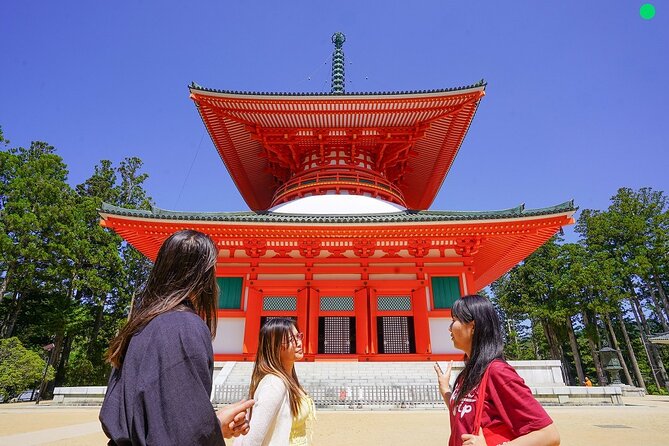
Koyasan feels worlds away in one day. This private trip from Kyoto pairs a personal guide with key temple stops, plus the big spiritual moment: the Goma fire ritual. I like that you also get a traditional Buddhist vegan lunch, Shojin Ryori, so the day is more than sightseeing.
The main thing to weigh is time. At about 10 hours, it moves on a tight plan, and the schedule can shift if weather or traffic affects the route or if a site is closed.
In This Review
- Key things I’d plan around
- A Private 10-Hour Koyasan Escape From Kyoto Station
- Price and Value: What $523.85 Per Person Buys
- Mt. Koya Drive-In: Setting the Stage Before Temples
- Kongobu-ji and Danjo Garan: Shingon Sites With Real Symbolism
- Kongobu-ji Again: Rock Garden Quiet and Sliding Door Art
- Koya-cho Shojin Ryori Lunch: Vegan Food That Feels Made for This Setting
- Shojoshin-in Temple Reserved Access: Statues and Mandalas
- Goma Fire Ritual at Shojoshin-in: Prayer, Flame, and Fudo Myoo
- Kukai’s Mausoleum on Mt. Koya: A Quiet Ending Up the Mountain
- Who This Private Tour Is Best For
- Booking Advice: How to Make the Day Go Smoothly
- Should You Book a Koyasan Day Trip by Private Car?
- FAQ
- What time does the Koyasan day trip start?
- Do I get picked up from my hotel?
- How long is the day trip?
- Is lunch included, and what type of food is it?
- What spiritual experiences are included?
- Are admission tickets included for the temple visits?
- Is this a private tour and how is ticketing handled?
Key things I’d plan around
- Hotel pickup and return from Kyoto Station area, so you start without logistics stress
- Kongobu-ji and Danjo Garan focus on Shingon Buddhism sites tied to Kukai
- Shojin Ryori lunch is part of the flow, not an afterthought
- Reserved temple access at Shojoshin-in when the schedule allows
- Goma fire ritual with monks chanting and prayer sticks being burned
- A peaceful finish at Kukai’s mausoleum on Mt. Koya
A Private 10-Hour Koyasan Escape From Kyoto Station
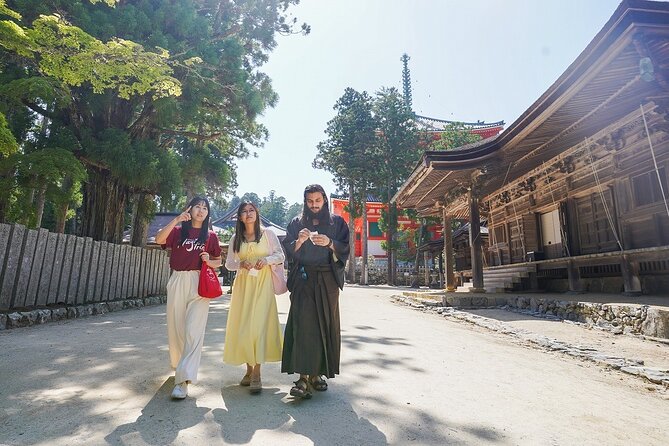
This is built for people who want the mountains around Koyasan without a crowded, stampede-style day. You meet in the morning at Kyoto Station, Hachijo Exit Parking Lot31, and the start time is 8:00 am. From there, you go by private car with a local guide and return to the same meeting point at the end.
I like that pickup is part of the deal, so you can match it to where you’re staying in Kyoto. For anyone who hates hunting down buses or trains while also trying to see temples, that matters. You’re also not stuck waiting for other tour groups, because the day is designed around your party.
The schedule is long by day-trip standards, roughly 10 hours. That’s not bad if you pace yourself, but it does mean you’ll want to travel light and keep your expectations realistic: this is a focused religious circuit, not a slow wander with lots of free time.
Price and Value: What $523.85 Per Person Buys
$523.85 per person sounds steep until you look at what’s included. This isn’t just transport and a driver. You’re paying for a private format, a guide, and admission tickets built into multiple temple stops. The itinerary also includes a traditional vegan lunch, Shojin Ryori, which is usually a highlight on its own.
Here’s the value math as I see it:
- Admissions are included at several stops (Mt. Koya, Kongobu-ji, Danjo Garan, and Shojoshin-in for the temple visit and the ritual)
- Lunch is included as part of the day, not something you have to find and time on your own
- The Goma fire ritual is not a casual add-on. It’s a specific practice with monks, chanting, and burning prayer sticks, so having a guide to manage timing and context matters
- Private car means you spend less energy on transit, and more energy on being present
A possible drawback is the cost for solo travelers. Private tours spread well across couples or families, but if you’re going alone, it can feel hard to justify. Still, if you’re serious about Koyasan’s spiritual side, this package saves you from cobbling together multiple tickets and schedules.
Booking timing also matters. This tour is commonly booked about 15 days in advance, so if your trip dates are set, plan ahead.
Skip the buses, hire a driver
- Kyoto Private Car Tour – Full Day with Local Guide & Nara Option
★ 5.0 · 169 reviews - Private car tour in Kyoto (up to 4)
★ 5.0 · 123 reviews - Private car tour in Kyoto (up to 9)
★ 5.0 · 74 reviews - Kyoto Day Trip using Private Car with English Driver (up to 5)
★ 5.0 · 74 reviews
Mt. Koya Drive-In: Setting the Stage Before Temples
Your day starts with that mountain drive into Koyasan from Kyoto. Even before the big temple buildings, your guide frames what you’re seeing: Japanese Buddhism basics, why Kukai matters, and how esoteric Buddhism connects to the sites on the hill.
Stop 1 is Mt. Koya itself, a short visit with admission included. It’s brief on the schedule, but it helps you get oriented in the setting. Koyasan is not just a collection of buildings. The idea is that spiritual practice happens in a landscape, and being up there changes the feel of the day.
If you’re someone who likes context, this early start is smart. If you’re more of a jump-straight-to-photography person, you might wish the day had a longer buffer, but the itinerary is clearly designed to hit the key rituals and temple areas.
Kongobu-ji and Danjo Garan: Shingon Sites With Real Symbolism
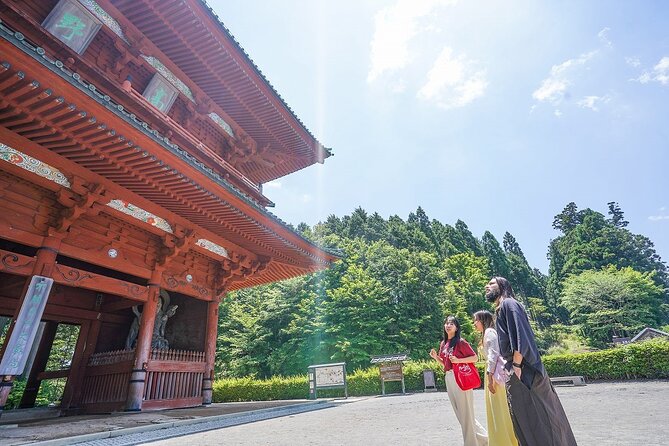
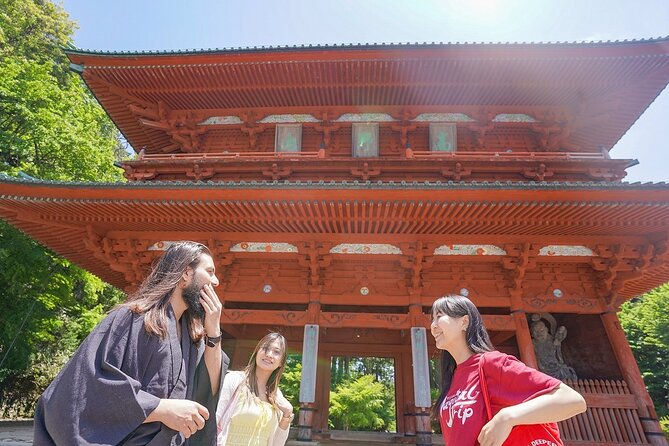
Next up is Kongobu-ji Temple, where you take a photo at the towering Daimon Gate, your symbolic entry point into the spiritual realm. After that, you explore Danjo Garan, a temple complex known for pagodas and sacred halls, with design meanings tied to esoteric Buddhism.
This is one of those parts where a guide adds real value. Without commentary, you can still see impressive architecture, but the meaning can slide past. With commentary, the gates, corridors, and hall layout start to feel intentional instead of just decorative.
Stop 2 and Stop 3 move you through two connected layers:
- Entry and orientation (Daimon Gate photo, the sense of crossing into Koyasan’s sacred space)
- Core temple complex time at Danjo Garan (about 40 minutes)
The schedule gives you enough time to look closely, but not so much that you get bored. Still, if you’re slow in crowds of people photographing, note that you’re choosing a day where you likely get fewer interruptions than busier group tours. That’s one reason people call this experience intimate and away from crowds.
Kongobu-ji Again: Rock Garden Quiet and Sliding Door Art
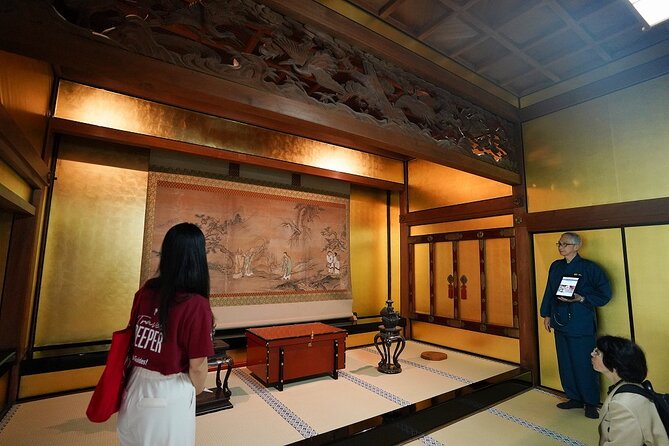
You return to Kongobu-ji for a second, more specific visit. This is where the famous rock garden comes in, described as Japan’s largest. You also spend time walking through a quiet corridor and seeing intricate sliding door paintings that bring Kukai’s journey to life.
I like this approach because it avoids the common problem of temple days turning into a blur of repeated halls. The second Kongobu-ji stop feels like a different lens: less about entry and complex layout, more about specific spiritual art and contemplation.
Practical note: rock garden viewing can be easy to rush if you’re thinking about the next stop. Give yourself permission to slow down here. Even within a guided itinerary, this kind of stop works best when you actually look.
The walking is manageable, but you will be moving through temple grounds and corridors. Comfortable shoes help, especially when you’re doing multiple short temple sessions across the day.
Koya-cho Shojin Ryori Lunch: Vegan Food That Feels Made for This Setting
Then you break for lunch in Koya-cho with Shojin Ryori, a refined form of Buddhist vegan cuisine. It’s about an hour, and it’s not just “food on the way.” The meal is presented carefully and uses seasonal ingredients.
From the review experience I’m drawing from, the lunch is a standout in a way people don’t always expect. One couple described it as surprisingly flavorful and beautifully presented, and that matches the tone of Shojin Ryori generally: the point is respect for ingredients and a careful balance of textures and taste without meat or fish.
Dietary restrictions are handled by the booking process. If you have any dietary constraints, you’re asked to inform the provider when you book. That’s the right move because it ensures the meal fits you, not just the generic default.
One caution: because lunch is scheduled and the day is full, you’ll want to eat at a normal pace without trying to stretch it into a late break. The best lunch moments happen when you’re calm and not hungry-agitated.
A quieter way to spend a day in Kyoto
Shojoshin-in Temple Reserved Access: Statues and Mandalas
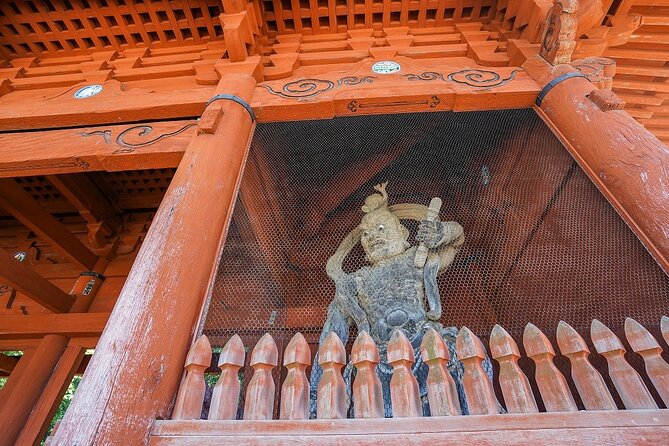
After lunch, you head to Shojoshin-in Temple. This is where the tour adds a big “why private” factor. You get reserved-access time at a temple that is usually closed to the public.
You’ll explore sacred statues, mandalas, and the spiritual symbolism behind what you’re seeing. You also have translation support from your guide, which is crucial here. Mandalas and iconography can look complex on the surface, so having help understanding what they point to makes the time feel worthwhile instead of confusing.
Stop 6 is about 50 minutes. That’s long enough to look and ask questions, but still part of a structured sequence leading directly to the ritual later. If you like spiritual art, you’ll likely enjoy this segment more than a standard temple stop because it’s more interpretive and less purely visual.
Goma Fire Ritual at Shojoshin-in: Prayer, Flame, and Fudo Myoo
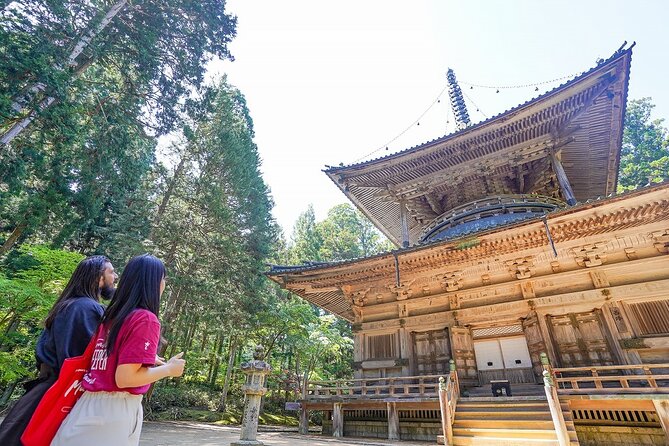
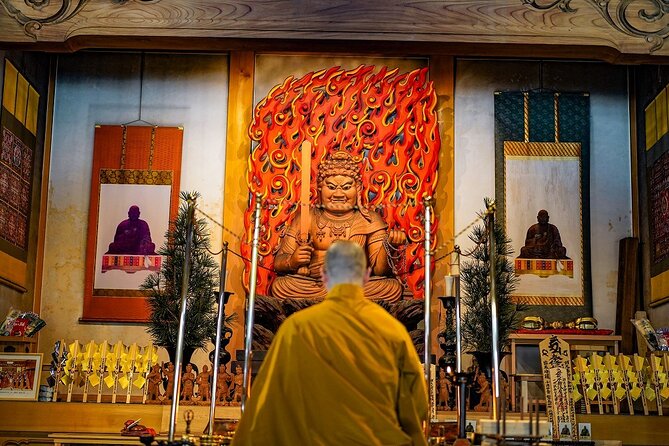
This is the headline moment for many people. You witness the Goma fire ritual at Shojoshin-in, one of the most dramatic practices in esoteric Buddhism. Flames blaze before the statue of Fudo Myoo, and monks chant as prayer sticks are burned.
One reviewer called it powerful to witness, and I understand that reaction. The ritual isn’t just a performance. It’s framed as a practice of purification, with burning prayer sticks symbolizing cleaning away negativity and supporting spiritual protection.
The session is about 1 hour. In that time, you’re not meant to act like a spectator with a checklist. You’ll get more out of it if you treat it like a moment of listening and observing, even if you’re not fluent in the religious language.
Also, because this part is emotional and visual, it can be a strong contrast to the earlier temple walking. The day has both stillness and fire, and that balance is exactly what makes it memorable.
Kukai’s Mausoleum on Mt. Koya: A Quiet Ending Up the Mountain
At the end, you head back up the path lined with ancient gravestones toward Kukai’s mausoleum. Stop 8 gives you about an hour here, and it’s framed as a time to feel the peace and timeless power of Koyasan.
This is a good place to slow down. By now, you’ve seen gates, pagodas, corridors, rock gardens, vegan cuisine, mandalas, and a fire ritual. Having the day close with a calmer, reflective moment helps it land emotionally, not just logistically.
If you’re the type who tends to check out mentally during travel days, this last stop is your chance to bring yourself back. Don’t just rush to photos. Take a few minutes without looking through your screen, even if you’re only doing it for your own comfort.
Who This Private Tour Is Best For
This tour fits best when you want three things at once: meaning, structure, and fewer crowds. The private car plus personal guide makes it easier to ask questions and understand what you’re looking at. A review specifically highlighted that the experience was perfect for couples or families, especially when you want an intimate day away from the usual crowds.
You’ll also like it if you care about Shingon Buddhism and want your day to connect to Kukai instead of treating temples as independent photo stops. The mix of Kongobu-ji, Danjo Garan, reserved-access Shojoshin-in, and the Goma ritual gives you a coherent spiritual arc.
Where it may not fit:
- If you want a budget-friendly day trip, the per-person price is high.
- If you hate fixed schedules, the 10-hour plan and multi-stop itinerary might feel tight.
- If you need tons of free time for shopping or long independent wandering, this is not built that way.
Booking Advice: How to Make the Day Go Smoothly
A few smart moves before you go:
- Book early since it’s commonly reserved about 15 days ahead.
- Plan for a long day so you don’t feel rushed between spiritual moments.
- Think about your role during the ritual. You’ll get more out of the Goma fire ritual if you treat it as a sacred practice, not a show.
Also remember that the itinerary can adjust depending on weather, traffic, or temple closures. If a shrine or temple is closed, alternative locations are visited, and refunds are not provided for those changes. That’s normal for real-world temple touring, especially in mountainous areas.
Should You Book a Koyasan Day Trip by Private Car?
I think you should book this if you want Koyasan to feel personal and guided, not just visited. The combination of temples, reserved-access time at Shojoshin-in, and the Goma fire ritual is exactly the kind of “only in this place” experience that private guiding is made for. Add in Shojin Ryori lunch, and you get a day that’s built around more than one type of sightseeing.
If you’re traveling solo on a tight budget or you prefer open-ended exploration, you might choose something less structured. But if you want a clear plan, spiritual context, and a quieter feel away from crowds, this private Koyasan day trip is a strong pick.
FAQ
What time does the Koyasan day trip start?
The tour starts at 8:00 am, with meeting at Kyoto Station Hachijo Exit Parking Lot31.
Do I get picked up from my hotel?
Pickup is offered, and the tour includes comfortable transport with hotel pickup and drop-off.
How long is the day trip?
The total duration is about 10 hours.
Is lunch included, and what type of food is it?
Yes. You’ll have Shojin Ryori, a traditional Buddhist vegan lunch. Vegetarian and vegan options are supported, and you should inform the provider of dietary restrictions when booking.
What spiritual experiences are included?
You’ll visit major temple sites such as Kongobu-ji and Danjo Garan, and you’ll also witness the Goma fire ritual at Shojoshin-in Temple.
Are admission tickets included for the temple visits?
Yes, admission tickets are included for the listed stops on the itinerary, except lunch (Shojin Ryori is free).
Is this a private tour and how is ticketing handled?
Yes, it’s private, meaning only your group participates. The tour also includes mobile ticket access.
New This Season
- Old Port Town and Ultimate Sake Tasting Private Tour From Kyoto
- Kyoto’s Timeless Charm: 3hr Exploration of History and Peace
- Kyoto: 5 Types of Sushi Making
- Sacred Peak & Ancient Paths: Kurama-Kibune Hiking Experience
- Kyoto: Exclusive ZEN practice at Manpukuji temple in Uji
- Kyoto: Private Seasonal Aroma Yoga Class
- Traversing Kyoto’s Scenic West – Arashiyama to Kinkakuji
- From Kyoto:Day Tour to Kifune Shrine+Kuruma+Sanzen-in Temple
Private Car with Driver, compared.
Kyoto Private Car Tour – Full Day with Local Guide & Nara Option
Read our review →
Kyoto Day Trip using Private Car with English Driver (up to 5)
Read our review →
Luxury Kyoto 1-Day Private Car Tour with Nara & Osaka Options
Read our review →
Private car tour Let’s uncover secrets of majestic Kyoto history
Read our review →
Kyoto Private Customizable Day Trip With English chauffeur
Read our review →Also filed under