
Reviewed · 1-DAY TOURS
Kyoto 1 Day Tour from Kyoto
One-day Kyoto always sounds impossible, until it isn’t. This tour strings together the big UNESCO sights, plus the gold-pavilion and torii-gate moments, with a guide to connect the dots. You’ll start early, ride in a climate-controlled bus, and move through Kyoto with admission fees handled for you.
What I love most is how packed-but-manageable the day feels, thanks to set stop times and multiple UNESCO stops in one route. I also like that you get real guided context, not just photo stops, with English interpretation and plenty of time at each major site.
One possible drawback: you are moving all day. Even with “adequate” time at stops, the route includes walks, crowd navigation, and a pace that may feel brisk if you prefer to linger.
In This Review
- Key points that make this tour worth your time
- A full-throttle Kyoto highlights day, built for limited time
- From the Avanti meeting point to Nijo Castle’s inside-the-palace surprise
- Kinkaku-ji’s Golden Pavilion, plus garden time you will actually use
- Kyoto Imperial Palace: the court vibe, and a closure fallback
- Fushimi Inari Taisha’s torii gates, plus a real-world walk
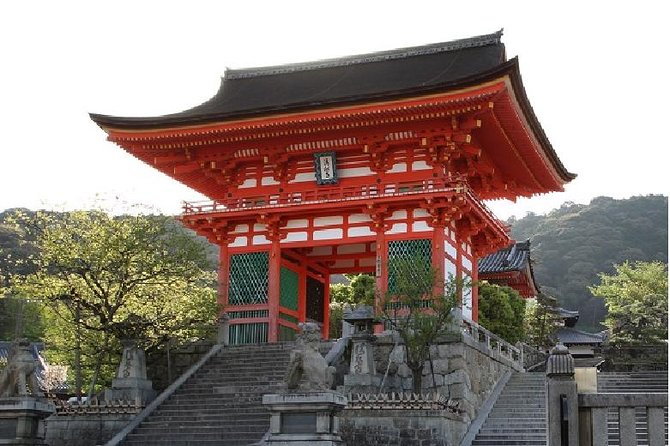
- Sanjusangendo’s 1,001 statues, then a short breather before Kiyomizu-dera
- Kiyomizu-dera terraces and the shopping lane that makes it feel like Kyoto
- Logistics that matter: timing, lunch choices, and group-day energy
- Lunch options
- Group size and comfort
- The best fit, plus what to watch for in real group pacing
- Should you book this Kyoto 1 day tour?
- FAQ
- Where do I meet the tour, and when does it start?
- What is included in the tour price?
- What lunch options are available, and are there dietary restrictions?
- What happens if Kyoto Imperial Palace is closed on my tour date?
- What happens if Nijo Castle is closed on my tour date?
- Do we walk at Fushimi Inari Taisha?
- How long is the tour and how large is the group?
Key points that make this tour worth your time
- Six major stops, tight route planning: You hit the icons plus a UNESCO-caliber sweep in one day.
- Admissions and transport included: You avoid the hassle of ticketing and transit planning for each site.
- Guide-led history, not just sightseeing: Commentary ties temples, castles, and shrines to Kyoto’s story.
- Two lunch options with limits: Western set menu or vegetarian Indian thali, with specific dietary constraints.
- Backup plans on closure days: Imperial Palace and Nijo Castle can swap to other sites.
- Smallish group size: Up to 40 travelers, which helps the day stay organized.
A full-throttle Kyoto highlights day, built for limited time
If you have only one day in Kyoto, the hardest part is deciding what not to miss. This tour is built around the “greatest hits,” with stops that cover different sides of the city: shogunal power, Zen aesthetics, court ceremony, shrine pilgrimage, and temple atmosphere.
The big value for you is the structure. The route is timed, admissions are included for the paid stops, and transportation is handled in an air-conditioned and heated vehicle. That matters in Kyoto because getting between sights can chew up time, especially when crowds and traffic slow things down.
You’ll also feel the design of the day in small ways: the order makes sense for momentum, and the final finish at Kiyomizu-dera includes time for both views and the shopping lane. A few guides in past groups were praised by name, including KC, Miyuki, Yuki, Michi, and Yoshitaka Harada, which tells me this experience often hinges on the guide’s delivery. When it clicks, you walk away understanding what you just saw, not just where it is.
This is best for you if:
- You’re on a tight schedule and want an efficient overview.
- You like a guided narrative that explains why each place matters.
- You don’t mind walking through crowds and moving between sites.
From the Avanti meeting point to Nijo Castle’s inside-the-palace surprise
Your day starts at the JTB SUNRISE TOURS desk near Kyoto Station, in the AVANTI building. You’ll depart at 8:20 am and return to Kyoto Station around 5:30 pm.
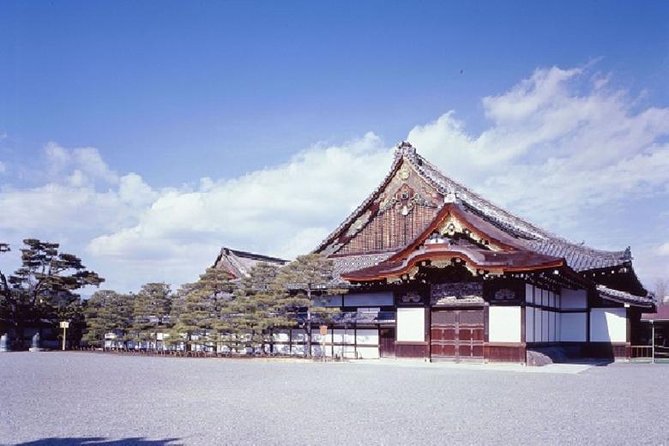
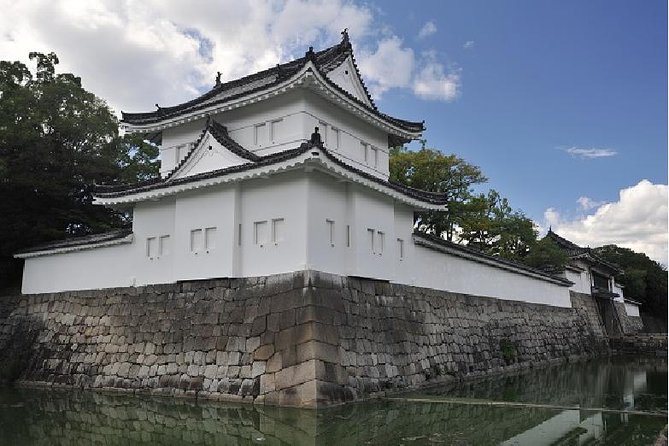
Stop one is Nijo Castle, completed in 1626. On paper, it can look like just another historic structure. In practice, it’s the kind of castle where the drama is inside: elaborately decorated chambers and gold leaf details that reward your attention once you’re there. Expect about 50 minutes including admission.
Why this stop works early: Nijo Castle gives you a framework for Kyoto’s political past. You’ll also get an easy anchor point for understanding later stops, because Kyoto’s religious spaces and imperial spaces make more sense when you’ve first seen how power was staged.
There’s also a key timing note you should keep in mind. Nijo Castle is closed on Tuesdays in January, July, August, and December. If that happens, the tour swaps in Ryoan-ji Temple instead. Plan on the experience staying in the same “historic culture” lane, just with a different featured site.
One more practical point: some guests describe the day as fast-paced overall. At Nijo Castle, you’ll still want to move deliberately. Crowds form, and photo lines appear quickly in places like castle halls.
A quieter way to spend a day in Kyoto
- PERFECT KYOTO 1-Day Bus Tour
★ 5.0 · 13,518 reviews - Kyoto: Fushimi Inari, Kinkakuji, Bamboo Grove 1 Day Bus Tour
★ 4.8 · 4,316 reviews - 10 Must-see Spots in Kyoto One Day Private Tour (up to 7 people)
★ 5.0 · 1,108 reviews - Kyoto and Nara Day Trip from Kyoto
★ 4.5 · 445 reviews
Kinkaku-ji’s Golden Pavilion, plus garden time you will actually use
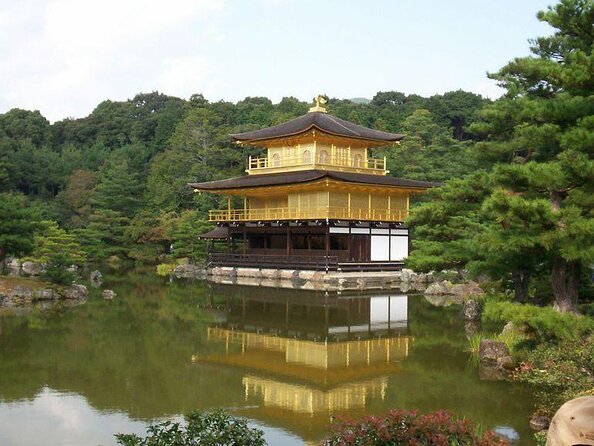
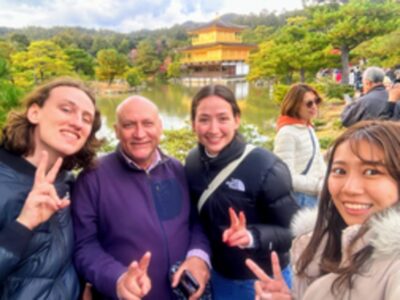
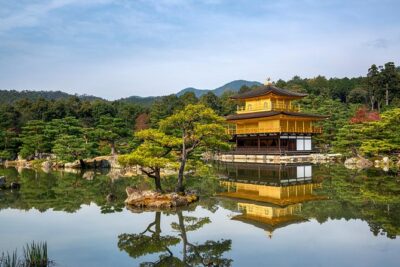
Next comes Kinkakuji Temple, also known as the Golden Pavilion. This is one of those places where the visual impact is immediate. The wooden structure is covered in thin layers of pure gold and sits beside a pond, giving you classic reflections when the light cooperates.
You get about 45 minutes here, and that time matters. It’s enough to walk the garden paths, pause for pavilion views, and still feel like you were there rather than just passing through.
This is also a good moment in the route to reset your senses. If the morning at Nijo Castle was about architecture and court-era power, Kinkaku-ji shifts you to aesthetics and stillness. Even if you’re not chasing perfect photos, you’ll notice how the pond and reflections help the space feel composed.
Admission is included, so you won’t be figuring out where tickets are sold or whether lines will be awful. That’s a real advantage when you’re trying to cover a lot in a single day.
One consideration: Kinkaku-ji is popular. Even with a guide handling the flow, you may still hit crowd pockets. If you want quieter minutes for the garden, stay flexible and take your photos in small bursts rather than trying to camp at one perfect angle.
Kyoto Imperial Palace: the court vibe, and a closure fallback
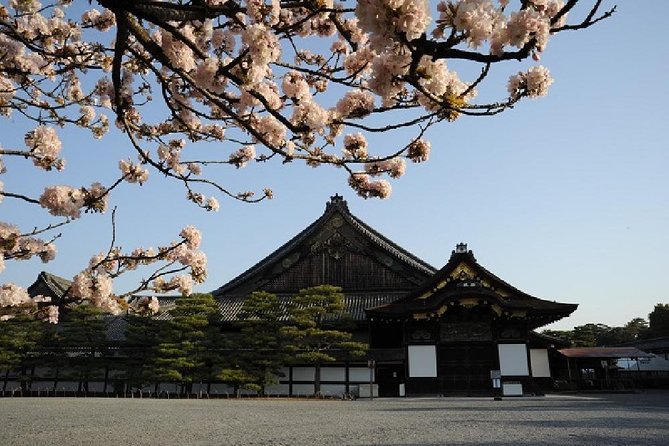
Then you move to Kyoto Imperial Palace, with about 40 minutes. The palace was used as the Emperor’s residence until roughly 150 years ago, and it’s the kind of site that rewards attention to details like ceremonial spaces and how the layout supports court life.
Admission is listed as free for this stop, but you still get guide interpretation, which is the main value here. Without context, imperial sites can feel like you’re simply looking at buildings. With the narrative, you’ll understand why certain areas were significant.
There is an important backup plan. Kyoto Imperial Palace is closed to visitors on Mondays (and sometimes the following day if Monday is a holiday), and also on days when the Imperial Household Agency has an event. If it’s closed, the tour visits Kitano Tenmangu Shrine instead.
So even if your calendar lands on a closure day, the tour doesn’t leave you empty-handed. It simply swaps in another culturally central location, keeping the theme of Kyoto’s official and spiritual structures.
One small practical note based on how these tours work: you may not have designated seats on the bus. The trade-off is that your attention is mostly on the sites, and the transportation logistics are otherwise handled.
Fushimi Inari Taisha’s torii gates, plus a real-world walk
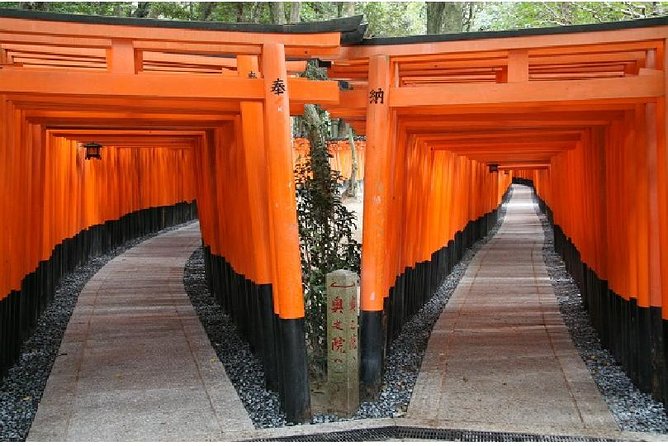
At Fushimi Inari-taisha Shrine, you get about 30 minutes, and the main show is the bright red senbon torii gates. This is a shrine complex that feels almost like a tunnel of color.
One thing you should plan for: participants walk from the parking area to Fushimi Inari Taisha, about 15 minutes one-way. That means you’ll want comfortable shoes, and you should mentally budget extra energy for walking through crowds and along the gate corridors.
Because time is limited here, you’ll likely focus on a portion of the torii trail and take in the core atmosphere rather than going deep to the farthest reaches. If you want to hike longer up the mountain, you may find yourself wishing for more time. For a first-timer “wow” moment, though, it’s ideal.
Fushimi Inari’s spiritual identity is distinctive, too. It’s the head shrine for around 40,000 inari-jinja shrines across Japan, which makes it more than just a colorful photo backdrop.
If you’re the kind of person who likes to stop often and chat with your guide about what you’re seeing, this portion is still workable. Just know the torii gates are a magnet, and the flow is crowd-driven.
Sanjusangendo’s 1,001 statues, then a short breather before Kiyomizu-dera
After the torii gates, the tour heads to Sanjusangendo Temple (Sanjusangendo Hall). Expect about 30 minutes.
Here’s what makes this stop different: the hall houses 1,001 life-size statues of Buddhist Kannon deities, dating back to the 13th century. It’s the kind of place where numbers matter, and the sheer quantity changes how the room feels. It can also be emotionally “loud” in a quiet way, because you’re surrounded by figures that you can’t really take in all at once.
Admission is included, so the experience stays simple on logistics. You show up, enter, and focus on the hall itself without ticket wrangling.
This is also a good transition stop, because Kiyomizu-dera later includes both views and a busy shopping lane. After the statue hall, you’re ready for a different kind of Kyoto moment: the famous terrace lookouts and the atmosphere around the approach to the temple.
One consideration from the way these tours are experienced: some guests love how much is covered, while a few mention a sense of rush at certain points. If you’re sensitive to pace, give yourself an internal rule: at each stop, pick one priority detail to really look at, not just everything at once.
A day of temples goes further with something to break it up.
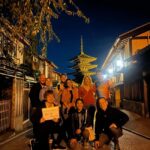
Kiyomizu-dera terraces and the shopping lane that makes it feel like Kyoto
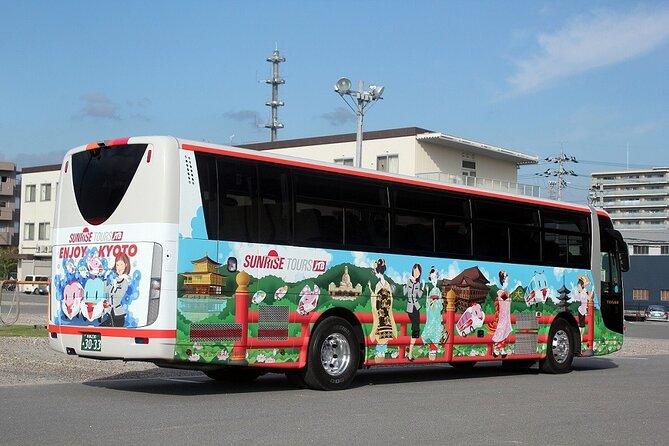
The final major site is Kiyomizu-dera Temple, with about 1 hour 10 minutes. This is often the most memorable stop for first-timers, because Kiyomizu-dera includes views over the city and a classic Kyoto approach.
You’ll get time for the panoramic vistas from the terrace, and you’ll also walk through the historic shopping lane that leads to the temple. That lane is part practical, part mood-setter. It’s where Kyoto feels lived in, not just museum-like.
Admission is included here too, and the extra time helps. In a day like this, you want one stop that has breathing room. Kiyomizu-dera is the right choice for that role.
Crowds are common at Kiyomizu-dera, and the terrace vantage point can be busy. If you want the best chance at a calm moment, aim to arrive on your timing rather than waiting until everyone else settles in. Your guide will keep the group moving, but you can still find a short quiet window if you’re paying attention.
Logistics that matter: timing, lunch choices, and group-day energy
This is a 9 hour 40 minute day, starting 8:20 am and ending around 5:30 pm. The tour also notes that order and arrival times can shift due to road conditions and congestion.
That’s normal in Kyoto, and it’s why the biggest “make or break” factor is how the group manages pace. Many reviews praise guides for humor and clarity, including KC and Miyuki, and for caring checks during very hot weather. A few reviews, though, mention issues like the guide moving too fast or being hard to hear, which can happen in any group setting if audio equipment or walking speed doesn’t match the group.
So here’s the practical mindset I recommend for you:
- Bring stamina, not just curiosity. You will walk and stand.
- If you need audio clarity, sit closer when possible and don’t be shy about asking the group to pause briefly.
- Use your time target for each stop. Decide in advance what you want from it: views, details, or photos.
Lunch options
You can add lunch only if you choose the With Lunch option. Lunch is either:
- Western-style set menu, with a vegetarian request option you must arrange at reservation time.
- Indian thali set menu (vegetarians), including multiple curries, vegetable pakora, yogurt, naan or roti, rice, salad, and a non-alcoholic drink.
Important limits: halal, gluten-free, and other meal requests are not available. Also, guests who book Western lunch and those who book Indian thali are served in separate dining areas, and the meal cannot be changed on the day.
If you book No Lunch, you get free time to eat on your own in the Kyoto Station area. One reason this matters: a few guests found their actual lunch plan didn’t match expectations, so double-check your option when booking.
Group size and comfort
The tour caps at 40 travelers. Seats may not be designated, but you’re in an air-conditioned and heated bus. Reviews often mention the coach as comfortable, and that can be a big deal when the day is long and the weather changes.
If you’re traveling solo, here’s the trade-off to know: one review described limited mixing on the bus and at lunch. That doesn’t mean you won’t meet people, but it suggests you should plan to chat if you want interaction, rather than assuming it will happen automatically.
The best fit, plus what to watch for in real group pacing
This tour is strongest for first-time Kyoto visitors who want to cover a wide range fast: castle, golden pavilion, imperial spaces, shrine gates, statue hall, and terrace temple. It’s also a good choice if you’re the type who likes to learn while you move, because the guide role seems to make a big difference in enjoyment.
The most praised aspects in guide performance are consistent:
- Friendly, humorous guides who keep the group engaged, including named guides like KC, Miyuki, Yuki, Michi, and Yoshitaka Harada.
- Clear English for many groups.
- Efficient timing that still allows enough time at major sites, even on days with rain.
The main complaints are also typical for a one-day city-sprint:
- Some guests felt the guide’s pace was too fast or the audio was difficult to hear.
- A few felt certain stops were rushed, with too much emphasis on getting pictures quickly rather than lingering for deeper temple viewing.
- One guest reported a serious issue with guide behavior and asked for a refund. If you care about respectful commentary and group culture, trust your instincts and speak up right away if something feels off.
My bottom-line advice: if you want a slow, reflective day where you can wander without structure, this isn’t the style. If you want the most iconic Kyoto sights packed into one day with admissions and transport handled, it’s a strong deal.
Should you book this Kyoto 1 day tour?
Book it if:
- You have one day and want multiple UNESCO highlights in a single route.
- You prefer guided explanation, with admission fees and transportation already included.
- You can handle steady walking and crowd navigation.
Skip it, or consider a different format, if:
- You hate group pacing and need long, quiet time at each temple.
- You expect a fully flexible itinerary where you can linger as long as you want at every stop.
One last practical tip: check which day you’re going. The tour has closure swaps for Kyoto Imperial Palace and sometimes Nijo Castle, so your experience will stay within the Kyoto highlights theme even when a specific site is closed. If you’re emotionally attached to one particular stop, look at your calendar before you commit.
Overall, this is a sensible, efficient way to get the major Kyoto icons done in one day, especially when the guide is firing on all cylinders.
FAQ
Where do I meet the tour, and when does it start?
You meet at the JTB SUNRISE TOURS desk Kyoto, located in the AVANTI building near Kyoto Station. The start time is 8:20 am, and the tour returns to Kyoto Station around 5:30 pm.
What is included in the tour price?
The tour includes a licensed English guide interpreter fee, admission fees where listed, and transportation costs. It also includes an air-conditioned and heated tour bus. Lunch is only included if you select the With Lunch option when booking.
What lunch options are available, and are there dietary restrictions?
If you choose With Lunch, you get either a Western-style set menu or an Indian thali set menu (vegetarian-friendly). Vegetarian requests for the Western option must be provided in advance. Halal, gluten-free, and other meal requests are not available.
What happens if Kyoto Imperial Palace is closed on my tour date?
Kyoto Imperial Palace is closed to visitors on Mondays (or the following day if Monday is a holiday) and on certain event days. On those days, the tour visits Kitano Tenmangu Shrine instead.
What happens if Nijo Castle is closed on my tour date?
Nijo Castle is closed on Tuesdays in January, July, August, and December. If it is closed, the tour visits Ryoan-ji Temple instead.
Do we walk at Fushimi Inari Taisha?
Yes. Participants walk from the parking lot to Fushimi Inari Taisha Shrine, about 15 minutes one-way.
How long is the tour and how large is the group?
The tour lasts about 9 hours 40 minutes. The group has a maximum size of 40 travelers. You’ll visit six main stops during the day.
New This Season
- Koyasan Day Trip by Private Car from Kyoto
- Old Port Town and Ultimate Sake Tasting Private Tour From Kyoto
- Kyoto’s Timeless Charm: 3hr Exploration of History and Peace
- Kyoto: 5 Types of Sushi Making
- Sacred Peak & Ancient Paths: Kurama-Kibune Hiking Experience
- Kyoto: Exclusive ZEN practice at Manpukuji temple in Uji
- Kyoto: Private Seasonal Aroma Yoga Class
- Traversing Kyoto’s Scenic West – Arashiyama to Kinkakuji
1-Day Tours, compared.
Fushimi Inari, Kinkakuji, Bamboo Grove 1 Day Bus Tour
Read our review →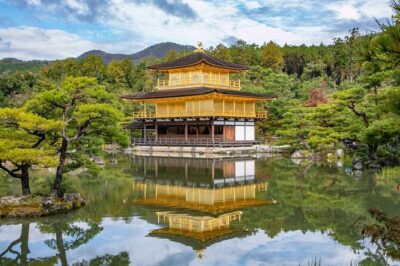
10 Must-see Spots in Kyoto One Day Private Tour (up to 7 people)
Read our review →
Kyoto Customized Private Tour: See Top Attractions in 1 Day
Read our review →
Nara, Osaka & Kobe Day Trip – 3 Cities in 1 Day
Read our review →
1 Day Traditional Japanese Kimono Rental Experience
Read our review →Also filed under