Reviewed · GION GEISHA QUARTER WALKS
Kyoto: Gion Magical Night Walking Tour with Geisha Trivia
One of Kyoto’s most atmospheric walks is after dark. This Gion night route mixes geisha trivia with shrine stops you would probably miss solo, guided at a relaxed pace.
I love the small group size, which makes it easier to ask real questions. I also like that the walk is built around key night sights, from Hanamikoji lantern streets to an illuminated pagoda. One catch, the route includes stairs, so it is not a fit for wheelchair users or limited-mobility walkers.
In This Review
- Key things to know before you go
- Gion After Dark: what changes when the sun goes down
- Meeting at Minamiza Theater: timing that trips people up
- Hanamikoji first: geisha trivia on the streets where it all starts
- Beyond the lanes: a matchmaking shrine stop you can actually understand
- The illuminated Buddhist pagoda: where the night view locks in
- Hidden pathways and the 1000-year-old shrine finish
- Photography service: how to get better night shots without holding up the group
- Price and logistics: what $24 gets you, and where it holds value
- Who should book, and who should skip this night walk
- Should you book the Kyoto Gion Magical Night Walking Tour?
Key things to know before you go
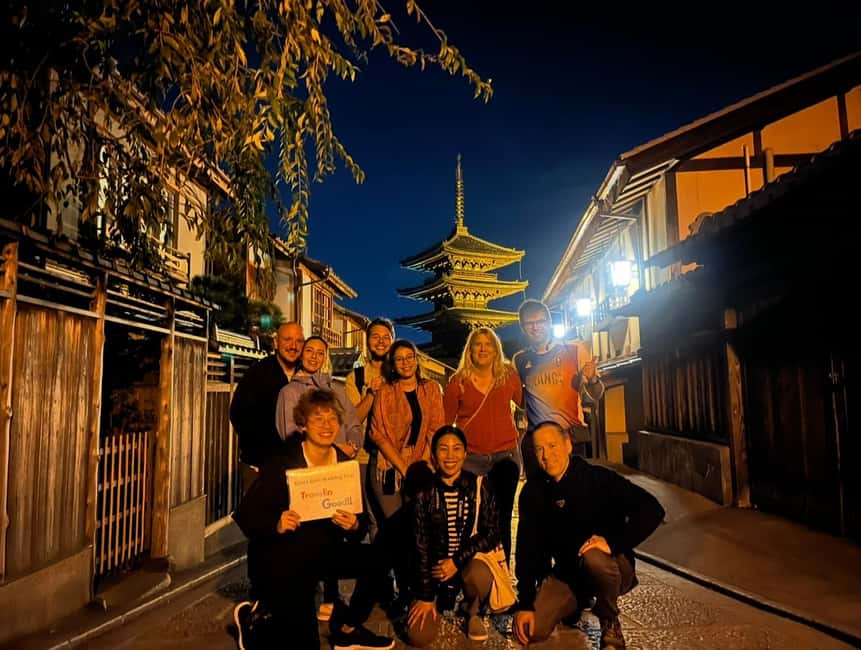
- A true small-group night walk (up to 10) keeps the mood calm and questions easy.
- Minamiza Theater is your anchor point and your timing starts when the group leaves.
- Hanamikoji geisha trivia is the main course, including rules and respectful etiquette.
- You might spot a geisha or maiko, but this is not a meet-and-greet tour.
- Illuminated shrine and pagoda moments change the look and feel of Gion at night.
- Photography help is included, so you can focus on the street instead of your phone.
Gion After Dark: what changes when the sun goes down
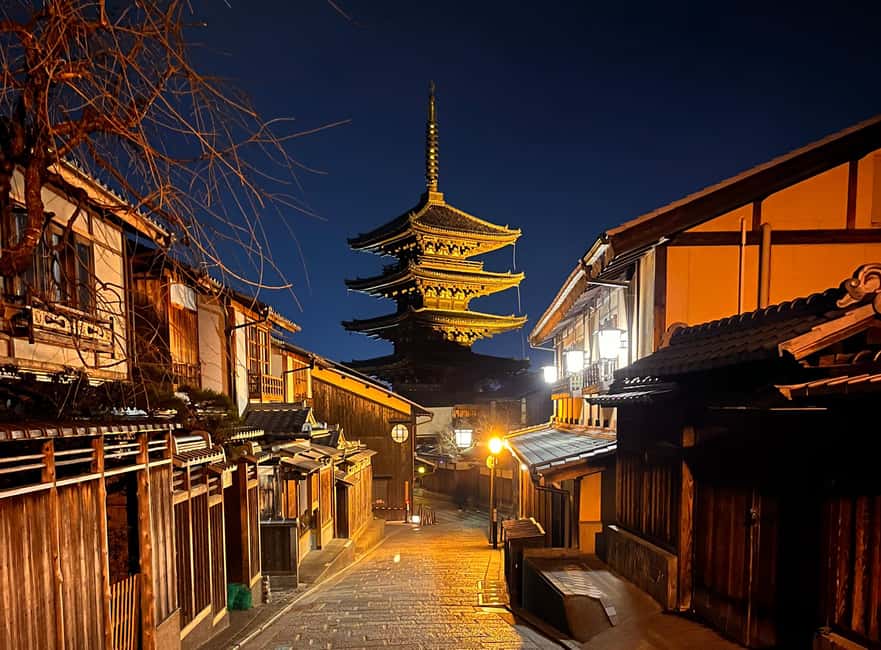
Gion has a reputation, but day and night feel like two different neighborhoods. At night, lantern light, storefront shadows, and quieter side streets make the district feel smaller and more human in scale. That matters, because this tour is designed to help you notice details, not just check boxes.
My favorite part is how the guide turns the street into context. You do not just walk past the famous lanes, you learn the rules and trivia that explain why things look the way they do. Guides also point out the difference between geisha culture on display and the realities of everyday life behind the scenes, so you know what you are seeing rather than guessing.
A second big plus is that night usually means fewer people on the lanes. Several guides also build in quieter detours, so you get those calm moments where Gion feels like it belongs to Kyoto residents again, not only to photo lines.
The main consideration is simple: if you are not comfortable with stairs, you should rethink it. The tour is not accessible for wheelchair users or those with limited mobility. And because it is outdoors at night, if you are feeling unwell, this is not the moment to push through.
Meeting at Minamiza Theater: timing that trips people up
You meet in front of Minamiza Theater in Gion, at the front side. Look for your guide holding a sign that says TravelinGood.
Here is the part that gets people in trouble: the listed time is the start time, meaning when the group leaves the meeting point, not when you arrive to stand around. Plan to be there at least 5 minutes early. If you are taking a bus or taxi, add extra buffer for traffic, because Kyoto can slow down right around the places everyone wants to get to.
If you visit in February, there is a special option mentioned for a 3pm start, which is a smart way to blend evening plans with the same Gion night feel. It also helps if you prefer to start while it’s still lighter and let the night build around you.
Once you’re lined up, the flow is straightforward: you head into the Gion streets, then gradually move through smaller lanes and sacred spots, finishing at an older shrine.
Lantern-lit streets of the geisha quarter
- Kyoto Geisha Walking Tour: Gion District & Hidden Gems
★ 4.7 · 3,273 reviews - Kyoto: Gion Geisha District Walking Tour – Stories of Geisha
★ 4.7 · 2,187 reviews - Best of Kyoto: Gion, Geisha, Pagodas & Cobblestones
★ 4.9 · 2,058 reviews - Night Walk in Gion: Kyoto’s Geisha District
★ 4.5 · 2,003 reviews
Hanamikoji first: geisha trivia on the streets where it all starts

The tour begins by heading to Hanamikoji, the geisha district you will recognize immediately. This is the lane where you notice the lanterns, the traditional facades, and the little rhythm of people moving in and out of side entrances.
What makes this section worth it is the guide’s focus on how to read the place. You will learn mysterious rules and geisha-related trivia, and you will get a better sense of what is meant to be seen, what is private, and how local etiquette shapes everyday behavior. It is the difference between looking at architecture and understanding why certain details matter.
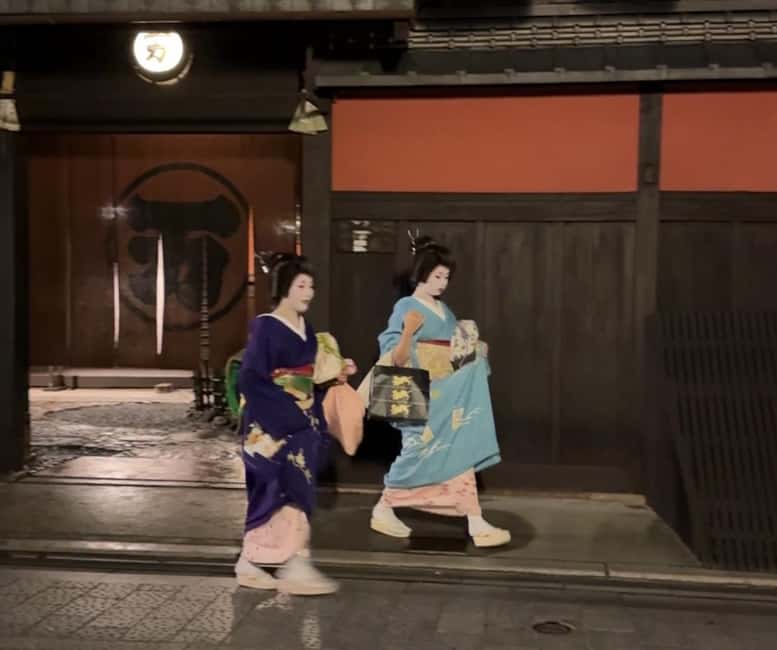
You also might see a real geisha. But do not book this expecting a guaranteed encounter. The tour is not intended for meeting geisha, and the focus stays on learning the area respectfully while you walk.
I like that some guides bring media and comparisons into the mix. In past groups, guides like Sho shared differences between geishas and maikos using pictures and videos, which helps you follow what you might spot outside the training lights.
A practical tip for this stretch: keep your expectations flexible. If someone is walking by in traditional attire, it is tempting to stare. The better move is to let the guide explain what you are noticing, and keep your camera ready without turning the street into a spectator sport.
Beyond the lanes: a matchmaking shrine stop you can actually understand
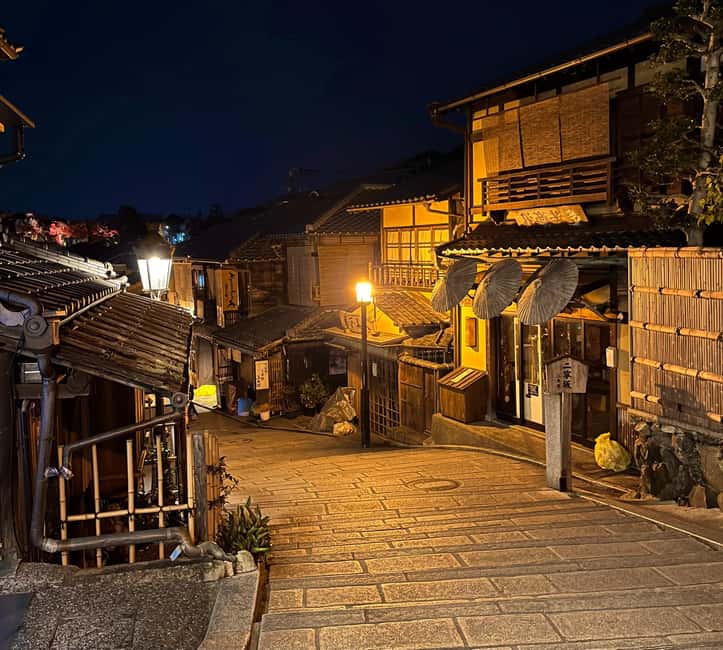
After Hanamikoji, the tour shifts to side streets and sacred stops that feel tucked away once you are away from the main lane. One highlighted stop is a shrine connected with matchmaking.
This is not just a photo stop. The guide ties it back to local beliefs and shrine purpose, so the visit makes cultural sense instead of becoming a quick look at a sign. If you’ve ever felt lost in Kyoto’s shrine world, this kind of guided context helps you learn how to interpret the symbols you see.
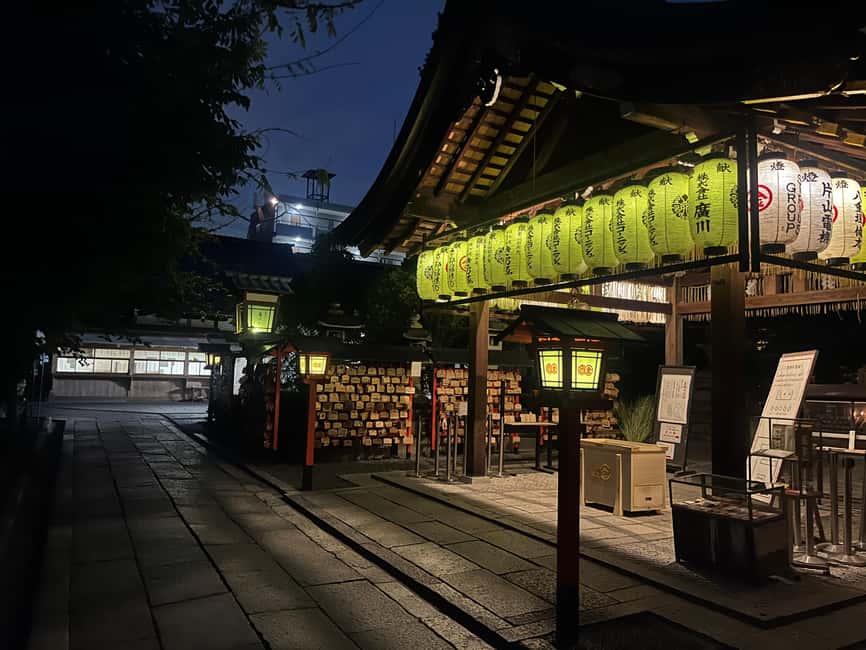
Night lighting changes everything here. Darker streets make shrine features stand out, and lantern glow makes the mood softer, not louder. Even if you are not a shrine person, you will probably find this pause calming because it breaks the street-watching loop.
If you want participation, you may also get instruction for a ritual practice. In some groups, guides led the group in learning how to pray at a Shinto temple, and even helped people feel comfortable doing the steps. That kind of guidance turns a cultural site from confusing to approachable.
The illuminated Buddhist pagoda: where the night view locks in
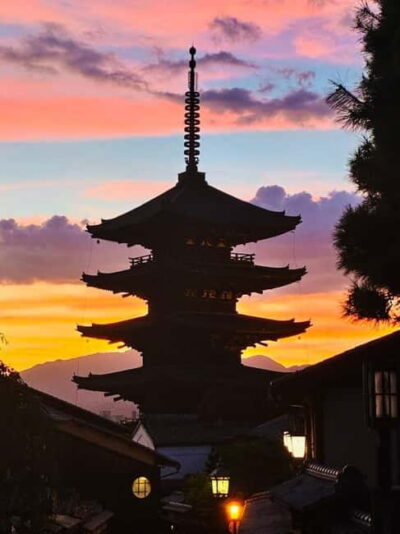
One of the most photogenic moments on this walk is the Buddhist pagoda outside the geisha district, illuminated at night. This is a rare combo: a classic Kyoto landmark feel, plus a lighting effect that looks dramatic without needing special timing.
Why this stop is valuable is that it adds variety. Up to now, you have been in streets and shrine-adjacent corners. Then suddenly you get a bigger, iconic view that you can frame, look at, and simply take in.
The guide also helps you slow down at the right time. Instead of hustling from one point to the next, the guide gives you the chance to notice details and ask questions. People also tend to mention that the pace feels manageable, with walking that is steady but not aggressive.
If you are worried about stamina, you should know this walk is listed at 100 minutes. That is long enough to feel like you are seeing Gion properly, but short enough that you should not feel wrecked afterward, as long as you’re okay with uneven pavement and some stairs.
Hidden pathways and the 1000-year-old shrine finish
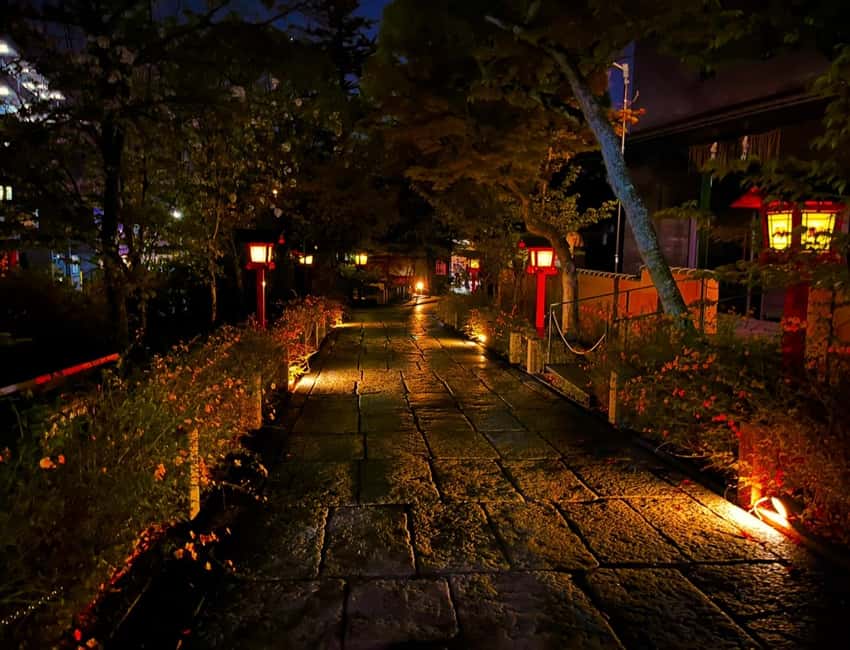
The tour continues beyond the main sights into hidden pathways and quieter parts of Gion. This is where a local guide earns their fee. Kyoto is easy to get wrong when you walk alone, because the streets look similar and the best turns are subtle.
The ending is a shrine over 1000 years old. That long timeline adds weight to the whole walk. When you finish at an older site, Hanamikoji stops feeling like a theme park lane and starts feeling like part of a living city tradition.
Night also makes this finale feel special. Older stone and shrine architecture look different after dark. They feel more solid and less ornamental, like you’re stepping into Kyoto’s longer story rather than only its tourist face.
One more detail I appreciate: guides often keep the group together and check in. Several groups mentioned how guides handled questions patiently and at a comfortable pace, even when the questions were not perfectly phrased. That is a big deal when you’re learning a culture that can feel tricky to interpret.
A quieter way to spend a day in Kyoto



Photography service: how to get better night shots without holding up the group
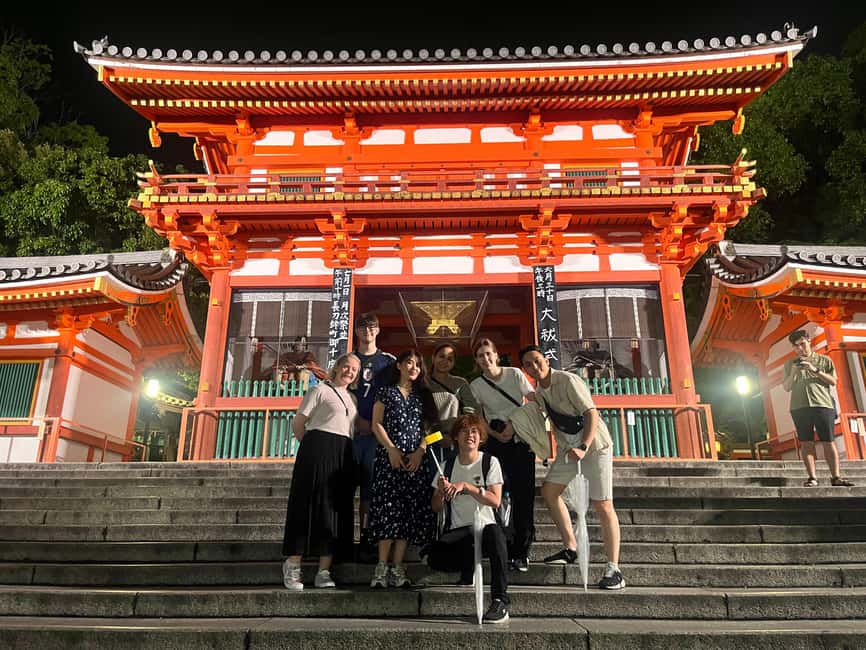
Photography help is included. Practically, that means you are more likely to end up with usable photos than just blurry phone snaps in lantern light.
Here’s how to make it work best: listen first, then shoot. The guide often points out what to notice at each stop, and those details usually create the best frames. If you rush to photograph before you understand what you’re photographing, you end up with pictures that look pretty but feel empty.
Also, remember that night walking means lower light and slower reaction time. If you get cold, take that seriously. The tour is not designed for people with a cold, and you’ll enjoy it more if you are comfortable and present.
If you want a simple checklist, I’d bring light layers, comfortable shoes, and a charged phone or camera. And keep your flashlight off. Lantern light is part of the experience, not a technical problem to solve.
Price and logistics: what $24 gets you, and where it holds value
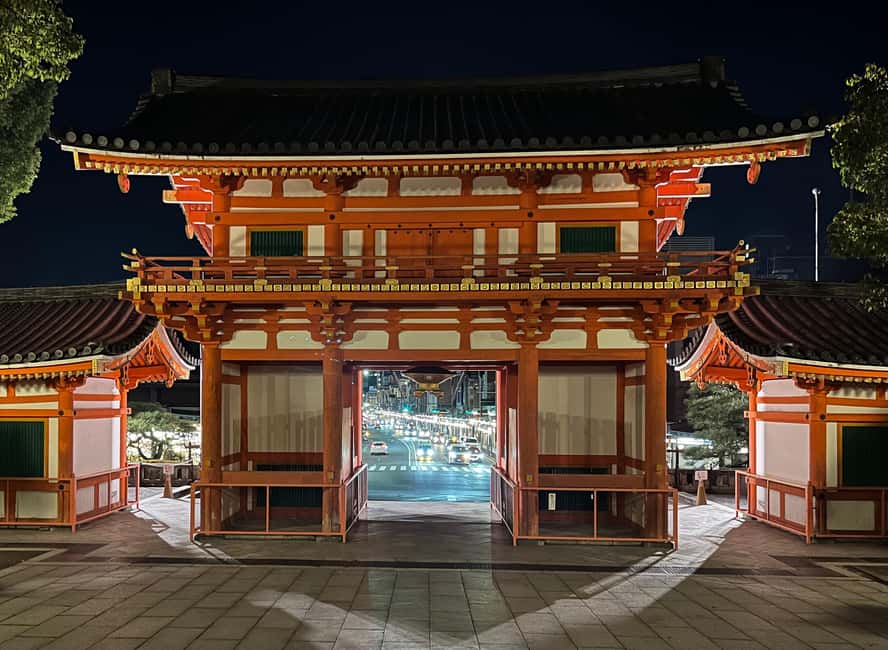
The price is $24 per person for a 100-minute, small-group English tour with a live guide and photography service. On paper, that can sound like a bargain or like a mystery, depending on how you measure tour value.
Here is how I see it: what you are paying for is not just walking through Gion. You are paying for interpretation, context, and a group size that stays small enough for real back-and-forth.
That small size shows up in the vibe. People regularly praise guides for answering questions, explaining the spiritual side of shrines, and giving respectful cultural guidance rather than a fast checklist. That type of attention is hard to scale up, which is why the tour is limited to around 10 people.
Also, $24 for English instruction in a prime area like Gion at night is not just about the location. Night guides have a harder job because details are harder to see and signage can feel confusing. The guide’s ability to point out rules, trivia, and how to behave at sacred spaces makes the walk feel like education without feeling like homework.
One more practical note: the tour is only valid for the booked date and time. Joining another tour without confirmation is not allowed, and the rule exists to keep group sizes small and respectful of schedules.
Who should book, and who should skip this night walk
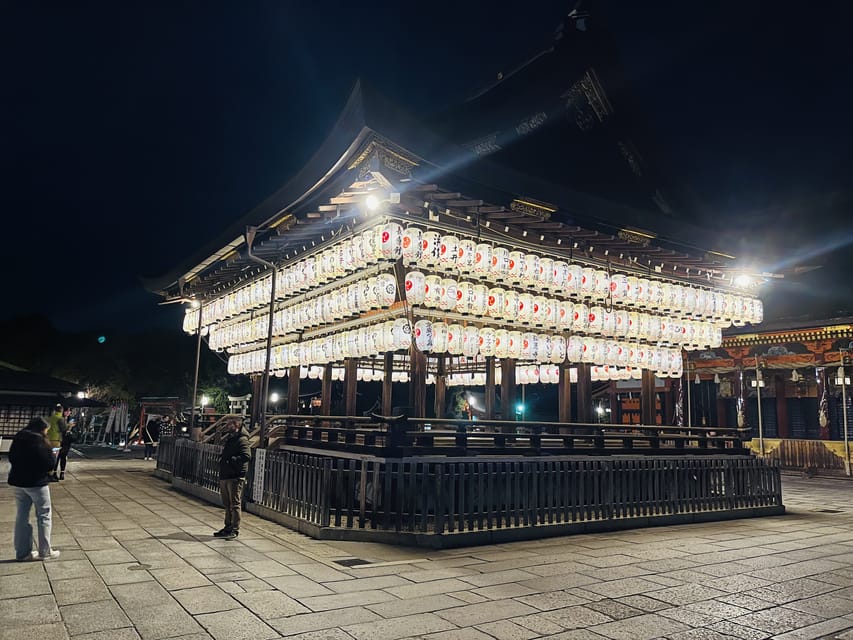
This walk is a great fit if you want Gion at night, but you also want to understand what you are seeing. It is especially good for:
- First-timers who feel overwhelmed by Kyoto’s many districts and shrine rules
- People who like small-group tours where you can ask questions
- Anyone traveling with kids who can handle a short night stroll, since groups have included children who enjoyed learning about maiko and geisha culture
It is not a fit for:
- Wheelchair users or anyone with limited mobility, because the route includes stairs
- People with a cold
- Babies under 1 year old
If you are sensitive to cold weather, plan layers and warm up before you meet. Night walking can feel chilly fast, and the tour keeps you outside for the full 100 minutes.
If you are expecting a planned meeting with a geisha, adjust your mindset. You may spot one, but the tour is not structured around guaranteeing encounters. The main win is how much you learn and how much more sense the district makes afterward.
Should you book the Kyoto Gion Magical Night Walking Tour?
If your goal is to see Gion after dark with cultural context, I would book this. The combination of Hanamikoji geisha trivia, shrine stops (including a matchmaking shrine), and the illuminated pagoda gives you variety in just 100 minutes. Add the small group size and photography help, and it becomes a comfortable way to get orientation fast without losing the magic of night Kyoto.
Skip it if mobility is an issue, because stairs along the route are part of the experience. And if you are currently sick or fighting a cold, wait for a better day so you can enjoy the walk instead of managing discomfort.
Bottom line: this is a well-priced, guide-led night stroll that helps you read Gion like an insider, not a tourist with a checklist.
More Walking Tours in Kyoto
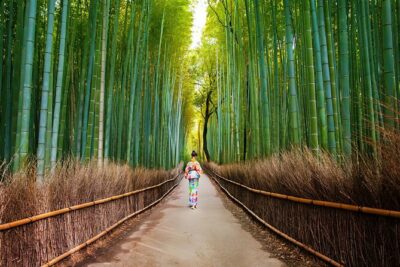
New This Season
- Koyasan Day Trip by Private Car from Kyoto
- Old Port Town and Ultimate Sake Tasting Private Tour From Kyoto
- Kyoto’s Timeless Charm: 3hr Exploration of History and Peace
- Kyoto: 5 Types of Sushi Making
- Sacred Peak & Ancient Paths: Kurama-Kibune Hiking Experience
- Kyoto: Exclusive ZEN practice at Manpukuji temple in Uji
- Kyoto: Private Seasonal Aroma Yoga Class
- Traversing Kyoto’s Scenic West – Arashiyama to Kinkakuji
Gion Geisha Quarter Walks, compared.
Kyoto Geisha Walking Tour: Gion District & Hidden Gems
Read our review →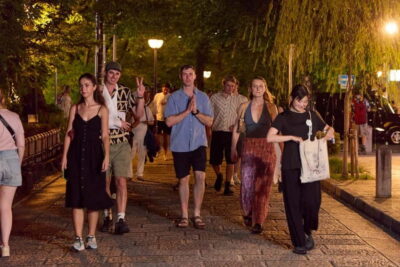
Gion Geisha District Walking Tour – Stories of Geisha
Read our review →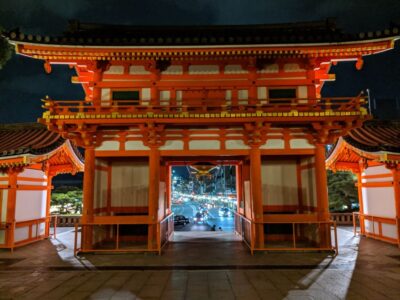
Best of Kyoto: Gion, Geisha, Pagodas & Cobblestones
Read our review →

Kyoto Night Foodie Tour in Gion (9+ dishes + 6 Sake tastings)
Read our review →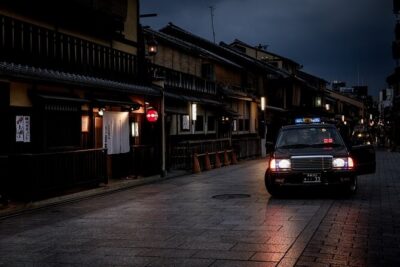
Kyoto Gion Geisha District Walking Tour – The Stories of Geisha
Read our review →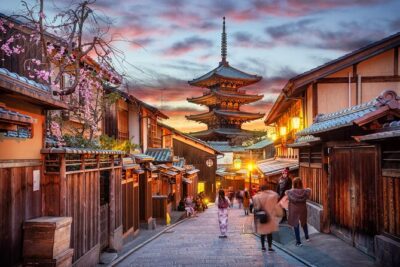
Kyoto Gion: 2-Hour Geisha Culture & History Walking Tour
Read our review →