Reviewed · ARASHIYAMA BAMBOO FOREST WALKS
Kyoto Arashiyama Walking Tour: Bamboo, Monkeys, Gardens & Secrets
That bamboo walk is the easy part. This Arashiyama route mixes major sights with quieter lanes, so the day feels ordered even when the district is crowded. I love how the pacing is built around key landmarks, starting with the train-station meeting and ending in a central spot you can actually use.
Two things I particularly liked: the guided context at each stop, and the fact that admissions are wrapped into the tour so you do not spend your time hunting tickets. One consideration is the Monkey Park hilltop hike, which is a 20 to 25 minute climb and can feel steep if you are not used to hills.
In This Review
- Key highlights if you want the good stuff
- Why Arashiyama feels different when you skip the chaos
- Meeting at the right station, then getting oriented fast
- Nonomiya Shrine: a short stop with real Shinto meaning
- Bamboo Forest Trail: how to enjoy the grove without rushing
- Okochi Sanso Garden: the calm break behind the bamboo
- Tenryu-ji Garden (Sogenchi Teien): UNESCO time that feels worth it
- Togetsukyo Bridge: river views and a quick shift in scenery
- Monkey Park Iwatayama: the hilltop climb and the payoff
- Timing, pace, and what to wear for 5 to 6 hours
- Price and value: what $65.57 buys you in the real world
- Tour rules that affect how you plan photos and video
- Who should book this Arashiyama walking tour
- Should you book? My practical take
- FAQ
- How long is the Kyoto Arashiyama Walking Tour?
- Where do I meet and where does the tour end?
- What is included in the price?
- Do I need to pay for Monkey Park or Tenryu-ji separately?
- Is the Monkey Park hike difficult?
- Are recording or live streaming allowed during the tour?
Key highlights if you want the good stuff
- Small-group feel (max 12) so you get through without getting lost in the crowd.
- Arashiyama shortcuts that help you reach the Bamboo Grove and move between sites efficiently.
- Tenryu-ji Garden (UNESCO) time built in, not just a quick look.
- Okochi Sanso Garden tucked away for a calmer, more garden-focused moment.
- Monkey Park interaction, including the payoff of views from the hilltop.
Why Arashiyama feels different when you skip the chaos
Arashiyama can be a wall of people, especially around the Bamboo Grove and the main river views. What makes this tour stand out is that it does not only chase the headline photos, it steers you through the district in a way that keeps the day from turning into a shuffle.
I also like that it is set up for flow. You are not standing at the wrong entrance, checking maps for the next stop, and losing time while everyone around you moves. The guide keeps the story moving, so you spend your attention on Kyoto, not logistics.
The Monkey Park part is the tradeoff. You get the memorable animal views, but you also get a real hike.
Meeting at the right station, then getting oriented fast
You meet at Saga-Arashiyama Station, which matters more than you might expect. There are multiple stations with Arashiyama in the name, and it is easy to end up at the wrong one, especially if you are arriving from Kyoto Station with fresh jet lag.
Once you are gathered, the guide helps you get your bearings quickly. That first leg sets the tone: you are walking as a group toward the quieter routes and the key landmarks that normally feel scattered if you do it alone.
This is also where you get to ask practical questions. I found this kind of early context helps a lot in Arashiyama because the area is built around different valleys, paths, and entrances that do not look connected on a map.
Moss, stone, and raked gravel gardens
- Kyoto Zen Meditation & Garden Tour at a Zen Temple with Lunch
★ 5.0 · 441 reviews - Kyoto Arashiyama Bamboo forest & Garden Half-Day Walking Tour
★ 5.0 · 413 reviews - Kyoto: Zen Garden, Zen Mind (Private)
★ 5.0 · 126 reviews - Kyoto Kiyomizu Tea Ceremony with Scenic Garden Views
★ 5.0 · 101 reviews
Nonomiya Shrine: a short stop with real Shinto meaning
A lot of tour routes forget the smaller cultural stops, but this one includes Nonomiya Shrine for a brief, focused visit. It is small, yet historically significant, and it has ties to purification rituals that were traditionally associated with unmarried imperial princesses before they served as priestesses at Ise Shrine.
Even if you are not a shrine-nerd, this stop helps your day feel less like a checklist. You get a calm Shinto moment early, which also makes the next stretch through the gardens and bamboo feel more grounded.
The visit is short, so it will not slow you down. Think of it as a reset button before the scenery gets louder.
Bamboo Forest Trail: how to enjoy the grove without rushing
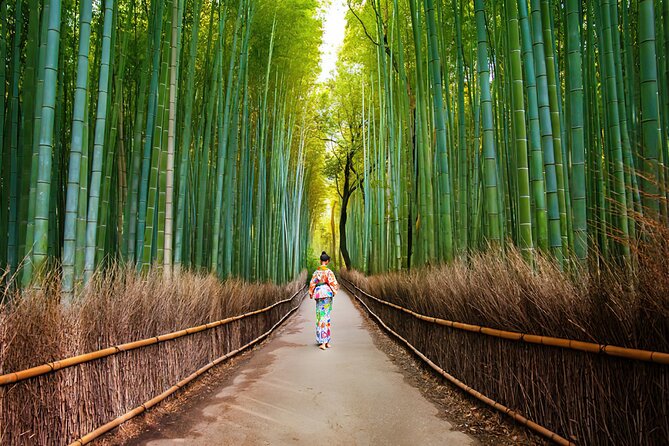
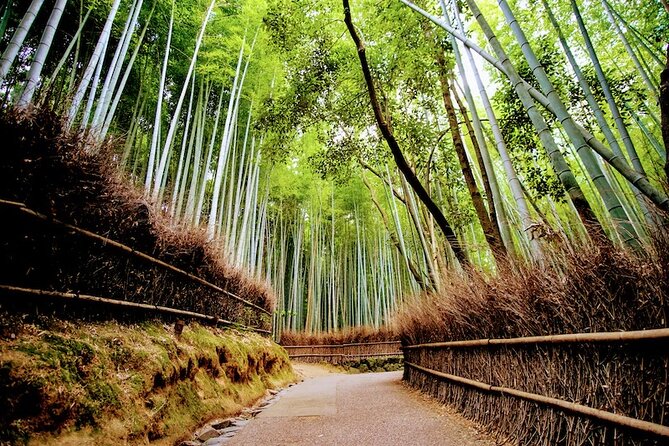
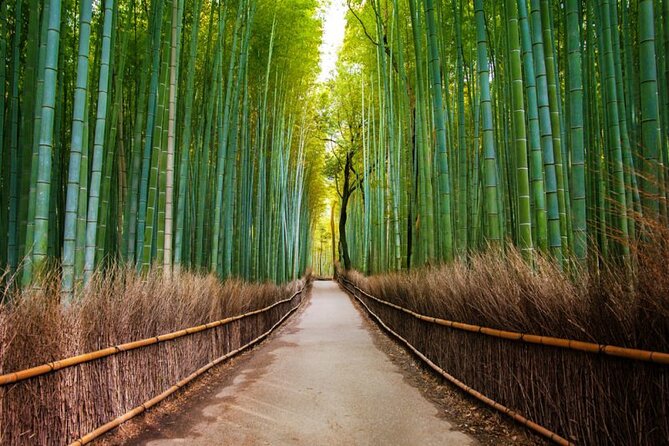
Yes, you will walk through the Bamboo Forest area. But the value here is how you move through it and what you learn along the way. The trail is only a few minutes from the station, and you will feel the shift as you enter a cooler, quieter pocket under towering bamboo.
You will also have time for the classic photos. The guide helps you find better angles and timing so you are not stuck shooting the same view from the same spot as everyone else.
One practical note: bamboo paths can be busy, but they also tend to give you a natural rhythm for walking. Stay patient, look up, and let the guide guide you. This is the kind of place where being in the right spot for five minutes matters more than sprinting for the perfect shot.
Okochi Sanso Garden: the calm break behind the bamboo
Okochi Sanso Garden is tucked away at the end of the Bamboo Forest route, which is why it feels like a breath of fresh air after crowds. You get around 30 minutes here, which is a sweet spot for taking it in without feeling trapped.
This garden is tied to a private villa once used by a famous Japanese actor, so it has that “escape from the outside world” vibe. Expect peaceful paths, carefully composed scenery, and a sense that the garden was meant to be enjoyed slowly.
If your priority is photos, you can still get them. But I think the real payoff is the atmosphere. You are surrounded by bamboo nearby, yet this stop turns the day into something more reflective and less theme-park.
Tenryu-ji Garden (Sogenchi Teien): UNESCO time that feels worth it
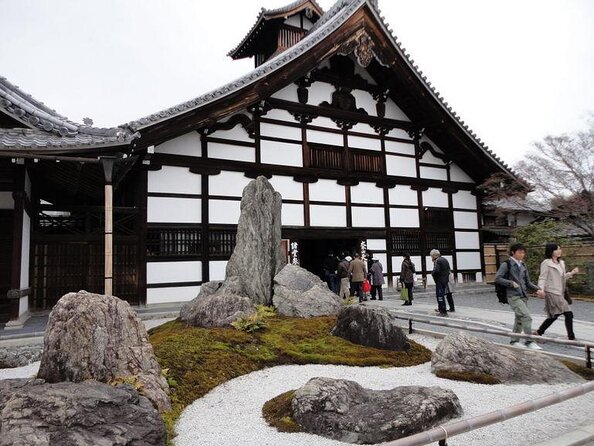
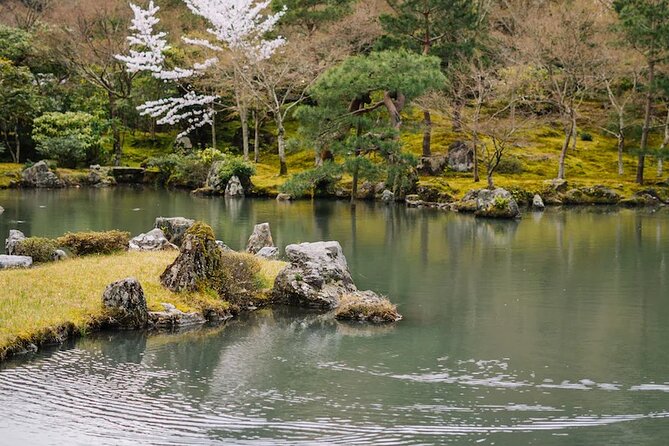
Tenryu-ji Garden, also known as Sogenchi Teien, is a UNESCO World Heritage Site. You get about 35 minutes, which is enough time to actually notice different garden features instead of just ticking off a name.
The garden is often considered among Japan’s top garden experiences, and you can see why once you slow down. This is the kind of place where the composition changes based on where you stand, what angle you view from, and how you let your eyes travel across water, stone, and greenery.
The guide context matters here. When you understand how the space is meant to be read, it stops being just pretty and becomes something you can interpret. If you like gardens, this is one of the strongest stops on the route.
Green light through a bamboo grove
Togetsukyo Bridge: river views and a quick shift in scenery
Togetsukyo Bridge is one of Arashiyama’s best-known sights for a reason. You get about 15 minutes here, with views over the Hozu River and toward the surrounding mountains.
This is a classic “reset your eyes” moment. After gardens and bamboo, you get a wider horizon and a sense of the valley landscape. It also helps you understand why Arashiyama became such a magnet for poets, artists, and day-trippers over the centuries.
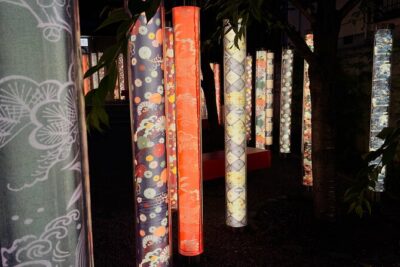
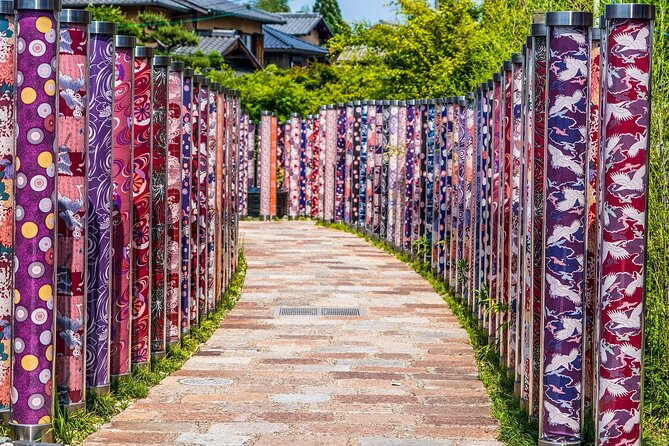
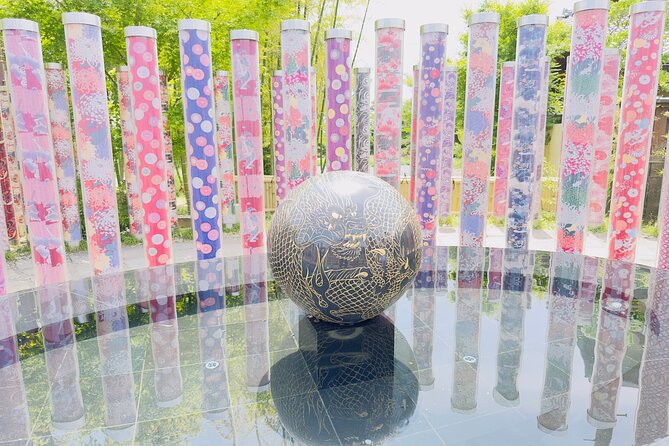
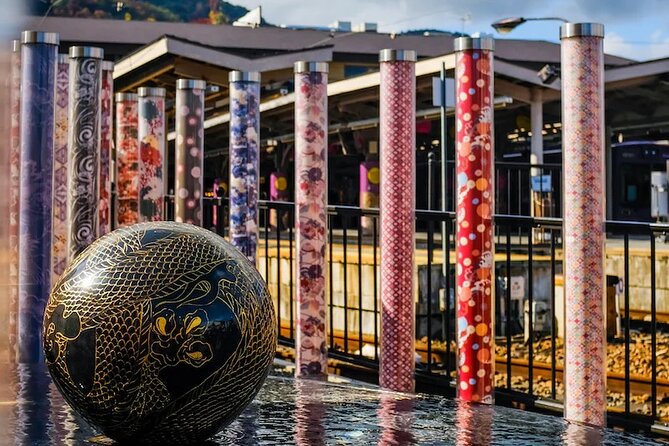
There is also a short mention of a Kimono Forest stop in the flow of the route. Even if that is more photo-moment than deep cultural visit, it can be fun if you want a quick visual detour before the hike.
Monkey Park Iwatayama: the hilltop climb and the payoff
This is the moment most people are excited about. You do a hike from Togetsukyo Bridge up to Arashiyama Monkey Park, and the time on the trail is about 20 to 25 minutes, with a path that is a bit steep.
The climb is absolutely the part you should prepare for. Wear shoes with grip, bring water if you can, and pace yourself. If you are carrying a small bag, keep it light, because you will feel the effort more on the ascent than the destination.
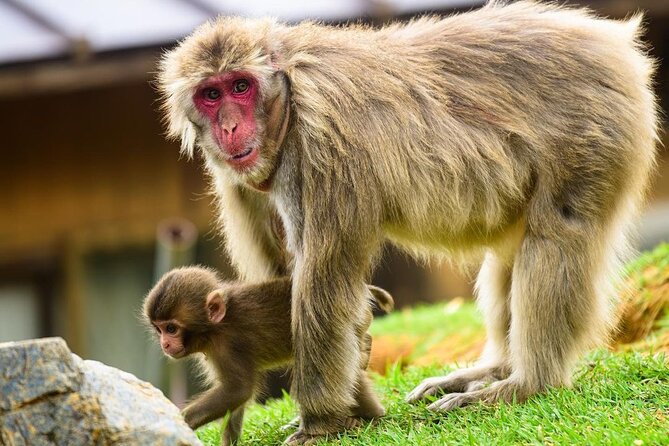
Once you reach the park, the views and the monkeys make it worth it. You can observe Japanese macaques in a natural-feeling setting, and the guide helps you understand what to watch for so you feel confident around the animals.
One more practical point from real-world experience: go in with a calm mindset. Do not crowd the edge spots, give the monkeys space, and keep your hands and food secured.
Timing, pace, and what to wear for 5 to 6 hours
This is a 5 to 6 hour walking tour, and it feels longer if you stop for every photo without a plan. The good news is the route is paced so you get a mix of walking, short cultural stops, and garden time, with the Monkey Park hike as the main physical block.
I also like that it caps at 12 people. Smaller groups typically move better through choke points like bamboo paths and temple entrances, so you spend less time waiting and more time seeing.
Dress for movement. Even if the district can feel cooler than central Kyoto, you will warm up on the climb. Bring a light layer you can handle if your pace changes with the crowd level.
Price and value: what $65.57 buys you in the real world
At about $65.57 per person, the real value is that the tour includes admissions for the major stops. That means you are not juggling separate ticket lines while you are tired from walking.
Admissions included cover key experiences like Okochi Sanso Garden, Tenryu-ji Garden, Nonomiya Shrine, and Monkey Park Iwatayama. Togetsukyo Bridge is also part of the planned flow, and the Bamboo Forest and related entries are included as part of the route.
You also get a bilingual guide and a structured route that saves you from the hardest part of Arashiyama, which is figuring out how to connect sites efficiently. If you were to do it solo, the biggest hidden cost is time, not just money. This tour buys back time and keeps the day coherent.
Tour rules that affect how you plan photos and video
This is a tour where recording rules are clearly part of the experience. Smart glasses with recording capabilities are not allowed, and recording and live streaming are not allowed during the whole tour.
If you love filming, it helps to know this up front so you do not get surprised. You can still enjoy photos, but treat it as a no-video, no-stream day so everyone can stay comfortable around the monkeys and within temple and garden spaces.
Also note that tours are in English only. If you need another language, you have to ask before booking.
Who should book this Arashiyama walking tour
Book this if you want a guided route that hits the big Arashiyama highlights, but with enough context to make the day feel meaningful. This is especially good for first-time Kyoto visitors who do not want to spend half the morning figuring out stations, entrances, and the best path between sites.
It also works for animal lovers who want more than a roadside monkey viewing. The hilltop hike is a real commitment, but the payoff is the interaction and the elevated vantage point.
Pick something else if you strongly dislike steep hills or you need a very low-walking day. The Monkey Park climb is central to the experience, and the tour expects you to handle it.
Should you book? My practical take
I think this tour is a smart choice if your goal is Arashiyama without the chaos. The mix of bamboo, shrine and temple moments, two garden experiences, river views, and the Monkey Park hilltop turns it into a full half-day that feels designed, not improvised.
The standout reason to book is the combination of included admissions and a guide who keeps you moving between sites at the right pace. If you are comfortable with a 20 to 25 minute steep hike, you will likely leave feeling like you saw Arashiyama properly.
If you are sensitive to hills, or you want maximum resting time, you might rethink the Monkey Park portion on your own schedule.
FAQ
How long is the Kyoto Arashiyama Walking Tour?
The tour runs about 5 to 6 hours.
Where do I meet and where does the tour end?
You meet at Saga-Arashiyama Station. The tour ends at a convenient central spot in the Arashiyama area, around the Monkey Park Iwatayama area.
What is included in the price?
The price includes admission to places on the itinerary, including Nonomiya Shrine, Okochi Sanso Garden, Bamboo Forest Trail access, Tenryu-ji Garden, and Monkey Park Iwatayama. A bilingual guide is also included.
Do I need to pay for Monkey Park or Tenryu-ji separately?
No. Monkey Park and Tenryu-ji Garden admissions are included in the tour.
Is the Monkey Park hike difficult?
There is a 20 to 25 minute hike to the hilltop, and the path is described as a bit steep.
Are recording or live streaming allowed during the tour?
No. Recording and live streaming are not allowed during the whole tour, and smart glasses with recording capabilities are not allowed as well.
More Walking Tours in Kyoto
New This Season
- Koyasan Day Trip by Private Car from Kyoto
- Old Port Town and Ultimate Sake Tasting Private Tour From Kyoto
- Kyoto’s Timeless Charm: 3hr Exploration of History and Peace
- Kyoto: 5 Types of Sushi Making
- Sacred Peak & Ancient Paths: Kurama-Kibune Hiking Experience
- Kyoto: Exclusive ZEN practice at Manpukuji temple in Uji
- Kyoto: Private Seasonal Aroma Yoga Class
- Traversing Kyoto’s Scenic West – Arashiyama to Kinkakuji
Arashiyama Bamboo Forest Walks, compared.
Fushimi Inari, Kinkakuji, Bamboo Grove 1 Day Bus Tour
Read our review →
Kinkakuji,Arashiyama,FushimiInariShrine,NaraPark
Read our review →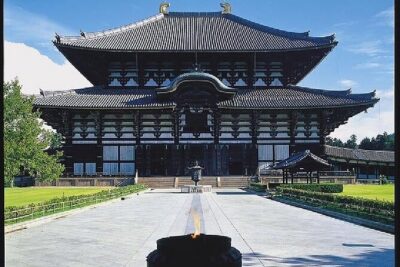
Nara, Fushimi Inari Taisha, Arashiyama Bus Tour
Read our review →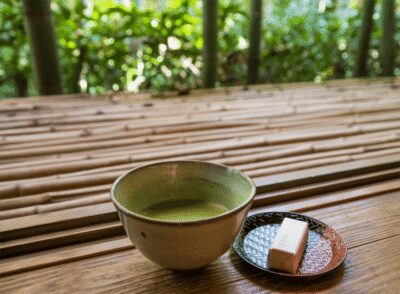
Arashiyama Bamboo, Temple, Monkeys, or Secret Sake Brewery
Read our review →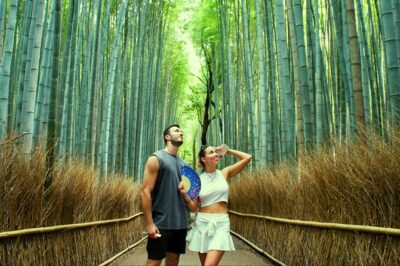
Arashiyama Bamboo Forest, Monkeys, Matcha & Temple Tour
Read our review →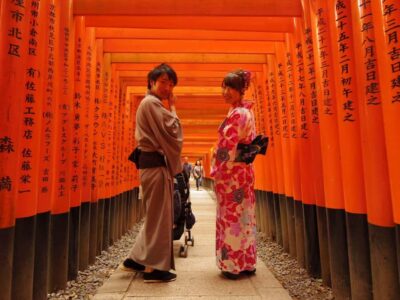
Arashiyama, Nara & Fushimi Inari Shrine w/Lunch
Read our review →
Nijo, Kinkaku-ji, Arashiyama, Kiyomizu & Fushimi Inari
Read our review →