Reviewed · FUSHIMI INARI SHRINE WALKS
Kyoto: Nijo, Kinkaku-ji, Arashiyama, Kiyomizu & Fushimi Inari
Kyoto in one long day, with a plan. This guided bus tour strings together Kyoto’s biggest-photo stops, so you can move fast between Arashiyama Bamboo Grove, Kinkaku-ji, Nijo Castle, Kiyomizu-dera, and Fushimi Inari Taisha, with guided commentary along the way.
I especially like the way the day is organized into clear chunks. You’ll get bilingual English and Spanish guidance plus time to explore on your own, including early access in Arashiyama. I also like the ticket flexibility for the temple sites that cost extra, because you can match the day to your interests without wasting time guessing what’s included.
One thing to plan for: it’s a long day. If the weather is hot, you may want to be extra serious about hydration and pacing, since the schedule moves from spot to spot for roughly 10 hours and 45 minutes total.
In This Review
- Key things that make this Kyoto day tour work
- One-Day Kyoto Highlights, Without the Routing Headache
- Where You Meet, and Why the Early Start Matters
- Arashiyama Bamboo Grove: Early Access and Fast Photo Wins
- Kinkaku-ji (Golden Pavilion): Where Tickets Can Change Your Day
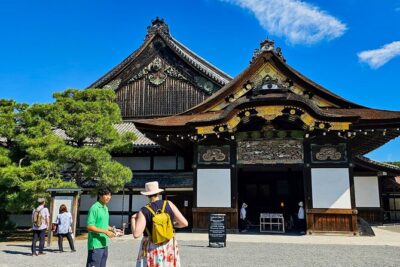
- Nijo Castle: UNESCO Architecture Plus Garden Time
- Kiyomizu-dera: Hillside Views and a Longer Temple Window
- Fushimi Inari Taisha: The Torii Walk You Can Keep Enjoying
- How the Guide Commentary Shapes the Day
- Lunch and Tickets: Choose the Option That Matches Your Priorities
- Price and What You Get for $51.80
- Who This Kyoto Bus Tour Fits Best
- Should You Book This Kyoto Highlights Bus Tour?
- FAQ
- What time does the tour start?
- How long is the Kyoto highlights bus tour?
- Where is the meeting point?
- How many people are in the group?
- Are the guides bilingual?
- Is admission to Kinkaku-ji included?
- Is lunch included?
- Are Arashiyama Bamboo Grove and Fushimi Inari included without paid admission?
- Can I cancel for a full refund?
Key things that make this Kyoto day tour work
- Early access for Arashiyama Bamboo Grove, timed to help you beat the worst of the crowds
- Bilingual guide support (English and Spanish) plus time for self-guided wandering
- Ticket options for Kinkaku-ji, Nijo Castle, and Kiyomizu-dera, so you can choose what you pay for
- Built-in free stops at Arashiyama Bamboo Grove and Fushimi Inari Taisha, so you’re not nickel-and-dimed
- A smallish group size, with a maximum of 30 travelers on board
One-Day Kyoto Highlights, Without the Routing Headache
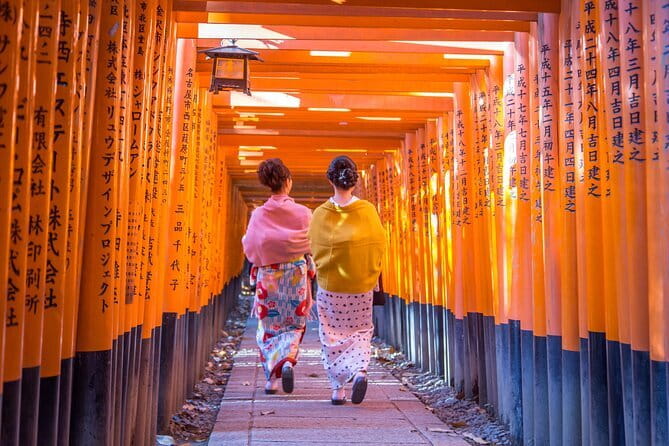
This is the kind of Kyoto tour you choose when you want results. You are not spending your morning drawing maps and recalculating bus lines. You get a morning start, guided drive time, and a sequence of major sights that fit together on one loop.
The value is not just “seeing famous places.” It’s the structure. Between the temple gates and garden stops, you also get commentary that helps the sights click into place, which makes the hours feel less like a checklist and more like a story you can follow.
The tour is operated by Amigo Tours Japan, and you’ll also appreciate that it’s capped at 30 travelers. That matters in Kyoto, where big groups can turn every walkway into a slow-moving traffic jam. A smaller bus group usually means fewer bottlenecks, especially when you’re switching sites.
Where You Meet, and Why the Early Start Matters
You meet at Hotel Keihan Kyoto Grande, in Minami Ward, near Kyoto Station (start point shown in the listing). The start time is 7:00 am, and the tour returns to the same meeting point.
Why that early start matters: Kyoto’s most popular photo spots fill up fast. Arashiyama Bamboo Grove is famous for a reason, and this tour schedules it first, with early access. That gives you a better shot at quieter walking and calmer photos, before the day gets crowded and hotter.
Also, the tour is long, so your strategy is simple. Think of it as a full-day “highlights pass.” If you normally like slow museum-style pacing, you might not love the constant motion. If you want to maximize what you see with limited time in Kyoto, the timing fits.
And yes, you’ll have a mobile ticket, which is a nice low-friction touch. Less paper clutter, fewer chances to misplace something in the morning rush.
Kinkaku-ji's gold roof over still water
- Kyoto: Fushimi Inari, Kinkakuji, Bamboo Grove 1 Day Bus Tour
★ 4.8 · 4,316 reviews - Osaka/Kyoto:Kinkakuji,Arashiyama,FushimiInariShrine,NaraPark
★ 4.1 · 1,596 reviews - Kyoto: Kinkakuji, Golden Pavilion Guided Tour
★ 4.7 · 71 reviews - Kyoto top must-see Golden pavilion and Bamboo forest half-day Private tour
★ 5.0 · 52 reviews
Arashiyama Bamboo Grove: Early Access and Fast Photo Wins
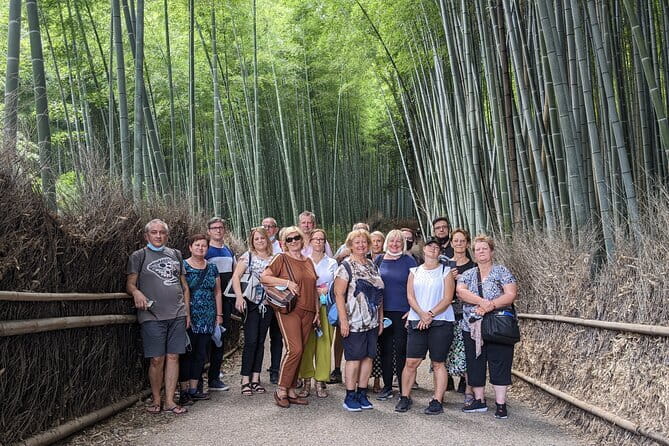
Your day begins with a drive toward Arashiyama, with a travel time of about 40 minutes. The stop itself, Arashiyama Bamboo Forest, runs about 1 hour 20 minutes.
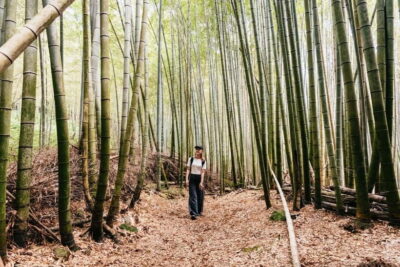
Here’s why this stop is worth prioritizing on a one-day plan. The bamboo grove is iconic for a reason: it’s visually dramatic, and it’s also one of those places where lighting and crowd levels change your entire experience. The tour’s early access helps you walk through before it becomes a slow shuffle.
Practical advice for this stop:
- Wear grippy shoes. You are walking among paths and visitors.
- Move at your pace. You get time to explore, not just pose and rush.
- If you care about photos, do a quick circuit first, then return for details once you know the flow.
Admissions are listed as free here, which is a bonus. You can spend your budget on the paid temples you truly want, instead of paying extra again and again.
Kinkaku-ji (Golden Pavilion): Where Tickets Can Change Your Day
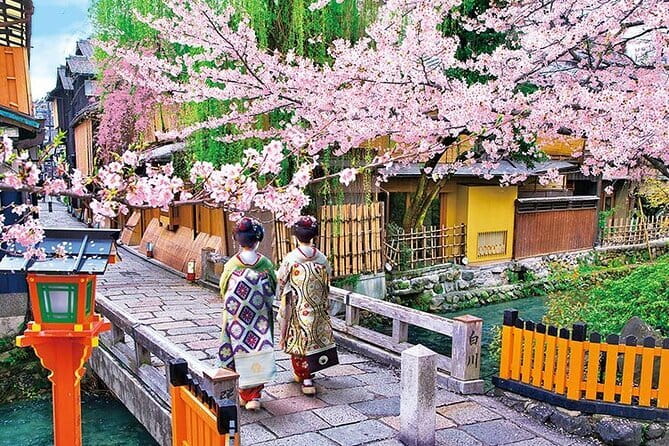
After Arashiyama, you head to Kinkaku-ji. The bus ride is about 30 minutes, and your time at the Golden Pavilion stop is listed as 45 minutes.
This is where the tour’s “ticket option” flexibility really matters. Kinkaku-ji admission is not included unless you select the option that covers it. So if Golden Pavilion is a must for you, don’t wing it. Pick the package that includes the ticket, or you might find yourself looking at something that you can’t fully enter.
What makes Kinkaku-ji special on a tight schedule is focus. In a day packed with multiple areas, this stop gives you a concentrated, high-impact sight. Even with a limited visit window, it’s the kind of place where the main views are obvious, and you can still get quality time without needing hours of wandering.
If you do choose the ticket, this stop becomes more than a photo. It’s one of the classic “Kyoto landmark” experiences you came for.
Nijo Castle: UNESCO Architecture Plus Garden Time

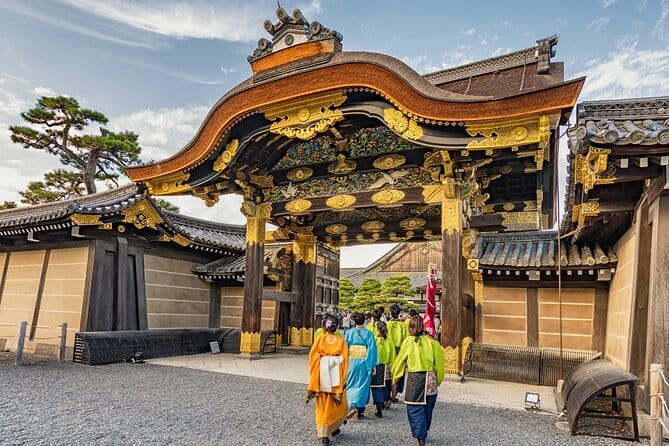
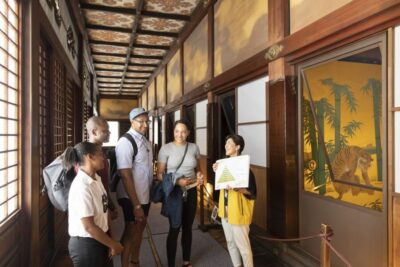
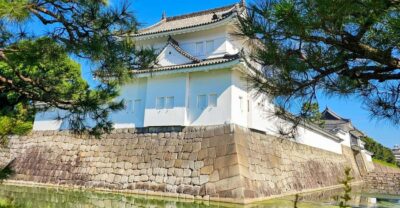
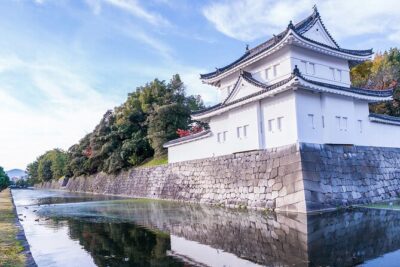
Next up is Nijo Castle, with about 1 hour 30 minutes on site. This is a UNESCO World Heritage stop, and the tour again treats the admission as optional.
That means: Nijo Castle admission is not included unless you bought the ticket option. So read your chosen package carefully. If you’re paying for a “highlights” day, you’ll probably want this one covered, because it’s listed as a key stop and it’s a major name in Kyoto.
What you’ll get from your time here is a mix of architecture and gardens, and the schedule gives you enough time to actually shift your pace. Unlike a rail-thin walkway full of torii gates, a castle-and-garden environment lets you pause, look, and reset.
Practical tip: if you’re tempted to rush this because the day feels busy, don’t. Nijo Castle is one of those places where slowing down for a few moments makes the whole stop feel more substantial, even within the allotted time.
Kiyomizu-dera: Hillside Views and a Longer Temple Window
Kiyomizu-dera is next, with a bus ride around 30 minutes and a site window of about 2 hours 30 minutes.
Admissions to Kiyomizu-dera are not included unless you select the option that includes it. So, just like Kinkaku-ji and Nijo Castle, your experience will depend on what you chose at booking.
What Kiyomizu-dera offers, based on the tour description, is a historic temple on a hillside with breathtaking views of Kyoto below. That “views” part is the key. This stop is not only about temple buildings. It’s also about getting that wide perspective that you miss if your day is only flat city walking.
The longer visit time compared to some other stops is helpful. It gives you breathing room to:
- take in the views when you want,
- find a viewpoint that suits your comfort,
- and slow down without feeling like the bus will leave immediately.
Wear comfortable shoes, because a hillside stop usually means you’ll be doing more walking on uneven ground than you might expect.
The wooden stage above the hillside
Fushimi Inari Taisha: The Torii Walk You Can Keep Enjoying

The final big sightseeing stop is Fushimi Inari Taisha, with about 30 minutes by bus and around 1 hour 30 minutes on site.
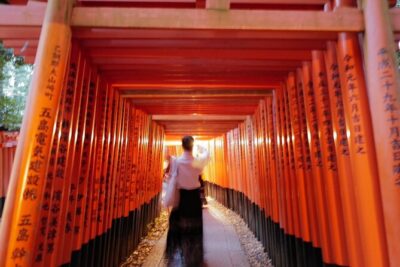
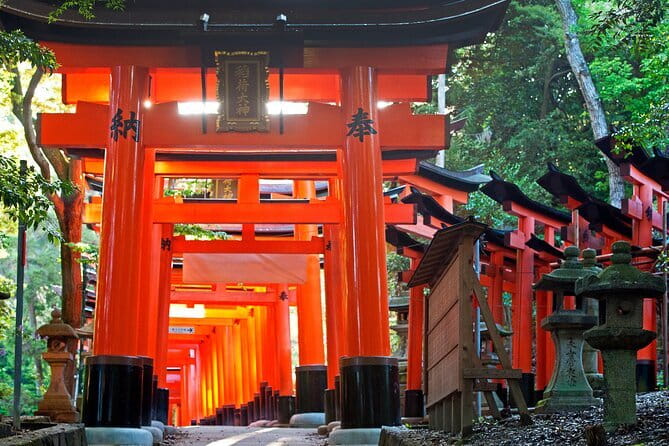
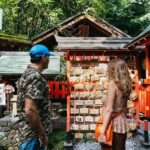
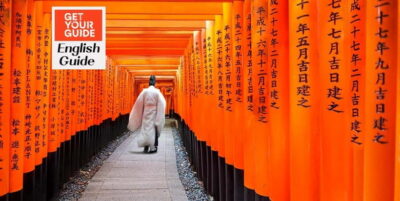
This one is listed as free admission. The big draw is the thousands of vermillion torii gates forming a mountain pathway. If you want a Kyoto experience that feels both playful and photogenic, this is it.
What I like about having Fushimi Inari as your late-day anchor: you can adapt your pace. The gates create a natural path for wandering, so you’re not stuck in a single room or a single garden corner. If you want more time taking photos, you can usually find it. If you want to keep it moving, the pathway helps you do that too.
One strong practical move: treat it like a walking stop. Bring water, and plan on taking short pauses if you’re in warm weather. The tour is schedule-driven, so you’ll feel better if you manage your energy yourself.
How the Guide Commentary Shapes the Day
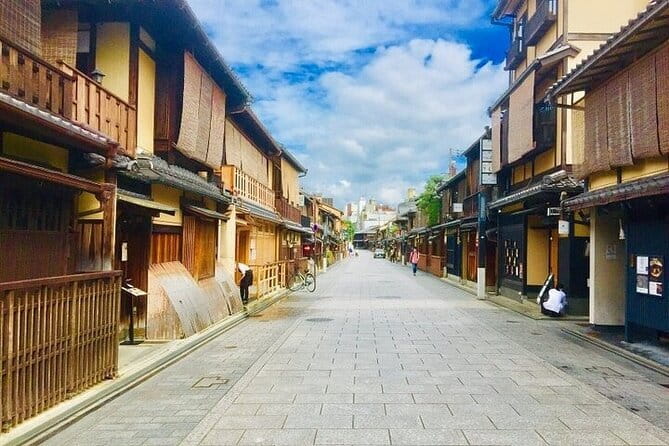
The tour experience isn’t only the places. It’s also the “what you’re looking at and why it matters” layer from the guide.
This tour includes a bilingual English and Spanish guide, and the guides are named in the information you provided, including Angeles, Cesar, and Paula. Across those examples, the consistent theme is that the guides combine local knowledge with enthusiasm, while still leaving you time to explore.
That balance is important. Too much guiding can turn Kyoto into a lecture hall. Too little guidance can make famous sights blur together. The best version of this tour is when the guide gives you enough context to make the sights feel connected, then lets you move at your own speed inside each stop.
One possible consideration: because it’s bilingual, your language may not feel 100 percent exclusive the whole time. Some people may find it annoying if they hear the same segment repeated in another language, or if the emphasis feels uneven. If language precision matters a lot to you, consider that before booking.
Lunch and Tickets: Choose the Option That Matches Your Priorities
The tour has options for which temple admissions are included and whether lunch is part of the day.
From the provided details:
- Golden Pavilion (Kinkaku-ji) is included only if you select that option
- Kiyomizu-dera is included only if you select that option
- Nijo Castle is included only if you select that option
- Lunch is included only in the Premium option
Why this matters for value: the base price is $51.80 per person, but your total day cost depends on which tickets you want covered. Arashiyama Bamboo Grove and Fushimi Inari Taisha are listed as free admission, so you can keep costs down if you’re flexible about which paid temples you enter.
If your top priority is Kyoto’s famous “must-sees,” you’ll likely want the ticket options for Kinkaku-ji, Nijo Castle, and Kiyomizu-dera. If your goal is mostly photos and wandering, you might choose fewer ticket add-ons to stay within budget.
For lunch: if you pick Premium, you gain convenience. On a long day with multiple stops, not having to locate a meal can be a real stress reducer.
Price and What You Get for $51.80
Let’s talk value in plain terms. At $51.80 per person, you are paying for more than sightseeing. You’re paying for:
- transportation from the meeting point,
- a guide with bilingual commentary,
- and a structured one-day route that hits major Kyoto landmarks.
Then you can layer in paid admissions and lunch based on your package.
This is a good deal if you want efficiency. It’s also a good deal if you like having someone else handle timing and route planning, especially on a day where you may otherwise lose hours figuring out transit.
It may not be the best fit if you want deep time at one place, or if you hate long travel between stops. Kyoto is not one-site-after-another for every reason. Some sights are best savored, and this format is more about coverage than slow immersion.
Who This Kyoto Bus Tour Fits Best
This tour fits best when you:
- have limited time in Kyoto and want a concentrated highlights run,
- like guided context but still want time to roam independently,
- prefer a bus loop over train and bus transfers on your own,
- and don’t mind that the day is long.
Most travelers can participate, and the group size is capped at 30, which helps keep the day manageable.
If you’re traveling with kids, pay attention to the day’s length and the need to hear the guide. There’s a note in your provided info that small kids can make it hard to hear commentary, so plan accordingly.
Also, since your day includes multiple walking and outdoor sections, hot-weather planning is smart. The tour is schedule-heavy. Bring what you need so heat does not turn your Kyoto day into a misery marathon.
Should You Book This Kyoto Highlights Bus Tour?
I’d book this tour if your goal is simple: see Kyoto’s headline sights in one day with less planning work and helpful commentary. The early access at Arashiyama is a real plus, and the free-entry stops (Arashiyama and Fushimi Inari) help the day feel efficient without stacking costs.
Choose it with care if you dislike long days or if you want very slow, detailed time at fewer locations. Also, double-check your ticket options. Kinkaku-ji, Nijo Castle, and Kiyomizu-dera only work fully when you select the right package coverage.
If you want a one-day Kyoto reset and you like the idea of moving through multiple famous sites with a guide keeping you on track, this is a solid way to do it. Just show up early, bring water, and plan to walk.
FAQ
What time does the tour start?
The tour starts at 7:00 am.
How long is the Kyoto highlights bus tour?
It runs for about 10 hours and 45 minutes.
Where is the meeting point?
You meet at Hotel Keihan Kyoto Grande, 601-8003 Kyoto, Minami Ward, Higashikujo Nishisannocho, 31 ホテル京阪 京都 グランデ ホテル2.
How many people are in the group?
The tour has a maximum of 30 travelers.
Are the guides bilingual?
Yes, the guide is bilingual in English and Spanish.
Is admission to Kinkaku-ji included?
Admission to the Golden Pavilion (Kinkaku-ji) is included only if you select the option for it.
Is lunch included?
Lunch is included only if you select the Premium option. Lunch may be added for other options.
Are Arashiyama Bamboo Grove and Fushimi Inari included without paid admission?
Yes. Arashiyama Bamboo Forest and Fushimi Inari Taisha Shrine are listed as admission ticket free stops.
Can I cancel for a full refund?
Yes. You can cancel for a full refund if you cancel at least 24 hours before the experience starts.
Fushimi Inari Shrine Walks
Nijo Castle Visits
New This Season
- Koyasan Day Trip by Private Car from Kyoto
- Old Port Town and Ultimate Sake Tasting Private Tour From Kyoto
- Sacred Peak & Ancient Paths: Kurama-Kibune Hiking Experience
- Kyoto’s Timeless Charm: 3hr Exploration of History and Peace
- Kyoto: 5 Types of Sushi Making
- Kyoto: Exclusive ZEN practice at Manpukuji temple in Uji
- Kyoto: Private Seasonal Aroma Yoga Class
- Traversing Kyoto’s Scenic West – Arashiyama to Kinkakuji
Fushimi Inari Shrine Walks, compared.

Fushimi Inari, Kinkakuji, Bamboo Grove 1 Day Bus Tour
Read our review →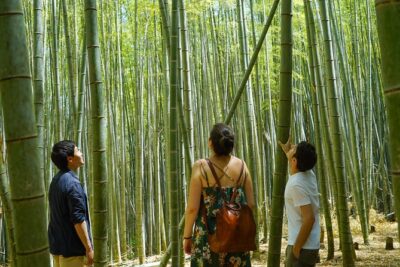
Fushimi Inari Hidden Hiking Tour (Private Option Available)
Read our review →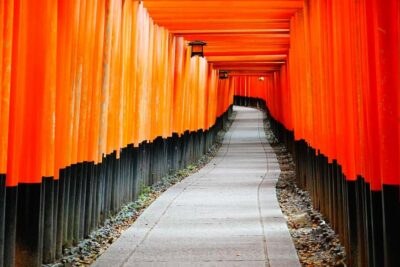
Kinkakuji,Arashiyama,FushimiInariShrine,NaraPark
Read our review →
Nara, Fushimi Inari Taisha, Arashiyama Bus Tour
Read our review →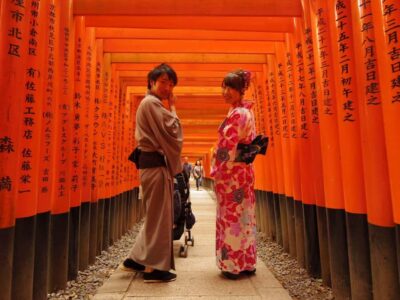
Arashiyama, Nara & Fushimi Inari Shrine w/Lunch
Read our review →
Nijo Castle, Kiyomizu & Fushimi Inari Guided Tour
Read our review →