Reviewed · FUSHIMI INARI SHRINE WALKS
Kyoto: 3-Hour Fushimi Inari Shrine Hidden Hiking Tour
Kyoto’s Fushimi Inari can feel like a red-colored crowd event. This tour turns it into a forest-hike day, starting at Tofukuji and sending you off paved paths for long stretches you just do not get on your own.
Two things I really like: first, the route keeps you out of the densest photo crush for most of the walk, so you can actually enjoy the shrine’s setting. Second, the guide focuses on how to move through the sacred space, including how to treat the torii gates with respect. Guides such as Jimmy and Hina stand out for explaining the rituals and pointing out details you’d miss.
One consideration: it is a real hike. You cover about 7 kilometers, with stairs and unpaved, sometimes slippery sections, plus bugs and mosquitoes since half the route is in the mountain. If you want a flat, easy stroll, this is probably not your thing.
In This Review
- Key things that make this Fushimi Inari tour worth your time
- Why Fushimi Inari feels different when you leave the main path
- Getting started at Tofukuji, and why the meeting point matters
- Quiet shrines, a neighborhood warm-up, and an easier mental gear shift
- Bamboo grove time: why it is more than pretty scenery
- The uphill viewpoint rhythm, plus what you should watch for
- Reaching the summit area: altars, torii focus, and respectful movement
- The return down forest trails and the second bamboo grove
- Ending at the base shrine, plus how to keep the day flowing
- Value and price: is $72 fair for 3 hours in Fushimi Inari?
- Who this tour suits best, and who should skip it
- What to pack: shade helps, but bring protection anyway
- Small-group feel: up to 9 people changes the whole pace
- A quick note on guide English
- FAQ
- What is the duration of the Kyoto 3-Hour Fushimi Inari Hidden Hiking Tour?
- Where do I meet the guide?
- How much walking is involved?
- What is included in the price?
- Is food included?
- What language is the tour guide speaking?
- Is this tour suitable for kids?
- Is this tour easy walking?
- What should I wear or bring?
- Are large bags allowed?
- Should you book this Fushimi Inari back-trail hike?
Key things that make this Fushimi Inari tour worth your time
- Off-paved forest trails for most of the hike, so you actually get quiet moments
- Bamboo grove detours on both the way up and the way back down
- Torii etiquette and shrine meaning, taught in plain, practical terms
- Small group size (up to 9), which makes stops feel personal instead of rushed
- Photo stops during the hike, not just one quick snap at the busiest area
- 7 km total walking, with effort, shade, and uneven ground
Why Fushimi Inari feels different when you leave the main path
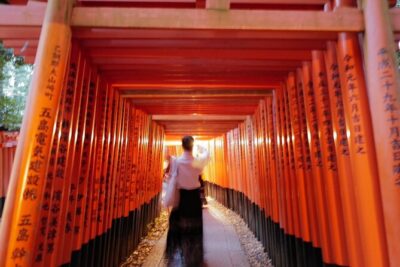
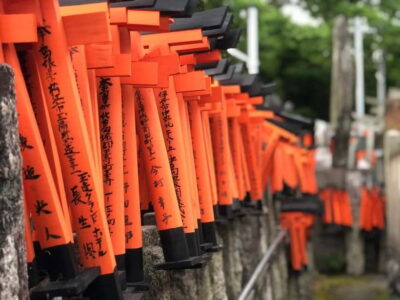
Fushimi Inari Shrine is famous for a reason. The thousands of red torii gates make a strong visual story as they climb and curve through the hillside. But if you only visit from the main approach, your day can turn into a slow shuffle, jostled by selfie timing and tour-group patterns.
What makes this experience special is that you see the shrine from the side routes first. You’ll start at Tofukuji and move through smaller shrines in quieter neighborhoods before the big torii corridor comes into play. Then, you come back down through forest trails and reach the well-known gate area from a different direction. The result is that the gates do not feel like a theme-park line. They feel like part of a living place.
I also like that the tour is built around walking time, not just sightseeing time. Since about half the hike is in wooded areas, you get relief from direct sun, and your mind stays on the scenery and the steps, not on finding shade.
Getting started at Tofukuji, and why the meeting point matters
The meeting point is at FamilyMart Nakai Tofukuji, outside Tofukuji Station Exit 2, right next to the store. This matters more than it sounds. Kyoto station exits can be confusing when you are rushing or navigating with limited Japanese. Arriving a few minutes early makes the start stress-free.
From there, you head into the surrounding neighborhood first. That early stretch is not filler. It sets the tone. You’re not immediately dropped into torii-gate crowds. Instead, you move at a calm pace past small shrines and local streets, which helps you ease into the shrine mindset before you start climbing.
Still climbing through the orange gates?
- Kyoto: Fushimi Inari, Kinkakuji, Bamboo Grove 1 Day Bus Tour
★ 4.8 · 4,316 reviews - Fushimi Inari Hidden Hiking Tour (Private Option Available)
★ 5.0 · 1,750 reviews - Osaka/Kyoto:Kinkakuji,Arashiyama,FushimiInariShrine,NaraPark
★ 4.1 · 1,596 reviews - Kyoto/Osaka: Nara, Fushimi Inari Taisha, Arashiyama Bus Tour
★ 4.7 · 1,275 reviews
Quiet shrines, a neighborhood warm-up, and an easier mental gear shift
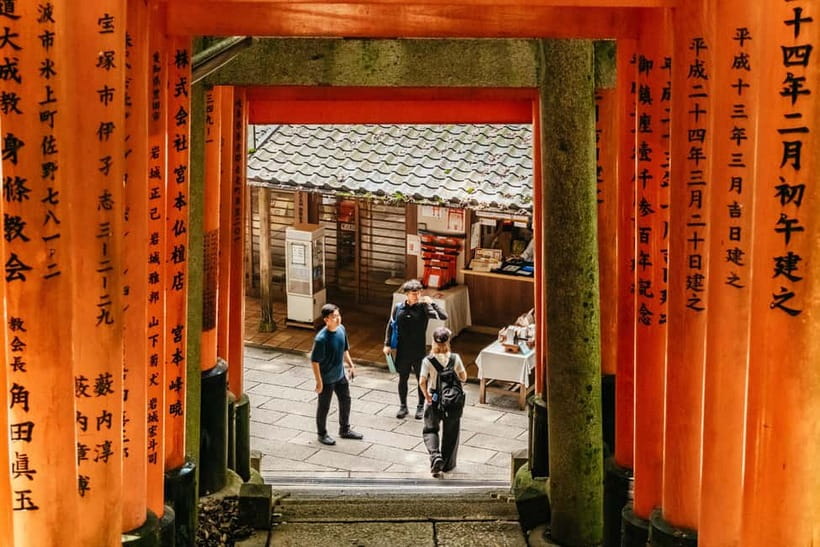
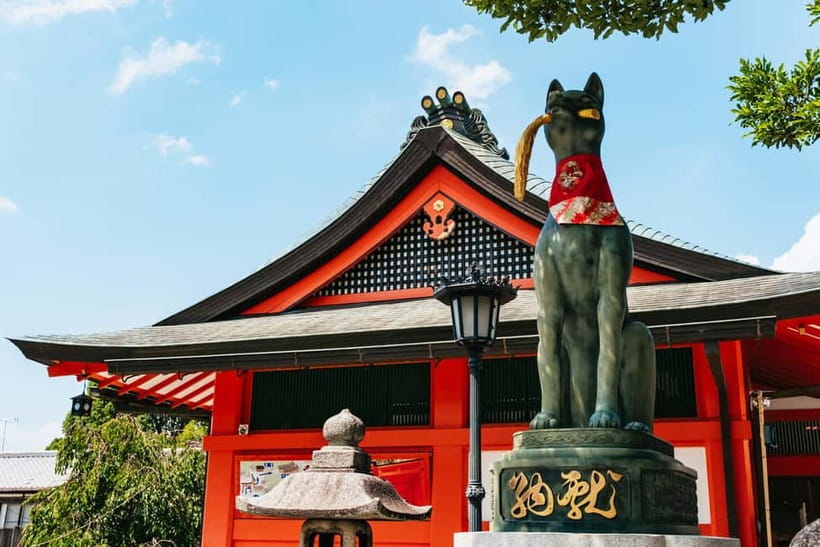
Early on, you visit a couple of smaller shrine spots as you work your way toward the mountain. Expect it to feel more like a local walk than a postcard stop. The guide uses these minutes to set context, so when you later see the larger shrine areas, you’re not just collecting images. You understand what you are seeing and why it matters.
In practice, this also helps your legs. The hike is not “push, push, push” right from the first minute. You ease into the rhythm: walk, quick stop, look around, then continue. It’s a smart pacing choice for a group hike.
Bamboo grove time: why it is more than pretty scenery
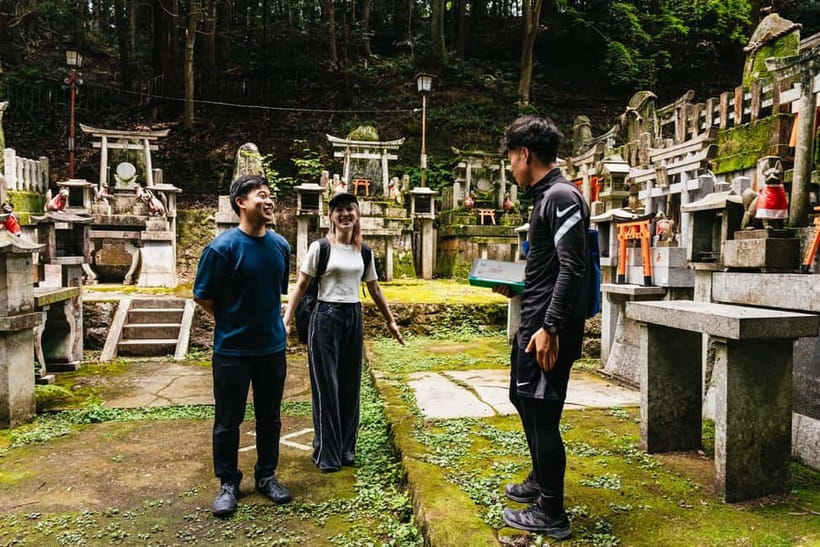
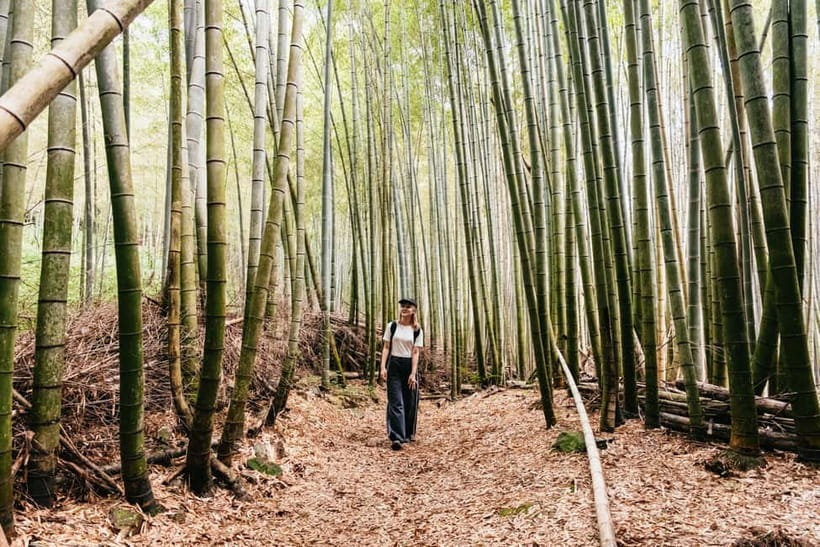
One of the most praised parts is the bamboo grove. You don’t just “pass by” it for a second. You actually take time to explore the grove area and step onto trails that feel like a different Kyoto.
Bamboo changes the whole atmosphere. Sound shifts. Light shifts. The air feels cooler under the canopy. And because this route avoids the main walkway for long stretches, the bamboo grove feels like a place you found, not a place everyone is walking through at the same time.
If you care about photos, this section gives you variety. You get calm, green-toned shots that do not look like the standard torii-gate images. And because the guide knows where to pause, you’ll spend less time searching and more time framing.
The uphill viewpoint rhythm, plus what you should watch for
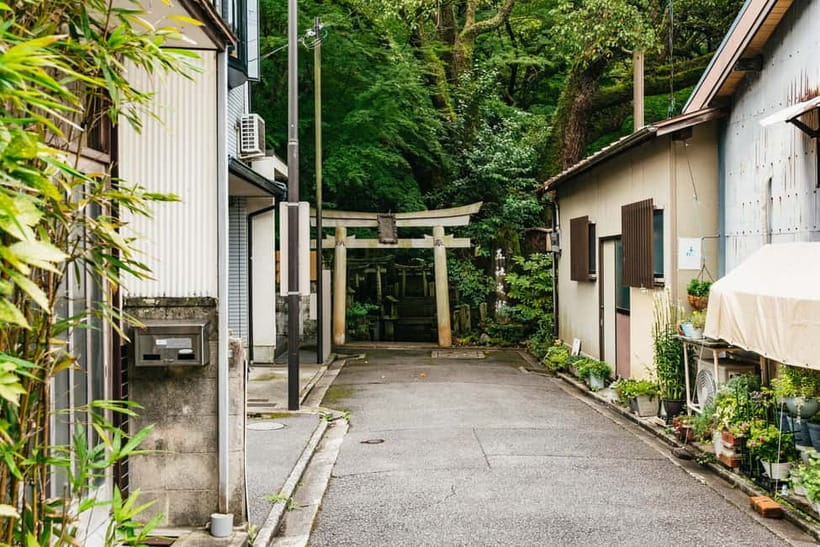
As you climb, you reach viewpoint moments where you can look over the shrine hillside and see how the torii gates thread through the slopes. The schedule has you at multiple key stops on the way up, including a longer viewpoint stretch and then another shorter one.
Here’s how I’d think about it: viewpoints are built into the walk to reset your pace. When the trail gets steeper, those pauses stop you from feeling like you are “only hiking.” You start thinking like a visitor again, not just a hiker.
Watch for ground conditions. The tour is not a smooth path the whole way. It includes stairs and uneven surfaces, and after rain the sections can feel muddy or slippery. Your best strategy is simple: smaller steps, slow breathing, and keep your attention on footing, especially during the downhill parts later.
Reaching the summit area: altars, torii focus, and respectful movement
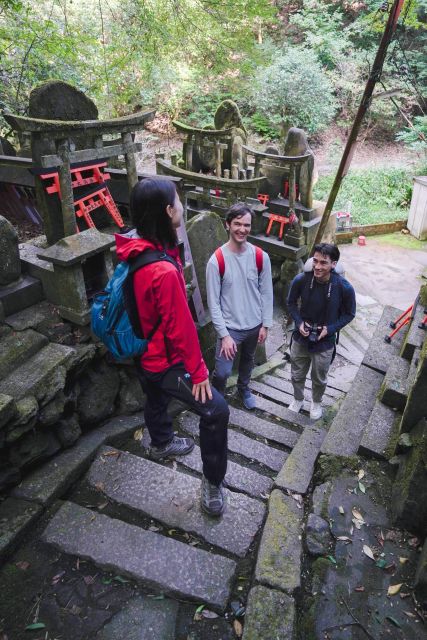
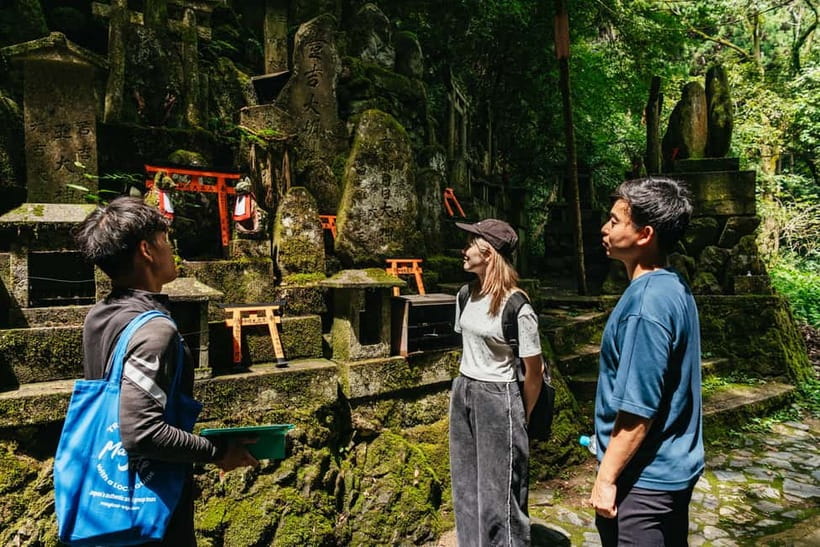
At the top, you reach the summit area that is covered in shrine altars. This is where the tour starts to feel distinctly different from a casual photo walk. Instead of rushing through gates, you move with a purpose: look, learn, and understand how people interact with the sacred spaces.
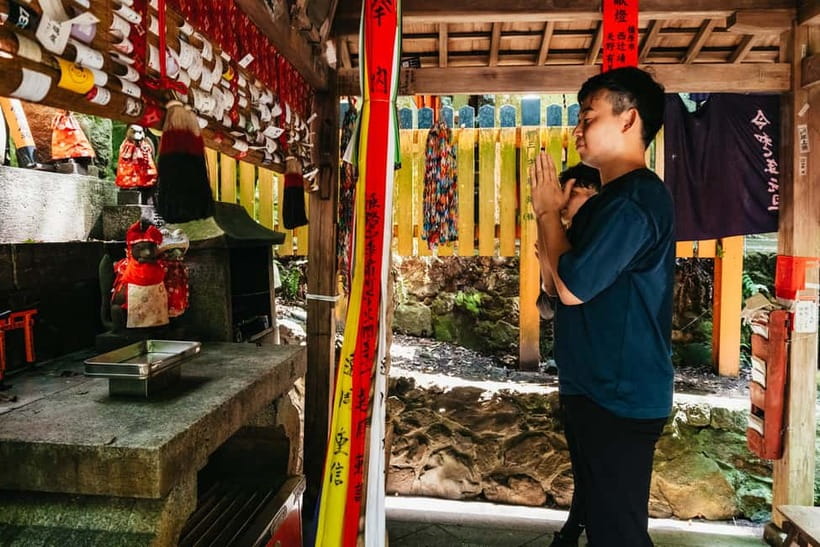
One reason people rate the experience so highly is the guide’s guidance on torii entry and shrine customs. Guides like Jimmy and Hina are noted for teaching how to enter respectfully, and how offerings and wishes work in this context.
Even if you’re not religious, the practical etiquette helps you slow down. You stop doing the wrong thing automatically, like walking through at full speed or forgetting that the gates are part of a ritual path, not just a backdrop. You’ll get a better sense of where to focus your attention, which makes your photos more meaningful, too.
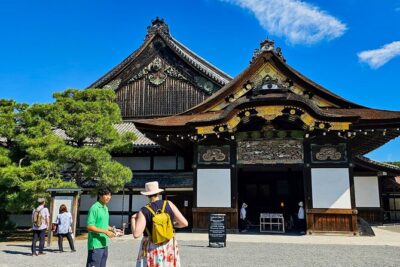
More rooftops worth a detour



The return down forest trails and the second bamboo grove
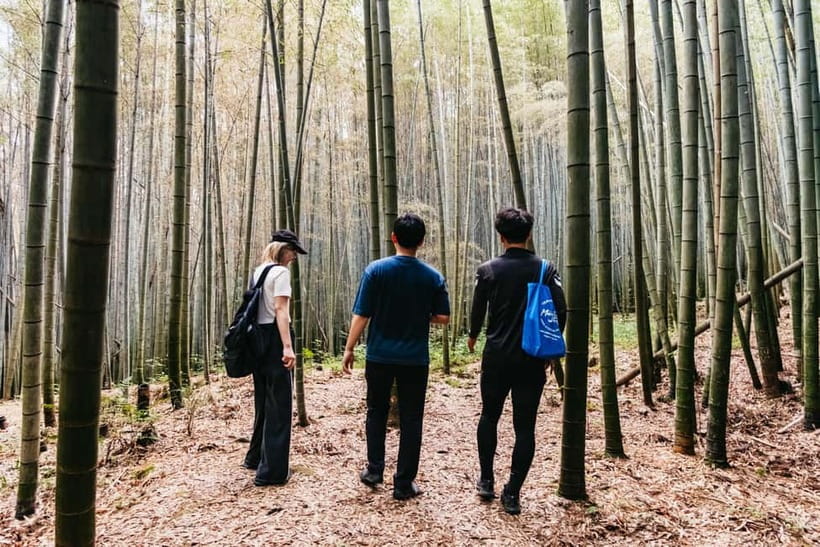
Going back down is where the tour really shows its planning. You do not retrace the exact same main path. Instead, you take a forested trail route that includes smaller shrines and leads you to another bamboo grove section.
This matters because it keeps the walk interesting. Even if you’ve already seen “torii gates in the distance,” the descent gives you new angles, different textures underfoot, and calmer moments.
Also, going down affects your energy. Stairs and uneven ground can feel harder on the knees than the uphill effort. If you have any knee sensitivity, take your time on descents and use the guide’s pace. It’s a moderate hike overall, but moderation is key on downhill segments.
Ending at the base shrine, plus how to keep the day flowing
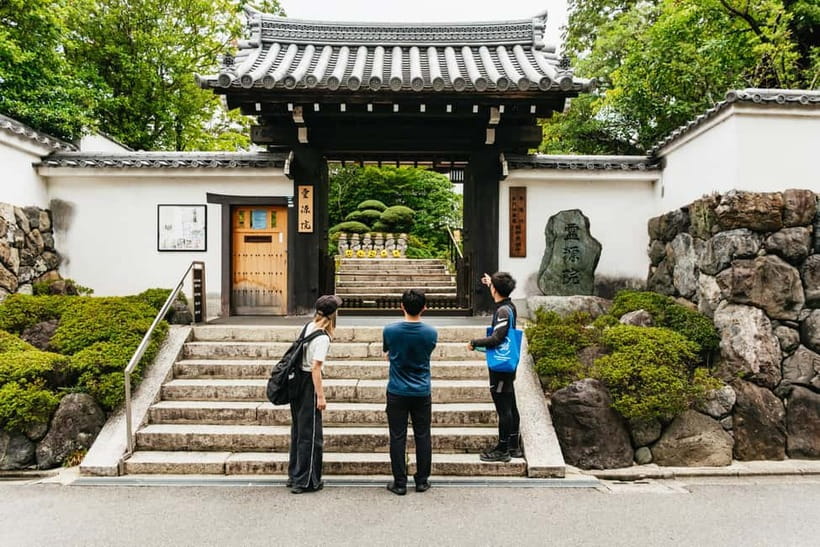
The tour finishes at the main shrine at the base of the mountain. This is the perfect moment to transition from hiking mode to Kyoto exploring mode. You can grab local street food there before continuing your day through Kyoto.
Think of it as a built-in rhythm: you earn the main gate views by hiking first, then you end with an easy reset at the base. It’s a nice flow if you plan to do other things after. You’re not stuck on the mountain past your energy limit.
Value and price: is $72 fair for 3 hours in Fushimi Inari?
At $72 per person for about 3 hours, you are paying for three things: a guided route off paved paths, a small group experience (up to 9), and included photos during the tour.
If you tried to do this on your own, you could technically walk the area and stumble onto quieter trails. But you’d lose the advantages that people rave about: the off-main-path timing, the navigation to less crowded routes, and the cultural context that makes the shrine feel more than a photo set.
Also, the guide isn’t just “pointing.” They are stopping you at the right moments, showing how to move through gates respectfully, and capturing images for you as you go. That included photo support is not free in practical terms. It saves you time and frustration, and it improves your chances of getting a decent shot without constantly handing your camera to strangers.
For $72, I think it’s strong value if you want both nature and shrine meaning, and if you’re the type who enjoys walking. If you want a purely relaxed shrine stroll, you may feel the price is too high for a hike you would rather skip.
Who this tour suits best, and who should skip it
This is best for you if:
- You enjoy walking and can handle uneven ground
- You want fewer people, especially during the bamboo and forest stretches
- You like guides who teach shrine etiquette and the meaning behind what you see
- You want photos but do not want to treat the day like a checklist
I’d skip it if:
- You have limited mobility or difficulty with stairs and rocky steps
- You need a low-effort, flat route
- You’re traveling with children under 8 (the tour says it is not suitable for children under 8)
If you’re an experienced walker, you’ll likely find it “moderate but real.” If you are a casual walker, go in with the mindset that it is a workout, not an easy promenade.
What to pack: shade helps, but bring protection anyway
Wear long-sleeved shirts and long pants. This is not about style. The trail goes into a mountain area with mosquitoes and bugs, and the tour strongly recommends long layers for comfort.
Other practical tips:
- Bring water if you’re the kind of person who gets thirsty on hikes. The tour does not include extra food or drink.
- Use shoes with solid grip. You’ll be on stairs and unpaved, sometimes slippery ground.
- Pack light. Luggage or large bags are not allowed.
One smart detail: since about half the tour is in forest shade, you won’t be dealing with constant direct sun. That’s a big plus in warmer months, and it helps keep your energy steady.
Small-group feel: up to 9 people changes the whole pace
This is a small-group tour capped at 9 people. That cap matters because it gives the guide room to manage slower moments and photo stops without turning the hike into a conveyor belt.
You also get better odds of getting individualized attention. Many people mention photo-taking during the walk, including getting pictures at scenic points, not just group shots.
If you’re the type who hates feeling rushed through sacred sites, this format is a good match. Stops feel like part of the journey, not interruptions to a stopwatch.
A quick note on guide English
The tour is in English with a live guide, but keep your expectations flexible. One traveler noted that an English explanation was brief. That likely means your experience depends on the specific guide that day.
The best approach for you: treat the guide as a translator of the place, even if explanations are short. When you see the gates, altars, bamboo, and small shrines, your eyes still do most of the work. And the walk itself speaks.
FAQ
What is the duration of the Kyoto 3-Hour Fushimi Inari Hidden Hiking Tour?
It lasts about 3 hours.
Where do I meet the guide?
Meet at FamilyMart Nakai Tofukuji, outside Tofukuji Station Exit 2 next to the store.
How much walking is involved?
The hike is approximately 7 kilometers total.
What is included in the price?
A local guide and photos during the tour are included.
Is food included?
No. Additional food and drink are not included, though you can enjoy local street food at the end near the main shrine.
What language is the tour guide speaking?
The tour is offered in English.
Is this tour suitable for kids?
Children younger than 8 must have permission of a parent or guardian before booking, and the tour is not suitable for children under 8.
Is this tour easy walking?
It is not a simple walk. The hike is not super difficult, but it requires moderate fitness and includes stairs and uneven trails.
What should I wear or bring?
Wear long-sleeved shirts and long pants. Long layers are strongly recommended due to mosquitoes and bugs. Wear appropriate footwear for uneven terrain.
Are large bags allowed?
No. Luggage or large bags are not allowed.
Should you book this Fushimi Inari back-trail hike?
Book it if you want the gates and shrines, but you also want the mountain quiet, the bamboo grove atmosphere, and a guided route that keeps you away from the densest tourist crush for most of the hike. The included photos and the cultural guidance on torii etiquette are real value, not just add-ons.
Skip it if you want a low-effort stroll, have mobility limits, or you plan to do the whole day on minimal walking stamina. This is a hike with shade, steps, and some rougher ground, and it works best when you show up ready to move.
Hiking Around Kyoto
More 3-Hour Experiences in Kyoto


New This Season
- Koyasan Day Trip by Private Car from Kyoto
- Old Port Town and Ultimate Sake Tasting Private Tour From Kyoto
- Kyoto: 5 Types of Sushi Making
- Sacred Peak & Ancient Paths: Kurama-Kibune Hiking Experience
- Kyoto’s Timeless Charm: 3hr Exploration of History and Peace
- Kyoto: Exclusive ZEN practice at Manpukuji temple in Uji
- Kyoto: Private Seasonal Aroma Yoga Class
- Traversing Kyoto’s Scenic West – Arashiyama to Kinkakuji
Fushimi Inari Shrine Walks, compared.

Fushimi Inari, Kinkakuji, Bamboo Grove 1 Day Bus Tour
Read our review →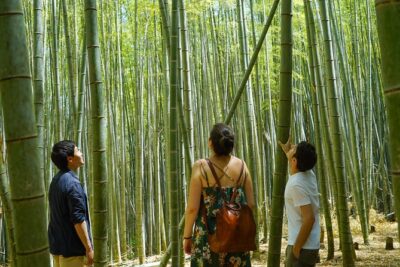
Fushimi Inari Hidden Hiking Tour (Private Option Available)
Read our review →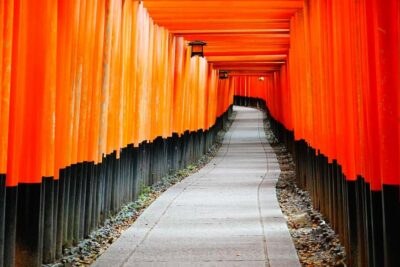
Kinkakuji,Arashiyama,FushimiInariShrine,NaraPark
Read our review →
Nara, Fushimi Inari Taisha, Arashiyama Bus Tour
Read our review →
Arashiyama, Nara & Fushimi Inari Shrine w/Lunch
Read our review →
Nijo Castle, Kiyomizu & Fushimi Inari Guided Tour
Read our review →
Nijo, Kinkaku-ji, Arashiyama, Kiyomizu & Fushimi Inari
Read our review →