
Reviewed · TEA CEREMONIES
Kyoto: Tea Ceremony Ju-An at Jotokuji Temple
Kyoto slows down for matcha. This chanoyu tea experience at Jotoku-ji Temple lets you step into the calm pace of Japanese ceremony, with a short, clear English-guided workshop that still feels traditional and meaningful. It starts outside, moves through the temple atmosphere, and ends inside the Grand Tearoom where the Tea Master runs the ritual step by step.
I especially love two things. First, you get the temple setting, including the purification ritual and the chance to admire the architecture before you sit down. Second, you do more than watch, you actually learn how to prepare and drink matcha, with patient instruction from the Tea Master and their team, including English support often led by hosts such as Kate and Yaki.
One possible drawback: the tearoom is not wheelchair accessible because there are three steps, and it also uses traditional floor seating. They can provide stools for those who are not comfortable sitting on the floor, but the space still is not designed for wheelchairs.
In This Review
- Key Highlights You Will Care About
- Kyoto Tea Ceremony Ju-An at Jotoku-ji, What It Really Feels Like
- Finding the Meeting Point and Getting Oriented Fast
- Temple Walk-Through, Architecture, and the Purification Moment
- Inside the Grand Tearoom, Shoes Off and Seating Options
- The Tea Master Demonstration, Then You Try It
- Learning the History and the Why Behind the Ritual
- How Long Is It, and What You Are Getting for $29
- What the Small Group Size Changes
- Who This Kyoto Tea Ceremony Is Best For
- Practical Tips That Make the Experience Easier
- The Bottom Line, Should You Book This?
- FAQ
- What is the price of the Kyoto tea ceremony?
- How long is the tea ceremony experience?
- Where do I meet for the tour?
- Is the tea ceremony taught in English?
- What is included in the price?
- Are meals included?
- Is kimono included?
- What happens if it rains?
- Is it wheelchair accessible?
Key Highlights You Will Care About
- Jotoku-ji Temple first, then tea, so the ceremony is tied to place, not just a standalone show
- Purification ritual before matcha, a meaningful start that sets the mood
- Small group up to 10, so your questions actually get answered
- Tea Master instruction you can follow, with guided steps you can try yourself
- Rain backup options, so the experience does not shut down if weather turns
- English support, with hosts such as Kate and Yaki showing you the what and the why
Kyoto Tea Ceremony Ju-An at Jotoku-ji, What It Really Feels Like
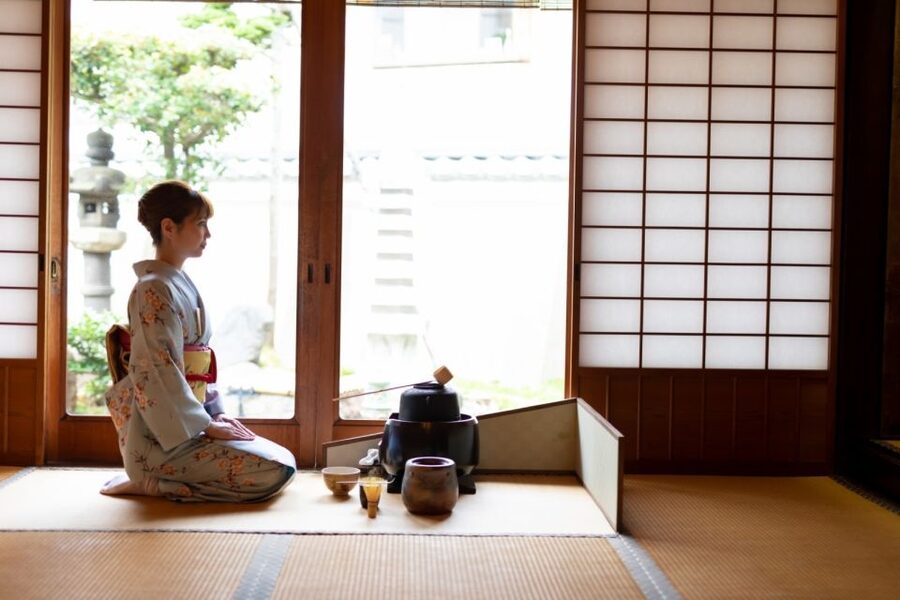
If Kyoto’s streets feel a bit too loud, this is the kind of activity that helps you reset. The pace is slower by design. In about 70 minutes, you move from temple grounds into the Grand Tearoom, and the whole experience is built around one simple goal: learning how to make and drink matcha correctly, and understanding why each gesture matters.
The setting helps a lot. You are not doing this in a studio. You begin at the main gates of Jotoku-ji Temple, so you are already in the right frame of mind before the first bowl ever appears. From there, the guide brings you through practical steps, and the Tea Master handles the ceremony itself with a calm, exact style.
And even if you know nothing about tea, you are not going to feel lost. The English instruction is repeated in a way that makes the ritual feel clear, not mysterious.
Finding the Meeting Point and Getting Oriented Fast
The meeting point is at Tea Ceremony Juan, 556, Gojo-sagaru, Tominokoji Dori, Shimogyo-Ku, Kyoto.
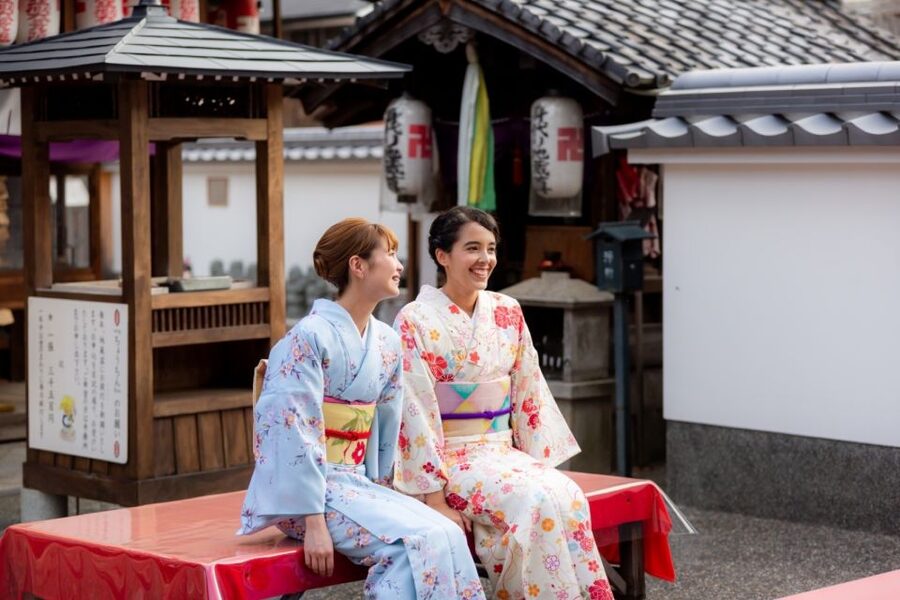
Once you arrive at Jotoku-ji Temple, you meet with your guide at the nearby red benches where you can settle in and get a quick sense of the flow. The directions are simple: once you are inside the temple grounds, you face the Main Hall, and you look to the left to find the steps that give access to the tea room.
This matters because tea ceremonies can feel intimidating if you arrive late or unsure where to go. Here, you get a clear handoff from the temple entrance to the tea space.
Tip: go a bit early. Even if the schedule is tight, arriving early helps you stay relaxed, and that is half the point of doing a ceremony like this in the first place.
More rooftops worth a detour
- Arashiyama Bamboo, Temple, Monkeys, or Secret Sake Brewery
★ 4.8 · 886 reviews - Kyoto: Arashiyama Bamboo Forest, Monkeys, Matcha & Temple Tour
★ 5.0 · 759 reviews - Osaka/Kyoto: Arashiyama, Nara & Fushimi Inari Shrine w/Lunch
★ 4.4 · 754 reviews - Kyoto Zen Meditation & Garden Tour at a Zen Temple with Lunch
★ 5.0 · 441 reviews
Temple Walk-Through, Architecture, and the Purification Moment
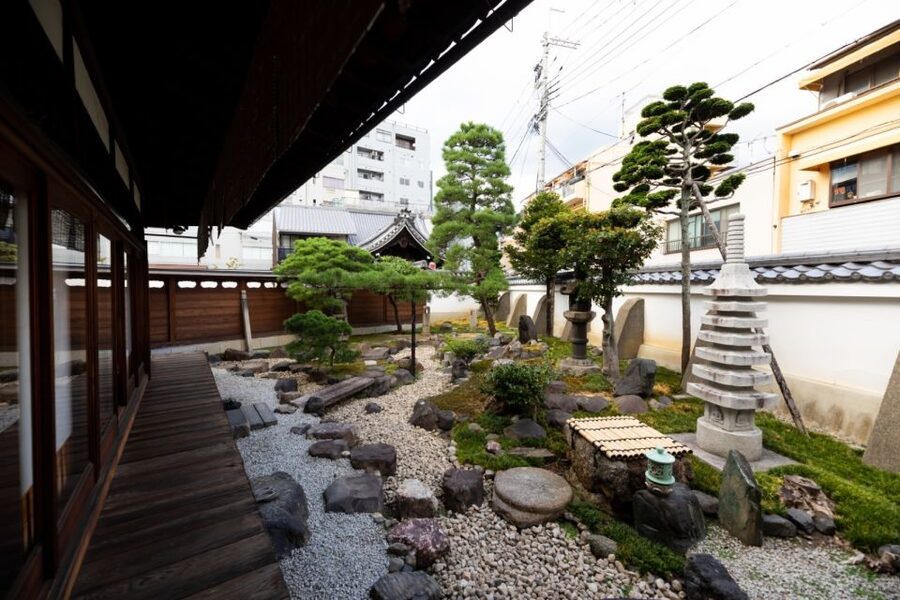
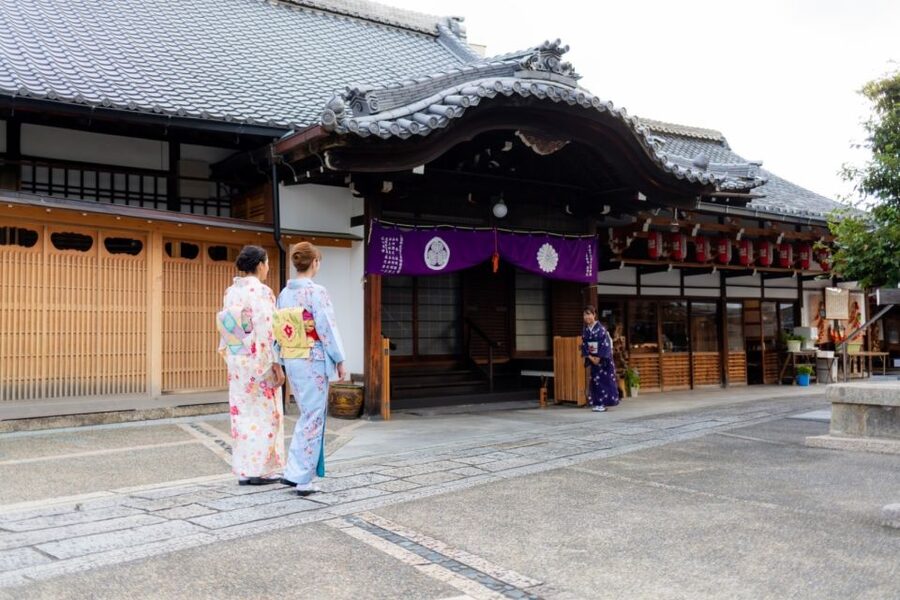
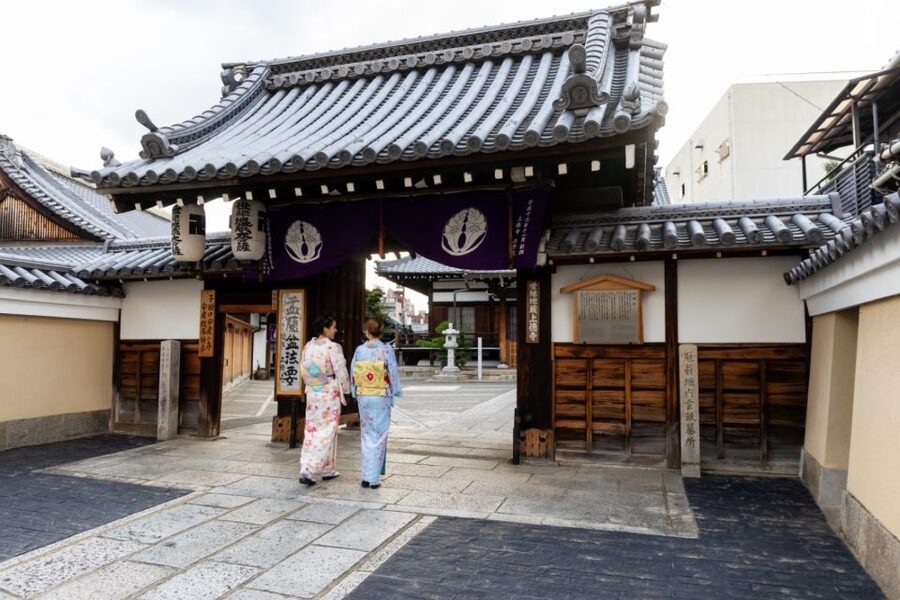
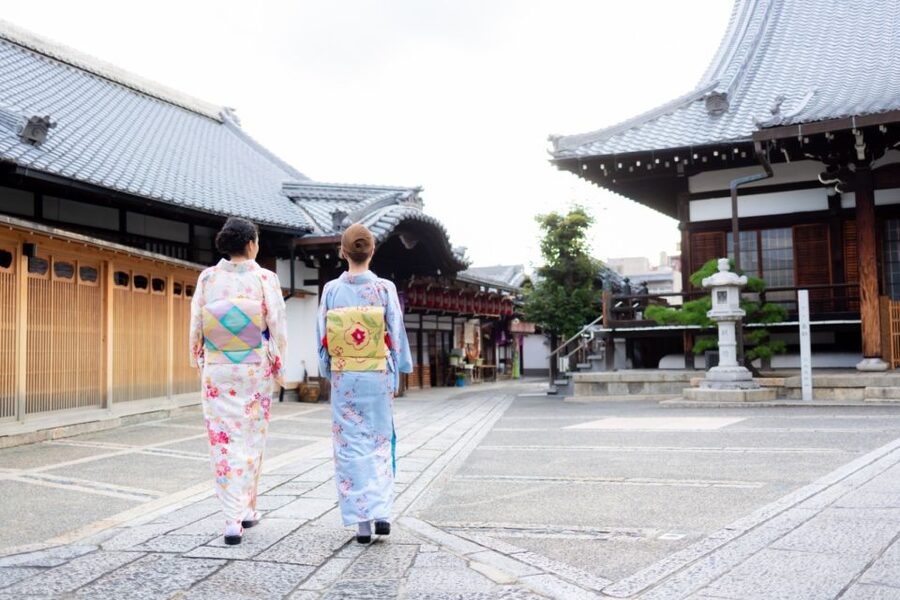
Before you sit down, you do a short temple sequence that sets the tone. You enter through the main gates, pass the entrance to the Grand Tearoom, and walk by a parish shop area on the way to your meeting spot. Along the way, you are free to admire the architecture and pause near the purification fountain.
This is not a long sightseeing stop. It is more like a quiet preface. You get to look around at the temple elements while your guide explains the context, and you are encouraged to take your time when weather allows.
Weather note: if it is raining, you are not forced to stand out. You can stand outside under the gable of the shop, or wait in the Grand Tearoom until it is time to begin.
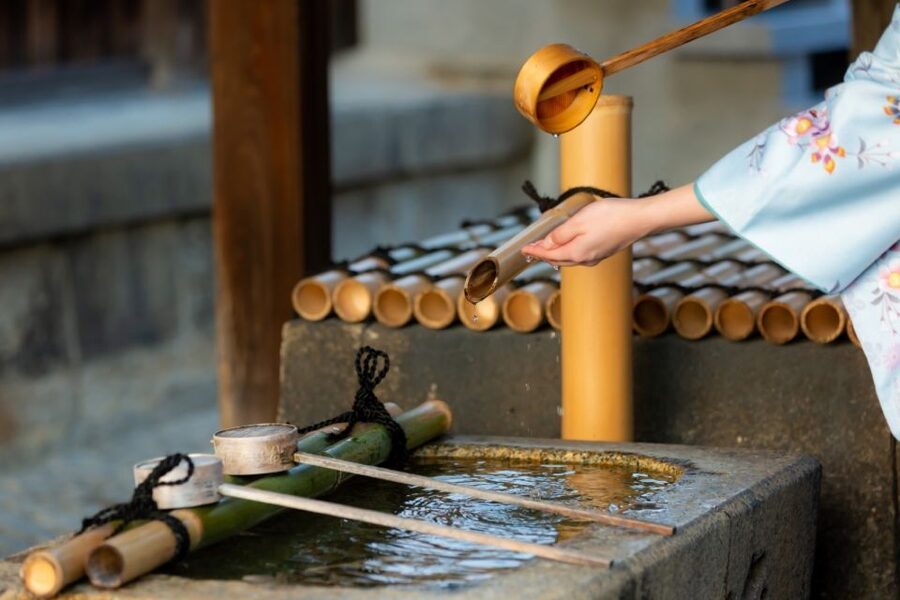
Then comes the key start: you begin the workshop with a traditional purification ritual. For Western visitors, this is often the part that surprises people most, because it is not about matcha yet. It is about resetting your behavior and attention, so the later steps do not feel random. The whole ceremony reads like a sequence with intention, not just a checklist of tea tools.
Inside the Grand Tearoom, Shoes Off and Seating Options
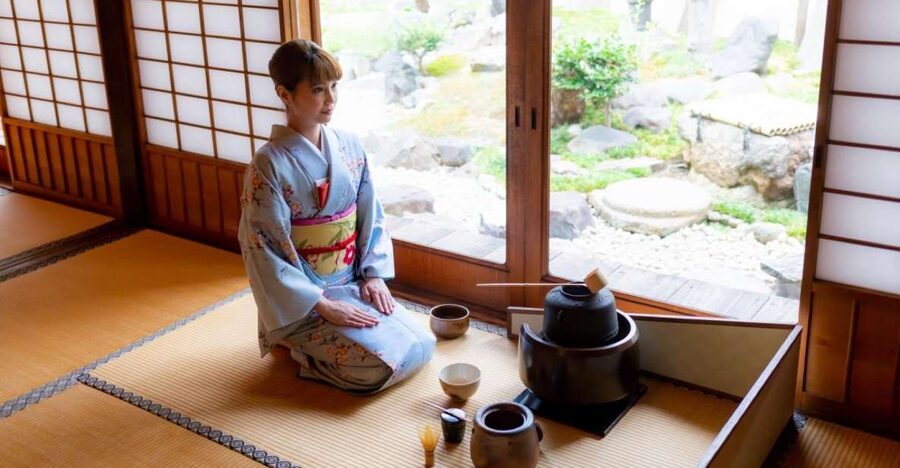
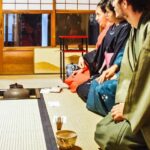
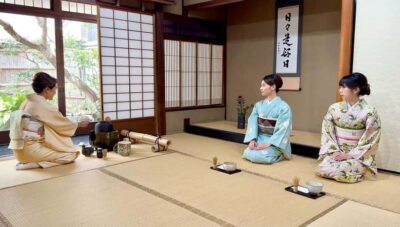
Once it is time to enter the Grand Tearoom, you remove your shoes at the entrance. Your group proceeds inside to your seats.
Here is the practical consideration you should plan for: the tearoom is wheelchair accessible only up to the temple area. The tearoom itself has three steps, so wheelchairs are not a good fit for this activity.
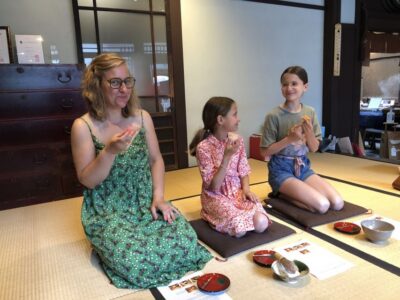
Good news for most people: if you are not comfortable sitting on the floor in the traditional position, seats and stools can be provided. That detail makes a difference. You can focus on learning the ceremony instead of fighting your legs the whole time.
If you do use floor seating, wear something that is comfortable for a kneeling or seiza-like position. The ceremony is short, but your body still needs to be able to stay steady for the tea steps.
The Tea Master Demonstration, Then You Try It
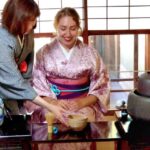
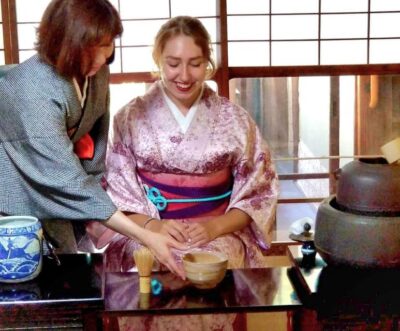
This is where the experience earns its high marks. The Tea Master guides you through every step of matcha preparation, explaining what you are doing and why it matters. You get a chance to see matcha prepared properly, then you get hands-on practice so you are not just a spectator.
You should expect to learn the basics of matcha making in a structured way. The guide and Tea Master explain the fine art of drinking matcha, including the importance of the ceremony as a way of valuing calm attention, respect, and mindful timing.
From the feedback, many people really react to the care in the teaching. The host team often slows down for questions, and instruction is delivered in a way that helps you get it, even if you have never touched a tea whisk before.
Also, you are not only tasting plain matcha. The experience includes matcha tea, and many people note that sweets are part of the calm setup during the workshop. It is a nice pairing in a temple setting, and it helps you treat the ceremony like a full small ritual rather than a quick sip and leave.
Learning the History and the Why Behind the Ritual
You might think a tea ceremony is mostly hand motions and pretty bowls. It is that, but the cultural context is what makes it stick.
The hosts typically explain the importance of the ceremony and the meaning behind how you handle the utensils and how you drink. People frequently describe the experience as more than learning matcha, it is learning a small chunk of Japanese life philosophy.
I like how this workshop does not try to make you feel like you need to perform. It teaches you to understand the purpose of the steps, so you can participate with respect. Even when you are clumsy the first time, you are guided back into the correct flow.
In sessions supported by English hosts such as Kate and Yaki, you often get a combination of temple context and clear translation, so you do not miss the thread of the story.
More bowls, poured the traditional way
How Long Is It, and What You Are Getting for $29
The duration is 70 minutes, which is short compared with the longer tea gatherings you might hear about elsewhere in Japan. But that is not a deal breaker here. You are buying a focused introduction with real participation, not a multi-hour deep dive.
Price check: $29 per person includes a tour guide and the chanoyu workshop ceremony. Considering that you are paying for English instruction plus the Tea Master’s time, and you get hands-on guidance inside a temple tearoom setting, it is solid value for Kyoto.
What you are not paying for: meals. Also, kimono is not included, though it can be rented separately. If you want to look the part, kimono rental can be a fun add-on, but it is not required to enjoy the core experience.
What the Small Group Size Changes
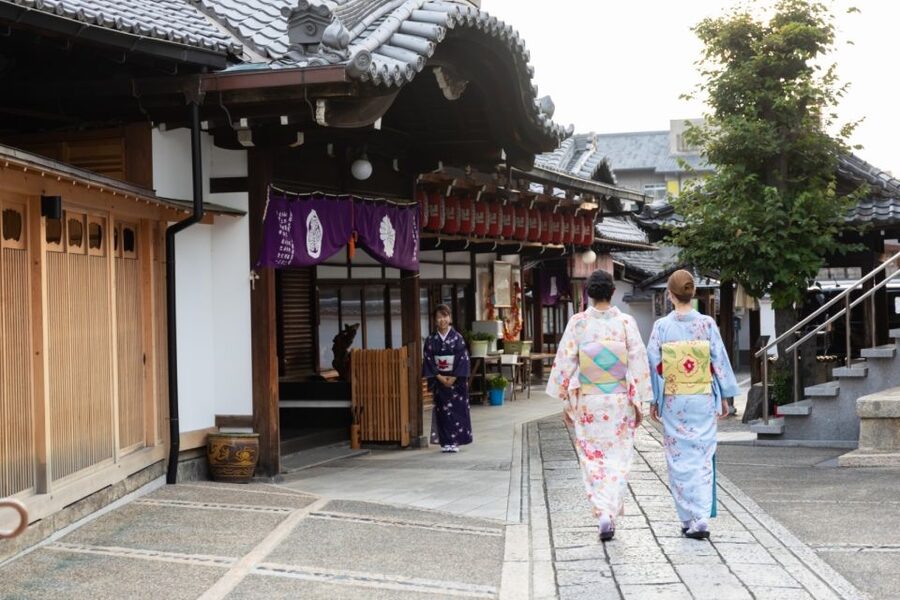
One of the most practical perks is that it is a small group limited to 10 participants. That size is just big enough for an atmosphere, small enough for attention.
In a group this size, you can ask questions about matcha preparation, utensil handling, or what the steps mean. You can also get help if your grip or timing is off while you practice. That matters because tea ceremony is detail work. The difference between a good bowl and a mediocre one can be small, and you do not get to learn that if the instructor only has time for a quick demo.
Who This Kyoto Tea Ceremony Is Best For
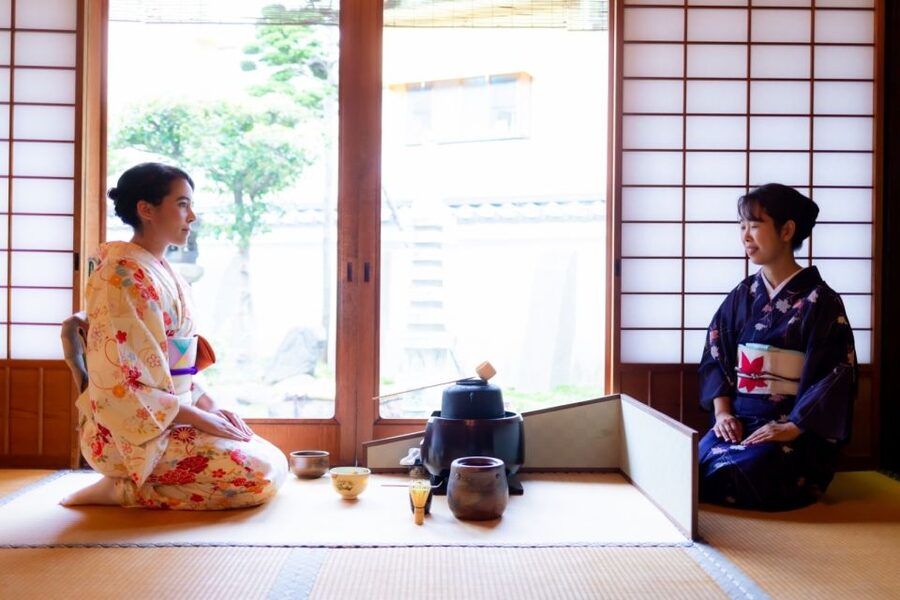
This is a great choice if you want a change of pace from shrine lines and photo stops. It is also a strong option for couples, solo travelers, and anyone who appreciates calm structure.
You will likely enjoy it most if:
- You want an authentic cultural experience tied to a real temple setting
- You like hands-on activities instead of watching from the sidelines
- You want English guidance and a clear explanation of what you are doing
- You are looking for a low-stress morning or afternoon activity that still feels special
You might want to rethink it if:
- You need wheelchair access to the tearoom area, since there are three steps
- You cannot sit on the floor at all, though stools can help for many guests
Practical Tips That Make the Experience Easier
A few small things can help you enjoy this more.
- Plan for shoe removal. Go in with clothing that is easy to slip into and out of.
- Choose comfortable clothes for floor seating, even if stools are available.
- Keep your questions ready. The best part of small groups is the time you get to ask.
- Arrive early enough to settle your nerves. Tea ceremony is calm, and that works better when you are not rushing.
Also, if rain is in the forecast, remember the temple has contingency options, including shelter and waiting in the Grand Tearoom.
The Bottom Line, Should You Book This?
I think Kyoto Tea Ceremony Ju-An at Jotoku-ji Temple is a smart booking for most visitors because it hits the sweet spot: temple atmosphere, purification ritual, English instruction, and actual participation in making matcha, all in a reasonable 70 minutes.
Book it if you want a respectful, structured introduction to chanoyu that still feels real, not staged. Pass or pick an alternative if you need wheelchair access to the tearoom or if floor seating is a deal breaker for you.
If you are doing Kyoto on a busy schedule, this is one of the best ways to slow down for an hour, learn something you can actually practice later, and leave feeling noticeably calmer than when you arrived.
FAQ
What is the price of the Kyoto tea ceremony?
It costs $29 per person.
How long is the tea ceremony experience?
The duration is 70 minutes.
Where do I meet for the tour?
You meet at Tea Ceremony Juan, 556, Gojo-sagaru, Tominokoji Dori, Shimogyo-Ku, Kyoto. Once inside the temple, you meet facing the Main Hall and look for the red benches area where your guide awaits.
Is the tea ceremony taught in English?
Yes. The instructor is English.
What is included in the price?
The price includes a tour guide and the chanoyu workshop ceremony.
Are meals included?
No. Meals are not included.
Is kimono included?
No. Kimono is not included, but it can be rented separately.
What happens if it rains?
Weather permitting, you can sit at the red benches. If it rains, you can stand outside under the gable of the shop or wait in the Grand Tearoom.
Is it wheelchair accessible?
The temple is wheelchair accessible, but the tearoom is not because there are three steps. Seats and stools can be provided for those not comfortable sitting on the floor.
New This Season
- Koyasan Day Trip by Private Car from Kyoto
- Old Port Town and Ultimate Sake Tasting Private Tour From Kyoto
- Kyoto’s Timeless Charm: 3hr Exploration of History and Peace
- Kyoto: 5 Types of Sushi Making
- Sacred Peak & Ancient Paths: Kurama-Kibune Hiking Experience
- Kyoto: Exclusive ZEN practice at Manpukuji temple in Uji
- Kyoto: Private Seasonal Aroma Yoga Class
- Traversing Kyoto’s Scenic West – Arashiyama to Kinkakuji
Tea Ceremonies, compared.
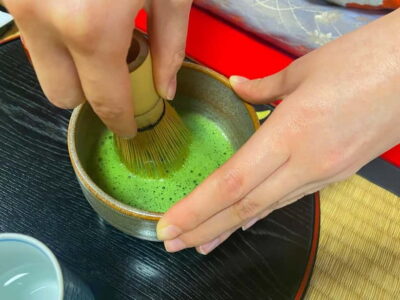
Tea Ceremony in a Traditional Tea House in Kiyomizu
Read our review →
Kimono Tea Ceremony at Kyoto Maikoya, NISHIKI
Read our review →
Tea Ceremony in 100-year-old Kyo-Machiya Townhouse
Read our review →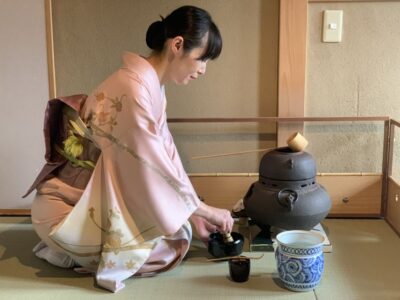
Tea Ceremony Meditation – Make Matcha with Tea Master
Read our review →Also filed under