
Reviewed · TEA CEREMONIES
Kyoto: Tea Ceremony Experience
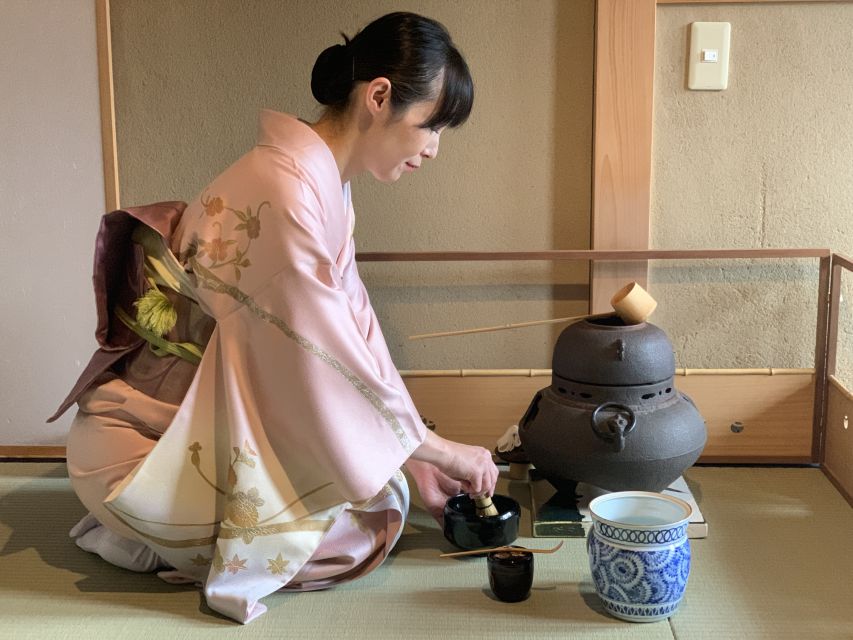
Matcha calm in the middle of Kyoto. In this Higashiyama tea ceremony, you learn the real rhythm of making matcha, and you get to whisk your own bowl with a host guiding you step by step. I like that it is short, structured, and hands-on, and one practical heads-up is that you may be asked to sit on the floor for close to 40 minutes.
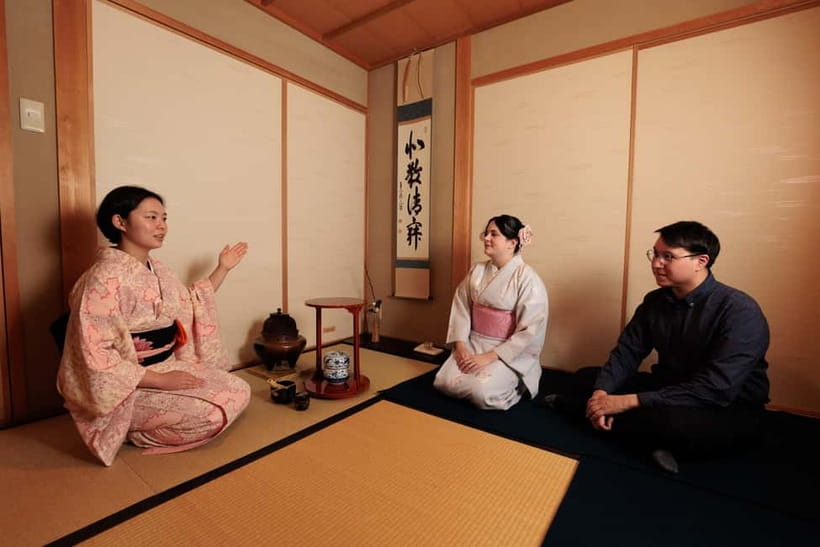
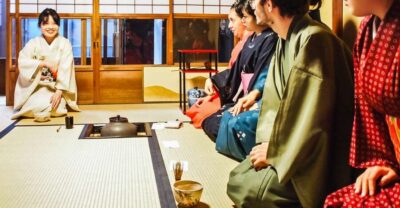
The setting helps too. You start in a traditional machiya house near Ninenzaka, then you watch the ceremony with attention to the utensils and the room setup, not just the drink. If you end up with an instructor like Ikuko, you can expect clear English and a friendly, patient pace, and you can even ask about the three schools of tea ceremony while you enjoy a seasonal sweet.
One more thing to plan for: the tearoom is upstairs. Good news, chairs and tables are available if floor sitting is tough, and there is also a wheelchair-accessible Garden Teahouse option if you need it.
In This Review
- Key takeaways before you go
- Entering the Kyoto machiya near Ninenzaka
- Finding Flower Teahouse without getting lost
- How the 45 minutes actually works, step by step
- Utensils and room layout: what you learn beyond the drink
- The seasonal sweet and the matcha tasting combo
- Whisking your own matcha, with real help
- Where discomfort can sneak in, and how to handle it
- Price and value: what you get for $32
- Kimono rentals and photo moments nearby
- Who should book this matcha ceremony
- FAQ
- FAQ
- How long is the Kyoto tea ceremony experience?
- Is the instructor available in English?
- What is included in the price?
- Is video recording allowed during the workshop?
- Can I sit comfortably if I do not want to sit on the floor?
- Where do I meet the group?
- Should you book this Kyoto tea ceremony?
Key takeaways before you go
- Hands-on matcha whisking in 45 minutes: you do more than watch, you try.
- A Kyoto machiya setting: the room layout and utensils matter here, and you learn why.
- Seasonal sweets with your tea: you taste how matcha and sweets are meant to pair.
- Utensils and tea schools explained in English: you can ask questions and get context.
- Upstairs tearoom with options: chairs for floor-sitters and a wheelchair-accessible Garden Teahouse.
- No video recording, still photos OK: you can capture memories without filming.
Entering the Kyoto machiya near Ninenzaka
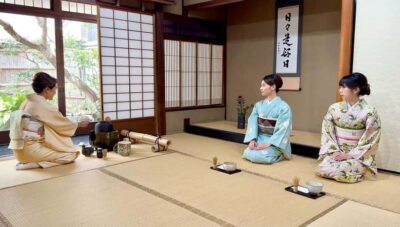
This tea ceremony happens in a traditional Kyoto townhouse style home, a machiya, in the Higashiyama area. The location is a big part of the experience because you are not doing matcha in a modern studio. You begin in a quieter, slower-feeling space that makes the whole ritual feel more intentional.
The meeting spot is down an alley branching off the main thoroughfare of Ninenzaka. If you want the easiest landmark approach, head to the Park Hyatt hotel. Opposite it is a Studio Ghibli store, and the alley is just to the left of that store. From there, you are close enough to do this as a break between major Higashiyama sights.
This is also a good mid-day activity. You can pair it with Kiyomizu-dera, Kodai-ji, Yasaka-jinja, Maruyama Park, Chion-in, and Gion since the teahouse is within walking distance of many of them.
Finding Flower Teahouse without getting lost
Kyoto turns alleys into puzzles, so I like the way this experience gives you a simple navigation plan. Use Park Hyatt and the Studio Ghibli store as your anchor points. Then walk to the alley to the left of the store, and follow the short walk from there.
Because the tearoom is upstairs, you should plan for stairs even if you do not intend to sit on the floor. If stairs are a problem, the Garden Teahouse is wheelchair accessible, so you will want to choose that option ahead of time.
Practical tip: wear shoes you can slip on and off easily if you end up seated informally. Even if you are using chairs, your comfort will make it easier to focus on the ceremony rather than your feet.
More bowls, poured the traditional way
- Kyoto: Tea Ceremony in a Traditional Tea House in Kiyomizu
★ 4.9 · 3,519 reviews - Kyoto: Tea Ceremony Ju-An at Jotokuji Temple
★ 4.9 · 3,207 reviews - Kyoto: 45-Minute Tea Ceremony Lesson Experience
★ 4.3 · 2,378 reviews - Kyoto: Table-Style Tea Ceremony at a Kyo-Machiya
★ 4.9 · 1,211 reviews
How the 45 minutes actually works, step by step
This is not a long, wandering “tour of tea.” It is a focused 45-minute lesson and experience built around flow. You start with a short introduction, then you watch the ceremony, then you make your own matcha.
Here is the typical pacing you should expect:
First, you settle into the machiya. Your English-speaking host introduces the world of matcha, explains the utensils, walks you through the ceremony steps, and points out why the room decoration matters. That room setup part surprised me as a concept, because it reframes tea from being only about taste into being about attention.
Next comes the tasting moment. You nibble on a seasonal sweet with your tea while you chat with your host. This is a great time to ask questions, including about the three schools of tea ceremony and other parts of Japanese culture that you are curious about.
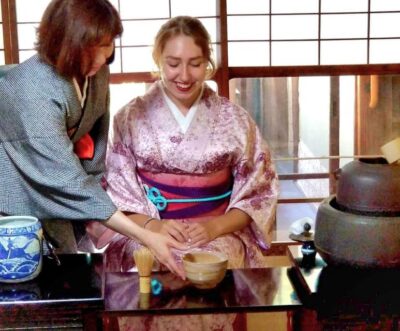
Then you move into the hands-on part. Your host guides you through frothing whisking matcha into that characteristic smooth foam. You are not expected to be a tea master on day one, but you do get enough guidance to leave with a bowl you made yourself, and that matters more than just watching.
Many people find the demonstration portion especially calm. One review noted the actual ceremony demonstration felt around 10 minutes, followed by hands-on whisking and drinking, which matches the “short and focused” feel of the full 45 minutes.
Utensils and room layout: what you learn beyond the drink
If you have ever had matcha that tasted flat or too bitter, you know it is not only the powder. It is technique. This ceremony explains the small moving parts that change the cup.
You will learn about the tea-making utensils and how they are used in the ceremony. While the exact list of utensils is not laid out in the details you provided, you can count on learning the purpose of each tool you see, since the host covers utensils as part of the introduction.
The room layout and decoration piece is also not window dressing. Your host explains the importance of the room setup, so you understand what you are looking at when you first sit down. This is one of the reasons the experience feels more cultural than culinary. You start to see tea ceremony as a choreography of respect: objects, space, and timing all work together.
If you like questions, you will likely enjoy this section. People reported that their host explained the symbolism and history clearly, and that there was time to ask about the tea schools and meaning behind the steps.
The seasonal sweet and the matcha tasting combo
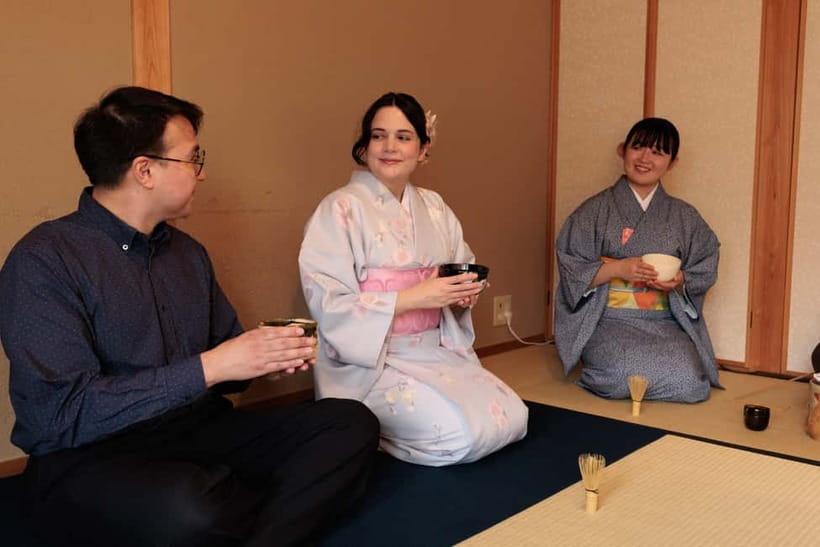
Tea ceremony matcha is not usually a “chug it and go” drink. You slow down to taste, and the sweet gives you a way to notice flavors.
You receive matcha and a traditional seasonal sweet. The host often explains the intent behind the pairing, but even without a formal lecture, you can taste how the sweetness balances matcha. One thing you should be prepared for is that matcha can be pleasantly bitter if it is made in the right style. That bitterness is part of the appeal for many people, and it is easier to accept once you know it is meant to be part of the profile, not a flaw.
This is also a low-pressure moment to talk. You can ask cultural questions while you eat, and it keeps the ceremony from feeling like a classroom. It feels like a conversation wrapped in ritual.
Whisking your own matcha, with real help
This is where the value really shows. For $32, you are paying for guided technique plus a finished drink you made yourself. Most importantly, you do not just stir. You learn how to get froth and the right texture by following the host’s instructions.
In many experiences like this, the hardest part is the moment you realize your cup is not just a drink, it is a small performance of precision. Here, the host helps you through that so you leave with a result you can actually be proud of.
One review mentioned that the host helped whisk matcha into good foam, and another noted the ceremony felt peaceful, then the opportunity to make their own matcha came right after. That sequence is a good fit for first-timers, because you see it done once, then you practice while the host can correct your technique.
If you are curious about the “how,” ask questions while you are whisking. The English instruction makes it easier to connect what you are doing with what you are tasting.
A day of temples goes further with something to break it up.

Where discomfort can sneak in, and how to handle it
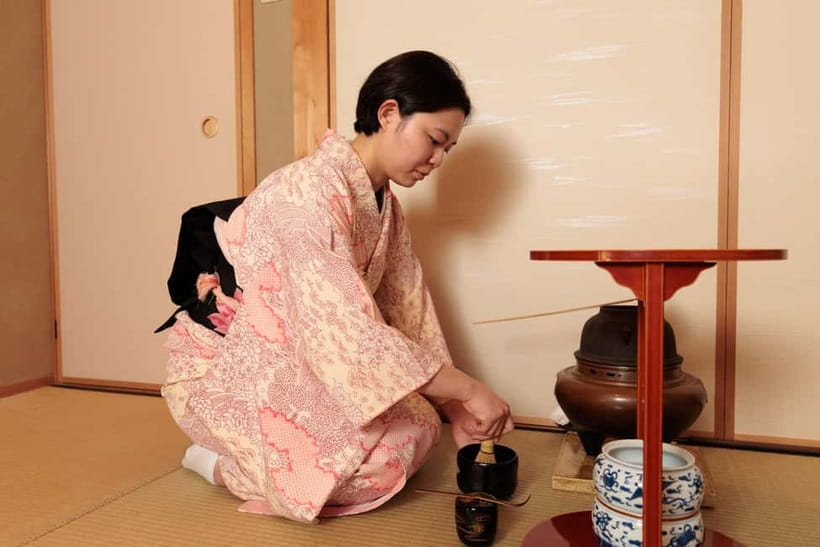
Tea ceremony sitting is the one practical issue to take seriously. Even with chairs available, some people will still be asked to sit on the floor for part of the experience, and you might be there for close to 40 minutes.
The good news is that the hosts understand this. Guests are encouraged to get comfortable, and chairs and tables are available for those who find it difficult to sit on the floor. So you are not stuck suffering politely.
If you know you struggle with floor seating, I would choose the chair option when you arrive, and wear clothing that lets you move easily. Think thin layers, not stiff jeans you cannot bend in.
Also remember the tearoom is upstairs. That means stairs before you ever get to sitting. If you want a smoother experience, go slowly, take a breath, and treat it like part of the ceremony: quiet and steady.
Price and value: what you get for $32
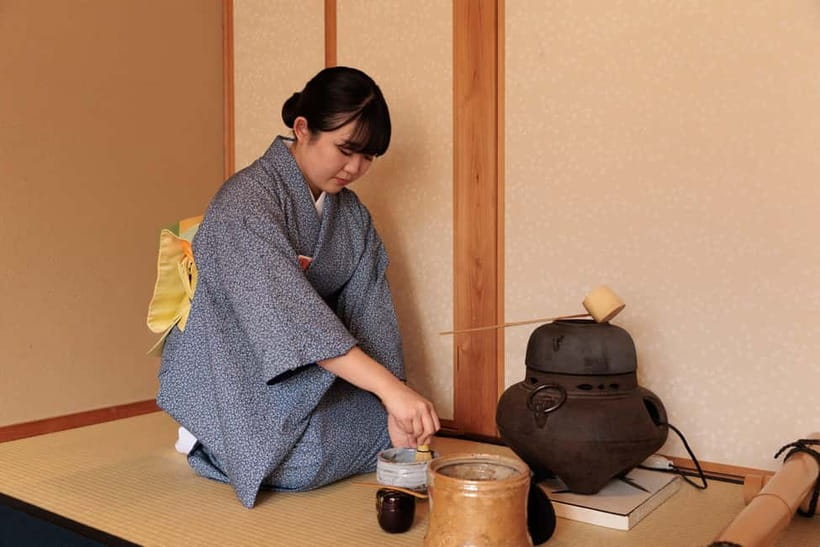
At $32 per person for 45 minutes, this is one of the better ratios in Kyoto for people who want more than sightseeing. You are not just paying for someone to explain tea. You are getting:
- Matcha and traditional seasonal sweets
- Tea-making utensils used during the ceremony
- A personal instructor/host guiding you in English
- A hands-on moment making your own bowl
The time matters. Forty-five minutes is long enough to learn a few key concepts and actually try the whisking step, but short enough that you do not lose an entire day to one activity.
Small group or private options are also meaningful value for families and couples. If you want more direct interaction, the private setting can make it easier to ask questions without feeling rushed.
If you are planning a full day of Higashiyama sights, this is a smart “anchor experience” that gives you a break from walking crowds.
Kimono rentals and photo moments nearby
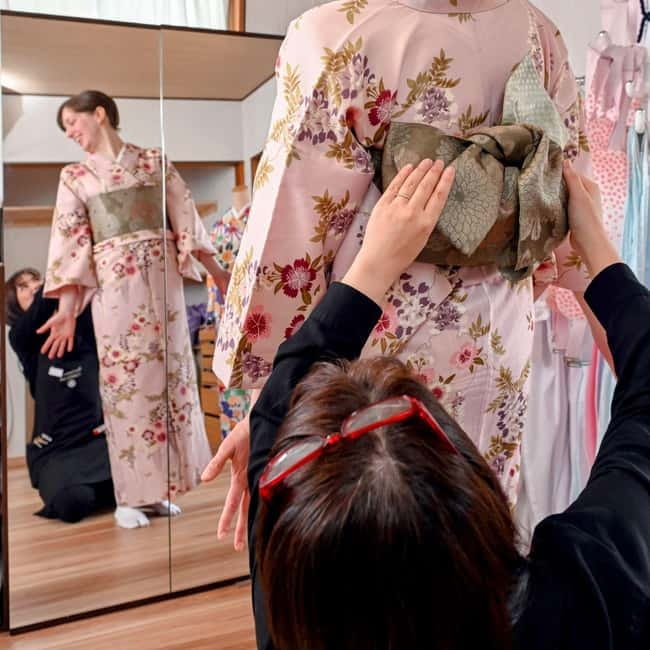
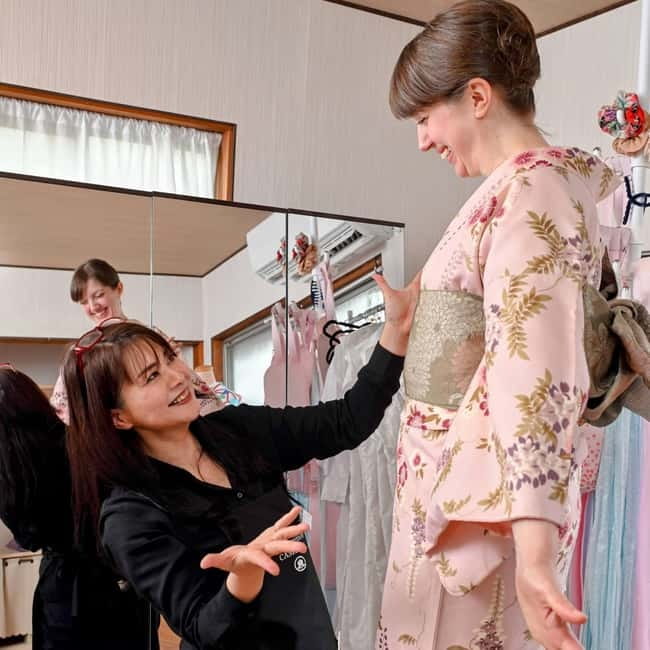
Kimono rentals are not included. Still, the area around the meeting point makes it easy to add one if you want the look.
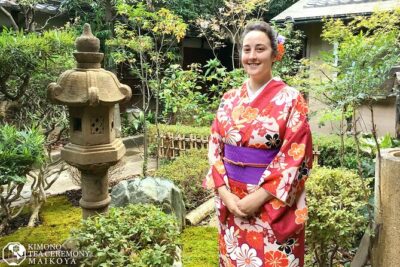
One review noted that the kimono hire place was around the corner and suggested renting beforehand. If you care about photos, this matters. Wearing a kimono can change the whole vibe of your visit, and it is a fun way to frame your time in Higashiyama.
Also, still photography is permitted as long as you do not use flash. Video recording is not allowed. If you want photos, plan to take them at natural breaks, not during the hands-on moments where your attention needs to be on whisking and drinking.
Who should book this matcha ceremony
This tea ceremony fits best if you want a calm cultural activity with real participation. I would especially recommend it if:
- You like hands-on lessons, not just watching
- You want context on matcha culture in Kyoto
- You prefer a shorter activity you can fit between temples and neighborhoods
- You enjoy asking questions, even on topics like the three tea schools
It may be less ideal if you want a long, roaming tour or if you cannot handle stairs. That said, chairs and the wheelchair-accessible Garden Teahouse option exist, so it is not a total deal-breaker.
If you are a first-timer to matcha, the ceremony is a good starting point because you learn technique and flavor expectations at the same time.
FAQ
FAQ
How long is the Kyoto tea ceremony experience?
The experience runs for about 45 minutes.
Is the instructor available in English?
Yes. The instructor is English-speaking.
What is included in the price?
You get matcha, traditional seasonal sweets, tea-making utensils, and a personal instructor or host.
Is video recording allowed during the workshop?
No. Video recording is not allowed.
Can I sit comfortably if I do not want to sit on the floor?
Yes. Chairs and tables are available for guests who find floor sitting difficult. Restrooms are also available, and the Garden Teahouse option is wheelchair accessible.
Where do I meet the group?
You meet at Flower Teahouse down a narrow alley branching off Ninenzaka in Higashiyama. The simplest landmark route is to go to the Park Hyatt, then look for the Studio Ghibli store across the street, and take the alley just to the left of it.
Should you book this Kyoto tea ceremony?
If you want a short, meaningful Kyoto experience that actually teaches you something, I would book it. The best part is the combination of a peaceful ceremony, a seasonal sweet moment, and guided matcha whisking so you leave with both understanding and taste.
Skip it only if you are looking for a long sightseeing tour or if stairs and sitting arrangements would be a major problem for you. Otherwise, this is a thoughtful way to slow down for 45 minutes and connect to Kyoto beyond temple photos.
New This Season
- Koyasan Day Trip by Private Car from Kyoto
- Old Port Town and Ultimate Sake Tasting Private Tour From Kyoto
- Kyoto’s Timeless Charm: 3hr Exploration of History and Peace
- Kyoto: 5 Types of Sushi Making
- Sacred Peak & Ancient Paths: Kurama-Kibune Hiking Experience
- Kyoto: Exclusive ZEN practice at Manpukuji temple in Uji
- Kyoto: Private Seasonal Aroma Yoga Class
- Traversing Kyoto’s Scenic West – Arashiyama to Kinkakuji
Tea Ceremonies, compared.
Tea Ceremony in a Traditional Tea House in Kiyomizu
Read our review →
Kimono Tea Ceremony at Kyoto Maikoya, NISHIKI
Read our review →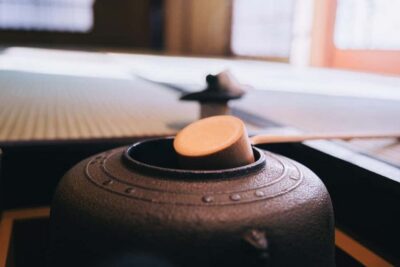
Tea Ceremony in 100-year-old Kyo-Machiya Townhouse
Read our review →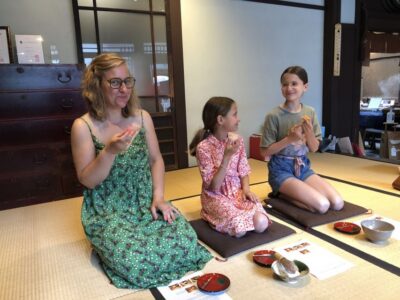
Tea Ceremony Meditation – Make Matcha with Tea Master
Read our review →Also filed under