Reviewed · FUSHIMI INARI SHRINE WALKS
Osaka/Kyoto:Kinkakuji,Arashiyama,FushimiInariShrine,NaraPark
A long day, packed with Japan’s biggest icons. I love how this tour strings together Kinkaku-ji, Fushimi Inari, and Nara in one smooth route, so you spend less time figuring transit and more time looking up at gold, torii gates, and deer. One thing to consider: it is a full day, so some stops feel a little time-tight if you want to shop slowly or linger for photos.
What makes it work is the guided structure. The bus ride is part of the experience, and guides like Harry, Gary, and Mike are known for clear timing, good explanations, and keeping the group on track. The main tradeoff is simple: you are traveling with a group bus, so crowding and logistics are out of your control, especially around popular photo spots.
In This Review
- Key highlights in plain language
- Why this day trip feels efficient in Japan
- The route starts with VIP lounge pickup, then moves fast
- Nara Park and Todai-ji: deer first, big Buddha energy after
- Arashiyama Bamboo Grove: the iconic path, timed for crowds
- Kinkaku-ji Golden Pavilion: gold leaf and mirror-like pond views
- Fushimi Inari Shrine: the torii tunnel climb you will never forget
- Optional Kobe beef shabu-shabu lunch: worth it, with a timing trade
- Included vs not included: what you are really paying for
- What the best guides do on a full bus day
- Logistics reality: meetings, timing, and energy level
- Who should book this tour, and who should skip it
- Should you book: my honest call
- FAQ
- What destinations are included in this tour?
- Where does the tour start and where do you end?
- How long is the tour?
- Is lunch included, and what are the options?
- Are entrance fees included for Kinkaku-ji and Todai-ji?
- What language is the guide?
- How does the meeting point work?
- Can I expect time to explore on my own?
- Are there any rules for interacting with the deer?
Key highlights in plain language
- Two UNESCO hits built into one day: Kinkaku-ji and Todai-ji (Great Buddha area)
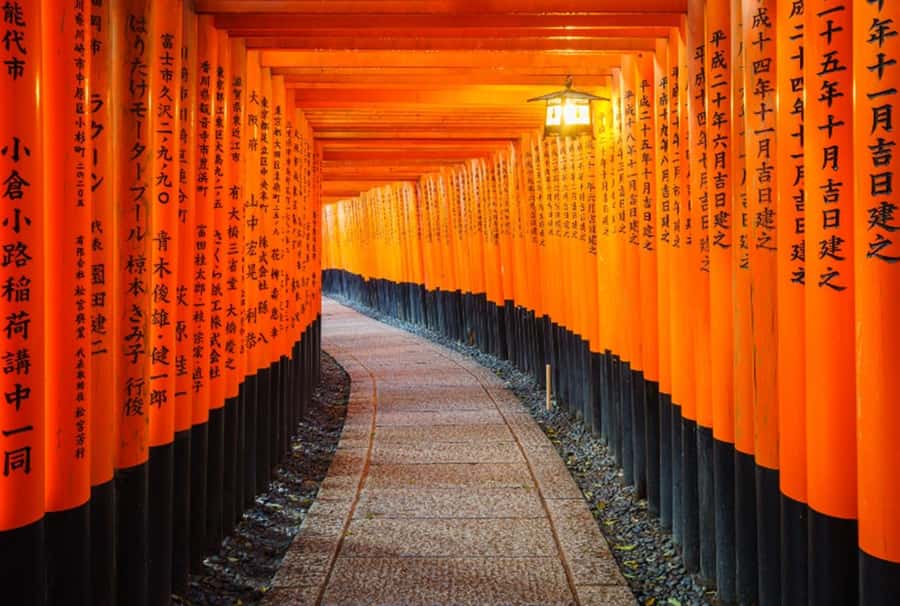
- Fushimi Inari’s torii tunnel: walking past iconic 1,000 vermilion gates up Mount Inari
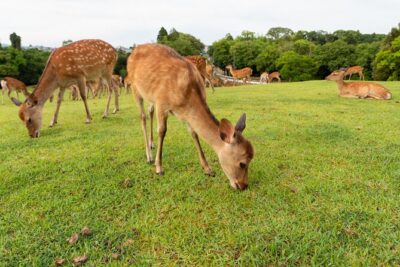
- Nara Park’s deer encounters: wild deer, plus a memorable free-roaming atmosphere
- Arashiyama Bamboo Grove timing: enough time to see the bamboo without feeling rushed the whole stop
- Optional Kobe beef lunch: shabu-shabu, with add-on aburi sushi available on site
Why this day trip feels efficient in Japan
Honshu can be a travel puzzle. Kyoto and Osaka are easy to reach, but hopping between Kyoto districts, Nara, and a major temple circuit takes time if you go solo. This tour handles the hard part for you: one departure, guided stops, and transport between the sights in an air-conditioned vehicle.
Price-wise, $66 per person is the key question. You are paying for a guided, timed loop that would otherwise require multiple train changes and a lot of planning. It is not cheap like a train day, but it is often cheaper than adding taxis or paying for guide support on your own. Also, Kinkaku-ji entrance is included, which helps value right away.
One more practical win: the tour starts from a VIP Lounge in Osaka or Kyoto. That matters because meeting points in Japan can be confusing, and the bus departs promptly. If you like clean logistics, this format fits.
The route starts with VIP lounge pickup, then moves fast
The day runs for about 9 hours (traffic can stretch it). You meet at a selected pickup point, and the bus departs on time. The guide is assigned to that specific bus and keeps a participant list, so arriving late or at the wrong meeting point can mean you miss the tour and do not get a refund.
The tour also lets you choose your day ending: finish back in Kyoto or Osaka depending on your preference. That is a small detail, but it can be a big deal if you are trying to protect your evening plans.
As for group vibes, the reviews you will see for this style of tour often point to one truth: a bus full of people means some delays can happen when someone gets lost, misses instructions, or wanders off. The guide typically works hard to keep things moving anyway.
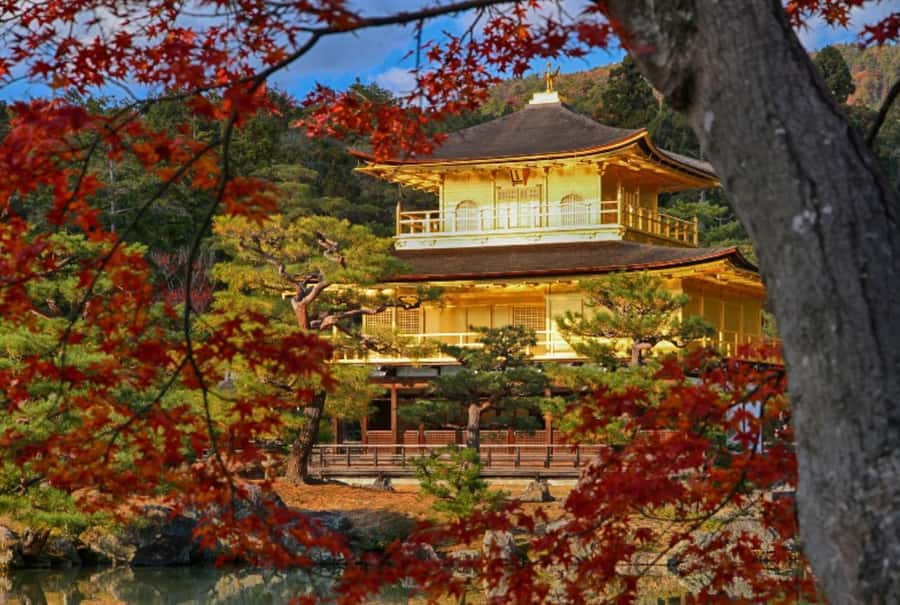
Kinkaku-ji's gold roof over still water
- Kyoto: Fushimi Inari, Kinkakuji, Bamboo Grove 1 Day Bus Tour
★ 4.8 · 4,316 reviews - Kyoto: Nijo, Kinkaku-ji, Arashiyama, Kiyomizu & Fushimi Inari
★ 5.0 · 699 reviews - Kyoto: Kinkakuji, Golden Pavilion Guided Tour
★ 4.7 · 71 reviews - Kyoto top must-see Golden pavilion and Bamboo forest half-day Private tour
★ 5.0 · 52 reviews
Nara Park and Todai-ji: deer first, big Buddha energy after
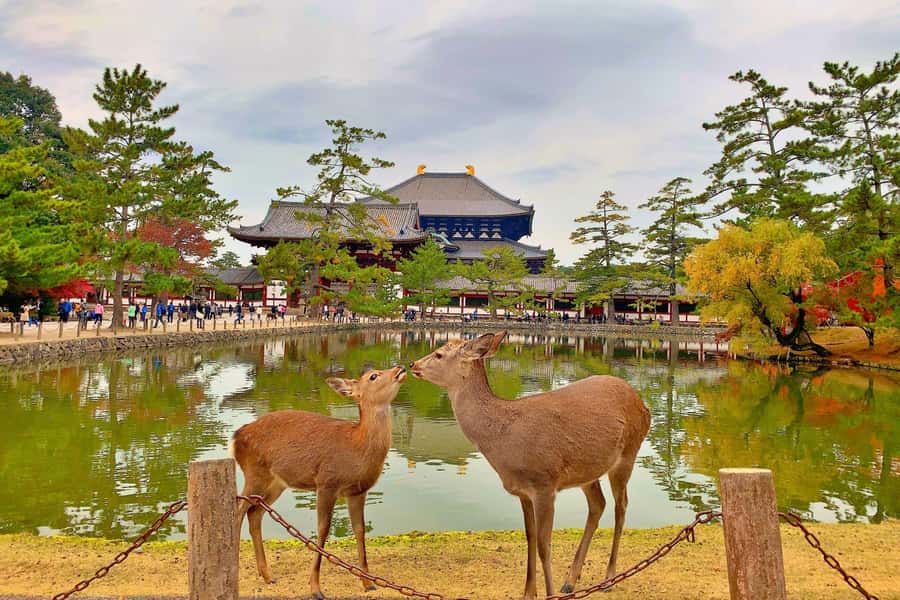
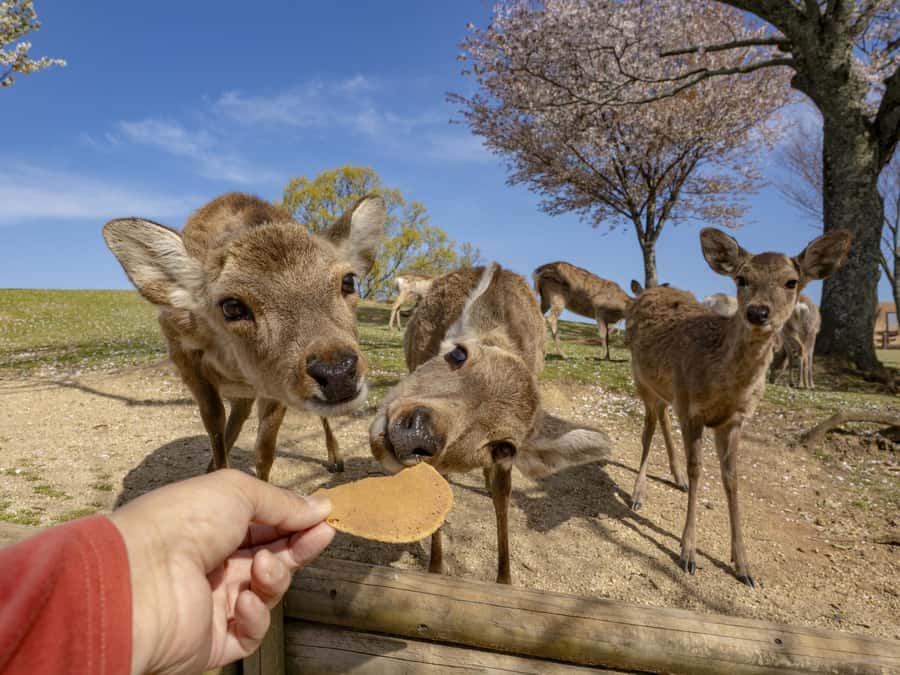
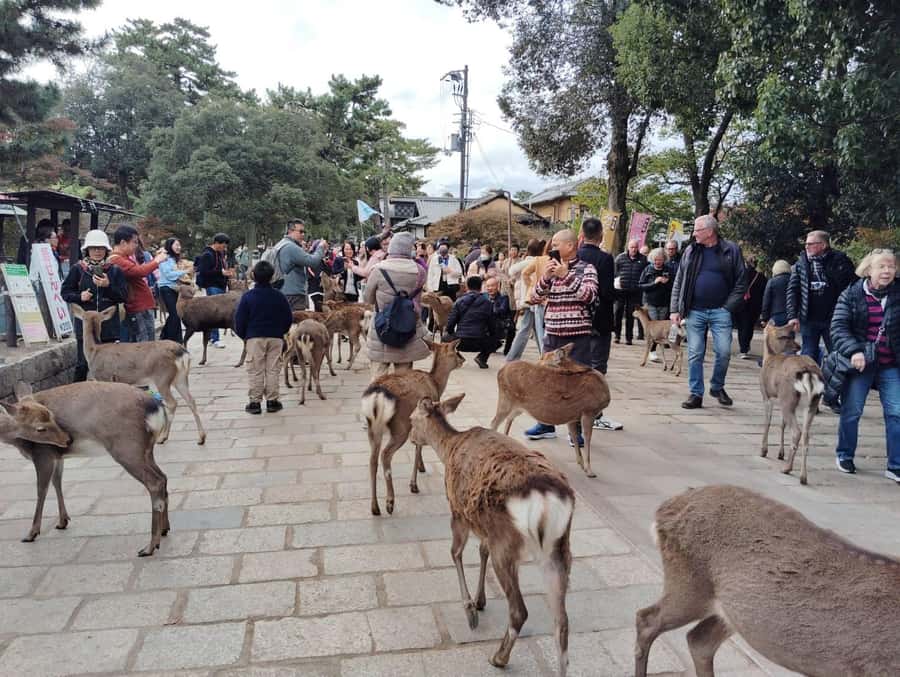
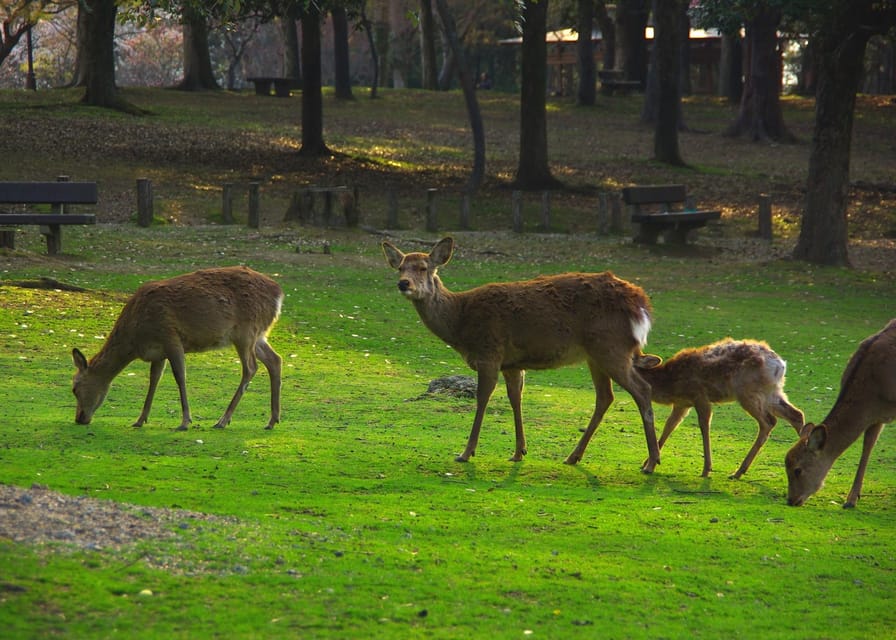
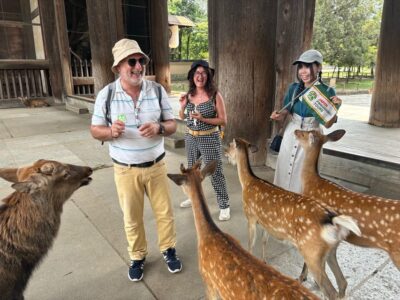
Nara is famous for two things that work together like a one-two punch: deer and Todai-ji. You start in Nara Park, where deer roam freely. The deer are wild animals, so the rule is simple: do not disturb them. If you want photos, keep your distance and follow the space around the deer rather than chasing close-ups.
What I like about Nara Park on a guided day is how it changes the pace. This is not just temple walls and gates. It feels like a historic outdoor park where you can wander, reset your legs, and take in the atmosphere.
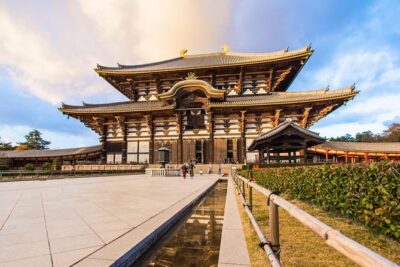
Then you move to Todai-ji. Here is the headliner: Todai-ji is a UNESCO World Heritage site and is known for being the largest wooden structure in the world. Inside that scale is the 15-meter-tall Great Buddha statue, which is the kind of sight that does not need extra explaining. You see it and the brain just goes quiet for a second.
Important note for your wallet: the tour includes Kinkaku-ji entrance fee, but Todai-ji entrance is not included. So you will want a little extra cash or card readiness for that stop.
Arashiyama Bamboo Grove: the iconic path, timed for crowds
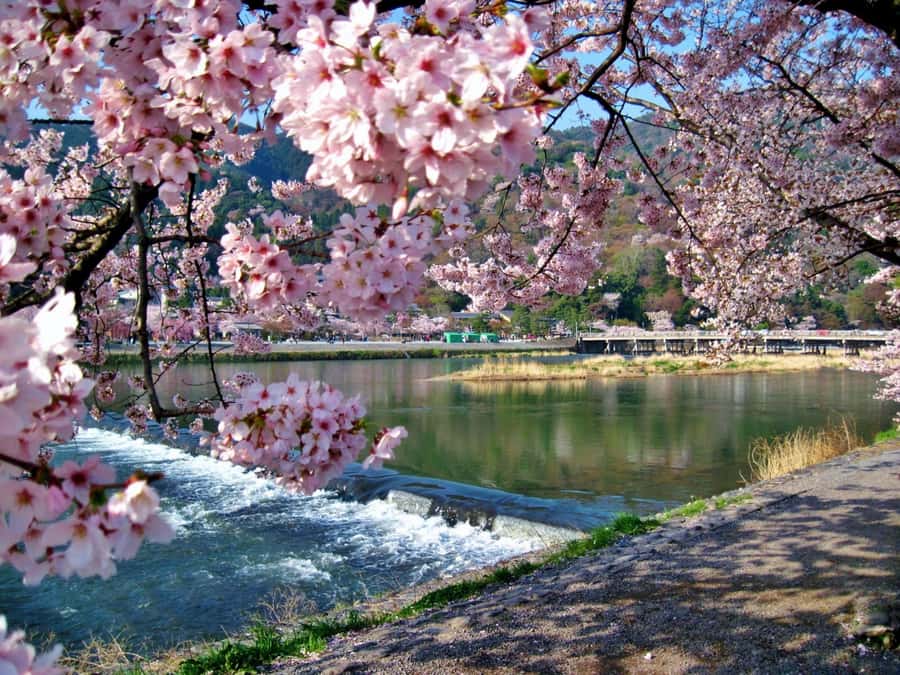
Arashiyama is the kind of Kyoto area that can swallow your day if you let it. That is why timing matters here. Your free time in Arashiyama changes depending on whether you choose lunch.
- If you choose the Kobe beef lunch, you get 60 minutes in Arashiyama.
- If you skip lunch, you get 120 minutes in Arashiyama.
This is not just a scheduling detail. The Bamboo Grove can be crowded, and you will want a little time to find your preferred walking rhythm and photo angles. With only 60 minutes, you will likely prioritize the bamboo path and quick nearby viewpoints. With 120 minutes, you can slow down and add more browsing around the area.
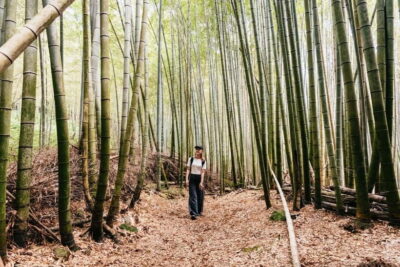
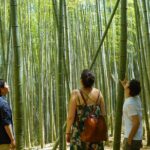
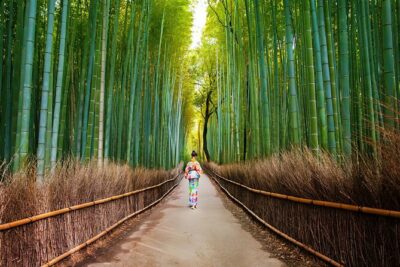
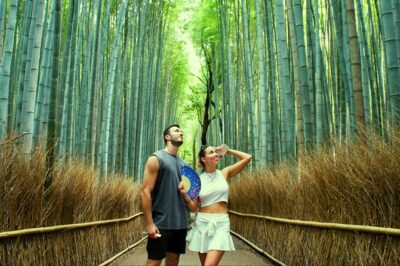
I also like that the tour frames Arashiyama as a serene experience. The bamboo path is described as sunlight filtering through tall stalks, which is exactly the mood you should expect. Bring patience for crowd flow at the busiest spots, and keep your plan flexible.
Kinkaku-ji Golden Pavilion: gold leaf and mirror-like pond views
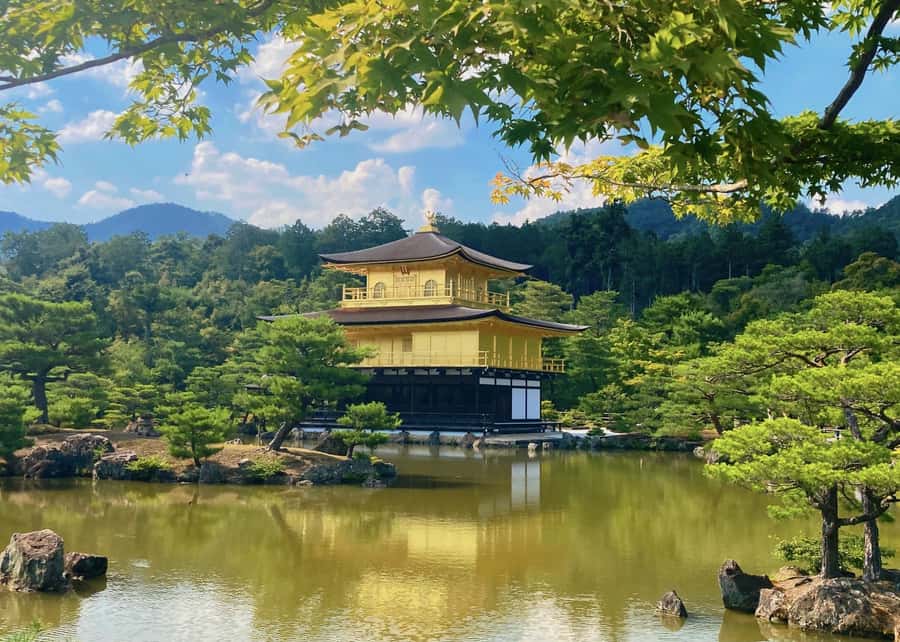
After Arashiyama, you head to Kinkaku-ji, the Golden Pavilion. This is the other UNESCO stop on the day, and it is included with your ticket. The pavilion is famous for its gold-leaf exterior and the peaceful gardens that surround it.
The most satisfying part is the reflection. The pavilion sits by a pond, and the tour setup gives you time to see the shimmering look that depends on light and weather. On a clear day, the gold feels almost unreal. On an overcast day, the colors go softer, and the reflection can still be beautiful.
Crowds are real at Kinkaku-ji, especially if you arrive when tour groups stack up. The upside of doing it in a guided loop is that you are not guessing when to go. If you want the best chance at good light, follow the guide’s guidance on where to stand and when to move.
Fushimi Inari Shrine: the torii tunnel climb you will never forget
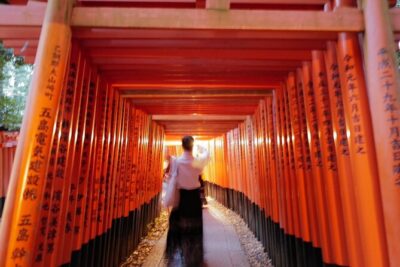
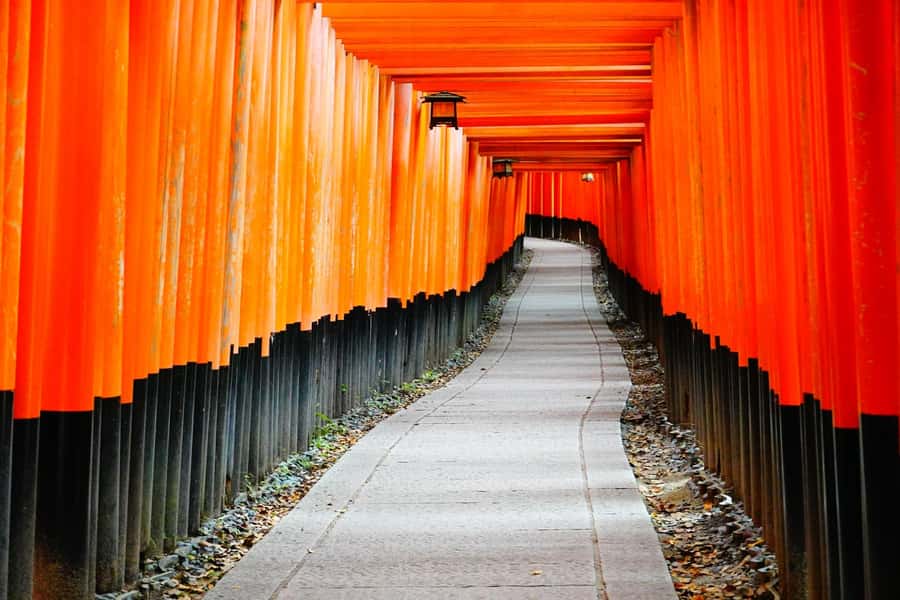
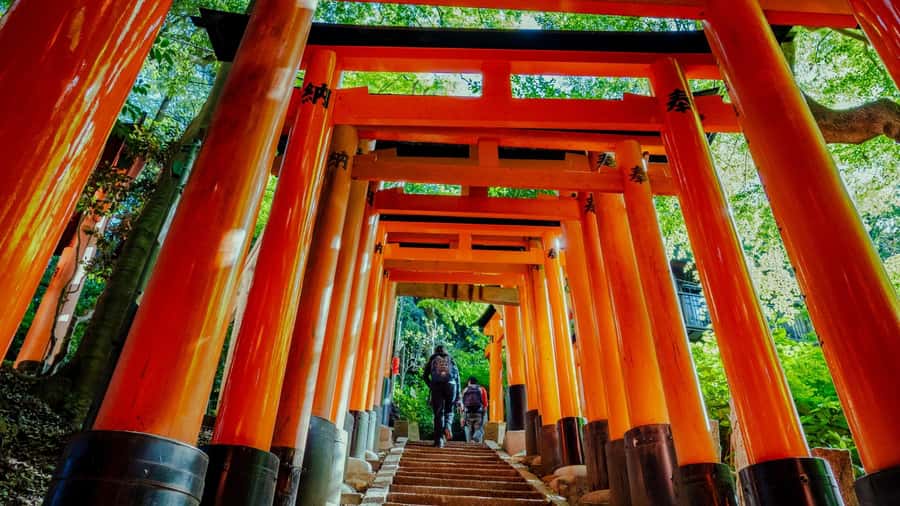
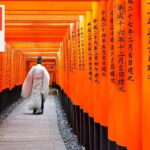
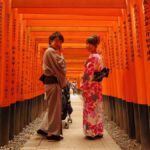
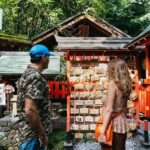
Then comes the shrine that people picture even when they do not know Japan. Fushimi Inari Taisha is both a Shinto shrine and an Important Cultural Property. The iconic feature is the torii gate tunnel, with 1,000 vermilion gates winding up Mount Inari.
This stop is meaningful because the gates are not random. Each gate represents a prayer or offering to Inari Okami, the deity connected with prosperity, household safety, and success. That gives the walk a narrative feeling. You are not just sightseeing steps, you are moving through a system of devotion.
Practical tip: start early in your mind even if it is not early on the clock. The walk becomes more crowded near the lower sections. If your energy allows, keep going at your own pace, then stop when your feet say enough.
Also, the tour is structured to get you through the major sections efficiently. If you want to treat Fushimi Inari like a long hike, you might feel slightly constrained. The flip side is that you get the full icon experience without needing to build a half-day plan.
Still climbing through the orange gates?
Optional Kobe beef shabu-shabu lunch: worth it, with a timing trade
The lunch option is only available on the Osaka departure. If you pick it, you get Kobe Beef Shabu-Shabu and an explanation of why Kobe beef is so prized, including that it follows strict standards among Japan’s major Wagyu breeds. The emphasis is on the fine marbling that melts as it cooks, producing a soft, velvety texture.
In real terms, this is not just about eating. It is a comfort break with a story. If you have never had shabu-shabu, it is a fun hands-on-style meal. If you have had it before, you will still probably notice the difference in marbling and tenderness.
There is also a Kobe beef aburi sushi option available for additional on-site orders. So if you are a big Wagyu fan, you can turn lunch into a small tasting moment.
The big tradeoff is time. Lunch takes 50 minutes, and then Arashiyama drops to 60 minutes. If your priority is Arashiyama browsing and bamboo photos at your own pace, skipping lunch gives you the bigger Arashiyama window. If your priority is adding a memorable meal to the day, the Kobe lunch option is a solid upgrade.
Included vs not included: what you are really paying for
Here is what is clearly included:
- Entrance fee to Kinkaku-ji
- English or Chinese-speaking guide
- Air-conditioned vehicle
- All taxes, fees, and handling charges
Not included:
- Todai-ji entrance fee
- Hotel pickup and drop-off
That distinction matters. Many tours bundle everything, and some do not. Here, you are essentially getting transport plus guide plus Kinkaku-ji ticket, while Todai-ji is a separate add-on cost. Budget for that, and you will avoid the end-of-day surprise feeling.
What the best guides do on a full bus day
Even when the schedule is fixed, the guide can make the difference between a stressful group day and a smooth one. The positive feedback for this tour repeatedly mentions guides who:
- explain what you are looking at and why it matters
- keep people on timeline with clear return instructions
- adjust to small real-life hiccups when someone is late or gets confused
- share practical photo spots and quick routing tips
Names that show up in the guide highlights include Harry, Gary, Nick, Ben, Mike, Tracy, Eric, Mimi, Chi, and Panda. That range is a sign the experience style is consistent across different guides, not dependent on one special person.
One more scheduling bonus that a few people noted: the route can feel timed to reduce peak pressure, such as being at certain spots earlier in the day and hitting others later, when light and crowds can be more favorable. You still need to accept crowds at Kyoto icons, but the flow can be better than you would expect.
Logistics reality: meetings, timing, and energy level
This is a long day. You are looking at walking, buses, and sightseeing in one sequence, with approximate 9 hours total time. People also report they clock high walking counts, so pack for it: comfortable shoes, water, and a plan for where you want photos.
The biggest logistics rule is meeting point accuracy. The bus departs promptly and does not wait for late arrivals. The guide has your name for that bus and may not be able to accommodate guests who arrive at a different meeting point. If you think you might have trouble finding the exact pickup area, contact the provider at least 2 days before departure for assistance.
Also, the deer at Nara are wild. Keep your distance, do not chase, and follow any on-site guidance.
Who should book this tour, and who should skip it
This tour is a great fit if:
- you want the major Osaka and Kyoto area icons plus Nara in one day
- you prefer guided timing over public transport juggling
- you like history and structure, but you still want free time to wander
- you are okay with a bus-group format
It might not be the best fit if:
- you hate crowds and want maximum space at each stop
- you want a slow, deep exploration of Arashiyama and bamboo stalls
- you strongly dislike the idea of fixed return times after each stop
If you are a first-timer who wants a highlight reel that still feels meaningful, this hits the sweet spot.
Should you book: my honest call
I would book this if you want a high-value day that protects your energy and your time. $66 works best when you remember what you avoid: train transfers, ticket hunting, and the mental load of building a route that hits Kinkaku-ji, Arashiyama, Fushimi Inari, and Nara in one sweep.
Choose the Kobe beef lunch if you want a memorable meal and you are fine trading some Arashiyama time. Skip lunch if Arashiyama is your top priority and you want 120 minutes there instead of 60.
Bottom line: if you are the kind of traveler who likes checking off iconic sights with smart guidance, this one-day circuit is a very practical way to do Kyoto and Nara without turning your day into a transportation project.
FAQ
What destinations are included in this tour?
You visit Kinkaku-ji Temple, Arashiyama, Fushimi Inari Shrine, and Nara Park, plus Todai-ji Temple.
Where does the tour start and where do you end?
The tour starts from a VIP Lounge in Osaka or Kyoto, depending on your booking option. At the end, you return by bus and can finish back in Kyoto or Osaka based on your preference.
How long is the tour?
The tour is approximately 9 hours, though it may vary due to traffic or unforeseen conditions.
Is lunch included, and what are the options?
There is an optional Kobe Beef Shabu-Shabu lunch. It is available on the Osaka-only departure. If you choose no lunch, you get more free time in Arashiyama.
Are entrance fees included for Kinkaku-ji and Todai-ji?
Kinkaku-ji entrance is included. Todai-ji entrance fee is not included.
What language is the guide?
The guide provides commentary in English or Chinese, depending on group needs.
How does the meeting point work?
Meeting points may vary by option booked. You should arrive on time at your selected meeting point because the bus and guide are based on that specific location, and late or wrong-location arrivals may miss the tour.
Can I expect time to explore on my own?
Yes. You get free time at Arashiyama: 60 minutes with lunch, or 120 minutes without lunch.
Are there any rules for interacting with the deer?
Yes. The deer are wild animals, so you should not disturb them.
Arashiyama Bamboo Forest Walks
Nara and Deer Park Day Trips
New This Season
- Koyasan Day Trip by Private Car from Kyoto
- Old Port Town and Ultimate Sake Tasting Private Tour From Kyoto
- Kyoto’s Timeless Charm: 3hr Exploration of History and Peace
- Kyoto: 5 Types of Sushi Making
- Sacred Peak & Ancient Paths: Kurama-Kibune Hiking Experience
- Kyoto: Exclusive ZEN practice at Manpukuji temple in Uji
- Kyoto: Private Seasonal Aroma Yoga Class
- Traversing Kyoto’s Scenic West – Arashiyama to Kinkakuji
Fushimi Inari Shrine Walks, compared.
Fushimi Inari, Kinkakuji, Bamboo Grove 1 Day Bus Tour
Read our review →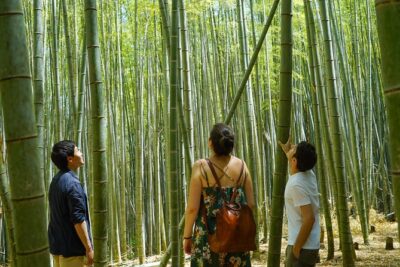
Fushimi Inari Hidden Hiking Tour (Private Option Available)
Read our review →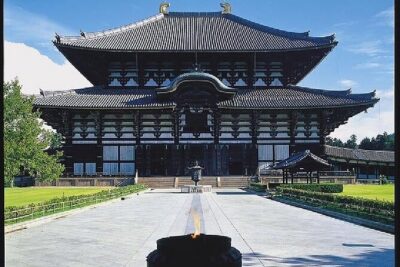
Nara, Fushimi Inari Taisha, Arashiyama Bus Tour
Read our review →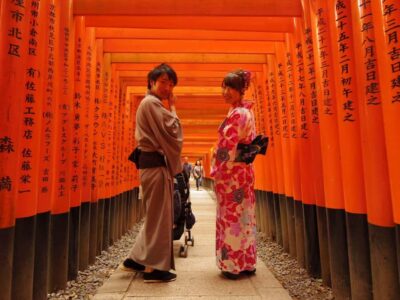
Arashiyama, Nara & Fushimi Inari Shrine w/Lunch
Read our review →
Nijo Castle, Kiyomizu & Fushimi Inari Guided Tour
Read our review →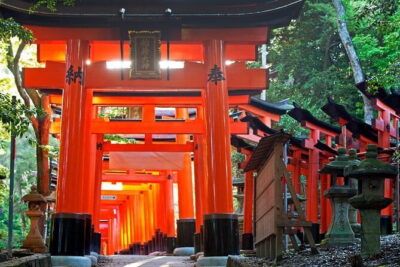
Nijo, Kinkaku-ji, Arashiyama, Kiyomizu & Fushimi Inari
Read our review →