
Reviewed · NARA & DEER PARK DAY TRIPS
From Kyoto: Nara Guided Morning Tour
Deer, lanterns, and a giant Buddha, fast. This morning tour strings together Todaiji Temple and Nara Park with just enough structure to keep the day moving, guided in English and supported by audio headsets. Guides like Ciel and Den are repeatedly called out for making the history feel practical, not just recited.
Two things I really like: the way you get early access to Nara’s top sights, and the freedom to wander in Nara Park instead of getting whisked through like a checklist. One drawback to plan for up front: the half-day version ends at Kintetsu Nara Station around noon, not back in Kyoto, so you will need to handle the return.
In This Review
- Key highlights at a glance
- A Smooth Kyoto Start, Then a Coach Ride With Wi-Fi
- Kasuga Taisha Shrine, Lantern Roads, and That Calm Morning Feel
- Nara Park Deer Time: Feeding Rules and Real-World Etiquette
- Todaiji Temple and the Great Buddha Hall (Daibutsuden) Up Close
- How the 4 Hours Actually Flow (and Why Order Can Shift)
- Price and Value: Is $77 Worth It for This Half-Day Format?
- The Guide Factor: When Names Come Up, It Usually Means Care
- Who This Tour Suits Best (and Who Should Rethink It)
- What to Bring for Comfort in Temple Country
- Should You Book the Kyoto to Nara Morning Tour?
- FAQ
- What time and where do I meet for the Kyoto to Nara morning tour?
- How long is the tour?
- Does the tour include a return bus back to Kyoto?
- What are the main stops during the tour?
- Are you allowed to feed the deer in Nara Park?
- What languages are available during the tour?
- Is this tour suitable for wheelchair users or mobility impairments?
Key highlights at a glance
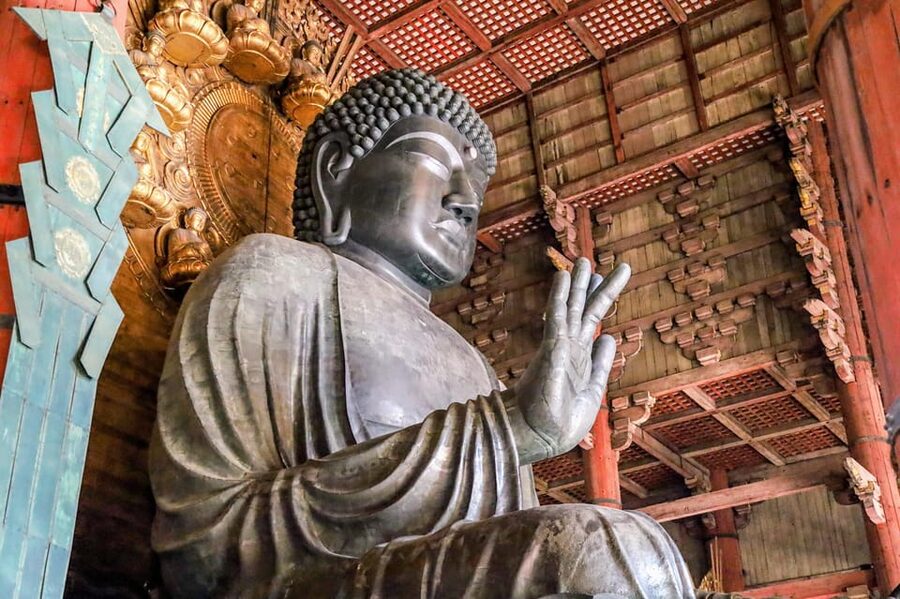
- Great Buddha at Todaiji: see the wooden Great Buddha Hall (Daibutsuden) and the iconic scale of the Nara Buddha.
- Sacred deer in Nara Park: observe and responsibly feed deer that roam freely around you.
- Kasuga Taisha Shrine: walk among paths lined with famous stone lanterns, a big part of the shrine’s atmosphere.
- Air-conditioned coach with free Wi-Fi: comfortable ride time plus on-board connectivity.
- English live guide plus multi-language audio: audio headsets are included in Spanish, French, Italian, German, Portuguese, and Ukrainian.
- A morning itinerary that avoids late-day crowds: you get the best light and calmer pacing for photos and walking.
A Smooth Kyoto Start, Then a Coach Ride With Wi-Fi
Your day begins at Tully’s Coffee Kyoto Avanti Shop, meeting around 7:50 AM and departing 8:00 AM. It is a simple setup, and having a clear meeting point near Kyoto Station area helps you avoid early-day stress.
Once you’re on the air-conditioned coach, you get free Wi-Fi and a chance to reset before Nara. The route passes by Fushimi Castle and Heijokyo Palace, which is a nice primer for what you’re about to see: this part of Japan is packed with layers, and the ride gives you that sense of continuity.
Timing matters here. This tour is only about 4 hours, and that means every minute is accounted for, including transit and guided time. If you want a slow, lingering day with zero pressure, you may feel a bit rushed, especially in Nara Park.
Kasuga Taisha Shrine, Lantern Roads, and That Calm Morning Feel
Kasuga Taisha is one of those places where even without trying, you slow your pace. The shrine is a UNESCO World Heritage Site, and it is especially known for its 3,000 stone lanterns lining the approaches and pathways.
What makes Kasuga Taisha work in a morning format is the combination of design and light. Early hours tend to feel quieter, and the shrine’s stone lantern corridors can look extra serene when you are not fighting peak crowds. Your guided visit is around 40 minutes, which is long enough to understand what you are seeing without turning it into a lecture.
Also note the practical part: you will be walking. The tour includes walking up stairs and hills, described as a moderate amount. If your feet are sensitive, comfortable shoes and a bottle of water are not optional.
Deer that bow back, a short ride away
- Osaka/Kyoto:Kinkakuji,Arashiyama,FushimiInariShrine,NaraPark
★ 4.1 · 1,596 reviews - Kyoto/Osaka: Nara, Fushimi Inari Taisha, Arashiyama Bus Tour
★ 4.7 · 1,275 reviews - Osaka/Kyoto: Arashiyama, Nara & Fushimi Inari Shrine w/Lunch
★ 4.4 · 754 reviews - Kyoto and Nara Day Trip from Kyoto
★ 4.5 · 445 reviews
Nara Park Deer Time: Feeding Rules and Real-World Etiquette
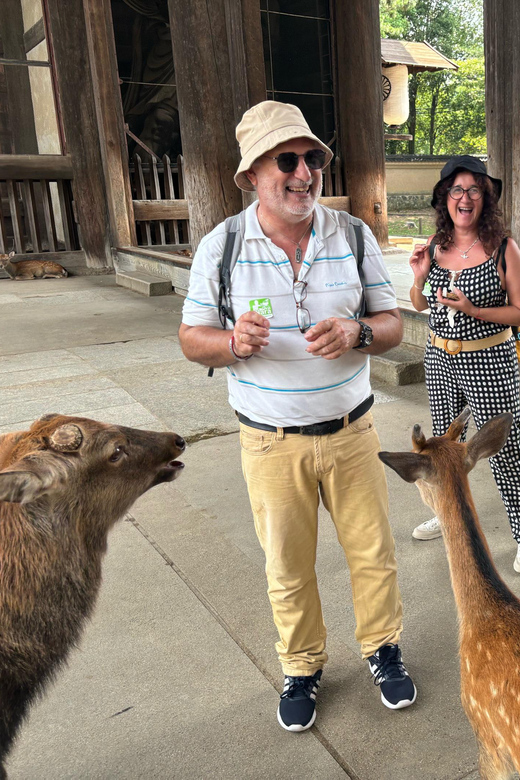
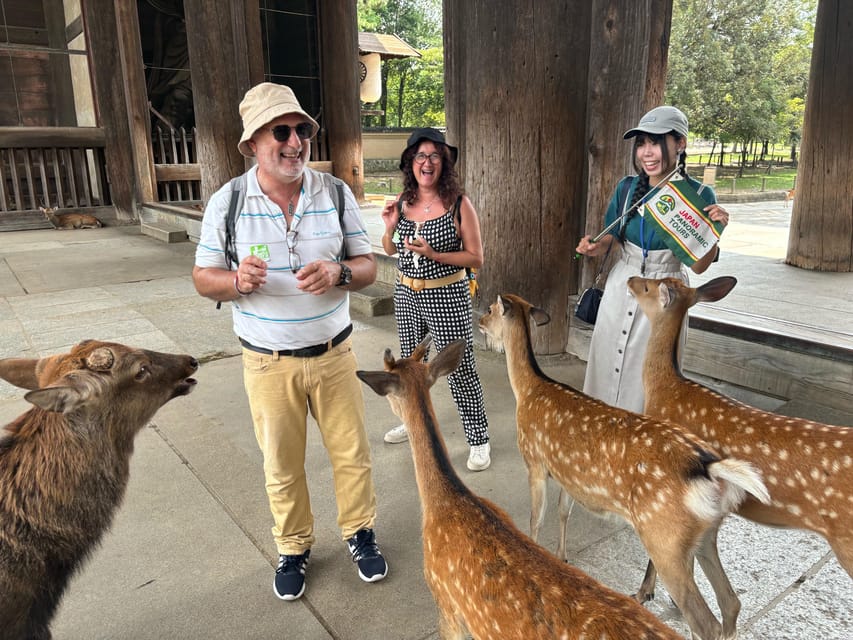
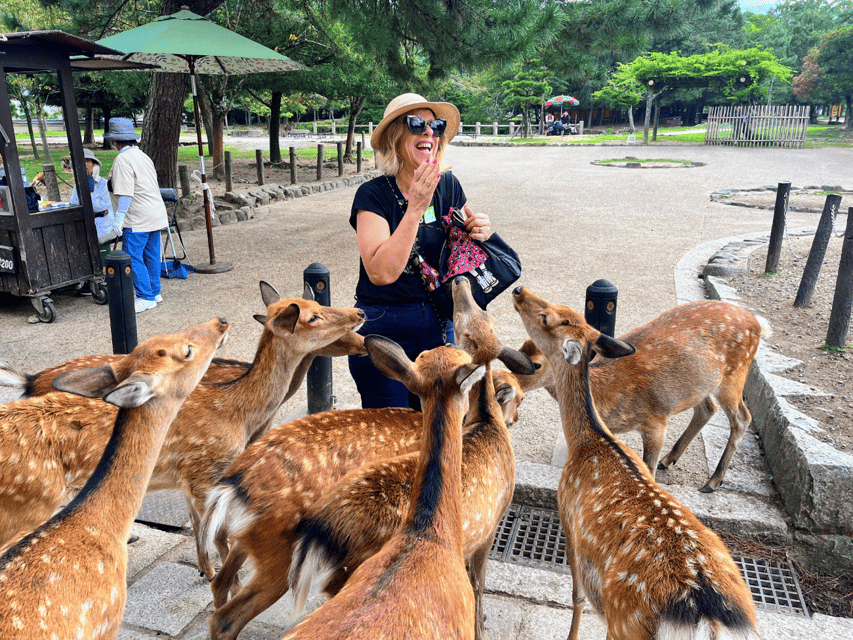
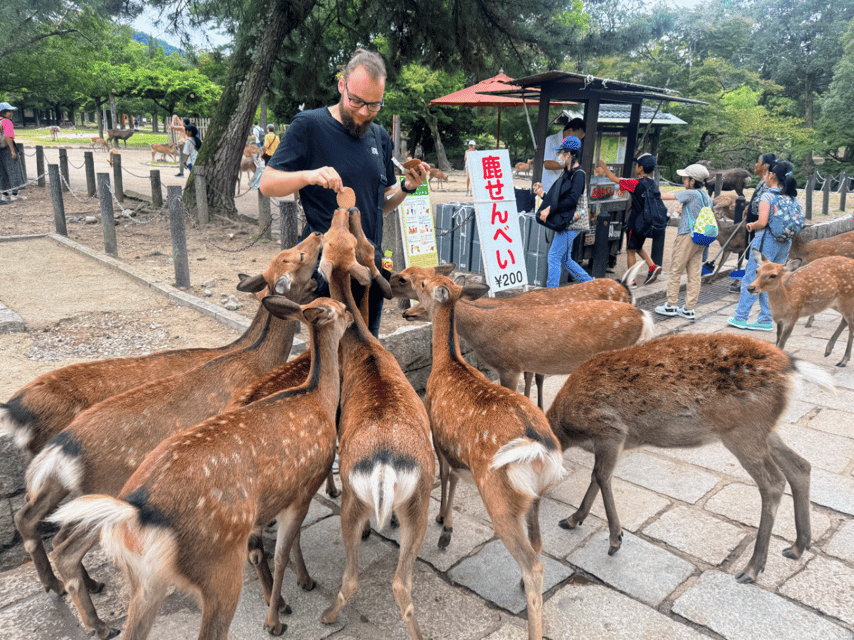
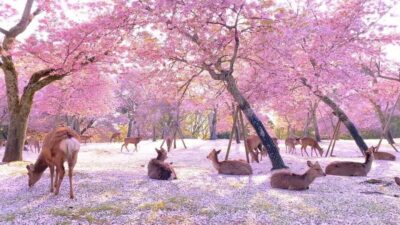
Then you step into the most famous scene in Nara: Nara Park with deer roaming freely. You have about 30 minutes of free time, which is just enough to get a feel for the park while still staying on schedule.
These deer are considered sacred messengers of the gods, but what you’ll notice first is their confidence. They are friendly and close, especially when people are carrying the right snack.
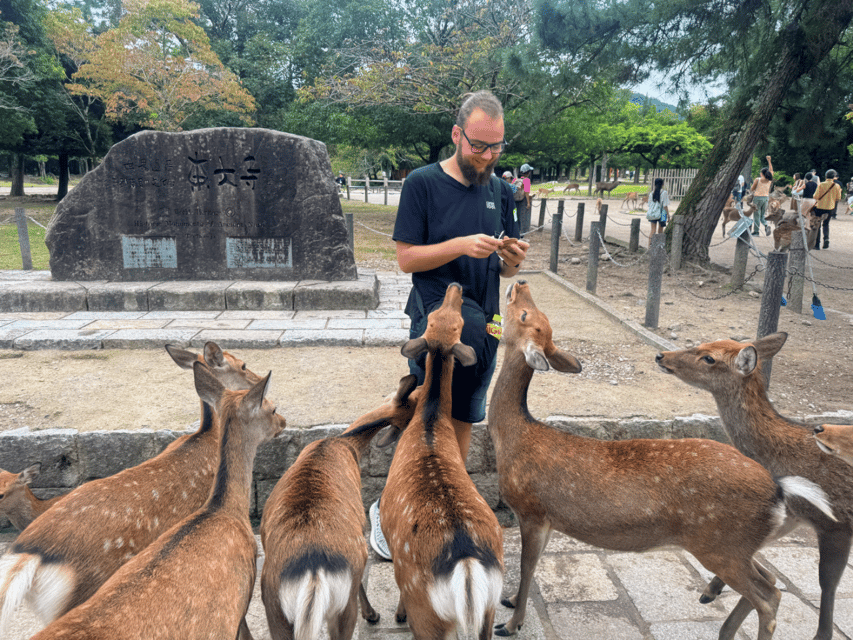
Here is the key rule: feeding the deer is allowed, but you should do it responsibly and only with the special crackers sold in the park. The tour’s guidance on how to handle this matters a lot because deer behavior can surprise people.
Practical deer tips that can save you from the chaos:
- Keep crackers secure until you’re ready to feed. One guide-style tip that shows up again and again is to keep crackers in your pocket, because deer gather quickly when food is visible.
- Use your hands clearly. If you do not have crackers, show empty hands so the deer can understand you are not offering anything.
- Be careful with your space. Guides repeatedly warn that deer can get pushy if they think you have snacks, including nips or head-butting behavior.
Even in a short time slot, you can get great photos because deer move around the paths and open areas. If it is crowded, aim to step slightly aside before you stop, so you are not holding up everyone behind you.
Todaiji Temple and the Great Buddha Hall (Daibutsuden) Up Close
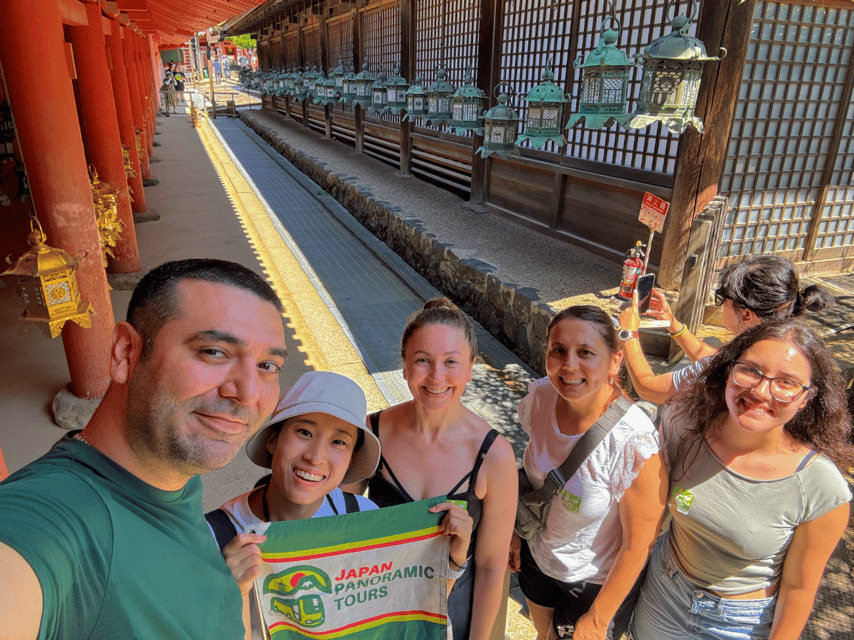
Todaiji Temple is the heavyweight on this itinerary. The highlight is the Great Buddha Hall (Daibutsuden), a massive wooden structure that houses the Great Buddha of Nara.
You get a guided tour of about 50 minutes here, plus included admission to Todaiji. That guidance helps because Todaiji is not just one building. You are moving through a complex where gates, halls, and sacred spaces connect visually, and a guide can point out what to look for.
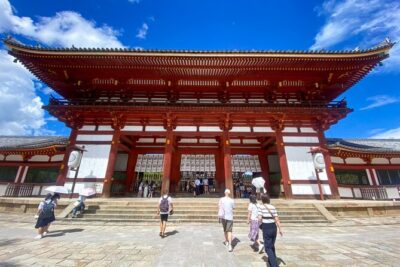
There is also a symbolic “welcome” as you approach the temple area. Near Todaiji, you pass the Nandaimon Gate, flanked by large guardian statues. Even if you only spend a moment there, it sets the tone: you’re stepping into a dramatic, ceremonial space.
Photography rules are part of the reality here. Flash photography is not allowed, so plan on steady lighting and slower shutter settings if your camera struggles in shade.
How the 4 Hours Actually Flow (and Why Order Can Shift)
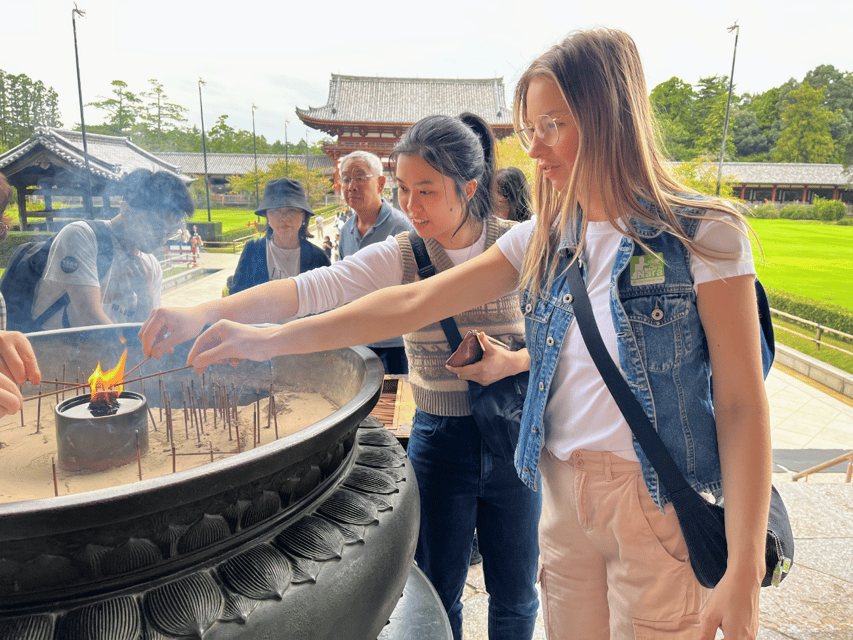
The scheduled pacing is simple: a coach ride into Nara, guided time at major stops, then a short pocket of free time in Nara Park, and finally your return to transit.
The listed flow is Kasuga Taisha, then Nara Park free time, then Todaiji Temple. That said, the operator notes the itinerary order can change due to traffic, weather, or operational reasons. In practice, this is common on half-day trips because you are fighting Japan’s real world: buses, road conditions, and weather.
What you should take from this:
- You will spend most of your time in three core zones, not “lots of random stops.”
- You will not have long, relaxed gaps. This is a morning tour built for efficiency.
- You should assume some walking uphill, and some stair climbing.
The end point is Kintetsu Nara Station around 12 PM. That is a big part of why this tour can keep the price sensible, but it also means you own the rest of the day planning.
Price and Value: Is $77 Worth It for This Half-Day Format?
At $77 per person for about 4 hours, this tour is positioned as a cost-effective “top hits” sampler from Kyoto. You are paying for three things: guided context, timed transportation, and entry support where it matters.
Here’s what you get for that money:
- Professional English-speaking tour guide
- Air-conditioned coach plus free Wi-Fi
- Admission to Todaiji Temple
- Audio headsets with multiple languages: Spanish, French, Italian, German, Portuguese, and Ukrainian
You do not get meals or drinks. You also do not get hotel pick-up or drop-off, and the half-day tour does not include the return to Kyoto by bus.
So how do you decide if it’s good value?
- It’s a strong deal if you want a guided morning and you are comfortable handling transit back from Nara.
- It’s not the best deal if you hate the idea of navigating on your own after you’ve left the group.
In feedback from people who did this exact half-day format, the biggest friction point is the handoff at Kintetsu Nara Station. Some guides help with practical tips, but the bus return is still not included. If you are the type who prefers a full-service loop from Kyoto, you’ll likely be happier with a longer option.
Beat the crowds with an early start
The Guide Factor: When Names Come Up, It Usually Means Care
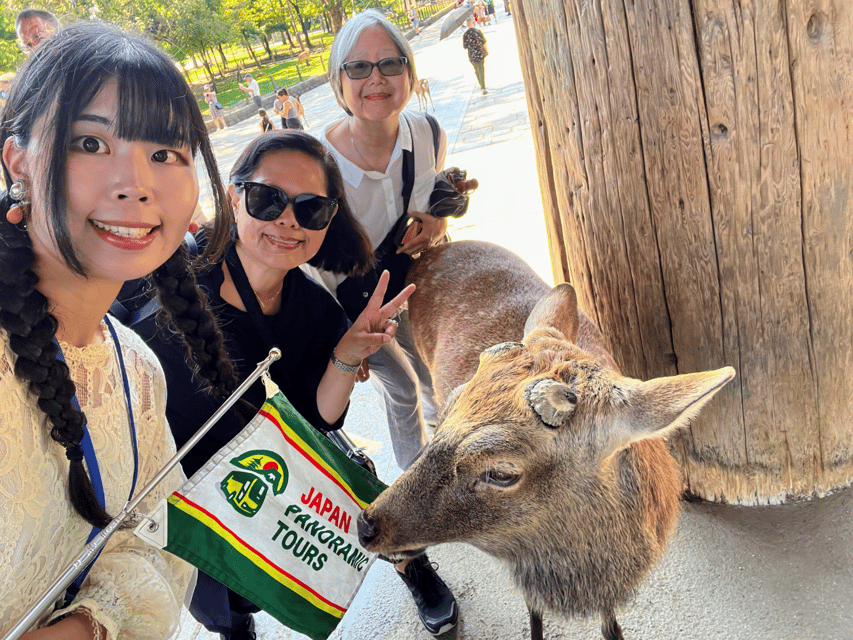
A lot of this tour’s success comes down to the human touch. In the feedback, names show up repeatedly because guides made the day smoother and more fun.
You’ll see people credit guides like Ciel, Den, Sakura, Tommy, Nagomi, Mai-san, Aoi, and Harry for keeping explanations clear and for giving on-the-spot help. Some also mention extra personality moments, like a guide running a small quiz or stepping in to help a solo traveler with photos.
A couple of practical guide moments stand out:
- Guidance around deer crackers, including reminders to keep food controlled so deer do not crowd you.
- Advice and restaurant recommendations after the tour, which can be a lifesaver when you only have limited time in Nara.
Even if your guide style is different, the consistent pattern is that the tour teams seem to prioritize keeping you on schedule while still letting you experience the sights.
Who This Tour Suits Best (and Who Should Rethink It)
This is a good fit for most people doing Kyoto and wanting a high-impact Nara morning without overthinking logistics.
You will probably love it if:
- You want Todaiji, Kasuga Taisha, and deer in one half-day package.
- You prefer an organized day with English live guidance plus optional audio headsets.
- You can handle a moderate amount of walking, including stairs and hills.
You may want to skip or adjust if:
- You need wheelchair-friendly access or have mobility limitations. The tour is noted as not suitable for wheelchair users or people with mobility impairments.
- You strongly prefer round-trip bus comfort back to Kyoto. This one ends in Nara at Kintetsu Nara Station.
What to Bring for Comfort in Temple Country
Because this is timed, you need to show up ready to move. Bring:
- Comfortable shoes
- Hat, sunscreen, and water
- Camera (flash is not allowed, so plan for non-flash shooting)
- Cash (especially for park snacks like the deer crackers)
Weather matters. The itinerary runs in the morning, and conditions can change quickly. Bring an umbrella or raincoat if rain is in the forecast.
Also, follow the basic on-tour rules: no smoking, no intoxication, and no alcohol or drugs in the vehicle. Flash photography is not allowed in the temple areas.
Should You Book the Kyoto to Nara Morning Tour?
Book it if you want a well-paced, guided Nara hit list that starts in Kyoto and gets you to the big sights before your energy runs out. The combination of Todaiji Temple admission, an English guide, audio headsets, and a short Nara Park window makes this a practical way to see the iconic parts of Nara in one morning.
Skip it or think twice if you do not want to plan your return from Nara. The half-day ends at Kintetsu Nara Station around noon, and you need to handle getting back to Kyoto on your own. If that sounds stressful, a longer day format that includes return transport may feel easier.
If you do book, do one thing that makes the whole tour better: show up on time at the meeting point near Tully’s Coffee, and treat deer time like a short mission. Keep crackers controlled, watch your footing, and you’ll end the morning with the best kind of souvenir, photos and stories from Todaiji and the deer park.
FAQ
What time and where do I meet for the Kyoto to Nara morning tour?
You meet in front of the Kyoto Avanti building at Tully’s Coffee on the Avanti side. Meeting time is 7:50 AM, and the coach departs at 8:00 AM.
How long is the tour?
The duration is about 4 hours.
Does the tour include a return bus back to Kyoto?
No. The half-day tour ends at Kintetsu-Nara Station around 12 PM, and return to Kyoto by bus is not included.
What are the main stops during the tour?
You visit Kasuga Taisha Shrine, spend time in Nara Park to see the deer, and tour Todaiji Temple, including the Great Buddha Hall. The order can change based on traffic or weather.
Are you allowed to feed the deer in Nara Park?
Feeding the deer is allowed, but you should do it responsibly and only with the special crackers sold in the park.
What languages are available during the tour?
The live tour guide is in English. Audio headsets are included in Spanish, French, Italian, German, Portuguese, and Ukrainian.
Is this tour suitable for wheelchair users or mobility impairments?
No. The tour is not suitable for people with mobility impairments or wheelchair users.
New This Season
- Koyasan Day Trip by Private Car from Kyoto
- Old Port Town and Ultimate Sake Tasting Private Tour From Kyoto
- Kyoto’s Timeless Charm: 3hr Exploration of History and Peace
- Kyoto: 5 Types of Sushi Making
- Sacred Peak & Ancient Paths: Kurama-Kibune Hiking Experience
- Kyoto: Exclusive ZEN practice at Manpukuji temple in Uji
- Kyoto: Private Seasonal Aroma Yoga Class
- Traversing Kyoto’s Scenic West – Arashiyama to Kinkakuji
Nara & Deer Park Day Trips, compared.
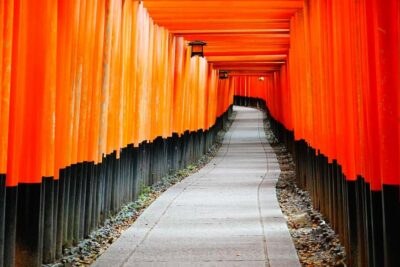
Kinkakuji,Arashiyama,FushimiInariShrine,NaraPark
Read our review →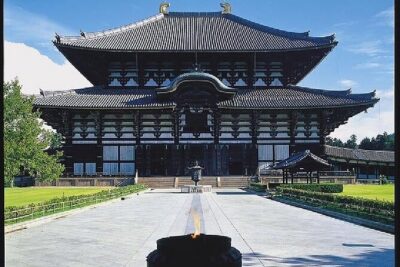
Nara, Fushimi Inari Taisha, Arashiyama Bus Tour
Read our review →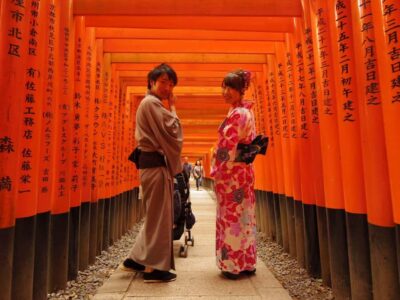
Arashiyama, Nara & Fushimi Inari Shrine w/Lunch
Read our review →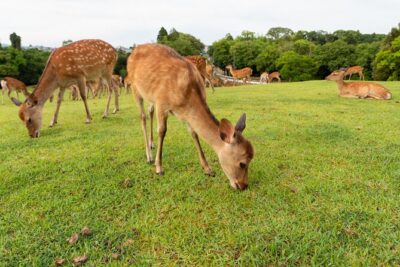
Full Day Guided Tour to Kyoto and Nara from Osaka by Van
Read our review →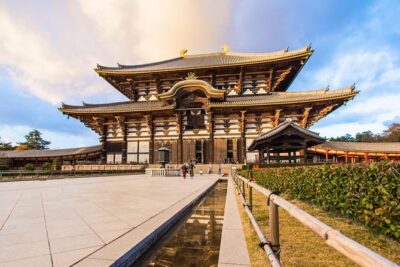
Nara Park, Osaka & Kobe from Kyoto Full Day tour
Read our review →Also filed under