Reviewed · MORNING
Kyoto Early Morning Tour with English-Speaking Guide
Beat Kyoto’s crowd rush before it starts. This early morning Kyoto tour is built for quieter shrine paths and photo breaks with fewer people in your frame. I especially like that you move through Kyoto with an English-speaking guide who explains what you’re seeing, not just where to walk next.
The other big win for me is the group size, max 8, so questions get answered and the pace stays human. The only real drawback to plan for is that Kinkaku-ji entrance and transit costs are extra, so your total won’t be only the headline price.
In This Review
- Key highlights at a glance
- Why This Kyoto Early Morning Route Beats the Crowd
- Small Groups, Real Local Transit, and an English Guide
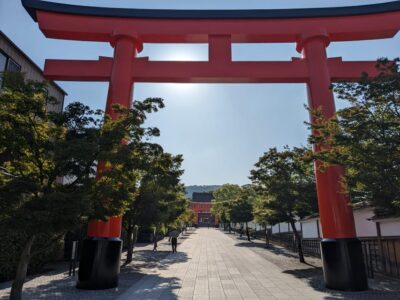
- Stop 1: Fushimi Inari-taisha Before the Day Gets Loud
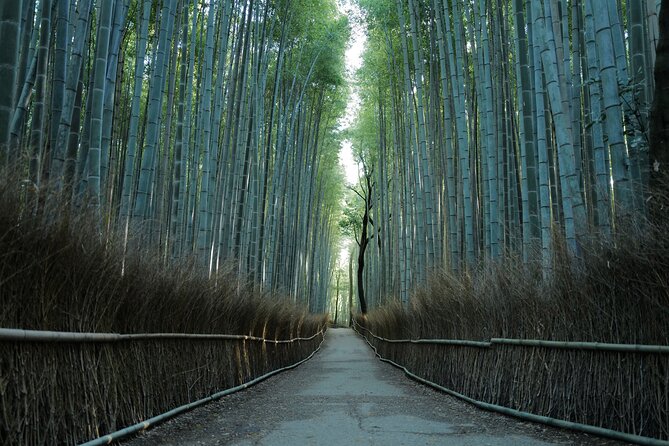
- Stop 2: Arashiyama Bamboo Grove and the Calm Time Slot
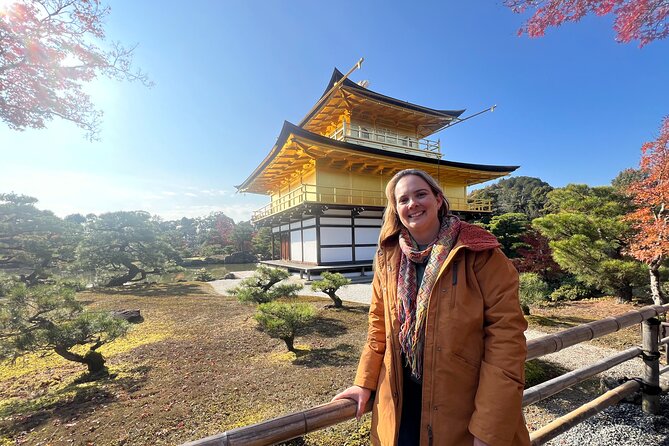
- Stop 3: Kinkaku-ji Golden Pavilion at Prime Light
- Pace, Walking, and What to Bring for a 5 to 6 Hour Morning
- Price and Value: What You Pay For, What You Save
- Who Should Book This Tour (and Who Might Skip It)
- Should You Book This Tour?
- FAQ
- What’s the duration of the Kyoto Early Morning Tour?
- Which stops are included?
- Is Kinkaku-ji admission included in the price?
- Is public transportation included?
- How big is the group?
- What if the weather is bad?
Key highlights at a glance
- Early arrival at Fushimi Inari-taisha so you can walk the torii gates with breathing room.
- Max 8 per group for a calmer morning and more personal guidance.
- Arashiyama Bamboo Grove timing that helps you enjoy the grove before it turns into a crowd.
- Kinkaku-ji Golden Pavilion visit timed for a more peaceful feel than later in the day.
- Public transit practice with your guide so you understand Kyoto’s city layout fast.
Why This Kyoto Early Morning Route Beats the Crowd
Kyoto has a simple rule: the later you go, the more complicated your life becomes. Lines grow, photo spots disappear under moving heads, and you spend more time sidestepping strangers than looking at temples and gardens. This tour aims at the best antidote, a truly early start.
Instead of rushing between landmarks like a checklist, you get a calmer flow across three major areas. Fushimi Inari is famous, Arashiyama is iconic, and Kinkaku-ji is a must. Doing them in the morning means you’re more likely to see the places as places, not as a human bottleneck.
Another smart part for your trip: you finish while the rest of your day is still wide open. After 5 to 6 hours, you’re set up to explore on your own with energy left for neighborhoods, cafes, or a second temple loop.
Small Groups, Real Local Transit, and an English Guide
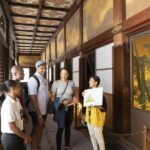
This is not a giant bus tour. Your group maxes out at 8, which you’ll feel quickly when you’re taking photos, asking questions, or trying to keep track of meeting points as you switch locations. Multiple reviews mention guides staying patient and tuned in to different ages, including families with kids. If your group includes a mix of adults and slower walkers, that flexibility matters.
The guide is the glue. You get an English-speaking guide for the full experience, and the main value is how the morning gets explained as you go. Reviews highlight guides like Haruki, Akira, Aya, Arisa, Genki, Karin, Kanami, and Suzuka, all praised for clear guidance and making history feel relevant to what you’re standing in front of.
You also learn how to use public transit as part of the trip. That sounds practical because it is practical. One of the most useful outcomes of a Kyoto morning tour is learning how the city moves around you, so your next hop on your own feels less like guessing.
Beat the crowds with an early start
- Kyoto: Early Morning Tour with English-Speaking Guide
★ 4.9 · 1,128 reviews - From Kyoto: Nara Guided Morning Tour
★ 4.6 · 335 reviews - Kyoto Morning Tour from Kyoto or Osaka
★ 4.0 · 281 reviews - Kyoto: Morning Japanese Bento Cooking Class
★ 5.0 · 149 reviews
Stop 1: Fushimi Inari-taisha Before the Day Gets Loud
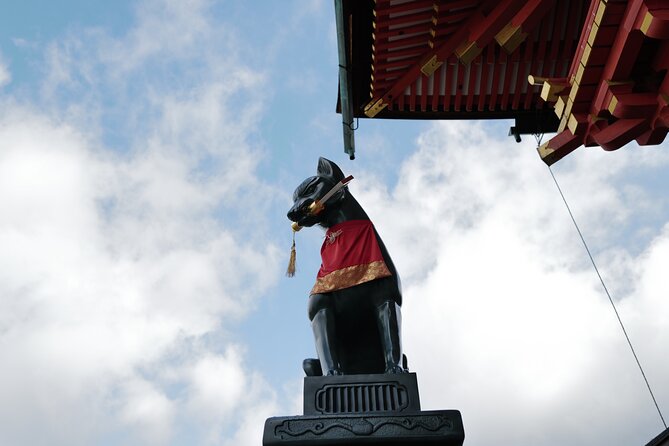
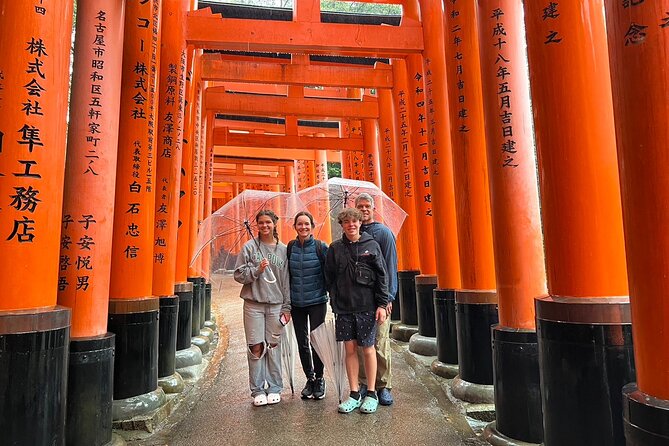
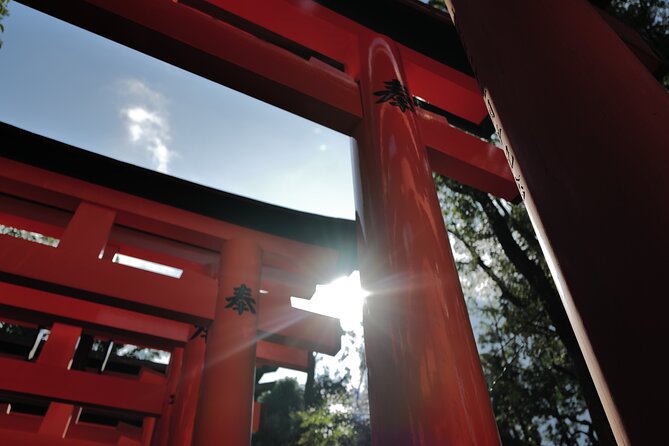
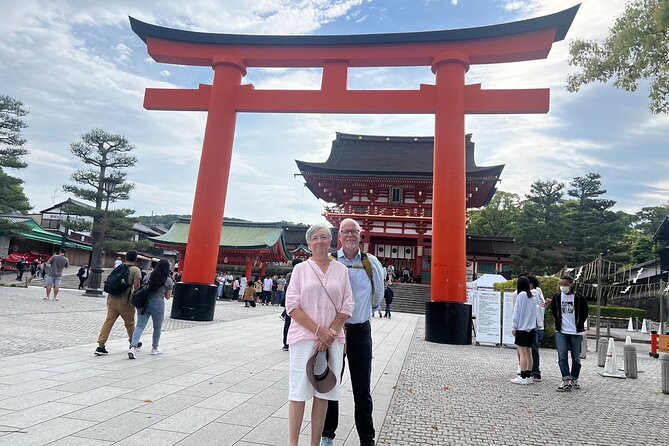
Fushimi Inari-taisha is one of Japan’s most instantly recognizable places: thousands of red torii gates marching up through the hills. The reason this stop is so well-suited to an early tour is simple. In late morning and afternoon, it gets crowded fast, and your photos start looking like you are photographing people, not gates.
In this format, you spend about 1 hour here. That’s enough time to do the main gate walk and also pause for pictures without feeling like you’re being herded. Admission is free, which is a nice bonus because you can put your money toward the parts that really need tickets.
What I like about going early is how the atmosphere changes. Early on, you get space to notice details like the way the torii line funnels your eye forward, and the quieter moments where it feels more spiritual than touristy. A review also points out that mornings help with things like goshuin, the temple stamp books, which can get packed later.
Practical tip: wear shoes you trust. Even if you do not go far up the mountain trails, this shrine area has uneven steps and you’ll be moving for the length of the gate walk.
Stop 2: Arashiyama Bamboo Grove and the Calm Time Slot
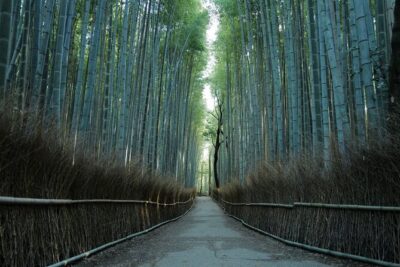
Arashiyama is your mid-morning reset. Instead of torii gates, you get towering bamboo stalks and that hushed, almost rhythmic look as the light filters through. You spend about 1 hour in this area, which is enough time to enjoy the bamboo grove itself and still feel like you’re not standing in one place for too long.
The best reason to schedule Arashiyama this early is crowd control. Bamboo groves are the kind of attraction where people stop wherever they stand, which can block your view and slow your movement. With an early time slot, you’re more likely to get angles that show bamboo depth instead of a wall of shoulders.
You’ll also get guided storytelling here. Reviews repeatedly mention guides helping bring sites to life with context, and that’s exactly what you want at a place like the bamboo grove. Without explanation, it can feel like a pretty photo stop. With it, you understand why the place is meaningful and what details are worth your attention.
A small bonus you might appreciate: some guides seem to build in extra breathing room after the bamboo grove. That can be handy if you want a slow walk, a photo you did not get earlier, or a snack break. Food and drinks are not included, so plan on carrying a little cash just in case.
Practical tip: keep your phone ready but also take a minute to look without it. The grove does something to your sense of scale. If you film or shoot constantly, you can miss it.
Stop 3: Kinkaku-ji Golden Pavilion at Prime Light
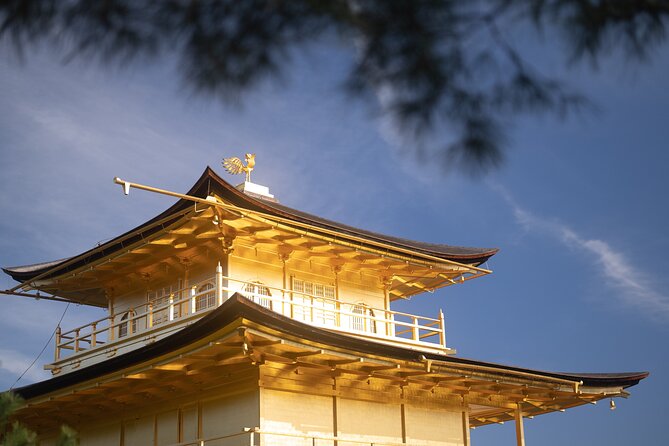
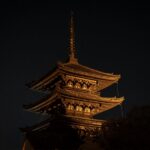
Kinkaku-ji, the Golden Pavilion, is the Kyoto stop most people recognize instantly. Even if you are not a temple person, you’ll see why it’s famous once you’re there. The golden structure catches the eye and anchors the whole scene.
You visit for about 1 hour. The key detail to know up front is that the entrance fee is not included. You’ll pay ¥500 per person on top of what you already booked. It’s a straightforward add-on, but it matters for planning because your final costs change slightly.
The other reason the tour format works well for Kinkaku-ji is timing. This is one of the most photographed temples in Kyoto. Going earlier generally means you have a calmer chance to see the pavilion and the surrounding views without constant jostling.
Reviews also praise how breathtaking the Golden Pavilion feels when the day is still young. If you care about photography, this is where the tour’s earlier schedule pays off again. You can spend time on composition, not just queue management.
Practical tip: bring something light for your comfort. Early mornings can be cool, and walking plus waiting in temple areas can make you feel the temperature change more than you expect.
Pace, Walking, and What to Bring for a 5 to 6 Hour Morning
This tour lasts about 5 to 6 hours, and travel time is included. Even with transit between stops, you should expect a lot of walking. The listing also notes moderate physical fitness is required, which makes sense because Fushimi Inari involves stairs and uneven paths, and you will be moving steadily from one landmark area to the next.
A good pace is part of why people recommend this tour. Many reviews call it relaxed and efficient at the same time, with enough pauses for learning and photos, not just nonstop marching.
Here’s what I’d pack for comfort, based on the rhythm of these three stops:
- Comfortable walking shoes (you’ll thank yourself at Fushimi Inari)
- A small day bag or crossbody so you can keep hands free for cameras
- Water (food and drinks are not included)
- A light layer for early morning temperature swings
If you have kids, this can still work. Several reviews mention guides being patient with younger travelers, and the small group size helps keep the day manageable.
A quieter way to spend a day in Kyoto
Price and Value: What You Pay For, What You Save
The price is $68.98 per person for an English-speaking guide, a small group experience (max 8), and a structured route across three of Kyoto’s headline sites. That is the heart of the value, you pay for time saved and stress reduced.
You also do not pay admission for two of the three stops in your route. Fushimi Inari-taisha is free. The bamboo grove area is presented as part of your experience without an added ticket cost in the tour details. Kinkaku-ji is the one with an entrance fee, ¥500 per person.
On top of that, public transportation fare is extra, listed at about ¥1240 yen. Food and drinks are also not included.
So how do you judge whether it’s worth it?
- If you want the highlights with minimal route planning, an English guide is doing real work.
- If you care about crowd timing, the early schedule is doing real work.
- If you are comfortable navigating Kyoto on your own and you do not mind crowding later, you might skip a guided tour.
For most first-time Kyoto visitors, though, paying for a guide plus crowd-smart timing is one of the highest return ways to spend your limited time.
Who Should Book This Tour (and Who Might Skip It)
Book this tour if you want a focused Kyoto introduction. It hits Fushimi Inari, Arashiyama bamboo, and Kinkaku-ji, then sends you off with the rest of the afternoon free. This is especially useful if it’s your first morning in Kyoto or if you only have limited time before moving on.
It’s also a good choice if you value photo opportunities. Multiple guides are praised for knowing where to stand for the best shots and keeping things moving without rushing people. If you want less crowd clutter in your pictures, the early start is the main advantage.
You might skip it if:
- You prefer to travel completely on your own with no group structure.
- You are strongly price sensitive and do not want additional costs for transit and Kinkaku-ji.
- Your group cannot handle walking and stairs involved around Fushimi Inari.
Should You Book This Tour?
If you are choosing between a DIY morning and a guided one, I’d lean toward this format. Three world-famous Kyoto stops in one morning can be chaotic if you plan poorly. With this tour, you get a calm start, an English guide who makes the sites click, and a small group that keeps the day from feeling like a herd.
My strongest reasons to book:
- Early timing for a quieter Fushimi Inari and Arashiyama.
- Small group size that makes questions and photo stops realistic.
- English guidance that helps you understand what you’re looking at, including how to use local transit afterward.
My one reason to pause:
- Budget for the extra entrance fee at Kinkaku-ji and the public transport fare.
FAQ
What’s the duration of the Kyoto Early Morning Tour?
It runs about 5 to 6 hours, with travel time included in the total.
Which stops are included?
The tour includes Fushimi Inari-taisha, Arashiyama, and Kinkaku-ji (the Golden Pavilion).
Is Kinkaku-ji admission included in the price?
No. The Kinkaku-ji entrance fee is not included and is listed as ¥500 per person.
Is public transportation included?
Public transportation fare is not included. It’s estimated at about 1240 yen.
How big is the group?
The maximum group size is 8 travelers.
What if the weather is bad?
The tour requires good weather. If it’s canceled due to poor weather, you’ll be offered a different date or a full refund.
New This Season
- Koyasan Day Trip by Private Car from Kyoto
- Old Port Town and Ultimate Sake Tasting Private Tour From Kyoto
- Kyoto: 5 Types of Sushi Making
- Sacred Peak & Ancient Paths: Kurama-Kibune Hiking Experience
- Kyoto’s Timeless Charm: 3hr Exploration of History and Peace
- Kyoto: Exclusive ZEN practice at Manpukuji temple in Uji
- Kyoto: Private Seasonal Aroma Yoga Class
- Traversing Kyoto’s Scenic West – Arashiyama to Kinkakuji
Morning, compared.
Early Morning Tour with English-Speaking Guide
Read our review →

Traditional Japanese Washi Papermaking- Kyoto morning
Read our review →
Explore Hidden Alleyway with a Local Expert (Morning tour)
Read our review →