Reviewed · GUIDED
Kyoto 6hr Private Tour with Government-Licensed Guide
Six hours in Kyoto, no guesswork. This private tour puts a licensed English-speaking guide in your day, so you can hit major sights while still moving at a human pace. I really like the public transit approach, because it links the landmarks with the real streets people actually ride.
My favorite part is the flexibility. You choose 3-4 sites from a big menu, and your guide can adjust the flow so you can ask questions while you walk and transfer. I also love how the guides consistently bring a clear, practical feel to the day, like Yuji guiding a route that included Fushimi Inari and Kiyomizu-dera, or Yuka tailoring a plan that finished at Nijo Castle.
One thing to consider: this is a walking-style day, and many temple and palace admissions are not included, plus lunch is not part of the tour price. If you dislike crowds, stairs, or moving between neighborhoods, plan extra time and keep expectations realistic.
In This Review
- Key Points to Know Before You Go
- Why Kyoto in 6 Hours Feels Like More Than a Whirl
- Government-Licensed English Guides You Can Actually Talk To
- Fushimi Inari and Kiyomizu-dera: The Stair-Step Classics With Context
- Gion, Higashiyama, Nishiki, and Pontocho: Old Streets Without the Lost Feeling
- Nijo Castle and Kyoto Imperial Palace: Power, Design, and What to Look For
- Arashiyama by Train: Bamboo, Tenryu-ji, and Togetsukyo Views
- Choosing East Kyoto vs North and Hillside Stops
- Temple Variety Beyond the Usual: Golden, Silver, Mercy, and Dry Gardens
- Tickets, Timing, and Walking Comfort for a Smooth 6 Hours
- Who This Kyoto Private Tour Fits Best
- Should You Book This Kyoto 6-Hour Private Tour?
- FAQ
- How long is the Kyoto private tour?
- Can I choose which sites to visit?
- Does the tour include pickup?
- Is lunch included?
- Are admission tickets included for temples and castles?
- What is the cancellation window?
Key Points to Know Before You Go
- Government-licensed English guide who helps with history and logistics in the same day
- Choose 3-4 sites from a long Kyoto menu, so you are not stuck on a rigid checklist
- Local transit and walking that help you get bearings fast, including navigation support
- Excellent pacing reported again and again, with guides like Joy Etsuko, Noriko, Emi, and Yasu praised for keeping the day smooth
- Entrance fees vary by stop, with some sites free and many others not included
- Made for your interests based on guide communication and day-of adjustments
Why Kyoto in 6 Hours Feels Like More Than a Whirl
Kyoto has a way of swallowing time. One wrong train transfer, one missed bus, and suddenly your one perfect afternoon turns into a running joke with yourself. This tour structure solves that by keeping the day tight, but not frantic: you get 6 hours with a private guide, moving by public transportation and on foot.
Instead of trying to “do Kyoto,” you pick 3-4 locations from a menu that covers classic East Kyoto, central sights, and West Kyoto. That matters. You end up spending your energy on understanding what you see, not just figuring out how to reach it.
Another quiet win is the meet-up style. You meet your guide on foot within a designated area, and pickup and drop-off are handled on foot rather than by a private car. If you want a day that feels local and manageable, this works.
Government-Licensed English Guides You Can Actually Talk To
The biggest difference with a private guide is the back-and-forth. You can ask questions as you go, not after you get home. That is exactly what many reviews highlight, including guides like Yuji, Joy Etsuko, Noriko, Emi, Kazuo, Louis, Yuka, Akira, Ken, Harry, Yasu, Rie, and Nori.
I like the way the best guides handle two different jobs at once. They explain what you are looking at, and they help you move confidently. Noriko is praised for making riders comfortable with subways and trains, while Akira is praised for using photos and diagrams to explain what you see at major sites.
You also get personalization from the start. Several guides are described as communicating ahead of time and tailoring the day around interests and pace, like Kazuo discussing a rough itinerary via WhatsApp, or Yuk a building a plan that matched what the group wanted to see. That is how a 6-hour tour stays worth it, even when Kyoto is busy.
A quieter way to spend a day in Kyoto
- Fushimi Inari Hidden Hiking Tour (Private Option Available)
★ 5.0 · 1,750 reviews - Private Kyoto Tour with a Local, Highlights & Hidden Gems, Personalised
★ 5.0 · 1,543 reviews - 10 Must-see Spots in Kyoto One Day Private Tour (up to 7 people)
★ 5.0 · 1,108 reviews - Kyoto 4hr Private Tour with Government-Licensed Guide
★ 5.0 · 629 reviews
Fushimi Inari and Kiyomizu-dera: The Stair-Step Classics With Context
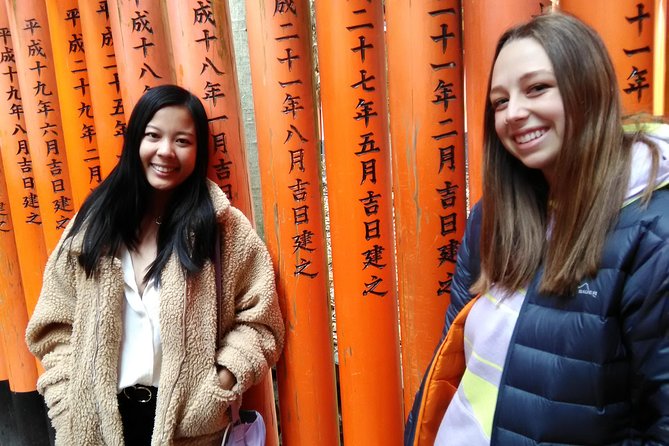
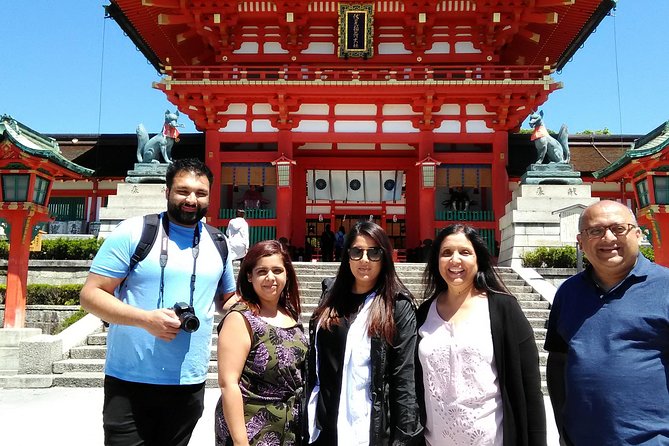
If your Kyoto day needs a strong opening, Fushimi Inari and Kiyomizu-dera are the usual power couple. Both show you different sides of the city: Shinto spirit paths and temple views.
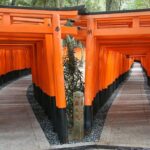
Fushimi Inari-taisha is famous for its vermillion-red torii gates. Even if you have seen photos, you feel the scale more when you are walking through the route with a guide who can connect the spot to broader Japanese cultural themes. The good news for planning: admission is marked as free for this stop.
Then comes Kiyomizu-dera, one of Kyoto’s most recognizable temples, with grounds that make you slow down and look around. Admission is marked as not included here, so budget for the ticket. If you are choosing only a few stops, Kiyomizu-dera is a smart pick because it combines architectural beauty with scenic city atmosphere.
A practical tip from the way these stops work on the ground: wear shoes with real grip. Kyoto temple approaches can be uneven, and you will likely be doing a lot of stairs and slopes even on a “short” route. If your group has mixed mobility, tell the guide early so the plan can be adjusted.
Gion, Higashiyama, Nishiki, and Pontocho: Old Streets Without the Lost Feeling
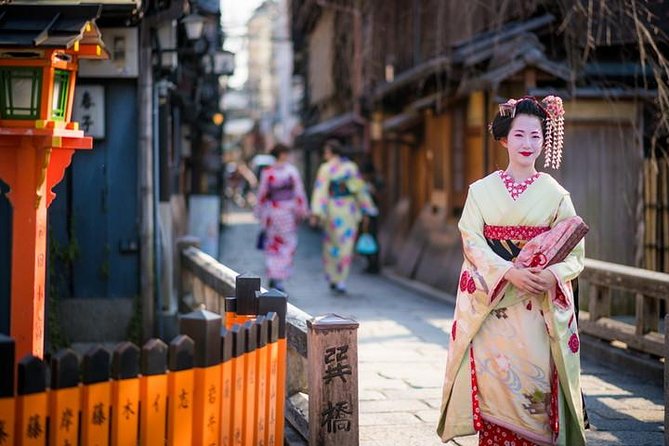
Once you move out of the big headline sights, Kyoto becomes much more fun. That is where districts like Gion, Higashiyama, Nishiki Market, and Pontocho shine, especially on a guided day.
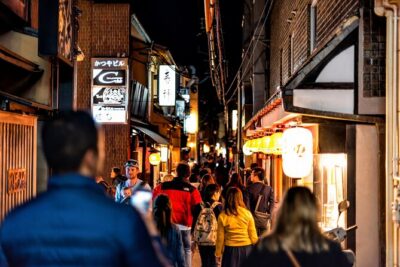
Gion is where you get Kyoto’s geisha district vibe. The tour description calls out that Gion can be daunting for first-time visitors, and a guide helps you avoid aimless circling. This stop is listed as free for admission, which is nice if you are trying to keep costs controlled while still enjoying the atmosphere.
Then you can layer on Higashiyama Ward, a preserved historic area along the eastern mountain slopes. It is the kind of neighborhood that changes depending on the time of day, and with a guide you can learn what to look for as you walk. That makes the streets feel more than scenery.
Add Nishiki Market, often described as Kyoto’s Kitchen. It is a narrow five-block stretch packed with shops and places to taste and browse. The key value of the guide here is direction: you can sample without wasting time guessing what is worth a stop.
Finally, Pontocho gives you that narrow alley restaurant energy by the Kamogawa river area. The listing marks it as free. This is a great “wind-down” stop when you want atmosphere without committing to a paid-ticket attraction.
One drawback: these areas can be crowded, especially around peak visiting hours. If you are sensitive to crowds, bring patience and let your guide guide you through timing and side-streets.
Nijo Castle and Kyoto Imperial Palace: Power, Design, and What to Look For
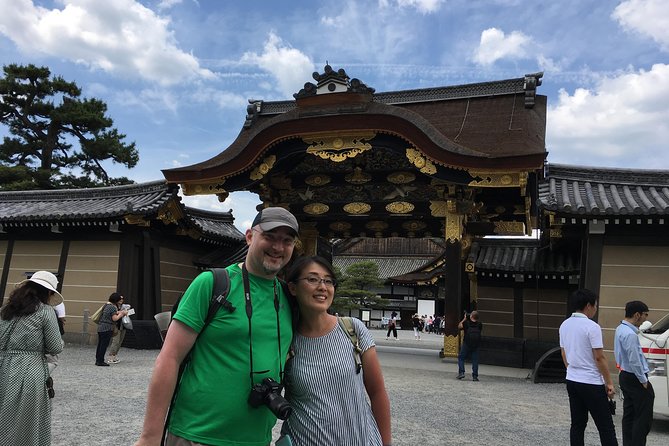
Kyoto is full of temple gates and tea-shop signage, but castles and palaces show you how the city’s political power shaped daily life. If you choose central-history stops, Nijo Castle and Kyoto Imperial Palace are both strong options.
Nijo Castle gives you the Tokugawa-era mood. The description highlights that its gorgeous style demonstrates shogun Tokugawa Ieyasu’s presence and legacy. Admission is not included for this stop, so plan for the ticket cost. I like this kind of stop when I want a break from walking shrine paths, because it rewards attention: you notice details when someone points them out.
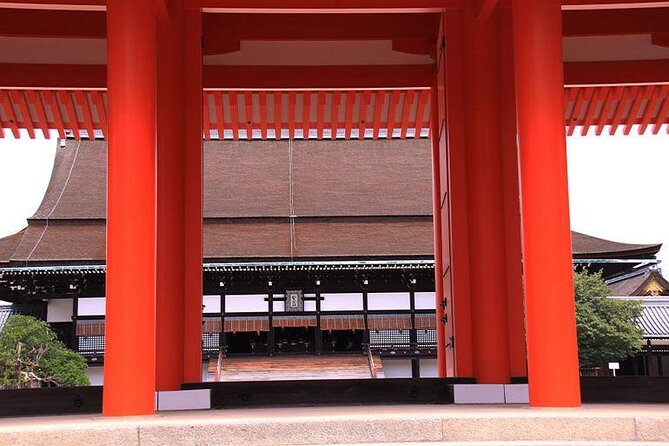
Kyoto Imperial Palace is different. It was the residence of Japan’s Imperial Family until 1868, when the emperor and capital moved from Kyoto to Tokyo. Admission is listed as not included, and you should expect extra travel time depending on how your route is shaped.
If you are building a 3-4 site day, a smart mix is one “high drama” site like Kiyomizu-dera plus one “power and architecture” stop like Nijo Castle. You get variety in mood, and the guide can help you connect the dots.
Arashiyama by Train: Bamboo, Tenryu-ji, and Togetsukyo Views
West Kyoto is where Kyoto feels wider, greener, and a little more breathing room, and Arashiyama is the name you will hear everywhere. The best part is that it is not just a single landmark. You can build a mini circuit.
If you choose it, Tenryu-ji Temple is a top pick. It is described as the most important temple in the Arashiyama district and even registered as a World Heritage Site. Admission is marked as not included. A guide helps here because the gardens and temple layouts can be easier to understand when someone explains what you are seeing as you walk.
Next is Togetsukyo Bridge, Arashiyama’s iconic landmark. Even the name, Moon Crossing Bridge, hints at the romantic reputation. It was originally built in the Heian Period and reconstructed in the 1930s, according to the tour details. It is one of those stops where the timing of your photos matters.
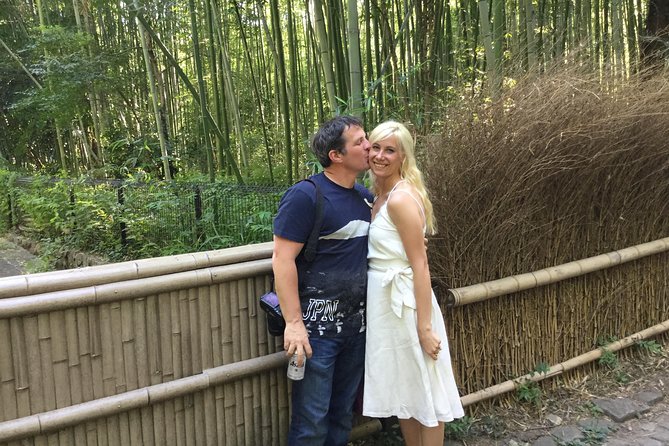
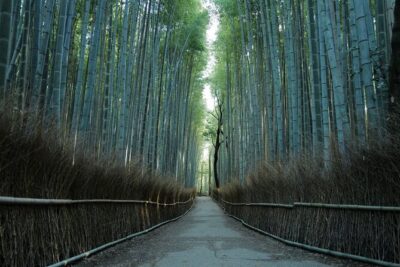
Then you add the bamboo grove walking paths. The listing notes that a light wind can make the bamboo stalks sway, and the paths are a nice walk or bike ride. This is often where the day shifts from “tour mode” to “Kyoto mode,” and having a guide means you spend less time deciding where to go.
A popular add-on is Okochi Sanso Garden, a former villa behind the bamboo groves of actor Okochi Denjiro. Admission is not included, but it fits well if you want more gardens and less pure sightseeing.
I will say one practical thing: Arashiyama can be touristy. That is normal. Your guide value is finding the best walk sequence and keeping you from backtracking.
A day of temples goes further with something to break it up.

Choosing East Kyoto vs North and Hillside Stops
Kyoto’s north and hillside areas can feel like a different trip. If your group wants a quieter, more nature-forward day, the tour menu includes options like Kibune and Kurama, plus hillside temple clusters.
Kibune is described as a small town in a forested valley, developed around Kifune Shrine. It is listed as free for admission. Kurama-dera is also included, with the note that it is less than one hour from the city center and best known for Kurama-dera and a hot spring.
If you like temple gardens, there is a whole section in the menu that can turn your day into a walking museum. You can pick a Zen temple route such as Ginkakuji (Silver Pavilion), Ryoan-ji with its famous rock garden, or Daitoku-ji and Myoshinji temple complexes. These are listed as not including admission tickets, so budget for that part.
One hillside temple circuit that stands out in the menu is Adashino Nenbutsu-ji and Otagi Nenbutsu-ji, both tied to stone statues of Buddhist figures. Another option is Jojakkoji, with small hillside buildings and seasonal maple and moss scenery. If your group enjoys quiet walks and doesn’t mind stairs, these are memorable picks.
The key is the trade-off. The more you go toward hills, the more your day depends on timing and walking comfort. With a guide, you can manage that trade-off better than self-guided.
Temple Variety Beyond the Usual: Golden, Silver, Mercy, and Dry Gardens
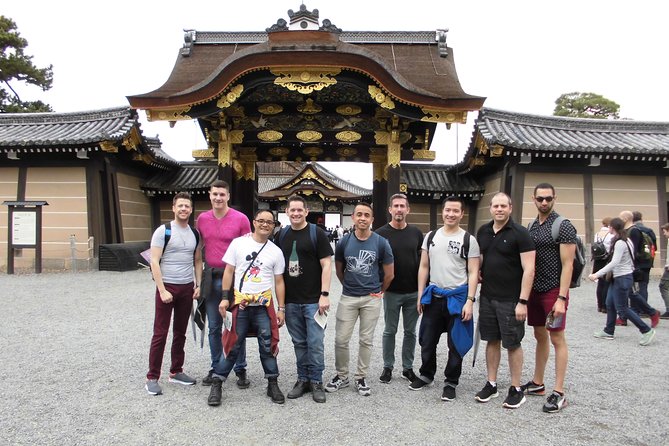
Part of what makes this tour menu appealing is that Kyoto is not one vibe. It is Shinto shrines, Zen rock gardens, Buddhist halls with statues, and even garden design. The guide helps you pick the mix that makes sense for your taste.
Kinkakuji (Golden Pavilion) is the famous gold-leaf temple, formally Rokuonji, and described as a retirement villa of shogun Ashikaga Yoshimasa. Admission is not included for this stop. If you have already seen gold versions in other countries, this one still lands because the setting matters.
Ginkakuji (Silver Pavilion) offers the opposite mood. It is described as a Zen temple with a retirement villa background, modeling it after a style connected to a famous counterpart. Admission is not included.
For statue-heavy stops, Sanjusangendo is listed as famous for 1001 statues of Kannon, the goddess of mercy. Admission is not included. That is an intense visual experience, and it helps when your guide frames what you are seeing before you enter the hall.
For garden lovers, Kennin-ji is in the menu near Hanamikoji and Shijo streets, with dry landscape gardens. Admission is not included.
And if your group is willing to include a trip beyond Kyoto city, Byodoin Temple in Uji is listed, with the Phoenix Hall as a National Treasure and UNESCO World Heritage Site. Admission is not included, and the tour details warn about extra travel time. If you want maximum “one-day impact,” this is a good high-value add-on, as long as your 6 hours stay realistic.
Tickets, Timing, and Walking Comfort for a Smooth 6 Hours
This tour is a walking tour. That sounds obvious, but it is the big hidden driver of how enjoyable the day feels. Even with public transit between areas, you should expect a lot of walking on uneven sidewalks, steps, and temple approaches.
Many temple sites on the list show admission tickets as not included, including Kiyomizu-dera, Nijo Castle, Kyoto Imperial Palace, and major Zen temples like Ginkakuji, Nanzenji Suirokaku, and Kinkakuji. Some stops are marked free for admission, including Fushimi Inari-taisha, Gion, Nishiki Market, Pontocho, and Toji. The practical takeaway is simple: you control your total cost by which paid-ticket stops you select.
Lunch is not included. That means you should plan food timing, especially if your itinerary includes busy districts like Gion and Nishiki Market. Several guide reviews praise restaurant and shopping suggestions, so ask your guide what makes sense for the group once your stops are set. If you skip that step, you might end up eating in a more touristy location out of convenience.
Finally, keep your expectations aligned with the format. You are not doing 15 stops. You are doing 3-4, and you are doing them in a way that keeps you oriented and moving efficiently.
Who This Kyoto Private Tour Fits Best
This experience fits best if you want your Kyoto day to be both efficient and personal. It is a great match for:
- First-time visitors who worry about getting lost in neighborhoods like Higashiyama and Gion
- Families and mixed-age groups who need pacing and context, like reviews praising guides who kept the day working for seniors and teenagers
- Food and shopping add-ons, since the menu includes Nishiki Market and the guide can point you toward practical choices
- People who want a guide who can explain what you see, not just escort you from one ticket line to the next
If you are the type who loves long solo wandering with no structure, you might find 6 hours still feels like you are being “managed.” But if you want the best of Kyoto with less stress, this is a strong way to start.
Should You Book This Kyoto 6-Hour Private Tour?
Yes, I think you should book it if you want a private guide, a short list of top sights, and real help moving between them. The pricing of $155.86 per person becomes easier to justify when you share the experience with friends or family, because you are paying for time saved, navigation stress reduced, and better understanding of what you are looking at.
I would book it with confidence if your plan includes at least one major icon (like Fushimi Inari or Kiyomizu-dera) and one neighborhood moment (Gion, Higashiyama, Nishiki Market, or Pontocho). The guides mentioned across reviews, including Yuji, Joy Etsuko, Noriko, Emi, Yuka, and Akira, repeatedly stand out for making the day flow and for adjusting to your group.
I would hesitate only if you hate walking, you cannot handle paid temple tickets on a tight schedule, or you want to see dozens of sites in a single day. Kyoto is big, and this tour is intentionally not trying to fake a time machine.
FAQ
How long is the Kyoto private tour?
The tour duration is about 6 hours.
Can I choose which sites to visit?
Yes. You can customize the day by choosing 3 to 4 sites from the available Kyoto list.
Does the tour include pickup?
Pickup is offered, and pickup and drop-off are described as being on foot. You also meet the guide within a designated area in Kyoto.
Is lunch included?
No. Lunch is not included.
Are admission tickets included for temples and castles?
No. Admission tickets are generally not included, though some stops are marked as free for admission.
What is the cancellation window?
Free cancellation is available up to 24 hours in advance for a full refund. If you cancel less than 24 hours before the start time, the amount you paid is not refunded.
New This Season
- Koyasan Day Trip by Private Car from Kyoto
- Old Port Town and Ultimate Sake Tasting Private Tour From Kyoto
- Kyoto’s Timeless Charm: 3hr Exploration of History and Peace
- Kyoto: 5 Types of Sushi Making
- Sacred Peak & Ancient Paths: Kurama-Kibune Hiking Experience
- Kyoto: Exclusive ZEN practice at Manpukuji temple in Uji
- Kyoto: Private Seasonal Aroma Yoga Class
- Traversing Kyoto’s Scenic West – Arashiyama to Kinkakuji
Guided, compared.
Kyoto Early Morning Tour with English-Speaking Guide
Read our review →Early Morning Tour with English-Speaking Guide
Read our review →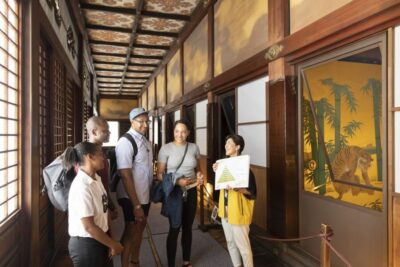
Nijo-jo Castle and Ninomaru Palace Guided Tour
Read our review →
Kyoto Gion Night Walk & Geisha District Guided Tour
Read our review →
Nijo Castle, Kiyomizu & Fushimi Inari Guided Tour
Read our review →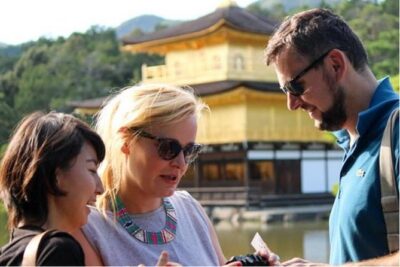
Kyoto 4hr Private Tour with Government-Licensed Guide
Read our review →