Reviewed · MORNING
Kyoto Morning Tour from Kyoto or Osaka
Kyoto in four and a half hours, yes, you can. This bus tour is built for a quick hit of three major UNESCO sites, with admission fees and transport handled for you. I like the straight-forward flow, you hit the big names early, then you get back to Kyoto Station before midday.
Two things I really like: first, the tour includes English-speaking guidance plus entrance tickets, so you do not waste your limited time figuring out gates and lines. Second, the air-conditioned vehicle between stops makes the schedule feel realistic, especially on hot or rainy mornings.
One thing to consider is timing. Kyoto’s biggest sites can be closed on certain days, and the tour swaps in other temples or shrines, so you may not get the exact Imperial Palace experience you planned.
In This Review
- Key things to know before you go
- A fast Kyoto sampler: what this 4.5 hour format gets you
- Meeting at Kyoto Avanti and riding in comfort
- Nijo Castle: Tokugawa power and the parts you should focus on
- If Nijo Castle is closed
- Kinkakuji Golden Pavilion: pond views and the one-way reality
- Kyoto Imperial Palace: seeing the emperor’s former seat when it is open
- If Kyoto Imperial Palace is closed
- Price and value: is $87.19 a good deal?
- Small-group notes: what crowding does to your experience
- Who should book this morning tour, and who should skip it
- Should you book this Kyoto Morning Tour?
- FAQ
- What are the main stops on this Kyoto morning tour?
- How long is the tour?
- Is transportation included, and do I need to buy tickets separately?
- Where do I meet the tour, and where does it end?
- What should I do if the Imperial Palace or Nijo Castle is closed on my travel day?
- Is there free cancellation?
Key things to know before you go
- Three UNESCO priorities in one morning: Nijo Castle, Kinkakuji, and Kyoto Imperial Palace area
- Clear time blocks at each stop: about 50 minutes, 45 minutes, 40 minutes
- Comfort matters: travel between sites in an air-conditioned vehicle
- Closures trigger planned substitutions: Kitano Tenmangu, Nishi Hongan-ji, or Ryoan-ji may replace a closed site
- Group size stays moderate: up to 40 people, seats are not designated
- Hearing the guide can vary: crowds can make it tough in popular areas
A fast Kyoto sampler: what this 4.5 hour format gets you
This tour is for people who want structure. You trade flexibility for speed, and you get a guided, adult-sized version of Kyoto highlights without spending the whole day running across town.
The schedule is tightly managed for a reason. Nijo Castle takes time to walk properly, Kinkakuji is popular and can get crowded fast, and the Imperial Palace grounds need a bit of pacing even when you are not lingering for hours. With stops set around 50 minutes, 45 minutes, and 40 minutes, you can see the core pieces and still have energy left for your own wandering afterward.
The included guidance is the other big reason this works. A good guide helps you read what you are looking at, like what Nijo Castle meant in the Tokugawa era or what the Imperial Palace represented before Japan’s capital moved to Tokyo.
Meeting at Kyoto Avanti and riding in comfort
You meet at Kyoto Avanti, address listed near Minami Ward, and the meeting spot is in front of Kyoto Avanti by Kyoto Station’s Hachijo Exit. The tour ends at the same place, in front of Kyoto Avanti across from the Hachijo Exit.
That matters because Kyoto Station is your practical hub. When the tour finishes, you are back where trains and buses are easiest to use. If you are starting the day by exploring a neighborhood, grab a coffee near your hotel and then come to Kyoto Station, you will stay less stressed all morning.
The bus ride is air-conditioned, and that is a small detail that turns into a big comfort win. Even on mild days, Kyoto mornings can feel muggy. The vehicle also keeps you from burning time on transfers between scattered sites.
Two more logistics notes from the overall experience setup:
- Seating is not designated, so arrive a little early if you care where you sit.
- The tour uses a mobile ticket, so you will want your phone charged and ready.
Beat the crowds with an early start
- Kyoto Early Morning Tour with English-Speaking Guide
★ 5.0 · 1,427 reviews - Kyoto: Early Morning Tour with English-Speaking Guide
★ 4.9 · 1,128 reviews - From Kyoto: Nara Guided Morning Tour
★ 4.6 · 335 reviews - Kyoto: Morning Japanese Bento Cooking Class
★ 5.0 · 149 reviews
Nijo Castle: Tokugawa power and the parts you should focus on
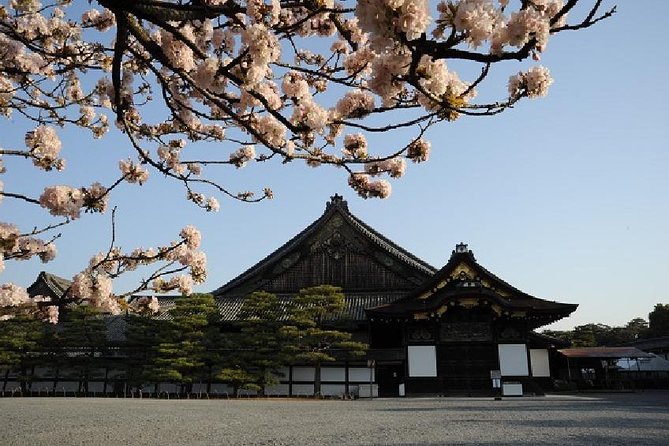
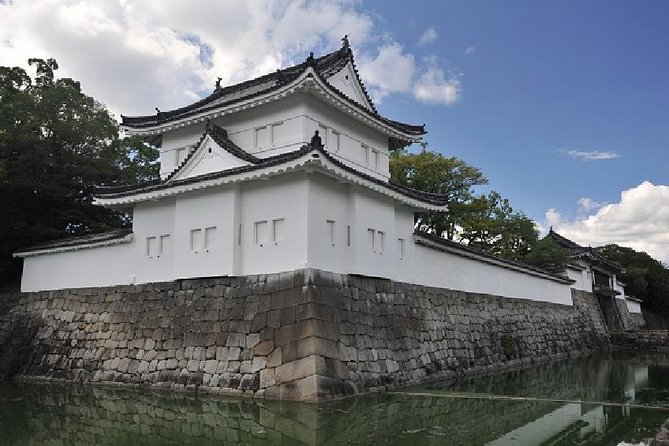
Nijo Castle is a UNESCO-listed fortress linked to the Tokugawa Shogunate. It was built on orders of Tokugawa Ieyasu, the first shogun of that era, in 1603. That background gives the visit context fast, because this is not just a pretty castle. It was designed to send a message of control.
You typically get around 50 minutes here. That is long enough to see the layout and key interior highlights without turning it into a sprint. The most commonly highlighted parts include the Ninomaru Palace, especially the elaborate carvings and decorations. This is also where you learn how the castle spaces were arranged for the shogun’s authority, not just for show.
Practical tip for your visit: because your time is limited, do not try to photograph everything. Pick your must-sees, then walk the gardens and approach points slowly enough to actually notice details. Even if you do not read every label, the building design tells a story when you slow down for 60 seconds at a time.
Also watch the weather. Castle interiors feel different depending on the light and humidity outside. If it is raining, you may find you spend more time under covered structures, which can be a good way to stay comfortable.
If Nijo Castle is closed
Kyoto has predictable closure days for major sites. If Nijo Castle is closed on certain Tuesdays (including specific months and dates), the tour swaps in Ryoan-ji Temple instead. No refunds are issued if a substitution happens due to those scheduled closures, so check your date early if Nijo is your main goal.
Kinkakuji Golden Pavilion: pond views and the one-way reality
Kinkakuji, the Golden Pavilion, is the Kyoto stop most people picture in their heads. Your schedule usually gives you about 45 minutes here, and it is usually enough if you focus on the big scenes: the pavilion itself and the pond setting that frames it.
The tour highlights that the architecture is covered in thin layers of pure gold. Visually, that is the main event, but Kinkakuji is also a design lesson. The surrounding gardens and the way viewpoints are arranged make you understand why people travel here even when they have already seen other temple gardens in Japan.
One important practical detail comes up in the way the site is managed. The route can be one-way, and you may encounter stairs that feel uneven or rocky. That is not a deal breaker, but it affects how fast you can move and how much you can enjoy the experience.
Another thing to plan for is crowd energy. This is the stop where groups can overlap, and you might find it harder to hear guide audio when multiple tour groups speak at once.
My advice: assume you will not hear every word at this stop. Instead, use the narration to catch a few key points, then spend your time looking. Take a few minutes at the best viewing areas, then move on before you get stuck in slow-moving lines.
Kyoto Imperial Palace: seeing the emperor’s former seat when it is open
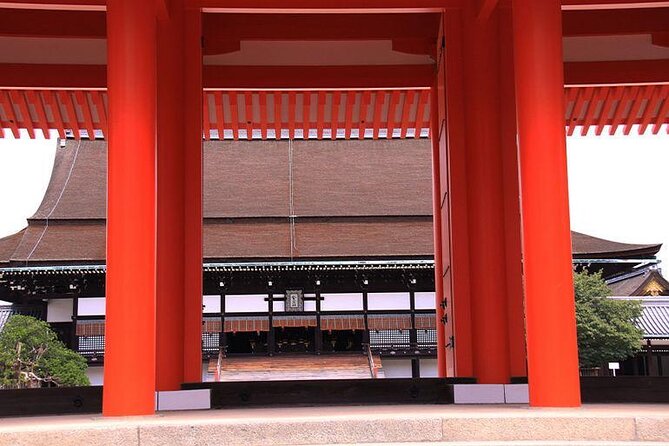
This is the emotional anchor for many people booking this tour. The Imperial Palace is tied to the Emperor’s residence before the capital moved to Tokyo around 1868. You will see the former site of imperial enthronement ceremonies and get a sense of the building design and simplicity in its interiors.
The stop is scheduled for about 40 minutes. That can feel short if you love details, but it is realistic when you also have Nijo and Kinkakuji on the same morning. For most people, 40 minutes is enough to understand the layout and hit the highlights without rushing through everything.
Now for the part you must know. Kyoto Imperial Palace can be closed to visitors on Mondays, or the following day if Monday is a holiday. If that is your day, the tour substitutes instead of cancelling.
A day of temples goes further with something to break it up.
If Kyoto Imperial Palace is closed
If the Imperial Palace is not accessible, the tour goes to Kitano Tenmangu Shrine. And if the closure day falls on the 25th, it swaps in Nishi Hongan-ji Temple.
This substitution policy shows up strongly in the feedback pattern for this tour. Some people booked primarily for the palace visit, and when the palace was closed, they felt the tour did not match their expectations. If Kyoto Imperial Palace is your top priority, double-check your visit day and be mentally flexible about your plan B.
Price and value: is $87.19 a good deal?
At about $87.19 per person, this is not a budget tour, but it is also not overpriced given what it includes. You are paying for:
- Entrance fees to the major stops (Nijo and Kinkakuji)
- Guided interpretation in English
- Vehicle transport between locations
- A morning schedule that gets you back to Kyoto Station
If you tried to replicate this on your own, the cost often shifts rather than disappears. You still pay for admissions at key sites. Add in transit time and getting to each stop efficiently, and your morning becomes a juggling act.
The tour is strongest for people who value time more than control. It is less ideal if you want to linger for hours, explore side streets, or move at your exact pace. This is a highlights-and-go format.
The best value move is to book this if you are staying in Kyoto for only a short window, or if you are based near Kyoto Station and want an efficient first taste of the city’s historic core.
Small-group notes: what crowding does to your experience
This tour runs with a maximum of 40 travelers, so it is not a private outing. Reviews tend to praise the guiding style and organization, and they also point out the friction points.
The most repeated practical issue is hearing. If your group is in a busy area, it can be hard to catch every word. There is also mention in feedback that some tours did not use the wireless microphone system that some guests expected, which makes audio clarity inconsistent.
What you can do to protect your experience:
- Stand near the front half when you expect narration to matter.
- When you are at the Golden Pavilion, accept that your eyes will do most of the work.
- If you care about audio, plan for crowds and consider bringing something that helps you hear at close range, if you already use that on other tours.
The human factor can make a big difference. Names that came up in feedback include Mr. Harada, Casey (KC), Jessie, and Jun. When you get a guide who keeps the stories lively and the pacing clear, this tour feels like an efficient education rather than a checkbox list.
Who should book this morning tour, and who should skip it
This tour fits well if you:
- Want a structured Kyoto introduction in one morning
- Like the idea of seeing three icons without planning transit between each one
- Appreciate having tickets and admissions handled
- Are staying near Kyoto Station or can easily reach Kyoto Avanti
Skip or think twice if you:
- Only care about the Imperial Palace and might be unhappy with substitutions
- Want lots of free time at each site for deep reading or slow photo sessions
- Hate crowded routes or uneven steps and would rather go at your own pace
If you are traveling with kids, the format can still work because the stops are timed and there is a bus between locations. Children up to 5 can join free, but bus seats are not provided for them, so that is a detail you should plan for.
Should you book this Kyoto Morning Tour?
Book it if you want the quickest on-ramp to Kyoto’s most recognizable heritage, and you are happy to treat it as a highlights sampler. The included admissions and transport, plus the short, guided stops, make it a strong value when your time is tight.
Hold off or choose a different plan if Kyoto Imperial Palace is your one must-see and you cannot tolerate the possibility of a day-based swap to Kitano Tenmangu or Nishi Hongan-ji. Check the day you are going, keep a flexible mindset, and you will get a lot out of a compact morning.
FAQ
What are the main stops on this Kyoto morning tour?
The tour visits Nijo Castle, Kinkakuji Temple (Golden Pavilion), and the Kyoto Imperial Palace area. If Kyoto Imperial Palace is closed, the tour visits Kitano Tenmangu Shrine instead, and on certain dates it may visit Nishi Hongan-ji Temple. If Nijo Castle is closed on specified days, the tour visits Ryoan-ji Temple instead.
How long is the tour?
The duration is about 4 hours 40 minutes. The time at each stop is approximately 50 minutes at Nijo Castle, 45 minutes at Kinkakuji, and 40 minutes at the Kyoto Imperial Palace stop.
Is transportation included, and do I need to buy tickets separately?
Yes. Transportation between sites and admission fees are included in the tour price. The Kyoto Imperial Palace portion is listed as free during the tour.
Where do I meet the tour, and where does it end?
You meet at Kyoto Avanti near Kyoto Station’s Hachijo Exit (the start point is listed at Kyoto Avanti31). The tour ends in front of Kyoto Avanti across from the Kyoto Station Hachijo Exit.
What should I do if the Imperial Palace or Nijo Castle is closed on my travel day?
If Kyoto Imperial Palace is closed to visitors on specific days, the tour goes to Kitano Tenmangu Shrine, and on certain dates it goes to Nishi Hongan-ji Temple. If Nijo Castle is closed on specified Tuesdays and date ranges, the tour visits Ryoan-ji Temple. The tour notes that refunds are not issued when these alternative destinations are used due to closures.
Is there free cancellation?
Yes. You can cancel for a full refund up to 24 hours before the experience start time.
New This Season
- Koyasan Day Trip by Private Car from Kyoto
- Old Port Town and Ultimate Sake Tasting Private Tour From Kyoto
- Kyoto’s Timeless Charm: 3hr Exploration of History and Peace
- Kyoto: 5 Types of Sushi Making
- Sacred Peak & Ancient Paths: Kurama-Kibune Hiking Experience
- Kyoto: Exclusive ZEN practice at Manpukuji temple in Uji
- Kyoto: Private Seasonal Aroma Yoga Class
- Traversing Kyoto’s Scenic West – Arashiyama to Kinkakuji
Morning, compared.
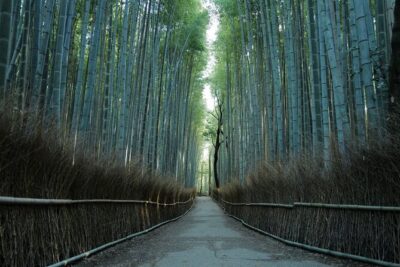
Kyoto Early Morning Tour with English-Speaking Guide
Read our review →Early Morning Tour with English-Speaking Guide
Read our review →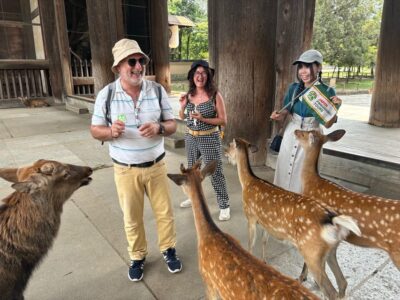
Traditional Japanese Washi Papermaking- Kyoto morning
Read our review →
Explore Hidden Alleyway with a Local Expert (Morning tour)
Read our review →