
Reviewed · NARA & DEER PARK DAY TRIPS
Kyoto and Nara Day Trip from Kyoto
One day, two UNESCO cities. This Kyoto and Nara trip strings together the big hitters of both places, with air-conditioned comfort and a licensed English guide explaining what you’re seeing. You get a smooth schedule that still feels like you are touring real historic neighborhoods.
What I love most is the way the guide keeps the day moving without turning it into a blur, with humor and clear context at each stop. I also like that admission fees and transportation are built into the price, so you can focus on temples, gardens, and photos instead of planning logistics. The main drawback to consider is that it is a packed, long day, so you will likely feel rushed at certain points, especially toward the end in Nara.
In This Review
- Key things to know before you go
- Why this Kyoto and Nara day works at all
- Getting started: the 8:20am meeting at JTB Sunrise Tours Desk Kyoto
- Nijo Castle: Tokugawa power you can feel in the details
- If Nijo Castle is closed, there’s a backup
- Kinkaku-ji: the Golden Pavilion and the pond you’ll want in your frame
- Kyoto Imperial Palace: Shishin-den and ceremony without the full palace access
- Palace closures mean a swap, usually nearby
- The drive to Nara: long day comfort matters
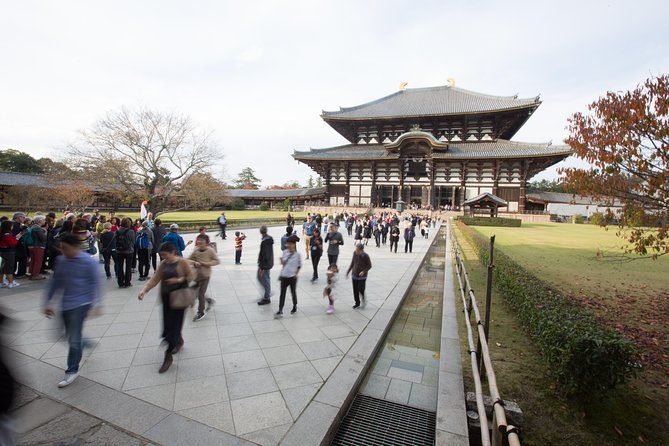
- Todai-ji and the Great Buddha scale in real life
- Then it flows right into Nara Park
- Kasuga Grand Shrine: lantern-lined quiet with a guide in control
- Main Sanctuary access is sometimes possible
- Nara Deer Park: cute, but keep your distance and watch your timing
- Price and value: is $194.85 a smart deal?
- Lunch options: included only if you choose the meal add-on
- Comfort, walking, and the reality of a 10 to 11 hour day
- Who should book this Kyoto and Nara day trip
- Should you book this tour?
- FAQ
- How long is the Kyoto and Nara day trip?
- What does the ticket price include?
- Is the bus air-conditioned?
- Does the tour include lunch?
- What lunch types are offered?
- What if Kyoto Imperial Palace is closed?
- What if Nijo Castle is closed?
- Where does the tour start and end?
- How does cancellation work?
Key things to know before you go
- UNESCO highlights, tightly scheduled: Nijo Castle, Kinkaku-ji, and Kyoto’s Imperial Palace, then Todai-ji and Kasuga in Nara.
- Gold Pavilion photo target: Kinkaku-ji is timed so you can take in the Golden Pavilion and its pond setting.
- Deer Park time at the end: you finish around Nara Park, where deer are free-roaming, and walking back to the bus can feel long.
- If a main sight is closed, you still get a swap: Kyoto Imperial Palace and Nijo Castle can be replaced by nearby alternatives.
- Lunch is optional, and options are limited: Western set menu or Indian thali if you book the lunch add-on.
- Group size stays reasonable: capped at 40, with no guaranteed assigned seats.
Why this Kyoto and Nara day works at all
If you only have one full day in the Kansai area, this trip is a practical way to see the most famous temple clusters without dealing with trains, transfers, or timing. You also get historical context at each stop, which helps Kyoto and Nara stop feeling like a checklist.
I like that the day is organized around major sites, not random photo stops. That means you spend your energy on places that are worth the queue and the shoe rules.
The flip side is the length. Expect a long day from an early start, and plan your energy like it is a workout.
Getting started: the 8:20am meeting at JTB Sunrise Tours Desk Kyoto
The tour begins at 8:20am at JTB SUNRISE TOURS DESK KYOTO, located in the Avanti building near Kyoto Station. It’s close to transit, which helps if you are arriving from elsewhere in Japan, and it is a straightforward meeting point once you find the building.
One practical tip: if you are not a Kyoto Station regular, give yourself a little cushion to locate the exact desk. A few people have said the start point can be confusing if you are new to the station area.
The end point is Kyoto Station around 6:30pm for guests using the Kyoto start and end option. You’ll head back to your hotel on your own, since there’s no door-to-door drop-off.
Deer that bow back, a short ride away
- Osaka/Kyoto:Kinkakuji,Arashiyama,FushimiInariShrine,NaraPark
★ 4.1 · 1,596 reviews - Kyoto/Osaka: Nara, Fushimi Inari Taisha, Arashiyama Bus Tour
★ 4.7 · 1,275 reviews - Osaka/Kyoto: Arashiyama, Nara & Fushimi Inari Shrine w/Lunch
★ 4.4 · 754 reviews - Full Day Guided Tour to Kyoto and Nara from Osaka by Van
★ 5.0 · 420 reviews
Nijo Castle: Tokugawa power you can feel in the details
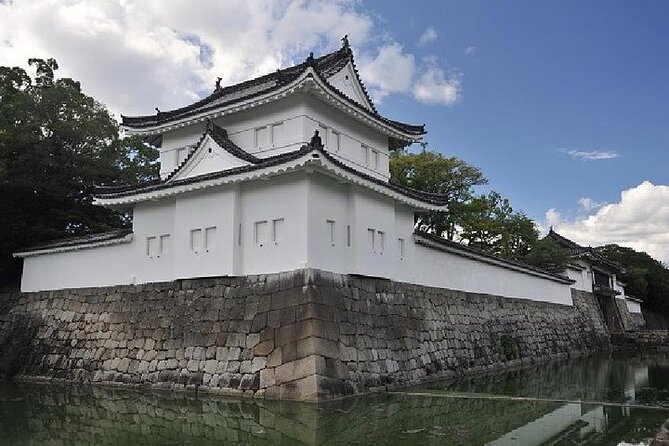
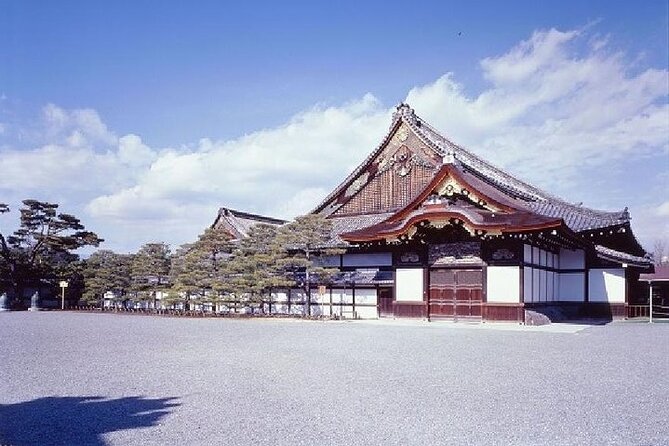
Nijo Castle is your first real hit of history, built for the Tokugawa shogun era and linked to Kyoto’s imperial seat. You’ll spend about 50 minutes here, with admission included, and it’s famous for the contrast between a solemn outside and a more detailed interior.
Plan on removing your shoes. This is one of those cultural moments that can slow you down if you’re not ready, so keep your socks and shoes routine simple.
A nice bonus of starting here is pacing. After breakfast in Kyoto, you get a big, structured site first, rather than reaching it late in the day when you’re tired.
If Nijo Castle is closed, there’s a backup
The tour notes that Nijo Castle can be closed on certain Tuesdays in specific months, and during a year-end stretch. When that happens, the plan may swap to Ryoan-ji Temple instead, so you are not left with only Kyoto’s secondary options.
Kinkaku-ji: the Golden Pavilion and the pond you’ll want in your frame
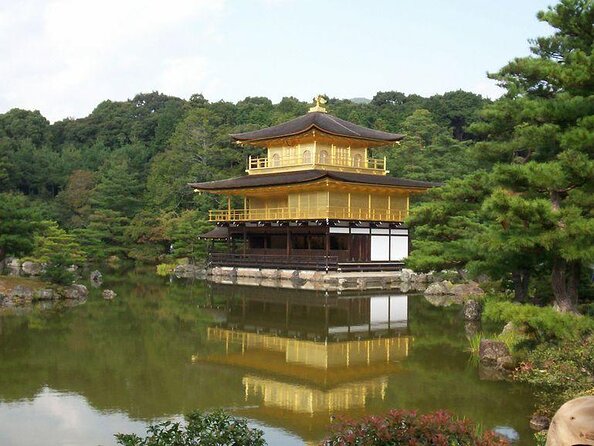
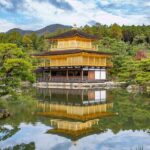
Next up is Kinkaku-ji, with about 45 minutes and admission included. This is the temple with the Golden Pavilion, a three-story building covered in gold leaf and set beside a pond.
What makes this stop work in a group format is that Kinkaku-ji is popular but also visually forgiving. Even if you can’t see every angle, you can still get strong shots of the pavilion and water reflections.
Kinkaku-ji can also feel crowded. To make it easier, I’d keep your camera ready, move with the flow, and grab the major views before you wander into smaller garden corners.
Kyoto Imperial Palace: Shishin-den and ceremony without the full palace access
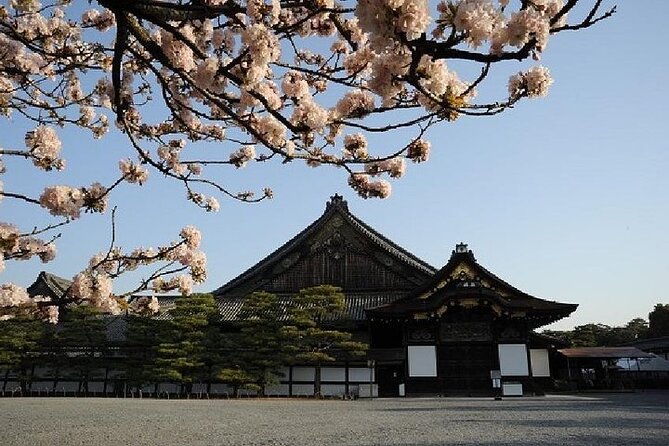
You’ll also stop at Kyoto Imperial Palace, with about 40 minutes. Admission here is free, and you get a chance to see the Shishin-den, a key building tied to state ceremonies.
One reason this stop is valuable is that it broadens your idea of Kyoto beyond temples. It’s the political and ceremonial heart of the city’s long imperial story.
A quieter way to spend a day in Kyoto

Palace closures mean a swap, usually nearby
The Kyoto Imperial Palace can be closed on Mondays or during special events. When that happens, the tour replaces it with Kitano Tenmangu Shrine. If the closure falls on the 25th, the tour may switch to Nishi Hongan-ji Temple instead.
The drive to Nara: long day comfort matters
Between Kyoto and Nara you get the benefit of stress-free air-conditioned transport. This is one of those underrated parts of the day, because a DIY version usually means juggling timing, stations, and walking between transit connections.
The group stays moving, and the guide keeps narration going so you’re not stuck in silence on the bus.
Also, seats are not guaranteed and can vary, so if you’re sensitive to motion, having your own water and a light snack can help.
Todai-ji and the Great Buddha scale in real life
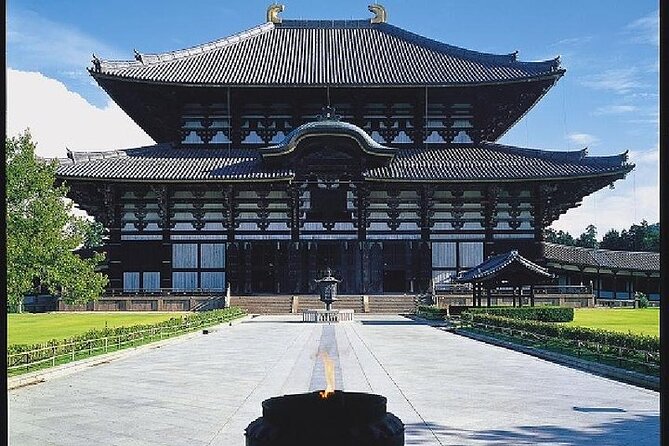
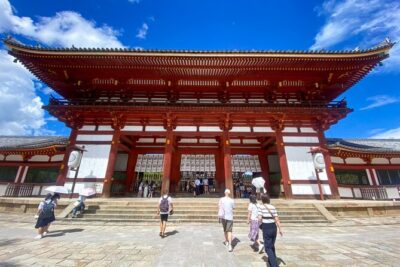
When you reach Nara, your main draw is Todai-ji. You’ll spend about 1 hour 10 minutes here, and admission is included.
Todai-ji is known as a symbol of the Nara Period and one of the world’s largest wooden structures. The reason everyone talks about it is the Great Buddha in the main hall, a bronze statue on a scale that is hard to imagine until you’re standing there.
This is the kind of place where a little context helps. I like that the guide role isn’t just reading off facts. Instead, you get religion and history explained in a way that makes the building’s importance click while you’re looking at it.
Then it flows right into Nara Park
Todai-ji sits close to Nara Park, and after your temple time you continue toward the shrine-and-park circuit. This keeps your travel friction low, which is the whole point of a day trip.
Kasuga Grand Shrine: lantern-lined quiet with a guide in control
Your next Nara stop is Kasuga Grand Shrine (Kasuga Taisha), about 1 hour with admission included. It’s designated a World Heritage site and is famous for the more than 3,000 lanterns lining the interior.
The best part here is how the lanterns create a different mood from the huge Todai-ji scale. It feels more intimate, even though it’s still very much a major shrine complex.
The deer theme also ties in: the tour info notes that the deer of Nara Park are thought to be shrine messengers. That helps you see Nara as a single living system, not just separate monuments.
Main Sanctuary access is sometimes possible
The tour enters the Main Sanctuary special visit area when operations allow. If that area cannot be entered due to events or operational circumstances, the plan may shift to the Kasuga Taisha Museum or the Todaiji Museum instead.
Nara Deer Park: cute, but keep your distance and watch your timing
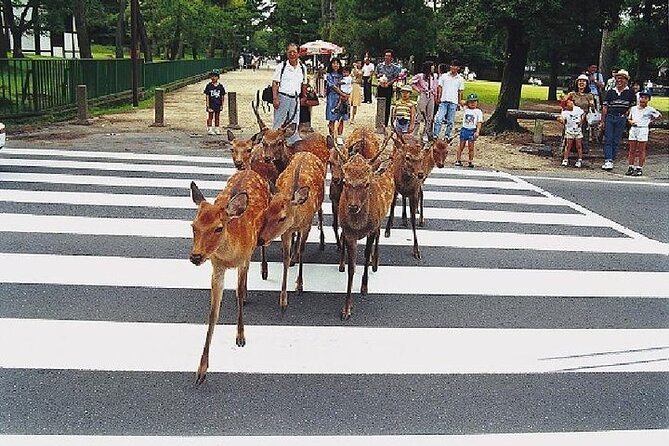
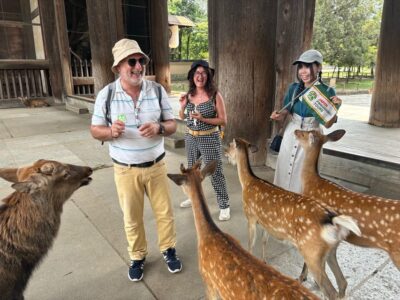
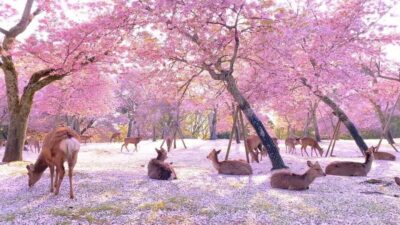
You finish at Nara Park, specifically a deer-rich area known for free-roaming deer. This is where the day becomes more casual and more chaotic in the best way.
The deer are often friendly-looking, but the tour description and guiding approach include warnings that deer can be aggressive in certain moments. So I’d treat the deer like wildlife, not like pets.
Also, this is the part of the day where you may notice that you have less time to linger. Some people have wished for more free time in Nara, and that longer-than-expected end walking can add fatigue.
If you want great photos, move early within the deer area and focus on calm viewing spots before the crowd thickens.
Price and value: is $194.85 a smart deal?
At $194.85 per person, this isn’t the cheapest way to do Kyoto and Nara. But it’s also not priced like a “see everything forever” luxury tour.
You’re paying for four things that add up fast if you DIY:
- a licensed English guide interpreter
- air-conditioned transport between sites
- admission fees for the listed stops
- a full-day schedule that compresses transit and timing into one organized plan
For many first-time visitors to the region, the biggest value is reducing decision fatigue. You don’t have to figure out which temple is on which day or how to get from one far corner of Kyoto to Nara without losing half your day.
If you already know Kyoto well and enjoy planning, you might prefer a train-based DIY. But if you want a guided first pass that hits UNESCO names and still feels thoughtfully paced, this price makes sense.
Lunch options: included only if you choose the meal add-on
Lunch depends on what you book:
- With the Western-style lunch option, you get a Western-style set menu. Vegetarian requests must be made at reservation time.
- With the Indian thali option, you get an Indian thali set menu suitable for vegetarians, including items like multiple curries, pakora, yogurt, naan or roti, rice, salad, and a non-alcoholic drink.
Halal and gluten-free requests are not available, and for lunch changes on the day, the tour rules don’t allow swapping between lunch styles.
If you choose No Lunch, you get free time to eat on your own in the Kyoto Station area.
Comfort, walking, and the reality of a 10 to 11 hour day
This trip runs about 10 to 11 hours, and it includes several major stops plus time for a park area at the end. That means you should expect footwear rules at some sites, steady walking, and standing in lines.
One review-based caution I’d take seriously: if you are not good at walking, this format may be a tough fit. It’s not an all-sitting tram tour. It’s a structured day with movement built in.
The good news is the bus helps between locations, and the guide helps keep the group together so you are not constantly searching for the next connection.
Who should book this Kyoto and Nara day trip
This works best for:
- first-time visitors who want UNESCO highlights quickly
- English speakers who want context at every stop, not just a self-guided read
- travelers who’d rather pay for convenience than spend a day coordinating trains and tickets
It may not be ideal if:
- you hate time pressure and prefer to linger for hours at a single site
- you need special dietary accommodations beyond what the lunch options allow
- you are very limited on walking endurance
Should you book this tour?
I think this is a strong choice if you want Kyoto and Nara in one day with minimal stress. The big wins are the guided storytelling, air-conditioned transport, and included access to the major named sites, all wrapped into a schedule that keeps you moving without feeling totally rushed.
If you want a slower, deeper experience at fewer temples, you’ll probably enjoy Kyoto and Nara more on separate days. But if your calendar is tight and you want to see the most important places with a good guide steering the day, I’d book this and treat it like a well-run sampler course.
FAQ
How long is the Kyoto and Nara day trip?
The tour lasts about 10 to 11 hours.
What does the ticket price include?
Admission fees and transportation costs are included, along with a national government licensed English guide interpreter.
Is the bus air-conditioned?
Yes, stress-free air-conditioned transport is included.
Does the tour include lunch?
Lunch is included only if you select the With Lunch option when booking. If you choose No Lunch, you get free time to eat on your own in the Kyoto Station area.
What lunch types are offered?
With Western-style lunch, you get a Western-style set menu. With the Indian thali option, you get a vegetarian Indian thali set menu. Halal, gluten-free, and other meal requests are not available.
What if Kyoto Imperial Palace is closed?
If the Kyoto Imperial Palace is closed, the tour will visit Kitano Tenmangu Shrine instead. If the closure falls on the 25th, it will visit Nishi Hongan-ji Temple.
What if Nijo Castle is closed?
Nijo Castle can be closed on certain Tuesdays and during a year-end period. If it is closed, the tour will visit Ryoan-ji Temple instead. If the closed day falls on the following day if Tuesday is a holiday, the swap still applies.
Where does the tour start and end?
It starts at JTB SUNRISE TOURS DESK KYOTO in the Avanti building near Kyoto Station, and it ends at Kyoto Station around 6:30pm for guests using the Kyoto start and end option.
How does cancellation work?
You can cancel for a full refund up to 24 hours in advance of the experience start time. If you cancel less than 24 hours before the start time, the amount you paid is not refunded.
New This Season
- Koyasan Day Trip by Private Car from Kyoto
- Old Port Town and Ultimate Sake Tasting Private Tour From Kyoto
- Kyoto’s Timeless Charm: 3hr Exploration of History and Peace
- Kyoto: 5 Types of Sushi Making
- Sacred Peak & Ancient Paths: Kurama-Kibune Hiking Experience
- Kyoto: Exclusive ZEN practice at Manpukuji temple in Uji
- Kyoto: Private Seasonal Aroma Yoga Class
- Traversing Kyoto’s Scenic West – Arashiyama to Kinkakuji
Nara & Deer Park Day Trips, compared.
Kinkakuji,Arashiyama,FushimiInariShrine,NaraPark
Read our review →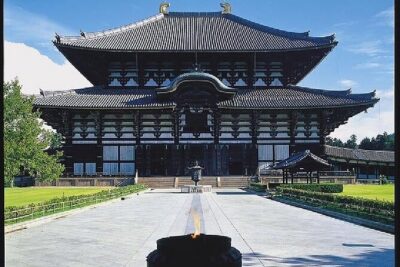
Nara, Fushimi Inari Taisha, Arashiyama Bus Tour
Read our review →
Arashiyama, Nara & Fushimi Inari Shrine w/Lunch
Read our review →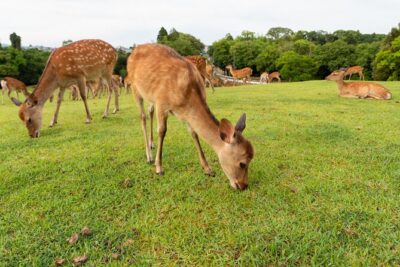
Full Day Guided Tour to Kyoto and Nara from Osaka by Van
Read our review →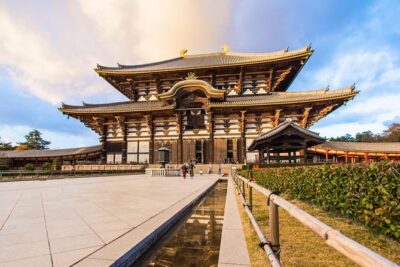
Nara Park, Osaka & Kobe from Kyoto Full Day tour
Read our review →Also filed under