
Reviewed · NIJO CASTLE VISITS
Kyoto Imperial Palace & Nijo Castle Guided Walking Tour – 3 Hours
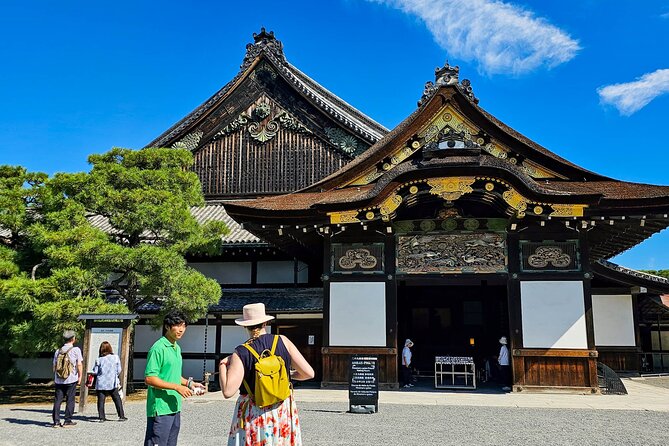
Kyoto has a talent for making history feel close, not museum-distant. This 3-hour route connects two heavy hitters, Nijo Castle and the Kyoto Imperial Palace, with a calm small-group pace and an English-speaking guide.
What I like most is the format. With a maximum of nine people, you get real back-and-forth time, not just a headcount shuffle, and the guide can tailor explanations as questions come up. I also love that entrance fees are included, so you spend your time looking at things instead of hunting for tickets.
One thing to consider: the two sites are not next door. Even with guidance, you should expect some transfer time between them, so it helps to build in a little flexibility if you are on a tight schedule.
In This Review
- Key things that make this tour worth your time
- Why Nijo Castle and the Imperial Palace make a smart 3-hour pair
- Small-group tour size (up to 9) and what it changes on the ground
- Price and included tickets: where your $55 actually goes
- Stop 1: Nijo Castle, the shogun-era details you will actually notice
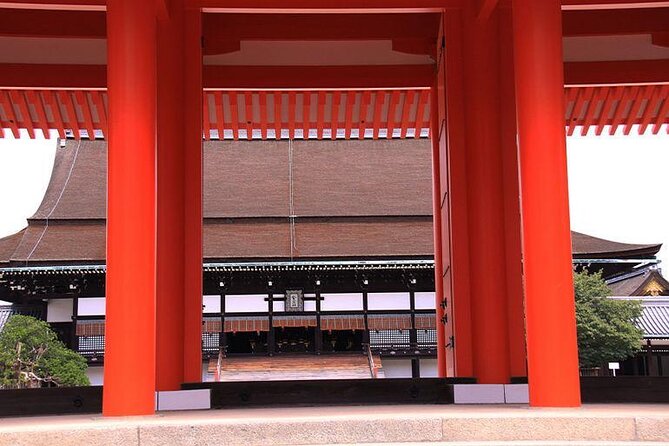
- Stop 2: Kyoto Imperial Palace, gardens and imperial residence context
- The transfer between Nijo Castle and the palace: plan for the non-walk time
- Guides: what you will notice in the small-group experience
- What the ending at Imadegawa Station means for your next stop
- Who this tour fits best, and who might want a different approach
- Should you book this TripGuru Nijo and Imperial Palace walking tour?
Key things that make this tour worth your time
- Max 9 travelers keeps the experience relaxed and question-friendly
- Tickets and entrance fees included, which saves you time at gates
- Two iconic Kyoto sites in one afternoon, so you see more without adding extra logistics
- Frequent photo moments at good viewpoints and indoor spots
- Guides with strong storytelling skills, including examples like Jasmine, Vincent, Taku, and Atsushi
- Practical pace on hot days, with breaks when needed
Why Nijo Castle and the Imperial Palace make a smart 3-hour pair
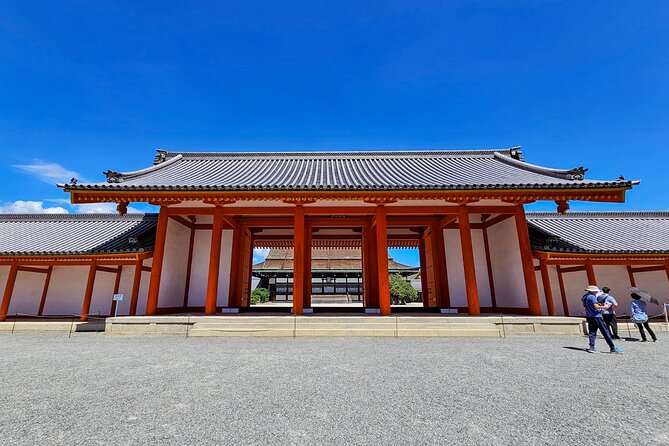
Kyoto’s big palaces and castles can feel intimidating if you only rely on signs. This tour is built to fix that problem. You move through two major power centers of Japan’s past, then your guide ties the architecture, layouts, and everyday symbols together so you can actually read what you’re looking at.
The timing also works well. You get about 1.5 hours at each place, which is long enough to notice details, not just pose for photos and rush out. At the same time, it is short enough that you can still enjoy the rest of Kyoto that day, whether that means Nishiki Market, a temple stop, or a simple walk through nearby streets.
The value question is pretty simple. At $55 per person, you are paying for three things at once: an English-speaking guide, paid entry to both sites, and a guided route that limits dead time. If you were to do both places solo, you might save a few dollars on a guide, but you would spend extra time figuring out what to prioritize and how to understand the symbolism.
Small-group tour size (up to 9) and what it changes on the ground
A group of nine is the sweet spot for guided touring in busy Japan. You can hear your guide, your questions do not get swallowed, and the pace stays human. In several experiences, guides seemed comfortable answering many questions and adjusting on the fly, including families with kids and even visitors with hearing needs.
There is also a real advantage to having a guide who stays confident with boundaries. Some guides were specifically praised for saying they were not sure instead of guessing, which matters when you are trying to understand historical meaning rather than memorize trivia.
One more practical benefit: with a smaller group, it is easier to gather for photos and keep everyone oriented at junctions. That matters most at large complexes, where you can easily lose sight of each other if you arrive at your own rhythm.
Nightingale floors that sing when you walk
- Kyoto: Nijo-jo Castle and Ninomaru Palace Guided Tour
★ 4.7 · 1,020 reviews - Kyoto: Nijo Castle, Kiyomizu & Fushimi Inari Guided Tour
★ 4.7 · 700 reviews - Kyoto: Nijo, Kinkaku-ji, Arashiyama, Kiyomizu & Fushimi Inari
★ 5.0 · 699 reviews - Kyoto: Imperial Palace & Nijo Castle Guided Walking Tour
★ 4.7 · 453 reviews
Price and included tickets: where your $55 actually goes
This tour is priced at $55 per person, and the big reason it feels like good value is that the essential costs are bundled in. You get:
- an English-speaking tour guide
- entrance fees for both stops
- a 3-hour walking tour structure
That means less time spent at ticket windows and more time spent inside the buildings and gardens. It also helps you avoid that awkward moment of standing around wondering which door to use or whether you are in the correct line.
You do still need to handle your own food and drinks. Meals are not included, so plan a lunch after the tour or a snack break while you’re walking between sites. If you want a proper meal, I recommend checking where you plan to end up, since the tour finishes at Imadegawa Station.
Stop 1: Nijo Castle, the shogun-era details you will actually notice
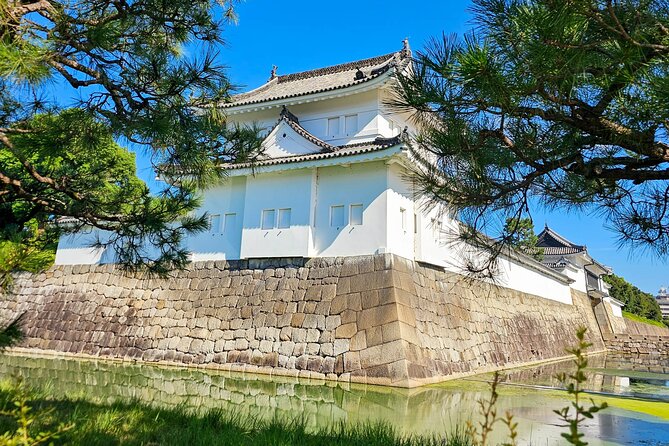
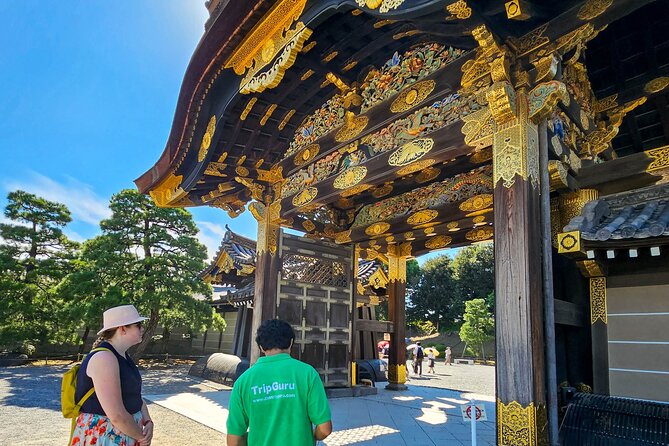
Nijo Castle is one of those places where the architecture is the story. On this tour, you start there, then your guide helps you connect the grandeur with what it was designed to communicate about power.
Here’s what tends to make the visit memorable:
- You get a clear sense of how the castle is laid out and why rooms and corridors matter.
- Guides often focus on symbolism tied to the shogun era, which turns the space from pretty to meaningful.
- You are given time to look closely at interiors, then step back and understand the bigger picture.
In multiple guide mentions, Jasmine stood out for clear explanations at Nijo Castle, including the ability to answer questions without turning the tour into a lecture. Guides like Vincent and Taku were also praised for a strong overview of the castle grounds and for being comfortable with pacing, including on warmer days.
If you care about photography, this is usually where you benefit most from a guide-led stop-and-go rhythm. You get pointed toward spots worth framing, rather than spending your time scrolling through the same angles you could have found alone.
Stop 2: Kyoto Imperial Palace, gardens and imperial residence context
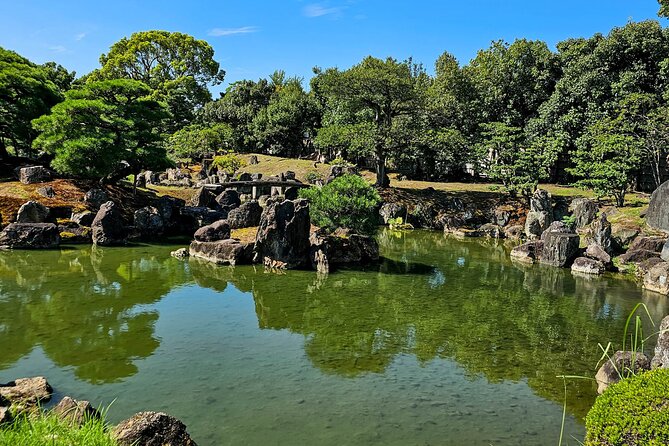
The Kyoto Imperial Palace visit is the second half of the story, and it’s where the tour becomes more than castle photos. Your guide walks you through the impressive structure and gives you time to appreciate the gardens and architectural details that reflect imperial life.
What you gain here is context. The palace is not only about buildings. It is about the meaning behind the design choices and what everyday experience looked like within that setting. When guides explain cultural symbolism and historical significance clearly, the place starts to feel like a living system, not a static landmark.
Also, don’t treat this stop like a quick sweep. The included time is long enough to slow down and notice how the grounds shape your movement. In several experiences, the guides ensured there was time for pictures and gave a sense of how construction and layout relate back to history.
As with Nijo, some guides were particularly effective at organizing the flow so the group stays together. That matters at larger complexes where there are many paths and different vantage points.
The transfer between Nijo Castle and the palace: plan for the non-walk time
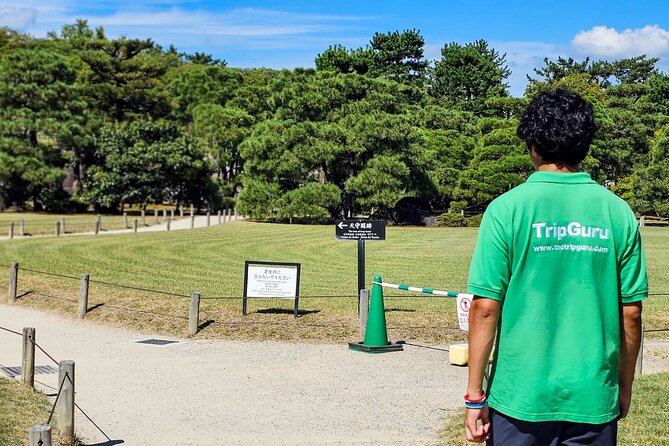
This is the one part that can surprise people. Even though the tour is described as a walking experience, the two sites require some form of travel between them. They are not adjacent, and you should expect that your time gets used for that movement.
A helpful way to think about it: the tour is three hours total, and roughly half that is spent at each site. The remaining time covers the handoffs and the travel between the locations. In at least one experience, the on-foot travel time between sites was about 30 minutes, which is enough to feel noticeable if you planned to be in the palace the whole second hour.
How should you handle that?
- Wear comfortable shoes and plan your hydration.
- If it is a hot day, take advantage of breaks when the guide offers them.
- Arrive on time at the meeting point so you start moving quickly and reduce stress later.
One more tip: if you want photos at both sites, keep your camera ready before you transition. The best shots often come right before you think you have time.
A quieter way to spend a day in Kyoto



Guides: what you will notice in the small-group experience
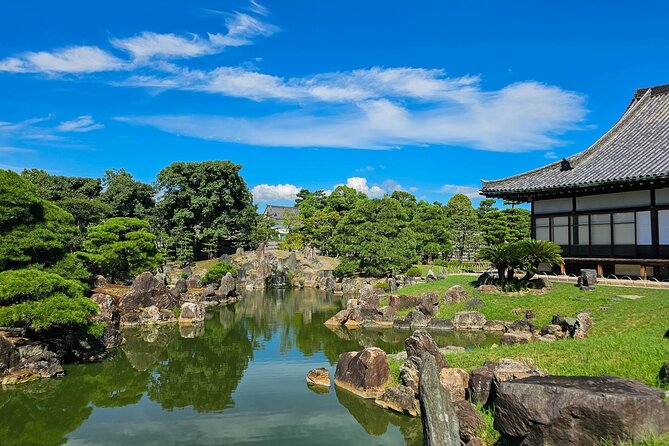
Good guiding is not just facts. It is clarity, pace, and trust. Many of the strongest notes were about guides who:
- explained history and architecture in a way that stayed easy to follow
- answered lots of questions without derailing the group
- kept the pace moving while still leaving room to look closely
- helped people capture photos at good moments
- supported families, including kids, with patience and friendly explanations
Some names that came up positively included Jasmine, Vincent, Taku, Cecilia, Raphael, Kata, Alex, and Atsushi. The common thread was the ability to make the symbols and layouts make sense, then still show you the best places to pause.
I also like the fact that some guides were specifically commended for being flexible in heat, with frequent stops for water and air conditioning breaks when needed. That is a practical quality, not a personality perk, and it can make or break a walking tour.
What the ending at Imadegawa Station means for your next stop
The tour ends at Imadegawa Station. That is useful because it gives you an easy anchor for the next thing on your day, especially if you are planning to move on to another neighborhood.
Before you book, I suggest you map your next activity around that station rather than around Nijojo-mae, since you will finish on the Imadegawa side. If you are staying near a different area, you might find that this endpoint works better for trains back to your hotel.
Also, consider lunch timing. Since food is not included, your best bet is to either grab something right after you wrap up, or plan a light snack for earlier so you are not starving during the transitions.
Who this tour fits best, and who might want a different approach
This is a strong fit if you want:
- a small-group guided experience
- clear explanations for Nijo Castle and the Kyoto Imperial Palace
- entrance fees handled for you
- a structured route that saves you time and decision fatigue
It is also a good choice for families, since guides were praised for answering kids’ questions and staying kind while keeping everyone on track.
You might choose something else if you:
- hate any uncertainty about transfers between sites
- need very tight control over your exact pacing, down to the minute
- prefer fully self-guided museum-style wandering without a set stop-and-go flow
In other words, if you like learning while moving, this tour works well. If you need maximum freedom, you may feel boxed in by the schedule.
Should you book this TripGuru Nijo and Imperial Palace walking tour?
I would book it if you want the best of both worlds in one half-day: two top Kyoto landmarks, a guide who explains what you are seeing, and a group small enough to ask questions. At $55, the combination of guide plus entrance fees is the value story, and the overall sentiment is very positive.
I would hesitate only if your day is extremely schedule-sensitive or you are the type who prefers to choose every step yourself, since the sites require travel between them and you will be operating inside a guided timing framework.
If you do book, show up a few minutes early at Nijojo-mae Station, wear shoes you can walk in comfortably, and bring a water bottle if you tend to get thirsty. Then you can focus on what matters most, noticing the symbolism and architecture that makes these places more than just pretty buildings.
More Walking Tours in Kyoto

New This Season
- Koyasan Day Trip by Private Car from Kyoto
- Old Port Town and Ultimate Sake Tasting Private Tour From Kyoto
- Kyoto: 5 Types of Sushi Making
- Sacred Peak & Ancient Paths: Kurama-Kibune Hiking Experience
- Kyoto’s Timeless Charm: 3hr Exploration of History and Peace
- Kyoto: Exclusive ZEN practice at Manpukuji temple in Uji
- Kyoto: Private Seasonal Aroma Yoga Class
- Traversing Kyoto’s Scenic West – Arashiyama to Kinkakuji
Nijo Castle Visits, compared.
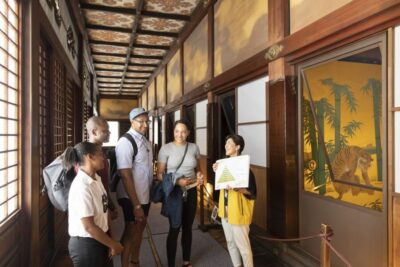
Nijo-jo Castle and Ninomaru Palace Guided Tour
Read our review →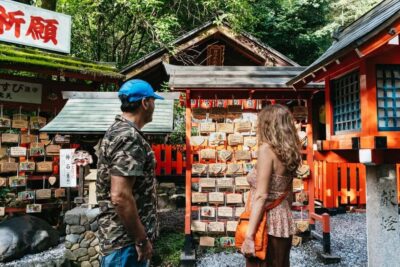
Nijo Castle, Kiyomizu & Fushimi Inari Guided Tour
Read our review →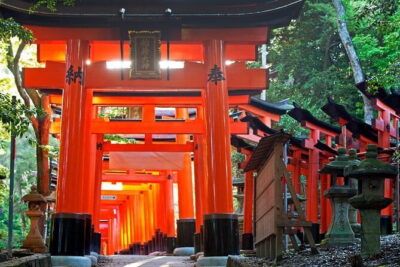
Nijo, Kinkaku-ji, Arashiyama, Kiyomizu & Fushimi Inari
Read our review →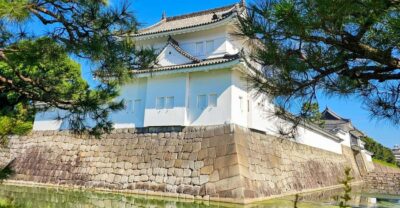
Imperial Palace & Nijo Castle Guided Walking Tour
Read our review →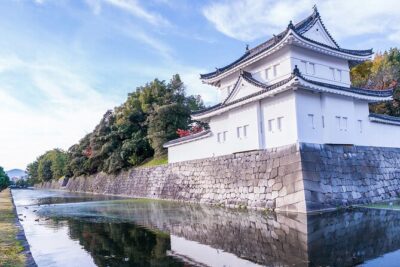
Nijo Castle World Heritage Guided Tour with Admission
Read our review →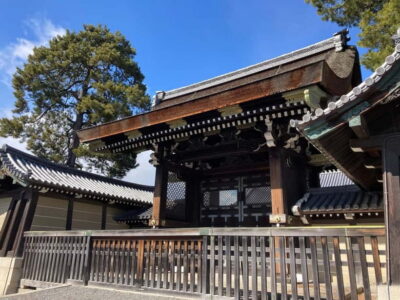
Nijo Castle and Kyoto Imperial Palace Guided Tour
Read our review →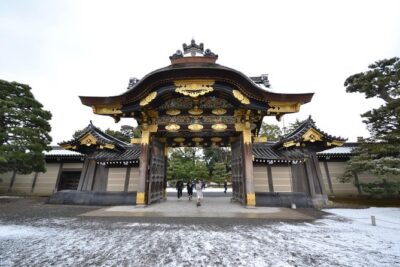
Nijo Castle and Imperial Palace Visit with Guide
Read our review →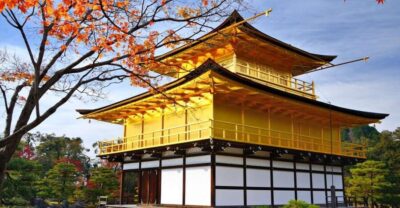
Golden Pavilion, Nijo Castle, & Nishiki Market Half day tour
Read our review →Also filed under