Reviewed · GOLDEN PAVILION VISITS
Golden Pavilion, Nijo Castle, & Nishiki Market Half day tour
Gold and samurai history in one morning. This half day tour strings together three Kyoto heavy hitters, from the Golden Pavilion to Edo-era power politics at Nijo Castle, then hands you off at Nishiki Market with lunch ideas ready to go.
I like the way the guide, Roberto, teaches. You get iPad explanations with clear visuals, not just hand waving, and it helps you understand why Kinkaku-ji and Nijo Castle look the way they do. I also like that he is a Kyoto City Certified Tourist Guide, so the stories stay grounded in real Kyoto context, including the Edo Period, the Shogun, and how samurai control slowly gave way to modernization.
One thing to plan for: entrance fees are extra (Golden Pavilion and Nijo Castle tickets are not included in the price), so check your budget before you go.
In This Review
- Key Highlights You Will Actually Feel During the Tour
- Half-Day Kyoto With Three Big Names: Kinkaku-ji, Nijo Castle, and Nishiki Market
- Meeting Point, Timing, and Getting Oriented Fast
- Golden Pavilion (Kinkaku-ji): Why Gold Leaf Matters, and Where to Look
- Nijo Castle and Edo Power: Shogun Tactics, Samurai Tension, Nightingale Floors
- Roberto’s iPad Lessons: How Visual Explanations Change the Visit
- Nishiki Market at 12:30: Turn Your Morning Lessons Into Lunch
- Price and Realistic Value for a 4-Hour Kyoto Morning
- Comfort, Rain Plans, and Who This Tour Fits Best
- When This Tour Is a Great Choice, and When It Might Not Be
- Should You Book This Golden Pavilion, Nijo Castle, and Nishiki Market Tour?
- FAQ
- How long is the Golden Pavilion, Nijo Castle, and Nishiki Market half-day tour?
- Where do we meet the guide?
- Are entrance fees included in the $90 price?
- How do we get between the sites?
- Is this a private tour or a group tour?
- What languages are offered?
- Can I take photos inside the temples?
- Is it wheelchair accessible or suitable with mobility limits?
Key Highlights You Will Actually Feel During the Tour
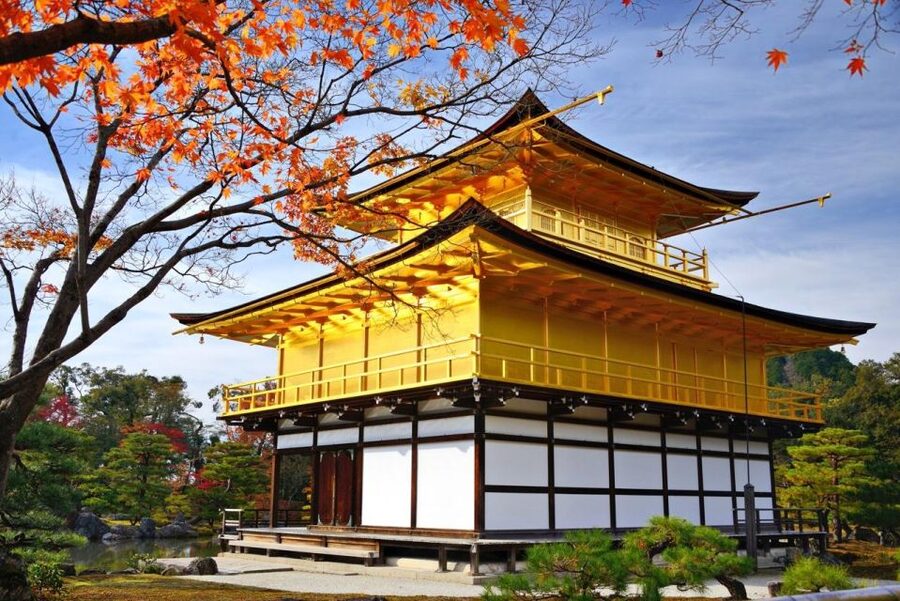
- Kinkaku-ji with gold-leaf meaning, not just gold-leaf pictures
- Nijo Castle’s Edo-era story, including the Shogun, feudal lords, and samurai-era tensions
- Nightingale floors, explained as an early security system idea
- Roberto’s iPad photo-and-visual coaching, built for understanding fast
- Finish at Nishiki Market, where you can choose lunch from hundreds of food options
Half-Day Kyoto With Three Big Names: Kinkaku-ji, Nijo Castle, and Nishiki Market
This tour is built for people who want Kyoto to make sense. In about four hours (8:30 to 12:30), you cover a UNESCO temple icon, a UNESCO castle with Edo Period drama built into the architecture, then end in the market that feeds the city every day.
What makes it especially useful is the theme. You are not just ticking off stops. You are learning how the Shogun system worked, what samurai life and power were tied to, and how that era starts to shift toward Japan’s modernization. That context helps everything you see afterwards in Kyoto.
The ending at Nishiki Market is smart too. You get historical context at the temples, then you get something practical: where to eat and what to look for without guessing.
Meeting Point, Timing, and Getting Oriented Fast
You meet at 7-Eleven Heart-In, JR Kyoto Station, Central Entrance side. Roberto holds an iPad and a red card with RBRT (Roberto) so it is easier to spot the right person.
The tour starts at 8:30 AM and runs until 12:30 PM. The route uses public transport, including a bus and subway segments, plus short walking stretches. Expect about 35 minutes of bus time early on, then 20 minutes by subway to connect to the next site, and 15 minutes by subway before the final short walk into Nishiki Market.
This timing matters because you are moving through Kyoto in the morning window, when crowds tend to feel more manageable than later in the day. Also, by finishing at late morning, you still have time to build a full afternoon on your own.
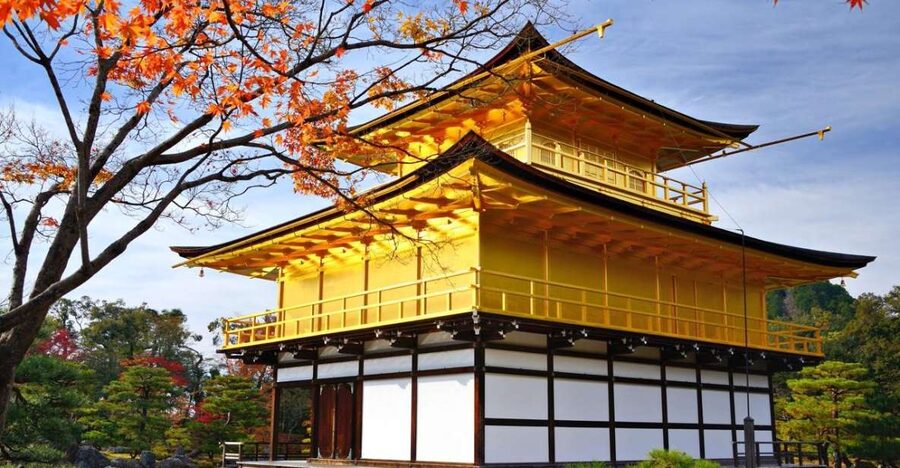
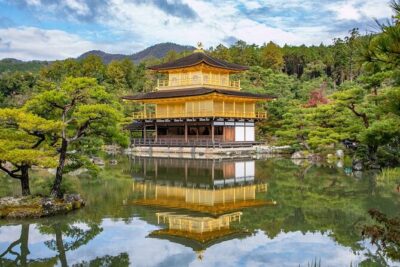
Kinkaku-ji's gold roof over still water
- Kyoto: Fushimi Inari, Kinkakuji, Bamboo Grove 1 Day Bus Tour
★ 4.8 · 4,316 reviews - Osaka/Kyoto:Kinkakuji,Arashiyama,FushimiInariShrine,NaraPark
★ 4.1 · 1,596 reviews - Kyoto: Nijo, Kinkaku-ji, Arashiyama, Kiyomizu & Fushimi Inari
★ 5.0 · 699 reviews - Kyoto: Kinkakuji, Golden Pavilion Guided Tour
★ 4.7 · 71 reviews
Golden Pavilion (Kinkaku-ji): Why Gold Leaf Matters, and Where to Look
The Golden Pavilion, called Kinkaku-ji, is in northwest Kyoto and is one of the city’s most recognizable landmarks. You spend about 1.5 hours here with a guided visit.
Yes, it is famous for being covered with gold leaf. But the point of your visit is not the sparkle alone. Roberto explains what the gold leaf was meant to communicate: wealth, power, and devotion. When you understand that, the temple stops being only a photo stop and starts becoming a clue about Ashikaga Yoshimitsu and the political world around him.
A few things you should keep on your radar while you are there:
- The pavilion’s top two floors are the gold-leaf sections, so your viewing angle affects what you notice.
- The reflection in the pond is a big part of the effect, so pay attention to where you are positioned, not just the building.
- Kinkaku-ji is a Zen Buddhist temple, so the design choices make more sense when you remember this is a spiritual setting, not a theme park.
Photo rules can be strict in parts of temples. The tour notes that there are places where pictures are forbidden, so plan to enjoy the space with your eyes first. Your camera will still get plenty of opportunities outside the restricted zones.
Nijo Castle and Edo Power: Shogun Tactics, Samurai Tension, Nightingale Floors
After Kinkaku-ji, the tour heads to Nijo Castle, where you spend about 95 minutes on a guided visit.
This stop is where the tour’s theme really clicks. Roberto focuses on the struggles between the samurai, feudal lords, and the Shogun’s control. You also get the bigger arc: the end of the samurai era and the beginnings of Japan’s modernization.
What to pay attention to at Nijo Castle:
- Edo Period architecture, including detailed woodwork and intricate designs. Even if you are not an architecture nerd, the craftsmanship gives you a sense of what power wanted to look like.
- The historical layout of the castle as a kind of political machine. The castle is not just walls and rooms, it is an environment that reflects authority.
- The nightingale floors. These floors chirp when walked upon, and the tour frames them as an ingenious early security system concept.
Those nightingale floors are the kind of thing you cannot fully appreciate from a single glance. You understand them better when you hear the story of why they were used. They also create a fun, memorable moment without turning the visit into chaos.
Roberto’s iPad Lessons: How Visual Explanations Change the Visit
One of the most praised parts of this tour is the teaching method. Roberto uses his own iPad explanations with images, designed to help you understand what you are looking at while you are looking at it.
This is not just “information.” It is a translation tool. Kyoto’s Edo-era details can feel distant if you only have modern guidebook descriptions. The iPad lets him slow things down and connect dots on the spot, which helps you move from random sightseeing to real comprehension.
He also offers to take pictures for you, and you can request as many as you want. That matters because Temple photography can be tricky: you are juggling angle, lighting, and the fact that other people are standing where you want to stand. Having someone manage that for you is a genuine value.
Nishiki Market at 12:30: Turn Your Morning Lessons Into Lunch
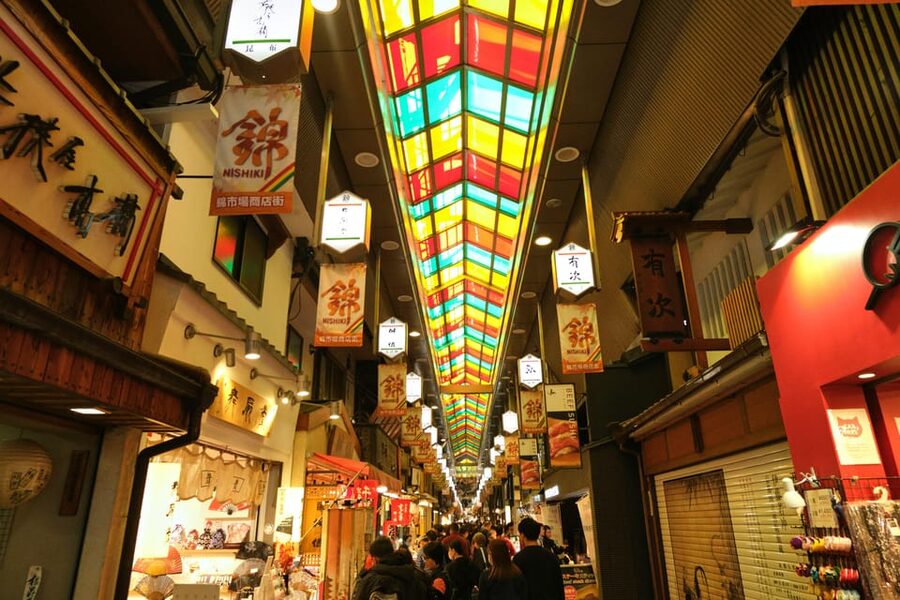
The tour finishes at the entrance of Nishiki Market, about 10 minutes away from the last transit stop.
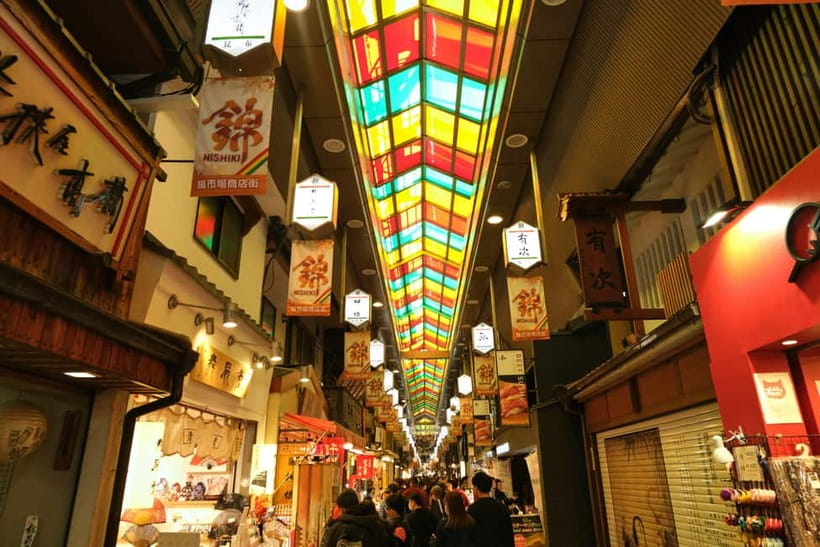
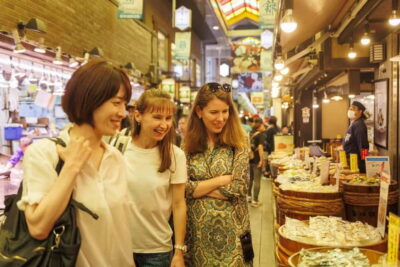
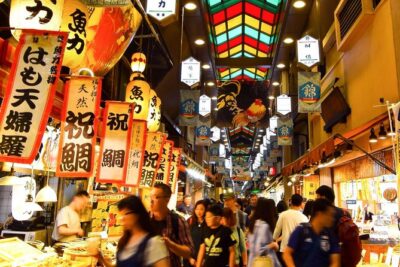
Roberto explains the origins of the market before you break off on your own. Nishiki Market is often called Kyoto’s Kitchen, and it really lives up to the nickname. You will see lots of food-focused shops and restaurants, from fresh seafood and produce to knives and cookware.
Here is how I suggest you use this time:
- Treat Nishiki as your menu research lab. Walk a bit before you commit.
- If you are unsure what to order, start with smaller bites so you can taste multiple styles.
- Look for the shops that show what they sell clearly through their displays. It makes decisions easier when you do not read everything.
The tour notes that explanations are in English for foreign visitors. That is helpful if you want to ask quick questions about what something is or how it is typically eaten.
And because you finish at lunch time, you have flexibility. You can eat right there, or you can grab something and continue exploring Kyoto with less decision stress.
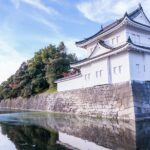
Nightingale floors that sing when you walk
Price and Realistic Value for a 4-Hour Kyoto Morning
The price is $90 per person for a 4-hour half-day tour. To judge value, look at what is included versus what is extra.
Included:
- A Kyoto City Certified Tourist Guide
- Explanations with images on the iPad
- Transport using public bus and train as part of the tour
- Guide entrance fee coverage (you do not pay for the guide’s fees)
Not included:
- Nijo Castle entrance fee: 1,300 yen (about US$8.15)
- Golden Pavilion entrance fee: 500 yen (about US$3.10)
- Food and drinks
So you should budget roughly $90 + $11 to $12 for entrances, depending on the current exchange rate. For many people, that works out well because entrance-heavy sites are usually where prices creep upward, and you still get guided context that makes the sights stick.
Also, this is a private group tour, which matters if you like a calmer pace and clearer Q and A. You are not fighting a crowd for attention while trying to understand Edo-era history.
Comfort, Rain Plans, and Who This Tour Fits Best
This is a walking tour, and you are using public bus and subway. The tour is designed so you are not climbing mountains or tackling very long stairs, but it still requires real walking ability.
Bring comfortable shoes. The weather part is simple: it runs rain or shine.
The tour is explicitly not suitable for:
- Pregnant women
- People with back problems
- Wheelchair users
- People prone to seasickness
- People with low level of fitness
- Baby strollers are not allowed, and luggage or large bags are not allowed
If you fall into one of those categories, it might be better to look for a more accessible alternative. If you are generally able to walk for a few hours at a steady pace, you should be fine.
When This Tour Is a Great Choice, and When It Might Not Be
This tour is ideal if:
- You want a fast introduction to Edo Period power rather than only sightseeing
- You like guided explanations you can understand while standing in front of the sights
- You want a morning plan that ends with a practical lunch option at Nishiki Market
- You prefer a private group feel and photos handled for you
It might not be your best fit if:
- You hate paying additional entrance fees on top of the tour price
- You strongly dislike crowds, since popular UNESCO sites can still feel busy even in the morning
- You need a fully accessible tour format, since this one is not wheelchair friendly and involves public transit
Should You Book This Golden Pavilion, Nijo Castle, and Nishiki Market Tour?
I would book it if your goal is to understand Kyoto, not just photograph it. The combination is tight and logical: Kinkaku-ji sets a tone of power and devotion, Nijo Castle gives you the Edo story behind that power, and Nishiki Market turns the morning into a real lunch plan.
Before you book, do two quick checks:
- Are you comfortable walking and riding public transit for about four hours?
- Can you budget the entrance fees on top of the $90 price?
If yes, this is one of those rare half-day tours where you leave with mental context, not just a camera full of images.
FAQ
How long is the Golden Pavilion, Nijo Castle, and Nishiki Market half-day tour?
It runs for about 4 hours, from 8:30 AM to 12:30 PM.
Where do we meet the guide?
Meet in front of the door of 7-Eleven, JR Kyoto Station Building 1F, using the Kyoto Tower side exit.
Are entrance fees included in the $90 price?
No. You pay the entrances yourself for Golden Pavilion (500 yen) and Nijo Castle (1,300 yen, approx. US$8.15).
How do we get between the sites?
The tour uses public transport, including a bus and subway/metro connections, plus some short walking.
Is this a private tour or a group tour?
It is a private group tour.
What languages are offered?
The live guide provides English and Spanish.
Can I take photos inside the temples?
You can take photos in many areas, but there are places inside temples where photography is forbidden.
Is it wheelchair accessible or suitable with mobility limits?
No. It is not suitable for wheelchair users, and it also is not recommended for people with back problems or low fitness levels. Baby strollers and large luggage are not allowed.
Kyoto's Markets
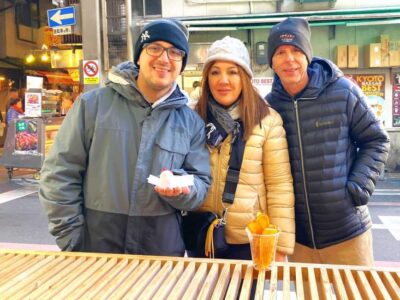
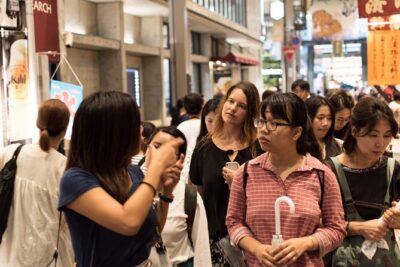
Nishiki Market Food Walks
New This Season
- Koyasan Day Trip by Private Car from Kyoto
- Old Port Town and Ultimate Sake Tasting Private Tour From Kyoto
- Kyoto’s Timeless Charm: 3hr Exploration of History and Peace
- Kyoto: 5 Types of Sushi Making
- Sacred Peak & Ancient Paths: Kurama-Kibune Hiking Experience
- Kyoto: Exclusive ZEN practice at Manpukuji temple in Uji
- Kyoto: Private Seasonal Aroma Yoga Class
- Traversing Kyoto’s Scenic West – Arashiyama to Kinkakuji
Golden Pavilion Visits, compared.
Fushimi Inari, Kinkakuji, Bamboo Grove 1 Day Bus Tour
Read our review →
Kinkakuji,Arashiyama,FushimiInariShrine,NaraPark
Read our review →
Nijo, Kinkaku-ji, Arashiyama, Kiyomizu & Fushimi Inari
Read our review →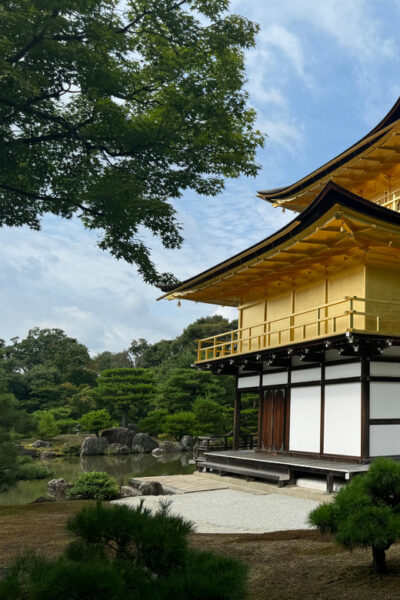
Kyoto top must-see Golden pavilion and Bamboo forest half-day Private tour
Read our review →
Kyoto Bamboo Forest & Golden Pavilion E-Bike Tour
Read our review →