
Reviewed · FUSHIMI INARI SHRINE WALKS
Kyoto: Fushimi Inari Hidden Hike (Private)
Torii gates can feel endless. This private Fushimi Inari hike trades the packed main path for quieter Mt. Inari trails and a private guide who keeps the story moving as you walk.
What I love most is the way your guide turns the shrine visit into something you can actually understand, with clear explanation of Japanese history and Shinto ideas. I also like that you get help with photos, including complimentary DSLR shots shared after the tour.
One consideration: you do need moderate physical fitness, and this is best in good weather since the experience requires it. If you want a totally flat, stroller-friendly walk, this one may not fit.
In This Review
- Key Points You Should Know Before You Go
- Why the 8:30 AM Fushimi Inari Start Feels Smarter Than Daytime Crowds
- Meeting Point, End Point, and What Private Means in Practice
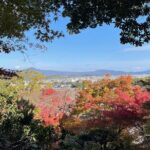
- The Early Views Over Tofuku-ji on the Way Up
- Fushimi Inari Taisha: Vermilion Torii, Bamboo Groves, and the Shinto Story
- A quick reality check on the shrine segment
- The Hidden Hike Part: Why Quieter Mt. Inari Trails Are Worth Your Money
- What You’ll See and Learn Along the Route (Without Feeling Lost)
- Coming Down With a Scenic Fushimi Momoyama Castle View
- Complimentary DSLR Photos: The Part That Saves You Effort
- Price and Value: How $62.26 for 3 Hours Adds Up (or Doesn’t)
- Who This Tour Suits Best (And Who Should Pass)
- A Note on Rain, Weather, and Getting the Best Day
- Should You Book This Private Fushimi Inari Hidden Hike?
- FAQ
- How long is the Kyoto Fushimi Inari hidden hike private tour?
- What time does the tour start?
- Where do we meet, and where does the tour end?
- Is hotel pickup and drop-off included?
- Is this a private tour?
- Is there an admission ticket cost for Fushimi Inari-taisha?
- Are photos included in the tour?
- What is the cancellation policy if the weather is bad or plans change?
Key Points You Should Know Before You Go
- Private routing for quieter trails so you spend more time hiking and less time shoulder-to-shoulder
- Shinto and history commentary that connects the torii, paths, and myths to what you’re seeing
- Tofuku-ji and Mount Inari viewpoints that add variety before and after the shrine focus
- Senbon Torii photos, plus off-main-path options for better angles and calmer walking
- Complimentary DSLR photos taken during the hike, then shared after the tour
- Realistic 3-hour pace with some stairs and uneven mountain paths
Why the 8:30 AM Fushimi Inari Start Feels Smarter Than Daytime Crowds
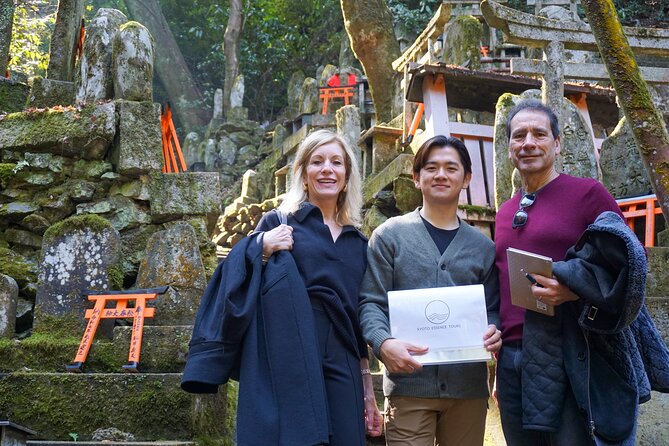
Timing is everything at Fushimi Inari Taisha. Starting at 8:30 am helps you avoid the worst crush and gives you fresher air when the torii paths are still calm.
When you walk earlier like this, you notice details you usually miss. The vermilion gates look brighter. The bamboo groves feel quieter. Even the sound changes. Instead of a constant crowd noise, you get more of the natural hush of a hillside shrine area.
And since this is private, the guide can keep you moving at a pace that makes sense for your group. You are not stuck waiting for a big tour to regroup at every turn.
Meeting Point, End Point, and What Private Means in Practice
You’ll meet at FamilyMart Nakai Tofukuji (12-chōme-232 Honmachi, Higashiyama Ward, Kyoto). The tour ends at Fushimi Inari Shrine Tower Gate, right in front of the Romon Gate, just before the main hall.
That end point matters. It sets you up well if you want to continue on your own afterward, without forcing you to backtrack through the whole area.
Also, this is truly private. Only your group participates, so you can ask questions without feeling rushed. The guide is English-speaking and local to Kyoto, so you get practical context instead of generic facts.
As for logistics, there is no hotel pick-up or drop-off included. You’ll want to get there under your own plan using public transportation. Luckily, the meeting point is described as near public transportation.
Still climbing through the orange gates?
- Kyoto: Fushimi Inari, Kinkakuji, Bamboo Grove 1 Day Bus Tour
★ 4.8 · 4,316 reviews - Fushimi Inari Hidden Hiking Tour (Private Option Available)
★ 5.0 · 1,750 reviews - Osaka/Kyoto:Kinkakuji,Arashiyama,FushimiInariShrine,NaraPark
★ 4.1 · 1,596 reviews - Kyoto/Osaka: Nara, Fushimi Inari Taisha, Arashiyama Bus Tour
★ 4.7 · 1,275 reviews
The Early Views Over Tofuku-ji on the Way Up
Before you even reach the main torii area, the walk includes a stop where you get views of Tofuku-ji. That’s one of Kyoto’s Five Great Zen Temples, so it gives your morning a wider Kyoto feel, not just shrine-only.
This is a good moment to slow down. Even if you think you already know what you’re going to see at Fushimi Inari, Tofuku-ji’s presence reminds you this is part of a bigger Kyoto religious and cultural landscape.
And it sets expectations for your guide’s style: you’re not just walking point to point. You’re getting context as the scenery changes.
Fushimi Inari Taisha: Vermilion Torii, Bamboo Groves, and the Shinto Story
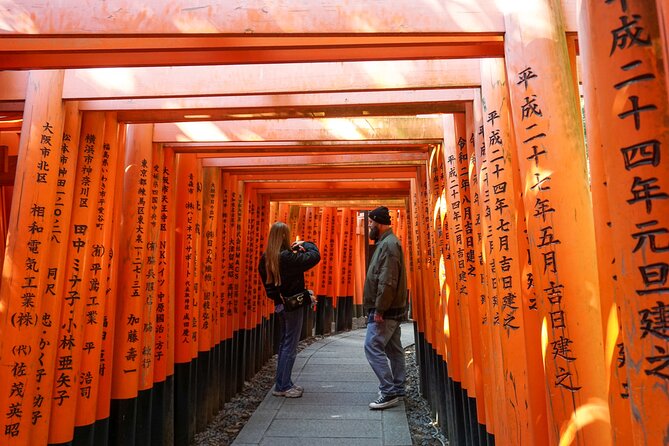
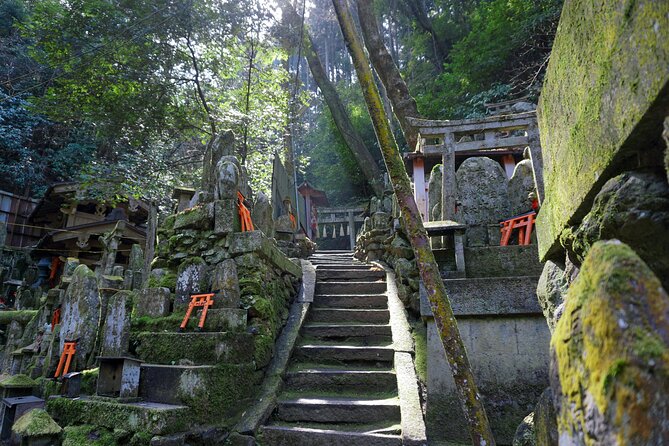
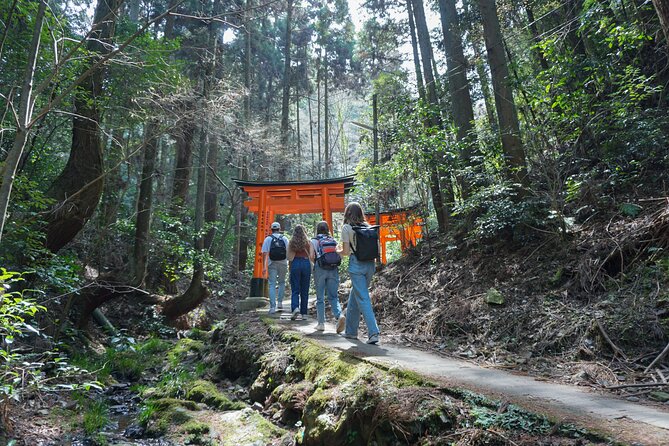
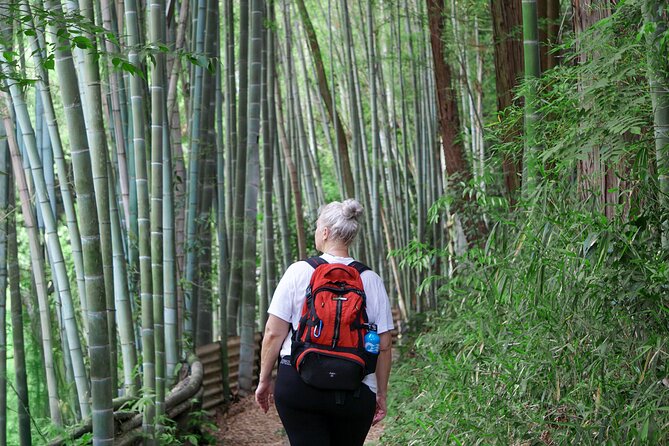
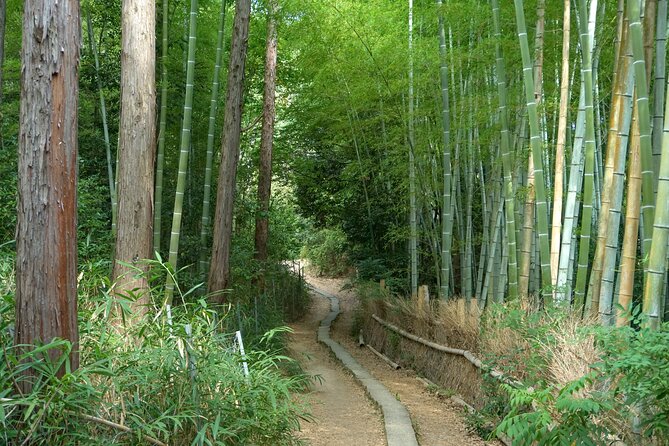
The main shrine portion is where Fushimi Inari goes from famous to personal. Your guide leads you through vermilion torii gates and quiet mountain paths, including wild bamboo groves, before you continue toward the iconic Senbon Torii Gates and the main shrine area.
This is where a private guide earns its keep. If you’ve ever walked through the torii corridors, you know there are two problems. First, it can feel repetitive. Second, it can feel like you’re guessing the meaning.
Here, you get narration on Japanese culture, history, and Shinto. The goal is that when you look at the torii gates, you also understand why they matter and what the religious setting is about.
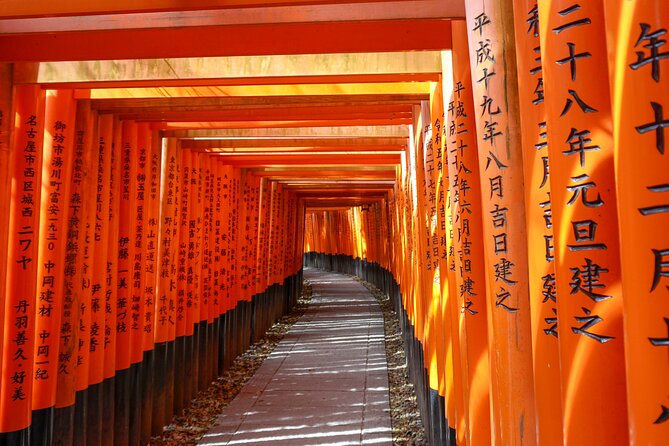
The tour also builds photo opportunities into the movement. The corridor of gates is one of the best scenes in Kyoto, but the real trick is timing and angles. With fewer people around you at key moments, you get shots that actually look like Kyoto, not like a crowded queue.
A quick reality check on the shrine segment
The time listed for this main shrine stop is about 2 hours, and it’s a hike on uneven paths. You’ll be walking and climbing some. If you know your legs tire faster on stairs or slopes, pace yourself and take short breaks when the guide pauses for explanations or photos.
The Hidden Hike Part: Why Quieter Mt. Inari Trails Are Worth Your Money
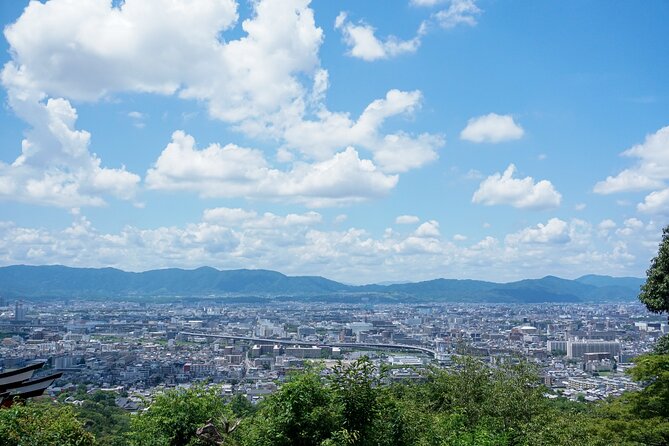
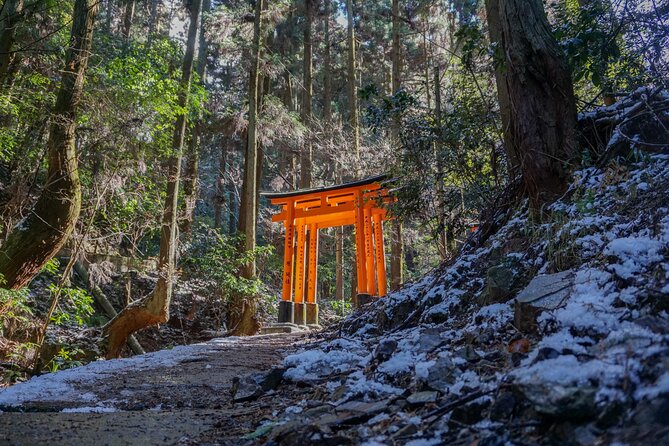
Fushimi Inari is famous, so it can be chaotic. The reason this tour is different is simple. You step away from the most crowded main paths and spend time on calmer routes near Mount Inari.
That’s the experience shift that matters for me. It changes how the shrine feels. On the main route, it can seem like a photo set. On the quieter trails, it starts to feel more like what it is, a hillside pilgrimage landscape.
You also get to enjoy the walk itself. The trails on the mountain side give you breathing room, and you get more opportunities for commentary because the group is moving through less traffic.
The private format helps here too. Your guide can adjust the route to keep your group from being pulled into the densest areas at the wrong moment.
If you care about atmosphere, this is the section you should think about when deciding whether it’s worth booking.
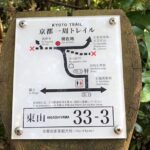
More trails into the hills above the city
What You’ll See and Learn Along the Route (Without Feeling Lost)
A private guide does more than point. It removes stress. The tour is designed so you don’t have to figure out where to go next while also juggling language barriers and crowds.
As you move up and through the torii areas, your guide’s narration keeps you oriented. You’re not just watching scenery. You’re getting a running explanation of Japanese history and Shinto ideas tied to the places you pass.
That also helps your photography. When you know what you’re photographing, you tend to frame better. You stop for the right moment instead of snapping at everything.
This kind of route guidance is especially valuable at Fushimi Inari because the area is big and the paths branch. Having someone lead means you can focus on what you came for, gates, stories, and viewpoints.
Coming Down With a Scenic Fushimi Momoyama Castle View
On the way back down, your route includes scenic views of Fushimi Momoyama Castle from the mountainside.
This is a smart addition because it breaks up the experience. After hours of torii and shrine paths, you get a different visual payoff. It also gives the hike a sense of progression, up toward the shrine highlight, then down with a broader scenic perspective.
From a photo standpoint, it also changes your lighting and angles. Depending on conditions, shaded hillside views can make torii shots look more dramatic once you move back into open viewpoints.
Complimentary DSLR Photos: The Part That Saves You Effort
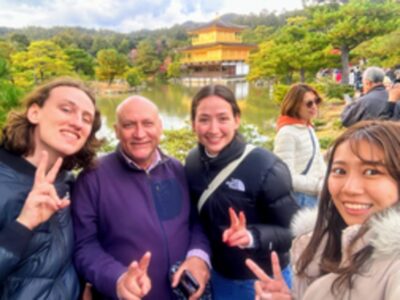
I like that the tour includes complimentary photos taken with a DSLR camera, shared after the tour. That means you are not stuck with the handheld scramble.
It also means you get at least some shots where someone is actually thinking about composition, not just pressing the shutter. In a place like Fushimi Inari, where the torii lines create strong patterns, a guided photo moment makes a difference.
A small but real benefit is that you can also enjoy the walk more. If you don’t have to stop every 30 seconds to wrestle with framing, you’ll remember more of the experience, not just the effort.
Price and Value: How $62.26 for 3 Hours Adds Up (or Doesn’t)
At $62.26 per person for about 3 hours, this sits in the mid-range for private Kyoto walking tours. The question is whether the inclusions justify it for you.
Here’s what you’re paying for, based on what’s included:
- A private, English-speaking local guide in Kyoto
- English narration focused on Japanese culture, history, and Shinto
- Route planning that targets quieter Mt. Inari trails away from the most crowded paths
- Complimentary DSLR photos shared after the tour
If you would otherwise do Fushimi Inari on your own, you might save money but you would likely lose two big advantages: the quiet routing and the guided interpretation. Those are exactly the things that transform the visit from sightseeing into understanding.
Another value point: the tour is designed with the “don’t get lost” idea in mind, which matters in an area where branching paths can confuse even confident walkers.
Where it might not feel like a great value is if you’re mainly interested in a quick look at the gates and you don’t care about history or photos. In that case, a self-guided visit could be more cost-effective.
Who This Tour Suits Best (And Who Should Pass)
This works best if you want:
- A quieter, more thoughtful hike rather than a crowded shrine walk
- A guide to explain Shinto context in plain English
- Strong photo opportunities with less stress
- A private experience that your group can actually shape with questions
You’ll also be happier if you’re comfortable with moderate hiking. The tour calls for moderate physical fitness, which fits most people who can handle uneven paths and some climbing.
If you have mobility challenges or you’re looking for a mostly flat route, you might find this harder than expected. The route includes mountain trails and the Senbon Torii area is reached via paths that involve walking and elevation.
A Note on Rain, Weather, and Getting the Best Day
This experience requires good weather. If it gets canceled due to poor weather, you’ll be offered a different date or a full refund.
That matters in Kyoto because rain can change the feel of the torii paths. If you do go on a clear or lightly cloudy morning, you’re likely to get the best combination of visibility and comfortable walking.
If your travel dates are flexible, that flexibility helps. But if you’re determined to lock in a date, be prepared that weather can affect your plan.
Should You Book This Private Fushimi Inari Hidden Hike?
I recommend booking if you want the real payoff of Fushimi Inari without the worst crowds. The private guide approach, the quieter Mt. Inari routing, and the Shinto narration are the big reasons to spend for this format.
I’d skip it if you want a short, low-effort shrine stroll or if you don’t care about interpretation and guided photo moments. In those cases, you can probably get what you want cheaper on your own.
If you are the kind of traveler who likes structure, meaning, and photos you can actually use, this private hike is one of the best ways to experience Kyoto’s most famous torii maze with a calm pace and a clear story.
FAQ
How long is the Kyoto Fushimi Inari hidden hike private tour?
It’s about 3 hours.
What time does the tour start?
The start time is 8:30 am.
Where do we meet, and where does the tour end?
You start at FamilyMart Nakai Tofukuji (12-chōme-232 Honmachi, Higashiyama Ward, Kyoto). You end in front of the Romon Gate, just before the main hall of Fushimi Inari Taisha, at Fushimi Inari Shrine Tower Gate.
Is hotel pickup and drop-off included?
No. Hotel pick-up and drop-off are not included.
Is this a private tour?
Yes. It is private, and only your group will participate.
Is there an admission ticket cost for Fushimi Inari-taisha?
The admission ticket for the shrine stop is listed as free.
Are photos included in the tour?
Yes. You’ll get complimentary photos taken with a DSLR camera, shared after the tour.
What is the cancellation policy if the weather is bad or plans change?
Free cancellation is available. You can cancel up to 24 hours in advance for a full refund. The experience requires good weather, and if it’s canceled due to poor weather, you’ll be offered a different date or a full refund.
New This Season
- Koyasan Day Trip by Private Car from Kyoto
- Old Port Town and Ultimate Sake Tasting Private Tour From Kyoto
- Kyoto’s Timeless Charm: 3hr Exploration of History and Peace
- Kyoto: 5 Types of Sushi Making
- Sacred Peak & Ancient Paths: Kurama-Kibune Hiking Experience
- Kyoto: Exclusive ZEN practice at Manpukuji temple in Uji
- Kyoto: Private Seasonal Aroma Yoga Class
- Traversing Kyoto’s Scenic West – Arashiyama to Kinkakuji
Fushimi Inari Shrine Walks, compared.
Fushimi Inari, Kinkakuji, Bamboo Grove 1 Day Bus Tour
Read our review →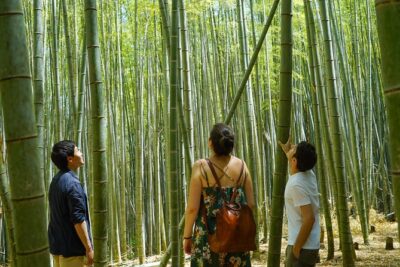
Fushimi Inari Hidden Hiking Tour (Private Option Available)
Read our review →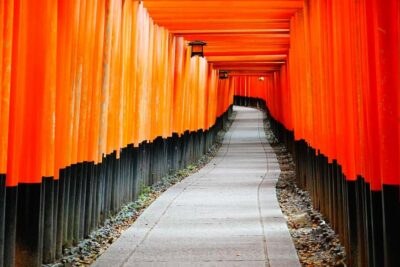
Kinkakuji,Arashiyama,FushimiInariShrine,NaraPark
Read our review →
Nara, Fushimi Inari Taisha, Arashiyama Bus Tour
Read our review →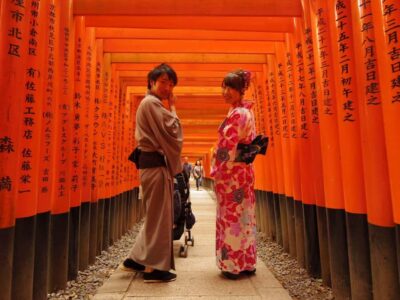
Arashiyama, Nara & Fushimi Inari Shrine w/Lunch
Read our review →
Nijo Castle, Kiyomizu & Fushimi Inari Guided Tour
Read our review →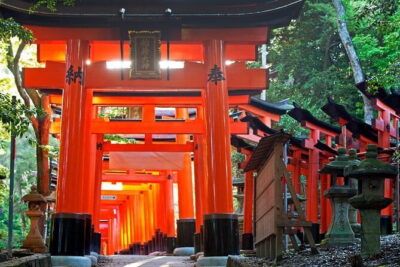
Nijo, Kinkaku-ji, Arashiyama, Kiyomizu & Fushimi Inari
Read our review →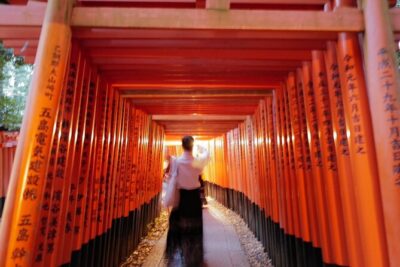
Also filed under