
Reviewed · GION GEISHA QUARTER WALKS
Kyoto : Chopsticks Making Workshop in Gion with Engraving Option
Making chopsticks is weirdly relaxing. In this Gion workshop, you start with raw wood blanks and shape them with a traditional kanna hand plane, with patient help when your hands get wobbly. I like that you actually get to finish a usable souvenir, not just watch someone else work.
The workshop also lets you pick Japanese wood types for different grain, color, and natural aroma, and you can add an optional name engraving in Japanese or your native language. One thing to consider: if you have your heart set on a specific wood option, there can be occasional availability limits in what’s on hand.
In This Review
- Key highlights to know before you go
- Kyoto chopsticks in Gion, where craft feels like part of the street
- Choose your wood, and pick the look you want to eat with
- The hand plane part, where you learn the feel of the wood
- Sandpaper, oil, and why the finish decides if it feels great
- Engraving your name, a simple add-on that makes the souvenir personal
- Timing in real life: how to fit an hour of carving into Kyoto
- What you carry home, and how to keep your chopsticks looking good
- Price and value: is $15.25 worth it for a one-hour craft?
- Who should book this workshop, and who might not
- Should you book the Kyoto chopsticks making workshop in Gion?
- FAQ
- How long does the Kyoto chopsticks making workshop take?
- What does the workshop cost?
- Where is the meeting point?
- Is there an engraving option for the chopsticks?
- Are wood choices included in the price?
- What kind of ticket do I need?
- How big is the group?
- Can I cancel for a full refund?
Key highlights to know before you go
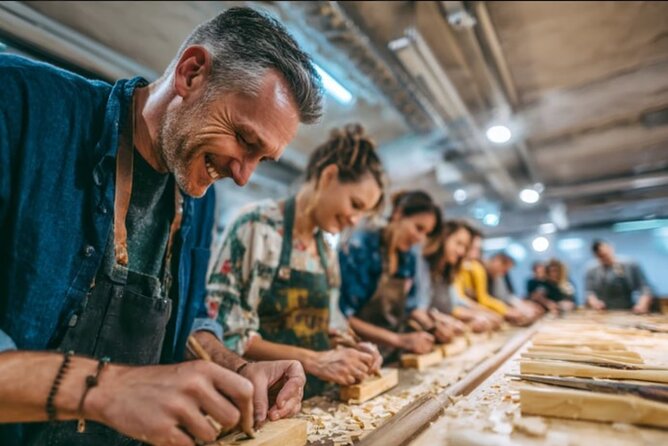
- Traditional kanna shaping: you carve your own chopsticks, step by step.
- Wood choice matters: different Japanese woods change the look and feel of your finished pair.
- Engraving option: your name can be added as a memorable personal touch.
- Beginner-friendly pace: staff guidance keeps first-timers on track.
- It’s hands-on, not a demo: you do the carving, sanding, and finishing yourself.
- About an hour total: a focused craft break in the middle of a Kyoto day.
Kyoto chopsticks in Gion, where craft feels like part of the street
Gion has that classic Kyoto mood, old lanes, teahouse vibes, and the sense that people still do things the traditional way. This is a good match for a Kyoto chopsticks making workshop because the whole point is practical craftsmanship you can take home, not a quick photo stop.
What I like most is that it fits into a normal day. You get an experience that feels Kyoto, but you are not committing to a full-day trip or a long commute.
Your setting is at the ZEN Chopsticks Making Workshop in Gion Kyoto, on Yasaka Koji South, Higashiyama Ward (address: machi-71-13 Tamamizu, Kyoto 605-0851). It is also described as near public transportation, which matters because Gion can be a walk-for-your-life zone if you wait too long to leave.
Choose your wood, and pick the look you want to eat with
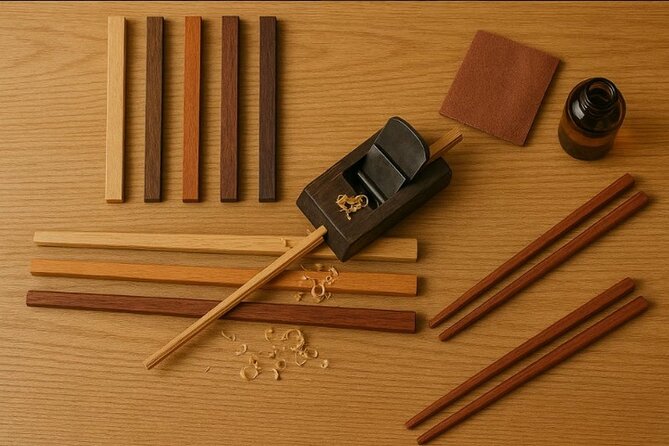
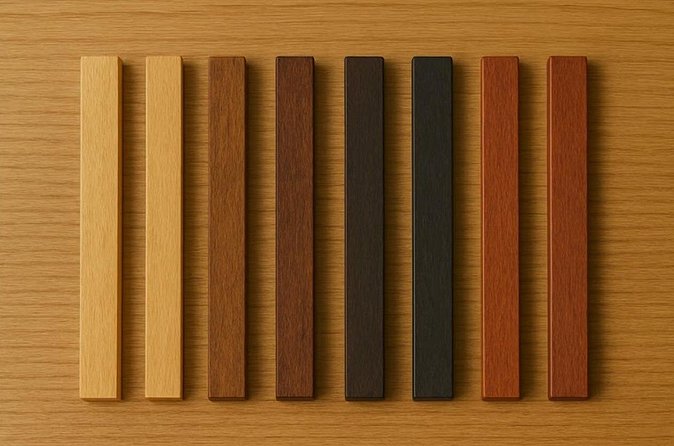
You begin by selecting from a curated set of Japanese woods, each with its own texture, aroma, and natural color. The idea is simple but smart: the wood choice is part of your souvenir, so you get to decide how your chopsticks will look sitting on your dining table later.
Two wood types are included at no extra cost. Premium options can be added as optional upgrades, so you can go basic or treat yourself if you want something more special.
Here is the practical tip that will save you disappointment: if you only want one specific wood tone, have a backup in mind. Some people have noted that not every advertised choice is always available, so your plan should include a willingness to select what’s on offer that day. The upside is that every wood option should still give you a genuine handmade pair.
Lantern-lit streets of the geisha quarter
- Kyoto Geisha Walking Tour: Gion District & Hidden Gems
★ 4.7 · 3,273 reviews - Kyoto: Gion Magical Night Walking Tour with Geisha Trivia
★ 4.9 · 2,393 reviews - Kyoto: Gion Geisha District Walking Tour – Stories of Geisha
★ 4.7 · 2,187 reviews - Best of Kyoto: Gion, Geisha, Pagodas & Cobblestones
★ 4.9 · 2,058 reviews
The hand plane part, where you learn the feel of the wood
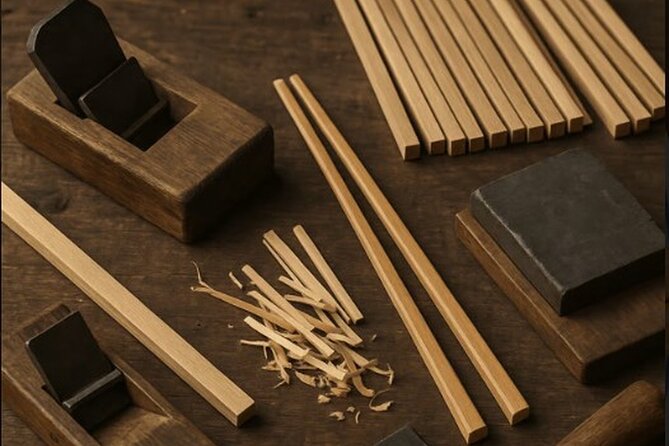
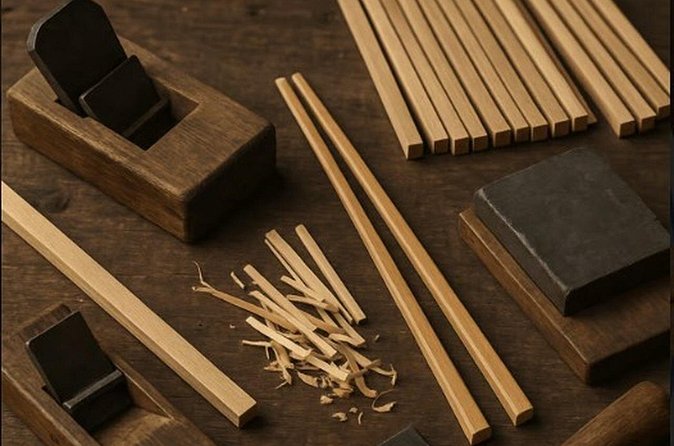
The core of the workshop is carving your chopsticks from raw blanks using a traditional kanna, a Japanese hand plane. You do not need prior woodworking experience. The instruction is designed for first-timers, and the pace is paced so you can keep up while your hands learn what the tool wants.
You start with rough shaping, meaning the chopsticks go from rectangular-ish pieces to something that begins to resemble the final silhouette. Then you continue carving until the proportions feel right in your hand.
This is the calm part. Even if you are not naturally patient, carving wood forces you to slow down. You can actually feel the grain as the plane removes thin layers, and that tactile feedback is why this experience works.
Two details make this more than a gimmick workshop:
- You shape the wood yourself, so you know what you are bringing home.
- The guidance is clear and patient, so even if your first passes look uneven, you can correct course.
Sandpaper, oil, and why the finish decides if it feels great
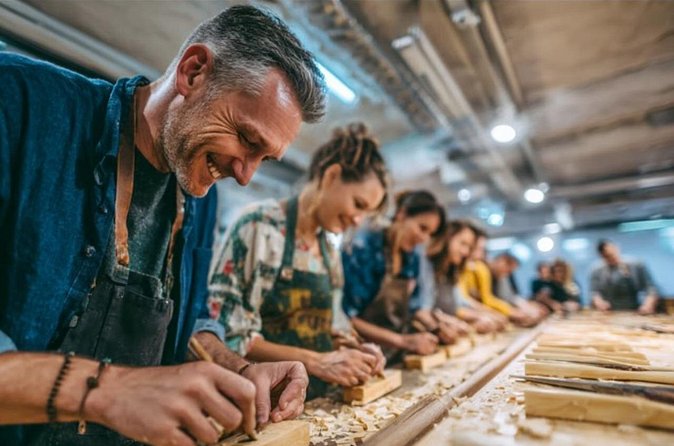
After carving, you smooth the surfaces and edges with sandpaper. This step matters more than people think, because sharp edges and uneven finish can make even pretty chopsticks feel annoying.
Once the sanding is done, you apply a coat of natural oil. The oil protects the wood and also brings out the look and comfort. In other words, you are not just making a keepsake, you are prepping something you can use.
One small reality check: because you finish with oil, your chopsticks may not feel completely dry immediately after the workshop. If you are heading straight into the rest of your Kyoto day, plan to handle them gently and give them time to settle and dry where you store them.
Engraving your name, a simple add-on that makes the souvenir personal
The optional finishing touch is engraving. You can add your name in Japanese or in your native language, turning a handmade pair into something that feels truly yours.
This is one of those extras that is worth considering because it does not add complexity for you. You are already making the chopsticks, and engraving is the part that personalizes them without making the craft harder.
If you want to gift these, the engraving makes them instantly meaningful. If you are keeping them for yourself, it gives you that little ritual moment later when you grab them off the shelf and remember the day you made them in Gion.
Timing in real life: how to fit an hour of carving into Kyoto
The experience runs about 1 hour. That makes it a great choice when you want something hands-on but you do not want your whole afternoon tied up.
Your group size has a maximum of 32 travelers. In practice, that number matters because it usually means you are not in a crowd that prevents you from getting help. It is still a workshop environment, so expect you will be in a room with other people, but the experience is structured for instruction and hands-on carving.
You will also use a mobile ticket. Keep it ready on your phone so you can check in without fuss. Since the venue is near public transportation, you should not need complicated routing, but I still suggest giving yourself a little buffer in Gion. Side streets plus Kyoto foot traffic can make a short walk feel longer than you expect.
A quieter way to spend a day in Kyoto
What you carry home, and how to keep your chopsticks looking good
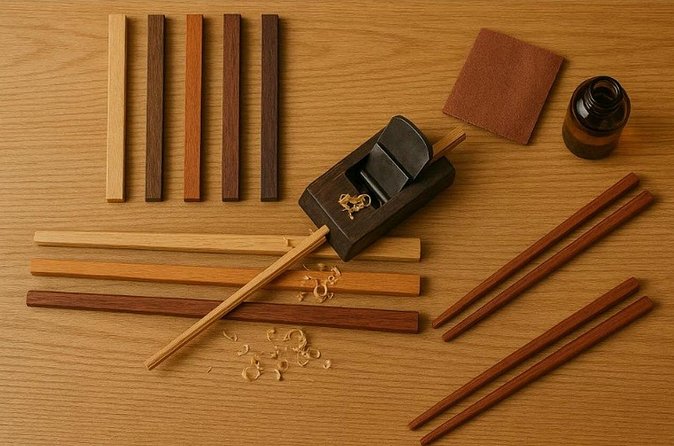
You take your chopsticks home as your souvenir. The workshop is built around making them functional, not decorative. The sanding and natural oil finish are the reason the finished pair should feel comfortable for everyday use.
For packing, keep it simple:
- Put them in something protective (a small pouch or wrap) so they do not knock around.
- Handle them gently right after oiling.
- Store them where they will not get bashed by other items in your bag.
If you plan to use them during the rest of your trip, keep them accessible. It is one of those fun travel details, using the chopsticks you made every time you stop for ramen or sushi.
Price and value: is $15.25 worth it for a one-hour craft?
At $15.25 per person for about an hour, this workshop is priced like a practical craft experience rather than a luxury class. And the value is not just the woodworking. You are getting the full process: carving with the hand plane, smoothing, oiling, and optional engraving.
The wood situation also affects value. Since two wood types are included at no extra cost, you are not automatically pushed toward upgrades. Premium woods are optional, so you can decide based on your interest in grain and color.
If you compare it to buying a finished souvenir chopstick set in Kyoto, the economics can still work in your favor because yours are personalized and made by you. Even better, you leave with something that supports how Japanese meals actually happen. You get a story, but you also get a tool.
Who should book this workshop, and who might not
This is a strong fit for:
- Beginners who want a real skill, not just a quick show.
- Families who can handle a structured activity and like making something together.
- Anyone who enjoys hands-on crafts and calm, focused tasks.
The engraving option also makes it a nice choice if you travel with someone you want to surprise, because you can engrave a name that feels intentional.
Here is the one possible mismatch: if you want a completely hands-off, watch-and-enjoy format, you might be disappointed. This is hands-on. Also, if you are extremely picky about a specific wood species, keep in mind there can be occasional availability gaps.
Should you book the Kyoto chopsticks making workshop in Gion?
Book it if you want a Kyoto souvenir that actually feels like work you did, with a tool you used, in a short time window. The traditional kanna shaping, the natural oil finish, and the optional name engraving are exactly the sort of details that make a craft day memorable and practical.
Skip it only if you dislike hands-on activities or you are chasing something more scenic or high-energy. For most people, though, this is an efficient way to add a real Japanese craft moment to your Gion day without eating up half your trip.
If you do book, go in with two mindsets: choose a wood you love, and give yourself permission to be a beginner. That is how you end up with chopsticks you genuinely want to use.
FAQ
How long does the Kyoto chopsticks making workshop take?
It lasts about 1 hour.
What does the workshop cost?
The price is $15.25 per person.
Where is the meeting point?
The start point is 禅 (ZEN) Chopsticks Making Workshop, Gion Kyoto, Yasaka Koji South, machi-71-13 Tamamizu, Higashiyama Ward, Kyoto 605-0851, Japan.
Is there an engraving option for the chopsticks?
Yes. You can add an optional engraving of your name in Japanese or your native language.
Are wood choices included in the price?
Two wood types are included at no extra cost, and premium woods are available as optional upgrades.
What kind of ticket do I need?
You receive a mobile ticket.
How big is the group?
The workshop has a maximum of 32 travelers.
Can I cancel for a full refund?
Yes. Free cancellation is available up to 24 hours before the experience start time for a full refund.
New This Season
- Koyasan Day Trip by Private Car from Kyoto
- Old Port Town and Ultimate Sake Tasting Private Tour From Kyoto
- Kyoto’s Timeless Charm: 3hr Exploration of History and Peace
- Kyoto: 5 Types of Sushi Making
- Sacred Peak & Ancient Paths: Kurama-Kibune Hiking Experience
- Kyoto: Exclusive ZEN practice at Manpukuji temple in Uji
- Kyoto: Private Seasonal Aroma Yoga Class
- Traversing Kyoto’s Scenic West – Arashiyama to Kinkakuji
Gion Geisha Quarter Walks, compared.
Kyoto Geisha Walking Tour: Gion District & Hidden Gems
Read our review →
Gion Magical Night Walking Tour with Geisha Trivia
Read our review →
Gion Geisha District Walking Tour – Stories of Geisha
Read our review →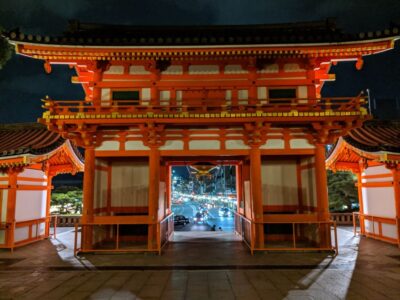
Best of Kyoto: Gion, Geisha, Pagodas & Cobblestones
Read our review →

Kyoto Night Foodie Tour in Gion (9+ dishes + 6 Sake tastings)
Read our review →
Kyoto Gion Geisha District Walking Tour – The Stories of Geisha
Read our review →
Kyoto Gion: 2-Hour Geisha Culture & History Walking Tour
Read our review →Also filed under