
Reviewed · NARA & DEER PARK DAY TRIPS
From Kyoto / Osaka: Kyoto Must-see Spots & Nara Park One Day Tour
One day, three big Kyoto icons, plus deer. I love the fast, guided routing that helps you hit top sights without wrestling trains all day. I also love that the day mixes headline temples with quirky stops like the Kimono Forest. The only catch is the schedule moves quickly, so you may feel like you need more time in at least one place.
The vibe is very practical: an air-conditioned vehicle, a guide with clear pacing, and frequent opportunities to wander on your own. If you care about comfort, it’s a big plus that the group is kept to a maximum of 45 people, and the day has built-in stops that reduce long, stressful transfers. The price is also fair for what you get, since most key sights are free.
Budget and expectations matter for the one paid add-on: Tenryu-ji Temple requires a 500 yen ticket, and lunch is not included. Also, some people find bus seats tight for long stretches, especially if you’re tall.
In This Review
- Key things I’d circle before you book
- Why This Kyoto and Nara One-Day Route Makes Sense
- Nara Park Deer Time: What You Get in Your First Hour
- Fushimi Inari Taisha and the Senbon Torii Walk
- Arashiyama in One Day: Bamboo Forest, Nonomiya Shrine, Kimono Forest
- Bamboo Forest: quick and iconic
- Nonomiya Shrine: the black torii gate
- Kimono Forest: the playful art installation
- A realistic drawback: the tradeoff is time
- Tenryu-ji Temple: UNESCO Zen, Plus Your 500 Yen Budget
- Rilakkuma Tea House and Togetsukyo Bridge: The Perfect Between-Stop Break
- Rilakkuma Tea House: kitsch you’ll either love or tolerate
- Togetsukyo Bridge: the iconic river view
- How the Day Actually Feels: Pace, Crowds, and Bus Comfort
- Price and What You’re Really Paying For
- Who This Tour Fits Best (and Who Might Want Something Else)
- Should You Book This Kyoto and Nara One-Day Tour?
- FAQ
- How long is the tour?
- What is included in the price?
- Is lunch included?
- Do I need to pay for Tenryu-ji Temple?
- Which stops are part of the day?
- How big is the group?
- Is the tour ticket mobile?
- Where does the tour start from?
- Can I cancel for a full refund?
Key things I’d circle before you book
- Deer time at Nara Park: famous, tame, and genuinely fun for families
- Senbon Torii at Fushimi Inari: a must-see walk through thousands of red gates
- Arashiyama variety in one pass: bamboo, shrine with a black torii gate, and the Kimono Forest installation
- UNESCO Tenryu-ji visit: included in the plan, but you pay the 500 yen entry ticket
- A guide who keeps you moving: many guides are praised by name for organization and clear English
Why This Kyoto and Nara One-Day Route Makes Sense
A one-day Kyoto and Nara combo only works if the planning is tight. This tour is built that way. In roughly 9 hours, you cover Nara Park, Fushimi Inari Taisha, and the Arashiyama area, which is a lot of ground for one day.
The value is in the mix. Nara Park gives you the famous deer experience and major temple atmosphere. Fushimi Inari gives you the instant visual impact of the torii gates. Then Arashiyama adds nature and art-world oddities, from bamboo to the Kimono Forest installation. It’s not “slow travel,” but it is a smart way to see the headline Kyoto you’re picturing.
Group size stays capped at 45, which matters because you visit very popular places. In tight crowds, you want an organized meeting rhythm so you don’t spend your vacation hunting for your group.
Nara Park Deer Time: What You Get in Your First Hour
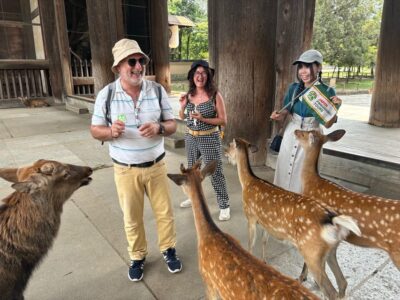
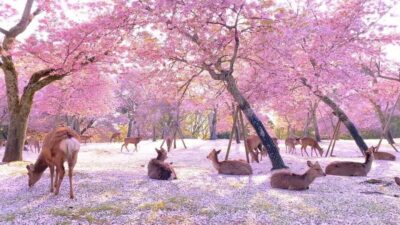
You start in Nara Park, one of Japan’s oldest parks, spread across 660 hectares. The big draw is the deer. They’re free-roaming, and the experience is playful, almost instantly memorable, especially if it’s your first time seeing them.
What I like here is that Nara Park is not just a “photo stop.” You get enough time to actually enjoy the area instead of just marching from one viewpoint to another. A common highlight is feeding the deer with treats, which many families love because it turns the famous animals into an interactive moment rather than a distant sight.
The main consideration is crowd control. Nara Park is popular, and the deer attract attention fast. If you’re sensitive to busy environments or you want quiet and solitude, you might find this start a little hectic. Wear comfortable shoes, because even a short walk inside the park adds up quickly.
Deer that bow back, a short ride away
- Osaka/Kyoto:Kinkakuji,Arashiyama,FushimiInariShrine,NaraPark
★ 4.1 · 1,596 reviews - Kyoto/Osaka: Nara, Fushimi Inari Taisha, Arashiyama Bus Tour
★ 4.7 · 1,275 reviews - Osaka/Kyoto: Arashiyama, Nara & Fushimi Inari Shrine w/Lunch
★ 4.4 · 754 reviews - Kyoto and Nara Day Trip from Kyoto
★ 4.5 · 445 reviews
Fushimi Inari Taisha and the Senbon Torii Walk
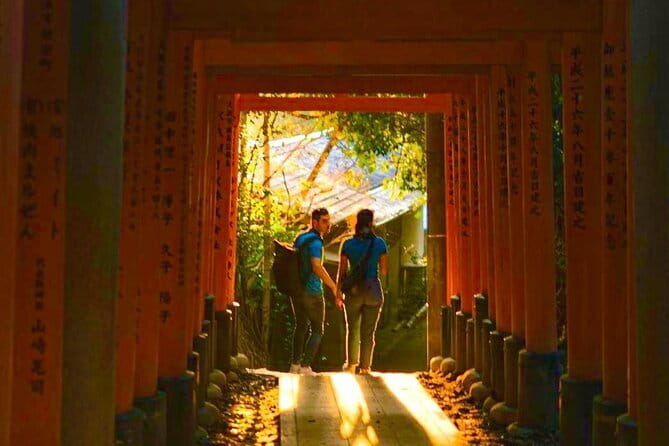
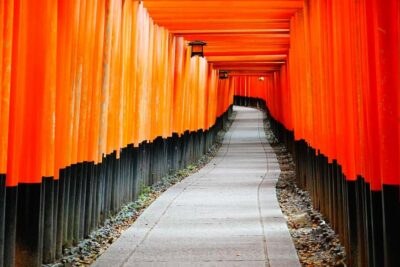
Next comes Fushimi Inari Taisha, the head shrine for Inari, the Shinto god of rice. This is the place with Senbon Torii, thousands of vermilion red torii gates lined up in rows, creating a walkway that feels both simple and spellbinding.
You’ll have about 1 hour 10 minutes here, which is enough time to do the classic section where the gates create that tunnel effect. Admission is free, so there’s no extra cost beyond your time. The big question is how far up you want to go, because the route climbs as you move deeper into the hills.
If you hate rushing, this is where the short timing can sting. One practical tip: decide early if you want the lower gate corridor experience or if you want to push higher for views. Then you can enjoy your chosen level instead of trying to do everything and feeling stressed.
Arashiyama in One Day: Bamboo Forest, Nonomiya Shrine, Kimono Forest
Arashiyama is Kyoto’s western district, famous for combining scenic nature with historic stops. This part of the day feels like walking through different versions of Kyoto, from traditional shrine details to modern photo-friendly installations.
Bamboo Forest: quick and iconic
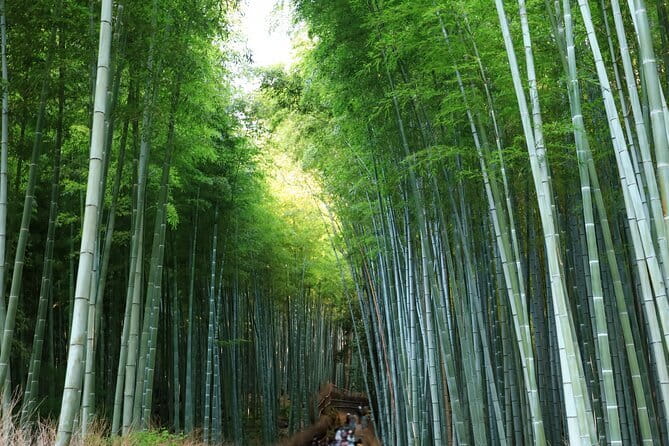
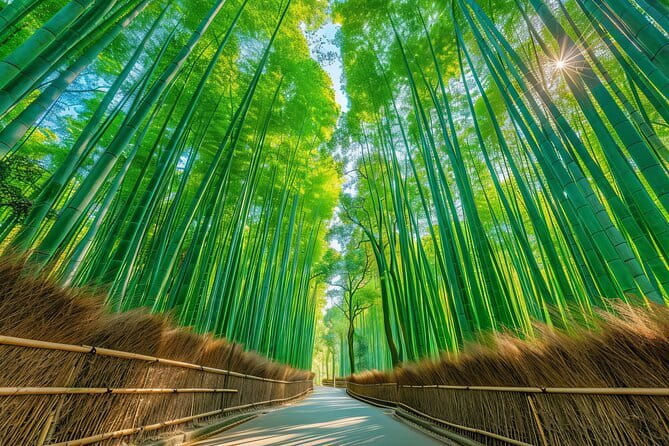
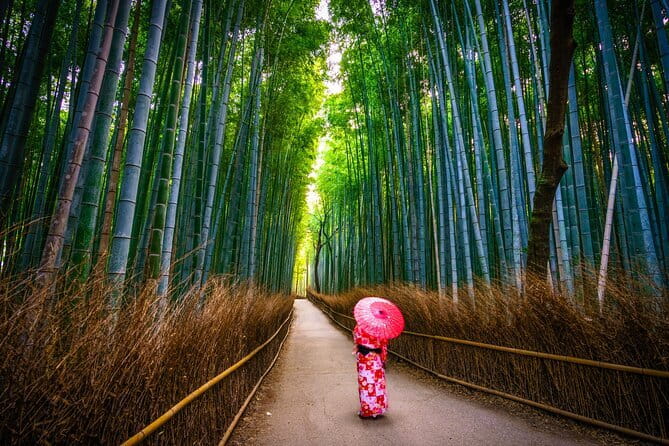
The Arashiyama Bamboo Forest is the obvious anchor. It’s serene in a way that surprises people, even with crowds. You’ll get around 50 minutes, which is enough for a slower stroll if you can manage the density.
One good way to enjoy it is to look beyond the main path shots. Bamboo changes with angle and light, and the quiet rhythm of the walking path is part of the charm.
Nonomiya Shrine: the black torii gate
Next is Nonomiya Shrine, a smaller stop that still adds variety. It’s known for a distinctive black torii gate, unlike the typical vermilion ones you’ll see elsewhere. You don’t need a long time here, but you do get that nice change of pace from bamboo.
A quieter way to spend a day in Kyoto

Kimono Forest: the playful art installation
Then comes the Kimono Forest, an installation made up of 600 clear acrylic cylinders, each about 2 meters tall, decorated with vibrant kimono designs. This is the kind of stop that’s hard to describe until you see it, because it’s both bright and strangely orderly.
Expect this to be very photo-driven. It’s also a fun contrast to the natural elements earlier in Arashiyama.
A realistic drawback: the tradeoff is time
This Arashiyama cluster is popular, so the timing is tight by design. Some people feel there’s not quite enough time to linger as long as they’d like in one specific spot, like the bamboo versus another shrine. If you’re the type who wants to “soak,” consider this tour as a highlights sampler, not a slow immersion day.
Tenryu-ji Temple: UNESCO Zen, Plus Your 500 Yen Budget
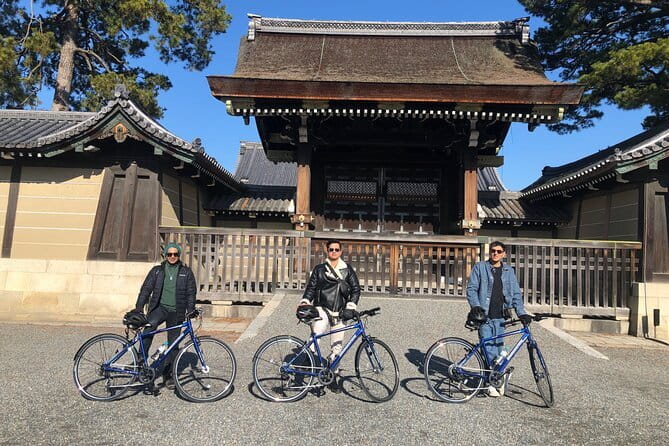
Tenryu-ji Temple is a UNESCO World Heritage Site and is ranked among Kyoto’s five great Zen temples. This is one of the most meaningful historical stops in the Arashiyama area, and it’s where the day shifts from sightseeing photos into temple atmosphere.
You’ll spend about 20 minutes here. Tenryu-ji is not included in admission, so plan on paying 500 yen at the site. This is the one part of the day where you should have cash or a payment-ready plan, because it’s easy to forget when everything else is free.
Also note that people get confused when a stop includes a paid ticket. So treat Tenryu-ji like a budget check, not like an optional add-on. If you’re trying to keep the trip within your planned spending, this is the cost that matters.
If you’re a temple-focused traveler who wants long meditation-style wandering, 20 minutes may feel short. In that case, you may prefer to pair this tour with a return visit later in your Kyoto stay.
Rilakkuma Tea House and Togetsukyo Bridge: The Perfect Between-Stop Break
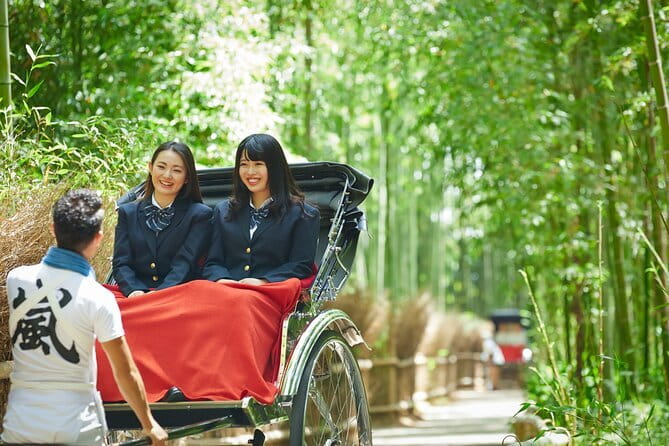
After the more solemn temple moments, you get a lighter break.
Rilakkuma Tea House: kitsch you’ll either love or tolerate
The Arashiyama Rilakkuma Tea House is named for Rilakkuma, which means bear in a relaxed mood. It’s a place to wander through a cafe and shop area with a distinctly cute, playful tone. It’s not a cultural landmark in the historical sense, but it’s a fun reset during a packed day.
If you’re traveling with kids or anyone who enjoys character-themed stops, this can be a morale booster. If you’re not into that style, you can treat it as a short pause, grab a drink if you want, and then move on.
Togetsukyo Bridge: the iconic river view
Finally, you reach Togetsukyo Bridge, the most iconic landmark in Arashiyama. It originally dates to the Heian Period, later reconstructed in the 1930s. The bridge spans the Katsura River and is a classic Kyoto photo moment.
You’ll have about 15 minutes. That’s just enough for a quick walk for viewpoints and photos before heading back.
How the Day Actually Feels: Pace, Crowds, and Bus Comfort
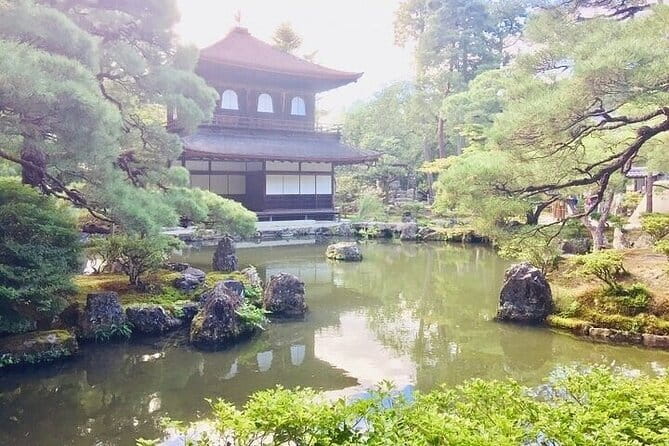
This tour is designed for getting you to a lot of places in one day, which means it uses short, efficient time blocks. That’s great when you’re short on time. It’s less great if you want long, slow wandering.
You’re also visiting very busy areas. Arashiyama and Fushimi Inari especially can feel packed. The best way to handle crowds is to listen closely when your guide gives coordination instructions, then follow the group like a school of fish. In places like this, even a 10-minute detour can make you miss the next meeting window.
What’s consistently praised is the guiding style. Guides on this kind of tour often handle timing and communication with energy, and some guides add small extras like games to reinforce what you just saw. Names that come up in positive feedback include Mia, Fiona, Laura, Amy, Tina, Tracy, Theodore, Willa, and Fredrick, and the common theme is clear coordination and a friendly attitude.
One practical downside is the bus comfort. A few comments point out that seats can feel narrow for people who need more legroom. Bring a water bottle, keep your phone charged, and wear layers in case the vehicle gets cold.
Price and What You’re Really Paying For
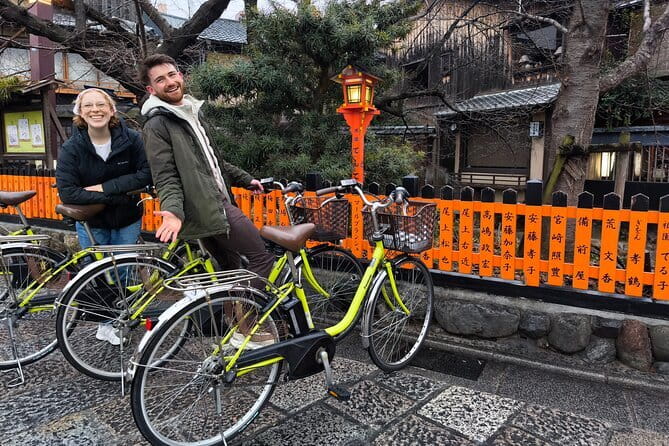
The price is listed at $60.00 per person. For a day that includes air-conditioned transportation and a guide, it’s not just “entry tickets plus a bus.” Most major sightseeing stops here have free admission, which helps you keep the day’s spending predictable.
Included in the tour:
- Air-conditioned vehicle
- Guide
Not included:
- Lunch
- Tenryu-ji Temple ticket (500 yen)
That adds up to a straightforward math problem. You’re mostly paying for time management, local guidance, and the ability to move between distant areas without hassle. Lunch is the flexible cost you control, so you can choose something near the stops that fits your budget and appetite.
One smart approach: think of this as a highlights plan. If you want to add your own extra temples or a longer Arashiyama stroll, do it with extra hours on a separate day.
Who This Tour Fits Best (and Who Might Want Something Else)
This is a good match for:
- First-time visitors who want the Kyoto hits without planning routes
- Travelers on a tight schedule, especially those staying near Osaka or Kyoto
- Families, since the deer interaction is a favorite for kids
- People who like structured days with clear meeting points
It may be less ideal if:
- You want long stays inside temples or on shrine paths with zero rushing
- You’re very sensitive to crowds and prefer quiet, off-peak pacing
- You’re hoping for a deep, slow food or photography day where every stop gets extra time
A helpful clue is how the schedule balances highlights. The Arashiyama segment gives you variety, but you won’t have unlimited time to linger in one favorite spot. If you have one or two places you care about most, plan to spend extra personal time on a different day.
Should You Book This Kyoto and Nara One-Day Tour?
If you want a strong sampler of Kyoto and Nara in one day, I think this is worth booking. The combination is smart, the guide support tends to be excellent, and the route covers the big visual icons people come to Japan for, like deer in Nara, the torii gates of Fushimi Inari, and the Arashiyama sights.
Before you book, decide if you’re okay with a full-day pace. This is not built for slow wandering. It’s built for seeing a lot, and doing it smoothly. If that sounds like you, go for it. If you want temple time to stretch and breathe, you might book a different plan that allows longer stays.
FAQ
How long is the tour?
The duration is approximately 9 hours.
What is included in the price?
The tour includes an air-conditioned vehicle and a guide.
Is lunch included?
No, lunch is not included.
Do I need to pay for Tenryu-ji Temple?
Yes. Tenryu-ji Temple requires a 500 yen ticket, and it is not included in the tour price.
Which stops are part of the day?
The day includes Nara Park, Fushimi Inari Taisha, Arashiyama (including the Bamboo Forest), Nonomiya Shrine, Arashiyama Kimono Forest, Tenryu-ji Temple, Arashiyama Rilakkuma Tea House, and Togetsukyo Bridge.
How big is the group?
The tour has a maximum of 45 travelers.
Is the tour ticket mobile?
Yes, it uses a mobile ticket.
Where does the tour start from?
The tour can depart from Osaka or Kyoto.
Can I cancel for a full refund?
Yes. Free cancellation is available up to 24 hours in advance for a full refund.
New This Season
- Koyasan Day Trip by Private Car from Kyoto
- Old Port Town and Ultimate Sake Tasting Private Tour From Kyoto
- Kyoto’s Timeless Charm: 3hr Exploration of History and Peace
- Kyoto: 5 Types of Sushi Making
- Sacred Peak & Ancient Paths: Kurama-Kibune Hiking Experience
- Kyoto: Exclusive ZEN practice at Manpukuji temple in Uji
- Kyoto: Private Seasonal Aroma Yoga Class
- Traversing Kyoto’s Scenic West – Arashiyama to Kinkakuji
Nara & Deer Park Day Trips, compared.
Kinkakuji,Arashiyama,FushimiInariShrine,NaraPark
Read our review →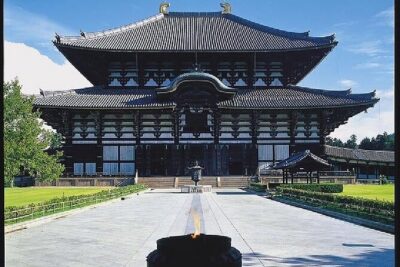
Nara, Fushimi Inari Taisha, Arashiyama Bus Tour
Read our review →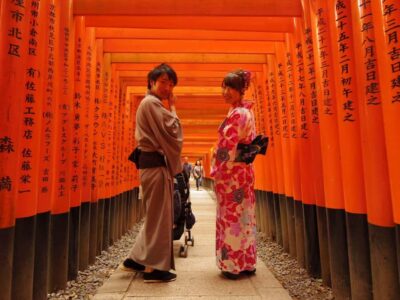
Arashiyama, Nara & Fushimi Inari Shrine w/Lunch
Read our review →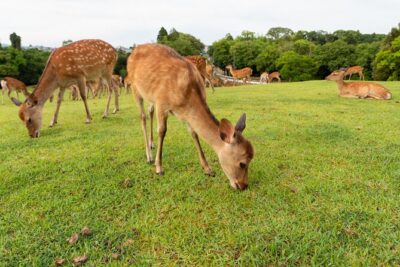
Full Day Guided Tour to Kyoto and Nara from Osaka by Van
Read our review →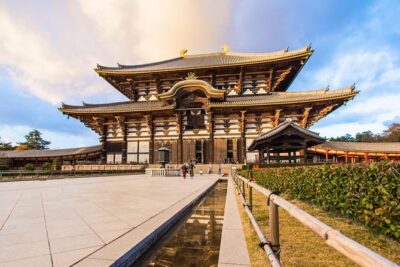
Also filed under