
Reviewed · RICKSHAW RIDES
Kyoto Rickshaw Tour
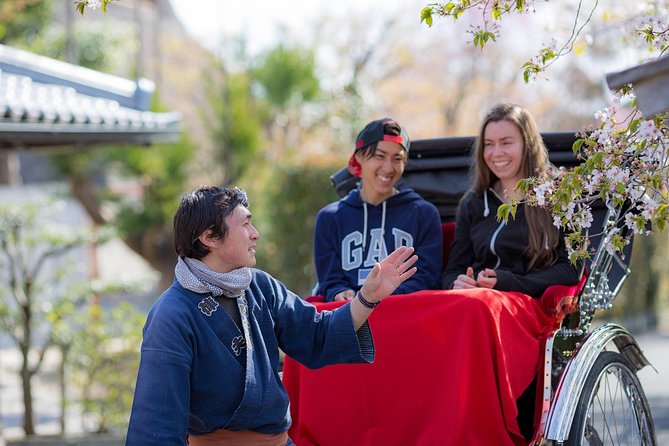
Old Kyoto glides by at rickshaw speed. Step into an authentic wooden rickshaw in Higashiyama, then let English-speaking guides steer you through stone alleys, temples, and Gion without the hassle of map juggling. On rides led by guides like Fumi or Kai, you get stories that actually connect the buildings to daily life.
I love the way the route turns tight backstreets into photo stops, from the geisha district lanes and traditional wooden town houses to cobblestone streets that are hard to enjoy at walking pace. The best part is flexibility, because you can choose shorter or longer ride times based on how much you want to see and how long you want to linger.
The main catch is comfort. Each rickshaw is only 29.1 inches wide and holds a maximum of two adults, so your group might need multiple rickshaws for everyone to sit comfortably. Also, don’t run late, since 10 minutes or more late can trigger automatic cancellation.
In This Review
- Key things I’d plan around
- What it’s like riding a Kyoto rickshaw through Higashiyama and Gion
- Meeting at Ebisuya Higashiyama and choosing your time window
- How the route flows, stop by stop
- Higashiyama base, then a first landmark beat
- Geisha district lanes and wooden town houses
- A small bridge stop in a traditional district
- Temple with a garden, then a more impressive temple stop
- A large Gion shrine stop, plus a note on New Year timing
- Cobblestone street time to feel the old Kyoto pace
- Comfort and seating rules that can affect the real value
- The guides: why this tour is often about the people, not just the ride
- Price and value: is $39.79 per person worth it
- What is not included (and what to pair with this)
- When to book, who should book, and who should skip it
- Should you book the Kyoto Rickshaw Tour?
- FAQ
- What is included in the Kyoto Rickshaw Tour?
- How long does the tour last?
- Where do I meet, and where does the tour end?
- Is this a private tour?
- Does the tour run in the rain?
- What is not included?
- Can the route be customized?
- How do seating rules work for adults and children?
- Where can I use the voucher or ticket?
Key things I’d plan around
- A private ride with only your group, not shared with strangers
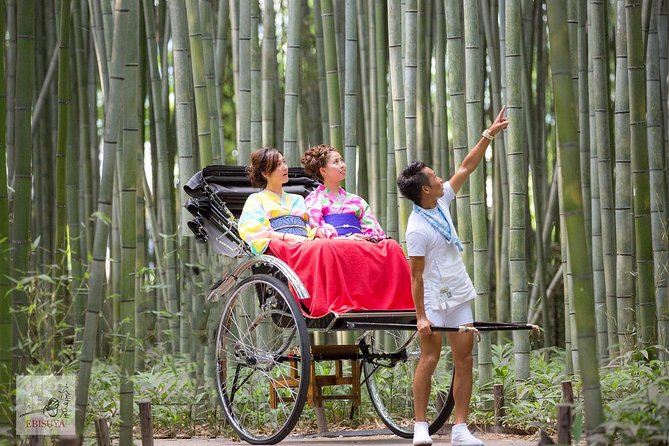
- English-speaking local guides who tell you what you are looking at, plus help with photos
- Higashiyama to Gion route with landmark stops, temples, and a large Gion-area shrine
- Geisha-district streets with traditional wooden town houses and a small bridge stop
- Short or long options (about 30 minutes to 3 hours) that change how much you cover
- Real-seat comfort matters (29.1 inches wide), so book wisely for your party size
What it’s like riding a Kyoto rickshaw through Higashiyama and Gion
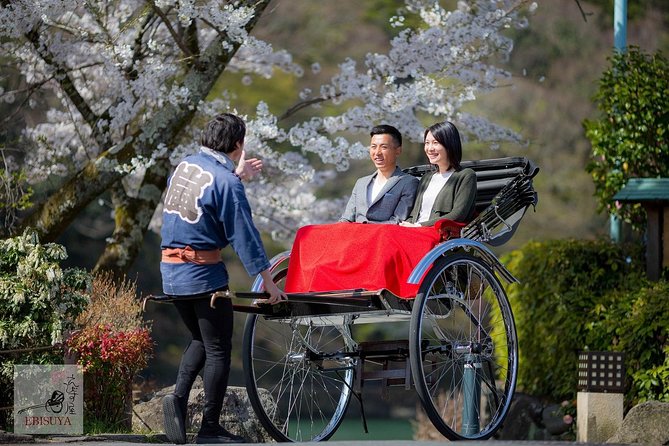
If you want Kyoto to feel like Kyoto, this is one of the easiest ways to get there fast. Instead of pushing through crowds on foot, you slide along narrow lanes in a wooden rickshaw, with a guide keeping the context flowing as the scenery changes around you.
In the Higashiyama area, you get those classic visual hits: wooden machiya-style town houses, stone alleys, and quiet temple approaches that you would miss if you only followed the big walking routes. Then the ride reaches the Gion side, where the pace shifts from alley-hopping to shrine-and-temple views that feel ceremonial, even when you are just gliding past.
One practical bonus you will feel quickly: you can take in details without constantly stopping, backtracking, and trying to read signs while your feet are tired. That matters in Kyoto, where a few blocks can feel like a long walk when you are trying to see a lot in one day. And if you are not able to walk much, the rickshaw format is a very smart way to still experience the old streets. I saw firsthand how a rider who could not walk far still got a full, enjoyable route.
Meeting at Ebisuya Higashiyama and choosing your time window
Your meeting point is Ebisuya Higashiyama Rickshaw at 483 Shimokawarachō, Higashiyama Ward, Kyoto (605-0825). The tour also ends back at the meeting point, which makes planning simpler. If you need a different drop-off location, finishing elsewhere may cost extra on the day.
You pick a ride length up front, and it runs about 30 minutes to 3 hours. The key thing to understand is that shorter rides may not cover every stop you see on longer options, so decide what matters most to you before you arrive. If geisha-district streets and quiet photo angles matter more, go with a route length that gives you breathing room. If you want more temple and shrine stops, plan for longer.
Because this is a private tour, you are not sharing the time with another group. That helps you ask questions and adjust on the spot, within reason. If you want something specific, the tour can be customized depending on your interests.
Two timing tips that can save your day:
- Be on time. If you are late by 10 minutes or more, it can lead to automatic cancellation, and late time can also be deducted from your tour duration.
- Plan for day light or a calm evening mood. Gion looks different depending on the hour, and a rickshaw ride is one of the easiest ways to appreciate that change without walking fatigue.
See the old streets by rickshaw
- Kyoto: Arashiyama Customized Rickshaw Tour & Bamboo Forest
★ 5.0 · 432 reviews - Kyoto Arashiyama Rickshaw Tour with Bamboo Forest
★ 5.0 · 354 reviews - Kyoto: Private Rickshaw Tour of Gion and Higashiyama Area
★ 5.0 · 144 reviews - Kyoto Sagano Insider: Rickshaw and Walking Tour
★ 5.0 · 15 reviews
How the route flows, stop by stop
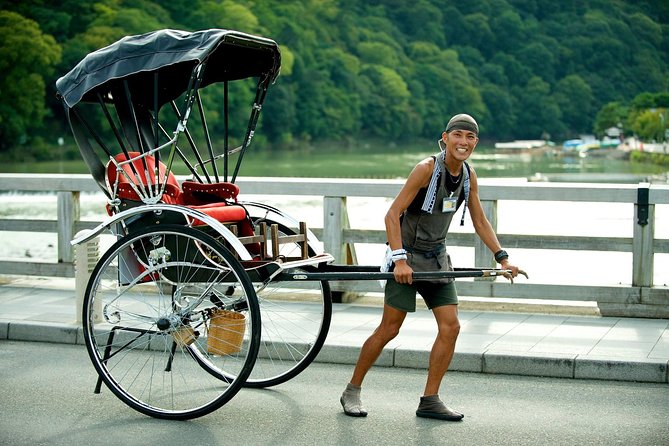
This ride is built like a sequence of Kyoto moments. You start at the tour operator area in Higashiyama and then move through a string of sights. While the exact lane turns can vary by the route length you select, the overall rhythm stays the same: landmark, alleys and wooden town houses, a small bridge in a traditional district, then temple and shrine stops.
Here is what you should expect from the main stops, and what makes each one worth your time.
Higashiyama base, then a first landmark beat
You begin at the operator side of Ebisuya Higashiyama Rickshaw. Think of this as your orientation moment. The guide and driver get you set up and help you understand what is coming next. It is also where the ride starts feeling real, because you are stepping into the rickshaw itself right at the start of the old-street zone.
Then you head toward a well-known Higashiyama landmark. I am keeping it general here because the tour can vary by your chosen duration, but the goal is consistent: a quick anchor point so you know what district you are in and how the area is laid out.
Geisha district lanes and wooden town houses
This is one of the highlights for a reason. The geisha-district streets can look almost like they belong to a different era, with traditional wooden town houses lining tight lanes. Even when you are not focused on shopping or sightseeing, the architecture alone gives you that old Kyoto feeling.
Guides often point out small customs and design choices as you pass, and you may even get lucky with a glimpse of maiko or geisha in the district. Some riders mention seeing a miko geisha, and the tour also has plenty of “look up and watch the street” moments baked in.
A small bridge stop in a traditional district
After the lanes and houses, you get a small bridge moment. It is not just a photo stop. A bridge like this gives you a different viewpoint, with the street narrowing or opening in a way that makes the district feel layered.
If you are sensitive to motion sickness, this is also usually one of the calmer segments, because the streets tend to feel more rhythmic than steep-and-turning alleys.
A day of temples goes further with something to break it up.
Temple with a garden, then a more impressive temple stop
Next comes the temple sequence. The tour includes a beautiful temple with a garden, and then another temple stop described as more impressive. In practical terms, this means you get at least one green, contemplative break from streets and a second moment where the scale and presence of the temple becomes part of the experience.
This is also where your guide matters. Guides such as Fuji and Humi (names that came up in guiding teams) are praised for making the place understandable, not just pointing at it. You will often learn what you are looking at, plus why a certain detail matters in Kyoto tradition.
If you are the type who likes to understand, even briefly, what makes a shrine or temple different from a neighboring one, you will appreciate the explanation time built into these stops.
A large Gion shrine stop, plus a note on New Year timing
You end up at a large shrine in the Gion area. This is one of those “Kyoto in one glance” moments, because shrines often act like the center of a district’s spiritual calendar.
There is also a useful timing note here. The shrine stop is worth planning around the New Year season, either before or after your rickshaw ride. If you are traveling during that time window, this part of the route can feel especially meaningful.
Cobblestone street time to feel the old Kyoto pace
The ride also includes time to feel the history as you travel on old cobblestone streets. Walking cobblestones for hours is not fun, but gliding over them is. You feel the texture underfoot while still resting your legs, which is a big reason this works so well as an introductory Kyoto experience.
Comfort and seating rules that can affect the real value
On paper, this sounds simple: sit in a rickshaw and go. In real life, comfort rules decide how enjoyable it feels.
Each rickshaw is 29.1 inches (74 centimeters) wide, and a maximum of two adults can ride per rickshaw. If your group includes larger people or you simply want more breathing room, the operator recommends booking a separate rickshaw for each passenger.
Here is how to think about this, so you do not get surprised:
- If you and a partner fit comfortably side by side, you can likely keep costs down by sharing one rickshaw.
- If you want space and ease, or if one person does not fit well in the narrow width, book separate rickshaws early.
- If you do not both fit in one rickshaw but want to ride at the same time, you may need to purchase an additional rickshaw. Availability might be limited if you do not book ahead.
Kids seating rules are also important:
- Children 5 years and under may sit on an adult’s lap, and there is one child per adult.
- If a child 5 years and under uses one of the two seats, they must be booked as an adult.
One more timing note that can affect comfort: the ride length depends on you being ready to go on time. If you arrive late, the experience can be shortened or canceled.
The guides: why this tour is often about the people, not just the ride
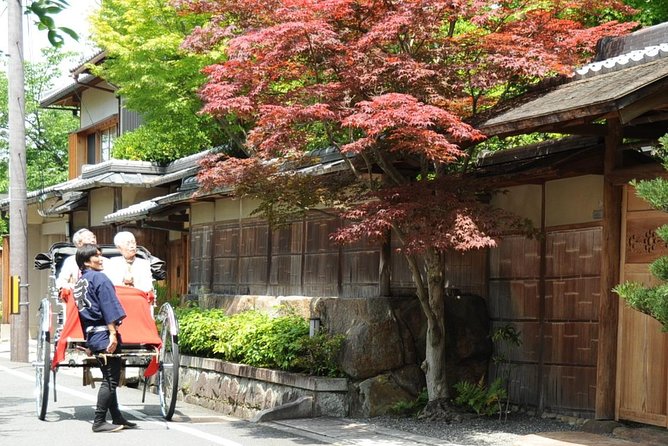
Most rickshaw rides are selling transportation. This one sells context, plus a guide who knows how to keep it moving.
What stands out from the best rides is how guides balance humor, clear English, and storytelling with practical street navigation. Names like Yoshi, Kai, Kota, Daichi, Takumi, Shuhei, Motu, Kanta, Kanta, and Hina come up repeatedly, and the pattern is consistent: guides are described as funny, energetic, and strong enough to handle the work even on hills and tight turns.
A big praised advantage is photo help. Several guides are mentioned as taking great photos and even helping with videos, so you get more than random point-and-shoot shots. One rider credited the guide with taking strong photos and videos while also keeping the ride smooth. Another mentioned walking a little to help with angles.
If you care about photos, here is what you should do: ask early where the guide wants to stop for the best shot, and tell them your preferred style (wide street views versus close shrine details). Guides seem to adapt quickly when you give them a simple direction.
Price and value: is $39.79 per person worth it
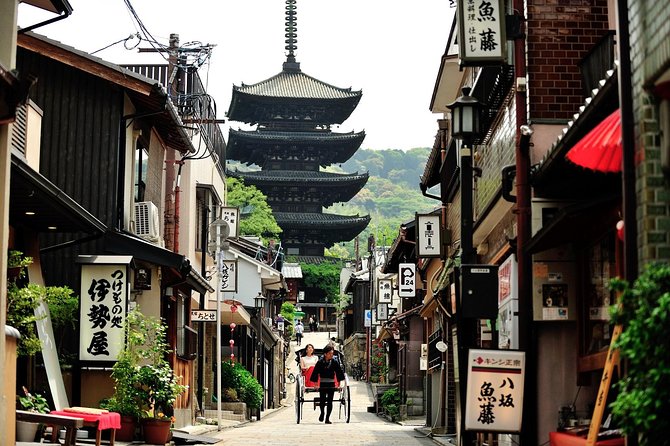
The price is $39.79 per person. That is a pretty low entry point for a private experience that includes both a guide and a rickshaw ride, especially in central Kyoto where a lot of sightseeing costs time rather than money.
Where the value really shows up is in what you avoid:
- You avoid the mental load of planning a route through the old districts.
- You avoid leg fatigue that can steal your attention from the details.
- You avoid spending extra money on transport just to move slowly through Higashiyama and Gion.
Two “value reality checks” though:
- Food and drinks are not included, so you will want to plan a meal before or after.
- If your party needs multiple rickshaws due to seating width, your per-person total can rise. That is not a bad thing, it is just the math of comfort.
Also, group discounts are listed, which can help if you are traveling with friends or family. And because you only share with your own group, you can keep things calm and predictable.
On timing, you should also match the ride length to your expectations. If you want a full slice of temples, shrine, geisha lanes, and extra stops, a longer option is what makes sense. If you want a taste and you are already planning a separate walking stop elsewhere, a shorter ride can still feel complete.
What is not included (and what to pair with this)
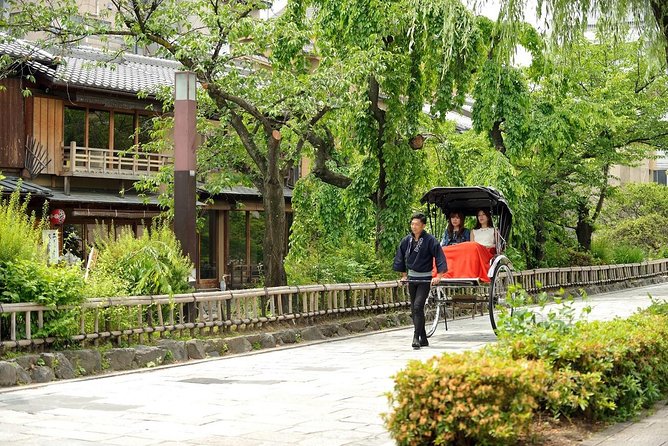
This is a Higashiyama and Gion focus. Two things to keep straight:
- Arashiyama Bamboo Forest is not included.
- Hotel pickup and drop-off are not included.
So if Bamboo Forest is on your Kyoto must-do list, plan a separate day or add-on for Arashiyama. Also, since the tour starts and ends at Ebisuya, you can design your day around it: do the rickshaw ride, then connect to nearby walking sights before going to dinner.
Because the ride ends back at the meeting point, it is also easy to build a simple itinerary. You can do the rickshaw, then walk out to other nearby temples or shopping lanes. And if you are visiting during the New Year season, the Gion shrine stop can be a useful anchor.
When to book, who should book, and who should skip it
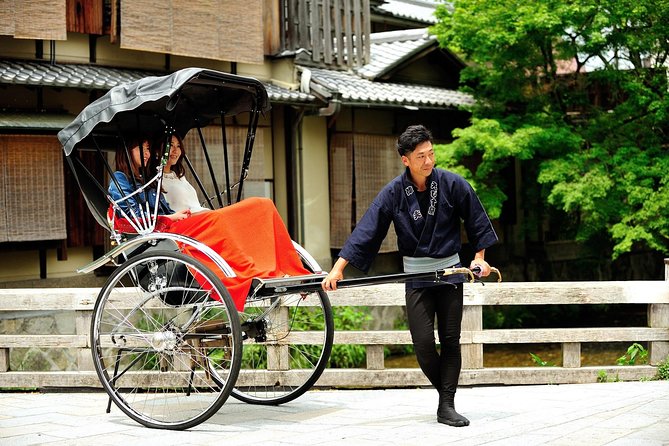
Book this if:
- You want an easy, old-district introduction to Kyoto without wearing out your legs.
- You like geisha-district streets, temples, and shrine areas more than modern shopping streets.
- You want a guide who can explain what you see while you relax.
- Your group includes at least one person who does not love long walking days.
This can be a great call for mobility-limited travelers too. A rider who was using a wheelchair described the rickshaw as a way to still experience the city and make it one of their best Japan moments.
Consider skipping or switching if:
- You know you strongly prefer to explore on your own schedule and do not want a structured stop sequence.
- You are traveling as a very large group and you cannot book extra rickshaws for comfort, because the 29.1-inch width can make the ride feel tight.
Should you book the Kyoto Rickshaw Tour?
I think this is a strong yes for first-time Kyoto visitors and for anyone who wants to see Higashiyama and Gion in a way that feels special, not exhausting. The guide quality is the biggest factor, and the best rides describe guides who are funny, physically impressive, and excellent at English, plus helpful with photos.
My practical suggestion: book based on what you care about most. If geisha-district lanes and photo angles matter, pick a longer option. If you just want a quick introduction and you have other temple stops planned, the shorter ride can work.
And do the comfort math early. If you are even slightly unsure about fit in a 29.1-inch wide rickshaw, book separate rickshaws. That small planning step is what turns this from a novelty into a truly comfortable highlight.
FAQ
What is included in the Kyoto Rickshaw Tour?
The tour includes a local English-speaking guide and the rickshaw ride.
How long does the tour last?
The ride duration is approximately 30 minutes to 3 hours, depending on the option you choose.
Where do I meet, and where does the tour end?
You meet at Ebisuya Higashiyama Rickshaw, 483 Shimokawarachō, Higashiyama Ward, Kyoto. The activity ends back at the meeting point.
Is this a private tour?
Yes. It is private, so only your group participates.
Does the tour run in the rain?
Yes, the tour takes place rain or shine. If poor weather cancels the experience, you will be offered a different date or a full refund.
What is not included?
Food and drinks are not included. Hotel pickup and drop-off are not included. Arashiyama Bamboo Forest is also not included.
Can the route be customized?
Yes. The tour can be customized depending on your interests.
How do seating rules work for adults and children?
A maximum of 2 adults can ride per rickshaw. Children 5 years and under may sit on an adult’s lap (one child per adult). If a child 5 years and under will use one of the two seats, they must be booked as an adult.
Where can I use the voucher or ticket?
The voucher or ticket can only be used at the Kyoto Higashiyama branch. It is invalid at the Kyoto Arashiyama branch.
New This Season
- Koyasan Day Trip by Private Car from Kyoto
- Old Port Town and Ultimate Sake Tasting Private Tour From Kyoto
- Kyoto’s Timeless Charm: 3hr Exploration of History and Peace
- Kyoto: 5 Types of Sushi Making
- Sacred Peak & Ancient Paths: Kurama-Kibune Hiking Experience
- Kyoto: Exclusive ZEN practice at Manpukuji temple in Uji
- Kyoto: Private Seasonal Aroma Yoga Class
- Traversing Kyoto’s Scenic West – Arashiyama to Kinkakuji
Rickshaw Rides, compared.
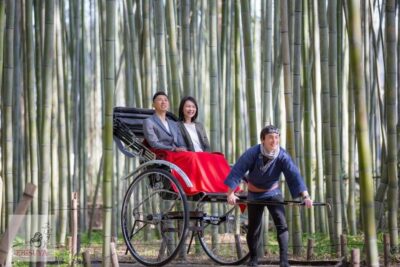
Arashiyama Customized Rickshaw Tour & Bamboo Forest
Read our review →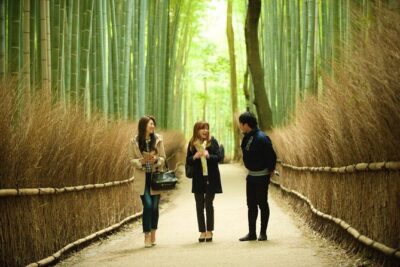
Kyoto Arashiyama Rickshaw Tour with Bamboo Forest
Read our review →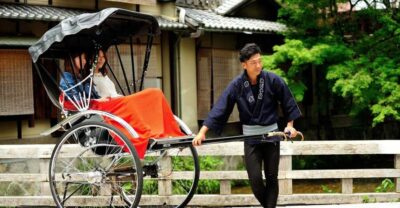
Private Rickshaw Tour of Gion and Higashiyama Area
Read our review →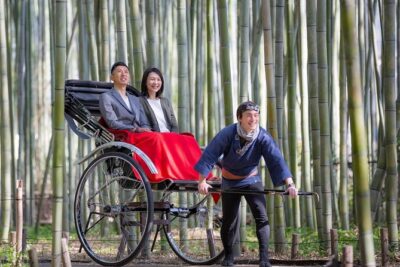
Kyoto Sagano Insider: Rickshaw and Walking Tour
Read our review →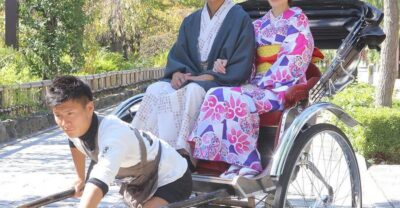
Kiyomizu-dera Temple Rent a kimono and ride a rickshaw
Read our review →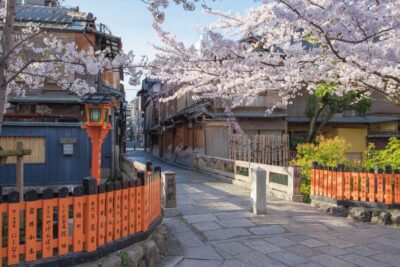
Higashiyama | Kyoto: Sakura Season Private Rickshaw Tour
Read our review →Also filed under