
Reviewed · CYCLING TOURS
5 Top Highlights of Kyoto Full Day Bike Tour (E-bike option)
Kyoto by bike turns a packed sightseeing list into a smooth flow of streets, temples, and neighborhoods. I love the mix of big-hitter landmarks (Kiyomizu-dera and Kinkakuji) with calmer paths that make the city feel more like a place you live in. I also like the simple, confidence-building setup, bikes plus helmets plus bottled water, run by friendly bilingual guides like Cass, Rob, Peter, Kes, and Ray.
One thing to consider first: this is a long day. You’ll ride up to 27 miles (44 km) and you’ll also walk at each stop, so bring a moderate fitness level and a good breakfast.
In This Review
- Key points before you go
- Why biking Kyoto beats doing it in “one big line”
- Price and value: what you pay for, and what you do not
- Meeting at Saga-Arashiyama and how the day is paced
- Stop 1: Bamboo Forest Street, the part you actually hear
- Stop 2: Fushimi Inari-taisha and the red torii tunnel flow
- Stop 3: Gion, where you slow down for the old Kyoto mood
- Stop 4: Kiyomizu-dera, the iconic view plus the walk
- Stop 5: Kinkakuji, the golden pavilion moment
- E-bike vs traditional bike: which one makes sense for you
- The small-group guide factor: safety, pacing, and stories
- Food and breaks: lunch and snacks keep the day human
- What a full-day route like this feels like
- Who should book this Kyoto full-day bike tour
- Should you book it? My decision guide
- FAQ
- How long is the Kyoto full-day bike tour?
- Where does the tour start and where does it end?
- What are the main stops on the route?
- Does the price include admission fees, lunch, and snacks?
- Is hotel pickup included?
- Can I ride an e-bike instead of a regular bike?
- What fitness level do I need?
- How big is the group?
- What if weather is bad or I need to cancel?
Key points before you go
- Small groups (max 8), so the guide can watch pacing and safety.
- Choose your ride style, traditional bike or an optional e-bike (extra fee, confirmation needed).
- Five top Kyoto sights in one day, built for efficient routing across the city.
- Included meals and gear, with lunch, snacks, helmet, and bottled water.
- Admissions are covered, so you spend less time queue-jumping and more time seeing.
Why biking Kyoto beats doing it in “one big line”
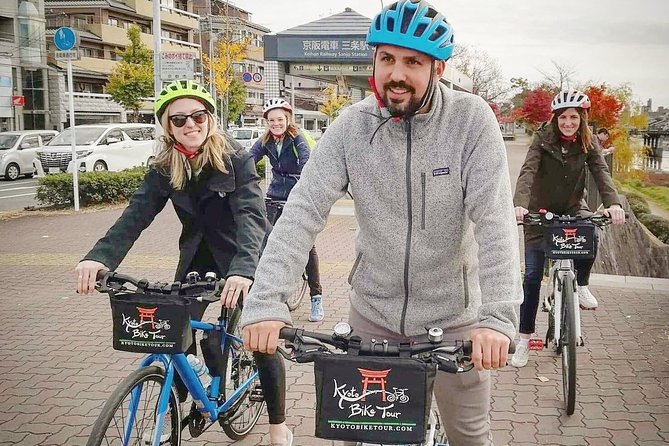
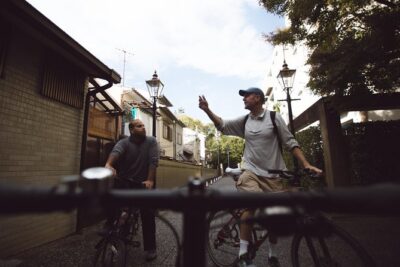
Kyoto’s sights are scattered, and buses can feel like you are glued to the window while other people glue themselves to the curb. Cycling changes the rhythm. You get to move through residential streets and along paved bike paths, then hop off to step into temples and shrine grounds.
What I appreciate here is that the route is designed for momentum. The tour focuses on 5 major stops, but your riding time also gives you a feel for daily Kyoto, not just postcard stops. If you like your sightseeing with motion, this format works.
Price and value: what you pay for, and what you do not
At $172.44 per person for a 7 to 8 hour small-group day tour, you’re buying a few big things at once: bike + helmet, admissions, a light lunch and snacks, and a native English speaking bilingual guide. You’re also buying route planning, which matters in Kyoto because traffic and crowding can scramble a self-guided day.
What is not included is hotel pickup or drop-off. You start and end back at the meeting point, so you’ll want to plan your own transport to Saga-Arashiyama Station.
Also note the e-bike detail: the standard tour uses the bike included in the price, while e-bikes are extra and require additional fee and confirmation.
A quieter way to spend a day in Kyoto
- Hidden Kyoto E-Biking tour
★ 5.0 · 1,843 reviews - E-Bike Tours of the highlights of Kyoto!!!
★ 5.0 · 291 reviews - Kyoto: City Secrets eBike Tour
★ 4.9 · 196 reviews - Kyoto: Hidden Gems E-Bike Tour with Local Japanese Guide
★ 4.9 · 189 reviews
Meeting at Saga-Arashiyama and how the day is paced
The tour starts at 8:30 am at Saga-Arashiyama Station (11-1 Sagatenryūji Kurumamichichō, Ukyo Ward, Kyoto). You end back at the same meeting point, so you’re not thinking about transit or getting back into the city maze later.
This matters more than it sounds. Ending where you started keeps the logistics simple when you are tired. And starting at 8:30 gives you some breathing room before the later-day crowd crush.
The group size is capped at 8 travelers, which is exactly what you want for a bike day. It’s large enough to feel like a group experience, but small enough that the guide can slow down for photo stops and keep everyone together.
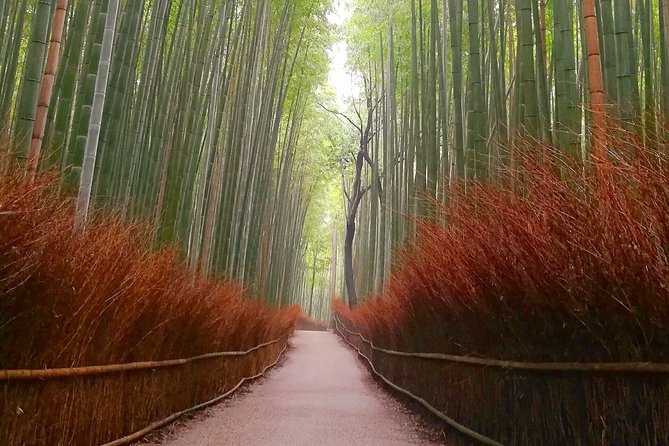
Stop 1: Bamboo Forest Street, the part you actually hear
Your first big visual is the Bamboo Forest Street area, where you can get hit with that unmistakable bamboo atmosphere, plus one of the top soundscapes of Japan. The timing is short, about 20 minutes, so you’re not stuck watching bamboo drift past like scenery you paid to ignore.
Here’s how to make that stop pay off:
- Stay a little flexible. Bamboo streets look different depending on the light and the angle you pause.
- Use the sound aspect. The quiet, the footsteps, and the breeze rhythm can be half the experience.
If you like sensory travel, this is a strong opener.
Stop 2: Fushimi Inari-taisha and the red torii tunnel flow
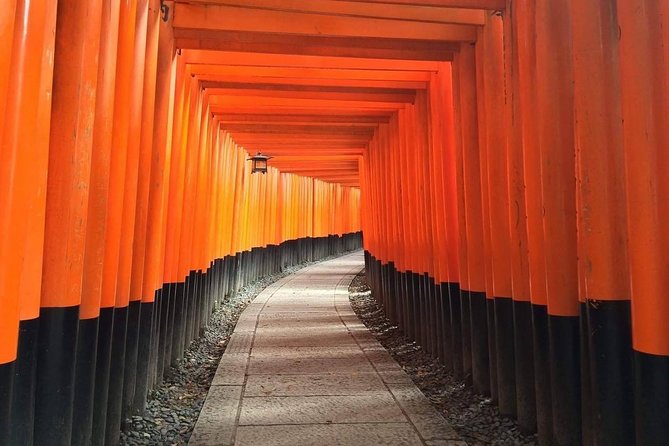
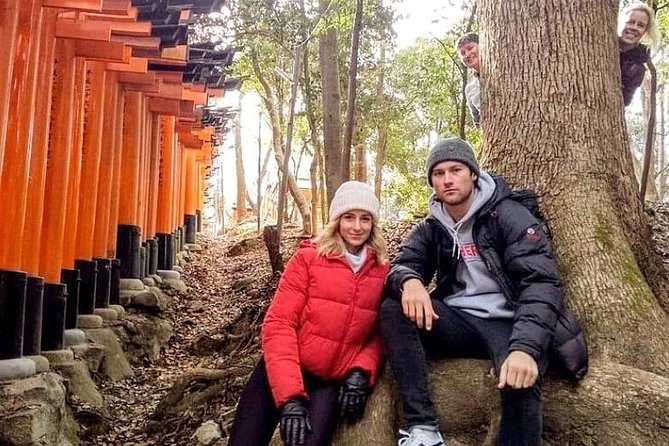
Next comes Fushimi Inari-taisha Shrine, with 30 minutes for the famous red torii tunnel. This is one of Kyoto’s most recognizable places, and it can also be one of the most crowded. On a bike tour, you get something self-guided walkers often miss: an efficient arrival plan and a guide who can help you move with less stress.
In practice, you’ll want to:
- Plan for lots of steps. Even if your scheduled time is 30 minutes, you’ll likely spend extra seconds at viewpoints.
- Think about photos. Many groups loved their guides’ photo tips, and having someone show you where to stand helps you avoid the worst angles.
If you’re doing Kyoto in a limited number of days, this stop earns its ticket price.
Stop 3: Gion, where you slow down for the old Kyoto mood
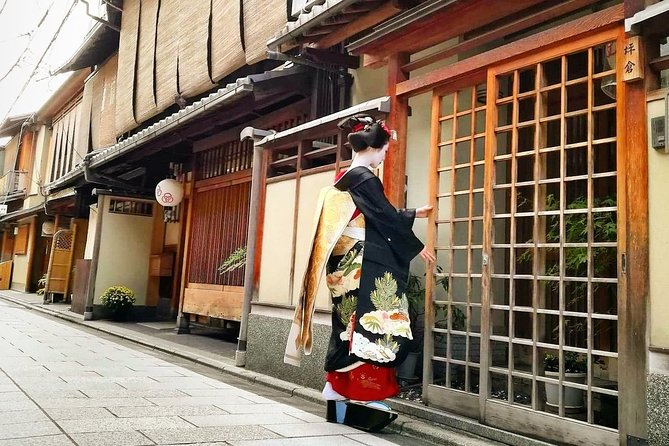
Then you head into Gion, Kyoto’s old historical district tied to geisha and maiko culture. Your time here is about 20 minutes, which is just long enough to walk a few lanes and absorb the atmosphere without feeling like you’re stuck in a long queue.
Gion is one of those areas where the “how you walk” matters. With a bike tour, you can combine a moving city feel with a slow neighborhood stroll. It’s also a nice change from temple-heavy stops, because the street design and everyday energy do the storytelling.
If you want to see Gion without turning your day into a full-time crowd-management job, this is a smart length of stop.
A day of temples goes further with something to break it up.
Stop 4: Kiyomizu-dera, the iconic view plus the walk
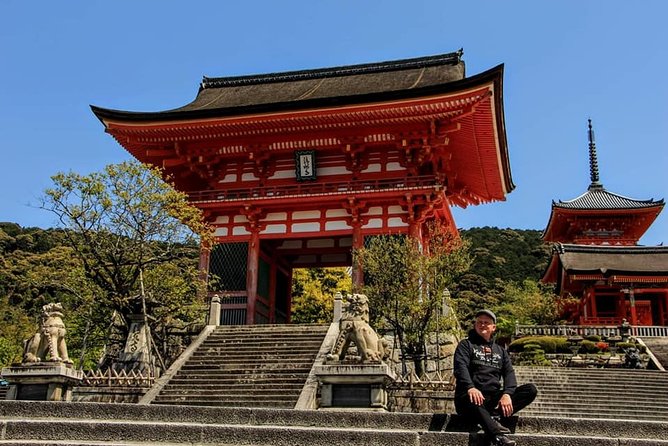
At Kiyomizu-dera Temple, you get about 1 hour and admission is included. This is the stop that often feels like the centerpiece of a Kyoto day, because the views and the temple setting are so closely tied to what people come to Kyoto for.
Your goal here is not to “check it off.” Instead, treat it like a slow climb with scheduled patience:
- Start walking early in your hour so you’re not rushing at the viewpoints.
- Build in a photo break. Guides like Rob and Cass are repeatedly praised for making group photos easy and for finding safe, sensible times to stop.
One practical note: you’ll walk more than you expect because temple grounds naturally pull you into side paths. Wear comfortable shoes and plan for a steady pace.
Stop 5: Kinkakuji, the golden pavilion moment
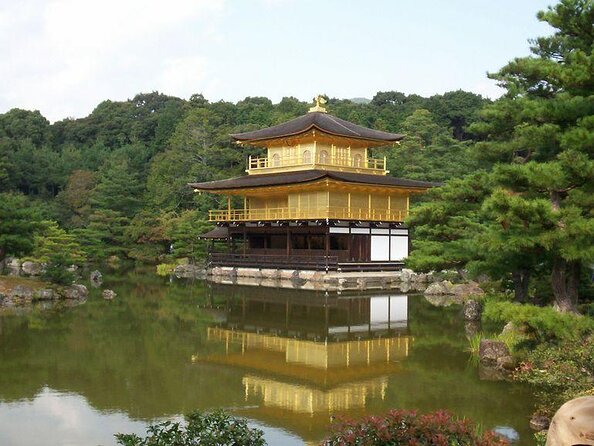
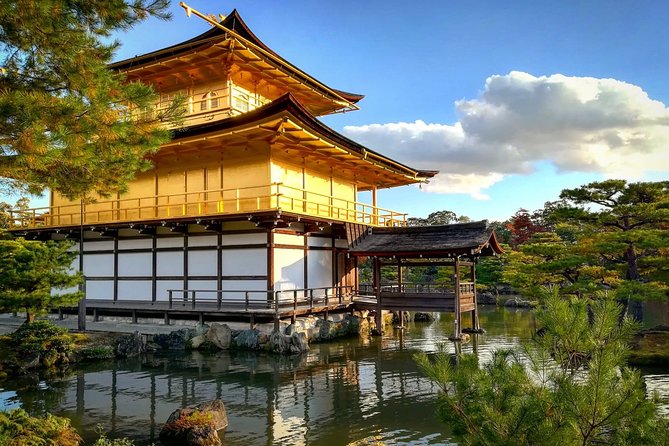
Finish with Kinkakuji Temple, the Golden Pavilion, with about 30 minutes on site. This is a fast, satisfying capstone because the main sight is instantly readable. You can go from walking and reading details to finding your photo spots quickly.
This is also a good place for zen-style logistics. If you time it well within the 30 minutes, you’ll get the shimmer moment without burning your whole day here. Some tours manage to route you so crowds thin later, and that pacing helps.
If you love iconic Kyoto visuals, this stop hits hard, but in a time-efficient way.
E-bike vs traditional bike: which one makes sense for you
You have two riding choices:
- Traditional bike included
- E-bike option for an added fee (confirmation required)
The e-bike debate in the reviews is very real. Many people say the e-bike is highly recommended because it makes inclines and long stretches easier, especially on a day that’s already running 7 to 8 hours with walking. Others said they skipped the e-bike and still felt fine.
My practical take: if you are unsure about your ability to ride comfortably for a full day, choose the e-bike. Not because you are incapable, but because it keeps you from turning the last third of the tour into a survival mission. When you arrive at temples tired, you do less looking and more hanging on.
Either way, you should treat this as an active day. Come prepared to pedal, then walk.
The small-group guide factor: safety, pacing, and stories
This tour stands or falls on the guide. And the pattern in the feedback is consistent: guides help people feel safe, they keep the group together, and they add context that turns stops into something you can remember.
You’ll hear different guide names in the feedback, including Cass, Rob, Peter, Ray, and Kes. People praise things like:
- Clear safety instincts on the road, including how to handle signals around cars and pedestrians.
- Cultural explanations that make each stop feel connected, not random.
- Photo help that saves time and improves your results.
One review even highlights Rob’s 14 years living in Japan, which fits the broader point. You’re not just getting someone who knows the route, you’re getting a person who can explain why Kyoto looks and works the way it does.
Food and breaks: lunch and snacks keep the day human
This is not a “bike all day, good luck” tour. You get a light lunch and snacks, plus bottled water. In Kyoto heat, that kind of built-in planning is the difference between sightseeing and feeling wrecked.
I also recommend the simple prep that shows up in good group reviews: eat a hearty breakfast. The schedule has multiple stops before and after lunch, and momentum matters. If you start hungry, you’ll feel it.
What a full-day route like this feels like
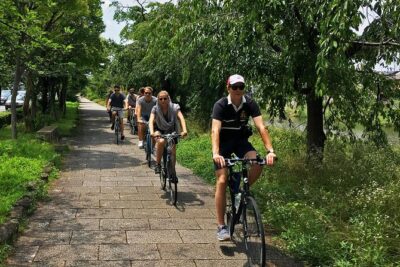
You are moving between major hubs and also seeing everyday Kyoto riding through local streets and bike paths. Some groups mention extra scenery on the ride itself, like rice fields, biking through streams, and passing garden areas. Even if you don’t catch every “extra” detail, you should expect a mix of urban riding plus quieter park-like stretches.
That combination is the value. You get the famous names, but you also get the in-between parts that make Kyoto feel real.
Who should book this Kyoto full-day bike tour
Book this if you:
- Have limited time in Kyoto and want 5 major sights without full-day buses.
- Like an active day, not a sit-and-wait day.
- Want a small-group setup with a guide who handles safety and pacing.
- Prefer learning from someone local and bilingual, not just reading signs.
Skip it (or plan differently) if you:
- Hate biking long distances or feel nervous sharing roads, even with a guide.
- Want a slow, minimal-walking day. There is walking at every stop, including 1 hour at Kiyomizu-dera.
Age wise, the tour is minimum 16 years old.
Should you book it? My decision guide
I’d book it if you’re trying to maximize Kyoto in one go and you want the logistics handled. The included bike, helmet, admissions, and meal coverage make it feel like a complete day, not a half-finished experience you must supplement.
Choose the e-bike option if you want to reduce stress on hills and arrive at temples with energy. If you’re a confident rider and your legs are strong, the standard bike can work just fine for many people.
One last tip: sunscreen and a water-friendly mindset are not optional. Kyoto sun can hit hard, and the schedule is packed enough that you’ll want to stay comfortable the whole way.
FAQ
How long is the Kyoto full-day bike tour?
It runs about 7 to 8 hours.
Where does the tour start and where does it end?
It starts at Saga-Arashiyama Station at 8:30 am and ends back at the same meeting point.
What are the main stops on the route?
The day includes Bamboo Forest Street, Fushimi Inari-taisha Shrine, Gion, Kiyomizu-dera Temple, and Kinkakuji Temple.
Does the price include admission fees, lunch, and snacks?
Yes. The tour includes admission fees, a light lunch, and snacks, plus bikes, helmets, bottled water, and the guide.
Is hotel pickup included?
No, hotel pickup or drop-off is not included.
Can I ride an e-bike instead of a regular bike?
An e-bike is available for an additional fee, but it requires confirmation.
What fitness level do I need?
The tour notes moderate physical fitness. You should expect both riding and walking throughout the day.
How big is the group?
The tour has a maximum of 8 travelers.
What if weather is bad or I need to cancel?
The experience requires good weather. If it is canceled due to poor weather, you are offered another date or a full refund. You can cancel up to 24 hours in advance for a full refund.
New This Season
- Koyasan Day Trip by Private Car from Kyoto
- Old Port Town and Ultimate Sake Tasting Private Tour From Kyoto
- Kyoto’s Timeless Charm: 3hr Exploration of History and Peace
- Kyoto: 5 Types of Sushi Making
- Sacred Peak & Ancient Paths: Kurama-Kibune Hiking Experience
- Kyoto: Exclusive ZEN practice at Manpukuji temple in Uji
- Kyoto: Private Seasonal Aroma Yoga Class
- Traversing Kyoto’s Scenic West – Arashiyama to Kinkakuji
Cycling Tours, compared.
Bike Tour Exploring North Kyoto plus Lunch
Read our review →
Arashiyama Bamboo Forest & Hidden Gems Bike Tour (Early Bird)
Read our review →
Full Day Biking Tour Exploring the Best of Kyoto
Read our review →

Afternoon Kyoto Bike Tour: Bamboo Forest, Monkeys & Hidden Spots
Read our review →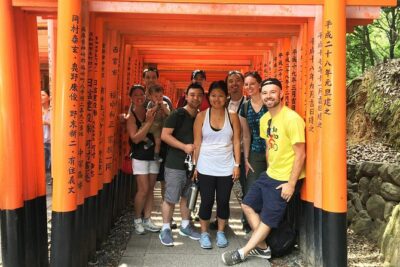
South Kyoto in a Nutshell: Gentle Backstreet Bike Tour!
Read our review →
Also filed under