
Reviewed · MATCHA & GREEN TEA TASTINGS
Hands On Uji Matcha Experience in Seika Town
Matcha gets real when you grind it. In Seika Town, between Kyoto and Nara, you get a guided, English-friendly hands-on matcha session built around Uji tea culture. It is a short, focused workshop in Japan’s matcha heartland, with taste testing and whisking you actually do.
Two things I love about this experience: you start with stone mill grinding, not just sipping, and you compare three different Uji matcha varieties side by side. The small group size also means you are not stuck watching from the back of the room.
One possible drawback to plan for: it lasts about two hours, so if you want a long, slow tea “day out,” this may feel short. Also, if you dislike green tea flavors, the matcha centered format may not be your best fit.
In This Review
- Key highlights you will care about
- Seika Town, the smart base between Kyoto and Nara
- Price and what you get for $36.01 per person
- The 2-hour workshop flow, from grinding to tasting game
- Pickup, a local tea-farmer vibe, and matcha context
- Step one: grind matcha on a traditional stone mill
- Step two: taste and compare three Uji matcha varieties
- Step three: whisk your own bowl, with guidance
- Step four: a matcha tasting game, then more Japanese tea samples
- How to get better at tasting during the workshop
- Pickup, duration, and group size, what this means for your schedule
- Who this workshop is best for, and who might skip it
- A quick guide to value: what you should aim to learn
- Should you book Hands On Uji Matcha in Seika Town?
- FAQ
- Where does this experience take place?
- How long is the workshop?
- Is pickup available?
- Is there an English-speaking guide?
- What is the group size?
- What is included in the hands-on activities?
- What is the cancellation policy?
Key highlights you will care about
- Grind matcha the traditional way using a stone mill, then see how texture changes.
- Taste three Uji matcha varieties in a structured comparison you can learn from quickly.
- Watch and then whisk your own bowl, so you do not leave with theory only.
- Play a matcha tasting game, which makes the flavor differences easier to catch.
- Add-on tea sampling beyond matcha, so your palette broadens fast.
- Small group, up to 6 travelers, which helps with hands-on time.
Seika Town, the smart base between Kyoto and Nara
Seika Town sits in Kyoto Prefecture, right in the zone most people aim for when they say Uji matcha. If you are splitting time between Kyoto and Nara, this is a practical stop that keeps you from making matcha a separate, half-day detour.
If you want the simplest logistics, you will appreciate the fact that it is near public transportation and pickup is offered. One review mentions pickup at the train station by car, about a 10 minute ride to the workshop location. That is a nice pattern for a short activity, because you spend more time with tea and less time juggling buses.
Also, the group size matters here. With a maximum of 6 travelers, you are more likely to get individualized coaching on whisking and pouring, not just a demo you rush past.
Price and what you get for $36.01 per person
At $36.01 per person, this is not a bargain class. But it is also not just a branded souvenir tasting. You are paying for hands-on steps that are hard to replicate at home: traditional grinding, structured comparison of three Uji matcha varieties, and real whisking practice with a guide there to correct you.
The length, about 2 hours, is part of the value story. This is long enough to learn the basics, taste multiple styles, and try whisking yourself. It is short enough that you can fit it into a busy Kyoto or Nara day without turning the trip into a planning project.
Add in the basics that keep it easy: confirmation at booking, mobile ticket, and pickup availability. Free cancellation up to 24 hours before start time is also helpful if your Japan schedule shifts.
Whisk your own bowl of matcha
- 7hr Private Wazuka True Hidden Kyoto Matcha Farm Experience
★ 5.0 · 3 reviews - Kyoto: Arashiyama Bamboo Forest, Monkeys, Matcha & Temple Tour
★ 5.0 · 759 reviews - Kyoto: Tea Museum Tickets and Matcha Grinding Experience
★ 4.9 · 739 reviews - Kyoto: Tea Ceremony Meditation – Make Matcha with Tea Master
★ 4.8 · 406 reviews
The 2-hour workshop flow, from grinding to tasting game
You should think of this as a “do it, taste it, learn it” session. The best part is that the activities are connected. Grinding leads into whisking. Whisking leads into tasting. Tasting leads into the game and comparison that makes the flavors easier to remember.
Pickup, a local tea-farmer vibe, and matcha context
You will likely start with pickup, depending on what you choose and where you are staying. Reviews describe meeting your guide at the train station and then heading to the workshop by car, around 10 minutes.
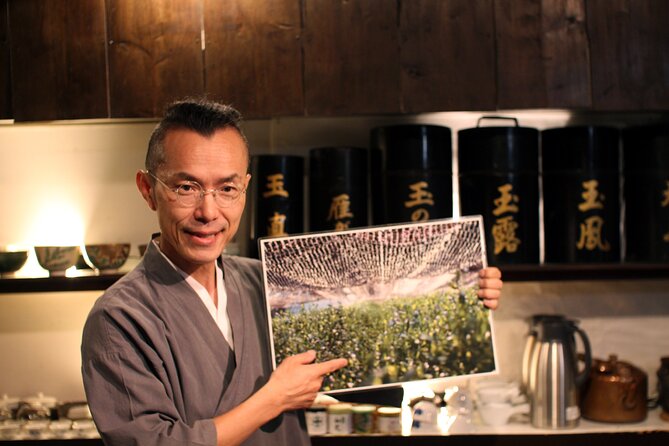
Once you arrive, expect tea talk focused on matcha agriculture and harvest. Even if you already know the basics, it helps to get the practical side of how matcha is grown before you taste. It also sets the reason behind what you are about to notice, like why different grades can taste different in sweetness, umami, and bitterness.
Step one: grind matcha on a traditional stone mill
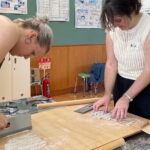
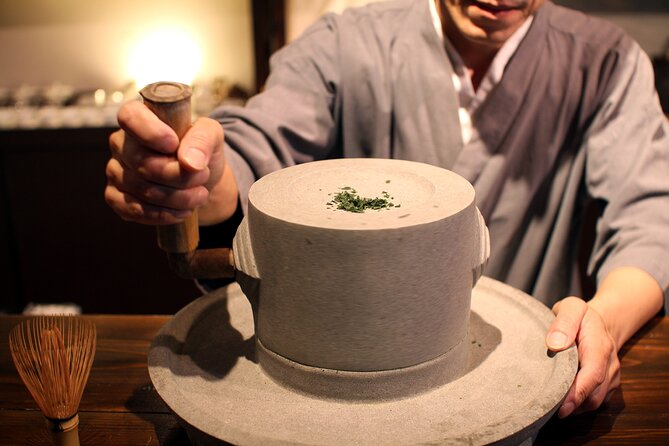
The first hands-on moment is the stone mill grinding. This is not a minor detail. Grinding is where you see matcha go from a powder you can’t judge to a finely processed ingredient you can actually smell and feel.
Why it matters for you: when you grind, you are actively participating, so the later tasting game makes more sense. You also get a quick sensory education, because the aroma you catch right before whisking often hints at how the bowl will taste.
Step two: taste and compare three Uji matcha varieties
Next comes the structured comparison. You will taste three renowned Uji matcha varieties and learn how to notice differences rather than just rank what you like.
Try to taste in a repeatable way:
- Pause after each sip.
- Notice bitterness first, then sweetness and umami.
- Think about how the flavor lingers.
A common reason people struggle with matcha is that they treat it like coffee. With tea, the aftertaste and balance are the story. The workshop format nudges you toward that.
A day of temples goes further with something to break it up.

Step three: whisk your own bowl, with guidance
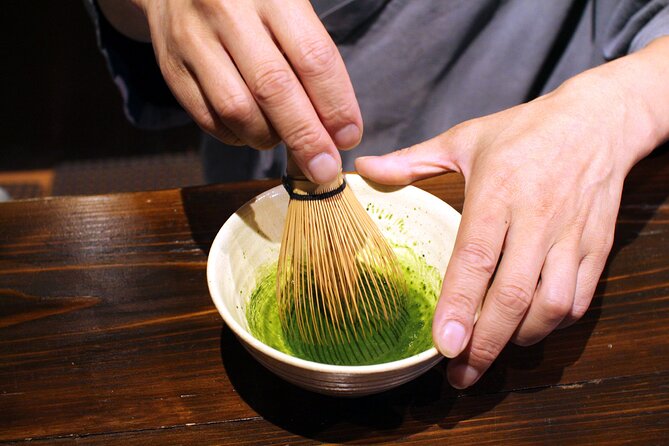
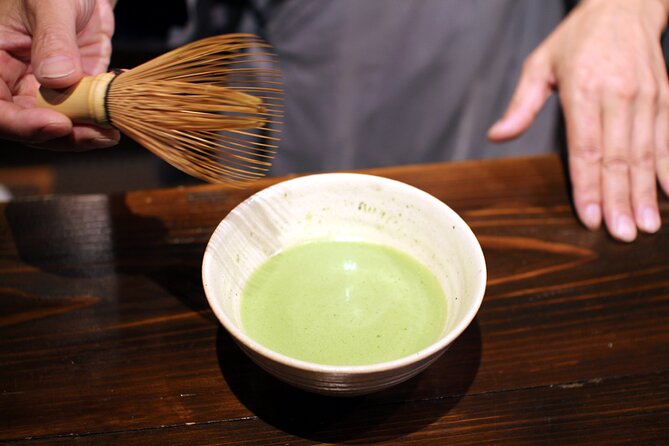
After you watch the tea master whisking technique, you get to try. This is where the class becomes something you can carry home, even if you do not buy the exact same grade.
Practical tip for your session: slow your hands down. A good whisk is about control, not speed. If you rush, you can end up with foam that hides what the matcha is doing.
This part is also where small-group size helps. If someone in your group is struggling with the bowl technique, you are more likely to get correction instead of waiting for a full reset.
Step four: a matcha tasting game, then more Japanese tea samples
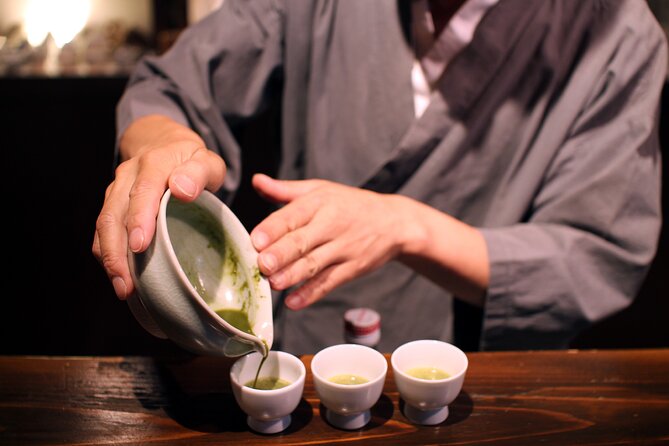
The workshop wraps with a matcha tasting game plus tasting other Japanese teas. The game is not just entertainment. It forces you to connect what you noticed earlier to a quick recognition task.
Then you broaden the palette with additional tea types. That is a smart move because it helps you avoid the one-note problem. Matcha can be your favorite, but knowing how other teas taste makes your matcha preference clearer.
How to get better at tasting during the workshop
If you want to leave with something useful, do not just drink and smile. Use the time like a tasting lesson you can actually apply later.
Here are a few things you can try right away:
- Smell the matcha before whisking fully (when you have the chance). Fresh aroma gives clues.
- Take smaller sips than you think you need. Matcha flavor builds fast.
- Compare on the same day, in the same order if possible. Your brain does the rest.
- After each bowl, jot a quick mental note: sweet, grassy, umami, bitter.
Also, do not ignore water and temperature. You are not given full specs here, but in tea tastings, serving temperature often affects bitterness. If one bowl tastes harsher, it may not be the matcha alone.
Pickup, duration, and group size, what this means for your schedule
This is designed for a real-world timetable. Expect about 2 hours total, which is easy to plug into an afternoon when you want cultural time without committing to a full day.
With pickup offered, you can reduce friction. If you are arriving via train, that 10 minute car ride described in a review is a good sign that you are not stuck in complicated wayfinding.
And the group cap of 6 travelers is a practical advantage. You get hands-on instruction, and it is less chaotic if questions pop up. If you are the type who asks why something works, this format will feel comfortable.
One scheduling note: tours like this can book up in peak periods. The average booking lead time listed is 12 days, so if you are traveling during busy seasons, lock it in early rather than waiting for the last moment.
Who this workshop is best for, and who might skip it
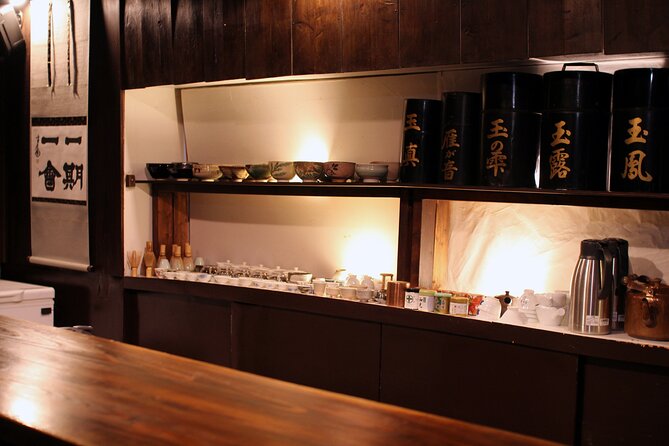
This experience fits best if you want more than a quick sip. If you enjoy making things with your hands, learning technique, and tasting in a structured way, you will get a lot out of it.
It is also a good choice for:
- First-time matcha drinkers who want guidance, not guesswork
- Tea lovers who want to compare different Uji matcha varieties correctly
- People who like small-group, instruction-led activities
- Travelers splitting time between Kyoto and Nara who want an easy add-on
You might skip it if:
- You only want sightseeing, photos, and time outdoors
- You dislike green tea flavors or bitter notes
- You need a longer half-day experience instead of a tight 2-hour class
A quick guide to value: what you should aim to learn
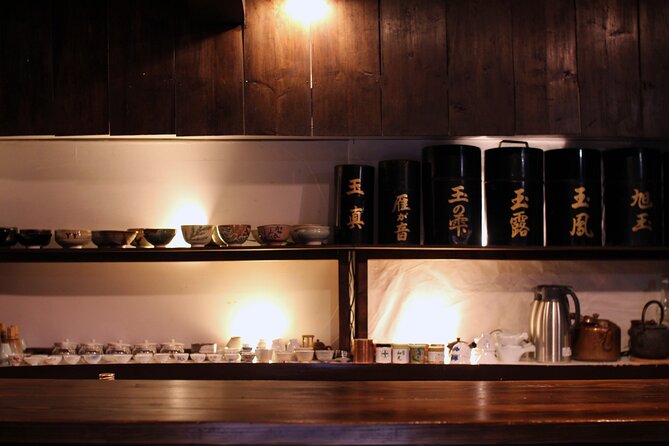
When you pay for a workshop, the “value” question is simple: can you take something home that lasts longer than the flavor in your cup?
From this experience, you can realistically walk away with:
- Better intuition for how matcha grades taste different
- Technique basics for whisking a bowl yourself
- A tasting framework you can reuse when you try matcha in shops later
- A broader sense of Japanese tea flavors beyond matcha
Even the grinding step helps you connect the process to the result. That makes later tastings in Uji or elsewhere feel less like a blind test.
Should you book Hands On Uji Matcha in Seika Town?
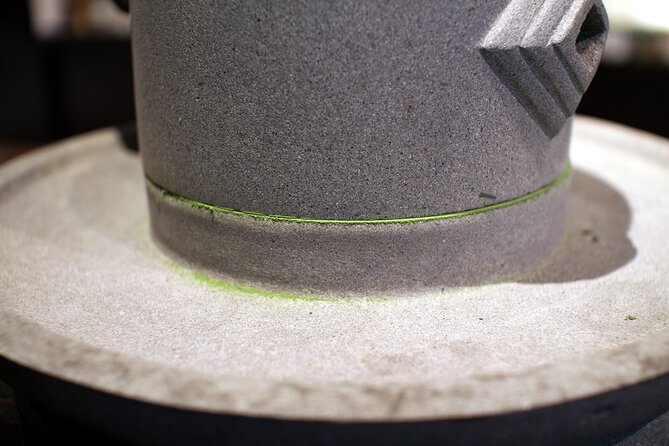
I would book this if you want a focused, hands-on matcha session in a real tea-growing area, not a generic tasting room. The combination of stone mill grinding, three Uji matcha comparisons, and your own whisking practice is exactly the kind of learning trip that feels worth the money.
Skip it if you are chasing a long sightseeing day or you are not interested in tea technique. But if matcha is on your trip list, this is one of the more practical ways to understand it quickly, while still keeping things fun with a tasting game.
If your schedule allows, pick a day when you can be present for the full session. Matcha is subtle, and you get more from it when you are not rushing.
FAQ
Where does this experience take place?
It takes place in Seika Town in Kyoto Prefecture, in the area between Kyoto and Nara.
How long is the workshop?
The experience lasts about 2 hours.
Is pickup available?
Yes, pickup is offered. Reviews also mention pickup from the train station by car, taking around 10 minutes.
Is there an English-speaking guide?
Yes. The instructor is described as English-speaking.
What is the group size?
The workshop has a maximum of 6 travelers.
What is included in the hands-on activities?
You will grind matcha using a traditional stone mill, taste and compare three Uji matcha varieties, learn how to whisk matcha, and enjoy a matcha tasting game along with other Japanese tea samples.
What is the cancellation policy?
Free cancellation is available. You can cancel up to 24 hours in advance of the experience for a full refund. If you cancel less than 24 hours before the start time, the amount paid is not refunded.
New This Season
- Suntory Whisky and Beer Tasting Walking Tour in Kyoto
- 7hr Private Wazuka True Hidden Kyoto Matcha Farm Experience
- Shibori Fukusa Course at Kyoto Shibori Museum
- Kyoto Satoyama Cycling with Lunch and English guide
- Kyo-arashi Shibori Scarf Class at Kyoto Shibori Museum
- Arashiyama Walking Tour with Optional Sagano Romantic Train Ride
- Amanohashidate Sand bar & culture e-bike tour
- kyoto:Experience creating one-of-a-kind special fragrances
Matcha & Green Tea Tastings, compared.

Arashiyama Bamboo Forest, Monkeys, Matcha & Temple Tour
Read our review →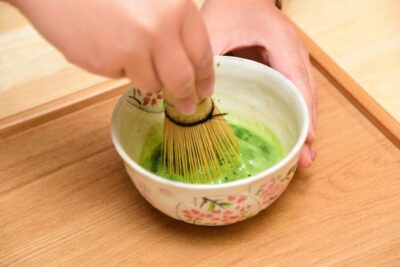
Tea Museum Tickets and Matcha Grinding Experience
Read our review →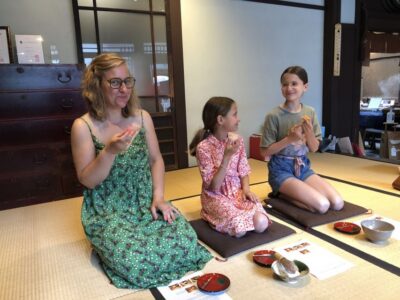
Tea Ceremony Meditation – Make Matcha with Tea Master
Read our review →Arashiyama Bamboo, Matcha, Monkeys & Temple Tour
Read our review →

Arashiyama Bamboo, Temple, Matcha, Monkeys & secret spots
Read our review →
Green Tea Tour with Byodoin and Koshoji Temple Visits
Read our review →Also filed under