Reviewed · FOOD
5 Types of Soy Sauce Tasting and Food Pairing
Soy sauce can sound simple, then it turns into a tasting game. In this 1.5 hour Kyoto workshop, I like that you learn how soy sauce is made, then you taste five different types side by side. It is also a hands-on way to understand why Japanese cooking uses soy sauce more like a tool than a single flavor.
My other favorite part is the food pairing. You will taste each soy sauce with raw fish (snapper and tuna) and with roast beef, so you quickly connect flavor to real dishes. The main thing to consider is that the pairing includes raw fish, so it may not work for everyone’s comfort level.
In This Review
- Key highlights I’d circle on your Kyoto to-do list
- Starting at Kikyo Sushi with a welcome drink
- Soy sauce basics, explained in a way you can actually use
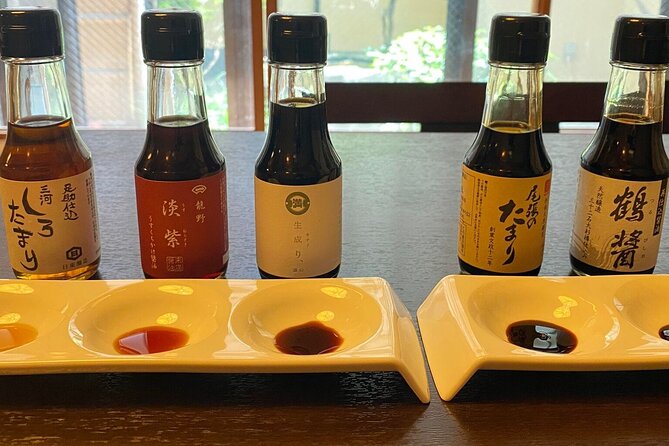
- Tasting five types of soy sauce, and how to compare them
- Food pairing with snapper, tuna, and roast beef
- Tips for daily cooking: turning tasting notes into dinner habits
- Value check: is $72.03 a good deal?
- Who this soy sauce workshop is best for
- Practical tips before you go
- Should you book this Kyoto soy sauce experience?
- FAQ
- Where is the meeting point for this soy sauce tasting workshop?
- What time does it start?
- How long is the workshop?
- How much does it cost?
- What is included in the price?
- What will I taste during the workshop?
- What foods are paired with the soy sauce?
- Is the workshop guided in English?
- What is the group size limit?
- What is the cancellation policy?
Key highlights I’d circle on your Kyoto to-do list
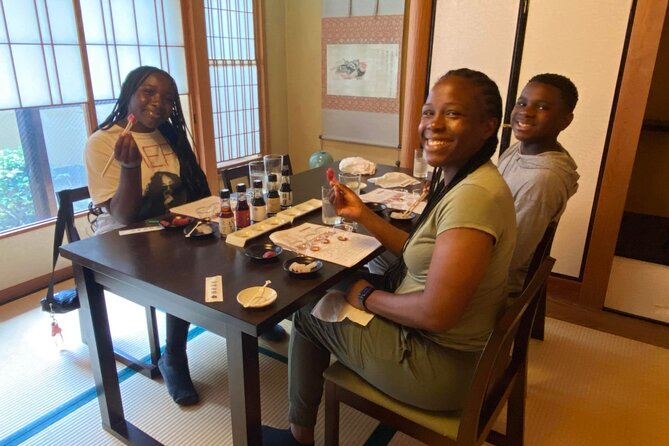
- Five soy sauces, one focused comparison so you can notice differences fast.
- Food pairing with snapper, tuna, and roast beef to learn what works and why.
- Practical tips for daily cooking so you can use what you taste at home.
- A welcome drink and a small soy sauce bottle included for a smoother start and a take-home souvenir.
- Small group size (max 8) for a quieter, question-friendly experience.
Starting at Kikyo Sushi with a welcome drink
The experience meets at Kikyo Sushi in Kyoto, in the Nakagyo Ward area. It runs about 1 hour 30 minutes, starting at 1:30 pm, and it ends back at the same meeting point. That loop matters, because you do not have to plan extra transit or worry about finishing far from where you started.
Before any lecturing, you get a welcome drink. It is a small detail, but it helps put you in a tasting mindset. You are not just arriving for information, you are arriving to pay attention.
One practical advantage: the workshop is described as near public transportation, which is a lifesaver in Kyoto. Also, it uses a mobile ticket, so you can keep things simple on your phone instead of juggling paper.
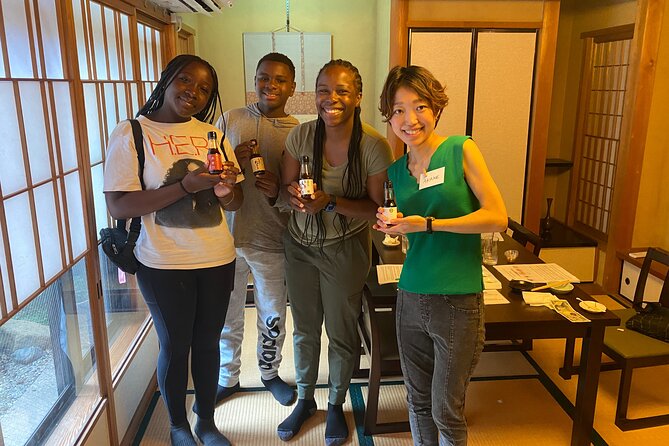
And yes, it is small. With a maximum of 8 travelers, the vibe is more like a focused class than a loud group tour.
Soy sauce basics, explained in a way you can actually use
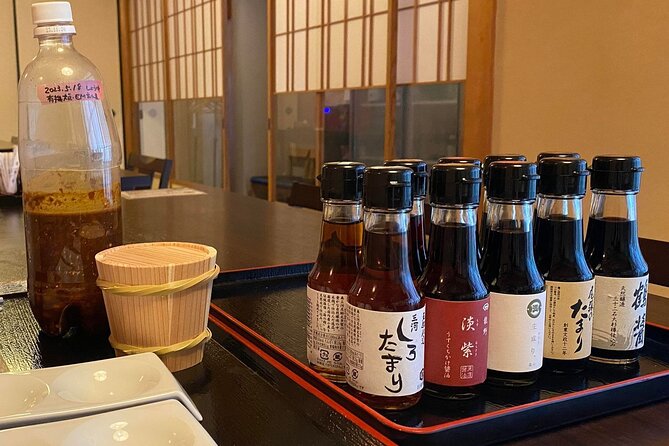
This is not a generic food lecture. You learn basic information about soy sauce, including the making process, and then you move into the part that sticks: how different types taste and behave.
In the review, Akane is called out for explaining the making process and the differences among soy sauce types. That is exactly what you want here. If you only taste without context, you might enjoy it but still feel stuck at home. If you only get facts, you might forget them by dinner.
This workshop aims for the middle ground: you learn what soy sauce is doing, then taste it, then get tips for daily cooking. That order is smart. It keeps your brain from treating the tasting like a random sample lineup.
A bonus detail that you should keep in mind: the workshop might be guided in English and Japanese at the same time, depending on who is in the group. So even if your Japanese is basic, you should still find your footing.
A quieter way to spend a day in Kyoto
- Kyoto Night Foodie Tour in Gion (9+ dishes + 6 Sake tastings)
★ 5.0 · 1,762 reviews - Kyoto: Insider Sake Brewery Tour with Sake and Food Pairing
★ 5.0 · 704 reviews - Kyoto Nishiki Market Food and Culture Walking Tour
★ 5.0 · 412 reviews - Kyoto: Gion Food Tour 13 Dishes at 4 Eateries
★ 5.0 · 408 reviews
Tasting five types of soy sauce, and how to compare them
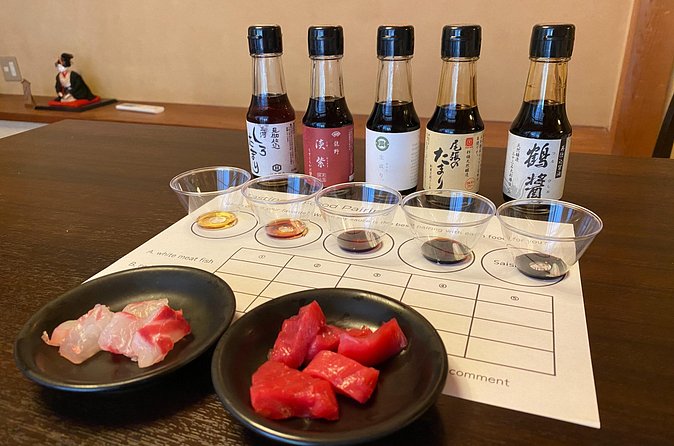
The core of the workshop is straightforward: you taste five different soy sauce types, and you do not just sip and shrug. You learn the flavor differences in a guided way, then you connect each one to real pairing results.
Here is what I’d do mentally while tasting, because it helps you remember later:
- Notice the first impression, then the finish. Some soy sauces read stronger at the start, others linger with aroma.
- Pay attention to how salty it feels. In Japanese cooking, “too much” often becomes “too one-note.”
- Compare sweetness and depth, not just salt and soy flavor.
You will also get tips on how to use each type for cooking. The goal is not to memorize labels. The goal is to build instincts, so when you are back in your kitchen, you know which bottle to reach for and how much to add.
That included small soy sauce bottle is also a practical nudge. It makes your learning portable. You are not relying on memory alone.
Food pairing with snapper, tuna, and roast beef
After the tasting, the workshop shifts into pairings. This is where soy sauce stops being theoretical.
You pair the sauces with:
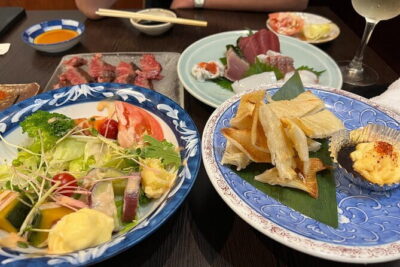
- Raw fish: snapper and tuna
- Roast beef
Pairing soy sauce with raw fish is a great test, because raw fish is delicate. If a soy sauce is harsh or overly salty, it shows up immediately. If it is balanced, it supports the fish instead of burying it.
Tuna and snapper also bring different textures and flavor intensity, even before any sauce enters the scene. That means you are not just tasting “fish.” You are tasting how soy sauce handles different kinds of flavor.
Then you get the other side of the coin: roast beef. Cooked meat can handle bolder, more assertive seasoning. So the workshop effectively shows you how soy sauce choices shift with cooking style and intensity.
One thing to be aware of: because this includes raw fish, it is worth thinking about your comfort with tasting raw seafood. If that is a hard no for you, this workshop might not match your preferences.
Tips for daily cooking: turning tasting notes into dinner habits
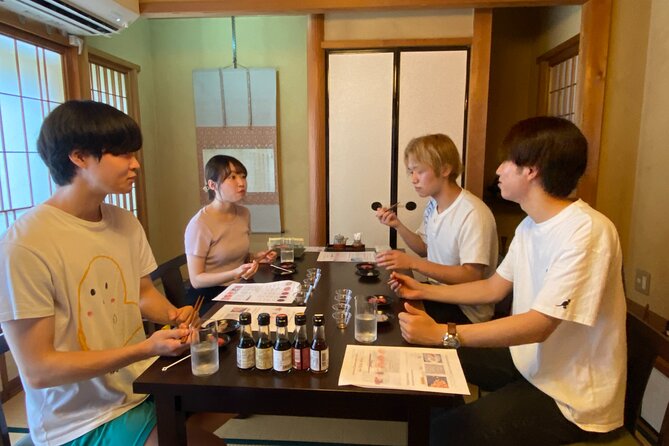
The workshop does more than teach flavor. It includes tips to use soy sauce for cooking, specifically designed so you can create variety after you return home.
That is the real value, because most tastings end with “that was interesting.” Here, you get guidance aimed at doing something different in your everyday meals.
A few ways these tips often translate in real kitchens, based on how the workshop is structured:
- Use different soy types for different roles: dipping, seasoning, or finishing.
- Adjust quantity based on how bold the soy sauce tastes when straight.
- Pair by method: raw and delicate foods tend to need a lighter touch than roast meats.
I also like that the food pairing happens after the tasting. Your brain naturally forms a connection: soy sauce type A tastes a certain way, so it should work in a certain cooking moment. That connection is exactly what helps you avoid guessing later.
And again, having that small bottle in hand makes it easier to test your own theory at home. If you are the type who likes to cook and then tweak, this workshop supports that style.
Value check: is $72.03 a good deal?
At $72.03 per person for about 1 hour 30 minutes, it is not the cheapest thing you can do in Kyoto. But it is also not trying to be.
The value comes from three ingredients that most food experiences do not combine well:
- Depth: five soy sauce tastings, not one or two.
- Application: you get tips for everyday cooking, not just a flavor tour.
- Pairing: snapper and tuna plus roast beef, so your tasting has consequences.
Plus, you get a welcome drink and a small soy sauce bottle included. Those extras are not huge, but they add up when you compare to a tasting where everything ends with a receipt and a memory.
And the max 8 travelers detail matters. When a class is small, the instruction feels more direct, and you can ask questions without waiting for a break in the group.
If your goal in Kyoto is to learn something you can use at home, this price makes sense.
A day of temples goes further with something to break it up.

Who this soy sauce workshop is best for
This workshop is a strong fit if you:
- Like to cook and want a better sense of what different soy sauces are doing.
- Enjoy tasting experiences that connect food to flavor decisions.
- Want an easy, single-session Kyoto activity that runs about 1.5 hours.
- Are curious about Japanese seasoning beyond sushi-only assumptions.
It is also ideal if you like structured learning. The flow is clear: meet, drink, lecture basics, tips, tasting, then pairings.
On the other hand, you may want to skip it if you do not want raw fish at all. The pairing includes snapper and tuna, and the workshop is built around that.
Practical tips before you go
A few small moves can make your tasting experience smoother:
- Arrive a bit early at Kikyo Sushi. You will want time to settle before the welcome drink and orientation.
- Go in ready to taste slowly. With five types, rushing makes the differences blur.
- If you have questions about cooking uses, ask during the instruction segment. The workshop includes tips, so it is the best time to connect what you taste to what you make.
Also, check whether you prefer English, Japanese, or a mix. The workshop may run English and Japanese simultaneously if there are Japanese guests who only understand Japanese. Either way, plan for a bilingual-style experience.
Should you book this Kyoto soy sauce experience?
If you like food that leads to practical cooking knowledge, I think it is an easy yes. The best reason to book is the combo of five soy sauces, then pairing with snapper, tuna, and roast beef, then tips you can use right away. That structure makes it more than a souvenir tasting.
I would only hesitate if raw fish is a dealbreaker for you. If you are comfortable with it, this is a smart, small-group Kyoto workshop that turns soy sauce from a bottle you own into a seasoning you understand.
If you want to leave Kyoto with both a small bottle and better instincts for dinner back home, this is the kind of experience that earns its $72.03.
FAQ
Where is the meeting point for this soy sauce tasting workshop?
The workshop meets at Kikyo Sushi, Kyoto, at 〒604-0071 Kyoto, Nakagyo Ward, Daimonjichō, 油小路通丸太町下る−43−2 大文字町43. It also ends back at the meeting point.
What time does it start?
The start time is 1:30 pm.
How long is the workshop?
The duration is approximately 1 hour 30 minutes.
How much does it cost?
The price is $72.03 per person.
What is included in the price?
It includes 1 welcome drink and a small soy sauce bottle.
What will I taste during the workshop?
You will taste five different types of soy sauce.
What foods are paired with the soy sauce?
The food pairing includes raw fish (snapper and tuna) and roast beef.
Is the workshop guided in English?
It may be guided in English and Japanese simultaneously, depending on the group.
What is the group size limit?
The experience has a maximum of 8 travelers.
What is the cancellation policy?
You can cancel for free up to 24 hours before the experience’s start time for a full refund. If you cancel less than 24 hours before, the amount paid will not be refunded.
New This Season
- Koyasan Day Trip by Private Car from Kyoto
- Old Port Town and Ultimate Sake Tasting Private Tour From Kyoto
- Kyoto’s Timeless Charm: 3hr Exploration of History and Peace
- Kyoto: 5 Types of Sushi Making
- Sacred Peak & Ancient Paths: Kurama-Kibune Hiking Experience
- Kyoto: Exclusive ZEN practice at Manpukuji temple in Uji
- Traversing Kyoto’s Scenic West – Arashiyama to Kinkakuji
- Kyoto: Private Seasonal Aroma Yoga Class
Food, compared.

Kyoto Night Foodie Tour in Gion (9+ dishes + 6 Sake tastings)
Read our review →
Insider Sake Brewery Tour with Sake and Food Pairing
Read our review →
Kyoto Nishiki Market Food and Culture Walking Tour
Read our review →