Reviewed · FOOD
Kyoto Food & Culture 6hr Private Tour with Licensed Guide
Kyoto food clicks faster with a guide. This private 6-hour plan mixes eating, temple stops, and neighborhood context, so you know what you are looking at, not just where to walk. I especially like the way the route can be customized to your pace and interests, instead of forcing one-size-fits-all sightseeing.
I also like the focus on where to eat, including local advice on street-food choices around Kyoto’s most famous lanes. One drawback to plan for: lunch and entrance fees are not included, and if your route reaches Uji for Byodoin, you should expect extra travel time.
In This Review
- Key things to know before you go
- A 6-hour Kyoto food and culture plan, built for real choices
- Nishiki Market: Kyoto’s Kitchen for snack decisions
- Gion and Pontocho: reading Kyoto’s dining streets without stress
- Kyoto sweets in a restored theater building
- Kennin-ji and other temple stops: what a guide adds
- Phoenix Hall at Byodoin, and the Uji travel reality
- Kyoto Imperial Palace and Nijo Castle: power before the tourists
- Fushimi Inari-taisha: the classic shrine with a guided context
- Tenryuji, Kiyomizu-dera, and Sanjusangendo: three different kinds of famous
- How much will it cost, beyond the $153.11
- Pickup, mobile tickets, and timing that matters
- Who this tour suits best in Kyoto
- Should you book this Kyoto Food and Culture private tour?
- FAQ
- How long is the Kyoto Food & Culture private tour?
- Is this tour private or shared?
- Does the tour include pickup?
- Can I customize which sights I visit?
- Are entrance fees included?
- Is lunch included?
- Does the tour include food and drinks?
- Can I cancel for free?
Key things to know before you go
- A licensed guide, private pace: You get local explanations without a crowd funneling you along.
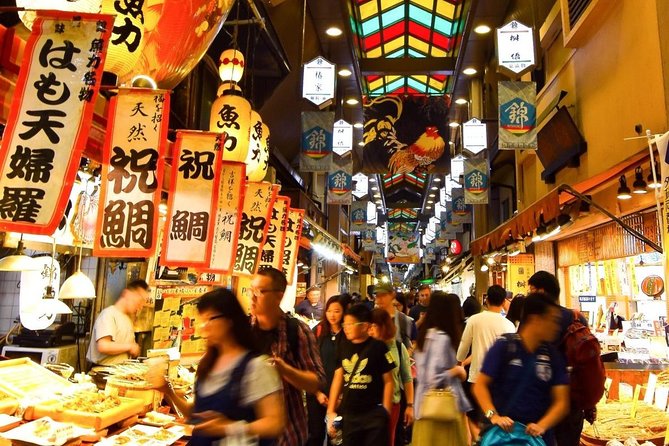
- Nishiki Market, Kyoto’s Kitchen: A short walk through over 130 shops gives you fast, real food discovery.
- Food districts with orientation help: Gion and Pontocho can be confusing at first, so you get the lay of the land.
- Pick 3 to 4 sites from a menu: The tour can be shaped to your interests, whether that means more temples or more food.
- Some stops are quick photo-orientation stops: A few highlights are timed tightly, so wear comfortable shoes.
A 6-hour Kyoto food and culture plan, built for real choices
A Kyoto day can turn into a blur. One hour you are staring at a shrine gate, the next you are hunting for a snack in a sea of people. This kind of private tour is meant to solve that problem by connecting food with culture, and by doing it at a human pace.
You are not just dropped at landmarks. You get a licensed local guide who can point out what matters, explain the background in plain language, and help you decide what to eat on the spot. That is the difference between collecting photos and actually understanding a place.
The tour is about 3 to 4 selected stops from a broader set of options, even though there are many possible highlights. That is important for value: you are paying for a guided flow, not for a long list of rushed checkboxes.
Nishiki Market: Kyoto’s Kitchen for snack decisions
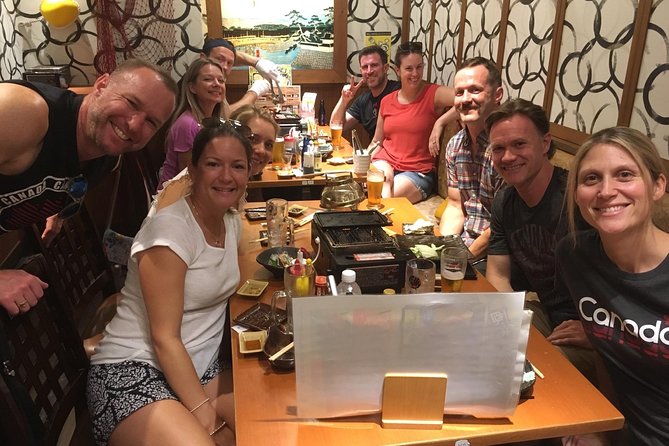
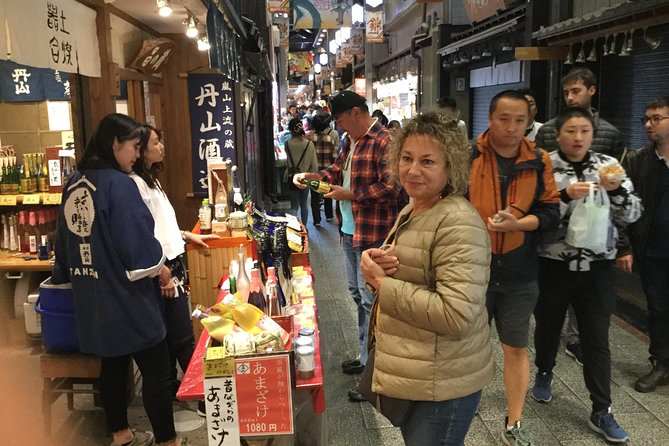
If Kyoto has a food street, this is it. Nishiki Market is a narrow, about five-block-long shopping strip with more than one hundred shops, known for specialties and grab-and-go bites.
This is where you learn the easiest way to eat like a local: sample your way through, but pick with a purpose. Instead of random tasting, a guide can help you spot what is worth the line, what to order to match your tastes, and where to buy small edible gifts if you want something that is easy to bring home.
Practical vibe check: Nishiki can feel tight and busy because it is narrow. Going with a private guide helps you avoid the beginner mistake of stopping in the middle of the walkway while you decide. You tend to move more efficiently, and you do not waste time doubling back.
A quieter way to spend a day in Kyoto
- Kyoto Night Foodie Tour in Gion (9+ dishes + 6 Sake tastings)
★ 5.0 · 1,762 reviews - Kyoto: Insider Sake Brewery Tour with Sake and Food Pairing
★ 5.0 · 704 reviews - Kyoto Nishiki Market Food and Culture Walking Tour
★ 5.0 · 412 reviews - Kyoto: Gion Food Tour 13 Dishes at 4 Eateries
★ 5.0 · 408 reviews
Gion and Pontocho: reading Kyoto’s dining streets without stress
Gion is famous, and that fame can be distracting. For a first-time visitor, the alleys can feel like a maze, and it is easy to accidentally end up in the wrong lane or simply end up walking in circles. A guided approach helps you get your bearings fast, while you still enjoy the narrow streets and atmosphere.
Then there is Pontocho, the dining alley running from Shijo-dori to Sanjo-dori, one block west of the Kamogawa River. This area is all about restaurant fronts, evening energy, and the feeling that Kyoto meals happen right on the street.
Here is why this pairing works well: Gion gives you the cultural backdrop, while Pontocho gives you the food-and-streets feeling. Even if you are not dining in a specific restaurant, you are learning how the neighborhoods function and why certain streets attract certain types of meals.
Timing note: both areas are short stops, so treat them as orientation plus a food moment, not as a full-length dinner plan. If you want a long sit-down meal, you will likely need to add time on your own.
Kyoto sweets in a restored theater building
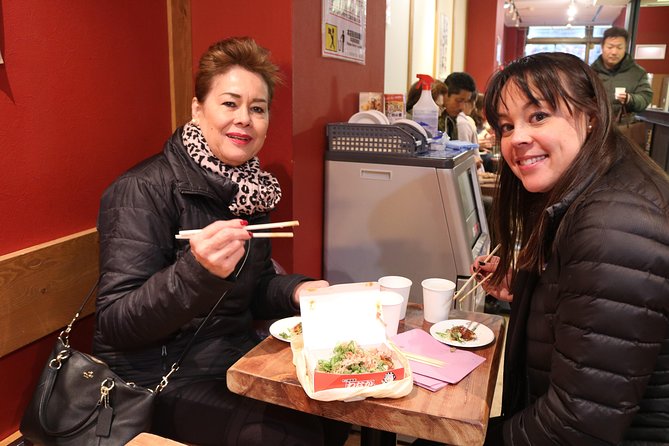
One of the more interesting stops in the lineup is a Kyoto sweets stop connected to a building renovated from a kabuki theater. Even if you are not a theater buff, the point is that Kyoto keeps repurposing spaces while preserving the vibe.
You get a quick window to try a traditional-style sweet in a setting with cultural context. It is not just dessert. It is a moment to see how Japanese tradition can show up in everyday tasting, not only in temples and ceremonies.
This stop is timed tightly, so if you have strong preferences, like avoiding overly sweet items, tell your guide. A good private guide can steer you toward something that fits your taste before you end up stuck with a sugar-heavy choice.
Kennin-ji and other temple stops: what a guide adds
Kyoto’s temples are more than pretty buildings. The value of a guided visit is that you understand what you are seeing as you see it, especially in places where the layout is not obvious.
Kennin-ji Temple is one such stop near the bustle of Hanamikoji and Shijo streets. The grounds are described as expansive and pleasant to walk, and it also features two karesansui, dry landscape gardens, which are the kind of detail you might miss if you only skim for photos.
A guide also helps you read the space in a calm way. Instead of rushing to check off the most famous view, you get a simple framework for how to look: where to stand, what elements to notice, and how the setting connects to the broader culture of Kyoto.
Some temple-related stops in this tour are listed as admission not included. That matters because you might need to pay entry on your own depending on what you choose and the specific site rules that day. For temple lovers, that is usually fine, but it is worth having a little cash or a payment plan ready.
Phoenix Hall at Byodoin, and the Uji travel reality
Byodoin Temple is known for the Phoenix Hall, a national treasure and a UNESCO World Heritage Site. That is the headline. The more useful part for you is planning how the day works when you leave central Kyoto.
Byodoin is located in Uji city, and the tour notes that extra travel time is expected. That means if you are trying to pack in multiple far-reaching sights, you might end up with less time at each, or you might start your day with tighter scheduling.
This is still a great option if you want one of Kyoto area’s most famous architecture moments. Just do it with eyes open: you are paying for guidance, but travel time is still travel time.
If your group includes kids, older adults, or anyone who hates long rides, consider picking fewer distant stops.
A day of temples goes further with something to break it up.
Kyoto Imperial Palace and Nijo Castle: power before the tourists
Not every stop is a shrine. Kyoto also holds the physical echoes of government and rule.
The Kyoto Imperial Palace was the residence of Japan’s Imperial Family until 1868, when the emperor and capital moved to Tokyo. Even if you do not know the timeline, a guide can help you understand what it means that Kyoto used to be the center of power.
Nijo Castle, built in 1603 as the Kyoto residence of Tokugawa Ieyasu, is a UNESCO World Heritage Site. It is tied to the Edo Period and gives you a different lens on Kyoto, one focused on leadership and the era’s presence in daily life.
These are not the type of stops where you should expect heavy hands-on activity. The value is in context: why the site exists, what the architecture represents, and how it connects to the culture around it.
Fushimi Inari-taisha: the classic shrine with a guided context
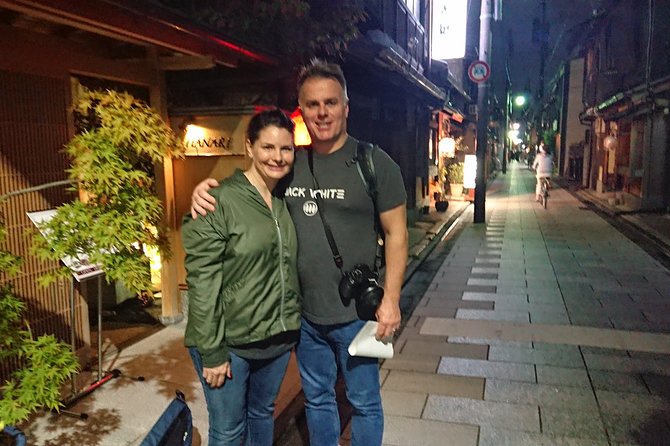
Fushimi Inari-taisha is famous for a reason. It is one of those places where the main visual feature, the shrine grounds, can overwhelm you if you only look at it as a photo opportunity.
In this tour flow, it is described as a short trip offering value way to experience it, including access to background that is off-limits to ordinary tourists after the tour. Even if you are not sure what that means yet, it signals that the guide’s role is partly interpretation and partly access to angles you might not find on your own.
This stop is timed as a brief visit, so do not assume you will finish everything on your own map. Use it as the guided introduction, then if you fall in love with the place, return later for a longer explore.
Tenryuji, Kiyomizu-dera, and Sanjusangendo: three different kinds of famous
Kyoto temple fame comes in different flavors, and the tour includes a variety.
Tenryuji in Arashiyama is described as the most important temple in the Arashiyama district and part of Kyoto’s major Zen temple tradition, with world heritage status mentioned. If you pick this stop, you are choosing a Zen connection, not just a sightseeing checklist.
Kiyomizu-dera is one of Kyoto’s most popular temples, and the tour notes a comprehensive 1-hour guided tour. That is a big clue about how you should plan your day: if you want Kiyomizu-dera, expect a more structured temple time block compared with quick photo stops elsewhere.
Sanjusangendo is known for 1001 statues of Kannon, the goddess of mercy. That fact alone tells you what kind of experience you are choosing: a place where counting and attention are part of the wonder.
For temple stops, the best move is to pick what matches your brain that day. If you want architecture and garden reading, pick the Zen-related options. If you want scale and statues, pick Sanjusangendo. If you want classic Kyoto drama, choose Kiyomizu-dera.
How much will it cost, beyond the $153.11
At $153.11 per person for a 6-hour private tour, the price feels reasonable only if you use the guidance well. This is not a low-cost bus tour model. You are paying for a licensed guide, a private flow, and customization.
The extra costs are clearly laid out: lunch is not included, and entrance fees for you are not included. Food and drinks during the tour are also on you.
That is not a deal breaker, but it changes how you budget. I recommend setting aside spending money for:
- small snack purchases and drinks
- at least one paid entry if you choose sites marked admission not included
- lunch if you want a sit-down meal rather than continuing with snacks
The good news: some of the key sights in the flow are free to simply experience, like Nishiki Market shopping and the Gion and Pontocho streets. You get your value from guiding, not from paying every single step.
Pickup, mobile tickets, and timing that matters
You can expect pickup offered and a mobile ticket. The tour is private, so you and your group only share time with each other, not with strangers in a big group.
One timing thing to watch: the tour is designed around selected stops within about 6 hours. If you choose far-flung options, like those requiring travel outside central areas, the schedule will tighten.
Also, a few stops are marked very short, like about a minute. That suggests a quick orientation moment, not a long sit-and-stare experience. If you hate rushing, tell your guide you want fewer quick stops and more time at places you care about.
Who this tour suits best in Kyoto
This tour is a great fit if you:
- want food guidance in places where choices are overwhelming
- are new to Kyoto and want neighborhood context, not just landmarks
- travel with a mixed-age group and want a flexible pace
The tour is also described as suitable for most travelers, and it allows service animals. If you have mobility limits, the best move is to discuss how many walking-heavy stops you want to include when customizing your route.
If you care about culture meaning, you may get a guide style that goes beyond facts and explains how tradition connects to daily life and what you are eating. One guide named Lily is specifically praised for making culture, religion, and meaning understandable for both younger and older people, and for choosing a route that feels educational without becoming boring.
Should you book this Kyoto Food and Culture private tour?
Book it if you want a guided food-and-culture day with real decision support, especially around Nishiki Market and Kyoto’s key dining districts like Gion and Pontocho. The customization matters because Kyoto rewards focus, not speed.
Skip or reconsider if you already know exactly which sites you want, and you only want temples with no food priorities. This tour is at its best when you actually use the guide to choose snacks, read the streets, and connect what you taste with what you see.
If you do book, plan your budget for lunch, temple entries, and snacks. Then show up ready to walk a bit, ask questions, and treat it like a guided tasting plus a guided story of Kyoto.
FAQ
How long is the Kyoto Food & Culture private tour?
It runs for about 6 hours.
Is this tour private or shared?
It is private. Only your group participates.
Does the tour include pickup?
Pickup is offered.
Can I customize which sights I visit?
Yes. The route can be customized based on your interests, and you choose 3 to 4 sites from the available options.
Are entrance fees included?
No. Entrance fees for you are not included.
Is lunch included?
No. Lunch is not included.
Does the tour include food and drinks?
Food and drinks are not included, so you’ll pay for what you eat and drink.
Can I cancel for free?
Yes. You can cancel up to 24 hours in advance for a full refund.
New This Season
- Koyasan Day Trip by Private Car from Kyoto
- Old Port Town and Ultimate Sake Tasting Private Tour From Kyoto
- Kyoto’s Timeless Charm: 3hr Exploration of History and Peace
- Kyoto: 5 Types of Sushi Making
- Sacred Peak & Ancient Paths: Kurama-Kibune Hiking Experience
- Kyoto: Exclusive ZEN practice at Manpukuji temple in Uji
- Kyoto: Private Seasonal Aroma Yoga Class
- Traversing Kyoto’s Scenic West – Arashiyama to Kinkakuji
Food, compared.
Kyoto Night Foodie Tour in Gion (9+ dishes + 6 Sake tastings)
Read our review →
Insider Sake Brewery Tour with Sake and Food Pairing
Read our review →
Kyoto Nishiki Market Food and Culture Walking Tour
Read our review →