
Reviewed · CYCLING TOURS
Kyoto: Full-Day City Highlights Bike Tour with Light Lunch
Kyoto looks better in motion. This full-day bike tour strings together Kyoto’s most famous sights with hands-on time to actually see them, from the Arashiyama Bamboo Grove to the Golden Pavilion at Kinkaku-ji. You move at a leisurely guide-led pace, with enough time for photos and for asking questions along the way.
Two things I really like: the route connects big-name places without feeling like a checklist, and the guide energy matters. In small groups (up to 8), you get bike support, bilingual interpretation, and a practical rhythm that keeps the day fun even when you are riding a lot.
One drawback to plan around: it is a long day with about 44 km (27 mi) of cycling. This is not for you if you do not ride comfortably already, and in winter the day runs shorter at the stops to finish before sunset.
In This Review
- Key things I’d prioritize on this Kyoto bike tour
- Why Kyoto’s top sights make sense by bike
- Price and what you actually get for your money
- Before you roll: fitting, safety, and the right clothing
- Saga-Arashiyama Bamboo Grove: green that hits fast
- Fushimi Inari Taisha: torii gates and fox-statue hunting
- Light lunch, then Gion street-level Kyoto
- Kiyomizu-dera in the eastern hills and Otowa Spring
- Kinkaku-ji: the Golden Pavilion and its water mirror
- The ride reality: 44 km, heat, and pedal-assist options
- Small group guides: humor, care, and cultural context
- Who this Kyoto bike tour fits best
- Should you book? My practical take
- FAQ
- Where does the tour start?
- How long is the Kyoto highlights bike tour?
- How many people are in the group?
- What is included in the price?
- Is hotel pickup or drop-off included?
- What should I wear or bring?
Key things I’d prioritize on this Kyoto bike tour
- Small group pacing that keeps you from getting stuck behind people, plus time to stop and look
- Arashiyama Bamboo Grove as an early highlight, with that iconic sea of green and easy photo angles
- Fushimi Inari’s torii trails beyond the main area, including lots of fox statues to spot
- Gion time on the streets, including views around Tatsumi Bridge and Hanamikoji Street
- World Heritage Kiyomizu-dera with Otowa Spring, a big cultural stop in the eastern hills
- Kinkaku-ji Golden Pavilion finished with a return ride to Saga-Arashiyama
Why Kyoto’s top sights make sense by bike
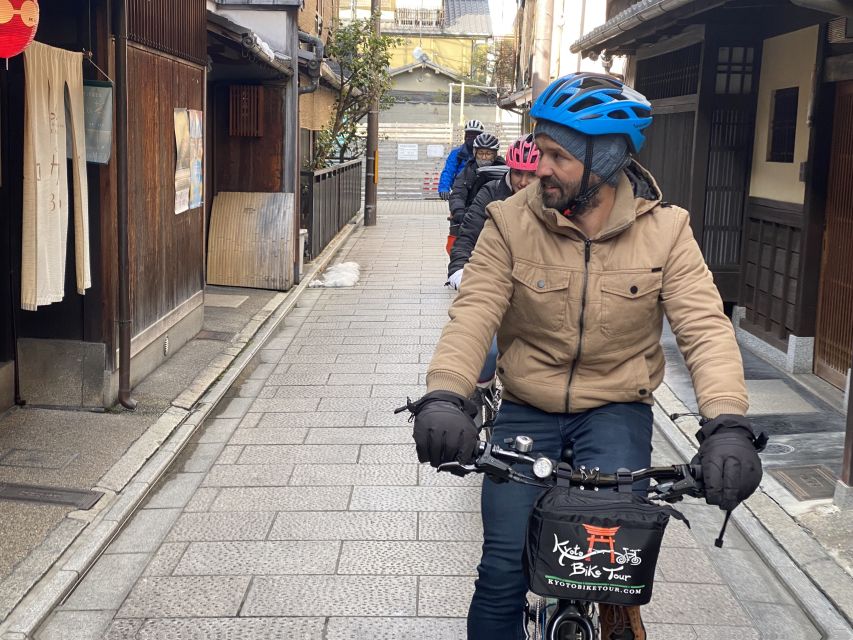
Kyoto is perfect for bike travel when you want both efficiency and atmosphere. A bus can get you to the points on a map, but it does not give you the slow window into local streets. On this route, you cover multiple neighborhoods across the city, while still feeling like you are touring the real Kyoto, not just passing through it.
What I like about this day is the shape of the itinerary. You get a classic west-to-east storyline: start at Saga-Arashiyama, then head toward Fushimi Inari, move through the Gion area, and finish at the eastern hill temples and Kinkaku-ji. That order helps your legs pace the day, and it keeps the sightseeing from feeling random.
Also, the tour is built for staying outdoors and looking up. Shrines, temple gates, and wooden streets all reward slow movement. And because you ride with a guide, you avoid the stress of route planning, street navigation, and figuring out where to park and how long to spend.
Price and what you actually get for your money
At $167 per person for an 8-hour guided tour, the value comes from what is included. You get a bilingual guide, bicycle, helmet, bottled water, entry fees, and a light lunch. That matters because Kyoto temple and shrine admissions can add up quickly, and the bike rental plus guide time would cost extra if you did it yourself.
The other plus is the small group size, limited to 8 participants. More space on the road means less waiting, fewer bottlenecks at crossings, and more chances to ask questions.
The main cost-related caution is about effort. This is not a casual stroll. You are cycling most of the day, about 44 km (27 mi) total. If you are not confident on a bike or you usually avoid long rides, you may want to plan around that with a pedal-assist option if available, because several riders strongly recommended e-bikes for handling the distance and heat.
Lunch, wedged between temple visits
- Bike Tour Exploring North Kyoto plus Lunch
★ 5.0 · 1,087 reviews - Osaka/Kyoto: Arashiyama, Nara & Fushimi Inari Shrine w/Lunch
★ 4.4 · 754 reviews - Kyoto Zen Meditation & Garden Tour at a Zen Temple with Lunch
★ 5.0 · 441 reviews - 4.5-Hour Kyoto Bike Tour with Lunch and UNESCO Zen Temples
★ 5.0 · 122 reviews
Before you roll: fitting, safety, and the right clothing
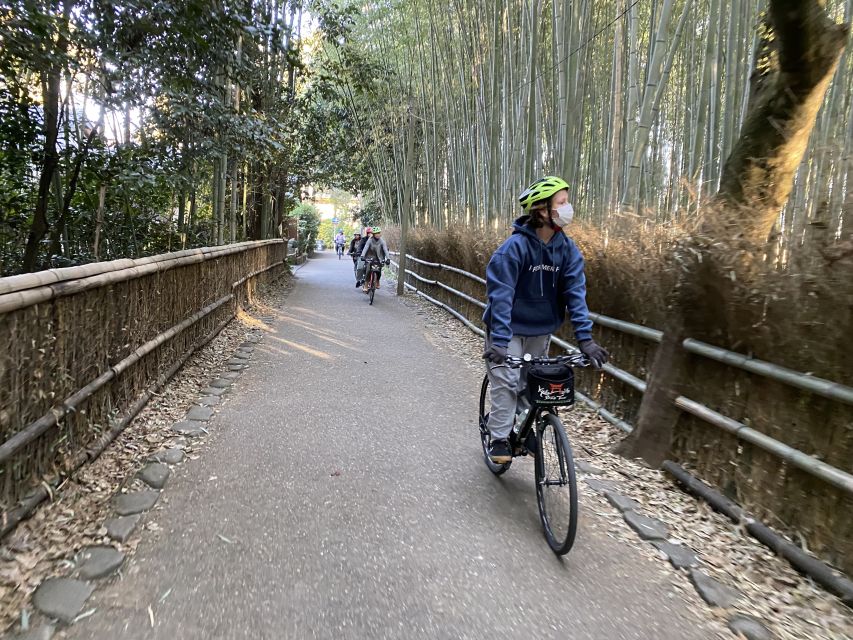
The day starts with a safety briefing and a bike fitting before you begin riding. You are also issued a helmet, and you ride at a leisurely guide pace. That combo is important in Kyoto because traffic can be busy, and group control is the difference between relaxing and stressful.
Wear matters more than you think. Bring comfortable shoes and comfortable clothes. Avoid high heels, sandals or flip flops, boots, and loose clothing. Kyoto street surfaces can be uneven, and sloppy footwear makes control harder.
For winter travel, plan for a shorter day at the stops during December through February. The route adjusts to finish before sunset, so you will not get the long linger time you might hope for if you are traveling in low-light months.
Finally, remember this is outdoors for most of the day. Even if the cycling pace feels manageable, you will still want weather-appropriate layers and sun protection when it is warm.
Saga-Arashiyama Bamboo Grove: green that hits fast
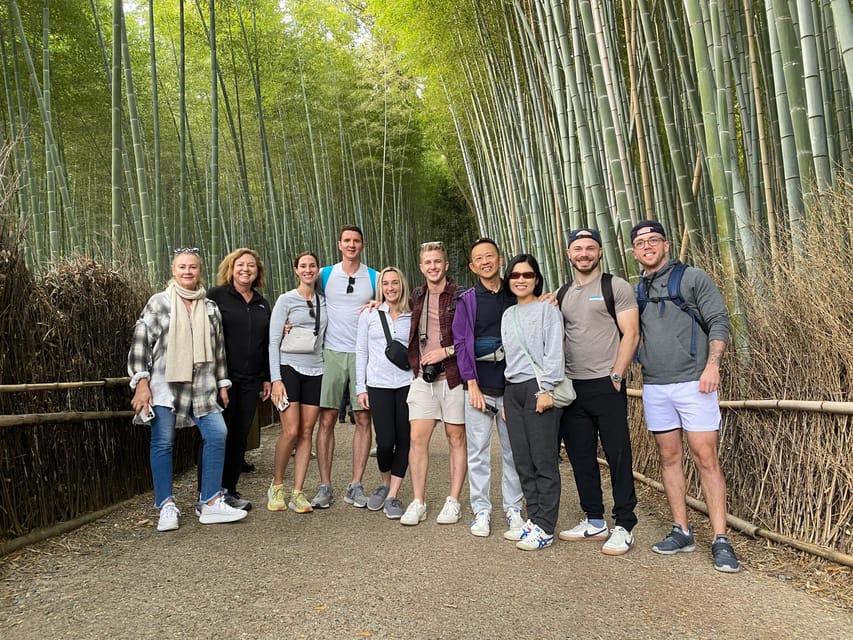
Your ride kicks off at Saga-Arashiyama Station, and one of the first big experiences is the Arashiyama Bamboo Grove. This is one of Kyoto’s most photographed scenes for a reason: the bamboo stalks create that hypnotic tunnel effect, and the colors feel like they have their own lighting.
On the tour, you do not just pass through. You get a guided sightseeing bike moment that is long enough to slow down, look up, and find a few different viewing angles. I like this as a first stop because it sets the tone: calm, scenic, and visually different from city streets.
A practical tip for this kind of stop is to think about your photo plan before you stop moving. If you wait until you are at the densest crowd spot, you lose time. Use the guide’s timing, then move into your favorite viewpoint quickly.
It is also a great place to reset mentally. After a long travel day, the bamboo grove gives you a gentle landing.
Fushimi Inari Taisha: torii gates and fox-statue hunting
Next comes Fushimi Inari Taisha Shrine, famous for its bright vermilion torii gates that lead you into a trail network behind the main buildings. This is where bike touring pays off, because you can reach the right area efficiently without wrestling with transit.
What makes this stop special is the way the shrine unfolds. You are not just looking at gates from one spot. You get time to stroll and follow the trails, and you start noticing the details, like how many fox statues you can spot.
Fox statues are a big part of the experience, and it is fun to play along. Count them. Compare their positions. Look for patterns in the way the area is arranged. Even if you are not religious, this is a cultural design language you can read with your eyes.
One drawback to watch for: this is a popular area. The tour helps by keeping you in motion with the guide and by giving you structured time at the shrine grounds. Still, wear shoes that are truly comfortable for walking, because even a short stop here can turn into more steps than you expect.
Light lunch, then Gion street-level Kyoto
After you work up an appetite, the tour includes a light lunch. The meal is intentionally not a giant production, so you can keep energy for the rest of the day. A lot of cyclists like this setup because you do not spend half the afternoon stuck in a food coma.
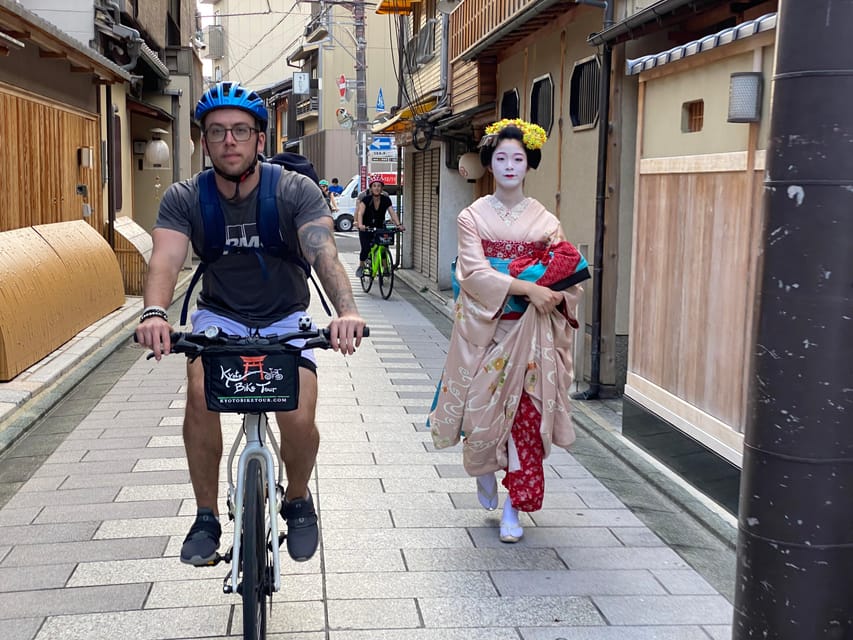
Then you ride through and explore Gion, the famous entertainment district area. The tour focuses on walking-and-looking moments rather than only photo stops. You can spot hostesses in colorful kimonos near Tatsumi Bridge, and you also see the refined atmosphere along Hanamikoji Street with its upscale restaurants and boutiques.
This part of the day is where Kyoto starts feeling personal. On a bike, you get close enough to notice textures in the streets, the feel of storefronts, and the way people move through narrow lanes. It is a different view than the wide bus corridors.
If you are aiming to see traditional scenes like kimono styling or occasional geiko and maiko, keep your expectations realistic and your phone away sometimes. A calm, respectful approach is part of the experience.
A quieter way to spend a day in Kyoto
Kiyomizu-dera in the eastern hills and Otowa Spring
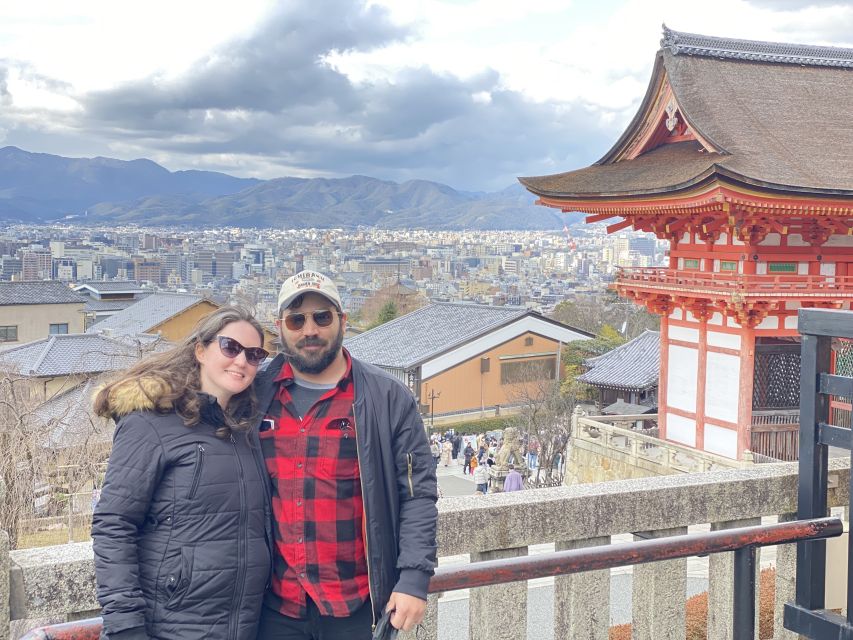
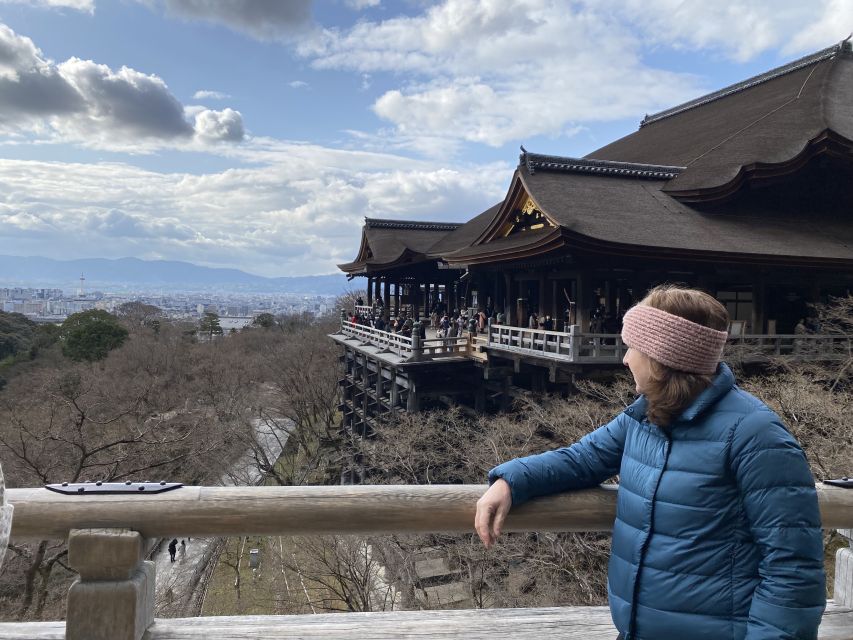
From Gion, you head toward the eastern Kyoto hills for Kiyomizu-dera, a UNESCO World Heritage Site. This stop is framed around one of its signature elements, the Otowa Spring, known for its medicinal pure waters.
The value here is twofold. First, it is one of Kyoto’s most dramatic temple settings, so you get a sense of scale that feels bigger than a flat street stop. Second, it adds context to what you have already seen at shrines. You start to notice that Kyoto’s spiritual spaces are designed to be approached, not just observed.
Your time at Kiyomizu-dera is guided and paced, so you are not spending the whole visit figuring out how to get between viewpoints. A possible consideration: if it is hot or crowded, you will feel the walking. This is one reason comfort and stamina matter more than fancy shoes or fashion footwear.
If you take a slow approach and give yourself a few pauses, Otowa Spring and the surrounding temple areas make more sense. You start noticing how sightlines are engineered, and how people flow through spaces.
Kinkaku-ji: the Golden Pavilion and its water mirror
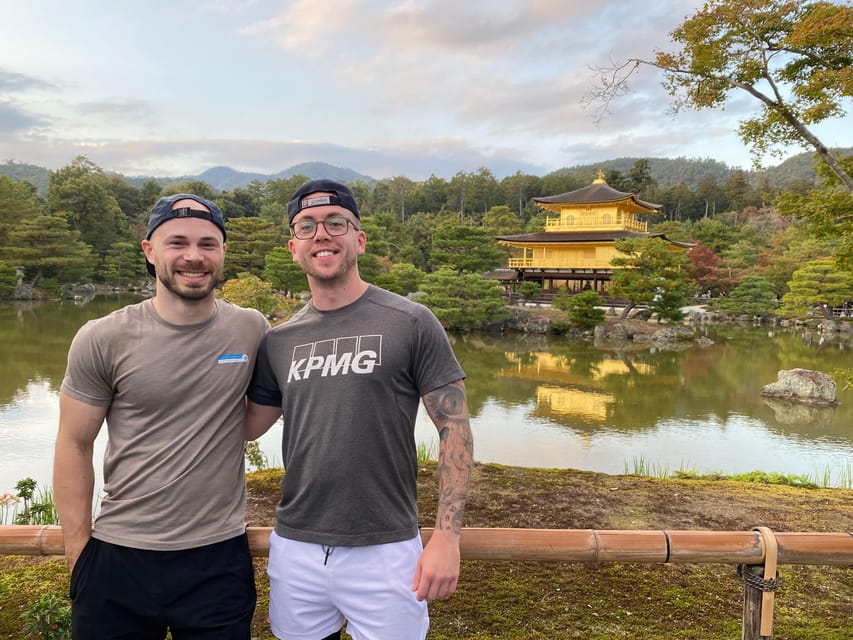
The finale is Kinkaku-ji, the Golden Pavilion, a Zen temple that rises above its reflecting pond like an apparition. You cycle to the site and then take in the brilliant gold during the visit window.
This is the kind of stop that looks incredible in photos, but you get even more out of it in person because of the details. The gold surface catches light, and the pond reflection changes how the whole scene feels. Depending on timing and sky conditions, you might catch the pavilion in gentler light that makes the gold glow even more.
Finish style matters. You end the day with a ride back to Saga-Arashiyama Station, which helps you decompress. It is also a practical way to close the loop, so you are not stranded far from transit after a long day.
One more practical note: this is a very visual stop. If you want more than one photo, plan for it. Walk a little, then stop and shoot from one angle. Repeat once. You will get better results than rushing through everything at once.
The ride reality: 44 km, heat, and pedal-assist options
This is an all-day cycling tour. Roughly 44 km (27 mi) is listed as the total riding distance, and the day includes several stop-and-walk segments. That means your legs will feel it even if you are a confident rider.
I think this is where most people succeed or struggle. If you are used to bike riding, you will likely find the pacing “leisurely” in a real way. If you are not, you still might enjoy it, but you should be prepared to work through some longer stretches.
That is why several riders mention choosing pedal-assist e-bikes, especially for extra help in heat and for comfort when they were not regular long-distance cyclists. If you are on the fence about your fitness, this is not the moment to prove a point. A pedal-assist upgrade can turn a tiring day into a memorable one.
Also, the group size helps. Up to 8 participants means less chaos at turns and crossings, and your guide can manage the group more easily. On busy city roads, that matters.
Small group guides: humor, care, and cultural context
The tour runs with a live English-speaking guide and stays small, limited to 8 participants. That combination is why the day feels smooth. You get bilingual guidance, plus enough cultural explanation to make the stops more meaningful without turning it into a lecture.
The guides named in rider accounts are often described as funny, organized, and patient, with a strong focus on safety and inclusion. Guides like Cass, Rob, Peter, Ray, and Adi have each been singled out for those qualities. Whether you get one of them or another member of the team, the guiding style seems consistent: keep you moving, but never rush you past what matters.
One detail I like is the way the guide supports photo moments. Some riders mention getting help timing shots, and there are even cases where photos were shared after the tour. That kind of light touch makes it easier to enjoy the scene without constantly juggling camera, group position, and traffic.
Who this Kyoto bike tour fits best
This tour is a good match if you:
- Can comfortably ride a bike for a long day
- Want big-name Kyoto sights plus time on side streets rather than only bus stops
- Prefer guided context to self-planning
- Like seeing neighborhoods from street level, including Gion’s lanes and bridge views
It is not a match if you:
- Are under 14 years old
- Have back problems or mobility impairments
- Cannot ride a bike
- Have low fitness or know you dislike long-distance cycling
Also, because you meet at the start location rather than having hotel pickup, plan to get yourself to outside JR Saga Arashiyama Station. If you want a door-to-door experience, this is not that kind of tour.
Should you book? My practical take
If you want Kyoto highlights and you are comfortable cycling, I think this is one of the smartest ways to spend a day. You get a powerful mix: bamboo tranquility at Arashiyama, torii trails at Fushimi Inari, Gion street atmosphere, world-class temple drama at Kiyomizu-dera, and the Golden Pavilion’s mirror-and-gold effect at Kinkaku-ji. Plus, the included entry fees and light lunch help justify the price.
Book it if your priority is efficiency without sacrificing atmosphere. Skip it if you are not ready for roughly 44 km of cycling or if walking distances at the shrine and temple stops will stress you out.
If you do book, think about one thing first: your comfort level on the bike. If you are unsure, consider pedal-assist options. It often makes the difference between a day that feels challenging and a day that feels fun.
FAQ
Where does the tour start?
The meeting point is outside JR Saga Arashiyama Train Station.
How long is the Kyoto highlights bike tour?
The tour duration is about 8 hours.
How many people are in the group?
It is a small group limited to 8 participants.
What is included in the price?
The tour includes a bilingual guide, bicycle, helmet, bottled water, entry fees, and a light lunch.
Is hotel pickup or drop-off included?
No. Hotel pickup and drop-off are not included.
What should I wear or bring?
Bring comfortable shoes and comfortable clothes. Weather-appropriate clothing helps. High heels, sandals or flip flops, boots, and loose clothing are not allowed. Also, the tour includes a safety briefing and bike fitting before you start riding.
New This Season
- Koyasan Day Trip by Private Car from Kyoto
- Old Port Town and Ultimate Sake Tasting Private Tour From Kyoto
- Kyoto’s Timeless Charm: 3hr Exploration of History and Peace
- Kyoto: 5 Types of Sushi Making
- Sacred Peak & Ancient Paths: Kurama-Kibune Hiking Experience
- Kyoto: Exclusive ZEN practice at Manpukuji temple in Uji
- Kyoto: Private Seasonal Aroma Yoga Class
- Traversing Kyoto’s Scenic West – Arashiyama to Kinkakuji
Cycling Tours, compared.
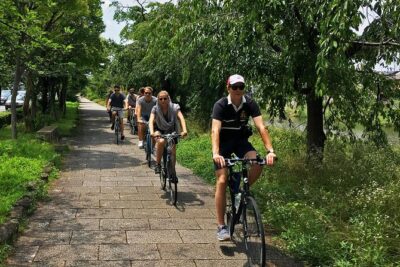
Bike Tour Exploring North Kyoto plus Lunch
Read our review →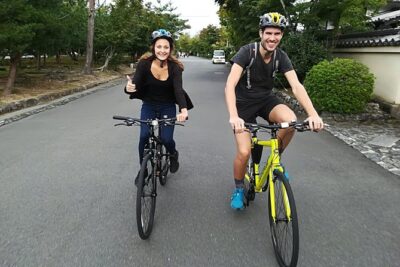
Arashiyama Bamboo Forest & Hidden Gems Bike Tour (Early Bird)
Read our review →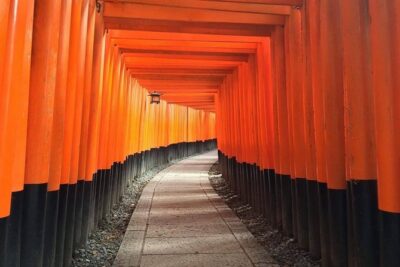
5 Top Highlights of Kyoto Full Day Bike Tour (E-bike option)
Read our review →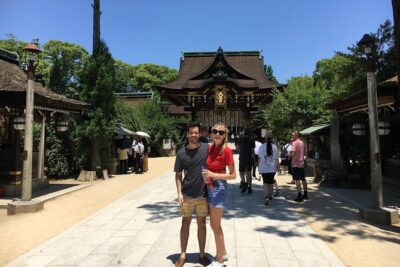
Full Day Biking Tour Exploring the Best of Kyoto
Read our review →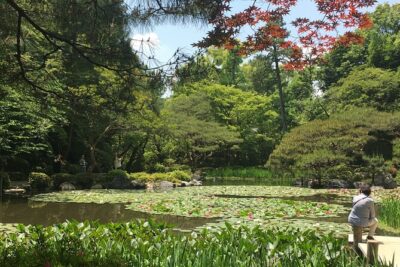

Afternoon Kyoto Bike Tour: Bamboo Forest, Monkeys & Hidden Spots
Read our review →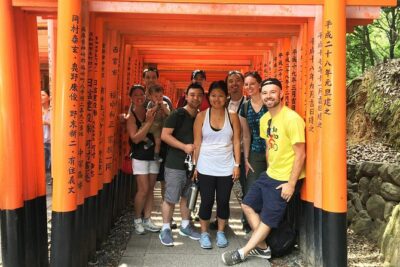
South Kyoto in a Nutshell: Gentle Backstreet Bike Tour!
Read our review →Also filed under