
Reviewed · CYCLING TOURS
Kyoto: Higashiyama Slow Cycling Tour along the quiet waterfront
Kyoto by bike feels like the city switches to a calmer channel. This slow cycling tour takes you around the Higashiyama waterfront with BROMPTON bicycles, then links you to shrines and temple sights along a route of about 12 km. You get an exclusive navigator who helps you move smoothly between classic landmarks and quieter side streets.
What I like most is the chance to ride Kyoto instead of just walking it. You’ll spend time along riverside paths with a relaxed rhythm, and you get the kind of local routing that tends to keep things calmer when some of the most famous areas feel crowded. I also love the visual payoff of arriving at spots like Nanzen-ji on a stylish BROMPTON, with photo moments that look very Kyoto.
One thing to consider: this is paced for people with moderate physical fitness, and the tour requires good weather. If the day is rough, the operator may shift dates or refund you.
In This Review
- Key highlights I’d plan around
- Slow Cycling on a BROMPTON Along Higashiyama Waterways
- Meeting at Demachiyanagi Station, and How the Tour Keeps It Easy
- Kamogawa River and Shimogamo Jinja: Nature in the Middle of Kyoto
- Philosopher’s Walk to Nanzen-ji: Temples Without the Time Pressure
- Nanzenji Suirokaku and Keage Incline: Waterways, Brick, and Industrial Heritage
- Kyoto Gyoen National Garden: Ending Near the Imperial Grounds
- Price and What You Get for 129 Dollars
- Who Should Book This 4-Hour Higashiyama Cycle
- Should You Book It for Your Kyoto Days?
- FAQ
- How long is the Kyoto Higashiyama slow cycling tour?
- Where does the tour start and end?
- How long is the cycling distance?
- What kind of bicycles and riding gear are provided?
- Is admission included for Nanzen-ji Temple?
- Do I need a high fitness level?
- How many people are in the group?
- Is insurance included in the tour price?
- What happens if the weather is bad?
Key highlights I’d plan around
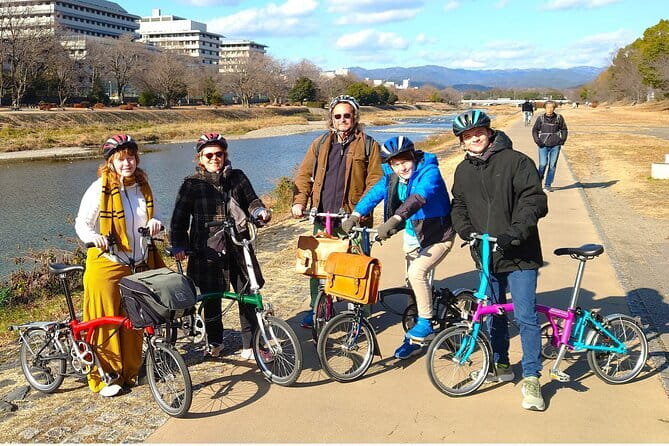
- BROMPTON bicycles designed for smooth, comfortable slow cycling through Kyoto lanes
- A small group size (up to 6), which makes the ride feel personal instead of rushed
- Riverside and canal paths that keep the scenery flowing for about 12 km total
- UNESCO Shimogamo Jinja plus forest light, not just a quick temple stop
- Nanzen-ji brick aqueduct and Keage Incline for a more unusual Kyoto story
- Photos get easier when you are rolling up on a sleek bike at the right moments
Slow Cycling on a BROMPTON Along Higashiyama Waterways
Kyoto is famous for its temples, sure. But Kyoto also lives with water, and this tour uses that fact like a map. You cycle through the Higashiyama area with a focus on the quieter waterfront side, then connect to shrines and temples in a way that feels steady rather than sprint-like.
The bicycles matter. This tour is built around BROMPTON bikes, which are a big part of the look and feel. They help you stay in control on small streets and gentle paths, which makes the whole day easier to enjoy. The navigator also does a lot of the heavy lifting, guiding your route so you can focus on seeing and photographing.
Meeting at Demachiyanagi Station, and How the Tour Keeps It Easy
The tour starts at Demachiyanagi Station (32-1, Tanaka Kamiyanagichō, Sakyo Ward). You return to the same meeting point at the end, so you do not have to worry about figuring out a second pickup or getting across town afterward.
With a duration of about 4 hours, the pacing is the whole strategy. You are not trying to cram Kyoto into a checklist. You ride, stop, look, and move again, without long gaps where you feel stuck waiting.
This is also a practical tour for people who want guidance but do not want to carry the logistics. Riding equipment is provided, including helmets and bags for wheeled transport. That means you can show up, get fitted, and start rolling.
One more value point: the navigator’s role is not just pointing at famous buildings. The route is designed so you can take in tranquil areas and alternatives when you run into busy zones on foot.
A quieter way to spend a day in Kyoto
- Hidden Kyoto E-Biking tour
★ 5.0 · 1,843 reviews - Bike Tour Exploring North Kyoto plus Lunch
★ 5.0 · 1,087 reviews - Arashiyama Bamboo Forest & Hidden Gems Bike Tour (Early Bird)
★ 5.0 · 613 reviews - 5 Top Highlights of Kyoto Full Day Bike Tour (E-bike option)
★ 5.0 · 511 reviews
Kamogawa River and Shimogamo Jinja: Nature in the Middle of Kyoto
Your first stop is Kamogawa River, flowing through the center of Kyoto. This is a good opener because it immediately resets your senses. Even when a city is busy, riverside spaces let you breathe and get oriented. You also get a sense of what the tour means by water in Kyoto: not only scenery, but a real corridor shaping daily life.
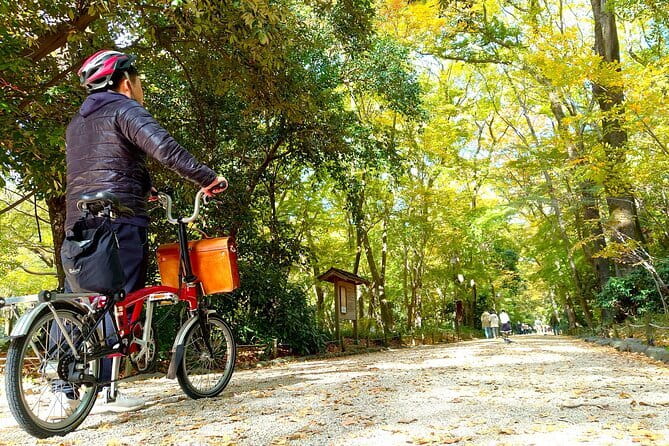
From there you move to Shimogamo Jinja, a UNESCO World Heritage Site north of the Kamogawa River delta. The special feeling here is the forest setting, especially Tadasunomori, where sunlight filters through the trees. If you like moments that feel less about crowds and more about atmosphere, this is the kind of stop that earns your time.
A subtle benefit of cycling between these kinds of places is the rhythm. On foot, you can lose time weaving through streets and crowds. On bike, the navigator can help you keep momentum, so Shimogamo arrives like a calm pause rather than a chore.
Possible consideration at this stage: if you expect only famous statues and photo spots, shrine grounds can feel more like a slow walk through mood. For me, that is the point, but you should be ready for quiet and space.
Philosopher’s Walk to Nanzen-ji: Temples Without the Time Pressure
Next up is the Philosopher’s Walk, also called the Philosophy Path. This footpath runs along the Lake Biwa Canal at the foot of Mount Higashiyama, and it is named because philosophers strolled here for contemplation. The charm is in the layout: it is a gentle, linear stroll next to water, with views that naturally slow you down.
The tour then shifts toward one of Kyoto’s standout temple experiences, Nanzen-ji Temple. Nanzen-ji is one of Japan’s most prestigious Rinzai temples. You will also hear about the Sanmon Gate, famous for appearing in Kabuki plays, plus the temple’s garden.
Here is the practical thing to know. Nanzen-ji admission is not included, so you will want to be ready for that cost on-site. If you are trying to keep the day very economical, treat this as the one extra ticket you might pay.
Why I think this temple stop works in a cycling format: you get a chance to see the setting without the energy drain of walking long distances between highlights. When you arrive on bike, you still get the classic Kyoto experience, but with less fatigue and more time for noticing details.
Nanzenji Suirokaku and Keage Incline: Waterways, Brick, and Industrial Heritage
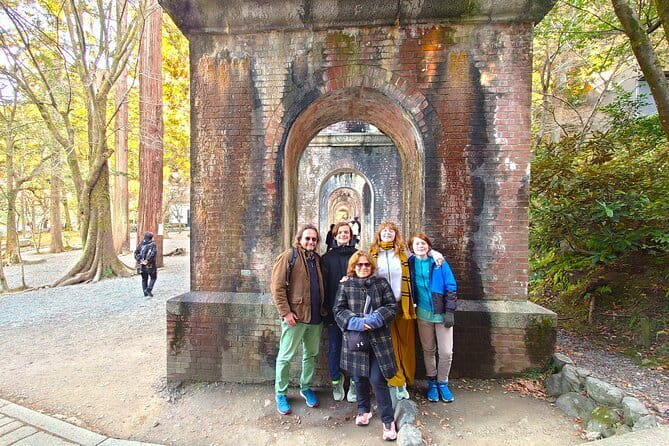
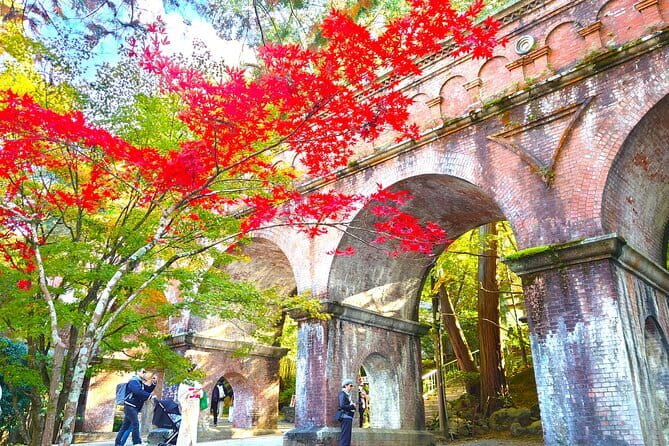
After Nanzen-ji, you move into a more distinctive, and frankly more interesting, side of the Kyoto story: Nanzenji Suirokaku. This is the brick aqueduct connected to the Lake Biwa River. It played a major role in Kyoto’s modernization in the Meiji era, and it is still in use today.
This stop is a great example of what I’d call Kyoto beyond the postcard. Instead of only focusing on the religious architecture, you get a view of how water infrastructure shaped the city itself. If you like engineering, history, or just the visual texture of old stonework and brick, this is worth lingering over.
Then you reach Keage Incline, a preserved incline railway linked to boat transport by the Lake Biwa Canal. It is also lined with cherry blossom trees, which makes it a particularly photogenic spot in season. Even if you are not there during blossom time, the industrial heritage angle gives you a different kind of Kyoto scenery.
The advantage of arriving by bike is timing and flow. These kinds of places can be hard to string together smoothly on your own, especially if you want to avoid backtracking. With the navigator guiding you, you can keep the ride gentle and the sightseeing coherent.
If you are someone who likes unusual Kyoto facts, this stretch is likely to be one of your favorite parts of the day. It teaches you something you usually do not learn when you only chase the most famous temples.
Kyoto Gyoen National Garden: Ending Near the Imperial Grounds
Your final major stop is Kyoto Gyoen National Garden, tied to the Kyoto Imperial Palace grounds, which were the Emperor of Japan’s residence until the middle of the 19th century. Even if you do not go deep into palace history, the setting helps the tour land softly. It feels like a calm finish, not a sprint to the next photo.
This is also a good time to reflect on the day. You started with river nature, moved through shrine and contemplative paths, then hit temple prestige and water infrastructure history. Ending here gives your brain a place to slow down before the tour ends back at the meeting point.
Admission for this garden stop is listed as free, which is another plus for value.
A day of temples goes further with something to break it up.
Price and What You Get for 129 Dollars
At $129 per person for about 4 hours, this tour sits in a midrange price band, but the value comes from what is included. You get bicycle rental, an exclusive navigator fee, and riding equipment like helmets and bags for wheeled transport. You do not have to bring bike gear, and you are paying for a guide who knows the route.
There is also a small-group feel here, with a maximum of 6 travelers. That matters in Kyoto because the best experience often depends on route choices and timing, not just visiting the same landmarks as everyone else.
Two cost notes to keep in mind:
1) Insurance fee is not included (500 yen).
2) Nanzen-ji Temple admission is not included.
So, think of the listed price as the base cost for a guided, equipped cycling outing, plus a couple of add-ons depending on what you choose to do at specific sites.
To me, the price feels fair when you want both movement and local guidance. If you were trying to do this route on your own, you would likely spend time figuring out bike logistics, then still be guessing at the quieter lanes and water-adjacent pathways.
Who Should Book This 4-Hour Higashiyama Cycle
This is best for you if you want Kyoto at an easy pace. The tour is designed for people with moderate physical fitness, and the slow-cycling format helps you see more without feeling like you are constantly exerting yourself.
You should also consider this if you like:
- quiet riverside atmosphere more than nonstop crowds
- temple and shrine culture, but with less walking fatigue
- learning how Kyoto connects nature, water, and infrastructure
- a guided route that helps with calmer alternatives when famous areas get busy
It is also a strong fit for couples and small friend groups who like a shared pace. With up to 6 participants, you are more likely to feel like you are riding with a small crew rather than being one of many.
One more point: the tour course can be arranged according to your wishes. That does not mean you will control everything, but it suggests flexibility if you have a preference for certain types of stops.
Should You Book It for Your Kyoto Days?
I think you should book this tour if you want Kyoto to feel quieter and more connected. The ride along the water-adjacent areas, combined with planned stops like Shimogamo Jinja, Philosopher’s Walk, Nanzen-ji, Nanzenji Suirokaku, and Keage Incline, creates a day that teaches you a broader Kyoto story than a typical temple-only outing.
Skip it, or at least think twice, if you are expecting a lot of intense physical challenge or if your travel schedule depends on stubborn sightseeing regardless of weather. This experience depends on good conditions, and it is built for a relaxed pace with moderate cycling.
If you have limited time in Kyoto and want a single outing that blends classic sights with quieter, water-driven routes, this is a smart use of a half day.
FAQ
How long is the Kyoto Higashiyama slow cycling tour?
It runs for about 4 hours.
Where does the tour start and end?
It starts at Demachiyanagi Station (32-1 Tanaka Kamiyanagichō, Sakyo Ward, Kyoto) and ends back at the same meeting point.
How long is the cycling distance?
The tour route is about 12 km.
What kind of bicycles and riding gear are provided?
You get BROMPTON bicycles, plus riding equipment such as helmets and bags for wheeled transport.
Is admission included for Nanzen-ji Temple?
No. Nanzen-ji Temple admission is not included, while other listed stops are free.
Do I need a high fitness level?
No high fitness is required, but you should have moderate physical fitness.
How many people are in the group?
The tour has a maximum of 6 travelers.
Is insurance included in the tour price?
Insurance is not included. The fee listed is 500 yen.
What happens if the weather is bad?
The tour requires good weather. If it is canceled due to poor weather, you will be offered a different date or a full refund.
New This Season
- Koyasan Day Trip by Private Car from Kyoto
- Old Port Town and Ultimate Sake Tasting Private Tour From Kyoto
- Kyoto’s Timeless Charm: 3hr Exploration of History and Peace
- Kyoto: 5 Types of Sushi Making
- Sacred Peak & Ancient Paths: Kurama-Kibune Hiking Experience
- Kyoto: Exclusive ZEN practice at Manpukuji temple in Uji
- Traversing Kyoto’s Scenic West – Arashiyama to Kinkakuji
- Kyoto: Private Seasonal Aroma Yoga Class
Cycling Tours, compared.
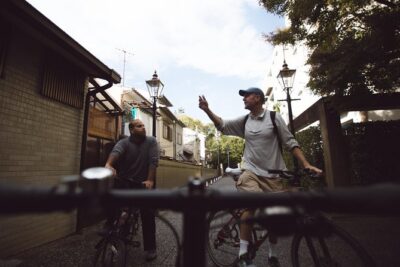
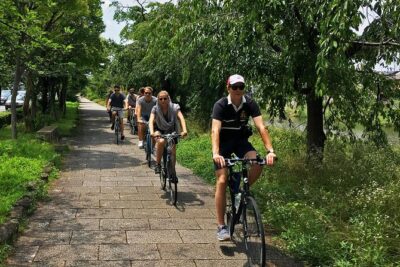
Bike Tour Exploring North Kyoto plus Lunch
Read our review →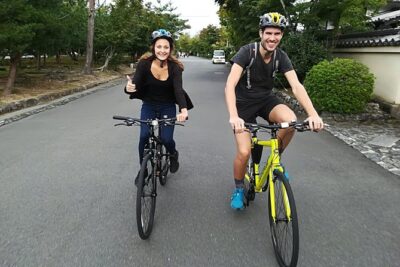
Arashiyama Bamboo Forest & Hidden Gems Bike Tour (Early Bird)
Read our review →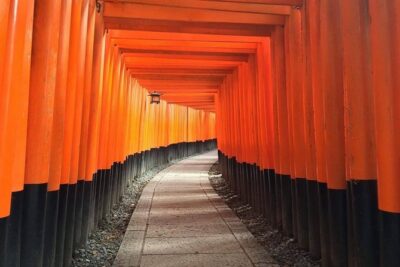
5 Top Highlights of Kyoto Full Day Bike Tour (E-bike option)
Read our review →
Full Day Biking Tour Exploring the Best of Kyoto
Read our review →

Afternoon Kyoto Bike Tour: Bamboo Forest, Monkeys & Hidden Spots
Read our review →
South Kyoto in a Nutshell: Gentle Backstreet Bike Tour!
Read our review →Also filed under