Reviewed · TICKETS
Kyoto: Hop-on Hop-off Sightseeing Bus Ticket
Kyoto looks bigger from the top deck. This hop-on hop-off bus is an easy way to cover the big-name sights without fighting train changes, and it comes with open-top panoramic views plus pre-recorded audio in 7 languages. The one real tradeoff is the sun, because the top deck is open and you can be in direct light for long stretches.
You can use the same ticket for a same-day or 2-day rhythm, and you get unlimited rides while it is valid. That flexibility matters in Kyoto, where one temple stop might turn into an hour of wandering, shopping, and snack-hunting near the gate. Also note: on-board Wi-Fi is listed as temporarily suspended, so plan like you are offline.
Here is how to think about the audio: it is helpful for orientation and for learning what you are looking at, but it is not a deep guidebook replacement. If you want thick historical context, you will still be doing that when you step off and read signage or use other sources.
In This Review
- Key points before you ride
- Price and value: why $27 can work in Kyoto
- Where to board in Kyoto (and how not to waste time)
- How the audio guide helps you use your stops well
- The route in plain language: what each stop is for
- Kyoto Station: your launchpad
- Nishihonganji (Kyoto Tokyu Hotel): a bridge between transit and temples
- Shijo Karasuma / Nishiki-ichiba Market: the food and shopping pause
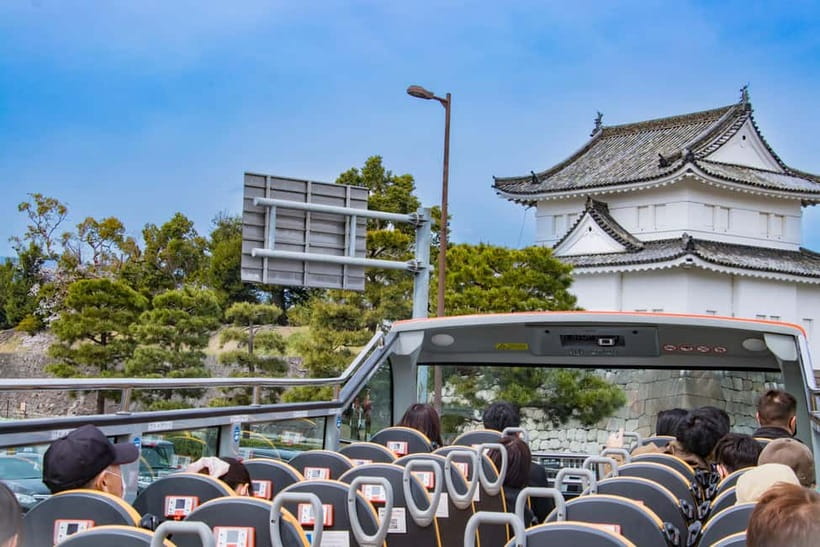
- Nijo-jo Castle: the classic culture stop
- Kitano-tenmangu Shrine / Kamishichiken: north-side atmosphere
- Kinkakuji Temple (Golden Pavilion): the famous one
- Daitokuji Temple: a quieter temple option
- Kyoto Imperial Palace (Doshisha University): grand views, formal grounds
- Ginkakuji Temple (Silver Pavilion): the elegant counterpoint
- Heian-jingu Shrine / Okazaki Park: a park-and-shrine mix
- Gion (Kotowa-Kyoto Yasaka): Kyoto’s most cinematic neighborhood
- Gojozaka (Kiyomizu-dera Temple / Gion): the switchback point
- Sanjusangendo / Kyoto National Museum (Hyatt Regency Kyoto): culture with an easy ride home
- Timing, frequency, and weather: how to stay comfortable
- Rules and practical limits that matter more than you think
- What is included, what costs extra, and what you should not assume
- Who this Kyoto bus fits best (and who should consider something else)
- Should you book this Kyoto hop-on hop-off bus?
- FAQ
- Where can I board the Kyoto hop-on hop-off bus?
- How long is the ticket valid?
- What language is the audio guide in?
- Is Wi-Fi included on the bus?
- Are entrance fees to temples and museums included?
- Can I choose to ride more than once during my ticket validity?
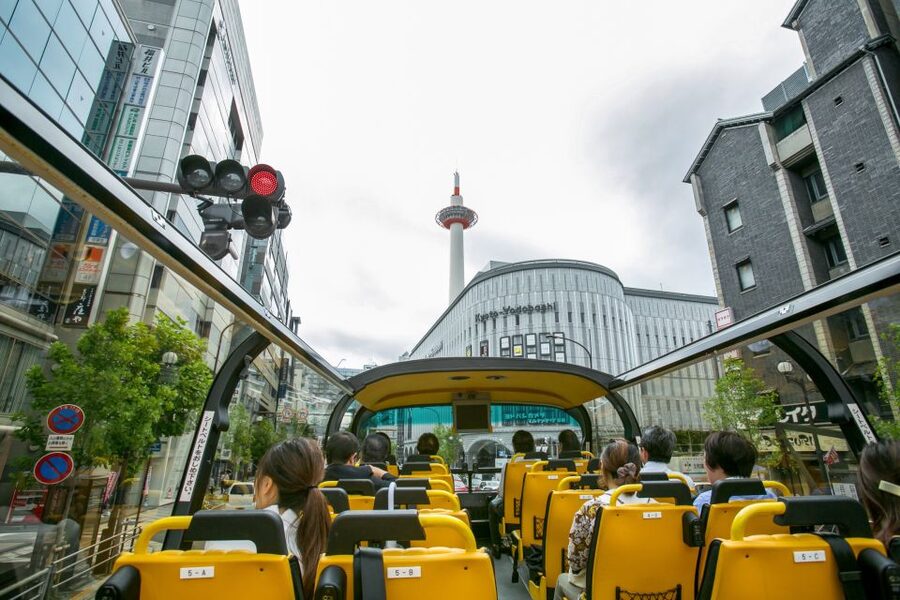
- Is the bus open-top?
- What items are not allowed on board?
- What if it rains?
- Do children need tickets?
Key points before you ride
- Unlimited hops for 1 or 2 days means you can pace your day instead of rushing a fixed tour.
- Open-top double-decker views are great for spotting neighborhoods and city layout from above.
- Audio in 7 languages helps you connect each stop to what you are seeing.
- Major UNESCO stops are on the route, including Nijo Castle, Kinkakuji, and Kiyomizu-Dera Temple.
- Weather and headcount affect your comfort, especially with an open-air top deck and popular sights.
Price and value: why $27 can work in Kyoto
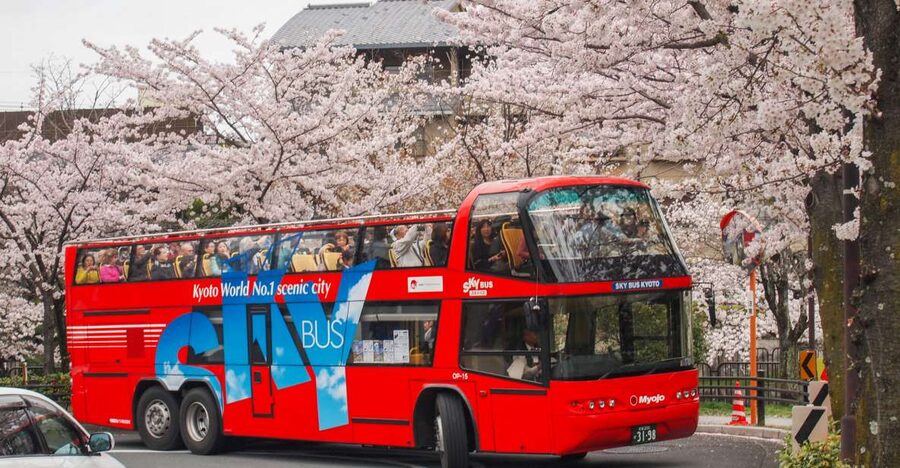
At about $27 per person for a 1 to 2-day ticket, this is less about buying a guided lesson and more about buying transportation freedom. You are paying for a simple bus loop with easy boarding and drop-offs at major attractions, so you do not waste time decoding local transit.
Kyoto can be a “spread-out classics” city. If you only have a short stay, the value comes from stacking multiple top sights into fewer logistics headaches. Even if you skip a stop or two, the cost still pencils out better than paying multiple single rides and walking long distances in the heat, rain, or crowds.
A key value detail: the bus runs past many big attractions, and you can ride as long as your ticket is valid. That means you can do a full circle, decide what you want more of, then return later without paying again.
Where to board in Kyoto (and how not to waste time)
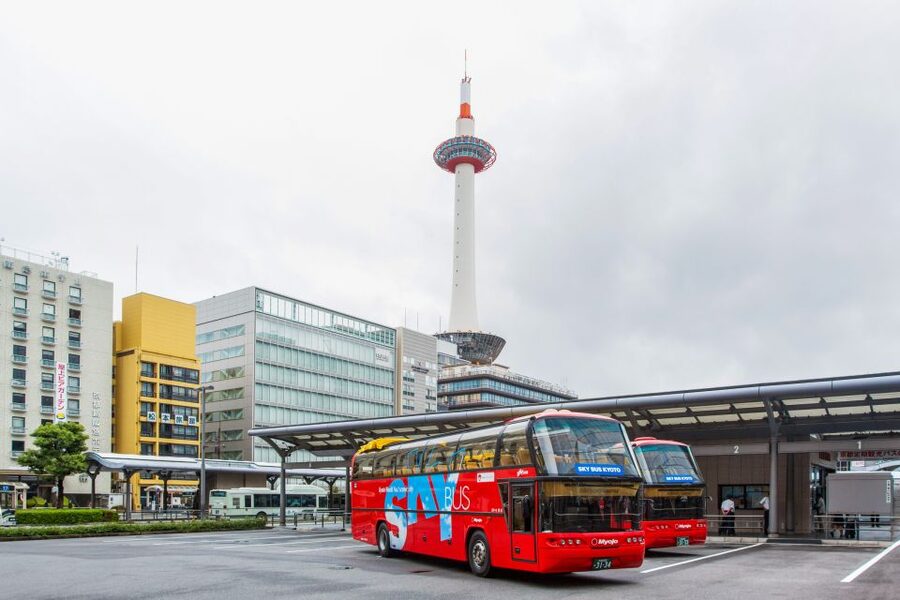
You can board at any stop on the route by showing your mobile voucher. The first stop listed is Kyoto Station, using the north central exit, with the bus stop directly in front of the Isetan department store.
If you are arriving by train, Kyoto Station is where you will feel the least confusion. You get a major starting point, plus easy access back to food and convenience stores after a sightseeing loop. One practical trick: arrive a little early, because the top deck can fill first on nice weather days.
Also remember: hotel pickup and drop-off are not included. So you are managing “get to a stop” on your own, then the bus handles the sightseeing connections.
A quieter way to spend a day in Kyoto
- Skip the lines Basic Ticket at SAMURAI NINJA MUSEUM KYOTO
★ 4.5 · 632 reviews - Kyoto: Nidec Kyoto Tower Observation Deck Admission Ticket
★ 4.5 · 273 reviews - Kyoto: Non-Verbal Theatre Show Tickets at GEAR
★ 4.9 · 198 reviews - Kyoto Sword Experience – includes Museum Ticket/Ninja Experience
★ 4.5 · 149 reviews
How the audio guide helps you use your stops well
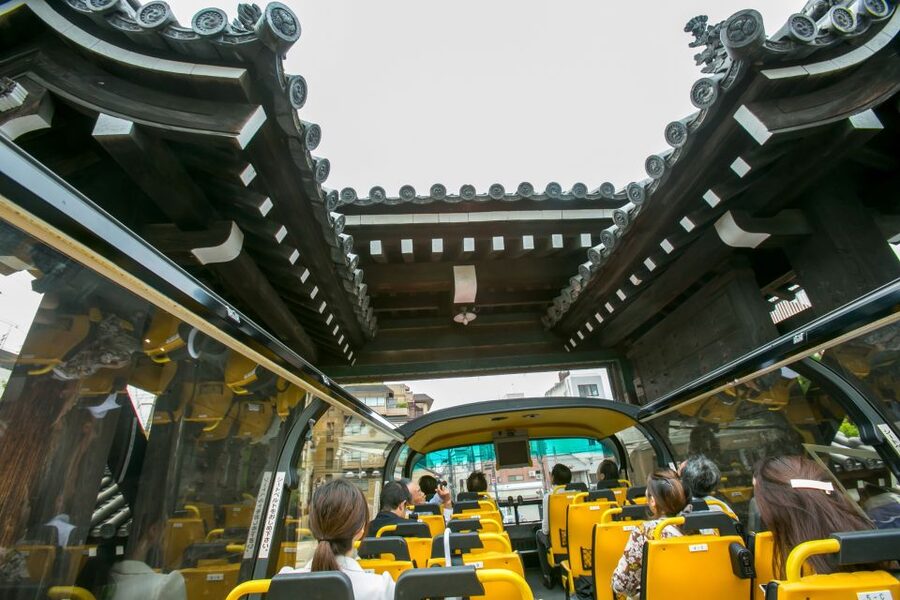
The bus includes pre-recorded audio commentary in English, French, Japanese, Korean, Chinese, Spanish, and German. In real-world use, audio is most useful when you are trying to understand why a stop matters before you step off.
What you should expect from the audio style: it is built to cue you as the bus approaches. It can shift from general narration to location announcements as you get close to the stop, so treat it as a “heads-up” rather than a long lecture. That is still worthwhile. When you know what you are looking at, you naturally wander smarter once you arrive.
One more note from experience with these formats: if the sound level seems off in the moment, do not panic. You can always read nearby signboards or switch to the on-site information once you exit.
The route in plain language: what each stop is for
This is the kind of bus route that works best when you think in segments. Ride to reposition, then hop off where your interests line up, and hop back on when you want to move on.
Below is what each listed stop gives you, plus a practical way to use it.
Kyoto Station: your launchpad
Starting at Kyoto Station is about control. You are at a transport hub, so you can start early, reset quickly, and avoid getting trapped in a single neighborhood with no easy escape route.
If your plan is to do one day fast, Kyoto Station is also where you can quickly grab a snack or coffee before heading out.
Nishihonganji (Kyoto Tokyu Hotel): a bridge between transit and temples
This stop is handy when you want to get away from the station area without committing to a long walk immediately. You can treat it like your first “temple zone preview,” and decide whether you want more time later.
A day of temples goes further with something to break it up.
Shijo Karasuma / Nishiki-ichiba Market: the food and shopping pause
This is the stop that makes the bus feel less like a checklist and more like a day out. Nishiki-ichiba Market is the sort of place where you can lose track of time, so hopping here is a smart move if you want Kyoto flavors and souvenirs without planning a separate route.
A good strategy is: ride the loop once, then come back to this area later when you know what else you want to see.
Nijo-jo Castle: the classic culture stop
Nijo-jo Castle is explicitly listed as a UNESCO World Heritage site on the route. That makes it a must for many first-timers, and it is also one of those locations where you may want to slow down and actually read what you are allowed to see.
If you are sensitive to crowds, plan to arrive off-peak when you can. Even with a bus stop right there, the surrounding area can get busy.
Kitano-tenmangu Shrine / Kamishichiken: north-side atmosphere
This stop pairs a shrine visit area with Kamishichiken nearby, which is why it is a useful “change of pace” stop. You can use it as your switch from big headline sights to a more neighborhood-feeling walk.
Kinkakuji Temple (Golden Pavilion): the famous one
Kinkakuji, the Golden Pavilion, is another UNESCO World Heritage stop on the route. This is one of those places where you will want to manage expectations around crowds. Getting there is easy, but the popularity is real.
One practical heads-up: the Golden Pavilion reportedly only accepts cash, and there is no ATM on the premises. So if you know you want to pay entry or fees here, plan cash before you arrive at the stop.
Daitokuji Temple: a quieter temple option
Daitokuji Temple is listed as a stop, which is valuable because it gives you a temple visit that is not just the absolute biggest icon. It can be a good choice when you want a break from the heaviest foot traffic.
Kyoto Imperial Palace (Doshisha University): grand views, formal grounds
This stop is built for people who want a different kind of Kyoto scene, not just temple postcard photos. Kyoto Imperial Palace and the associated university area are a strong choice when you want something more official and spacious.
It is also a helpful midday reset, because you can move from sightseeing energy to a slower walk and people-watching.
Ginkakuji Temple (Silver Pavilion): the elegant counterpoint
Ginkakuji is listed as the Silver Pavilion, and it is another major icon on the route. If you only have time for one pavilion day, this stop gives you the balance to pair with Kinkakuji.
Because both pavilions are famous, plan your pacing. If you do both in the same day, take breaks and do not rush the second one just to check it off.
Heian-jingu Shrine / Okazaki Park: a park-and-shrine mix
This stop combines a shrine area with Okazaki Park, which is useful if you want Kyoto sightseeing that includes time outside. A park stop works well for a recovery break, especially if you have been moving quickly across other attractions.
Gion (Kotowa-Kyoto Yasaka): Kyoto’s most cinematic neighborhood
Gion is one of the most iconic areas on the route, and the bus stop is placed for easy access to the neighborhood. This is a great place to hop off for a slow walk, then ride on again when you want to reposition.
If you like atmospheric streets over indoor tickets, this stop can be your anchor.
Gojozaka (Kiyomizu-dera Temple / Gion): the switchback point
Gojozaka is listed as connecting to Kiyomizu-dera Temple and Gion. That means it is a strategic stop if you want a temple visit and then to return toward the Gion-side vibe.
Kiyomizu-dera Temple is included as a UNESCO World Heritage site in the route description, so this is another headline stop worth planning for.
Sanjusangendo / Kyoto National Museum (Hyatt Regency Kyoto): culture with an easy ride home
This end stop (as listed) puts you at or near Sanjusangendo and Kyoto National Museum, with Hyatt Regency Kyoto referenced in the stop name. That pairing is useful because museums can soak up time when weather is not ideal.
If you want a day that mixes sights with indoor calm, this is the stop to build around.
Timing, frequency, and weather: how to stay comfortable
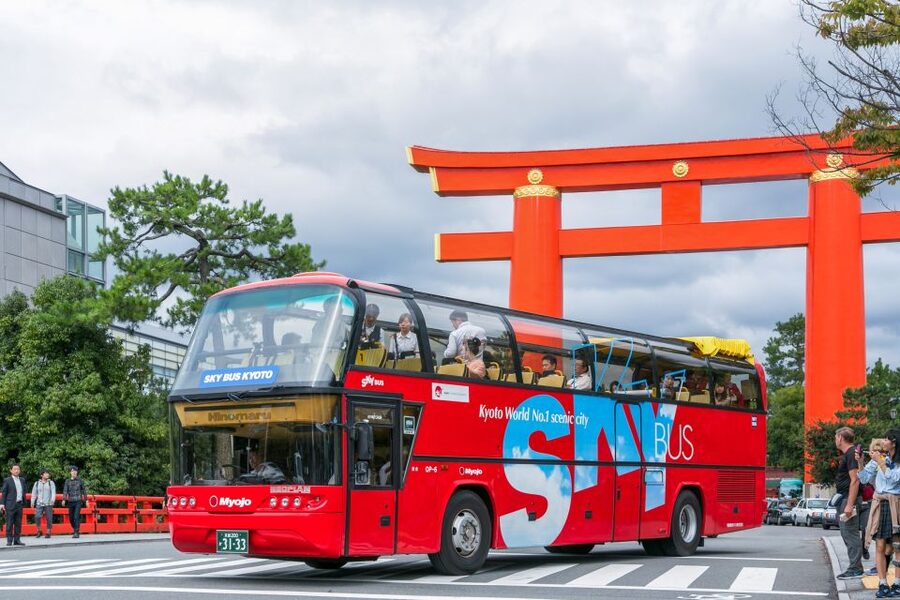
The bus is designed for flexibility, but you still need to think about timing. One review note suggests there can be longer gaps during 10am to 12pm, sometimes requiring a wait of around an hour if you miss one bus. If you are connecting to a specific timed plan, give yourself extra buffer.
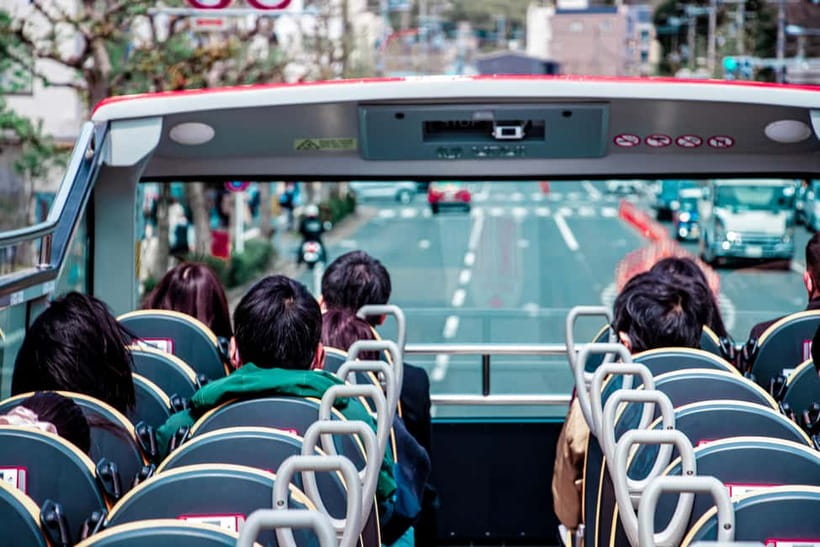
The open-top top deck is a huge part of the experience, but it changes how you should dress. With direct sunlight, you might want a hat, sunscreen, and water. And when it rains, you will get raincoats, which is good because umbrellas are not allowed on board.
If weather gets rough, buses may not operate in severe conditions like typhoons or thunderstorms. When that happens, your best move is flexibility rather than rigid timing.
One more comfort reality: if you sit downstairs during bad weather, views can be limited. So choose your deck based on conditions, not just on preference.
Rules and practical limits that matter more than you think
This bus has clear on-board rules. No smoking in the vehicle, no selfie sticks, no food in the vehicle, and no umbrellas. Alcoholic drinks are also not allowed.
Bring and carry strategy is simple:
- You can bring only soft drinks with lids (plastic bottles, coffee).
- If you need rain gear, count on the raincoat provision rather than an umbrella.
These rules help keep the bus clean and safe, but they also mean you should plan your snacks and meals outside the bus. When you hop off at Nishiki-ichiba Market or around Gion, you can handle food there and come back to ride.
Also, Wi-Fi is listed as temporarily suspended. So do not count on it for real-time navigation or app lookups while on board.
What is included, what costs extra, and what you should not assume
Included:
- Your 1-day or 2-day bus ticket (based on the option you select)
- Audio commentary
- On-board Wi-Fi, noted as temporarily suspended
Not included:
- Entrance fees to attractions
- Food and drinks
- Hotel pickup and drop-off
So treat this as transportation plus orientation. You are responsible for admission costs at each stop, and you will want cash at places where cash-only policies exist, like the Golden Pavilion note mentioned earlier.
Also expect that some sights may require you to walk from the bus stop into the grounds. That is normal in Kyoto, and the stop placement is meant to be convenient, not right at your exact ticket gate.
Who this Kyoto bus fits best (and who should consider something else)
I think this works best if you:
- Have a short stay and want to cover multiple major sights without planning transit every hop
- Want a flexible day where you can stop, wander, and rejoin when you feel ready
- Like panoramic city views, especially from the open-top deck
- Prefer a transportation-first experience with audio cues rather than a scripted guided tour
It might be less ideal if you want:
- Deep, site-specific history as you ride
- Guaranteed quiet time at the most popular places like Kinkakuji and Kiyomizu-dera, where crowding is part of the deal
- Easy photo opportunities from inside the bus itself, since you may not get a clear shot while the bus is moving or as you approach busy areas
If you are traveling solo, this bus can be a confidence boost. If you are with family, it can help you keep everyone moving together, with the ability to adjust each stop.
Should you book this Kyoto hop-on hop-off bus?
Book it if you want a smart, low-stress way to see Kyoto highlights with unlimited rides for 1 or 2 days and audio in 7 languages. For first-time visitors, or anyone who hates the mental load of figuring out trains and walking transfers, this is a practical solution.
I would especially lean toward the 2-day option if you like to linger. A second day turns sightseeing into a calmer loop, and it gives you time to return to the Nishiki Market and Gion areas when you want to slow down.
Skip the bus or adjust expectations if you are traveling for one hyper-specific site and only one site. For that, a focused plan might be more efficient. But for Kyoto classics across multiple neighborhoods, this ticket is a good value bet, especially when you use it as a flexible framework rather than a strict schedule.
FAQ
Where can I board the Kyoto hop-on hop-off bus?
You can board at any of the available stops by showing your mobile voucher. The first listed stop is Kyoto Station, north central exit area in front of the Isetan department store.
How long is the ticket valid?
Your ticket is valid for either 1 day or 2 days, depending on the option you choose.
What language is the audio guide in?
The audio commentary is available in English, French, Japanese, Korean, Chinese, Spanish, and German.
Is Wi-Fi included on the bus?
Wi-Fi is listed as included, but it is noted as temporarily suspended.
Are entrance fees to temples and museums included?
No. Entrance fees to attractions are not included in the ticket price.
Can I choose to ride more than once during my ticket validity?
Yes. The bus offers unlimited rides for the duration of your ticket’s validity.
Is the bus open-top?
Yes. It is an open-top double-decker bus, so you will be in direct sunlight when you ride outside.
What items are not allowed on board?
You cannot bring selfie sticks, food, umbrellas, or alcoholic drinks. Smoking is also not allowed in the vehicle.
What if it rains?
Raincoats will be provided in wet weather, and umbrellas are not allowed.
Do children need tickets?
Children aged 0-5 do not need a ticket if they sit on an adult passenger’s lap who has a ticket (1 child per passenger with a ticket).
New This Season
- Koyasan Day Trip by Private Car from Kyoto
- Old Port Town and Ultimate Sake Tasting Private Tour From Kyoto
- Sacred Peak & Ancient Paths: Kurama-Kibune Hiking Experience
- Kyoto’s Timeless Charm: 3hr Exploration of History and Peace
- Kyoto: 5 Types of Sushi Making
- Kyoto: Exclusive ZEN practice at Manpukuji temple in Uji
- Kyoto: Private Seasonal Aroma Yoga Class
- Traversing Kyoto’s Scenic West – Arashiyama to Kinkakuji
Tickets, compared.

Tea Museum Tickets and Matcha Grinding Experience
Read our review →
Skip the lines Basic Ticket at SAMURAI NINJA MUSEUM KYOTO
Read our review →
Nidec Kyoto Tower Observation Deck Admission Ticket
Read our review →
Kyoto Sword Experience – includes Museum Ticket/Ninja Experience
Read our review →

Samurai Performance and Casual Experience: Kyoto Ticket
Read our review →