
Reviewed · SAMURAI TRAINING EXPERIENCES
Samurai Performance and Casual Experience: Kyoto Ticket
Kyoto’s samurai show ends with sword photos. I love the friendly, comedic performances and the hands-on photo time with a sword and fan, and the format is perfect when you want something cultural but not overly serious. One thing to keep in mind: it is a theatrical introduction to Kembu, not a long, step-by-step martial-arts lesson.
This is an easy evening plan in downtown Kyoto, and the pace fits well after temples and walking. You sit on traditional-style seating with your shoes off, listen to narration that explains what you are seeing, and then you get a mini session that keeps it fun.
If you want a lights-out, battlefield-style fight show, you may end up wanting more action. But if you like Japanese history stories, performance art, and taking home a great photo, this one works.
In This Review
- Key Points Worth Knowing Before You Go
- A Kyoto Samurai Show That Feels Like Performance Art, Not Just a Lecture
- Price and Value: Why This Ticket Can Feel Like a Bargain
- Getting Seated Right: Shoes Off, Low Chairs, and a Small-Theater Layout
- The 40-Minute Kembu Performance: Sword, Fan, Poetry, and Clear Segments
- What you will actually see
- Why the explanations matter
- A note on tone
- The Running Story Behind It: Samurai Focus, Courage, and Ritual Discipline
- The Mini Experience After the Show: Sword and Fan Photo Time
- What you should expect from the participation
- Timing It in Kyoto: A Smooth Evening Plan After Sightseeing
- Who This Ticket Fits Best (And Who Might Want Something More)
- Who might not love it
- Practical Tips for Comfort, Photos, and a Low-Stress Evening
- Arrive earlier than you think
- Dress for easy movement
- For better photos
- Keep expectations matched
- The Bottom Line: Should You Book This Kyoto Samurai Kembu Ticket?
- FAQ
- What time does the Kyoto ticket start?
- How long is the experience?
- Do I need a physical ticket?
- Where does the experience take place?
- Do I need to remove my shoes?
- What is included in the price?
- Is hotel pickup or drop-off included?
- Is food or drinks included?
- Can I cancel for a refund?
Key Points Worth Knowing Before You Go
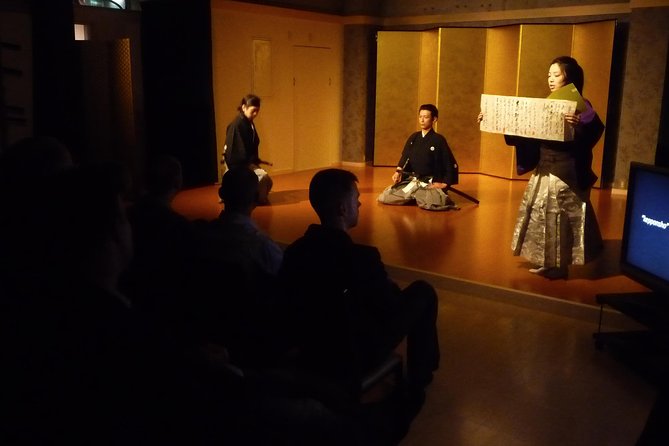
- Kembu show plus photo session: about 40 minutes of performance, then a short mini experience with sword and fan posing.
- Shoes off, Kyoto-style seating: you remove shoes on arrival and sit on low or normal chairs.
- Two types of Kembu shown: traditional and newer styles, with narration before each segment.
- Culture explanations included: you hear context on samurai focus, and even the meaning behind seppuku (hara-kiri).
- You take your own pictures: a performer helps you during the sword-and-fan photo time after the show.
- Downtown location near Gion: an easy add-on if you are already planning an evening walk in that area.
A Kyoto Samurai Show That Feels Like Performance Art, Not Just a Lecture
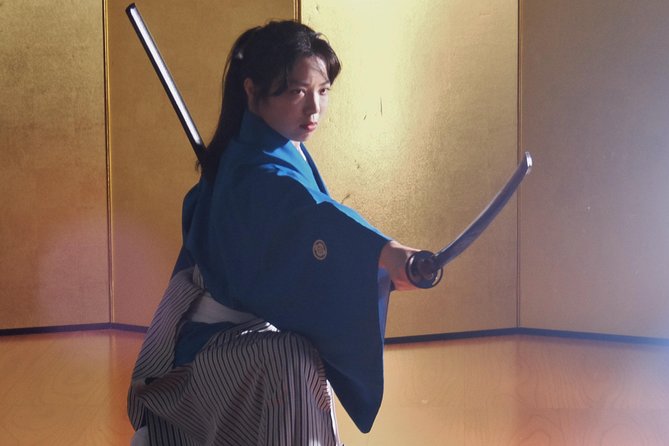
Kembu is a sword performance art tied to samurai culture, and this ticket gives you a full little package in about an hour. You start by watching staged sword-and-fan movements, you learn what the movements mean, and then you get a chance to participate. That structure is the big win.
I also like that it has a sense of humor. The room tends to go along with the performers, and that makes the storytelling land faster than it would in a dry talk. The show is still respectful and focused, but it does not treat you like a museum visitor who only needs to sit quietly.
If you come in hoping for nonstop sparring, that is not the vibe. The performance is broken into short segments with explanations, so your attention is guided instead of asked to figure everything out on your own.
Price and Value: Why This Ticket Can Feel Like a Bargain
At about $33.03 per person, you are paying for a small-theater evening experience that includes:
- a seated Kembu performance,
- English narration and culture context,
- a post-show mini experience where you handle or pose with props (sword and fan),
- and personal photo time you can do yourself.
In Kyoto, that mix matters. Many cultural tickets either give you a show only, or they give you a workshop only. Here you get both, and the total time stays short enough to avoid turning your evening into a full schedule grid.
The venue also seems built for close viewing. Small group seating came up in the experience feedback, and you can feel the difference when performers are not just on a distant stage.
If your budget allows just one “different than another temple” activity this trip, I think this is the kind that delivers something memorable without demanding hours of your time.
Pick up a sword for an afternoon
- Kyoto Samurai Experience
★ 5.0 · 1,294 reviews - Kyoto: Kendo and Samurai Experience with Uniform and Gear
★ 4.9 · 815 reviews - Kyoto: Samurai Sword Class by Experts in Traditional Arts
★ 4.9 · 657 reviews - Skip the lines Basic Ticket at SAMURAI NINJA MUSEUM KYOTO
★ 4.5 · 632 reviews
Getting Seated Right: Shoes Off, Low Chairs, and a Small-Theater Layout
This experience starts at Kyoto’s Samurai Kembu Theater, conveniently located downtown. When you arrive for your selected showtime, you take off your shoes and sit down in the traditional-style setup.
One practical detail: the seating can be low to the ground or normal chairs. So if you are someone who does not love kneeling or low seating, arrive early enough to settle comfortably.
Another small but helpful thing is the direction to the reception desk. You will go down the stairs on the right side toward the GOZAN building and check in at the reception desk. That is exactly the kind of detail that prevents a last-minute scramble, so use it.
Because this is indoors, it also works well on rainy evenings. Kyoto nights can be damp, and this is one way to keep moving without canceling your plan.
The 40-Minute Kembu Performance: Sword, Fan, Poetry, and Clear Segments
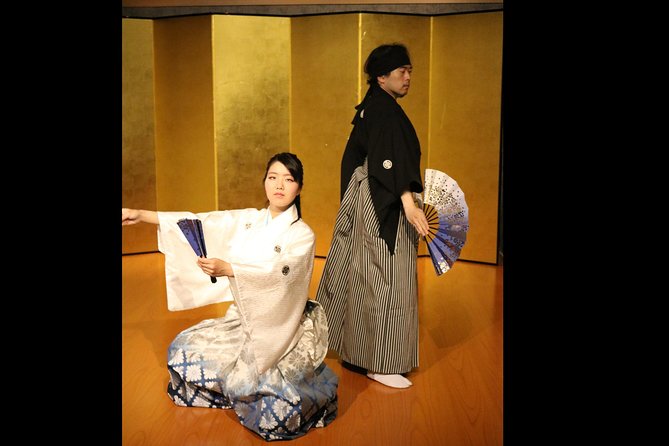
The main show runs about 40 minutes. It is not one long continuous routine, and that is good. You get narration from a performer before key parts, then you watch a sequence of demonstrations.
What you will actually see
You will see Kembu demonstrations in both traditional and newer styles. Each segment is framed with context, and the show includes:
- performers wielding swords in carefully choreographed movements,
- recitation of short Japanese poems associated with samurai culture,
- and fan-related movement that connects to how samurai training and discipline were expressed through ritual.
Kembu is also presented as a training tool for mind and spirit, not just weapon handling. The explanations you hear tie the practice to focus, courage, and disciplined control.
Why the explanations matter
A lot of sword shows fail when the audience cannot connect the movement to the meaning. Here, narration and short history lessons are built into the show flow. You hear about samurai culture and how it developed between the 12th and 19th centuries.
You also learn about the ceremony of seppuku (hara-kiri), at least in terms of its meaning within the cultural story the performance is telling. That part is handled as education within the context of samurai history, not as sensational shock.
A quieter way to spend a day in Kyoto


A note on tone
The vibe can be theatrical and sometimes funny. Several people enjoyed that blend of seriousness and humor. If you want an austere battle performance, you might find the tone lighter than expected.
The Running Story Behind It: Samurai Focus, Courage, and Ritual Discipline
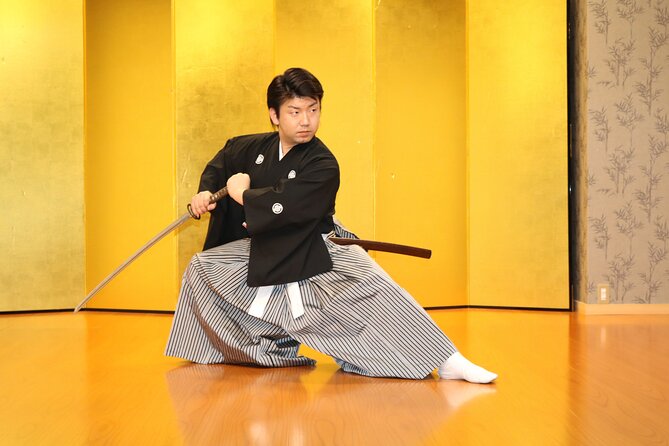
One of my favorite parts of this ticket is that it tries to answer the obvious question: why do these movements matter?
Instead of treating the show like a string of stunts, the narration connects the sword-and-fan choreography to the role of samurai training. The idea presented is that Kembu helped samurai build courage and mental concentration for the rigors of battle.
That means you are not only watching technique. You are learning a way of thinking. Even if your history knowledge is basic, the structure gives you handles to remember what you saw.
This also helps you appreciate why Kembu includes poetry and ritual elements. The show is making a case that samurai performance traditions were tied to identity and discipline, not only to violence.
The Mini Experience After the Show: Sword and Fan Photo Time
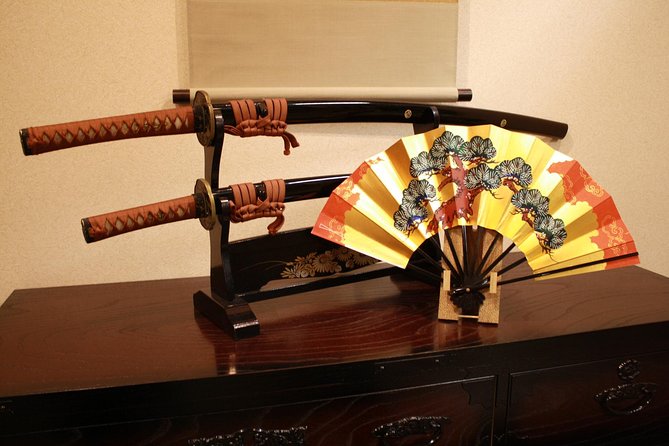
After the main show, you transition to the mini experience portion. This is where the ticket becomes more than a spectator event.
You get a photo session where you can hold a sword and take pictures with performers. This is not a distant pose option. A staff member and performer guide you through the moment so you can actually get usable photos, which is half the fun.
The show includes folding fan elements too, and the mini time connects to that. People specifically noted learning a few fan and movement ideas, even if it is not a full training course.
What you should expect from the participation
This is hands-on in the sense that you participate briefly and take photos. It is not presented as a long workshop where you learn a full set of fighting methods.
So if your goal is to become a capable martial artist after one hour, set the expectation differently. But if your goal is to feel what the performance is like and get a memorable, personal photo, this part delivers.
Timing It in Kyoto: A Smooth Evening Plan After Sightseeing
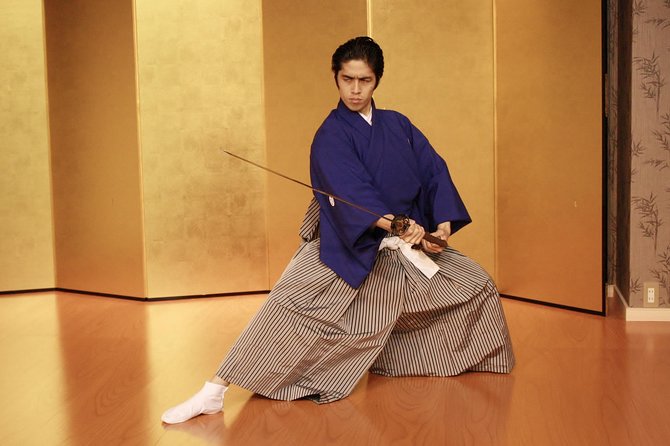
The start time listed is 4:15 pm, and you can choose from two showtimes depending on what schedule you are working with.
That afternoon start is helpful. You can do morning and early afternoon sightseeing, then come in for a cultural evening that is compact and not exhausting. It is also a good “rain insurance” plan since you are indoors for the show.
If you like walking around after, the location near Gion is an easy follow-up. You can finish the performance and still have time for dinner plans nearby.
Who This Ticket Fits Best (And Who Might Want Something More)
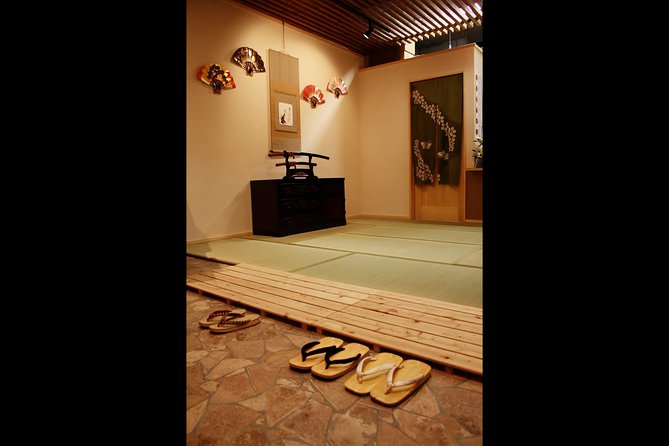
This experience fits best if you:
- want a cultural activity that is different from temple hopping,
- like performance art and storytelling,
- enjoy taking photos and doing light participation,
- travel with teens or families who can handle sitting through a short show.
It also works well if you care about clarity. People noted that narration was informative, and that staff members were friendly and engaging.
Who might not love it
I would be cautious if you:
- want a long, serious deep training in fighting methods,
- want a constant action battle style with no breaks,
- or are sensitive to strong theater humor or extended talking.
One helpful reality check: the show balances action with narration and short history lessons. If you need lots of physical action back-to-back, you may crave more.
Also, English can vary in clarity. A couple of comments mentioned that it could be difficult to understand the narration depending on your listening comfort. If you rely on perfectly paced English, go in with patience, and focus on the visuals and context.
Practical Tips for Comfort, Photos, and a Low-Stress Evening
Here is how to make the most of this kind of show.
Arrive earlier than you think
Arrive 15 minutes to 5 minutes before the start time. In a small theater with shoes-off rules, early arrival gives you time to check in, get seated, and avoid feeling rushed.
Dress for easy movement
Because you take off shoes and sit either low or normal chair style, choose comfortable clothes. If you are wearing stiff shoes or tricky layers, you may regret it after check-in.
For better photos
You will be holding a sword for photos during the mini session. Keep your phone stable, silence audio if needed, and try not to block others while people are posing. You will get your best pictures by staying calm, following staff guidance, and letting the performer position you.
Keep expectations matched
Think of this as samurai culture explained through stage craft. The value is the combination of sword-and-fan performance plus a fun participation moment.
The Bottom Line: Should You Book This Kyoto Samurai Kembu Ticket?
I would book it if you want a short, high-reward evening activity that is more than sightseeing, and you like culture you can see and feel. The best parts are the mix of clear storytelling, the memorable sword-and-fan photo time, and the overall friendly atmosphere that keeps it light.
Skip it if you want hardcore combat training or nonstop action. This is a guided cultural performance with participation, not a full martial-arts class.
For most visitors, especially those staying in central Kyoto and looking for a one-hour plan that works even on a rainy day, this ticket is an easy yes.
FAQ
What time does the Kyoto ticket start?
The start time listed is 4:15 pm. You can also choose from two showtimes.
How long is the experience?
The experience is approximately 1 hour. About 40 minutes is the show part, followed by the mini experience part.
Do I need a physical ticket?
No. The ticket is a mobile ticket.
Where does the experience take place?
It takes place at Kyoto’s Samurai Kembu Theater in downtown Kyoto.
Do I need to remove my shoes?
Yes. You take off your shoes to enter and find your seat in the traditional style.
What is included in the price?
You get admission to watch the Kembu show, plus a mini experience after the show that includes a sword and photo time.
Is hotel pickup or drop-off included?
No. Hotel pickup and drop-off are not included.
Is food or drinks included?
No. Food and drinks are not included.
Can I cancel for a refund?
Yes. Free cancellation is available up to 24 hours in advance for a full refund. If you cancel less than 24 hours before the start time, the amount paid will not be refunded.
New This Season
- Koyasan Day Trip by Private Car from Kyoto
- Old Port Town and Ultimate Sake Tasting Private Tour From Kyoto
- Kyoto’s Timeless Charm: 3hr Exploration of History and Peace
- Kyoto: 5 Types of Sushi Making
- Sacred Peak & Ancient Paths: Kurama-Kibune Hiking Experience
- Kyoto: Exclusive ZEN practice at Manpukuji temple in Uji
- Kyoto: Private Seasonal Aroma Yoga Class
- Traversing Kyoto’s Scenic West – Arashiyama to Kinkakuji
Samurai Training Experiences, compared.
Kendo and Samurai Experience with Uniform and Gear
Read our review →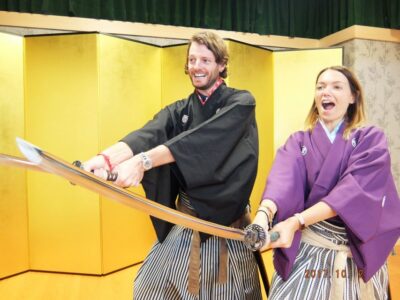
Samurai Sword Class by Experts in Traditional Arts
Read our review →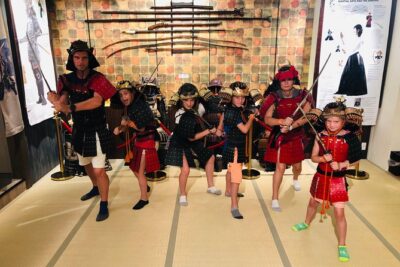
Skip the lines Basic Ticket at SAMURAI NINJA MUSEUM KYOTO
Read our review →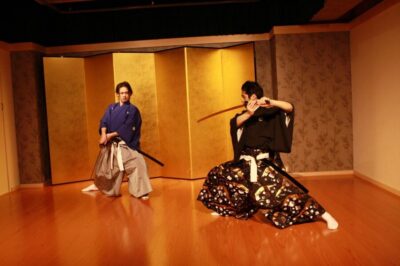
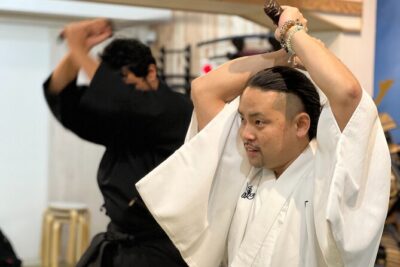
Samurai Training with Modern day Musashi in Kyoto
Read our review →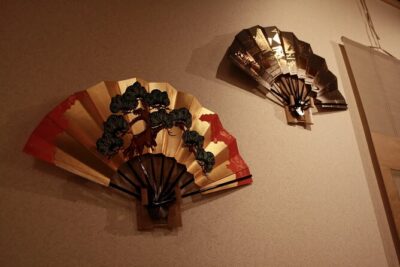
Private Tea Ceremony and Sake Tasting in Kyoto Samurai House
Read our review →Also filed under