
Reviewed · SAMURAI TRAINING EXPERIENCES
Samurai Training with Modern day Musashi in Kyoto
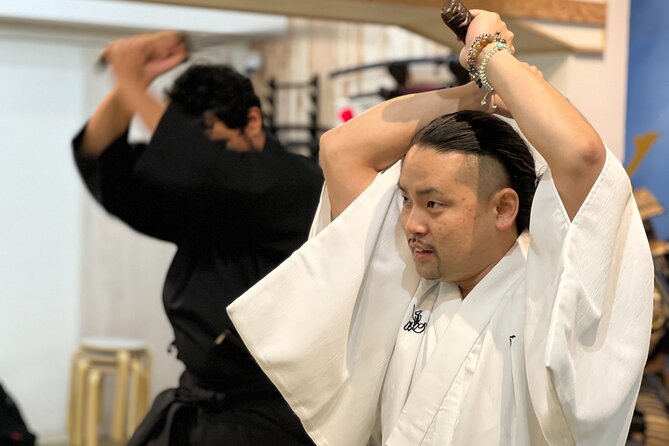
A real katana dojo beats any tourist act. In Kyoto, this Samurai Training with Modern-day Musashi gives you a hands-on session in an actual training space, led by Sensei Yushin, with instruction that goes beyond poses to cover sword handling, culture, and etiquette. I especially liked the small-group feel and the chance to watch a two-katana performance that feels built for students, not spectators.
The main thing to consider is that mat cutting with a real katana is not currently offered, so if your fantasy is a big shredding finale, you should adjust expectations. That said, you still train the core skills, dress in full gear, and get a powerful demonstration plus plenty of time to ask questions.
In This Review
- Key Highlights You Will Feel in Your Bones
- Entering a Kyoto Dojo With Shinto Quiet and Real Training Energy
- Dress Like a Samurai, Then Learn Why the Uniform Changes Your Movements
- Sword Safety and Basics: What You Learn Before You Swing
- What You Actually Practice: Draw, Sheath, Wield, Then Kata
- Sensei Yushin’s Two-Katana Performance and Sword Details You Can Tell Your Friends About
- Why the Class Feels More Like Training Than a Quick Show
- Price and Value: Is $132.65 Worth It in Kyoto?
- Practical Tips Before You Go (So You Enjoy Every Minute)
- Who Should Book Samurai Training With Modern-day Musashi
- Should You Book This Samurai Training in Kyoto?
- FAQ
- How long is the Samurai Training session?
- What is the group size limit?
- What is the minimum age to participate?
- What will I do during the class?
- Will I practice with a real katana?
- Is mat cutting with a real katana included?
- Where is the meeting point?
- Do we return to the same place?
- Is the experience near public transportation?
- What physical fitness level do I need?
- What is the cancellation policy for a full refund?
Key Highlights You Will Feel in Your Bones
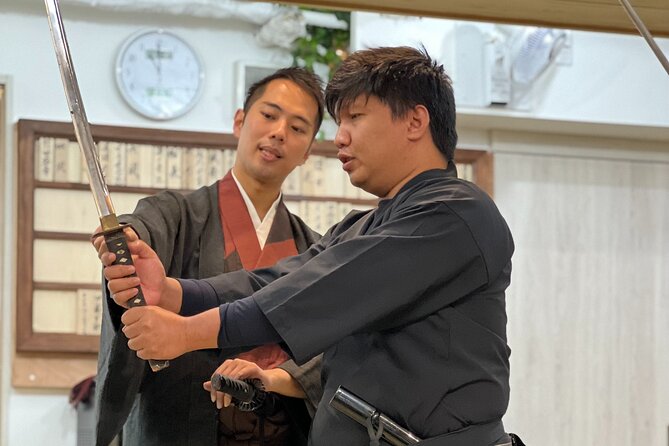
- Train in a real Kyoto dojo with a Shinto shrine, not a rented stage
- Small classes with a typical cap of 6, with the chance of more if group numbers are small
- Authentic sword practice using iaito for safer, hands-on learning
- Katana basics that actually matter: draw, sheath, and controlled wielding
- One short kata you can take home as a real skill, not just a photo op
- Two-katana performance by Sensei Yushin that adds real punch to the experience
Entering a Kyoto Dojo With Shinto Quiet and Real Training Energy
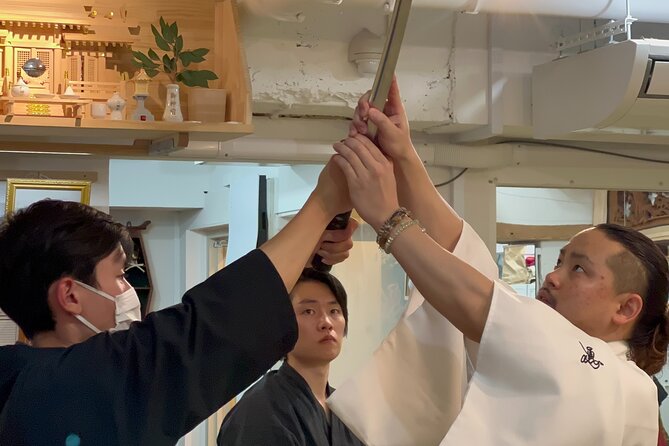
Kyoto has a way of making history feel physical. This class starts with that same feeling, because you are not learning sword basics in a mall-like setting or an edited performance space. You are going into a dojo environment where training etiquette matters, and the room itself signals that people come here to practice, not just to look.
You get a direct view of what the discipline is about: posture, timing, and control. Several details from past sessions point to how students are part of the space, including visible community elements like student name plaques on the wall. It is the kind of place that makes you sit up a little straighter, even before you pick up a sword.
One more practical perk: this is set up as an easy add-on for a Kyoto day. It runs about 1 hour 45 minutes and your start point is in Nakagyo Ward near public transportation, so you are not forced into a long commute or an awkward schedule gap.
Dress Like a Samurai, Then Learn Why the Uniform Changes Your Movements
The first big shift is wardrobe. You dress in traditional samurai training gear, including a dōgi, an obi, and a hakama. It is not just costume dressing. The way the clothing fits and restricts your movement is part of why the class feels authentic, and why the instructor can guide your form with clear, consistent references.
Expect a short setup period where you get help getting dressed correctly. The class is designed so you can focus on learning rather than figuring it out alone. Once the gear is on, the training starts with fundamentals, and the uniform helps you understand where your body should align.
It is also a fun moment for families and teens. You can take photos and video during the kata learning portion, so you will leave with real memories, not just a vague “we tried something” feeling. If you are traveling with kids, this dressing step often turns the whole experience from scary to exciting.
Pick up a sword for an afternoon
- Kyoto Samurai Experience
★ 5.0 · 1,294 reviews - Kyoto: Kendo and Samurai Experience with Uniform and Gear
★ 4.9 · 815 reviews - Kyoto: Samurai Sword Class by Experts in Traditional Arts
★ 4.9 · 657 reviews - Skip the lines Basic Ticket at SAMURAI NINJA MUSEUM KYOTO
★ 4.5 · 632 reviews
Sword Safety and Basics: What You Learn Before You Swing
Before anything dramatic happens, you learn how to handle the sword safely. That is a big deal here, and it is baked into the tone of the session. The instruction focuses on safety, safe handling, and the logic behind why certain movements are controlled and deliberate.
This matters because beginners often assume sword training is about power. In this class, the emphasis is on control, and that makes the whole experience more approachable. Even if you have never held a blade before, the structure gives you a clear order of operations.
You practice drawing and sheathing. You also learn controlled ways to wield the katana. The goal is to move like a student, not like someone imitating a movie scene. Your moderate physical fitness requirement supports that idea too: you are doing real form practice, but it is not described as extreme athletics.
What You Actually Practice: Draw, Sheath, Wield, Then Kata
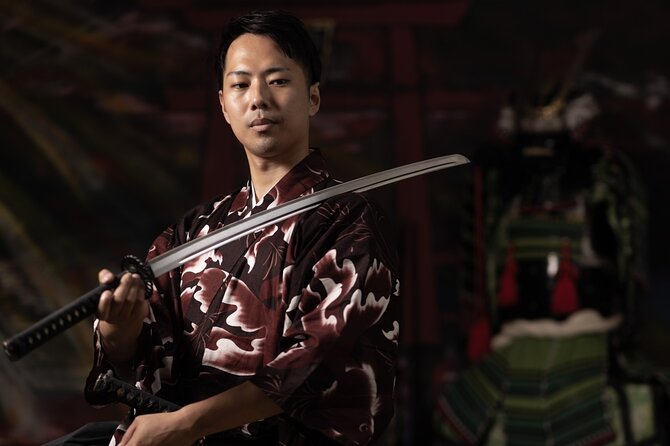
The heart of the session is the sequence of skills you train step by step.
First, you work on drawing and sheathing. These are foundational movements in sword arts because they demand timing, body alignment, and spatial awareness. You do not just learn the motion, you learn the order and control needed to repeat it cleanly.
Next comes how to wield the katana in a controlled way. This is where the iaito choice becomes important. Iaito are practice swords that help keep training safer while still letting you experience the feel of form and handling. You get the authenticity of practicing with a sword, without the danger level of sharpening-focused weapon use.
Then you learn an actual katana kata (form). This is one of the reasons the class feels more meaningful than a “hands-on photo moment.” A kata is not random. It is a structured set of movements that you can understand, practice, and refine. Even learning one kata can give you a mental framework for what you are doing and why.
You will also have time to ask questions during the session. Many people walk away feeling like they got explanations they did not expect, including how to think about the sword in samurai life and training values.
Sensei Yushin’s Two-Katana Performance and Sword Details You Can Tell Your Friends About
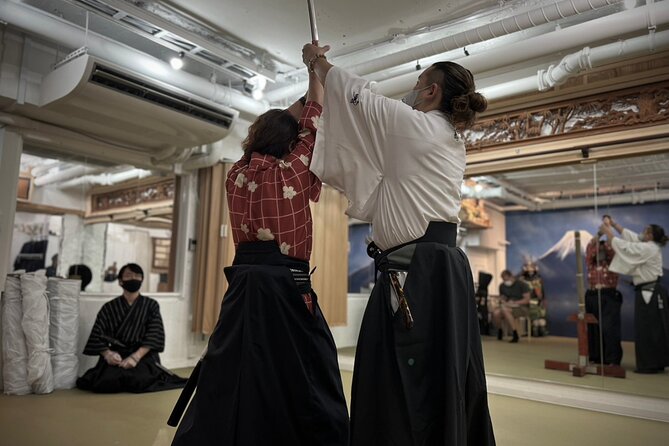
After you practice, you shift from doing to watching. This is where Sensei Yushin’s skill hits hard.
The class includes a two-katana performance, which is a standout element because you do not often see that kind of focused demonstration in casual, tourist-first experiences. It is built to show precision, timing, and control, not just speed for show.
You may also get direct sword context that helps the blade feel real as an object. Past sessions have included explanations about parts of the sword and even what different components do in the larger system of the weapon. Even if you are not a sword nerd, those details make the katana less mysterious and more understandable.
Here is the important expectation-setting point: mat cutting with a real katana is not currently offered. So if you are expecting a big cutting finale, you should plan for instruction plus demonstration rather than a sure-to-happen cutting spectacle. The lesson still gives you authentic training, and the performance portion remains the dramatic highlight.
Why the Class Feels More Like Training Than a Quick Show
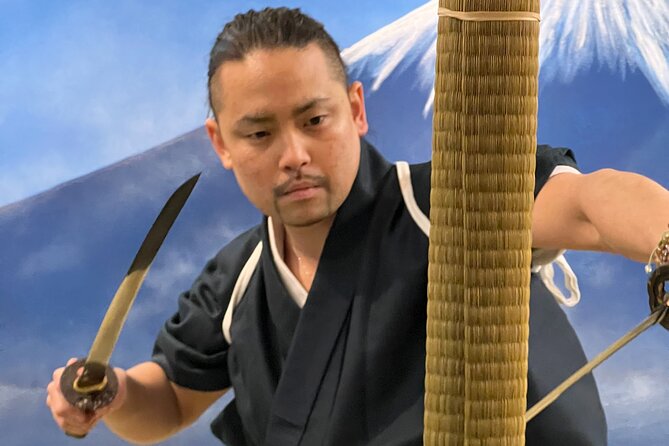
A lot of “samurai experiences” are basically a costume walk-through with a few motions thrown in. This one feels different because it is structured like a real dojo class, with rules, etiquette, and a clear teaching arc.
Small-group size is a major reason. The class typically keeps groups to about 6 participants, though the operator notes the class can have more if there are only small numbers of parties. Either way, the lesson is geared toward interactive teaching, so you get form correction and not just a general explanation.
Instruction also includes culture, not only technique. You get lessons about samurai culture and swordsmanship, with emphasis on history and the honor code. That combination changes how you interpret the kata you learn. Instead of copying movements, you understand them as part of a discipline and a mindset.
Another value boost: you are not just told to watch. You train. Then you watch. Then you connect the two. That rhythm helps you remember what you learned because you have lived it once before seeing it performed at a higher level.
A day of temples goes further with something to break it up.


Price and Value: Is $132.65 Worth It in Kyoto?
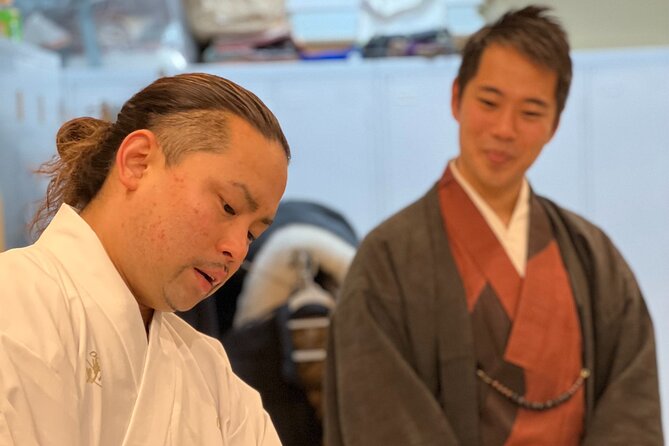
At $132.65 per person, this is not a bargain. But it also is not priced like a low-effort stunt. You are paying for a few things that raise the value: an actual dojo setting, small group instruction, a guided kata lesson, safe practice with swords, and a real demonstration by the master.
The biggest value driver for me is the time and structure. About 1 hour 45 minutes is long enough to teach fundamentals and still cover a kata and a performance. Many short “try it” experiences rush too fast to correct anything. Here, the instruction is designed to keep you moving through a learning sequence.
Also, you are getting more than a single activity moment. You dress in full training gear, practice draw and sheath basics, learn a kata form, and then watch a two-katana performance. That is a full experience arc, not just a one-scene performance.
If you have limited time in Kyoto and want one hands-on martial arts stop, this can work well. If you want the cheapest possible thing to do, you can skip it and still see plenty of Kyoto. But if you care about learning skills and being in an authentic training environment, the price starts to make sense quickly.
Practical Tips Before You Go (So You Enjoy Every Minute)
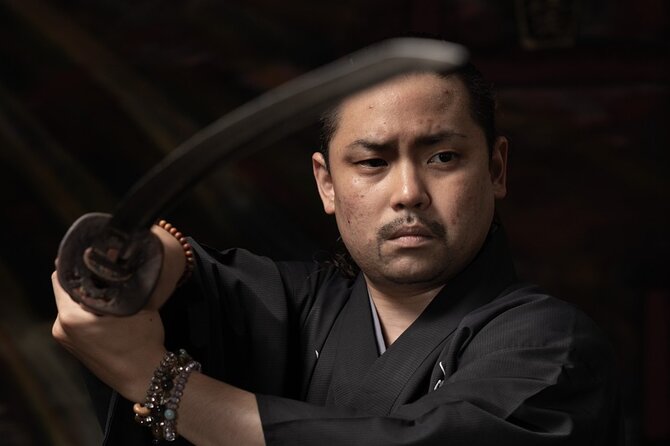
Because this is a dojo-based class with sword training, show up ready to focus. Arrive a little early so you can find the location and settle in before dressing and practice.
The meeting point is at 452-4 Matsugaechō, Nakagyo Ward, Kyoto, 604-8034. The experience ends back at the meeting point, which makes it easier to plan the rest of your day.
Also, plan your day with the mindset of movement and attention. You do not need to be an athlete, but you should be comfortable with moderate physical activity and standing in training stances while practicing form. If you have limitations, it is worth considering how controlled movements will feel for you.
And bring a phone plan for photos or video. The session includes time where you can record or take pictures while learning the kata, so you can capture what you did while it is fresh.
Who Should Book Samurai Training With Modern-day Musashi
This is a strong choice if you want an authentic Kyoto katana dojo experience, not just a costume performance. It is especially good for:
- Families with teens who can handle structured instruction and enjoy dressing up
- Beginners who want step-by-step guidance on safety and technique
- Anyone who likes culture learning alongside physical training
- Travelers who want a real master demonstration, including a two-katana performance
If you hate structured activities or want purely passive sightseeing, you may find the practice portion more demanding than expected. And if your main goal is mat cutting with a real katana, you should know it is not currently offered, so your best memories may come from the kata practice and performance instead.
Should You Book This Samurai Training in Kyoto?
I recommend booking it if you want your Kyoto day to include real skill learning in a real dojo setting. The combination of small-group instruction, sword safety training, dressing in full gear, and Sensei Yushin’s two-katana performance makes it feel like you are getting something you cannot easily replace with a quick tour stop.
Book it if you are excited to learn draw, sheath, controlled wielding, and one real kata, even if you are not expecting a cutting show. And if you do not mind that mat cutting with a real katana is not currently offered, you will likely leave with a stronger story than just photos.
If you tell me what kind of Kyoto traveler you are, I can help you decide where this fits among temples, food stops, and the rest of your schedule.
FAQ
How long is the Samurai Training session?
It lasts about 1 hour 45 minutes, roughly 1.5 to 2 hours depending on the number of participants.
What is the group size limit?
The experience has a maximum of 9 travelers. The class is described as typically keeping groups to only 6 participants per class, with the note that there may be more than 6 if there are only a small number of parties.
What is the minimum age to participate?
You must be 12 years or older.
What will I do during the class?
You will dress in samurai training gear (dōgi, obi, and hakama), learn about samurai culture and swordsmanship, practice drawing and sheathing and wielding a katana, learn an actual katana kata (form), and watch the master’s katana performances.
Will I practice with a real katana?
You will train during the session, and the class includes authentic sword instruction. The information provided notes that mat cutting with a real katana is not currently offered, so plan on practice focused on safety and form rather than cutting.
Is mat cutting with a real katana included?
No. Mat cutting with a real katana is not currently offered.
Where is the meeting point?
The start location is 452-4 Matsugaechō, Nakagyo Ward, Kyoto, 604-8034, Japan.
Do we return to the same place?
Yes. The activity ends back at the meeting point.
Is the experience near public transportation?
Yes. It is near public transportation.
What physical fitness level do I need?
Travelers should have a moderate physical fitness level.
What is the cancellation policy for a full refund?
You can cancel up to 24 hours in advance for a full refund. If you cancel less than 24 hours before the experience start time, the amount paid will not be refunded.
New This Season
- Koyasan Day Trip by Private Car from Kyoto
- Old Port Town and Ultimate Sake Tasting Private Tour From Kyoto
- Kyoto’s Timeless Charm: 3hr Exploration of History and Peace
- Kyoto: 5 Types of Sushi Making
- Sacred Peak & Ancient Paths: Kurama-Kibune Hiking Experience
- Kyoto: Exclusive ZEN practice at Manpukuji temple in Uji
- Kyoto: Private Seasonal Aroma Yoga Class
- Traversing Kyoto’s Scenic West – Arashiyama to Kinkakuji
Samurai Training Experiences, compared.
Kendo and Samurai Experience with Uniform and Gear
Read our review →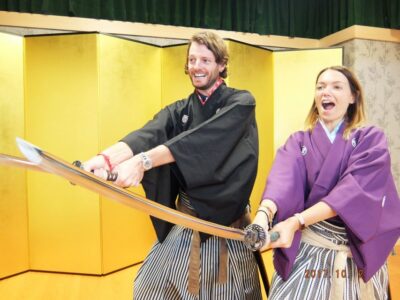
Samurai Sword Class by Experts in Traditional Arts
Read our review →
Skip the lines Basic Ticket at SAMURAI NINJA MUSEUM KYOTO
Read our review →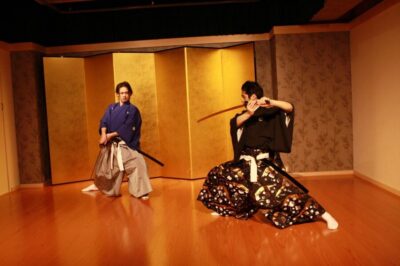
Private Tea Ceremony and Sake Tasting in Kyoto Samurai House
Read our review →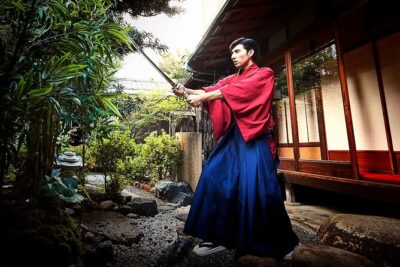
Kyoto Sword Experience – includes Museum Ticket/Ninja Experience
Read our review →Also filed under