
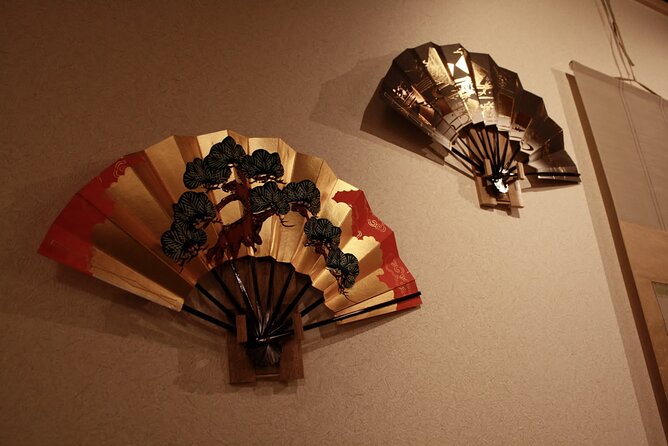
Reviewed · SAMURAI TRAINING EXPERIENCES
Samurai School in Kyoto: Samurai for a Day
Kyoto is one place where you can practice discipline, fast. This small-group Samurai School class blends bowing technique, sword draw basics, and hands-on kenbu training, then wraps with costume photos and a completion certificate.
I love that it is truly practical. You get time to wear the uniform, learn the bow, and practice the katana movements you would normally only see in performances.
The tricky part is the schedule rhythm. There is a short film at the start and, for some people, the included show timing can feel a bit long, especially if you are tight on evening plans.
Key things I’d put on your shortlist
- Small group size (maximum 10 travelers), so you are not just watching from the back.
- Hands-on sword draw and scabbard practice, not only choreography.
- Costume photo session plus a completion certificate and a tenugui towel.
- Short class or longer upgrade, with extra skills like the folding fan and stage kenbu choreography.
- English-speaking instruction, so the steps make sense even if you are new to martial arts.
- Practical safety focus, with clear follow-the-instructor guidance during sword work.
In This Review
- Entering Kembu Kyoto Dojo: The Quick Film, Then Real Training
- Suiting Up Samurai Style: Uniform Fit, Bowing, and Safety
- Sword Draw Basics: Kenbu Footwork, Scabbard Work, and Strikes
- The Costume Photo Session, Certificate, and Tenugui Towel
- Choosing the Upgrade: Folding Fan, Walking, and Stage Kenbu
- Price and Value: Why $66.32 Works for This Kind of Class
- Who This Samurai Class Fits Best (and Who Might Want Another Option)
- Practical Tips for Your Best Samurai Sword Day
- Should You Book Samurai School in Kyoto: Samurai for a Day?
- FAQ
- Where is the meeting point for Samurai School in Kyoto?
- How long is the class?
- What do I learn in the training?
- Is there a photo session and certificate?
- What should I wear?
- Is instruction available in English, and how large is the group?
- Can I cancel for a full refund?
Entering Kembu Kyoto Dojo: The Quick Film, Then Real Training
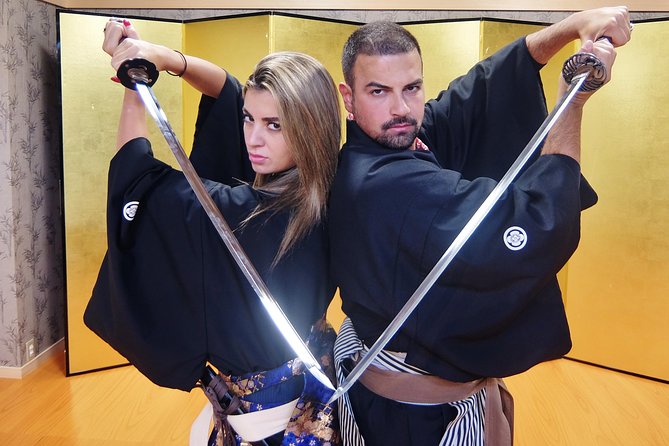
Your experience starts at the Kembu Kyoto Dojo area, at the meeting point in Higashiyama Ward (Sanchome 35). Plan to arrive early, because you should be in position 10 to 3 minutes before your start time. On the day, go to the first basement floor from the stairs on the right side of the GOZAN building. If you are usually late to everything back home, set an extra alarm anyway.
Before any sword touches, you watch a short 3-minute film that covers basic samurai practices. It is not a full museum lesson, and that is the point. It gives you enough context to understand what you are about to do, which makes the class feel more like training and less like a performance.
For a lot of people, the biggest surprise is how structured it feels for something that could have been a simple photo op. You get the order of operations right away: bow first, then uniform, then sword technique.
Two practical notes I like:
- This is near public transportation, so you do not need hotel pickup.
- You get an English-speaking local instructor who guides you through each step.
Suiting Up Samurai Style: Uniform Fit, Bowing, and Safety
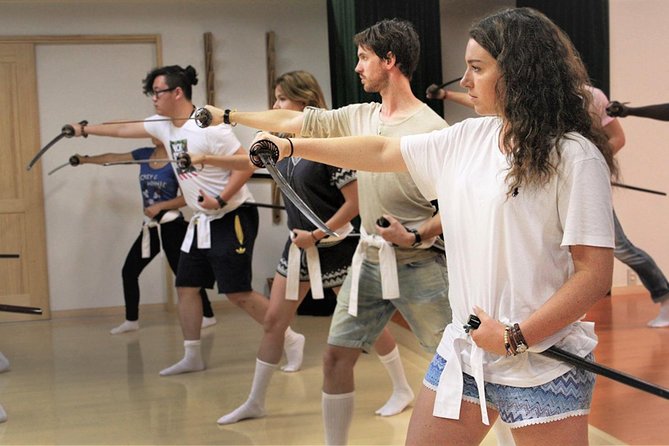
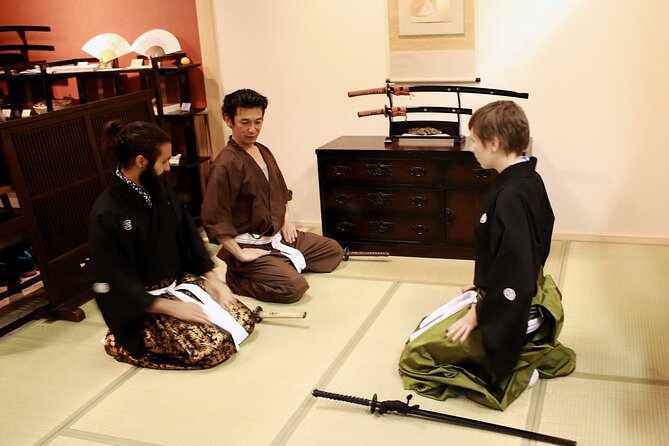
Once you begin, you suit up in traditional samurai-style clothing. The basics include a white belt and Japanese-style socks, plus the sword setup you will use during the lesson. How you wear it matters, because costume changes are part of the training flow. They are not super picky about fashion, but they do need you to be able to move safely.
The class begins with learning the proper methods to bow. It sounds simple, but it sets the tone. In Japanese martial traditions, bowing is not just politeness, it is part of how you show readiness and respect. You will feel that right away because the instructor uses the bow as your transition marker for what happens next.
Then comes the safety reality check. You are handling a sword as part of a controlled practice class, so you must follow the instructor’s instructions. The experience is designed for moderate physical fitness, not extreme athleticism, but you do need to be comfortable moving your arms, standing for stretches, and practicing precise motions.
What to wear matters more than you think. Wear clothes suited for exercise and moving around. If your whole outfit is a single hoodie and tights, it may not be suitable for costume changes. You will be happier if you wear something that can handle getting adjusted for the uniform. Also, avoid anything too slippery or bulky around your wrists and ankles.
Sword Draw Basics: Kenbu Footwork, Scabbard Work, and Strikes
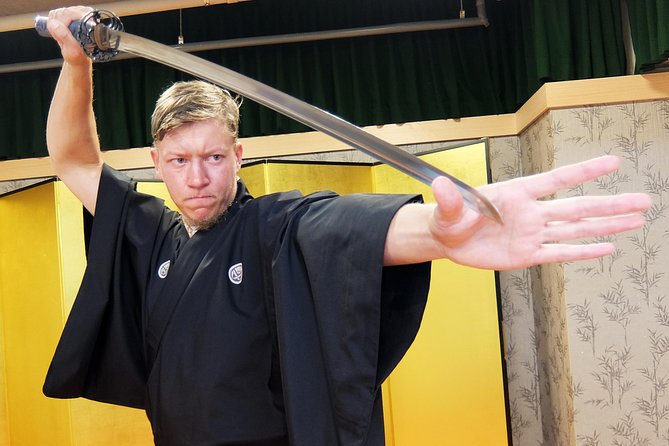
The heart of the training focuses on the controlled movements you see in classic samurai technique. You start with learning how to draw the sword and then replace it back in the protective scabbard. That motion is famously tricky. You are coordinating hands, timing, and body position, so even if you have done martial arts before, it is not automatic.
After the draw, you practice variations that include how to strike. You are not being asked to fight like in a movie. Instead, you train the stylized method of acting against a potential opponent. That means you learn how the movement is meant to look and feel, with control and respect built in.
A few details are worth knowing before you go:
- You will likely repeat sections until the steps become consistent.
- The instructor guides you on what correct form looks like, not just how to move.
- You are wearing a costume and practicing staged motions, so you are learning posture as much as technique.
What I like here is the balance between form and function. You get enough instruction to make your motions look right, but you are also actively doing the movement rather than only hearing about it. It is one of the reasons this activity works for both martial arts fans and history buffs.
Pick up a sword for an afternoon
- Kyoto Samurai Experience
★ 5.0 · 1,294 reviews - Kyoto: Kendo and Samurai Experience with Uniform and Gear
★ 4.9 · 815 reviews - Kyoto: Samurai Sword Class by Experts in Traditional Arts
★ 4.9 · 657 reviews - Skip the lines Basic Ticket at SAMURAI NINJA MUSEUM KYOTO
★ 4.5 · 632 reviews
The Costume Photo Session, Certificate, and Tenugui Towel
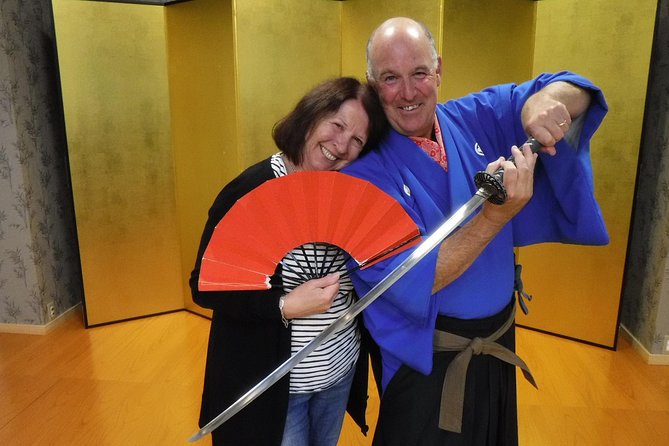
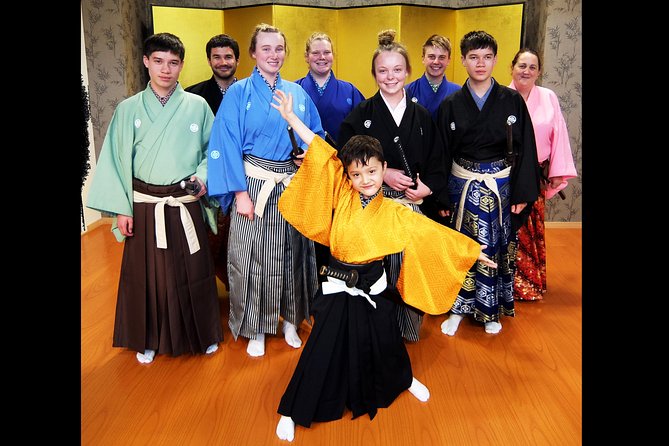
After you train, you get into samurai costume again for a short photo session. This is part of the experience, not an optional add-on. You will be able to dress up and capture the moment you just practiced for.
You also receive a lesson completion certificate and a tenugui towel. A tenugui is a traditional Japanese towel, and it is a nice souvenir because it is practical. You can use it later at home, or at least keep it as a reminder that this was a hands-on class, not just sightseeing.
One detail to plan around: the pace of the photo time. If your group has a few people who want extra photos, your own camera time can feel rushed. The included photo session is part of the experience, and in practice it is often easier than trying to manage your own shots while others are still changing. If photos are a top priority for you, arrive early, act fast when you are called, and ask what timing looks like on the day.
When you finish the shorter option, the class wraps with a respectful bow to the instructor. Then you grab your photos, certificate, and head out back to the meeting point.
Choosing the Upgrade: Folding Fan, Walking, and Stage Kenbu
If you book the longer practice session upgrade, your time expands beyond the basic sword draw and strike sequence. You continue learning stylized movements that add more elements to the performance side of kenbu.
The extra skills described for the longer option include:
- How to walk in samurai style
- How to use the folding fan
- More challenging kenbu choreography
You finish with a stage-style kenbu performance. You perform choreography with your sword while it is accompanied by a poem and music. Even if you are not a performer, this part turns the class into something more memorable. You are not only practicing technique, you are also learning how the technique looks when it is set to rhythm.
This option is especially good if you want the full experience arc, from classroom basics to performing the choreography. It also tends to satisfy people who feel they did not get enough time with the sword in the shorter session.
A good sanity check before choosing: if you are short on time or you dislike being watched, the shorter option may feel better. If you want to learn the extra choreography pieces and you are okay with a staged moment, the upgrade is likely worth it.
Price and Value: Why $66.32 Works for This Kind of Class
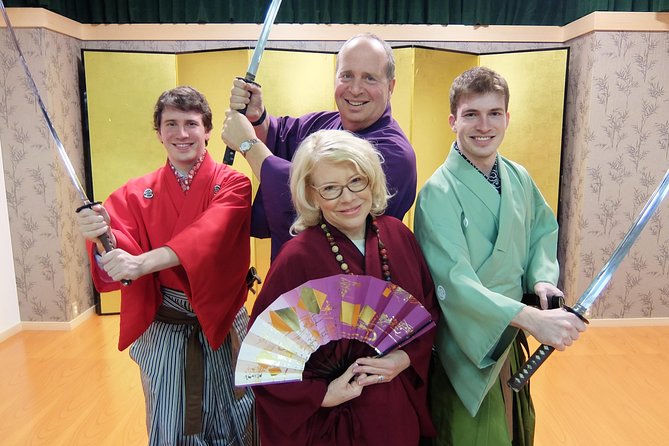
At $66.32 per person for about 1 hour 30 minutes, the price is not “cheap,” but it is also not inflated for what you get. The value comes from a cluster of things that usually cost more separately: instructor-led sword practice, a costume photo session, and physical takeaways like the tenugui towel and completion certificate.
This is also a small-group experience with a maximum of 10 travelers. Smaller groups often mean more coaching per person, especially during the sword draw practice where technique matters. It is one reason this feels like training rather than a show-first activity.
Is it worth it if you are mostly a casual tourist? If you only want pictures and do not care about learning steps, you might find it more time and structure than you expected. But if you enjoy hands-on activities, want a brief martial arts taste, or like history that you can feel in your body, this is a strong use of time in Kyoto.
Also, it is a rainy-day friendly indoor option. You are inside for the film and class, and you get a performance component as part of the experience flow, which helps if your outdoor sightseeing plans get disrupted.
Who This Samurai Class Fits Best (and Who Might Want Another Option)
This is a good fit for:
- Martial arts enthusiasts who want a beginner-friendly introduction to sword-based choreography
- History buffs who like the cultural discipline angle, not only facts and photos
- Families with older kids and teens who do better with active learning than long lectures
- Couples who want a shared, hands-on activity with great souvenir photos
It is also a smart choice if you like experiences that are structured and guided. The instructor approach is professional, and the expectations are clear. Some people note the instructor can be strict, which is usually a sign the class safety standards are taken seriously.
Who should reconsider:
- If you are extremely sensitive to being corrected during physical practice, you may find the strictness uncomfortable.
- If you have a hard time limit later in the evening, build in extra buffer. The show timing at the beginning can run long for some people, and you may want breathing room after class.
A day of temples goes further with something to break it up.


Practical Tips for Your Best Samurai Sword Day
Here are the things that will help you get better results during your limited training time:
1) Arrive early enough to settle in
You are asked to arrive 10 to 3 minutes prior to start. I would treat it as a must, not a suggestion, because costume and prep depend on timing.
2) Wear movement-friendly clothing for costume changes
Do not show up in an outfit that feels hard to adjust. Bring the basics that let you dress comfortably and move safely.
3) Keep your expectations focused
You are learning staged technique, not becoming a swordsman. The win is in mastering the specific motions you practice, especially the bow and the draw from the scabbard.
4) Use the included photo session for the best odds
If you want photos, let the process work for you. Trying to manage your own camera while others are switching costume can make your shots less polished.
5) Choose the longer upgrade if you want performance elements
If folding fan and stage choreography sound fun, go for the upgrade. If you want only the core sword draw and a shorter time commitment, choose the standard session.
Should You Book Samurai School in Kyoto: Samurai for a Day?
Book it if you want a hands-on Kyoto activity that feels different from temples and shopping. You get sword practice, costume dressing, souvenir photos, and a completion certificate, all in a compact time window. It is especially worth it if you are the type who learns best by doing, not just watching.
Skip or reconsider if your schedule is tight and you hate shows that may run longer than expected. Also, if you are not comfortable with physical instruction and corrections during a structured class, you might prefer a lighter cultural experience.
If you want my simple decision rule: choose this when you want action plus culture, in a small group, with clear instruction. That combination is exactly what this class is built for.
FAQ
Where is the meeting point for Samurai School in Kyoto?
You meet at Japan, 605-0005 Kyoto, Higashiyama Ward, Sanchome, 35. On the day, go to the first basement floor from the stairs on the right side of the GOZAN building.
How long is the class?
The experience is about 1 hour 30 minutes approximately, but your class time can vary depending on the length and option you selected.
What do I learn in the training?
You learn how to bow, basic sword technique including drawing the sword and returning it to the scabbard, and striking methods. If you choose the longer upgrade, you also learn additional stylized movements like how to walk and how to use the folding fan, plus more challenging kenbu choreography.
Is there a photo session and certificate?
Yes. Your experience includes a photo shoot, a lesson completion certificate, and a tenugui towel.
What should I wear?
Wear clothes suited for exercise and moving around. A single hoodie or tights may not work well for costume changes. The idea is to wear something you can adjust and move in comfortably.
Is instruction available in English, and how large is the group?
The guide/instructor is English-speaking. The tour has a maximum of 10 travelers.
Can I cancel for a full refund?
Yes. Free cancellation is available up to 24 hours in advance for a full refund. If you cancel less than 24 hours before the start time, the amount paid is not refunded.
New This Season
- Koyasan Day Trip by Private Car from Kyoto
- Old Port Town and Ultimate Sake Tasting Private Tour From Kyoto
- Kyoto’s Timeless Charm: 3hr Exploration of History and Peace
- Kyoto: 5 Types of Sushi Making
- Sacred Peak & Ancient Paths: Kurama-Kibune Hiking Experience
- Kyoto: Exclusive ZEN practice at Manpukuji temple in Uji
- Kyoto: Private Seasonal Aroma Yoga Class
- Traversing Kyoto’s Scenic West – Arashiyama to Kinkakuji
Samurai Training Experiences, compared.
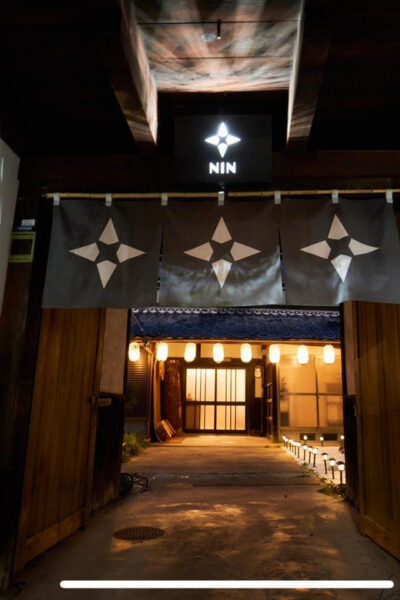
Kendo and Samurai Experience with Uniform and Gear
Read our review →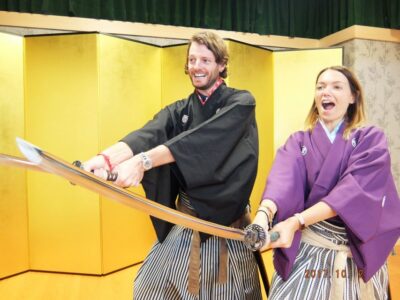
Samurai Sword Class by Experts in Traditional Arts
Read our review →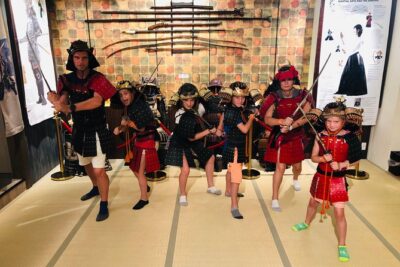
Skip the lines Basic Ticket at SAMURAI NINJA MUSEUM KYOTO
Read our review →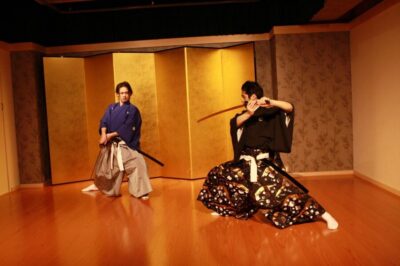
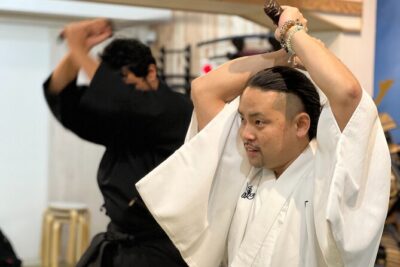
Samurai Training with Modern day Musashi in Kyoto
Read our review →
Private Tea Ceremony and Sake Tasting in Kyoto Samurai House
Read our review →
Kyoto Sword Experience – includes Museum Ticket/Ninja Experience
Read our review →Also filed under