
Reviewed · SAMURAI TRAINING EXPERIENCES
Kyoto: Samurai Kenbu Traditional Sword Dancing Show
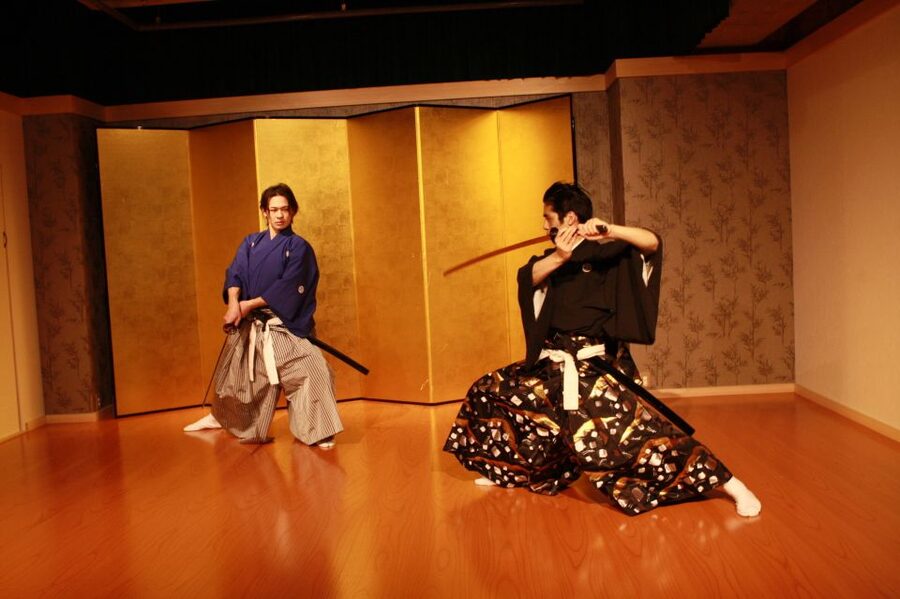
Kyoto has a way of making history feel close. At the Samurai Kenbu Theater, you watch Kenbu, a traditional sword-dancing art, then you get a brief chance to try a sword. It is theatrical, but the message is serious: grace, focus, and responsibility.
Two things I really like. First, the pacing works well for a 1-hour slot, with clear narration and short background stories before each demonstration. Second, the ending mini-lesson is interactive, not just a quick photo op.
One possible drawback to plan for: the show does not let you take photos or videos during the performance. You get time after, but if you are the type who needs live footage, this is worth knowing up front.
In This Review
- Key things to know before you go
- Entering the Samurai Kenbu Theater in Kyoto (and why rules matter)
- The Kenbu show: what you actually watch (and what it means)
- Stories first, then sword work
- Poem, pose, and precision
- The fan part is more than a prop
- The samurai responsibility lesson: why carrying a sword is not casual
- After the performance: photos, faces, and the mini sword experience
- Your short sword lesson: drawing, holding, and gentle swings
- What you should watch for (especially if English is not your first language)
- Value in plain terms: is $32 worth it?
- Logistics that affect your comfort (so you can relax)
- Who this Kyoto Kenbu show is best for
- My take: what you will remember most
- Should you book Samurai Kenbu in Kyoto?
- FAQ
- Where is the meeting point for this experience?
- How long is the Kyoto Kenbu show?
- What does the ticket include?
- Is food or drinks included?
- Are photos or videos allowed during the show?
- What languages are used during the show?
- Is the venue wheelchair accessible?
- Do I need to arrive early?
- Is there a waiting room if I arrive early or late?
- What is the cancellation policy?
Key things to know before you go
- Kenbu is storytelling through sword movement, not full-on combat
- English narration is built into the program, with performers explaining technique and samurai practices
- Shoes off tradition when you enter the theater
- No photos or videos during the show, with photo time after
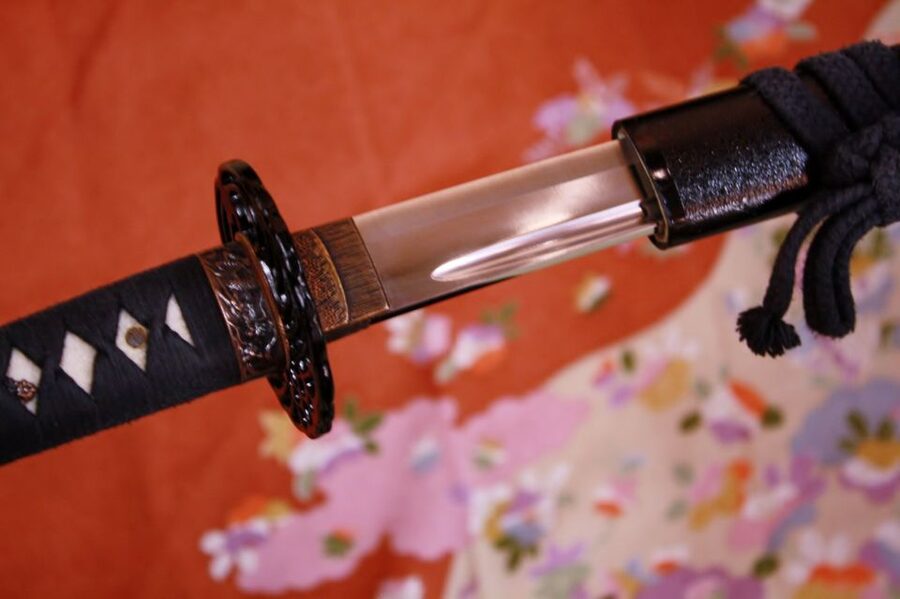
- Short katana and fan experience, depending on timing
- Small, up-close feel, since there is no waiting room and they run the session by appointment
Entering the Samurai Kenbu Theater in Kyoto (and why rules matter)
This is one of those Kyoto experiences where the small etiquette details help you slip into the setting. When you arrive at the Samurai Kenbu Theater, you take off your shoes. That simple act changes the mood fast, because you are no longer sightseeing, you are entering a performance space that follows local custom.
The theater is run on a tight schedule. Plan to arrive 5 to 15 minutes early so you can check in and settle before the program starts. There is no waiting room, so if you are late, you may have trouble getting in smoothly. Also note the luggage situation. There is no room for large luggage or travel bags, so travel light.
You will also want to keep your phone out. The show asks you to refrain from taking photos or videos during the performance. It is not just a rule, it keeps the focus on the dance and the narration, and it helps the performers hold the atmosphere.
The Kenbu show: what you actually watch (and what it means)
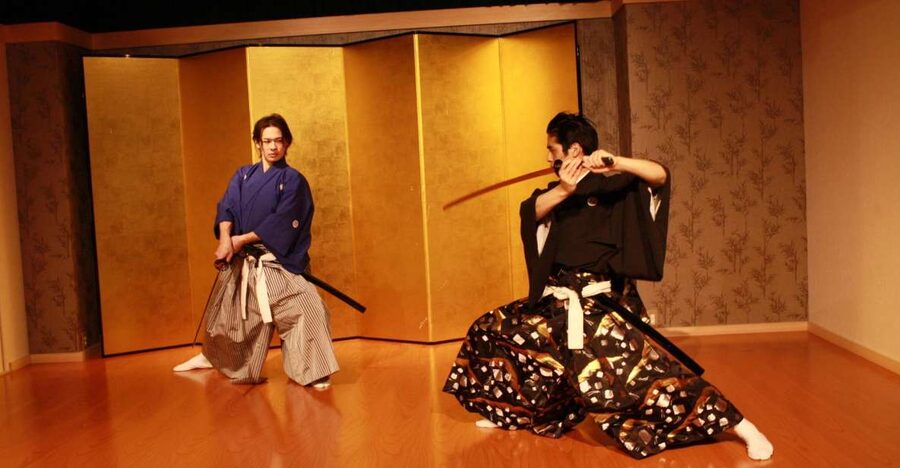
Kenbu is often described as a sword dance, but the best way to understand it is this: it is movement with purpose. In this show, each segment is built like a mini story from Japan’s feudal period, roughly between the 12th and 19th centuries, with an emphasis on how samurai culture shaped discipline, calm, and readiness.
Pick up a sword for an afternoon
- Kyoto Samurai Experience
★ 5.0 · 1,294 reviews - Kyoto: Kendo and Samurai Experience with Uniform and Gear
★ 4.9 · 815 reviews - Kyoto: Samurai Sword Class by Experts in Traditional Arts
★ 4.9 · 657 reviews - Skip the lines Basic Ticket at SAMURAI NINJA MUSEUM KYOTO
★ 4.5 · 632 reviews
Stories first, then sword work
Before the dancers go into the next set of techniques, they share short histories and context. That structure matters because it turns a sequence of elegant motions into something you can track. You are not just watching hands and blades move, you are following the reason the movement exists.
The program also includes traditional and newer styles of Kenbu. That variety keeps it from feeling repetitive, and it gives you a sense that Kenbu was not frozen in time. It adapted while still staying rooted in samurai ideals.
Poem, pose, and precision
One of the most distinctive parts of the show is how it ties the choreography to poems recited by samurai before heading to battle. Even if you do not know the literary background, you can feel the difference when the performance shifts into a more ritual tone. The dancers’ pacing changes, and the sword movements look less like dance tricks and more like controlled responses.
This is also where you learn that Kenbu is not about flashy chaos. The choreography highlights controlled arcs, deliberate stances, and a kind of balance between beauty and force. If you have seen modern sword demonstrations, you might expect intensity to look like speed. Here, strength often looks like restraint.
The fan part is more than a prop
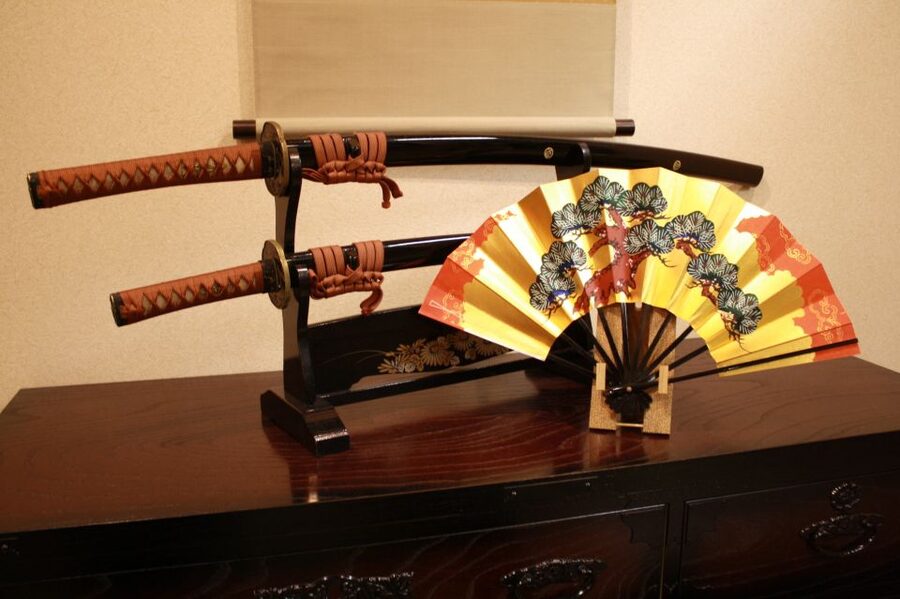
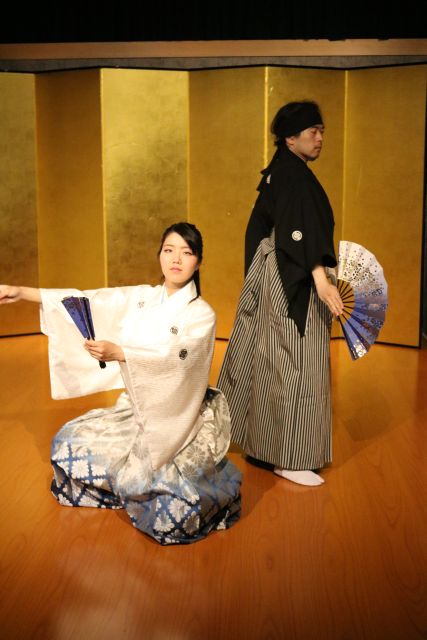
You also see techniques using a folding fan. That matters because it shows how samurai training was not limited to weapons swinging. In the performance, the fan becomes part of the language of movement, adding rhythm and contrast to the sword work. It gives you a different mental image of readiness, one that is quick and agile rather than purely heavy and forceful.
The samurai responsibility lesson: why carrying a sword is not casual
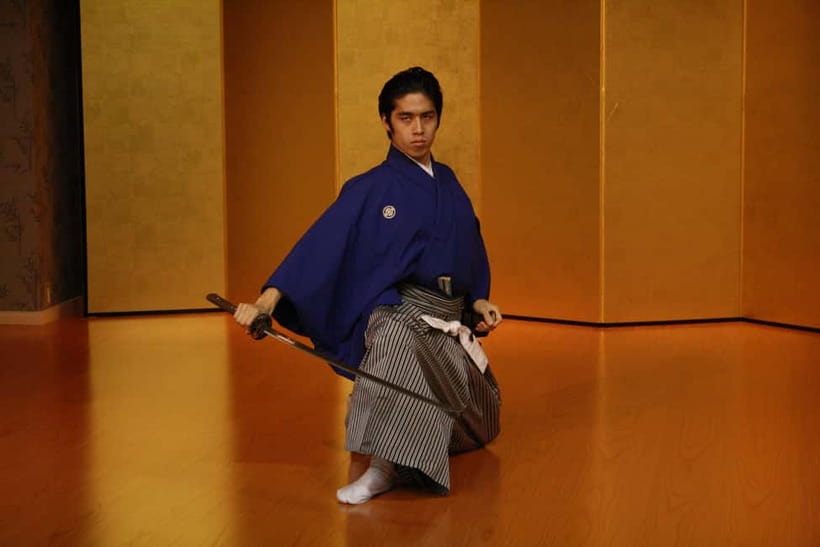
At some point, the narration shifts from what the dancers do to what samurai were expected to carry in their minds. You hear about the responsibility of carrying a samurai sword. It is not presented as a vague “honor” speech. Instead, the show connects that responsibility to the way movements are performed: careful handling, respect for technique, and a sense that the blade represents more than power.
That is one reason this experience plays well even if you are not a martial arts person. You get a guided interpretation of the culture behind the choreography. You walk out understanding why a sword dance exists, and why the choreography focuses on control.
A quieter way to spend a day in Kyoto

After the performance: photos, faces, and the mini sword experience
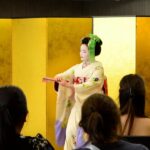
The show ends, the performers return, and this is where the experience turns from watch-only to hands-on.
First, there is time for camera use after the show. During the performance, you are asked not to record. After, you get the chance to capture your own memories. Many people love this part because it feels like meeting the art halfway. You are not just observing from a distance.
Then comes the mini experience, the short sword lesson. This is the moment most people come for, because it answers the question, What does it feel like?
Your short sword lesson: drawing, holding, and gentle swings
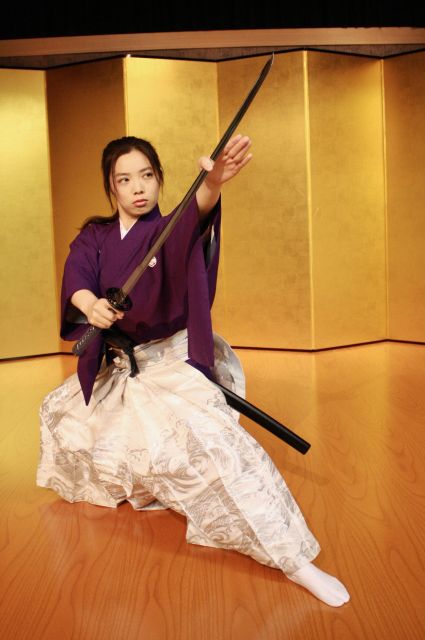
This portion is designed for first-timers. You are not thrown into a sparring session. Instead, the instructor guides you step by step, which keeps it safe and understandable.
Here is the sequence you can expect:
- You pick up the sword.
- You slowly pull out the scabbard.
- You grasp the blade when prompted.
- At the instructor’s command, you start with gentle swings, then gradually increase your force.
That gradual increase is smart. A katana is not only heavy in an obvious way, it also feels different once you learn the right angle and timing. Even without training, you quickly realize that control matters more than strength.
If there is time, you may also get a chance to learn some fan use. The show content already introduced the folding fan, so this is the chance to connect the choreography you watched with a basic physical skill.
What you should watch for (especially if English is not your first language)
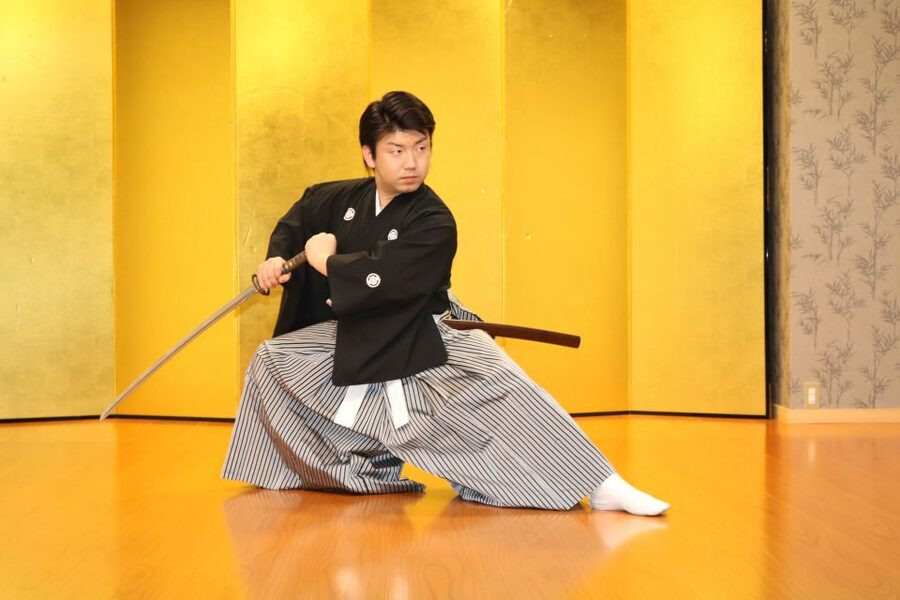
The narration is provided in English and Japanese, so you should be able to follow along comfortably. Still, a practical note from the way the show is structured: the timing is tight, and the information is delivered as a sequence of short stories tied to movement. If you miss a sentence, you might still catch the “shape” of the story through the choreography.
You do not need to be a samurai-scholar. But if you want maximum understanding, arrive with a little context. Think of Kenbu as ceremonial movement linked to samurai culture, not a modern action show.
Value in plain terms: is $32 worth it?
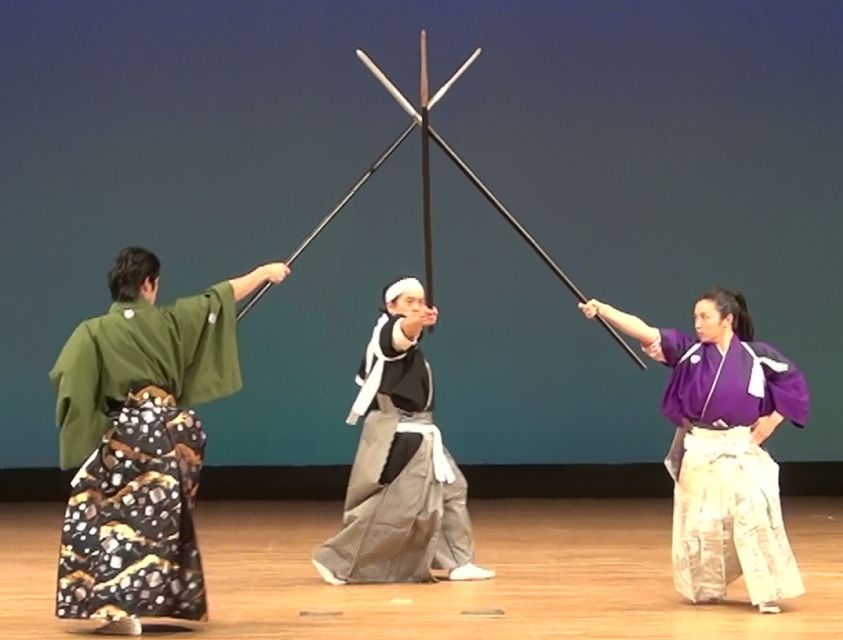
At $32 per person for about 1 hour, the value depends on what you want from Kyoto.
If you want a quick cultural performance, you get an actual show plus English-friendly explanations. If you want interaction, you get a short sword-handling lesson that goes beyond a staged photo moment. And if you want a memorable souvenir experience, the photo time after the show gives you proof you were there, without breaking the no-photo rule during the performance.
Compared with many standard entertainment tickets, the “two-part” format is the key. You watch Kenbu, then you try basics yourself. That combination is why people tend to feel satisfied even if they do not know anything about Kenbu going in.
Logistics that affect your comfort (so you can relax)
This is a straightforward hour, but a few details can affect how pleasant it feels.
- Shoes off: wear footwear you can take off and put back on quickly.
- No large bags: keep your carry-on small.
- No waiting room: arrive on time so you are not rushed.
- No photos during the show: plan to enjoy the moment live, then shoot after.
- No alcohol: the venue asks you not to visit under the influence.
One more consideration: the show is more about elegant flow than a big stage battle. If you are expecting a massive fight demonstration, you might be a little surprised. The emphasis is controlled technique, storytelling, and ritual.
Who this Kyoto Kenbu show is best for
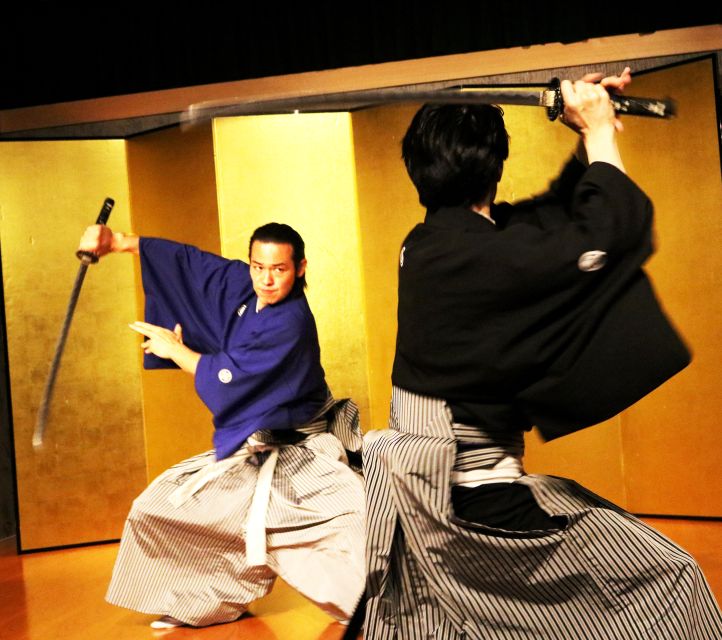
I think this experience fits best if you:
- like cultural shows with explanations you can follow in real time
- want hands-on learning without needing martial arts experience
- enjoy samurai-themed history but prefer it told through performance
- want a short activity that does not swallow your whole day
It is also family-friendly in spirit. The format is narrative, and the interactive ending gives kids and adults a shared “we tried it” moment. Just keep in mind there are clear rules about timing and recording during the show.
If you are very performance-obsessed and want huge stage spectacle, you may prefer a different type of theater production. But if you want authenticity and skill, Kenbu is a strong pick.
My take: what you will remember most
When you leave, you will remember three things most clearly.
First, the sword work looks effortless, but you can feel the control behind it. Second, the narration connects the movements to samurai ideas about readiness and responsibility, so the dance stops being random. Third, the mini lesson makes it real. When you draw the sword from the scabbard and swing gently, you understand why this art demands respect.
That is the best kind of travel memory, the one where you do something small but meaningful.
Should you book Samurai Kenbu in Kyoto?
Book it if you want a focused, high-skill introduction to Kenbu in a format that fits into your Kyoto schedule. You will likely love the blend of storytelling, graceful technique, and a short katana lesson. It is also good value for the time you spend, because you get both performance and hands-on instruction in that 1-hour window.
Skip it only if you need nonstop action, or if you strongly dislike rules like no filming during the show. Otherwise, it is one of the most practical ways to connect Kyoto’s samurai legends to a real, watchable art form.
FAQ
Where is the meeting point for this experience?
Meet at the Samurai Kembu Theater, Kyoto. It is about a 4-minute walk from Subway Sanjo Keihan Station and 5 minutes on foot from Sanjo Station on the Keihan Main Line.
How long is the Kyoto Kenbu show?
The experience runs for about 1 hour.
What does the ticket include?
It includes the Samurai Kenbu Theater entry fee, the Kenbu show, and a short sword lesson.
Is food or drinks included?
No. Food and drinks are not included.
Are photos or videos allowed during the show?
No. You are asked to refrain from taking photos or videos during the show. You should have time for photos after the performance.
What languages are used during the show?
Instruction and narration are available in English and Japanese.
Is the venue wheelchair accessible?
Yes, the activity is listed as wheelchair accessible.
Do I need to arrive early?
Yes. Plan to arrive 5 to 15 minutes before the activity starts.
Is there a waiting room if I arrive early or late?
There is no waiting room, and those without an appointment cannot wait in the room.
What is the cancellation policy?
You can cancel for a full refund up to 24 hours in advance. If you want to cancel, you must do it yourself on GetYourGuide.
New This Season
- Koyasan Day Trip by Private Car from Kyoto
- Old Port Town and Ultimate Sake Tasting Private Tour From Kyoto
- Kyoto’s Timeless Charm: 3hr Exploration of History and Peace
- Kyoto: 5 Types of Sushi Making
- Sacred Peak & Ancient Paths: Kurama-Kibune Hiking Experience
- Kyoto: Exclusive ZEN practice at Manpukuji temple in Uji
- Kyoto: Private Seasonal Aroma Yoga Class
- Traversing Kyoto’s Scenic West – Arashiyama to Kinkakuji
Samurai Training Experiences, compared.
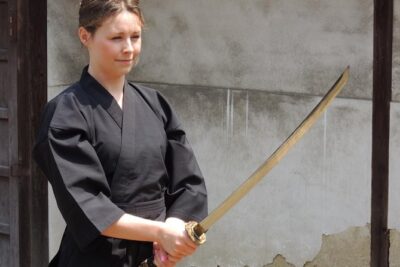
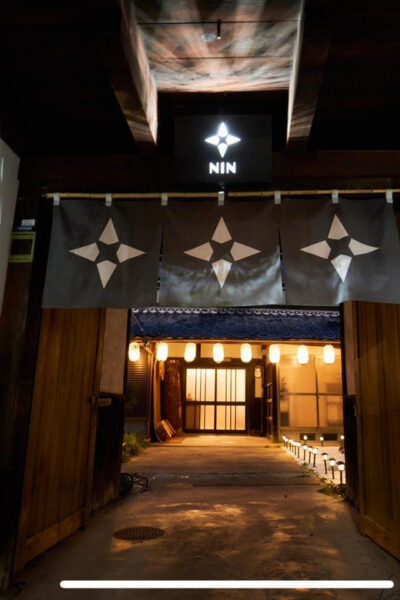
Kendo and Samurai Experience with Uniform and Gear
Read our review →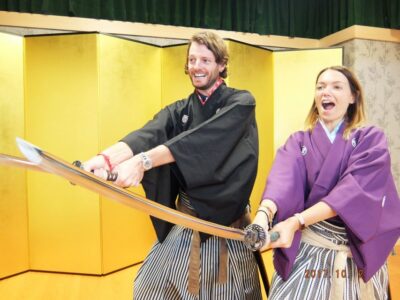
Samurai Sword Class by Experts in Traditional Arts
Read our review →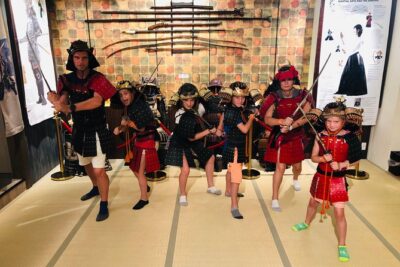
Skip the lines Basic Ticket at SAMURAI NINJA MUSEUM KYOTO
Read our review →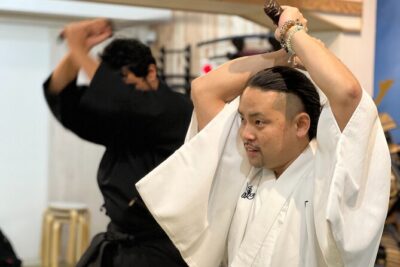
Samurai Training with Modern day Musashi in Kyoto
Read our review →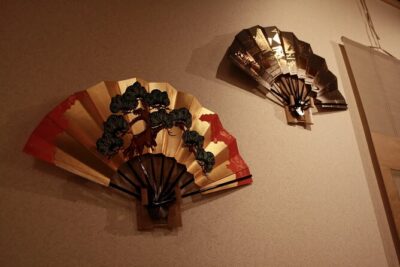
Private Tea Ceremony and Sake Tasting in Kyoto Samurai House
Read our review →
Kyoto Sword Experience – includes Museum Ticket/Ninja Experience
Read our review →Also filed under