
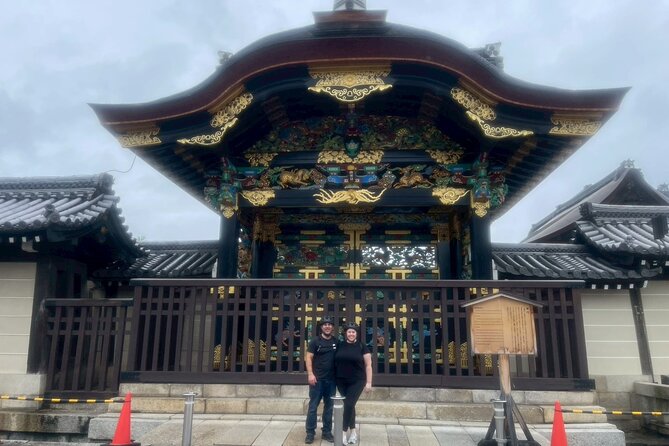
Reviewed · CYCLING TOURS
No. 1 E-Bike Tour for Up to 5 Guests in Kyoto with a Local!
Kyoto on e-bike feels like cheating, in a good way. You get a relaxed, small-group ride where the stories matter as much as the scenery. Expect a smooth loop that mixes famous sights with calmer backstreets.
I especially like the small group size (up to 5), because you are not dodging around strangers while trying to hear the guide. I also like that the stops are big-name Kyoto highlights, including Nishi Honganji and Nanzen-ji, without turning this into a rushed sprint.
One consideration: this is still cycling, and you will want a comfortable pace, good weather, and the patience to learn a few bike hand-signs before you roll out.
In This Review
- Key things to know before you ride
- A Half-Day Kyoto Ride With a Local, Not a Parade Route
- Meet-Up at Clew, Helmet On, and Quick Hand-Sign Coaching
- Nishi Honganji: Big Temple Architecture Without the Museum-March Feeling
- Kagiyacho Pass-Through: Historic Streets and the Nintendo Headquarters
- Gion Shirakawa Area: Tea-House Streets, River Views, and Photo-Friendly Calm
- The Lake Biwa Canal Around Nanzenji: When Water Shapes a City
- Heian Shrine: A Commemorative Story, Plus That Big Red Torii Feel
- Nanzen-ji Temple: Main Temple and Gate, Up Close
- Kamogawa River Cooling Break: Slow Down, Then Get Your Feet Wet
- Back to the Start, Then Your Kyoto at Your Own Speed
- Price, Inclusions, and Where the Value Comes From
- The Itinerary That Works: Temples, Neighborhood Contrasts, and Riverside Reset
- Who Should Book This E-Bike Tour in Kyoto
- Practical Tips to Make This Ride Feel Easy
- Should You Book This Kyoto E-Bike Tour?
- FAQ
- How long is the Kyoto e-bike tour?
- How many people are in the group?
- Where do I meet for the tour, and when does it start?
- What stops and sights are included?
- Is there an admission fee for the listed stops?
- What is included with the price?
- Do the guides speak languages other than English?
Key things to know before you ride
- Up to 5 people means you get a quieter, more personal tour flow
- E-bike effort, real sightseeing lets you cover temples and neighborhoods in about half a day
- Meet at the Clew share-cycle port near Seikouin Wagatazizou, with a quick riding briefing first
- Free-entry stops are built into the route, so you can spend time looking instead of paying entrances
- Kamo River cooling break lets you slow down and literally cool off at the end of the tour
- Guides may offer languages like German, Dutch, and Urdu, if you request ahead
A Half-Day Kyoto Ride With a Local, Not a Parade Route
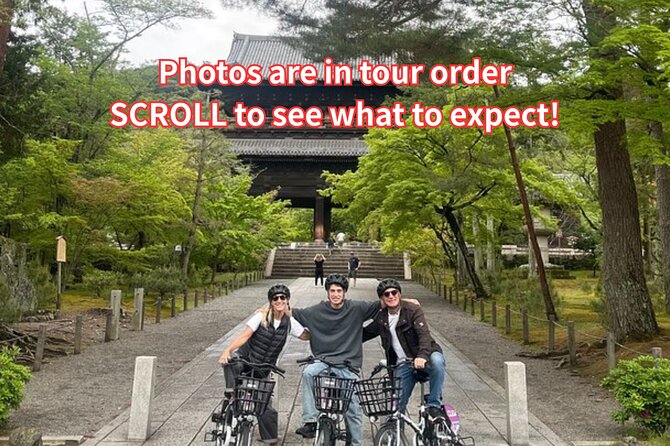
This is the kind of Kyoto tour that fits a tight schedule without making you feel like you are doing paperwork with temples. You ride for about four hours, at a relaxed pace, with a guide who connects what you see to how Kyoto grew and what people valued there. It is also set up for small-group comfort, up to five guests, which changes the whole vibe. Less crowd pressure. More time to ask questions and actually notice details.
The electric bike is the practical superpower here. Kyoto has plenty of sights, but also plenty of stopping points, hills, and lanes that can feel stressful on a regular bike. With an e-bike, you can focus on route watching and listening to the guide instead of constantly wrestling your legs.
You also get a nice mix of Kyoto styles. There is temple atmosphere, historic neighborhood character, and riverside breathing room. If your Kyoto plan includes a lot of walking on other days, this tour is a smart balance.
Meet-Up at Clew, Helmet On, and Quick Hand-Sign Coaching
Your tour starts at a share-cycle port called Clew, right in the area near Seikouin Wagatazizou (it is described as behind a hotel). You will meet there and do a short prep before riding. The briefing focuses on cycling hand-signs, so the group stays safe and predictable.
You are also provided with a helmet, and the bike rental is included. That matters because it lowers friction. You do not need to hunt down gear, and you can show up ready to ride. The total experience is designed to run smoothly, so you should plan to arrive a little early, find the port, and get settled before the briefing.
If you care about language, this is one of the rare tours that explicitly notes guide language options. Some guides can speak German, Dutch, Bangladeshi, Hindu, and Urdu. If you have a preference, contact ahead so you can align with the best match.
A quieter way to spend a day in Kyoto
- Hidden Kyoto E-Biking tour
★ 5.0 · 1,843 reviews - 5 Top Highlights of Kyoto Full Day Bike Tour (E-bike option)
★ 5.0 · 511 reviews - E-Bike Tours of the highlights of Kyoto!!!
★ 5.0 · 291 reviews - Kyoto: City Secrets eBike Tour
★ 4.9 · 196 reviews
Nishi Honganji: Big Temple Architecture Without the Museum-March Feeling
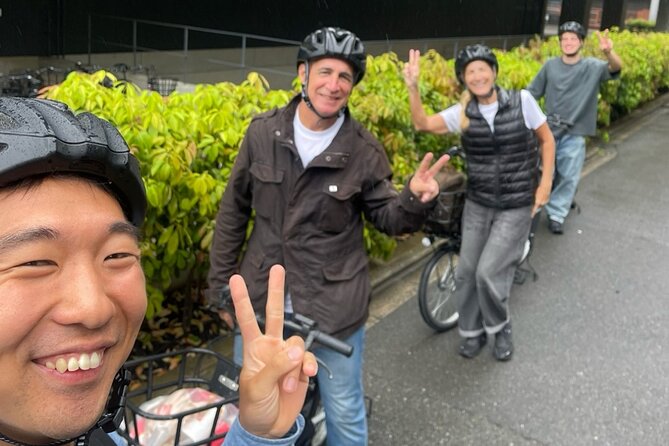
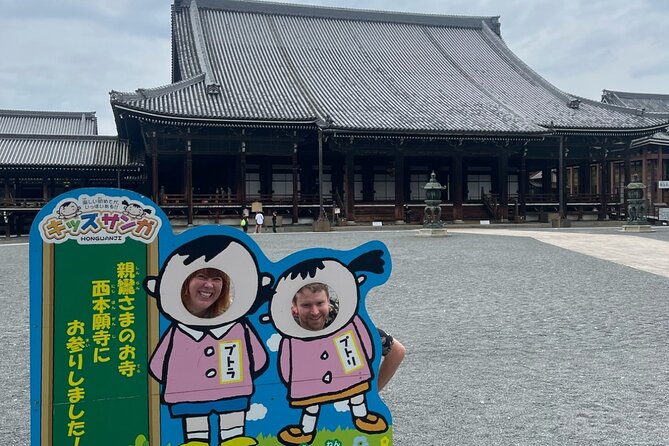
One of the first major stops is Nishi Honganji (Hongan-ji), head temple of the Jodo Shinshu Hongwanji-ha sect, often referred to as Western Honganji. This is a temple complex known for historical buildings, and it is the kind of place where scale hits you before the details do.
You spend about half an hour here, which is a good amount of time for Kyoto temple sightseeing. Not too rushed. Not so long that you start checking the time every five minutes.
What I like about starting with a major temple early is that it sets your Kyoto baseline. You go from there into neighborhoods and streets that feel less like isolated photo spots and more like parts of a living city.
Tip: When you arrive, take a moment to look around first. Kyoto temple areas can be visually dense, so letting your eyes adjust makes the whole visit more rewarding.
Kagiyacho Pass-Through: Historic Streets and the Nintendo Headquarters
After Nishi Honganji, the route includes Kagiyacho, described as a local area where a large building stands out as the old headquarters of Nintendo. This is not framed as a full stop where you spend long inside a building. Instead, it works as a contrast point: historic Kyoto street life alongside a modern institution that still signals how the city changes over time.
That quick pass-through can actually be useful. It helps you notice how Kyoto is not stuck in a single era. It layers old and new, sometimes right next to each other.
If you like cities that keep evolving, this kind of stop adds texture without derailing the ride.
Gion Shirakawa Area: Tea-House Streets, River Views, and Photo-Friendly Calm
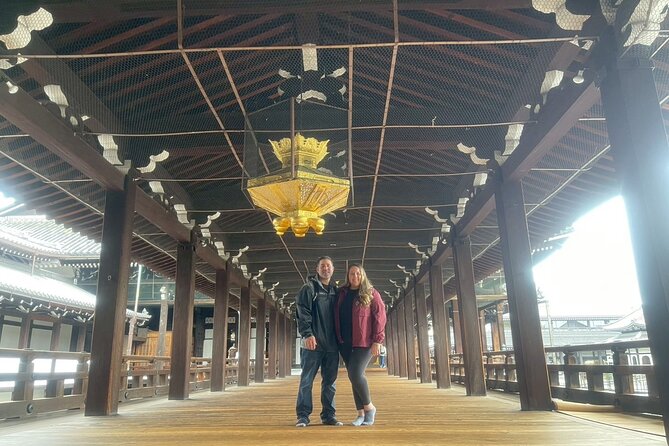
Next you enter Gion, where the tour highlights the street atmosphere associated with chaya-mati, the tea-house district. You get about thirty minutes here, long enough for a real look rather than a quick glance.
What makes this part feel special is the combination of old buildings along the river and the way the neighborhood breathes. Even if you have already seen photos of Gion, arriving by bike changes how you experience it. You can drift at a slower pace, catch the rhythm of the street, and notice the seasonal plants mentioned for the area.
A practical note: Gion can be busy on some days, and narrow lanes do not always make it easy to stop for long. The benefit of a small group tour is that your guide can position your movement so you spend time looking, not negotiating crowds.
The Lake Biwa Canal Around Nanzenji: When Water Shapes a City
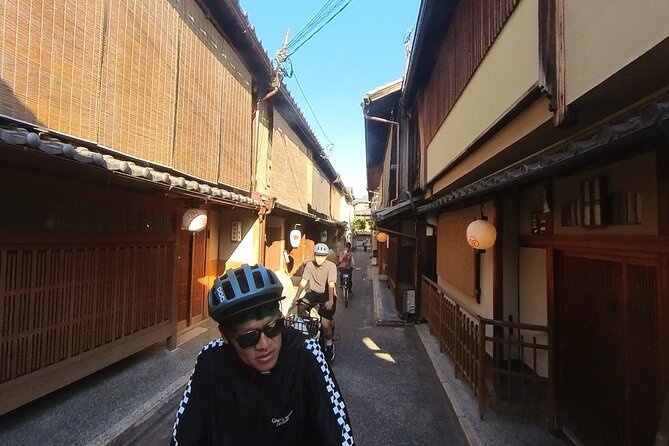
Two stops near Nanzen-ji focus on the Lake Biwa Canal, a waterway system linking Kyoto and Lake Biwa. The tour hits two addresses in the Nanzenji area, and the wording in the route description points out how the canal helped Kyoto’s development by supplying water and managing elevation differences.
This is one of those Kyoto details that feels almost invisible until someone points it out. Water infrastructure sounds boring on paper, but here it becomes a way to understand how Kyoto grew. The canal is described as a long river-like feature, and you get time to ride through and around it.
One reason I like this section of the tour is that it breaks the usual temple-only pattern. You spend time on a practical historical system, not just a scenic view. It gives your sightseeing a backbone.
A day of temples goes further with something to break it up.
Heian Shrine: A Commemorative Story, Plus That Big Red Torii Feel
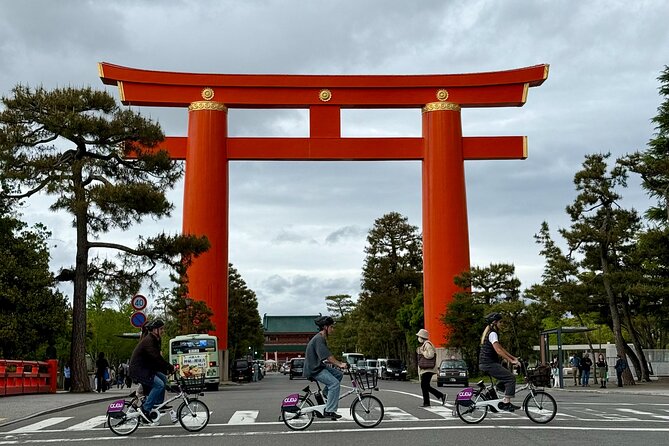
Heian Shrine is a major moment on the route. It was established to commemorate the 1100th anniversary of the transfer of the capital to Heian-kyo, and the enshrined deity is Emperor Kanmu. The tour also calls out the big red torii gate as a highlight.
You are not just seeing a gate. You are seeing a monument to a specific turning point in Japanese history. That context helps. Kyoto is full of shrines and temples, but many feel more meaningful when you know what event they mark or whom they honor.
Heian Shrine also gives you a more spacious, open feeling compared to some tightly packed historic lanes. It is a good place to reset your legs after earlier cycling segments.
Nanzen-ji Temple: Main Temple and Gate, Up Close
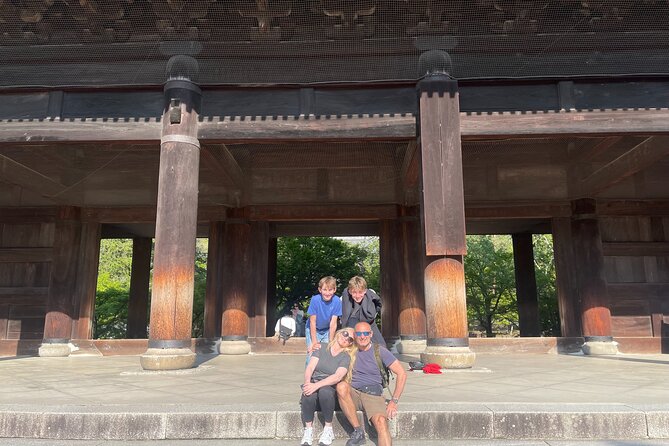
After Heian Shrine, you reach Nanzen-ji Temple, described as special among the Five Mountains of Kyoto. The tour emphasizes the magnificent main temple and gate, and the precinct atmosphere.
You spend about twenty minutes here. That is enough for first impressions and a focused look at the key structures. If Nanzen-ji is already on your must-see list, this stop helps you hit it without having to plan extra transport or squeeze it into a longer day.
Also, because you are arriving by e-bike, you can stay in motion even before the stop. That matters if you want a steady flow from one viewpoint to the next.
Kamogawa River Cooling Break: Slow Down, Then Get Your Feet Wet
The tour finishes in a way that feels very Kyoto: the Kamogawa River. You get about ten minutes here, with options to relax along the riverbed or cycle on the riverbank. The route description also mentions cooling your feet in the water at the end.
Even if you do not actually put your feet in, the point is that you get a real break. After temples and streets, a river moment helps you process everything you just saw.
If you are traveling in warmer months, this stop is especially useful. You get a chance to cool down and reset before you head off on your own.
Back to the Start, Then Your Kyoto at Your Own Speed
After the final Kamogawa moment, you return to the meeting point area and end the tour there. Then you are free to explore Kyoto on your own.
That is a smart setup because you are not forced into another guided segment right away. You can choose what fits your energy level: wander nearby streets, find a meal, or head to another landmark while the bike ride is still fresh in your mind.
Because you have already covered major geography by bike, your self-guided time often feels easier. You have orientation. You know roughly where you are.
Price, Inclusions, and Where the Value Comes From
At $99.08 per person for about four hours, this is not a budget “just get around” activity. It is priced like a guided experience, and it is worth judging based on what is included.
Here is the value picture:
- E-bike rental and helmet are included, so you do not add extra costs
- A cycling guide is included, which matters on a city route through different districts
- Multiple top sights are built into the route
- The itinerary lists admission ticket free for the stops, which reduces cash outlay during your tour
Also, small group up to five helps justify the price. If you were doing this route independently, you would still need a bike, a helmet, and a plan that minimizes backtracking. You would also likely spend time figuring out safe stops and transitions. Paying for the local guide is basically paying for less friction.
In other words, you are buying convenience plus context. For a first or mid-trip Kyoto day, that is often money well spent.
The Itinerary That Works: Temples, Neighborhood Contrasts, and Riverside Reset
The route is thoughtfully staged so you do not bounce randomly from place to place. It moves from a major temple complex into a historic neighborhood pass, then into Gion, then toward Nanzen-ji and Heian Shrine, and finally into a riverside finish.
A key strength is that the stops are varied in theme:
- Religious heritage at Nishi Honganji and Nanzen-ji
- Neighborhood identity in Gion and the street feel around Kagiyacho
- City infrastructure history at the Lake Biwa Canal sections
- Historical commemoration at Heian Shrine
- Relaxation at the Kamogawa River
That variety keeps your attention without turning the tour into a checklist. Even if you enjoy temples most, you still get breathing time and different kinds of meaning.
And yes, guides can make a difference. One guide named Yuki has been noted in feedback for keeping the experience fun and story-focused. You should still expect that your actual guide’s style will vary, but the tour is clearly built around storytelling, not just navigation.
Who Should Book This E-Bike Tour in Kyoto
This is a great match if:
- You want to see a lot in half a day without exhausting yourself
- You prefer a small group over a large bus-style tour
- You like history, but you do not want to spend hours in only one type of place
- You want Kyoto classics like Gion and major temples, plus a riverside wind-down
It may be less ideal if:
- You want a slow, deep temple-by-temple experience with lots of free time inside
- You hate cycling logistics, even with an e-bike
- Your schedule is tightly booked right at the four-hour window, since the tour is built around that loop
For families: children under 10 can participate if they are taller than 140 cm and can ride a bicycle, with the same fee as an adult. That is useful to know if you are traveling with a tall child who already rides confidently.
Practical Tips to Make This Ride Feel Easy
I would plan for a few basics so you can enjoy the scenery instead of worrying about logistics:
- Wear comfortable shoes you can walk in afterward. You will still step off the bike at stops.
- If you have language needs, message ahead so the guide can be a good match.
- Go in with a flexible mindset. You are moving between districts, and short stop times work best when you stay present instead of trying to do everything perfectly.
- Check the weather forecast. The experience is described as requiring good weather, and it can change if conditions are poor.
One more thing: pay attention during the hand-sign briefing. It may feel quick, but it keeps the ride smooth for everyone.
Should You Book This Kyoto E-Bike Tour?
If you want Kyoto in four hours that feels efficient but not rushed, this tour makes sense. The mix of temples, Gion atmosphere, Lake Biwa Canal context, and a Kamogawa cooling break is a strong combination, and the small group size helps it stay relaxed.
With a solid average rating of 5 out of 5 from 46 reviews, it is also a safe bet for your first time in Kyoto planning. If you are the type of traveler who likes your guide to explain what you are seeing, and you want the practical benefit of an e-bike, book it.
Skip it only if you strongly prefer walking-only sightseeing or you want very long time inside specific sites. For everyone else, this is one of the more sensible ways to hit big Kyoto highlights without burning the whole day.
FAQ
How long is the Kyoto e-bike tour?
It is about 4 hours long.
How many people are in the group?
The tour has a maximum of 5 travelers.
Where do I meet for the tour, and when does it start?
You meet at the share-cycle Clew port near Seikouin Wagatazizou, behind the hotel area in Kyoto. The start time is 1:00 pm.
What stops and sights are included?
The route includes Nishi Honganji, Gion, Heian Shrine, Nanzen-ji, the Kamogawa River, and sections around the Lake Biwa Canal, plus a pass through Kagiyacho.
Is there an admission fee for the listed stops?
The itinerary indicates admission ticket free for the stops included in the route.
What is included with the price?
You get a helmet, bike rental, a cycling guide, and use of the bicycle. You also get a mobile ticket.
Do the guides speak languages other than English?
Some guides can speak German, Dutch, Bangladeshi, Hindu, and Urdu. If you have a language preference, you should contact before reserving.
New This Season
- Koyasan Day Trip by Private Car from Kyoto
- Old Port Town and Ultimate Sake Tasting Private Tour From Kyoto
- Kyoto’s Timeless Charm: 3hr Exploration of History and Peace
- Kyoto: 5 Types of Sushi Making
- Sacred Peak & Ancient Paths: Kurama-Kibune Hiking Experience
- Kyoto: Exclusive ZEN practice at Manpukuji temple in Uji
- Kyoto: Private Seasonal Aroma Yoga Class
- Traversing Kyoto’s Scenic West – Arashiyama to Kinkakuji
Cycling Tours, compared.
Bike Tour Exploring North Kyoto plus Lunch
Read our review →
Arashiyama Bamboo Forest & Hidden Gems Bike Tour (Early Bird)
Read our review →
5 Top Highlights of Kyoto Full Day Bike Tour (E-bike option)
Read our review →
Full Day Biking Tour Exploring the Best of Kyoto
Read our review →

Afternoon Kyoto Bike Tour: Bamboo Forest, Monkeys & Hidden Spots
Read our review →
South Kyoto in a Nutshell: Gentle Backstreet Bike Tour!
Read our review →Also filed under