
Reviewed · CYCLING TOURS
Private Kyoto Back Street Cycling Tour w. ENG-Speaking Guide
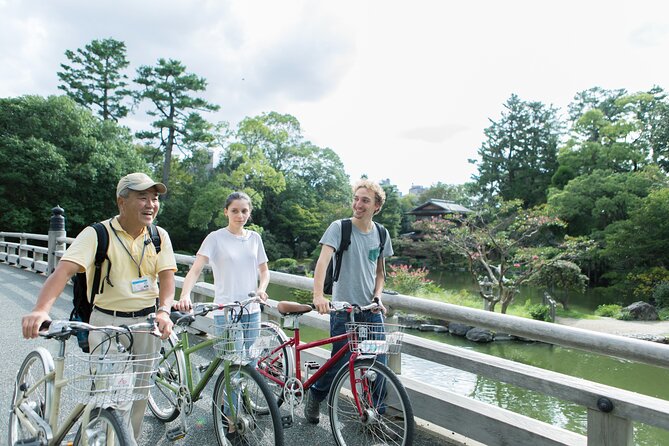
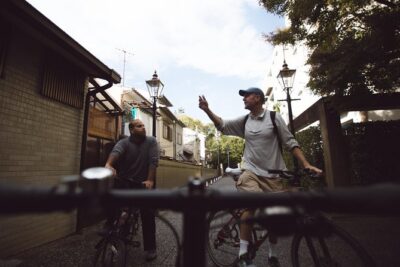
Kyoto by bike feels like insider access. This private 3 hour ride starts and ends at Kyoto Station, then threads through flat roads and classic neighborhoods with an English-speaking guide, with stops built around Gion and the Shirakawa river path. I like that it is an easy way to see Kyoto’s atmosphere without getting stuck in sightseeing bottlenecks, and I love the built-in chance to spot a maiko while you roll through old streets.
The only real catch is that it depends on good weather. If it is canceled due to poor conditions, you will be offered a different date or a full refund, but if the weather is fine, plan on pedaling for a solid stretch.
In This Review
- Key Things You Will Notice on This Cycling Tour
- Meeting at Kyoto Station and Rolling Out at 9:30 or 13:30
- Why the Ride Feels Comfortable on Mostly Flat Roads
- Gion Stop: Quick Old-Street Atmosphere and a Real Chance at Maiko
- Shirakawa River Cycling: Fresh Air Along a Clear Stream
- Kamo River and Kyoto Imperial Palace Area: Local Views, Not Just Landmarks
- Finishing Back Near Kyoto Station, Then Optional Extra Riding for 500 Yen
- Price and Value: What $85.12 Covers, and What Can Cost Extra
- What’s Actually Included, and Why It Makes the Day Easier
- Flexible Temple and Shrine Stops Without Forcing a Rigid Schedule
- Who This Tour Is Best For (and Who Might Want Something Different)
- Should You Book This Private Kyoto Back-Street Cycling Tour?
- FAQ
- How long is the Kyoto back-street cycling tour?
- Where do I meet and where does the tour end?
- What departure times are available?
- Is the guide available in English?
- How many people can be in a group?
- Is the rental bike included in the price?
- Are admission fees included?
- What if I want to end the tour away from Kyoto Station?
- What happens if the tour is canceled due to poor weather?
Key Things You Will Notice on This Cycling Tour
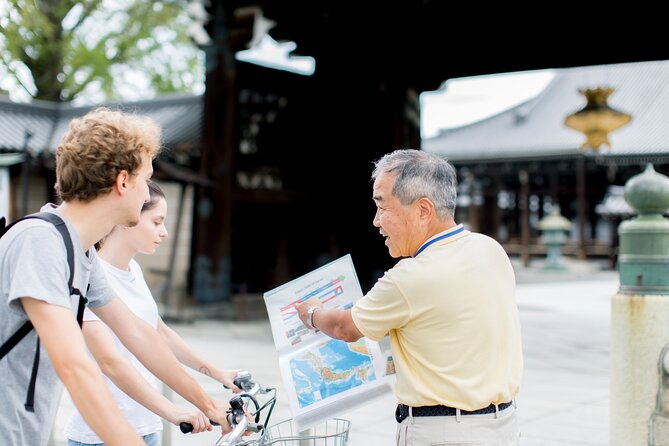
- Small private group up to 8 people: easier to hear your guide and get moving quickly.
- Kyoto Station start keeps logistics simple: you ride fast into the “real Kyoto” areas.
- Gion stop is short and street-focused: quick hit of atmosphere, plus possible maiko sightings.
- Shirakawa river path ride feels calm and refreshing: a breather between temples and shrines.
- Imperial palace area and Kamo River add local rhythm: you see more than postcard corners.
- Bike rental, admissions, and insurance are included: fewer add-on surprises at the check-in desk.
Meeting at Kyoto Station and Rolling Out at 9:30 or 13:30
This tour is built for momentum. You meet at the Kyoto Station area, specifically the KCTP Kyoto Station Terminal for departure at 9:30 or 13:30, depending on the option you book. Then the route loops you back to the meeting area when you are done, which makes it easy to keep the rest of your day unplanned.
If you are the kind of traveler who hates spending precious sightseeing time figuring out transit lines and transfers, this setup helps. Kyoto Station is a hub, so you can arrive, check in, and get on a bike with minimal fuss.
One more detail I appreciate: you ride in a group limited to a maximum of 8 travelers. That small size matters because you can actually hear the guide, stop when you need to, and keep a relaxed pace instead of waiting for a long chain of cyclists.
Why the Ride Feels Comfortable on Mostly Flat Roads
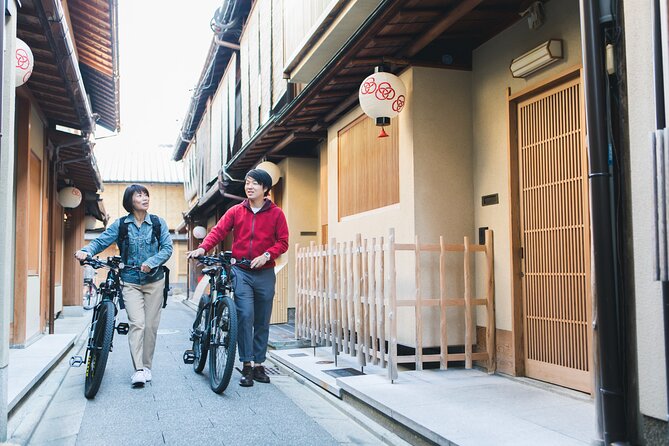
The tour is designed for comfort first. It is described as one of the easiest cycling options in Kyoto because the route uses mostly flat roads, so you are not dealing with constant steep climbs. That means the tour can work for a wide range of ages, including children and elderly riders, as long as everyone can handle a standard bicycle for a few hours.
You should still expect some exertion, though. Even an easy route involves pedaling and balance. You will want to wear comfortable shoes and be ready to slow down at stops and intersections like a normal city ride. If you are unsure, stay close to your guide and follow their cues.
What really makes it feel doable is the way the sightseeing is structured. Instead of a long grind with no breaks, you get short riding segments followed by stops where you can hop off and walk around. That mix is what keeps fatigue from stacking up.
A quieter way to spend a day in Kyoto
- Hidden Kyoto E-Biking tour
★ 5.0 · 1,843 reviews - Bike Tour Exploring North Kyoto plus Lunch
★ 5.0 · 1,087 reviews - Arashiyama Bamboo Forest & Hidden Gems Bike Tour (Early Bird)
★ 5.0 · 613 reviews - 5 Top Highlights of Kyoto Full Day Bike Tour (E-bike option)
★ 5.0 · 511 reviews
Gion Stop: Quick Old-Street Atmosphere and a Real Chance at Maiko
Gion is the kind of place where you can over-plan and still miss the feeling. Here, the tour gives you a 15 minute stop in Gion, which is exactly enough time to get oriented, notice the street vibe, and wander a little without turning it into a marathon. Admission is listed as free for this stop, so you are not juggling extra tickets mid-walk.
What I like about this approach is that you are not forced to treat Gion like a checklist. You ride in, pause, look around, and then get back on the bike while the area is still buzzing. It is also where you have the best opportunity to see a maiko on the street, depending on timing and luck.
Practical tip: bring your phone or camera, but also leave some attention for what is happening around you. Gion has a way of feeling different once you slow down. Even a short stop gives you that contrast between Kyoto’s famous main streets and its quieter lanes.
Shirakawa River Cycling: Fresh Air Along a Clear Stream
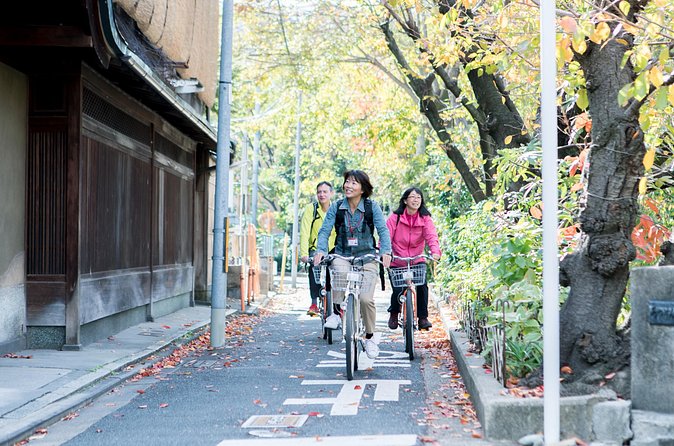
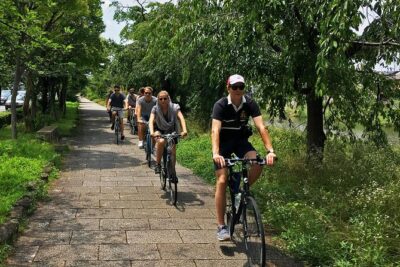
After Gion, the ride shifts into calmer mode. You cycle along the Shirakawa river, using a path beside a clear stream. This section works like a reset button. You get a gentle flow, cooler air, and a sense of movement without feeling rushed.
Why it matters: river paths are where Kyoto feels more lived-in. Instead of just dropping into a temple entrance, you get to travel through the spaces people actually pass through every day. The route also gives your legs a chance to loosen up after stops, which is useful on a 3 hour tour that still includes multiple sightseeing moments.
If you are traveling with kids or a group with mixed comfort levels on bikes, this river segment is a smart place for everyone to breathe. It is still Kyoto, but in a calmer rhythm.
Kamo River and Kyoto Imperial Palace Area: Local Views, Not Just Landmarks
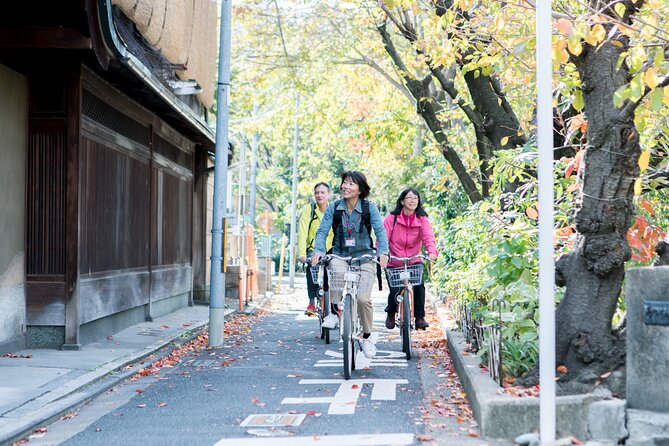
Next, you ride on roads around the Kyoto Imperial Palace and along the Kamo River (鴨川). The Kamo River is a familiar feature for locals, which is a big reason this segment feels valuable. You see the city from a position that is different from walking routes and photo-stop tours.
The practical benefit is that it connects several key areas without making the whole day feel like a series of hard stops. You also get more variation in the scenery: open river views, wide road stretches, and the sense of Kyoto’s layout from street level.
One caution for cyclists: even if the roads are mostly flat, city cycling still takes attention. Keep your speed moderate, watch for traffic, and use the guide as your anchor. The tour is designed to be not intimidating, including for riders who might be slightly nervous, but confidence still comes from paying attention, not ignoring the ride.
Finishing Back Near Kyoto Station, Then Optional Extra Riding for 500 Yen
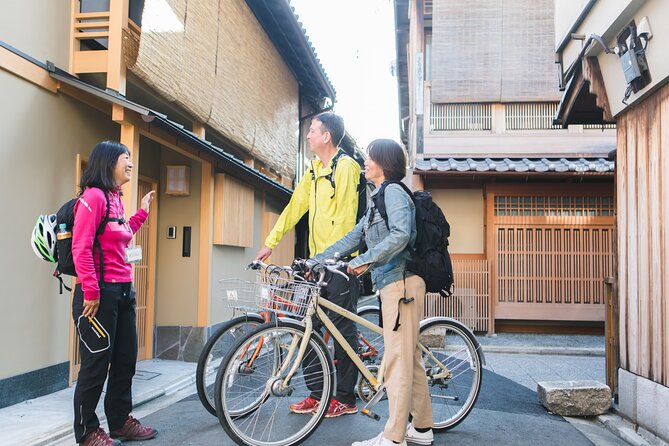
You do not finish with a locked gate and a hard stop. After the tour, you can keep cycling for a little longer. The information notes that you can ride it continually for 500 yen per bicycle each after the tour.
This is a nice option if you want to build a personal route for the rest of your afternoon. It is also handy if your group wants to linger near a river area for photos without paying for another guided segment. If you do plan to extend, check in with your guide at the end so you understand exactly how the extra ride is handled.
A day of temples goes further with something to break it up.
Price and Value: What $85.12 Covers, and What Can Cost Extra
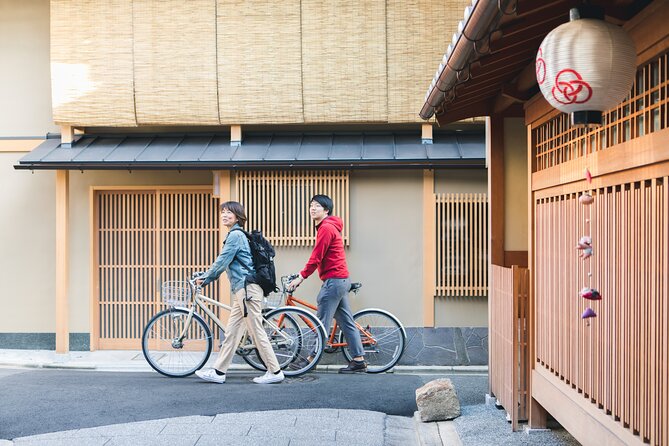
At $85.12 per person, this tour is positioned as good value because it bundles the big essentials. Included items are listed clearly: the English-speaking guide fee for one guide for one group, admission fees, bicycle rental, and accident insurance. In other words, you are not separately buying entry tickets, and you are not dealing with rental logistics.
That matters in Kyoto, where ticket lines and scattered locations can quietly eat time. A guided bike tour turns that into one smooth block of time. You get a short itinerary, a bike ready for you, and insurance coverage tied to the activity.
What is not included is simple and easy to plan for. If you request to conclude away from Kyoto Station, there is a 500 yen bike collection fee per person. So if you are thinking of combining this with another destination and want a different drop-off point, factor that cost into your decision.
What’s Actually Included, and Why It Makes the Day Easier
Let’s break down the included items into real-life benefits.
Bicycle rental means you do not have to find a shop, figure out helmet rules, or confirm bike sizes on your own. The tour makes the bike part of the plan, not a chore you squeeze in later.
Admission fees are included, which helps because the stops involve temples and shrines depending on time and your preferences. You do not need to decide ticket budgets while you are mid-ride.
Accident insurance is included as well. I always appreciate when a tour lists this plainly because it signals they treat safety as part of the package, not an afterthought.
Finally, you get an English-speaking guide. That is not just about translation. A good guide also helps you move efficiently through Kyoto’s streets, making stops smoother and reducing the mental load for your group.
Flexible Temple and Shrine Stops Without Forcing a Rigid Schedule
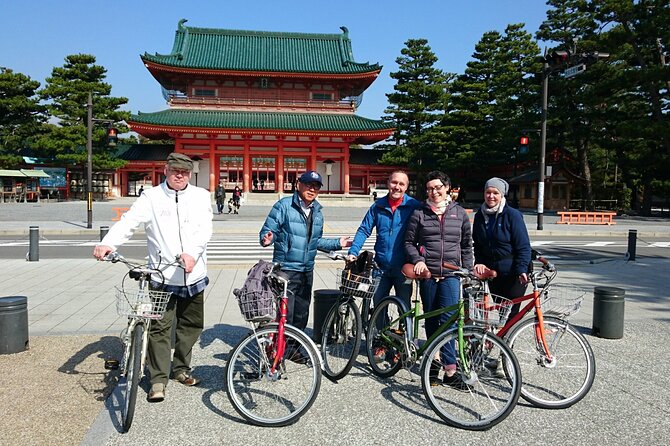
The tour is built around the idea that your time and preferences can shape which high-impact sites you touch. Along with Gion and the river scenery, you may stop at temples and shrines such as Higashi Honganji and Heian Jingu, depending on timing and what you want to prioritize.
That flexibility is practical. Kyoto has so many must-sees that fixed itineraries can feel like compromise. Here, you can get major sights without turning the whole ride into a sprint between gates.
One more small but important detail: you can plan for a mix of riding and walking. That helps when you want a closer look at an entrance or want to photograph an area without trying to keep a bike balanced in crowded spots.
Who This Tour Is Best For (and Who Might Want Something Different)
This is a strong pick if you want a quick, low-stress introduction to Kyoto’s neighborhoods you might not automatically find by walking main routes. It is also a good choice for mixed groups because it is designed around mostly flat roads and a moderate, easy-paced structure.
You should consider a different style of tour if you are expecting a full-day ride with lots of nonstop cycling. This one is about 3 hours, with sightseeing stops that keep it comfortable. It is not meant to replace a whole day of walking or museum time.
Also, if you are traveling on days when weather is unpredictable, keep in mind the tour is weather-dependent. You will be offered a different date or a full refund if it is canceled due to poor conditions, which helps, but it still means you want a plan for alternate scheduling.
Should You Book This Private Kyoto Back-Street Cycling Tour?
I would book this if you want Kyoto at a slower pace with a practical rhythm. It is private, small-group sized, and structured so the ride stays easy while still delivering meaningful stops like Gion, the Shirakawa river, and a loop around the imperial palace area and Kamo River.
It also scores on value. You pay once for the guide, the bike, admission fees, and accident insurance, so your day feels simpler and more predictable than piecing it together yourself.
If you want a highly flexible, scenic Kyoto intro that avoids long transfers and reduces decision fatigue, this is a very sensible way to spend a half day.
FAQ
How long is the Kyoto back-street cycling tour?
The tour runs for about 3 hours.
Where do I meet and where does the tour end?
You meet at the KCTP Kyoto Station Terminal and the tour ends back at the meeting point area.
What departure times are available?
Departures are listed for 9:30 and 13:30.
Is the guide available in English?
Yes. The tour is listed as an English-speaking guide.
How many people can be in a group?
The tour has a maximum of 8 travelers.
Is the rental bike included in the price?
Yes. Bicycle rental is included.
Are admission fees included?
Yes. Admission fees are included.
What if I want to end the tour away from Kyoto Station?
If you request the tour conclude away from Kyoto Station, there is a 500 yen bike collection fee per person.
What happens if the tour is canceled due to poor weather?
If it is canceled due to poor weather, you will be offered a different date or a full refund.
New This Season
- Koyasan Day Trip by Private Car from Kyoto
- Old Port Town and Ultimate Sake Tasting Private Tour From Kyoto
- Kyoto’s Timeless Charm: 3hr Exploration of History and Peace
- Kyoto: 5 Types of Sushi Making
- Sacred Peak & Ancient Paths: Kurama-Kibune Hiking Experience
- Kyoto: Exclusive ZEN practice at Manpukuji temple in Uji
- Kyoto: Private Seasonal Aroma Yoga Class
- Traversing Kyoto’s Scenic West – Arashiyama to Kinkakuji
Cycling Tours, compared.
Bike Tour Exploring North Kyoto plus Lunch
Read our review →
Arashiyama Bamboo Forest & Hidden Gems Bike Tour (Early Bird)
Read our review →
5 Top Highlights of Kyoto Full Day Bike Tour (E-bike option)
Read our review →
Full Day Biking Tour Exploring the Best of Kyoto
Read our review →

Afternoon Kyoto Bike Tour: Bamboo Forest, Monkeys & Hidden Spots
Read our review →
South Kyoto in a Nutshell: Gentle Backstreet Bike Tour!
Read our review →Also filed under