
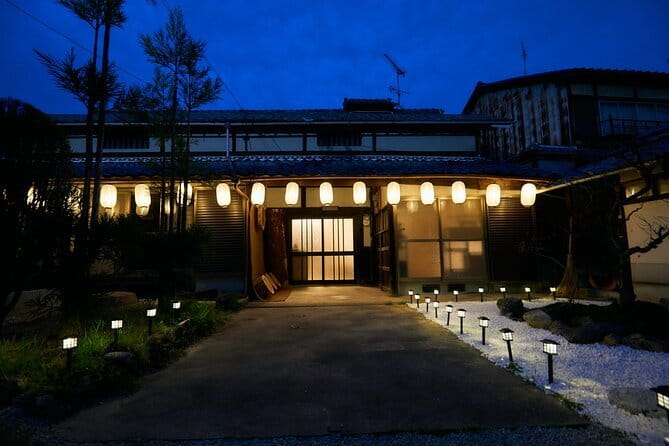
Reviewed · NINJA TRAINING EXPERIENCES
Authentic Ninja Weapon Forging Experience in Kyoto
Make a real kunai in Kyoto. This hands-on ninja weapon forging workshop turns movie myths into hot steel and real skills, right at Atelier NIN. You heat, hammer, shape, engrave, blacken, and polish a weapon you can actually take home.
I especially like that it is beginner-friendly, with no experience required and craftspeople guiding every step. I also love the full package approach, you get the specialized tools, the traditional samue-style uniform, and a proper storage box and bag for your finished piece.
The main thing to consider is pacing. You move through multiple stages in a short time window, so if you expect hours of solo hammering, manage your expectations for how much time is spent on each step.
In This Review
- Key highlights you will feel from the start
- Ninja weapon forging in Kyoto, what you’re really signing up for
- Suiting up like a craftsman at Studio NIN
- Choosing your weapon: shuriken styles vs. a kunai
- The 800°C forging step, heat and hammer control
- Shaping and refining with a belt sander
- Kanji engraving, your one character moment
- Blackening the steel for the dark finish
- Final polish and the sense of completion
- Ninja history session, why the lesson sticks
- Taking it home: box, bag, and travel reality
- Price and logistics in Kyoto: what $151.92 buys you
- Who should book this ninja weapon forging experience
- Should you book Atelier NIN’s ninja weapon forging in Kyoto?
- FAQ
- How long is the authentic ninja weapon forging experience in Kyoto?
- What weapons can I choose to make?
- Do I need prior experience to take the class?
- What is included in the price?
- Is private transportation included?
- Where is the meeting point?
- What should I know about fitness level?
- What is the cancellation policy?
Key highlights you will feel from the start
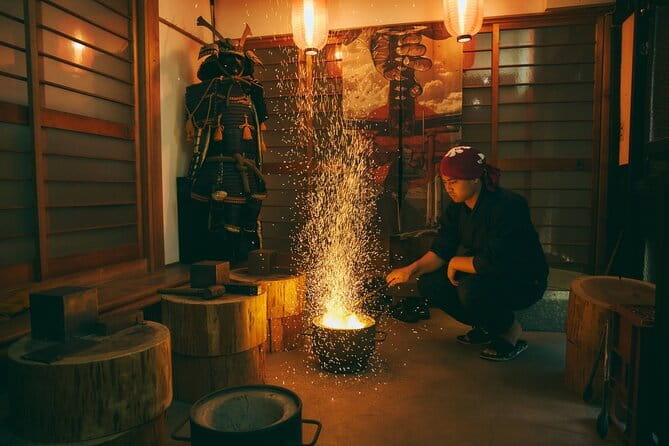
- Step into the workshop vibe with samue and a tenugui, so it feels like training, not just a craft class
- Choose your weapon from three shuriken styles or one kunai, then make it yours
- Learn real metalwork basics by heating steel around 800°C, hammering, and refining with tools
- Add personalization with precise kanji engraving, then protect the metal with blackening
- Finish with a take-home souvenir stored in a clean box and bag, made for travel
Ninja weapon forging in Kyoto, what you’re really signing up for
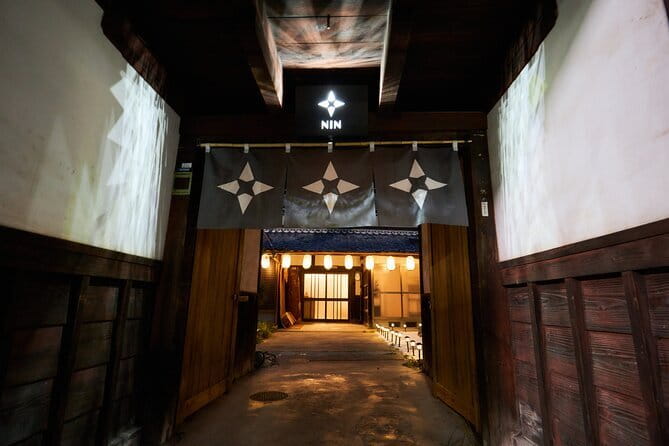
This is not a museum stop and it is not cosplay. It is a workshop where you shape metal into a ninja-style tool, under supervision. The format is simple and action-heavy, you start by suiting up, you pick your weapon form, then you go through the workflow of a traditional style of making: heat, hammer, shape, refine, mark, finish.
What makes it feel authentic is that the process has steps with consequences. Heating affects how the metal behaves. Hammering changes the overall geometry. Refining turns a rough shape into something crisp. Engraving and blackening add identity and a protective finish. If you like hands-on learning, you will enjoy that your souvenir is also your lesson.
The other big win is context. Along the way, you get a ninja knowledge session about history, weapons, and even secret techniques. It is not just “here is a tool,” it is “here is why tools like this mattered.” That combination, making plus explanation, is what turns it from a novelty to a memorable Kyoto activity.
Suiting up like a craftsman at Studio NIN
Your first step is changing into the traditional blacksmith uniform, samue in a dark style, plus a tenugui wrapped around your head. That is not just for photos. It signals that you are entering a working space where you follow instructions, keep things tidy, and handle tools carefully.
You’ll also want to take a moment to notice the practical side. This experience is designed for mixed ages and skill levels. One clue is the phrasing about moderate physical fitness. You do not need advanced athletic ability, but you should be comfortable standing for the workshop flow and doing handwork during shaping and refining.
Group size is capped at 25 travelers. That matters because it is big enough to feel lively, but small enough that staff can keep an eye on safety and technique. If you like learning in a group without feeling lost, this size is a sweet spot.
Language is also handled by enthusiastic staff, and you may hear English explanations that are clear enough to follow the steps. People often mention being helped directly when getting things symmetrical or aligned, so do not be shy about asking for a second look.
Throw stars and learn to move unseen
- Skip the lines Basic Ticket at SAMURAI NINJA MUSEUM KYOTO
★ 4.5 · 632 reviews - Ninja 1-hour Hands-on Lesson by Japanese master in Kyoto -Entry
★ 5.0 · 489 reviews - Kyoto: Ninja Weapon Forging Experience
★ 4.8 · 478 reviews - Ninja 2-hour Hands-on Lesson by Japanese master in Kyoto -Medium
★ 5.0 · 218 reviews
Choosing your weapon: shuriken styles vs. a kunai
Before you touch anything, you pick what you will make. You can choose from three shuriken styles or one kunai. The difference is not just visual. Each option has its own shape and handling feel, which affects how you refine it and what you end up engraving.
In practice, that choice helps you tailor the workshop to your interests:
- If you like a star-like, multi-point look, shuriken is the obvious grab.
- If you want something more straightforward and sturdy, the kunai is a great fit.
Either way, you should expect a guided process. This is a workshop where staff rent the specialized tools you use for shaping and refining, so you are not figuring out an unfamiliar setup alone.
The 800°C forging step, heat and hammer control

The core moment is forging. You heat your steel in an 800°C furnace, then hammer the glowing metal as sparks fly. This part is the “wow” stage, but it is also the technical foundation. Heating brings the metal into a workable state, then hammering shapes it while it is ready to be formed.
Even if you have never touched blacksmithing tools, the key is that someone is showing you what to do, not just letting you try. You are learning basic metalwork movements and how to follow timing and instruction. That matters because hot work is not forgiving.
One practical takeaway for you: come ready to focus. This is not a “chat while you work” activity. You’ll want to be mentally present, because the whole sequence relies on you doing the step the way the craftspeople instruct. If you drift, you slow down the process for yourself and the rest of the group.
Also, remember that forging is only one stage. You are not only hammering for the entire 2.5 hours. The experience moves you into refining and finishing soon after, which is why pacing feels fast to some people.
Shaping and refining with a belt sander
After the heat and hammer work, you use a professional belt sander to refine and sharpen the metal. This is where your weapon starts to look “finished” instead of rough. The sanding step is less dramatic than the furnace, but it is crucial for getting the edges and surfaces right.
Why this step matters: sanding is how you reduce unevenness from earlier work. It is how you turn a shape into something clean, wearable as a tool, and ready for engraving and final polish.
Staff also use the right tools and files to support different comfort levels. If your stamina is lower, the experience still aims to keep you involved without requiring you to do every heavy movement at full intensity. The workshop is set up so most people can complete the process and leave with a weapon they feel proud of.
Kanji engraving, your one character moment
Once the shape is right, you choose a kanji character. Then the skilled staff engrave it with precision. This is where your souvenir becomes personal. A symbol you choose, placed deliberately, changes it from a product to a keepsake.
Engraving also forces you to think small and exact. You are not just making something that resembles a weapon. You are adding identity with a mark that you can read later.
If you want to make this step easy on yourself, pick a kanji character ahead of time that you feel good about. The workshop gives you the chance to personalize, but it will be faster if you are ready with your choice when you get to that station.
A day of temples goes further with something to break it up.


Blackening the steel for the dark finish
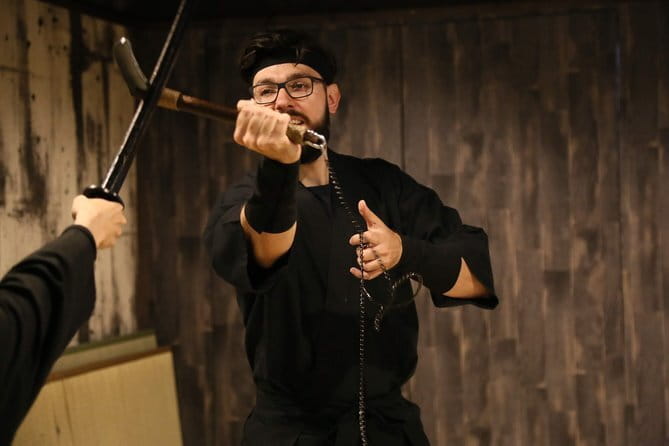
Next comes blackening, where you apply a special solution to protect the metal and give it a darker, authentic finish, like a real ninja tool. This step is both aesthetic and practical. The finish helps protect the surface and gives your weapon that moody, traditional look.
You’ll likely notice that this is where the weapon stops looking like raw metalwork and starts looking like something you would display. It also sets you up for the last polish stage, which brings out shine.
This is a helpful moment if you are someone who worries their work will look too handmade. Blackening plus polish is part of the transformation.
Final polish and the sense of completion
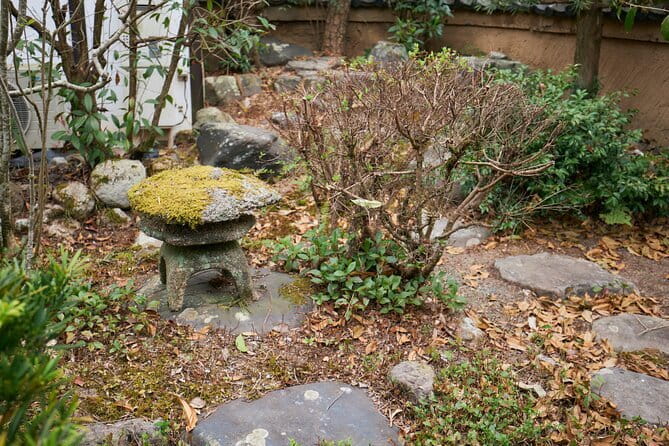
The final polish is the payoff. You polish your weapon to bring out the shine and the crispness of the surfaces. It turns your earlier shaping work into a clean, presentable result.
This stage also helps psychologically. After the heat, hammering, and sanding, your brain is tired from focusing on technique. The polish is the step where you can see the end immediately, and it makes the whole 2.5 hours feel worth it.
When it is done, you are not leaving with a kit. You are leaving with a finished piece, which is exactly why this works as a Kyoto souvenir.
Ninja history session, why the lesson sticks
The workshop includes a ninja knowledge session where you learn about ninja history, weapons, and secret techniques. Even if you are skeptical about movie versions of ninjas, the value here is that you connect the weapon you made to a broader story.
That changes how you remember the experience. Instead of thinking, “I made a star-shaped metal thing,” you start thinking about purpose, era, and why certain weapon designs made sense.
The staff’s high energy also matters. People often mention names like Taka and how friendly, helpful, and enthusiastic the instructors are. That vibe keeps the history part from feeling like a lecture you have to endure.
If you love context while you learn your craft, you’ll likely enjoy this more than a purely hands-on class where the explanations are minimal.
Taking it home: box, bag, and travel reality
You get preparation materials for taking your piece with you. The included items mention a clean box and bag to take home, plus storage support that fits the reality of flying or hopping trains the same day.
A good practical point from how the souvenir is handled: since it is a metal object, packaging matters. The box and bag are there so the finish and surface stay protected while you move through Kyoto, board transport, and pack.
If you plan to travel onward quickly, plan your day around this workshop so you are not rushing to repackage your weapon at the last minute. Having the provided box and bag makes that easier.
Price and logistics in Kyoto: what $151.92 buys you
The price is $151.92 per person. That sounds high or normal depending on your travel style, but here is what you are actually paying for.
You are paying for:
- Tool rental for metalwork tasks like files and hammers
- Uniform rental for the craftsman look and workshop safety flow
- A full guided sequence from furnace work to finishing
- Personalization time, including kanji engraving
- Packaging for taking the weapon home
- A small-group experience capped at 25 people
So you are not just paying for an activity. You are paying for instructor time, safety oversight, specialized equipment access, and the materials and finishing process that makes the item presentable.
The main logistics watch-out is location. The meeting studio is near public transportation, but it is described as off the beaten path. For that reason, a taxi app may be useful when you are coordinating timing, especially if you are coming from a busier Kyoto hub.
Also note that private transportation is not included. Build in some time to get there smoothly. A workshop like this runs on a schedule, and arriving late can cut into the steps.
Who should book this ninja weapon forging experience
This experience is a strong match if you:
- Want a hands-on Kyoto activity that produces a real take-home object
- Enjoy Japanese crafts, blacksmithing basics, and learning by doing
- Like history that connects to real tools, not just pictures
- Travel with teens or family members who enjoy making things
It is also a decent fit for first-time workshop participants because there is no experience required. You are guided through heating, hammering, sanding, engraving, blackening, and polishing. The staff are part of the value, and people specifically praise their friendliness and help when adjusting details.
It may not be the best fit if you:
- Hate structured, step-by-step activities
- Expect an ultra-personal, slow-motion workshop where you control every single second
- Have limited stamina for metalworking tasks, since the experience asks for moderate physical fitness
Should you book Atelier NIN’s ninja weapon forging in Kyoto?
I think this is worth booking if you want a Kyoto souvenir with real effort behind it. The combination of forging at heat level, tool-based refining, and your own kanji engraving gives you something you can show later and tell a story about.
Book it soon if you want one of the limited time slots and a seat in a small group. Also, if you care about smooth logistics, plan your route early, because the studio is not right in the thick of the main tourist route.
If you are on the fence because of price, compare it to other “make something” experiences that only give you materials and a quick craft outcome. Here, you get specialized tools, multiple metalworking stages, blackening, and a finished weapon stored in a proper box and bag.
FAQ
How long is the authentic ninja weapon forging experience in Kyoto?
It lasts about 2 hours 30 minutes.
What weapons can I choose to make?
You can choose one kunai or one of three shuriken styles.
Do I need prior experience to take the class?
No experience is required. Skilled craftsmen teach you the process step by step.
What is included in the price?
Specialized tools are provided to use during the workshop, uniforms for craftsmen are rented, and you receive a clean box and bag to take your weapon home.
Is private transportation included?
No. Private transportation is not included.
Where is the meeting point?
The start point is studio NIN, Yasenosechō 168-1, Sakyo Ward, Kyoto 601-1254, Japan. The activity ends back at the meeting point.
What should I know about fitness level?
You should have a moderate physical fitness level.
What is the cancellation policy?
You can cancel for a full refund up to 24 hours before the experience starts. If you cancel less than 24 hours before start time, the amount paid is not refunded.
New This Season
- Koyasan Day Trip by Private Car from Kyoto
- Old Port Town and Ultimate Sake Tasting Private Tour From Kyoto
- Kyoto’s Timeless Charm: 3hr Exploration of History and Peace
- Kyoto: 5 Types of Sushi Making
- Sacred Peak & Ancient Paths: Kurama-Kibune Hiking Experience
- Kyoto: Exclusive ZEN practice at Manpukuji temple in Uji
- Kyoto: Private Seasonal Aroma Yoga Class
- Traversing Kyoto’s Scenic West – Arashiyama to Kinkakuji
Ninja Training Experiences, compared.

Skip the lines Basic Ticket at SAMURAI NINJA MUSEUM KYOTO
Read our review →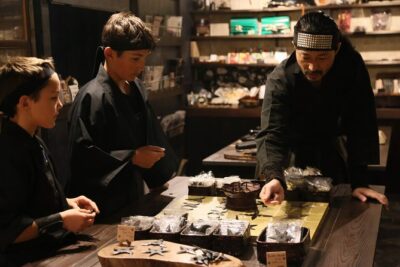
Ninja 1-hour Hands-on Lesson by Japanese master in Kyoto -Entry
Read our review →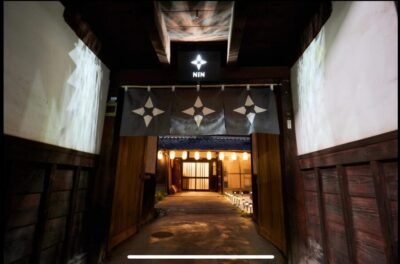
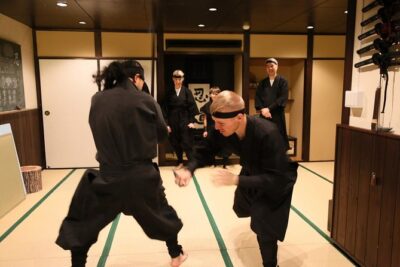
Ninja 2-hour Hands-on Lesson by Japanese master in Kyoto -Medium
Read our review →
Kyoto Sword Experience – includes Museum Ticket/Ninja Experience
Read our review →
Ninja Experience (Family Friendly) at Samurai Ninja Museum KYOTO
Read our review →
Forge Your Own Ninja Weapon with Japanese Tin Casting
Read our review →Also filed under