Reviewed · SAMURAI TRAINING EXPERIENCES
Kyoto: Samurai Ninja Museum guided tour
Samurai and ninja in one hour feels surprisingly real. This Kyoto tour turns museum displays into a guided walk plus hands-on training with an English-speaking guide.
I especially liked the ninja star throwing portion and the chance to dress up with a real samurai helmet and replica sword.
One possible drawback: the whole experience is one hour, so if you want a long, slow browse, this is more of an active introduction than a deep museum day.
In This Review
- Key highlights in plain terms
- Kyoto Samurai Ninja Museum, what the 1-hour really includes
- Meet the guide, and why English delivery matters here
- Dress like a samurai, helmet on, replica sword in hand
- Shuriken throwing, why the hands-on part is the point
- Samurai armor and katana lessons, what you should watch for
- Ninja fukiya, the small-tool moment people forget to plan for
- Skip the ticket line, and how the small group changes your visit
- Price and value: is $28 for one hour fair?
- The practical reality in Kyoto, where to fit this into your day
- Who this tour suits best (and who might want something else)
- Should you book the Kyoto Samurai Ninja Museum guided tour?
- FAQ
- How long is the Kyoto Samurai Ninja Museum guided tour?
- What is included in the tour price?
- Is there a shuriken throwing experience?
- Can I dress up as a samurai?
- Is the tour in English?
- Is the tour skip-the-ticket-line?
- How big is the group?
- Is the tour wheelchair accessible?
- Do I need transportation to and from the museum?
- What is the cancellation policy?
Key highlights in plain terms
- Hands-on shuriken throwing as the main action station
- Dress-up time with samurai-style costume, helmet, and replica sword
- English-speaking guide who keeps the story moving
- Small group feel, limited to 10 participants
- A real demo style program that includes multiple warrior skills (like fukiya and katana lesson)
- Skip-the-ticket-line entry to start faster
Kyoto Samurai Ninja Museum, what the 1-hour really includes
Kyoto already gives you walls full of history, temples, and street-level atmosphere. This tour adds a different flavor: it takes the samurai and ninja story and gives you a hands-on, guided version in about one hour.
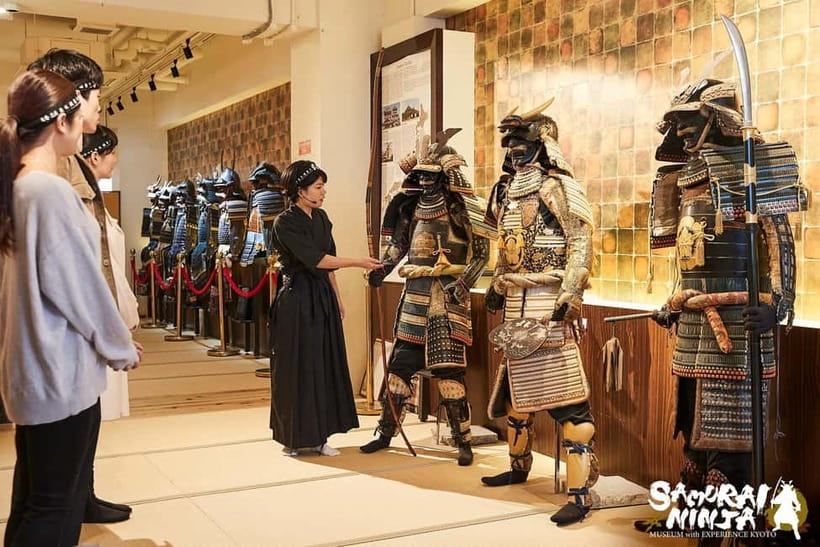
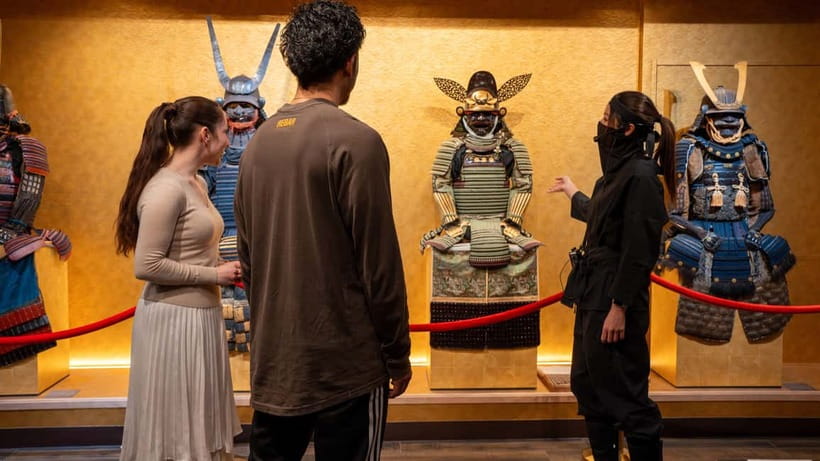
The flow is built around a guided museum walkthrough, then multiple interaction stations. You are not just looking at armor behind glass. You get to try the ninja star (shuriken) throw, and you also get costume time where you can wear a samurai helmet and hold a replica sword. The experience is designed to be active without being exhausting, which is a big deal in Japan, where you might already be walking all day.
What makes it interesting is how the guide connects the objects to the bigger Kyoto setting: samurai and ninja are tied to the city across different eras, so the visit works best as a story you can physically participate in, not a slideshow.
Meet the guide, and why English delivery matters here
This is a guided experience with a live English-speaking guide, and that matters more than you might think. In a museum-style setting, the difference between a confusing scan of labels and a clear, spoken explanation can be huge, especially when you are learning terms like katana, samurai armor components, and how ninja tools were used.
From the variety of guide names you might see on the tour, like Mami, Miu, Sayo, Akiko, Aya, Ko, Saku, Tepe, Taku, and Jukia, there is a consistent pattern: they tend to explain with historical context while keeping the pace interactive. The best guides in this type of setting do two things at once. They make the story understandable for first-timers, and they keep people engaged with questions during the hands-on parts.
You should also expect a guide who can adapt to the room. A small group program works because you can actually hear the guide and respond during the practice stations. When the tour stays fast and focused, you get value instead of feeling like you are waiting for the next step.
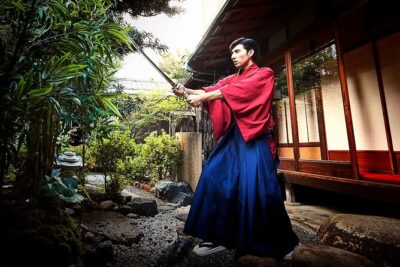
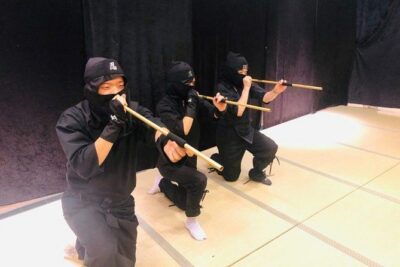
Throw stars and learn to move unseen
- Skip the lines Basic Ticket at SAMURAI NINJA MUSEUM KYOTO
★ 4.5 · 632 reviews - Ninja 1-hour Hands-on Lesson by Japanese master in Kyoto -Entry
★ 5.0 · 489 reviews - Kyoto: Ninja Weapon Forging Experience
★ 4.8 · 478 reviews - Ninja 2-hour Hands-on Lesson by Japanese master in Kyoto -Medium
★ 5.0 · 218 reviews
Dress like a samurai, helmet on, replica sword in hand
The dress-up segment is one of the most practical reasons this tour gets strong ratings. It is not just a quick costume photo. You get to wear a samurai costume, put on a real samurai helmet, and hold a replica sword.
For me, the payoff is how quickly it changes your mindset. You can see armor in a display and still feel detached. But when you are wearing a helmet and lifting a sword-like prop, your brain starts asking better questions: how would this armor sit, what motions would be limited, and why training mattered. The guide’s job is to connect those physical observations back to real life, not just let the costume float free.
Also, this segment tends to be camera-friendly. Multiple guides are known for creating good photo moments without turning it into a long, awkward wait. If you like having at least a few images that look like a memory, this is one of the best ways to get them without hunting for the perfect selfie spot later.
Shuriken throwing, why the hands-on part is the point
The main interaction is the shuriken (ninja star) throwing experience. This is the portion that turns curiosity into a skill attempt, and it is why this tour feels more fun than a standard ticketed museum visit.
Here is what you are really paying for beyond the display access:
- You get instruction from a guide instead of guessing the mechanics.
- You get a structured moment where you are actively participating.
- You end with a result you can share, even if you are not a natural thrower.
The most useful way to think about it: shuriken throwing is not about becoming a ninja. It is about understanding weapon design and the mindset behind training tools. The guide can explain how such tools fit into a larger history of stealth and preparation, then you try it with your own body.
If you are traveling with kids or teens, this is usually the segment that keeps attention. Even adults who usually skip hands-on activities tend to enjoy it because it is quick, clear, and low-pressure. You will likely remember it longer than another set of labels you read while walking.
Samurai armor and katana lessons, what you should watch for
The tour also includes experiences that go beyond throwing. In the overall program description, you can expect a katana lesson and time that relates to samurai equipment in a hands-on way, alongside the dress-up and ninja tool practice.
One thing to keep your expectations grounded: you are not signing up for a full martial arts class. You are doing a guided introduction that helps you understand what you are seeing. The goal is comprehension through touch and short practice windows.
When you are doing these station-style activities, look for how your guide frames the lessons:
- Why certain armor pieces mattered
- How training tools shaped technique
- How the samurai and ninja reputations connect to real historical roles
This is where the guide quality really shows. The guides mentioned by name, like Miu, Sayo, and Akiko, are repeatedly described as engaging and history-focused while keeping the vibe light enough for a mixed group. In other words, the experience is not just cosplay. It tries to give you the why, not only the wow.
Ninja fukiya, the small-tool moment people forget to plan for
The program also includes using a ninja fukiya, a tool associated with ninja lore. This kind of station is easy to overlook when you are only thinking about the popular shuriken throwing. But it often adds variety, because it shifts you from throwing to demonstrating another technique with a different kind of tool.
What you should take away is that the tour is trying to cover multiple facets of warrior life in a short time. In a single hour, you might see how different tools require different motions and different kinds of practice.
If you like experiences that are a bit different from the standard museum script, the fukiya station is part of why this tour feels like more than a ticket.
Pick up a sword for an afternoon

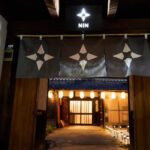

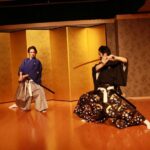
Skip the ticket line, and how the small group changes your visit
This tour includes skip-the-ticket-line entry, and you should use that to your advantage. In Kyoto, time disappears fast, and it is rarely worth showing up late and hoping the day still works. Getting in quicker helps you keep the whole hour on track.
The group size is also part of the value equation. It is described as a small group, limited to 10 participants, and there is also a maximum traveler count listed for the activity. In practice, smaller group programming usually means:
- you get more chances to ask questions
- you spend less time waiting
- the guide can correct or encourage people during interactive stations
If you hate crowded group tours where you spend half your time craning your neck, this one is built to be easier to manage.
Price and value: is $28 for one hour fair?
At $28 per person for a one-hour guided program, the value depends on what you want from Kyoto.
If you want a hands-on, guided intro with a ticket included, the math is straightforward:
- Museum entry is built into the experience
- You get an English-speaking guide
- You get interactive stations like shuriken throwing and dress-up with a real helmet and replica sword
That is a lot packed into a short time, especially if you would otherwise spend time figuring out where to go and how to get explanations in English.
That said, one caution comes up in a different kind of feedback: some people feel uneasy when they expected the price to feel more like a simple museum ticket. If you are the type who prefers self-guided exploring, you might need to adjust your mindset. This tour is not trying to replace a slow museum day. It is designed as an action-focused introduction with a guide steering you through the key parts.
My practical advice: treat the price as paying for guidance plus hands-on practice, not just access to rooms.
The practical reality in Kyoto, where to fit this into your day
This is a 1-hour experience, and it works best when you need something active in the middle of sightseeing. Kyoto days can be a mix of walking and waiting, so a guided hour with hands-on stations can act like a reset button for your energy level.
You also need to plan for timing around arrival. Transportation to and from the attraction is not included, so you will need to budget time to get there on your own. That is normal in Kyoto, but it matters here because the program is short. If you arrive late, you may compress your participation even further.
Because it is scheduled with starting times, I recommend choosing a slot where you are not rushing from one must-see to the next. This is not about being perfect. It is about keeping the experience enjoyable, especially during costume and throwing stations where you will want to move at a relaxed pace.
Who this tour suits best (and who might want something else)
This is a great fit if you want:
- a short, guided way to connect samurai and ninja themes to Kyoto
- an interactive activity, especially shuriken throwing
- a family-friendly format, since many guides and experiences are described as engaging for kids and teens
- an English-speaking guide to explain what you are looking at
It may be less ideal if you want:
- a long museum crawl with lots of quiet reading time
- minimal interaction and more independent wandering
- a detailed, study-like approach to armor history without hands-on stations
If you are unsure, pick it when you value fun plus learning. If your priority is slow depth, consider balancing this with another museum day where you can go at your own speed.
Should you book the Kyoto Samurai Ninja Museum guided tour?
Yes, I think you should book it if you want a fun, guided sampler of Kyoto warrior lore in one hour, and you care about doing at least a couple of hands-on activities. The strongest reasons to choose it are the combination of English guidance, the real helmet dress-up moment, and the shuriken throwing experience that actually gets you involved.
Before you book, do a quick self-check:
- Are you okay with an hour that is active and structured?
- Do you like learning by doing, not only reading labels?
- Will you bring your own transportation planning so you can arrive on time?
If those answers are yes, this is a solid use of time in Kyoto, especially for first-time visitors who want something memorable that is not another line, not another lecture, and not another day lost to crowded schedules.
FAQ
How long is the Kyoto Samurai Ninja Museum guided tour?
The tour duration is 1 hour.
What is included in the tour price?
The package includes museum entry, a guided tour with an English-speaking guide, a samurai costume, and the ninja star throwing experience.
Is there a shuriken throwing experience?
Yes. Ninja star (shuriken) throwing is part of the experience.
Can I dress up as a samurai?
Yes. You get samurai costume dressing, including a real samurai helmet and a replica sword to hold.
Is the tour in English?
Yes. The live tour guide speaks English.
Is the tour skip-the-ticket-line?
Yes. Skip-the-ticket-line entry is included.
How big is the group?
It is a small group limited to 10 participants, and the overall activity notes a maximum traveler limit.
Is the tour wheelchair accessible?
Yes, it is wheelchair accessible.
Do I need transportation to and from the museum?
Transportation to and from attractions is not included.
What is the cancellation policy?
Free cancellation is available up to 24 hours in advance for a full refund.
Kyoto Museums

New This Season
- Koyasan Day Trip by Private Car from Kyoto
- Old Port Town and Ultimate Sake Tasting Private Tour From Kyoto
- Kyoto’s Timeless Charm: 3hr Exploration of History and Peace
- Kyoto: 5 Types of Sushi Making
- Sacred Peak & Ancient Paths: Kurama-Kibune Hiking Experience
- Kyoto: Exclusive ZEN practice at Manpukuji temple in Uji
- Kyoto: Private Seasonal Aroma Yoga Class
- Traversing Kyoto’s Scenic West – Arashiyama to Kinkakuji
Samurai Training Experiences, compared.
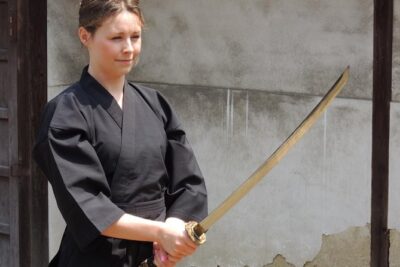
Kendo and Samurai Experience with Uniform and Gear
Read our review →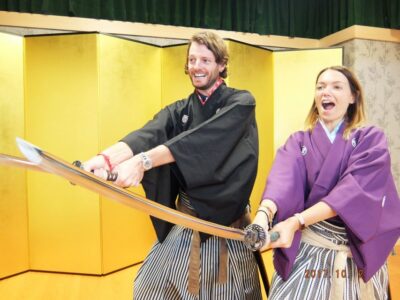
Samurai Sword Class by Experts in Traditional Arts
Read our review →
Skip the lines Basic Ticket at SAMURAI NINJA MUSEUM KYOTO
Read our review →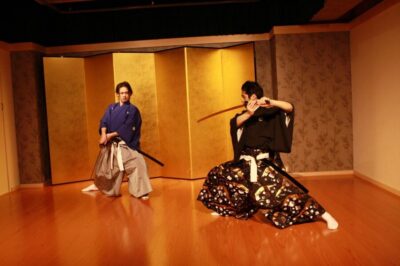
Samurai Training with Modern day Musashi in Kyoto
Read our review →