Reviewed · PRIVATE
Kyoto: The Path Less Traveled (Private)
Kyoto feels quieter than you expect. A private day with Andrew (An Design) threads you through Zen gardens and temple spaces that most people miss, so your time is spent looking, not waiting. I like the balance of calm, architectural garden art and the one big jaw-drop moment of Sanjusangendo’s 1,001 golden Buddhas. You get a slower pace that makes these sites feel personal, not checkbox-y.
One thing to plan for: depending on timing and conditions, the route may run short. If that happens, you help decide what gets cut.
In This Review
- Key points to know before you go
- A private Kyoto route that actually feels private
- Your day at a glance, from Keage Station to Kawai Kanjiro’s house
- Konchi-in: high-level temple design and art in a hush
- Tenjuan Garden: two garden moods, including the fairy-tale forest feel
- Heian Shrine’s garden: the tourist gate is not the whole story
- Chishaku-in: sliding-door paintings plus a garden that feels far away
- Sanjusangendo: the big wow of 1,001 golden Buddhas
- Toyokuni Shrine: samurai memory and Japan’s largest bell
- Kawai Kanjiro Memorial Museum: wabi-sabi design in a real home setting
- Price and value: what you get for $690 per group
- When this Kyoto day makes the most sense
- Should you book this Path Less Traveled private Kyoto tour?
- FAQ
- How long is the Kyoto private tour?
- How many people are in the private group?
- What time does the tour start?
- Where do we meet and end?
- Is the lunch included in the price?
- Do I need cash for transportation during the day?
- Are admission fees included?
- Is the tour dependent on weather?
Key points to know before you go
- Private group up to 4: more space for questions and slower garden walking.
- Garden focus, not crowd focus: quieter temple grounds and behind-the-main-gate moments.
- 1,001 golden Buddhas at Sanjusangendo: the dramatic contrast to serene Zen courtyards.
- Wabi-sabi at Kawai Kanjiro’s home-museum: a lived-in look at craft and design.
- A flexible route: if not every stop fits, you choose what gets removed.
- Cash for the day: lunch, local transport, and admissions are paid separately.
A private Kyoto route that actually feels private
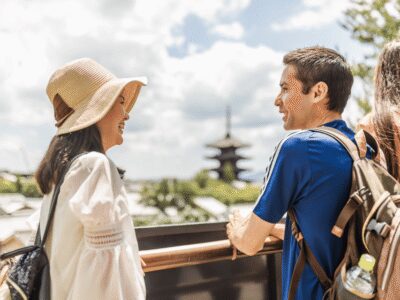
Kyoto can be crowded in a hurry. This experience is built around the idea that you should get to breathe while you’re in the city. It’s a private tour, up to four people, and it runs about eight hours. That matters because gardens and shrines reward you when you have time to stop, look up, and notice details.
I also like the way the day is organized for variety. You move between quiet architectural temple grounds, garden “stages” that change as you walk, and then the high-impact visual of the 1,001 golden Buddhas. That contrast keeps the day from feeling repetitive, even if you’re not a hardcore temple person.
And yes, Andrew’s approach is part of the value. The way the stops are explained makes a difference. You spend less time guessing what you’re seeing, and more time understanding why it’s arranged that way.
Your day at a glance, from Keage Station to Kawai Kanjiro’s house
You start at 9:00 am at Keage Station (Higashikomonozacho, Higashiyama Ward). You’ll finish outside Kawai Kanjiro Memorial Museum, and it’s only about a five-minute walk to Umamchi Bus Stop.
Being near public transportation is convenient, especially on an eight-hour day when you might want an easy escape route later. The tour uses a mobile ticket, which is handy, but do keep in mind that some costs are paid in cash during the day.
Also, the tour is described as requiring good weather. If it’s canceled due to poor weather, you’ll be offered another date or a full refund.
A quieter way to spend a day in Kyoto
- Fushimi Inari Hidden Hiking Tour (Private Option Available)
★ 5.0 · 1,750 reviews - Private Kyoto Tour with a Local, Highlights & Hidden Gems, Personalised
★ 5.0 · 1,543 reviews - Kyoto 6hr Private Tour with Government-Licensed Guide
★ 5.0 · 1,369 reviews - 10 Must-see Spots in Kyoto One Day Private Tour (up to 7 people)
★ 5.0 · 1,108 reviews
Konchi-in: high-level temple design and art in a hush
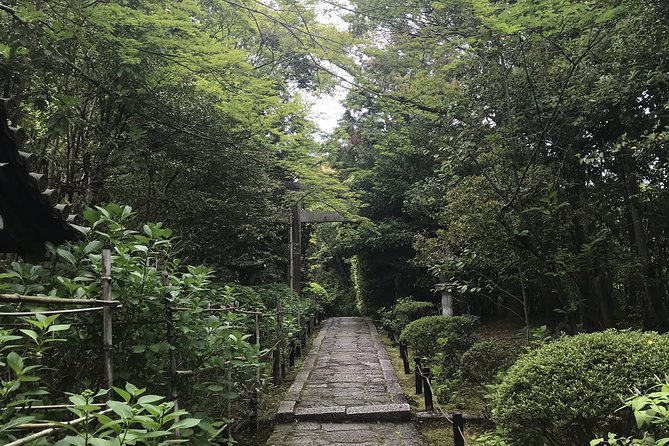
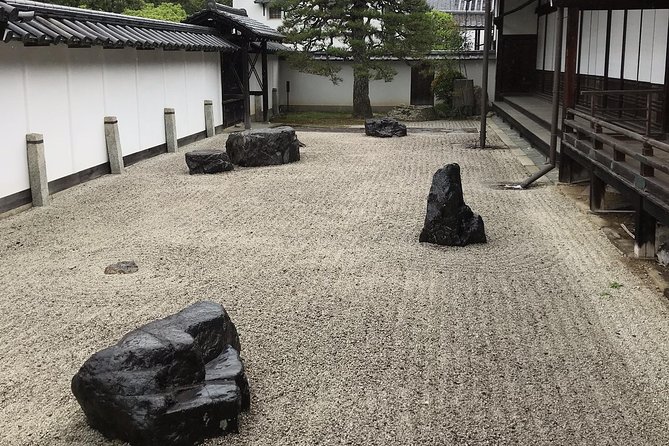
Stop one is Konchi-in, a tranquil setting far from mass tourism. You’re looking at high-level architecture, gardens, statuary, and paintings. The key here is tone. This is the kind of place where the design is the message, and where you get to slow down.
What you can expect:
- A calm introduction to Kyoto’s temple aesthetics, before you hit the more famous names.
- Plenty of time to notice how paths, views, and small details are arranged.
Possible drawback:
- Since it’s quieter than the big sites, you’ll want to actually use the time well. If you rush or keep checking your phone, you’ll miss the point.
Tenjuan Garden: two garden moods, including the fairy-tale forest feel
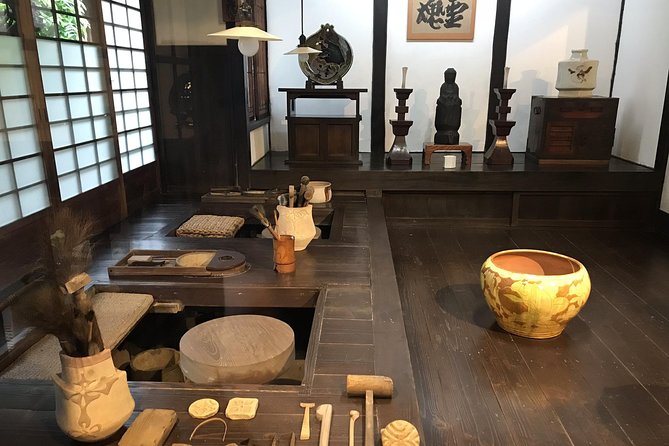
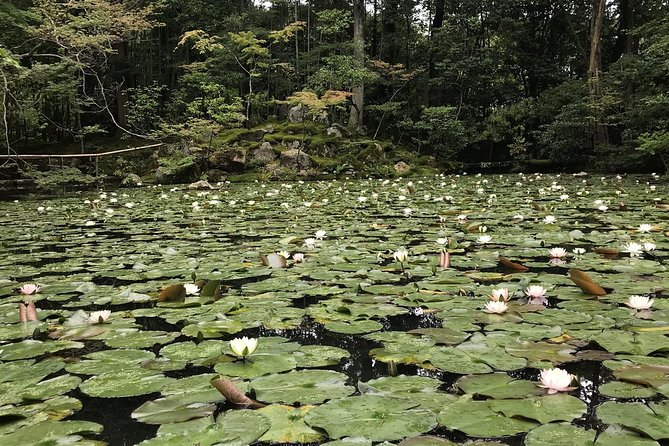
Next comes Tenjuan Garden, where you spend about an hour in two gardens. One entrance is described as suddenly feeling like you’ve walked into a forest, like a fairy tale moment.
Why this stop is worth your time:
- Gardens in Kyoto aren’t just scenery. They’re designed as sequences, so the experience changes as you move through it.
- Two separate garden spaces in one stop means you get contrast without adding extra travel time.
How it may feel in practice:
- Expect a “walk, pause, look, walk, pause” rhythm. You’re not just passing through. You’re meant to take the garden in, slowly.
Potential drawback:
- If you don’t care for gardens beyond quick photos, you may find this portion less interesting than the Buddha-focused stop later.
Heian Shrine’s garden: the tourist gate is not the whole story
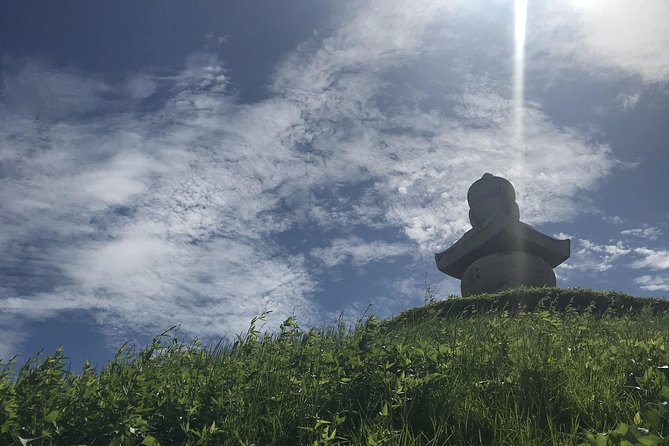
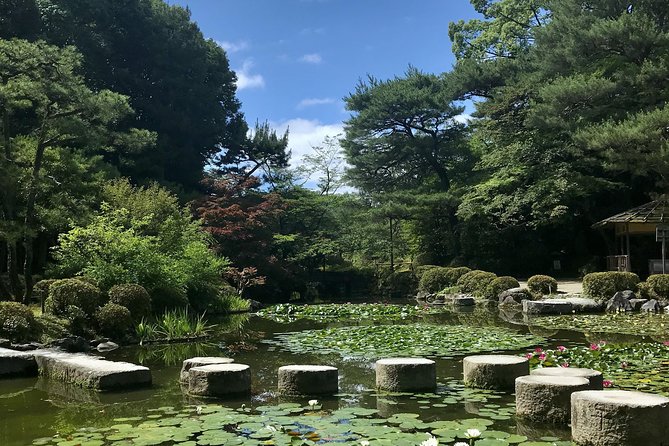
Stop three is Heian Shrine. The shrine itself can be well-known, but the garden behind it is the real reason this stop is on the route. You’ll spend about an hour there, with a focus on one of the most picturesque gardens in Kyoto.
What makes it special:
- You get the atmosphere of a major shrine without the same level of crowd energy.
- The garden is the “main event” here, so your time stays focused.
Practical note:
- This is an easy one to enjoy even if you’re a first-time Kyoto visitor, because the garden gives you a clear sense of what the city does best.
Chishaku-in: sliding-door paintings plus a garden that feels far away
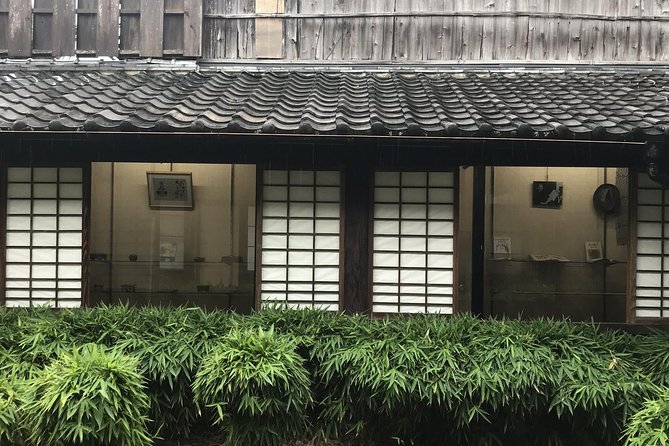
Stop four is Chishaku-in, described as hardly visited compared to the headline sites. The garden is meant to transport your mind to far-away lands, and there are also sliding door paintings by one of Japan’s heralded painters.
Why this works on a half-day style route:
- You get another garden stop, but with a different “layer.”
- Visual art is part of the experience, not an afterthought.
What you’ll likely notice:
- The way the space is composed for quiet viewing. If you like architecture and art details, this one tends to land well.
- If you’ve already seen major temples that rely on size alone, this offers a more intimate kind of awe.
Possible drawback:
- The experience depends on how much attention you give to indoors or framed viewing spaces. If you prefer open-air only, you might not enjoy every minute.
A day of temples goes further with something to break it up.
Sanjusangendo: the big wow of 1,001 golden Buddhas
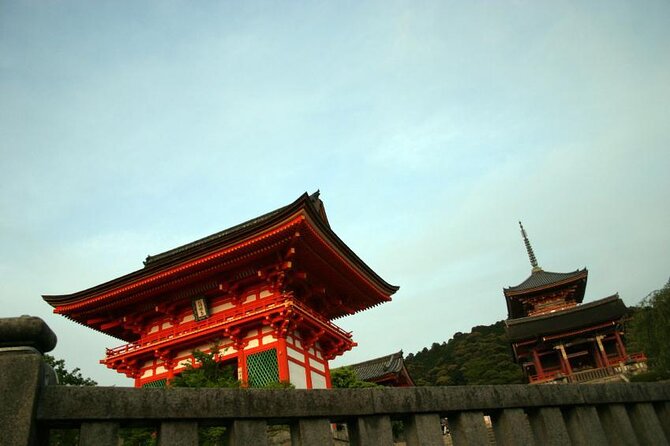
Stop five is Sanjusangendo Temple, where the highlight is 1,001 golden Buddha statues. The description also notes that it’s one of Kyoto’s oldest structures, which adds weight to the moment.
This is the emotional high point for many people because:
- The sheer number is hard to absorb quickly.
- Gold details create a powerful visual effect, especially when you’re not being rushed.
How to experience it well:
- Give yourself time to look across the space, not just at the nearest statues.
- If you come expecting to snap one photo and move on, you’ll probably miss the feeling of scale.
Possible drawback:
- This is the stop most likely to feel the most busy compared to the earlier gardens. That’s not a deal-breaker, it just changes the pace of the day.
Toyokuni Shrine: samurai memory and Japan’s largest bell
Stop six is Toyokuni Shrine, dedicated to an important samurai figure in Japan’s history. On the grounds, you’ll also see the largest bell in Japan.
Why this stop is a strong mid-to-late day shift:
- After several garden moments, you get a more shrine-centered experience with a big, specific object (the bell).
- It’s short at about 20 minutes, so you won’t feel stuck.
What you can expect:
- A more concentrated burst of architecture and spiritual atmosphere.
- Time to look at the shrine grounds and the bell.
Possible drawback:
- If you love long museum-style stops and hate short shrines, this part might feel brief. It’s designed to keep the whole route moving.
Kawai Kanjiro Memorial Museum: wabi-sabi design in a real home setting
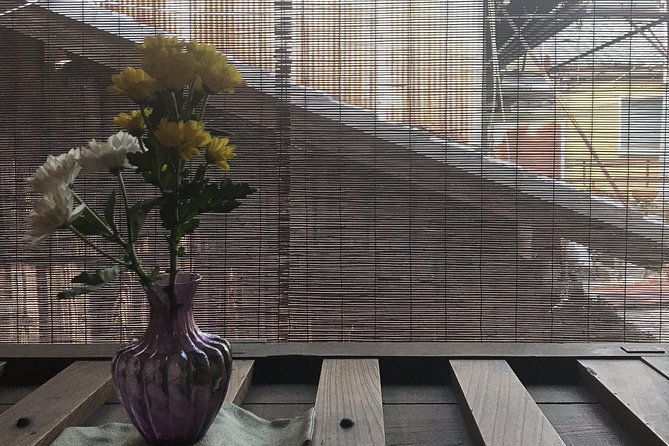
The final stop is Kawai Kanjiro Memorial Museum, described as the converted home of a noted 20th century master potter. This is where you shift from temples to craft and daily living. The design is framed as wabi-sabi, meaning the beauty is in imperfection, material, and everyday character.
What makes this ending work:
- You finish the tour with a different kind of Kyoto. Instead of worship and formal garden rules, you see a person’s life shaped by craft.
- A converted home setting tends to feel more human than a purpose-built museum, even if you aren’t a pottery expert.
What you might notice:
- How the space is arranged in a way that feels lived in.
- The contrast between perfectly composed garden views and the quieter textures of a home-museum.
Logistics:
- You end outside the museum, and it’s around a five-minute walk to Umamchi Bus Stop, which makes it easy to continue your day.
Price and value: what you get for $690 per group
The price is $690 per group, up to four people, for about eight hours. The guide service is included. That already tells you this isn’t priced like a quick ticket tour. It’s built for a private pacing, with the guide shaping your experience stop by stop.
Now the real question is what you pay in addition.
You’ll need to bring cash for:
- Lunch: 1,500 yen per person
- Transportation: 1,000 yen per person
- Admissions: 3,500 yen total per person for the five sites with admission fees
Because the tour notes that admission tickets are not included for the listed stops, plan for those costs. The good news is the admissions amount is bundled as a clear figure for five sites, so you’re not guessing on the spot.
Is it good value? For most people, yes, because:
- Private access saves time and stress. Kyoto rewards patience, and a private format protects that.
- The route focuses on the parts of Kyoto that are often overlooked, which can be harder to self-navigate without local context.
Where it might not be value for you:
- If you already love temples and gardens and you’re comfortable building a route with transit and entrance fees, a DIY day could be cheaper. This tour is for people who want the route to work without the guesswork.
When this Kyoto day makes the most sense
This experience fits best if you:
- Love gardens and want to see them as a designed experience, not a background.
- Prefer calmer cultural stops over the busiest “famous photo first” sites.
- Appreciate a guide who can connect what you’re seeing to the feeling and purpose of the space.
It can also work well for people who have been to Kyoto before. If you’ve already done the main hits, the quieter temple grounds and the pottery home-museum ending give you a different angle.
One caution: the route may not include every stop. It’s flexible by design, and you help decide what gets cut if the day needs to shorten.
Should you book this Path Less Traveled private Kyoto tour?
I’d book it if you want Kyoto without sprinting. The day has a thoughtful mix: tranquil gardens early, a major Buddha moment mid-route, and then a craft-focused ending at Kawai Kanjiro’s home-museum. That sequencing makes the day feel coherent instead of random.
I’d skip it if you:
- Want a fixed checklist with zero changes.
- Dislike gardens enough that you’d rather spend your time somewhere else.
- Are trying to keep total costs as low as possible, since you’ll still need cash for lunch, transport, and admissions.
If your goal is a quiet, well-guided Kyoto day where you notice details, this is the kind of tour that turns the volume down and the meaning up.
FAQ
How long is the Kyoto private tour?
It runs about 8 hours.
How many people are in the private group?
It is a private tour for only your group, up to 4 people.
What time does the tour start?
It starts at 9:00 am.
Where do we meet and end?
You meet at Keage Station, Higashikomonozacho, Higashiyama Ward, Kyoto. You end outside Kawai Kanjiro Memorial Museum.
Is the lunch included in the price?
No. You need an additional 1,500 yen cash per guest for lunch.
Do I need cash for transportation during the day?
Yes. You need an additional 1,000 yen cash per guest for transportation.
Are admission fees included?
No. Admission tickets are not included. The total admission fee listed is 3,500 yen cash per person for five sites.
Is the tour dependent on weather?
Yes, it requires good weather. If it is canceled due to poor weather, you will be offered a different date or a full refund.
New This Season
- Koyasan Day Trip by Private Car from Kyoto
- Old Port Town and Ultimate Sake Tasting Private Tour From Kyoto
- Sacred Peak & Ancient Paths: Kurama-Kibune Hiking Experience
- Kyoto’s Timeless Charm: 3hr Exploration of History and Peace
- Kyoto: 5 Types of Sushi Making
- Kyoto: Exclusive ZEN practice at Manpukuji temple in Uji
- Kyoto: Private Seasonal Aroma Yoga Class
- Traversing Kyoto’s Scenic West – Arashiyama to Kinkakuji
Private, compared.
Fushimi Inari Hidden Hiking Tour (Private Option Available)
Read our review →
Private Kyoto Tour with a Local, Highlights & Hidden Gems, Personalised
Read our review →
Kyoto 6hr Private Tour with Government-Licensed Guide
Read our review →
10 Must-see Spots in Kyoto One Day Private Tour (up to 7 people)
Read our review →
Kyoto 4hr Private Tour with Government-Licensed Guide
Read our review →
Private Kyoto Tour with Licensed Guide & Vehicle (Max 15 persons)
Read our review →