Reviewed · PRIVATE
Kyoto tour 12 hours Private Nagoya pick up available
Kyoto can feel like a puzzle, this makes it easy. I like the private car and the way you can get dropped off and picked up close to where you want to be, so you lose less energy to transfers. I also like the flexible timing, which lets you decide how long to stay at each highlight. One possible drawback: this is not a full, in-depth guided lecture, so if you want heavy historical storytelling, you’ll rely more on your own reading and the driver’s translation help.
You get an easy rhythm for a long day: ride in comfort, stop at the big hits, and adjust on the fly. For the most part, the tour includes time at free sights, but you will pay the entry fee at Kinkakuji. If you’re traveling with a group and want maximum sightseeing with minimum walking between locations, this setup is built for you.
In This Review
- Key points to know before you go
- Kyoto private car service, minus the transit headache
- Your driver and your pace, not a scripted day
- Stop 1: Arashiyama and the Togetsukyo Bridge views
- Stop 2: Kinkakuji Temple, Golden Pavilion on your terms
- Stop 3: Nishiki Market for shopping and quick bites
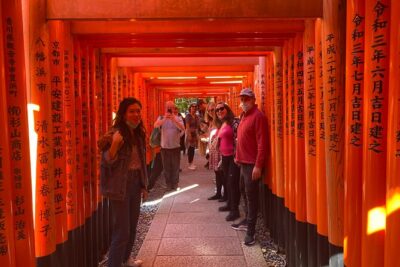
- Stop 4: Fushimi Inari-taisha Shrine and the torii walk
- Stop 5: Kiyomizu-dera for the UNESCO-listed viewpoint stop
- Stop 6: Higashiyama Ward time and Hōkan-ji
- Lunch, timing, and how not to get stuck with a surprise
- Price and value: what you pay for, and what you don’t
- Who this Kyoto private tour fits best
- Should you book this private Kyoto tour from Nagoya?
- FAQ
- How long is the Kyoto private tour?
- What is the group size for this private tour?
- Is pickup available from Nagoya?
- Are tickets included for all attractions?
- Is lunch included in the price?
- What languages does the driver speak?
- Is there WiFi on the vehicle?
- Do I get help with photos?
- Is the tour flexible if we want to skip or add stops?
- What is the cancellation policy?
Key points to know before you go
- Nagoya-area pickup available so you start the day already in motion.
- You control the time at each stop, meaning no feeling trapped on a fixed schedule.
- Fewer transfers equals less walking strain, especially compared with crowded trains and buses.
- Most major stops are free, with Kinkakuji the notable paid ticket.
- English/Tagalog/Japanese speaking driver, plus translation and practical help.
- Photography assistance included, but it is not the same thing as having a professional photographer.
Kyoto private car service, minus the transit headache
Kyoto is famous for being walkable, but that can turn into a trap if you try to hop around using public transportation all day. This tour is built around a simple idea: get you from place to place in comfort, then park you close enough that you can spend your energy on the sights, not the commute.
The big win here is that you’re not dealing with packed trains, confusing transfers, or that moment when everyone exits the station in different directions. With an air-conditioned vehicle and WiFi on board, you can regroup, plan your next move, and stay comfortable even if the weather turns.
The other practical advantage is the private setup. This is not a bus tour where you have to match someone else’s pace. It’s just your group, so if you want to linger for photos at a bridge view or take an extra minute at a shrine pathway, you’re not arguing with a clock.
Your driver and your pace, not a scripted day
The tour is flexible and customizable, and that matters more than it sounds. You can typically skip or add destinations, and you can also request a photo-focused itinerary that targets the best photo spots. Even without a custom request, the standard plan is designed around letting you choose how long you stay.
Expect a driver who helps you with guidance and translation rather than acting like a full professional guide. The service includes a photography assist, but it’s described as help for taking pictures, not a stand-in for a dedicated pro photographer. In plain terms: you’ll get support and logistics help, but you should still come ready to enjoy the places yourself.
In one account of the experience style, the driver was calm and responsive, answering questions while keeping things low-key. That fits the way this tour is positioned: smooth logistics, your pace, practical help, and fewer stress points.
A quieter way to spend a day in Kyoto
- Fushimi Inari Hidden Hiking Tour (Private Option Available)
★ 5.0 · 1,750 reviews - Private Kyoto Tour with a Local, Highlights & Hidden Gems, Personalised
★ 5.0 · 1,543 reviews - Kyoto 6hr Private Tour with Government-Licensed Guide
★ 5.0 · 1,369 reviews - 10 Must-see Spots in Kyoto One Day Private Tour (up to 7 people)
★ 5.0 · 1,108 reviews
Stop 1: Arashiyama and the Togetsukyo Bridge views
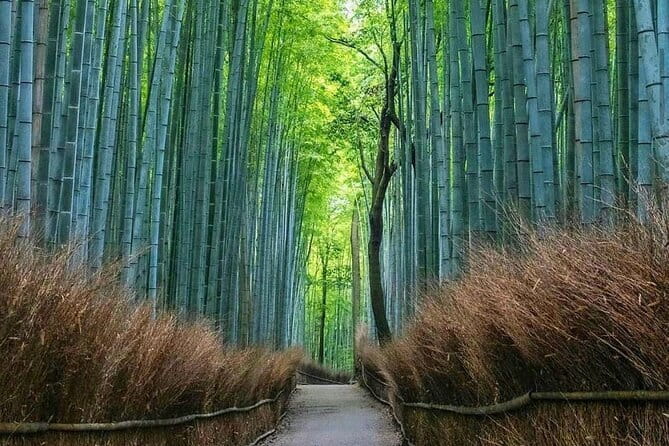
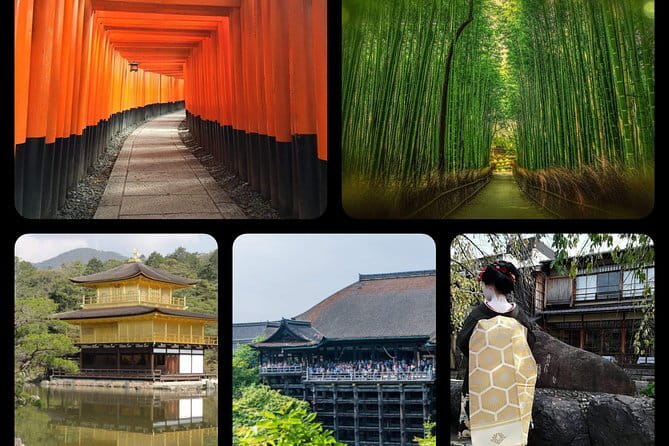
Arashiyama is where Kyoto feels cinematic. The standout here is Togetsukyo Bridge, a classic viewpoint that gives you a postcard-style scene right away. You’re scheduled for about 2 hours at Arashiyama, and you choose your own timing within that window.
What you’ll likely enjoy most is the freedom to mix slow strolling with snack time. The tour notes that your stay can include time for food, which is useful because Arashiyama is one of those places where the walk turns into wandering, and wandering works best when you’re not on a strict itinerary.
A consideration: Arashiyama can draw crowds, especially at peak times. Since the tour is private, you can still manage your experience by shifting your focus, for example spending more time on the bridge views and less time forcing a rushed circuit elsewhere. The car logistics help you avoid the worst of “getting there took forever,” even if the attraction itself is busy.
Stop 2: Kinkakuji Temple, Golden Pavilion on your terms
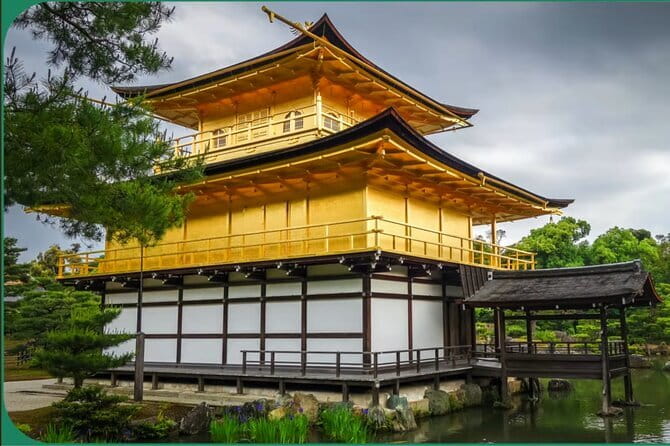
Kinkakuji, the Golden Pavilion, is the kind of sight people travel to Kyoto for. You get about 1 hour here, and the entry fee is not included. The tour lists Kinkakuji admission as ¥500 per person, so it’s the one stop where you should plan to pay extra.
Even with only 1 hour, the private format helps because you are not stuck coordinating with a group schedule. You can arrive, get your main views, and then decide whether you want more time for angles and photos or a quicker stop to save energy for the next neighborhoods.
Drawback to keep in mind: because the entry fee is separate, your total day budget depends on how many people you bring. Also, if you want a lot of context and storytelling, this tour’s guide role is more practical than lecture-based. You can still enjoy it fully, but if you’re a history-nerd you might want to read a bit beforehand so the pavilion has extra meaning when you’re standing in front of it.
Stop 3: Nishiki Market for shopping and quick bites
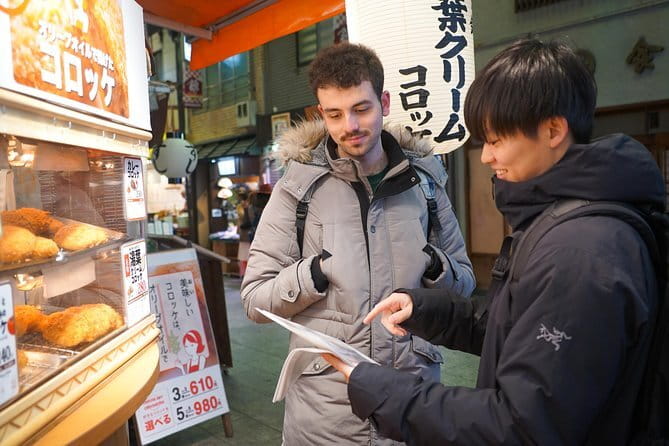
Nishiki Market is one of Kyoto’s best places for casual food breaks and souvenir shopping. You get around 2 hours here, and admission is listed as free.
This is the stop that often makes the day feel real. Temples are dramatic, shrines are iconic, but Nishiki is where you interact with the everyday side of the city. Even if you don’t buy much, you can still use the time to snack, browse, and get a sense of what people actually eat and buy in Kyoto.
A practical consideration: markets can be crowded. A private car does not remove the crowds once you’re inside, but it helps you avoid crowd-on-crowd stress from transit. Use the Nishiki window to pick what you like fast. If a stall looks good, you don’t have to force a perfect plan. Two hours is enough to sample and shop without feeling like you’re speed-running.
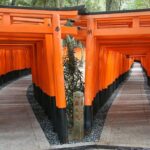
Stop 4: Fushimi Inari-taisha Shrine and the torii walk
Fushimi Inari-taisha is famous for the torii gates, and the tour schedules about 2 hours for this stop. Admission is listed as free, and the experience is built around giving you time to walk and photograph without a hard rush.
This is the one place where your personal choice matters a lot. Some people want the full torii pathway experience at a slower pace. Others prefer a shorter route for views and photos, then pivot to the busy shrine atmosphere. Since you decide how long you stay, you can match the day to your energy level.
A drawback to consider: torii-path walking adds up. If your priority is minimizing fatigue, you’ll still get exercise here, but you can control how far you go. If your legs are tired from earlier stops, you can shorten your route and focus on the best gate views instead of trying to complete everything.
A day of temples goes further with something to break it up.
Stop 5: Kiyomizu-dera for the UNESCO-listed viewpoint stop
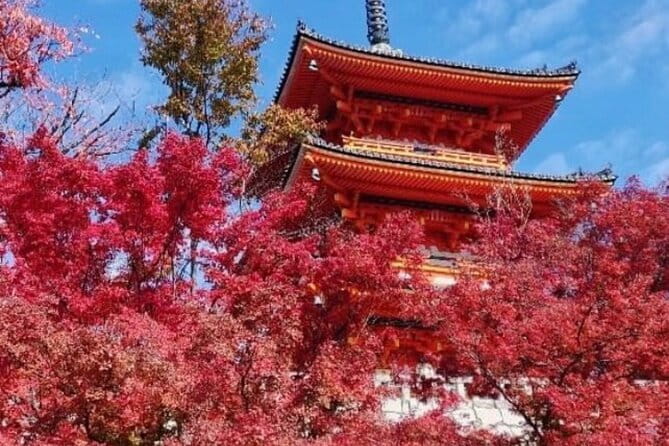
Kiyomizu-dera is listed as a UNESCO World Heritage site, and you’re allocated about 1 hour at this stop. Admission is listed as free on the tour details, which helps with budgeting.
The biggest reason to include Kiyomizu-dera is the view from the famous wooden stage area. The tour description highlights the stage and city views, plus the sacred Otowa Wa-tonfall area.
Because you have a limited window, I recommend using this hour for the core experience first. Get to the main viewpoint, take your photos, then decide how much extra walking you want to do inside the complex. A private format is helpful here because you can adjust if you move more slowly or if you want extra time for one particular angle.
One more practical point: if you’re aiming for photos, bring a plan for where you want your shots, because you might not have time to chase every perspective. Better to nail a few great ones than to burn the clock with constant wandering.
Stop 6: Higashiyama Ward time and Hōkan-ji
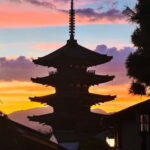
After the core highlights, the itinerary allows the remaining hours for travel time and your time in the Higashiyama area. The details specifically name Hōkan-ji with an allocated 2 hours, with admission listed as free.
Higashiyama is the kind of Kyoto district where the streets and atmosphere matter as much as any single building. Even if you do not go deep into every corner, this is a good segment to slow down and soak up the feel of the neighborhood.
A consideration: the exact flow depends on your earlier timing and the amount of travel time needed. Because this tour is described as flexible and not strictly fixed, your Higashiyama time may feel slightly different depending on how long you spend at each stop before it. That’s not a flaw, it’s the nature of a private day, but it helps to keep expectations flexible.
Lunch, timing, and how not to get stuck with a surprise
Lunch is not included. The tour gives an estimated budget of ¥1000 to ¥3000.
This is useful because it tells you two things. One, you’re expected to eat on the go rather than have a guaranteed sit-down meal planned for you. Two, the food cost range suggests you can keep lunch affordable without needing to hunt for expensive tourist menus.
Timing is also part of the deal. Since you decide how long you stay, you can time lunch to avoid the worst crowd moments. If you feel hungry mid-morning, you can build a snack stop into the plan at Nishiki. If you prefer a full lunch after Kiyomizu-dera, you can aim for that. Either way, keep some flexibility because traffic and walking pace will change how the day feels.
Price and value: what you pay for, and what you don’t
The price is listed as $1,172.75 per group up to 6. So your per-person cost depends heavily on group size.
- If you’re a full group of 6, that works out to about $195 per person.
- If you’re a smaller group, the cost per person rises fast, for example 4 people is about $293 each, and 2 people is about $586 each.
So what are you really buying? You’re buying a private, air-conditioned car, parking and gas coverage, plus driver support and translation help. You’re also buying flexibility: you can skip or add stops, and you can control how long you spend at each location.
What you are not buying is a fully scripted, lecture-heavy tour guide. The service is described as not being a professional guide, though you still get assistance and translation. And you’re not buying included temple entry for Kinkakuji, which costs ¥500 per person.
My take on value: this is strongest when you have enough people to share the vehicle cost, and when you care about comfort and time efficiency. If you’re traveling solo or as a couple, it can still make sense if you want a tailored plan and you’re done with transit stress, but you should weigh that against the fact that the guide role is more “help and logistics” than “deep guided narration.”
Who this Kyoto private tour fits best
This tour suits you best if you fall into one or more of these categories:
- You want the highlights, but you don’t want the day to feel like a transit scavenger hunt.
- Your group includes people who tire easily from transfers and longer walks between neighborhoods.
- You prefer a flexible day where you can adjust your pace and photo priorities.
- You like practical guidance and translation help, more than a nonstop history lecture.
- You value a comfortable ride with WiFi, bottled water, and an air-conditioned vehicle.
It might be less ideal if you want a very detailed, professional guide style at every stop. The plan can still be wonderful, but you’ll likely enjoy it most if you treat it as a private sightseeing day with support, not a classroom.
Should you book this private Kyoto tour from Nagoya?
I’d book it if your priority is comfort, efficiency, and control. The combination of Nagoya-area pickup, private car logistics, and self-directed stop times is exactly what makes Kyoto feel manageable for a full day. You can see Arashiyama, Kinkakuji, Nishiki Market, Fushimi Inari, Kiyomizu-dera, and get time in Higashiyama without bouncing around transit all day.
I would pause and double-check your expectations if you want a professional, history-heavy guide experience at every site. Also, budget for the one extra ticket, Kinkakuji, plus lunch.
If you’re going with up to 6 people, this becomes even more compelling because the group price spreads out. For most people who want a smooth, flexible Kyoto day with fewer headaches, this is a smart way to do it.
FAQ
How long is the Kyoto private tour?
The tour duration is approximately 10 to 12 hours.
What is the group size for this private tour?
It is priced for a group of up to 6 people, and only your group participates.
Is pickup available from Nagoya?
Yes, Nagoya area pickup is available.
Are tickets included for all attractions?
Not all tickets are included. Kinkakuji Temple has an entry fee of ¥500 per person that is not included.
Is lunch included in the price?
No. Lunch is not included, and the tour estimates ¥1000 to ¥3000 yen.
What languages does the driver speak?
The driver speaks English, Tagalog, and Nihongo.
Is there WiFi on the vehicle?
Yes, WiFi is included on board.
Do I get help with photos?
Yes, photography assistance is included, but it is not described as help from a professional photographer.
Is the tour flexible if we want to skip or add stops?
Yes, the itinerary is described as flexible and customizable, so you can skip or add destinations.
What is the cancellation policy?
Free cancellation is available up to 24 hours in advance for a full refund. If you cancel less than 24 hours before the start time, the amount paid is not refunded.
New This Season
- Koyasan Day Trip by Private Car from Kyoto
- Old Port Town and Ultimate Sake Tasting Private Tour From Kyoto
- Kyoto’s Timeless Charm: 3hr Exploration of History and Peace
- Kyoto: 5 Types of Sushi Making
- Sacred Peak & Ancient Paths: Kurama-Kibune Hiking Experience
- Kyoto: Exclusive ZEN practice at Manpukuji temple in Uji
- Kyoto: Private Seasonal Aroma Yoga Class
- Traversing Kyoto’s Scenic West – Arashiyama to Kinkakuji
Private, compared.
Fushimi Inari Hidden Hiking Tour (Private Option Available)
Read our review →
Private Kyoto Tour with a Local, Highlights & Hidden Gems, Personalised
Read our review →
Kyoto 6hr Private Tour with Government-Licensed Guide
Read our review →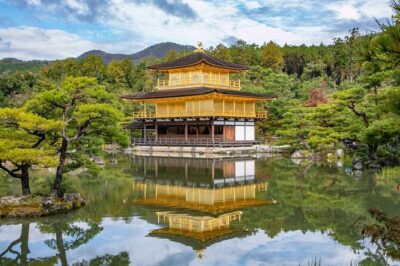
10 Must-see Spots in Kyoto One Day Private Tour (up to 7 people)
Read our review →
Kyoto 4hr Private Tour with Government-Licensed Guide
Read our review →
Private Kyoto Tour with Licensed Guide & Vehicle (Max 15 persons)
Read our review →