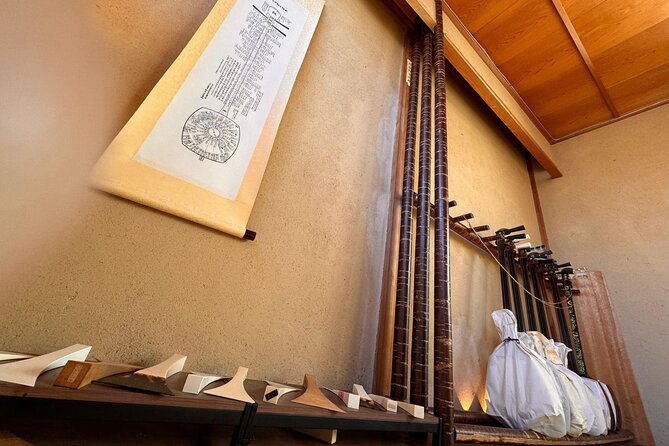
Reviewed · PRIVATE
Shamisen Experience in Kyoto 【Private】
Kyoto sounds different when you hold the strings. This private shamisen lesson in Kyoto is taught in English, so you spend 1 hour 30 minutes focused on learning the basics, then playing along with a professional musician, not just watching from the sidelines. You also get a Japanese tea break during relaxed conversation, so it feels like a cultural sit-down, not a classroom drill.
I especially love the jam session part. You learn using traditional scales and then get room to play melodies your way while Jack-san accompanies you. Second, I love the tone of the lesson, calm and practical, with a Japanese tea break that keeps the pace friendly, even if you are brand new to the shamisen.
One thing to consider: 1 hour 30 minutes is not long enough to make you sound like a pro. And the meeting point is in Kita Ward, so you will want to plan your timing for getting there from wherever you are staying.
In This Review
- Key Highlights You Will Actually Care About
- Entering The Dojo: What a “Private” Lesson Changes
- Where You Meet in Kyoto (and Why Location Matters)
- First Steps: Tuning, Seating, and Posture
- Jack-san’s English Teaching Style (and the Tea Break)
- The Jam Session: Traditional Scales and Your First Real Playing
- The Traditional Song You Learn (and What You Can Do After)
- Left-Handed? There Is a Shamisen Option
- Price and Value: Is $99.10 for 1.5 Hours Fair?
- Timing Tips: When This Works Best in a Kyoto Day
- What to Bring (and What Not to Stress About)
- Should You Book This Private Shamisen Lesson?
- FAQ
- How long is the Shamisen Experience in Kyoto?
- Is this experience private?
- Do I need shamisen experience before booking?
- Is the lesson taught in English?
- What is included during the lesson besides playing?
- Is there a left-handed shamisen option?
- Where does the activity start and end?
- What is the cancellation policy?
Key Highlights You Will Actually Care About

- Private, one-on-one instruction with Jack-san, so questions do not get lost
- English lesson for beginners, including how to tune and how to sit
- Japanese tea break built into the experience for a relaxed rhythm
- Jam session with traditional scales, so you play early, not at the end
- Lefty shamisen available, so left-handed players are not an afterthought
- Souvenir gift included to mark the moment
Entering The Dojo: What a “Private” Lesson Changes
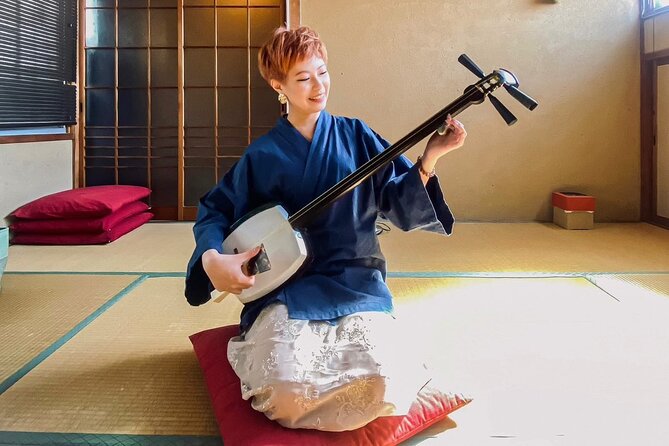
This experience swaps typical sightseeing for something hands-on. Instead of racing between temples, you get to learn a traditional three-stringed Japanese instrument called the shamisen, right there in Kyoto. The key difference is that it is private, meaning it is tailored to your group and you get uninterrupted attention.
I like that the lesson is designed for first-timers. There is no need to already know music notation or how to play anything on a string instrument. The structure supports beginners step by step, so you are not stuck feeling lost while everyone else has moved ahead.
Also, the instruction is in English. Kyoto has plenty of culture tours, but English teaching can be hit or miss depending on the activity. Here, English is part of the plan, which makes the techniques easier to grasp and the conversation more natural.
Where You Meet in Kyoto (and Why Location Matters)
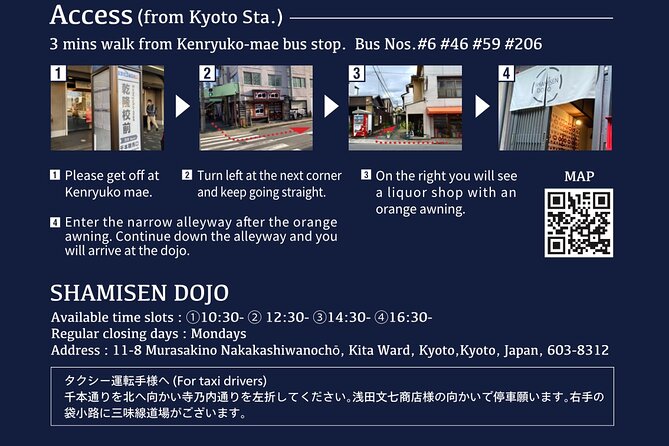
You start at Murasakino Nakakashiwanocho, Kita Ward, Kyoto, 603-8312, Japan. Then the activity ends back at the same meeting point.
That return-to-start setup is convenient. You will not have to figure out how to continue your day from a faraway drop-off. Still, Kita Ward is not the center of the usual tourist loop, so you should build extra time if your lodging is in Gion, Kyoto Station area, or Arashiyama. If you are visiting on a rainy day, this plan is also refreshingly weather-proof because the core is indoors.
You can also expect it to be near public transportation. That helps, because 1.5 hours passes quickly, and you want your commute to be painless rather than stressful.
A quieter way to spend a day in Kyoto
- Fushimi Inari Hidden Hiking Tour (Private Option Available)
★ 5.0 · 1,750 reviews - Private Kyoto Tour with a Local, Highlights & Hidden Gems, Personalised
★ 5.0 · 1,543 reviews - Kyoto 6hr Private Tour with Government-Licensed Guide
★ 5.0 · 1,369 reviews - 10 Must-see Spots in Kyoto One Day Private Tour (up to 7 people)
★ 5.0 · 1,108 reviews
First Steps: Tuning, Seating, and Posture
A shamisen lesson lives or dies on fundamentals. The good news is that this one starts from practical basics, not theory. You can expect to learn how to tune and how to play in a way that keeps your body comfortable.
From the way the lesson is described, the teacher pays attention to the details that most people never think about at first. Seating and posture matter because the instrument position affects everything, from hand placement to the way notes come out. This is where a private setting really helps, because you can get quick corrections on your form instead of guessing.
If you have played any guitar, violin, or other string instrument before, you will still benefit. You may already understand hand control, but you likely do not know shamisen-specific posture and tuning habits. If you have never touched a string instrument, you still get a beginner-friendly pathway that helps you move from confused to confident within the short time window.
Jack-san’s English Teaching Style (and the Tea Break)
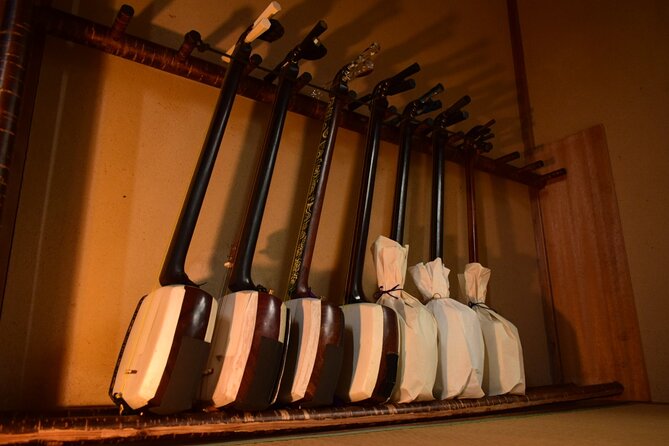
The owner and teacher, Jack-san, is a professional shamisen player and he teaches in English. That sounds simple, but it matters more than it seems. You learn faster when you can ask follow-up questions and when key instructions land clearly the first time.
The experience also includes a Japanese tea break during the lesson. This is not just a snack. It functions like a reset button. You slow down, you chat casually, and then you continue learning with fresher focus. That rhythm is especially helpful if your brain is busy translating new instructions in real time.
You will also get a more human vibe than in many music workshops. The atmosphere is relaxed conversations plus clear guidance, which makes it easier to play without fear of making mistakes. In other words, you will not feel like you are being graded.
The Jam Session: Traditional Scales and Your First Real Playing
This is the part many people remember. The standout moment is a jam session with Jack-san, using traditional Japanese scales.
What you should expect is that you are not only learning one fixed pattern and then stopping. Instead, the teacher guides you while encouraging you to freely play melodies and express yourself through the shamisen. That shift, from copying to creating, is where the instrument becomes fun.
For beginners, this matters because playing a melody you recognize is much more satisfying than doing exercises that feel abstract. Even if you are new, the session is structured so you can participate. You get to hear how the shamisen supports melody in traditional music, and you get coaching while you try.
Jack-san accompanies you. You are not alone in the performance. That makes the jam session feel like collaboration rather than pressure, and it helps you understand how your part fits into the bigger musical picture.
The Traditional Song You Learn (and What You Can Do After)
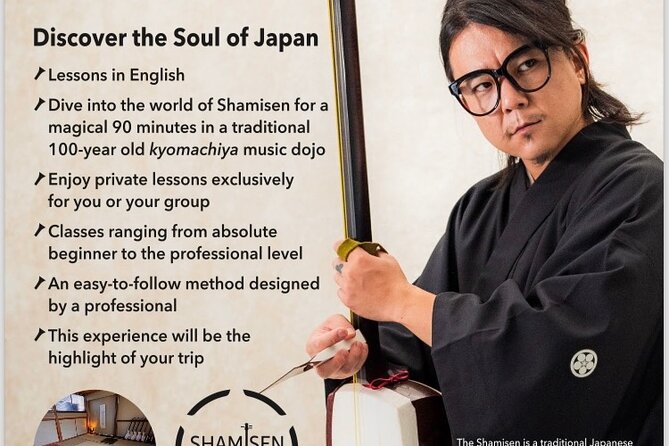
The lesson includes learning to play a traditional Japanese song. You also learn practical techniques along the way, like tuning and proper form, which you can use later if you decide to practice with a shamisen of your own.
What I like about this setup is that it is not just a one-time performance. You leave with something tangible: a melody you can point to, plus the body mechanics to try again. Even if you cannot replicate it perfectly right away, the next attempt becomes easier because you know what should be happening in your hands and posture.
Also, because the jam session uses traditional scales, you are not just memorizing one “song trick.” You are gaining a sense of how traditional notes connect. That is useful if you later explore more shamisen music on your own.
A day of temples goes further with something to break it up.


Left-Handed? There Is a Shamisen Option
If you are left-handed, this detail is worth highlighting. A lefty shamisen is available for left-handed players.
That sounds small, but it is exactly the kind of accommodation that prevents frustration. Standard instrument setups can force left-handed players to adapt in awkward ways. Having an option designed for you makes the learning feel more natural and helps you focus on technique rather than survival.
Price and Value: Is $99.10 for 1.5 Hours Fair?
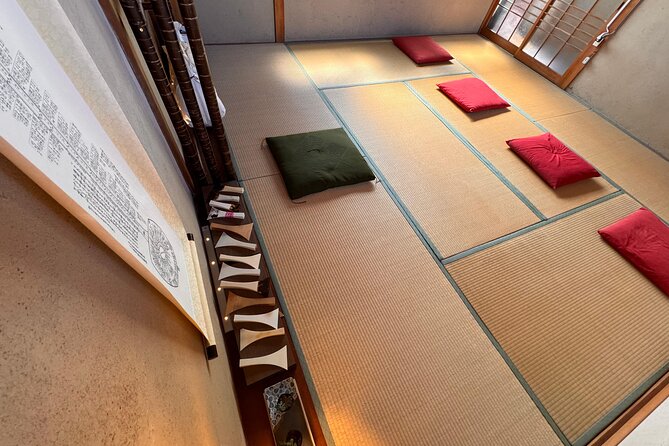
The price is $99.10 per person for about 1 hour 30 minutes, and it is a private experience. Average booking time is about 35 days in advance.
Here is how I think about the value. Traditional lessons can be expensive, especially when they are private and taught in English. You are paying for two things that do not happen in group classes: (1) direct feedback on your posture and technique, and (2) coaching while you play, especially during the jam session. The teacher is with you the whole time, and the experience includes a tea break and a souvenir gift.
Could you spend less and watch shamisen music on a stage? Yes. But you would not walk away with the chance to tune the instrument, practice basic technique, and play along. If your goal is real hands-on cultural learning, the cost starts to make sense.
Also, because the experience is short, it is easier to fit into a Kyoto schedule. You do not need a half-day commitment, which helps if you are juggling multiple interests in a single trip.
Timing Tips: When This Works Best in a Kyoto Day
This lesson is 1.5 hours, so it fits well as a mid-morning plan, an early afternoon reset, or a rainy-day activity. If you are touring temples for most of the day, this is a strong change of pace. It also gives you a break from crowds, walking, and constant decision-making.
Since you start in Kita Ward, I would schedule it with realistic travel time. You want to arrive early enough to settle in, not sprint through Kyoto streets at the last minute. Once the lesson starts, you will want to focus on learning, not on catching your breath.
What to Bring (and What Not to Stress About)
The data says you only need to be able to participate, and most travelers can join. No prior experience is required, which is a big mental relief.
Beyond that, I would keep it simple. Wear comfortable clothing you can sit and move in. If you are the kind of person who gets nervous in lessons, remember this is built for beginners and paced with a tea break and one-to-one guidance. Your job is to show up and try. The teacher handles the hard part.
Also, because the ticket is mobile, you do not need to worry about printing anything. Just keep your phone ready for the ticket information.
Should You Book This Private Shamisen Lesson?
Book it if you want a Kyoto experience that is cultural and practical, not just visual. If you like music, enjoy learning by doing, or want an English-friendly way to connect with traditional Japanese art, this fits well. The jam session and the chance to learn a traditional song make it feel active, not passive.
Skip it or reconsider if you are looking for a long, museum-style cultural tour or if you expect to become advanced in 1 hour 30 minutes. This is about starting well, getting correct fundamentals, and leaving with a melody plus technique to keep going.
If your schedule can handle Kita Ward and you want something hands-on with a real musician, this is a solid choice. The kind of memory you take home is not a photo. It is the feeling of making the shamisen speak, even if only for your first attempt.
FAQ
How long is the Shamisen Experience in Kyoto?
It lasts about 1 hour 30 minutes.
Is this experience private?
Yes. It is a private tour or activity, so only your group participates.
Do I need shamisen experience before booking?
No experience is required. The curriculum is designed to be beginner-friendly.
Is the lesson taught in English?
Yes. The learning is in English.
What is included during the lesson besides playing?
The lesson includes a Japanese tea break and a souvenir gift.
Is there a left-handed shamisen option?
Yes. A lefty shamisen is available for left-handed players.
Where does the activity start and end?
It starts at Murasakino Nakakashiwanocho, Kita Ward, Kyoto 603-8312, Japan, and ends back at the same meeting point.
What is the cancellation policy?
You can cancel for a full refund up to 24 hours before the experience’s start time.
New This Season
- Koyasan Day Trip by Private Car from Kyoto
- Old Port Town and Ultimate Sake Tasting Private Tour From Kyoto
- Kyoto’s Timeless Charm: 3hr Exploration of History and Peace
- Kyoto: 5 Types of Sushi Making
- Sacred Peak & Ancient Paths: Kurama-Kibune Hiking Experience
- Kyoto: Exclusive ZEN practice at Manpukuji temple in Uji
- Kyoto: Private Seasonal Aroma Yoga Class
- Traversing Kyoto’s Scenic West – Arashiyama to Kinkakuji
Private, compared.
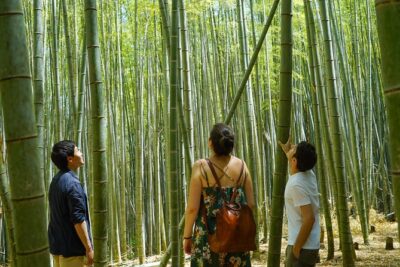
Fushimi Inari Hidden Hiking Tour (Private Option Available)
Read our review →
Private Kyoto Tour with a Local, Highlights & Hidden Gems, Personalised
Read our review →
Kyoto 6hr Private Tour with Government-Licensed Guide
Read our review →
10 Must-see Spots in Kyoto One Day Private Tour (up to 7 people)
Read our review →
Kyoto 4hr Private Tour with Government-Licensed Guide
Read our review →
Private Kyoto Tour with Licensed Guide & Vehicle (Max 15 persons)
Read our review →