
Reviewed · ARASHIYAMA BAMBOO FOREST WALKS
Arashiyama/Tenryu-ji Temple Guided Tour
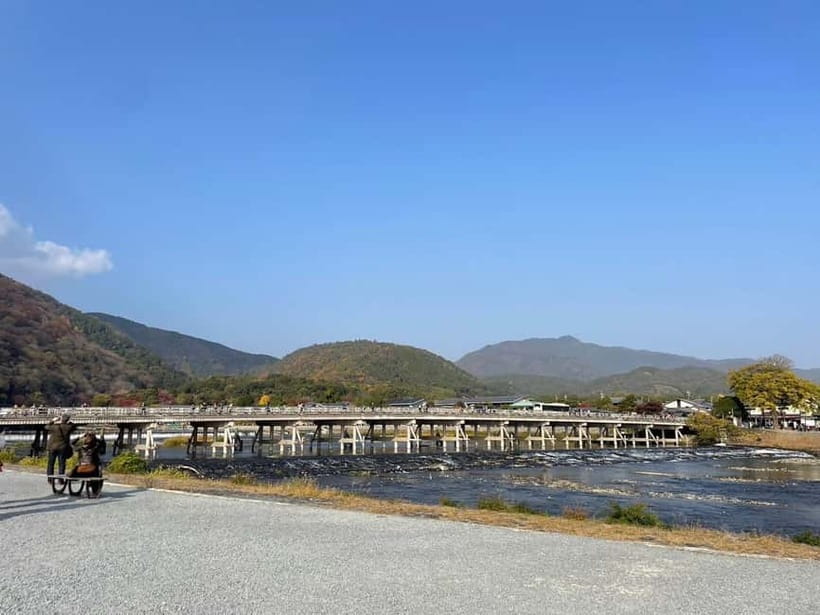
Arashiyama feels like a living postcard, and this guided Tenryu-ji focus keeps you looking at the details that make it work. I especially like the way the tour connects the area’s seasonal beauty to what you see at Sogenchi, Tenryu-ji’s famous garden. One thing to consider is that it runs rain or shine, so you’ll want weather ready shoes and a flexible mindset.
The historic payoff is real: Tenryu-ji’s Sogenchi Garden uses borrowed scenery to blend the Hozu River, nearby mountains, and Kyoto basin into one composed view. You’ll also get a straightforward, comfortable 90 minute pacing with a live guide in Chinese or English. The possible drawback is simple, there is no long linger time built in, so if you want to wander solo for an hour, plan to add extra time afterward.
In This Review
- Key highlights you will notice
- Arashiyama in 90 Minutes, Why This Season Spotting Works
- Tenryu-ji Temple and the Sogenchi Garden’s Borrowed Scenery
- How the Tour Moves Through the Area, Without Feeling Rushed
- Flora and Seasonal Changes in Arashiyama, Four Times More Diverse
- Price and Admission Fees, What the $63 Really Buys
- Practical Tips: Shoes, Crowds, and Getting There by Public Transport
- Who This Guided Walk Fits Best
- Should You Book This Arashiyama Tenryu-ji Tour?
- FAQ
- How long is the Arashiyama and Tenryu-ji guided tour?
- What is included in the price?
- What languages are the live guides available in?
- Will the tour run in rain?
- Is there parking available?
- When can I cancel for a full refund?
Key highlights you will notice
- Sogenchi Garden, borrowed scenery in action, with the Hozu River and distant views treated as part of the design
- Tenryu-ji’s Heian period setting, tied to aristocratic tastes that still shape what you notice today
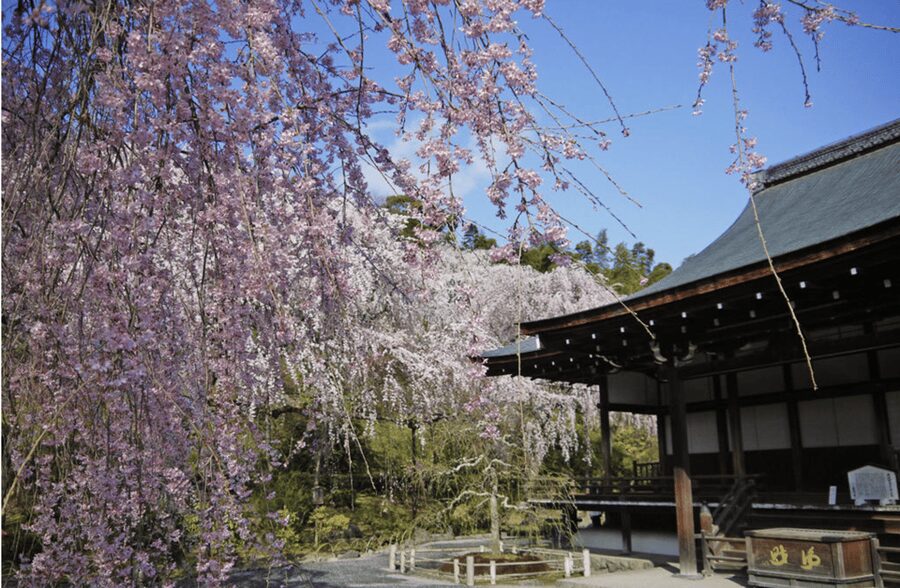
- Arashiyama’s seasonal change, from cherry blossoms to snow capped mountains, all in one area you can revisit
- Flora variety framed for visitors, with the note that Arashiyama vegetation is four times more diverse than Europe
- Private group, live guidance in Chinese or English, so the garden rules and symbolism feel clearer as you walk
Arashiyama in 90 Minutes, Why This Season Spotting Works
Arashiyama is one of those Kyoto places where nature does the storytelling. This tour leans into that fact, with an approach that helps you connect what you see in the moment to what the season is doing to the whole scene.
You will get a practical kind of sightseeing here. Instead of only checking off landmarks, you get help noticing patterns: how plants change texture and color, how sightlines shift, and how water and mountains keep returning as visual anchors.
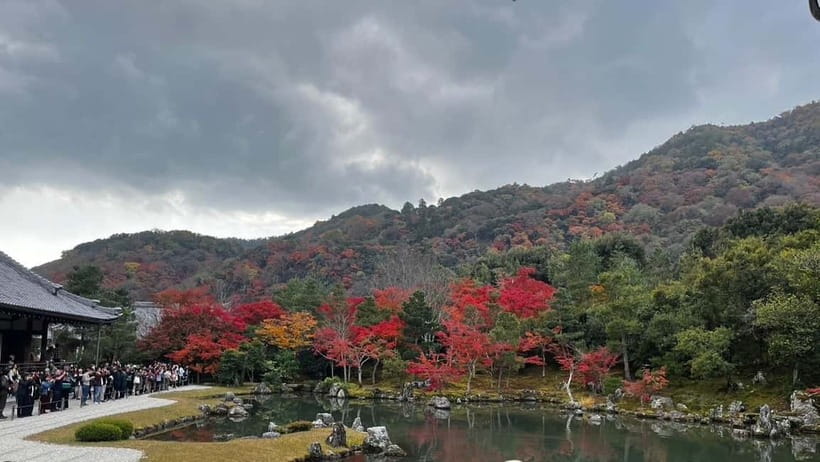
That season angle matters because Arashiyama is not a single mood. In spring you get cherry blossoms, in summer fresh greenery, in autumn the leaves turn, and in winter the mountains can look capped with snow. Even if you visit only once, the tour trains your eyes so the next season feels easier to read.
Tenryu-ji Temple and the Sogenchi Garden’s Borrowed Scenery
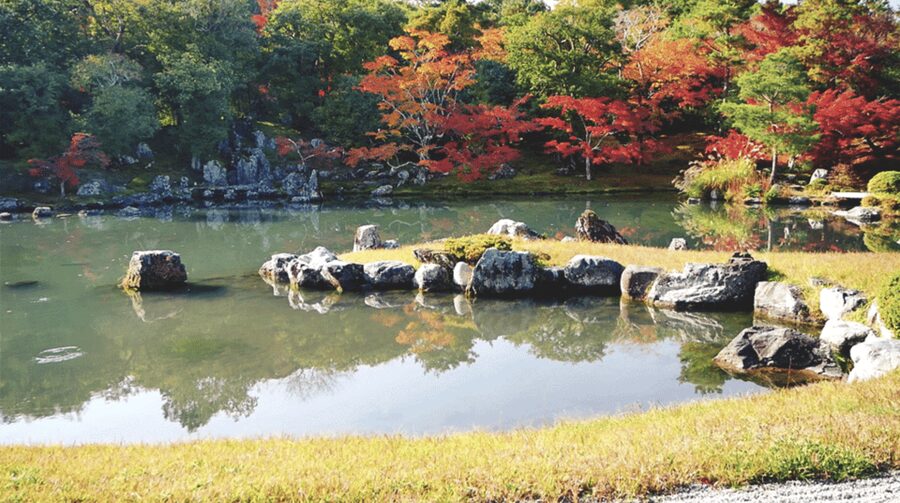
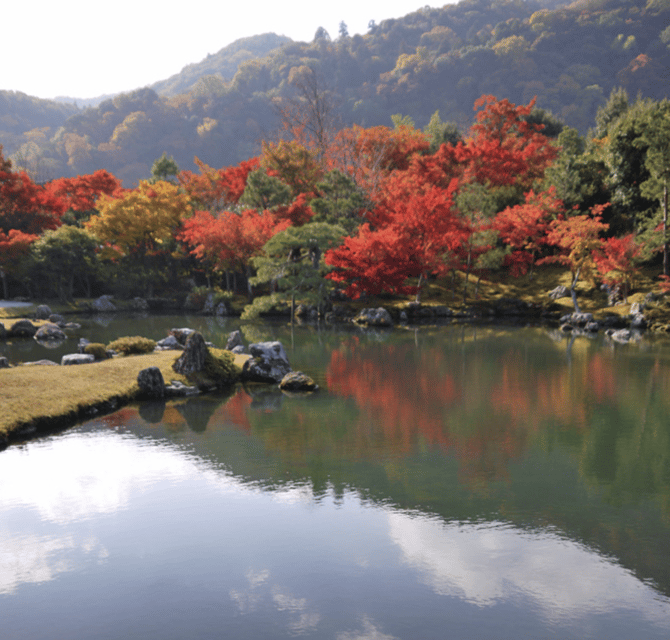
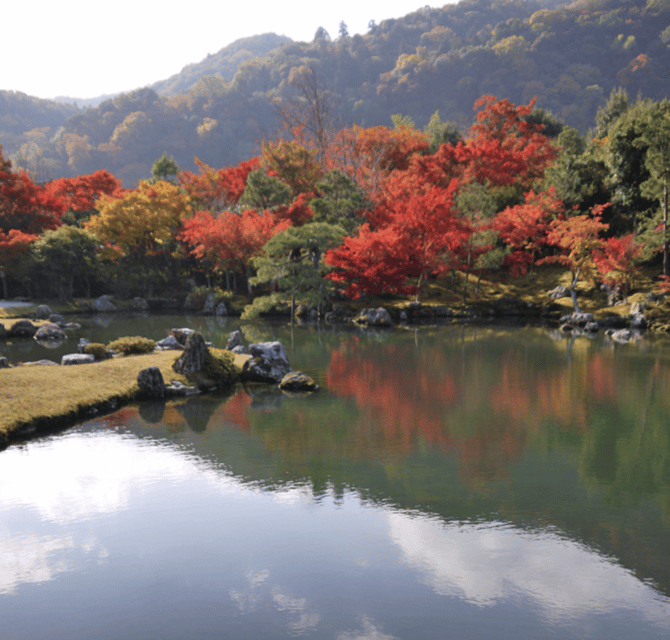
Tenryu-ji is a heavyweight name in Kyoto temple life, but what makes this visit special is the specific garden at its center. The Sogenchi Garden is designed to treat the wider landscape as part of the artwork, using the technique often described as borrowed scenery.
Here is what that means for you on the ground. You are not only staring at a pond and rocks. You are also watching how the garden pulls in surroundings: the Hozu River flow and the surrounding mountains and basin context. The garden’s harmony with nature is the point, and the guide helps you see it as intentional, not accidental.
Tenryu-ji’s garden also sits in a long timeline. Arashiyama has been a playground for aristocrats since ancient times, and Tenryu-ji became a nobles favorite starting in the Heian period. You can feel that historical layering in the way the views are framed and the way the garden invites quiet attention.
Also, if you enjoy gardens but often get stuck thinking, I do not know what I am supposed to look for, this is helpful. Borrowed scenery gives you a clear mental checklist. Look for what feels like it belongs inside the fence, even when it is actually beyond it.
More rooftops worth a detour
- Kyoto: Tea Ceremony Ju-An at Jotokuji Temple
★ 4.9 · 3,207 reviews - Arashiyama Bamboo, Temple, Monkeys, or Secret Sake Brewery
★ 4.8 · 886 reviews - Kyoto: Arashiyama Bamboo Forest, Monkeys, Matcha & Temple Tour
★ 5.0 · 759 reviews - Osaka/Kyoto: Arashiyama, Nara & Fushimi Inari Shrine w/Lunch
★ 4.4 · 754 reviews
How the Tour Moves Through the Area, Without Feeling Rushed
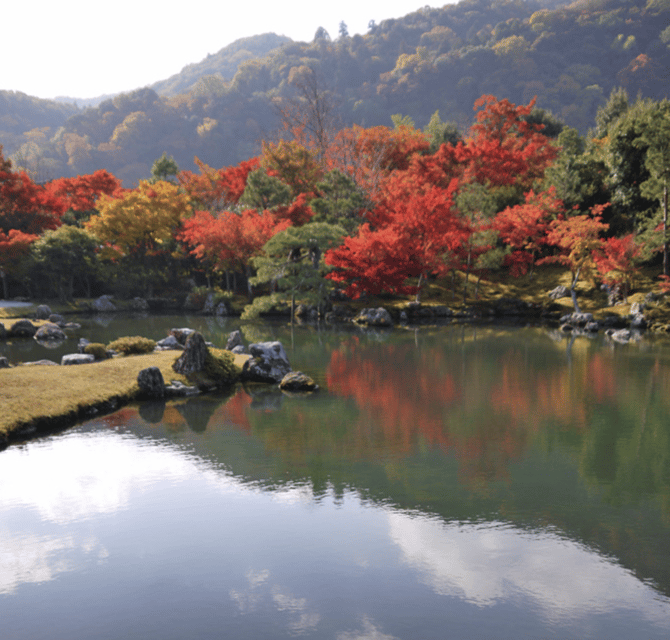
This experience runs 90 minutes, so it is designed for focus, not wandering forever. You can expect a guided flow that connects Arashiyama’s outdoors with Tenryu-ji’s most important garden viewpoint.
The pacing is one reason to choose a guide in the first place. Temple grounds can be easy to walk through on autopilot. With guidance, you get a structure for where to look first, how to relate the garden to the surrounding geography, and how to avoid missing the key visual trick of Sogenchi.
Because it is a private group, you can also move at a calmer speed than you would in a larger crowd. The guide being there in Chinese or English makes a difference too, especially when garden symbolism or terminology needs quick clarification without guesswork.
One practical note. The tour asks you to avoid disturbing other pedestrians by spreading out or walking in a way that blocks foot traffic. In Arashiyama, that is not just politeness, it also keeps your own sightlines clear. If you keep a compact, respectful pace, you will enjoy the views more.
Flora and Seasonal Changes in Arashiyama, Four Times More Diverse
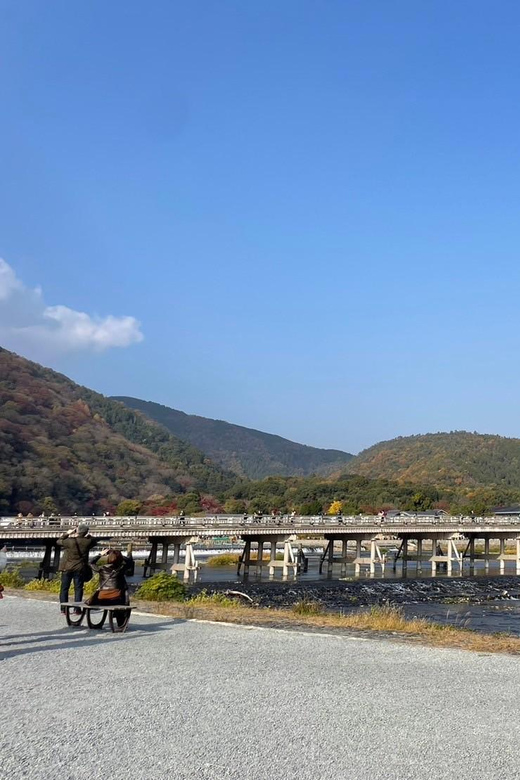
Arashiyama gets a lot of attention for its visuals, but the tour adds one extra layer that I like: it frames the botanical side with a specific claim. The vegetation here is described as four times more diverse than Europe, and it shows in how many different plant textures you can spot depending on the season.
That matters because gardens and nature in Kyoto can sometimes blur together when you only look at color. Diversity of flora means you will notice variation in leaf shape, canopy density, and how sunlight filters through. The same path can look completely different just by watching how the light hits different leaves.
The seasonal promise is not vague either. You are pointed toward what to expect across the year: cherry blossoms in spring, fresh greenery in summer, autumn leaves in autumn, and winter scenes with snow capped mountains. Even if your visit is only one moment in time, you will leave with a better idea of what you should have been looking for.
If you are the type of traveler who likes repeat visits, this is a great choice because the tour trains your eye. Next time you come back, you will be able to compare what changed, instead of feeling like you are seeing the same postcard again.
Price and Admission Fees, What the $63 Really Buys
At $63 per person, the price feels reasonable because admission is included. You are paying for a guided, time bound experience, plus the entry costs inside the temple area.
The included breakdown is clear: 800 yen total, with 500 yen for the garden and 300 yen for the halls. That is useful because you can think of the tour fee as covering two things. One, the guide’s time to help you notice the borrowed scenery concept and Tenryu-ji’s key elements. Two, a structured visit that fits into 90 minutes without you feeling lost.
Guided garden tours can vary a lot in value. Here the value is in clarity. You are not just getting access, you are getting help translating what you see into something meaningful. If you know the garden technique ahead of time, the visit makes more sense, and your photos will be better because you will know where to look for the “framed” moments.
For a quick budgeting tip, plan your day so this fits smoothly. If you are already in Arashiyama, you can treat this as the core temple segment and add extra free time for river views or nearby streets afterward.
Practical Tips: Shoes, Crowds, and Getting There by Public Transport
A few details can make or break a short 90 minute walk.
First, wear comfortable walking clothes and shoes. Arashiyama and Tenryu-ji involve real walking on uneven paths. If your footwear is only fine for museums, upgrade it for this day.
Second, the tour has a clear stance on weather. It runs rain or shine, but it is cancelled if inclement weather triggers warnings or advisories. If that happens, you will be informed by 8pm the night before the start time.
Third, no parking is available. That means you should plan to arrive by public transport. Build in a little buffer so you are not rushing at the start time. Even a calm morning walk can feel hectic if you are figuring out transit midstream.
Finally, keep your group behavior in mind. The tour asks you not to disturb other pedestrians, including spreading out too much. In a place like this, good etiquette also improves your experience, because you are not constantly stepping around people trying to enjoy the same view.
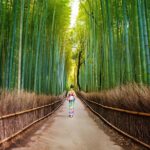
Green light through a bamboo grove

Who This Guided Walk Fits Best
This tour suits you best if you want a guided introduction to Arashiyama that actually teaches you how to look. It is ideal if you care about gardens, seasonal sights, or you want your visit to Tenryu-ji to feel coherent rather than random.
It also fits well if you are traveling with someone who enjoys nature but does not want to spend extra time researching garden terms on their phone. The guide being available in Chinese and English supports that kind of visit.
If you are only interested in quick photo stops and you like to roam on your own, you might prefer a more flexible self guided approach. But if you want the Sogenchi Garden’s borrowed scenery explained while you stand in the right spots, the guided format is where the value is.
Should You Book This Arashiyama Tenryu-ji Tour?
I think you should book it if your goal is a meaningful Tenryu-ji visit, not just temple entry. With Sogenchi’s borrowed scenery concept and Arashiyama’s strong seasonal identity, the guided approach helps you get more out of the time you have.
Book it if you are visiting during a season with strong visual cues like cherry blossoms or autumn leaves, or if you simply want to learn how the garden uses the wider landscape. You will get a clear structure, included admission value, and a 90 minute pacing that keeps you from drifting.
Skip it or pair it differently if you want a long, slow temple day. This is focused. It is not built for hours of wandering. If you want that, treat this as your anchor, then add extra time around the river or the wider Arashiyama area after the tour.
FAQ
How long is the Arashiyama and Tenryu-ji guided tour?
The tour duration is 90 minutes. Starting times vary by availability.
What is included in the price?
Admission is included (800 yen total: 500 yen for the garden and 300 yen for the halls), and there is a staff member available if foreign language assistance is required.
What languages are the live guides available in?
The live tour guide is available in Chinese and English.
Will the tour run in rain?
The event is held rain or shine. It will be cancelled if inclement weather includes warnings or advisories, and you will be informed by 8pm the night before the start time.
Is there parking available?
No parking is available, so you should plan to come by public transport.
When can I cancel for a full refund?
You can cancel up to 3 days in advance for a full refund.
New This Season
- Koyasan Day Trip by Private Car from Kyoto
- Old Port Town and Ultimate Sake Tasting Private Tour From Kyoto
- Kyoto’s Timeless Charm: 3hr Exploration of History and Peace
- Kyoto: 5 Types of Sushi Making
- Sacred Peak & Ancient Paths: Kurama-Kibune Hiking Experience
- Kyoto: Exclusive ZEN practice at Manpukuji temple in Uji
- Kyoto: Private Seasonal Aroma Yoga Class
- Traversing Kyoto’s Scenic West – Arashiyama to Kinkakuji
Arashiyama Bamboo Forest Walks, compared.
Fushimi Inari, Kinkakuji, Bamboo Grove 1 Day Bus Tour
Read our review →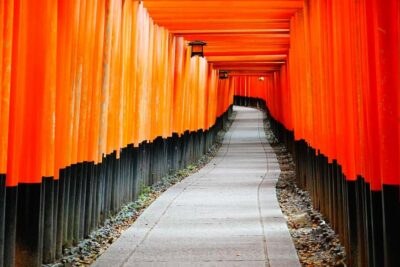
Kinkakuji,Arashiyama,FushimiInariShrine,NaraPark
Read our review →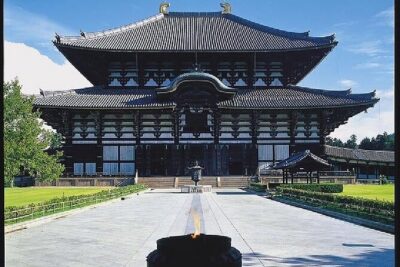
Nara, Fushimi Inari Taisha, Arashiyama Bus Tour
Read our review →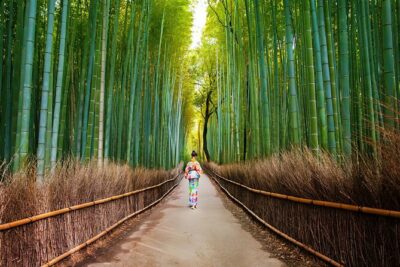
Kyoto Arashiyama Walking Tour: Bamboo, Monkeys, Gardens & Secrets
Read our review →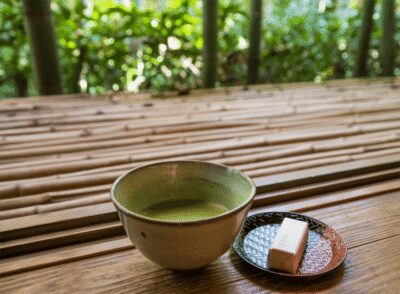
Arashiyama Bamboo, Temple, Monkeys, or Secret Sake Brewery
Read our review →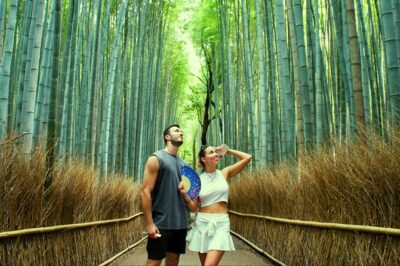
Arashiyama Bamboo Forest, Monkeys, Matcha & Temple Tour
Read our review →
Arashiyama, Nara & Fushimi Inari Shrine w/Lunch
Read our review →
Nijo, Kinkaku-ji, Arashiyama, Kiyomizu & Fushimi Inari
Read our review →Also filed under