
Reviewed · KYOTO
Early Half Day to Kyoto Highlights
Four Kyoto icons in one quiet morning.
This early half-day route is designed to get you to Kyoto’s top sights before the worst crowds, without locking you into an all-day trek. I like the way the tour mixes big visual moments, like the red gates at Fushimi Inari, with smaller cultural context so you understand what you are looking at, not just where to stand.
My other favorite part is the small group size (up to 8) and the guidance style, led by Indra, who keeps the morning organized and lets you ask questions without feeling rushed. One consideration: you will pay for Kinkakuji entry (¥500) and public transport (¥1,300 per person) on top of the tour price, plus gratuity.
In This Review
- Key highlights at a glance
- Why this early Kyoto route works before the day gets crowded
- Meeting at Kyoto Tower Sando with a mobile ticket, then moving fast
- Stop 1: Starbucks at Kyoto Tower Sando to get your bearings
- Stop 2: Fushimi Inari Taisha, the red gates and the Shinto angle
- Stop 3: Arashiyama Bamboo Forest and how to notice what people miss
- Stop 4: Kinkakuji Golden Pavilion, Buddhism, history, and the view
- Stop 5: Back near Kyoto Station, with time to continue on your own
- Price and logistics, what you really pay and why it can still be good value
- Tips to make this 5-hour highlights plan feel easy
- Should you book this Kyoto highlights half-day tour?
Key highlights at a glance
- Early start strategy that helps you see Fushimi Inari and Arashiyama with less crowd pressure
- Small group (max 8) so you can actually ask questions and get real guidance
- Indra’s pacing and storytelling, focused on history, culture, and Japanese society
- Public transport routing that saves you from awkward, time-wasting transfers
- Kinkakuji Golden Pavilion stop with a dedicated time block to enjoy the views properly
Why this early Kyoto route works before the day gets crowded
Kyoto has a funny rhythm. Late mornings and afternoons are when popular sights feel like an endless line. This half-day plan tackles that head-on by starting at 8:00 am, aiming for the calmer window where you can still enjoy the places instead of just surviving them.
Because it is only about 5 hours, the schedule is tight but not punishing. That matters if you want the morning highlights and still plan an afternoon on your own terms, whether that is lunch nearby, exploring another neighborhood, or just soaking in the slower pace Kyoto is famous for.
I also like that this is not a one-note sightseeing list. You get context on what you are seeing, tied to Shintoism at Fushimi Inari and Buddhism at Kinkakuji. It is the kind of framework that makes photos better, and it makes the whole city feel less like random stops on a map.
Meeting at Kyoto Tower Sando with a mobile ticket, then moving fast
The meet point is Starbucks Coffee at Kyoto Tower Sando, right in the Kyoto Station area. The key benefit here is simple: Kyoto Station is easy to find and transit-friendly, so you are not burning time figuring out where to start.
You also get a mobile ticket, which usually means fewer last-minute headaches with paper confirmations. The tour is designed for a smooth start, and it gets you walking in the right direction quickly rather than lingering in a big crowd at the beginning.
Group size is capped at 8 travelers, which changes the whole feel of the morning. With a small group, your guide can keep tabs on timing, answer questions without shouting, and adjust the pace if the sidewalks are sticky or if lines appear where you do not want them.
At the end, you head back to the meeting area near Kyoto Station, so you are not stranded across town when you still have energy for more exploring.
Kyoto rewards patience — the quieter half of the city sits just off the main path.
- PERFECT KYOTO 1-Day Bus Tour
★ 5.0 · 13,518 reviews - Kyoto: Fushimi Inari, Kinkakuji, Bamboo Grove 1 Day Bus Tour
★ 4.8 · 4,316 reviews - Kyoto: Tea Ceremony in a Traditional Tea House in Kiyomizu
★ 4.9 · 3,519 reviews - Kyoto Geisha Walking Tour: Gion District & Hidden Gems
★ 4.7 · 3,273 reviews
Stop 1: Starbucks at Kyoto Tower Sando to get your bearings
This first stop is only about 15 minutes, so think of it as your launchpad. You meet at the Starbucks location in the Kyoto Tower Sando complex, then your guide gets the group organized and sets expectations for what you will do next.
Even if you are comfortable on public transport, this moment is helpful. Kyoto is full of stairs, underpasses, and station exits that all look the same when you are stressed and holding a coffee. Starting with a clear meet point reduces that stress, and you lose less time to small confusion.
One practical tip: wear shoes you can walk in for an extended stretch. Even though this is a half-day tour, you will still be on your feet a lot, especially once you reach the shrines and temple grounds.
Stop 2: Fushimi Inari Taisha, the red gates and the Shinto angle
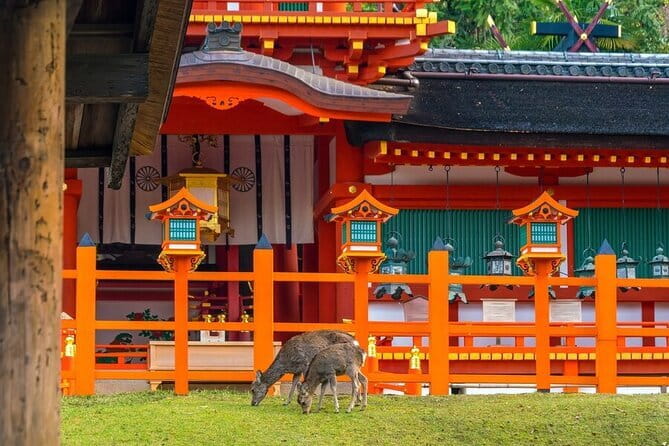
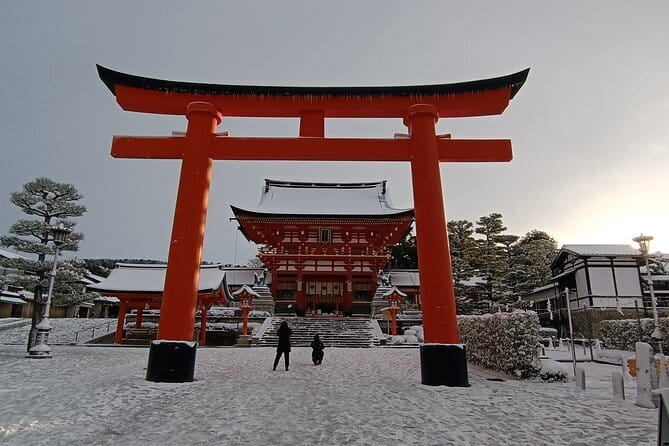
Fushimi Inari is the reason most people come to Kyoto. You get 1 hour 30 minutes here, and that time block is what lets you do more than just snap a few photos at the entrance.
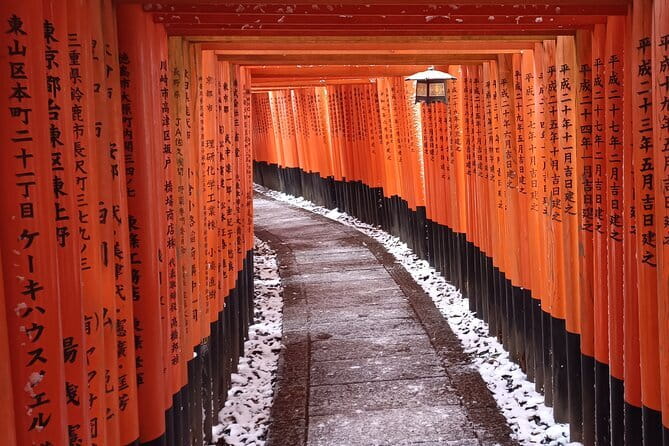
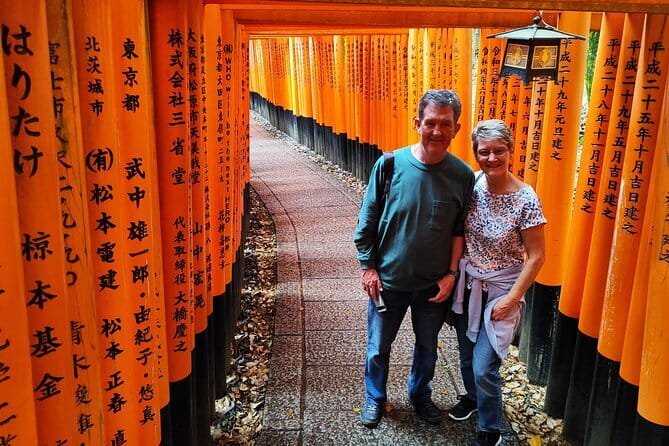
The signature sight is the thousands of red torii gates. Early morning timing helps, because the view is better when you are not weaving through a dense crowd every few steps. You can slow down, notice the patterns, and actually enjoy the way the gates pull your eye into the distance.
But the tour adds value by focusing on the cultural meaning. You learn the most important aspect of Shintoism while you enjoy the views without the heaviest crowd pressure. That matters. When you understand what the shrine represents, the whole walking route stops feeling like a photo scavenger hunt and starts feeling like a place with intention.
Potential drawback: if you are not keen on lots of walking uphill and along lined paths, this stop can feel physically demanding. You can still pace yourself, but you should plan for a steady walk as you go.
Stop 3: Arashiyama Bamboo Forest and how to notice what people miss
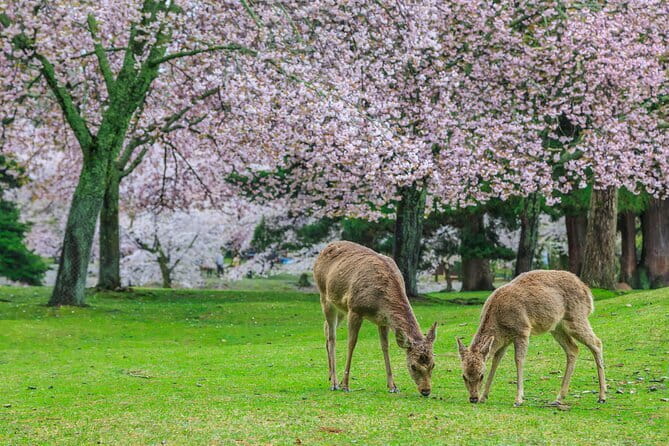
Next up is the Arashiyama Bamboo Forest, again with 1 hour 30 minutes. This is one of those sights where people either love it instantly or feel slightly disappointed if they expect a postcard and get normal crowds. Starting early changes the odds.
In practical terms, you get the chance to experience the bamboo stands while the area feels calmer. That gives you room to take photos without constant side-steps, and it makes it easier to just stand there and look at the details.
The tour also frames the experience around Japanese society, not just scenery. That makes sense here, because bamboo becomes a stage for how people move through the space, how they pause for views, and how a landscape becomes part of daily cultural memory.
If you are sensitive to cold or damp early in the day, this is a good place to plan clothing that layers. Bamboo areas can feel cooler than the streets outside, especially in the morning. Bring something light you can add or remove without slowing down the whole tour.
Stop 4: Kinkakuji Golden Pavilion, Buddhism, history, and the view
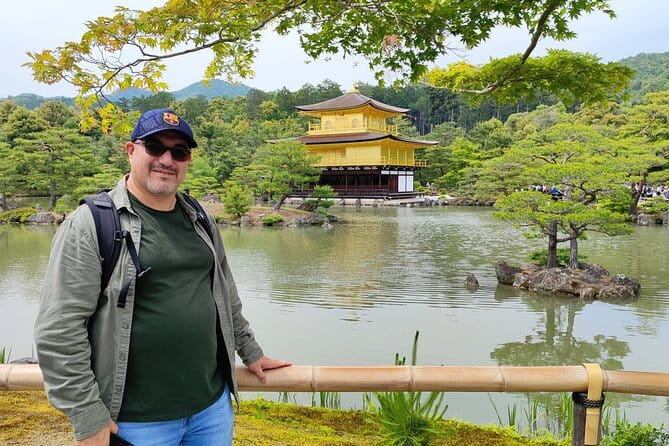
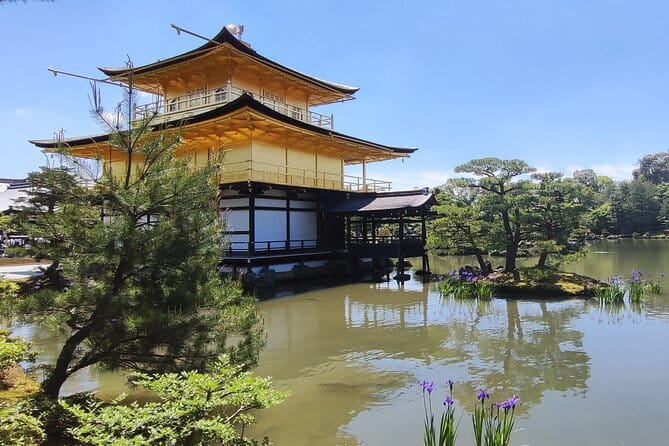
Then comes the headliner for many visitors: Kinkakuji, the Golden Pavilion. You have 1 hour 30 minutes here, but the most important budget note is that the Kinkakuji entrance fee is not included. It is ¥500 per person, so plan to pay that separately.
The tour presents Kinkakuji as the 2nd most visited tourist spot in Japan, and it does a good job setting you up to look beyond the gold finish. You learn about Buddhism in Japan and the history of the temple, and you are guided toward what to watch for so you can appreciate the setting instead of just standing wherever you find space.
The view is the whole point, and this stop gives enough time to enjoy it properly. You are not rushed through like a drive-by stop. You can move, pause, compare viewpoints, and soak up the atmosphere.
Possible consideration: entry fees and lines can add friction at Kinkakuji, depending on the day. The tour’s early planning helps, but you still need to stay flexible and expect some crowd flow once you enter.
A day of temples goes further with something to break it up.
Stop 5: Back near Kyoto Station, with time to continue on your own
Your last 15 minutes are back at the Kyoto Station building area, returning you to the neighborhood where you started. That is not just convenient, it is smart.
Kyoto Station is a practical hub for transport and for finding food afterward. If you want to keep exploring, you are positioned to do it without a long journey. If you want to rest and just enjoy the afternoon, you can do that too, without losing your momentum to getting back across town.
This design is one reason the half-day format feels valuable. You get the big icons and then you are still in control of the rest of your day.
Price and logistics, what you really pay and why it can still be good value
The tour price is $94.71 per person, and it includes an experienced local guide with good English plus the structure of a half-day route that uses public transport.
What is not included matters, and it is clearly listed:
- Kinkakuji Golden Pavilion entrance fee: ¥500 per person
- Public transportation: ¥1,300 per person
- Gratuity
So how do you judge value? You are paying for a guide to do three hard things for you:
- Coordinate timing across multiple far-flung areas (Inari, Arashiyama, and Kinkakuji).
- Reduce decision fatigue so you do not spend your morning guessing routes and platform exits.
- Add meaning so the day feels like more than a checklist.
The reviews highlight that the tour is efficient and organized, and I think that is the right word for this format. When someone plans the morning well, you gain time, confidence, and a smoother flow. Indra, specifically, is mentioned for pacing the schedule so the group stays on track and for answering questions in a way that feels personal, not scripted.
If you are the kind of traveler who likes seeing a lot but hates wandering, this tour fits that. If you prefer total freedom and you already know Kyoto well, you might skip the guide and build your own route. But for most first-time visitors, paying for guidance and routing can be the difference between a fun morning and a messy one.
Tips to make this 5-hour highlights plan feel easy
A few small choices can make this morning much more pleasant.
First, plan for walking. Even though each major stop has a time block, you still move between places, and the shrine and temple areas involve paths and changes in elevation.
Second, bring clothing for weather. The experience is described as requiring good weather, so pack for changeable conditions, especially if you are traveling outside summer.
Third, use the small-group advantage. With a maximum of 8 travelers, ask questions while you are still on-site. The guide’s focus on Japanese culture and society works best when you can point to what you are looking at and ask, Why this? What does this represent?
Fourth, keep your expectations realistic for Kinkakuji. The Golden Pavilion is popular for a reason, and your time there is long enough to enjoy it, but not long enough to treat it like a private room. Arrive ready to follow the flow, then take your time inside the viewing moments you get.
Should you book this Kyoto highlights half-day tour?
If you want Kyoto’s greatest hits in one early, organized morning, I would book it. The best reason is the combination of early timing and a small-group pace. You get Fushimi Inari, Arashiyama bamboo, and Kinkakuji without turning the day into a long, stressful marathon.
Book it especially if:
- You want help using public transport without guessing.
- You care about the cultural meaning behind Shinto and Buddhist sites.
- You like a morning plan that leaves your afternoon open.
I would think twice if:
- You strongly dislike paying extra on the spot for entrance fees and transit.
- You hate any walking that feels like a gentle climb, since shrine grounds can demand it.
- You prefer a fully independent day where you can wander without a set schedule.
If you fall into the middle, the smart compromise is to treat this as your Kyoto foundation. See the big icons early, learn the context while you are there, and then use your afternoon to explore at your own speed.
New This Season
- Koyasan Day Trip by Private Car from Kyoto
- Old Port Town and Ultimate Sake Tasting Private Tour From Kyoto
- Kyoto’s Timeless Charm: 3hr Exploration of History and Peace
- Kyoto: 5 Types of Sushi Making
- Sacred Peak & Ancient Paths: Kurama-Kibune Hiking Experience
- Kyoto: Exclusive ZEN practice at Manpukuji temple in Uji
- Kyoto: Private Seasonal Aroma Yoga Class
- Traversing Kyoto’s Scenic West – Arashiyama to Kinkakuji