Reviewed · GUIDED
Guide tour of Japanese bathing culture at Funaoka Onsen
Onsens feel simple until someone shows you. This small-group tour pairs Japanese bathing etiquette with a real soak at Funaoka Onsen, so you do not just watch culture, you follow it step by step. You start at Sarasa Nishijin, a cafe rebuilt from a public bathhouse, then move on to a bathhouse Kyoto locals still love.
I especially like the lecture first, practice right after approach. And I love that the first stop is not a museum moment, it is a working space, Sarasa Nishijin, where you learn the why behind the customs while you sit down for a drink.
The main consideration is the bathing style: it is nude and gender-segregated, and that may not match everyone’s comfort level. The guide also notes that couples may be separated, so plan for that reality.
In This Review
- Key things I’d circle before you book
- Why This Kyoto Onsen Stop Feels Like a Local Ritual
- Sarasa Nishijin Cafe, Built From a Former Public Bathhouse
- Funaoka Onsen: The Before-Soak Lesson That Saves You Stress
- The Etiquette Steps That Actually Make the Soak Better
- Nude, Gender-Separated Baths: What You Need to Know Up Front
- Guide Atsuki, Local Insight, and the Onsen-Story You Can Reuse
- Price and Value: Is $45.72 Worth It?
- Timing, Group Size, and How to Be Ready
- Health and Comfort Rules You Should Treat Seriously
- Who This Tour Fits Best
- Should You Book This Japanese Bathing Culture Tour at Funaoka Onsen?
- FAQ
- How long is the Japanese bathing culture tour at Funaoka Onsen?
- Where does the tour start and where does it end?
- What is included in the price?
- Do I need a mobile ticket?
- Will I be able to participate if I have health conditions?
- How many people are in a group?
Key things I’d circle before you book
- Sarasa Nishijin was once a public bathhouse, now turned into a cafe where bathing culture starts with history and practical do’s and don’ts
- A small group of up to 5 travelers makes it easier to ask questions and move through the steps calmly
- Funaoka Onsen is the real target, with a short lecture using materials before you actually get in
- Nude, gender-separated baths are built into the experience, not a side note
- Guide name is Atsuki, a local Japanese guide who runs you through the ritual and helps reduce first-timer anxiety
Why This Kyoto Onsen Stop Feels Like a Local Ritual
If you have ever stared at a sign in a Japanese bathhouse and thought, I hope I am doing this right, this tour is made for you. It takes the biggest confusion points, like order of steps, how to behave, and what to do with yourself before you enter the water.
The value here is not just the ticket for Funaoka Onsen. It is the guidance that turns an onsen visit from guesswork into muscle memory. You walk in knowing what matters, what is polite, and what helps you relax instead of worry.
Sarasa Nishijin Cafe, Built From a Former Public Bathhouse
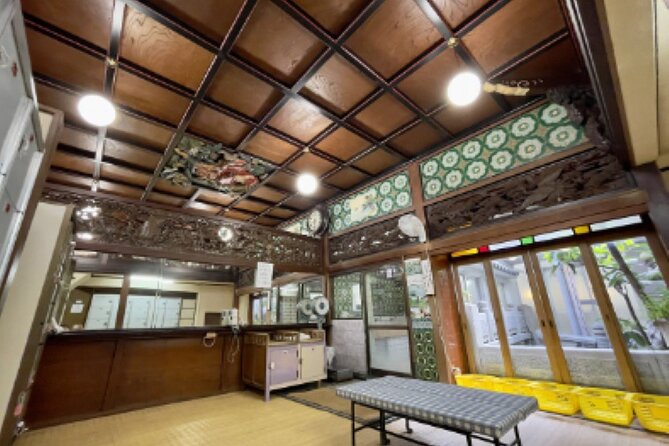
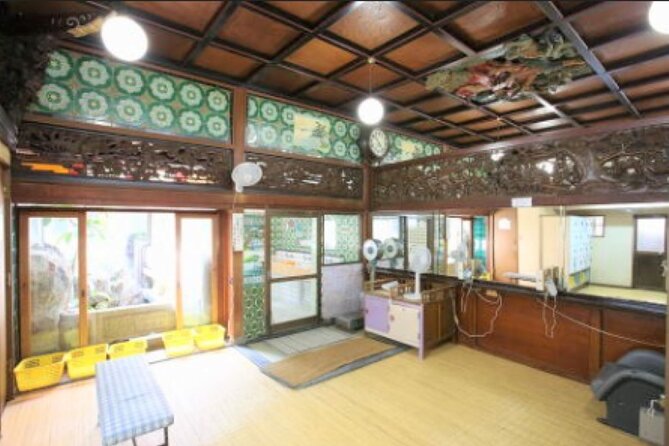
You begin at Sarasa Nishijin, a cozy cafe that was renovated from a public bathhouse. That setting matters because it keeps you in the right mindset, you are not learning etiquette in a lecture hall, you are learning it where bathing culture used to happen.
The format is simple. You sit down, have a drink, and learn about the history and meaning behind Japanese public baths, then you get take-home guidance for the correct bathing techniques. For first-timers, the take-home part is practical because it helps you remember the order of operations when you are back in your hotel, before your next sento or onsen visit.
This is also a good warm-up stop. It gives you time to settle your brain before you head to the actual bathhouse, where you are expected to switch into a different rhythm entirely.
A quieter way to spend a day in Kyoto
- Kyoto: Arashiyama Day Tour with Train, Boat, and Onsen
★ 4.9 · 48 reviews - Kyoto E Bike Tour and Aroma Spa Experience
★ 5.0 · 1 review - Kyoto: Hike and Hot Springs in Kurama
★ 5.0 · 49 reviews
Funaoka Onsen: The Before-Soak Lesson That Saves You Stress
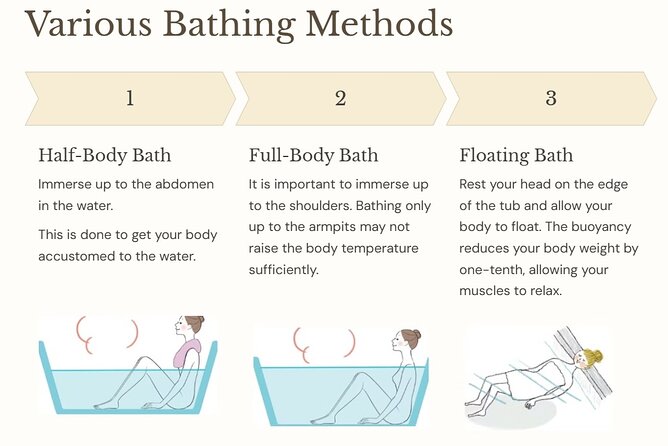
Next comes Funaoka Onsen, the Kyoto bathhouse that locals have valued for generations. Before you get into the bath, the guide uses materials to explain unique bathing methods and the correct way to handle the process.
This pre-soak lecture is where the experience earns its keep. Most people who visit an onsen for the first time know they should be quiet and respectful, but they often miss the finer flow of what happens first and what comes next. Here, you get that structure so you can relax once you are in.
The guide does not just point you toward the door and hope for the best. The process is taught and then you try it yourself, with the guide positioned so you are not left wandering through steps that feel awkward.
The Etiquette Steps That Actually Make the Soak Better
Japanese bathing etiquette can sound like rules for rules’ sake. But once you understand the logic, it makes the experience calmer and healthier-feeling.
Here is what this kind of guidance tends to help with, and why you will care once you arrive:
- You know what to do before entering the bath, so you can focus on your body, not your confusion
- You follow a respectful routine, which makes the whole space feel easier to navigate
- You prevent that first-timer panic, where you worry you will do something wrong in front of everyone
A big bonus from the way the guide explains this is that the steps are presented as reusable. The guide highlights that the bathing steps and etiquette are consistent across other hot springs and public baths, so you get more than one good visit out of this.
Nude, Gender-Separated Baths: What You Need to Know Up Front
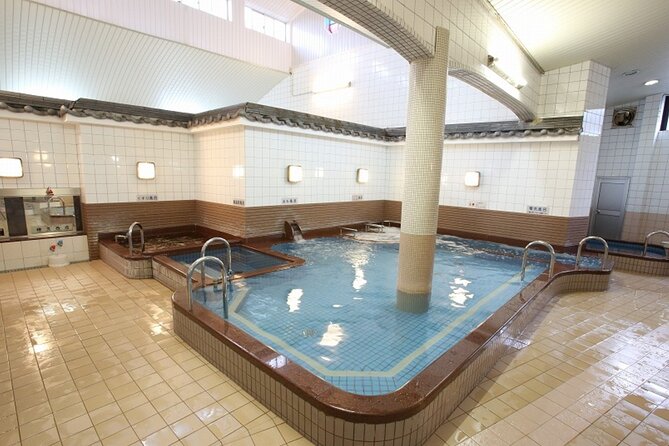
Let’s talk comfort and logistics, because the bathing style is the biggest decision point for many people.
At Funaoka Onsen, bathing is nude, and the facilities are strictly separated by gender. Couples may be separated because of that setup. If you are traveling with someone and you were imagining sharing the experience in the same space, you will want to adjust your expectations before you go.
The upside is that the atmosphere is about ritual and relaxation, not performance. Once you understand the etiquette, it becomes less about awkwardness and more about following a local wellness rhythm.
Also, there is a practical reality: the guide is local Japanese and not very strong in English. If you are easily flustered by language gaps, plan to rely on the step-by-step structure and the physical demonstration of the process.
Guide Atsuki, Local Insight, and the Onsen-Story You Can Reuse
The guide leading this tour is Atsuki, and that local perspective shows up in how he explains both etiquette and context. One of the memorable parts is the onsen background, including the interesting history of how Funaoka Onsen developed and how its founders competed with traditional geothermal onsen.
That kind of story matters because it changes your relationship to the place. You are not just soaking because it is different, you are soaking with a little more understanding of why this bathhouse became valued in Kyoto.
Atsuki also directly addresses a common expectation conflict: mixed-gender bathing in swimsuits is an understandable wish for some visitors, but Japanese bathing culture keeps the facility segregated by gender. Knowing that upfront helps you avoid building a fantasy version of the experience that reality will not match.
A day of temples goes further with something to break it up.
Price and Value: Is $45.72 Worth It?
At $45.72 per person for about 1 hour 30 minutes, this is not just paying for entry. You are paying for guided translation of a ritual that can be confusing if you arrive cold.
Value comes from three places:
- Two curated learning moments, first at Sarasa Nishijin and then at Funaoka Onsen
- The pre-bath lesson, with materials and instruction before you get in
- Small group size, capped at 5 travelers, which helps people ask questions and follow along
If you are comfortable on your own in unfamiliar cultural settings, you could theoretically DIY an onsen visit. But if you want a first visit that feels respectful and low-stress, this is priced like a coach for a ritual you will use again elsewhere.
One more small practical note: confirmations happen at booking, and you get a mobile ticket. That cuts down the hassle of printing and re-checking paperwork.
Timing, Group Size, and How to Be Ready
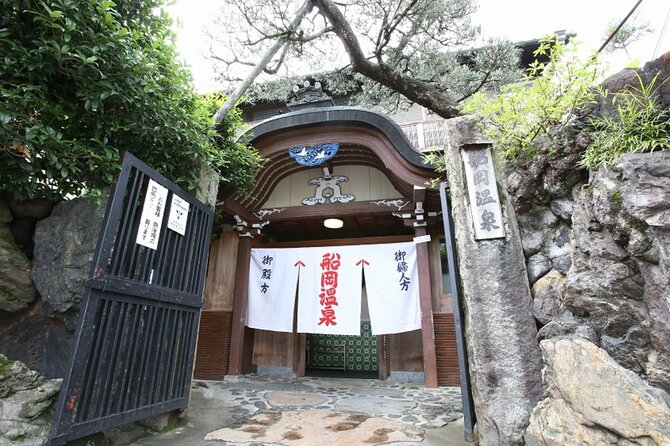
This experience runs roughly 1 hour 30 minutes and ends back where you start. The meeting point is Funaoka Onsen, 82-1 Murasakino Minamifunaokachō, Kita Ward, Kyoto.
The tour is near public transportation, which matters in Kyoto because you do not want an onsen visit to turn into a mini expedition. A shorter guided stop near transit is also easier to fit after shrine visits or sightseeing that already has you on your feet.
Group size is capped at 5 travelers. That is big enough to meet other people if you want company, but small enough that you are not lost in the shuffle.
Health and Comfort Rules You Should Treat Seriously
This tour is not for everyone, and the health guidance is part of the reason it feels safe and respectful.
You should not participate if you have contraindications for hot springs such as severe heart or lung diseases, recent gastrointestinal bleeding, advanced malignant tumors, or severe anemia. You also should skip the experience if you feel unwell on the day, have a fever, or have consumed alcohol, and if a doctor advises against participation you need to follow that advice.
This is not the moment to be brave. An onsen is relaxing for many people, but it is still heat and physiology, so the rules are there for a reason.
Who This Tour Fits Best
This experience is a strong match if you want Japanese culture with an everyday-skill angle, not just photos. It is also a good fit for wellness-minded travelers and people interested in mindfulness-style routines, because the whole format pushes you toward calm, correct practice.
You may especially like it if:
- you are visiting Kyoto and want a break from shrine-heavy days
- you want someone to explain the ritual so you do not feel awkward
- you like learning how to do things the local way, not only seeing sites
If you are uncomfortable with nude, gender-separated bathing, or you need mixed-gender space, this tour might not suit your comfort level.
Should You Book This Japanese Bathing Culture Tour at Funaoka Onsen?
Book it if you are craving the kind of cultural experience that teaches you how to act, not just where to stand. The guided etiquette plus the real soak is exactly what makes this feel different from a standard onsen visit.
Skip it if nude bathing is a deal-breaker for you, or if you were hoping for a shared couple setup in the same space. Also think twice if your health situation makes hot springs unsafe, because the tour asks you to respect those limits.
In my view, the best reason to book is this: your first onsen can either be awkward and confusing, or it can be calm because someone taught you the rules that matter. This tour is built to push you toward the calmer version.
FAQ
How long is the Japanese bathing culture tour at Funaoka Onsen?
It runs for approximately 1 hour 30 minutes, with about 15 minutes at the first stop and about 1 hour at Funaoka Onsen.
Where does the tour start and where does it end?
The tour starts at Funaoka Onsen, 82-1 Murasakino Minamifunaokachō, Kita Ward, Kyoto, and it ends back at the same meeting point.
What is included in the price?
Admission tickets are included for both stops, and the experience includes an introductory explanation of bathing etiquette and techniques.
Do I need a mobile ticket?
Yes. The tour uses a mobile ticket.
Will I be able to participate if I have health conditions?
If you have contraindications for hot spring participation, such as severe heart or lung diseases, recent gastrointestinal bleeding, advanced malignant tumors, or severe anemia, you should not join. You should also refrain if you feel unwell, have a fever, or have consumed alcohol, or if a doctor advises against it.
How many people are in a group?
The tour has a maximum of 5 travelers.
New This Season
- Koyasan Day Trip by Private Car from Kyoto
- Old Port Town and Ultimate Sake Tasting Private Tour From Kyoto
- Kyoto’s Timeless Charm: 3hr Exploration of History and Peace
- Kyoto: 5 Types of Sushi Making
- Sacred Peak & Ancient Paths: Kurama-Kibune Hiking Experience
- Kyoto: Exclusive ZEN practice at Manpukuji temple in Uji
- Kyoto: Private Seasonal Aroma Yoga Class
- Traversing Kyoto’s Scenic West – Arashiyama to Kinkakuji
Guided, compared.
Kyoto Early Morning Tour with English-Speaking Guide
Read our review →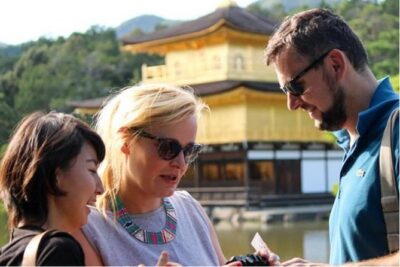
Kyoto 6hr Private Tour with Government-Licensed Guide
Read our review →Early Morning Tour with English-Speaking Guide
Read our review →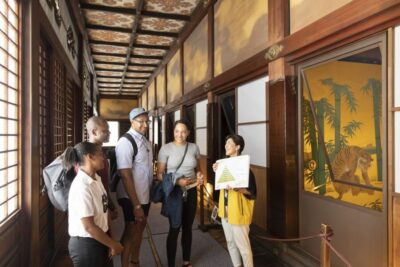
Nijo-jo Castle and Ninomaru Palace Guided Tour
Read our review →
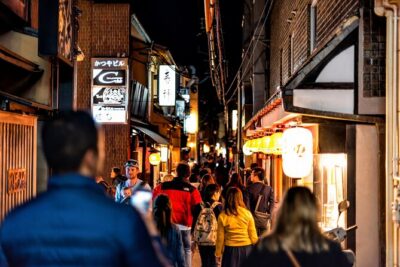
Kyoto Gion Night Walk & Geisha District Guided Tour
Read our review →
Nijo Castle, Kiyomizu & Fushimi Inari Guided Tour
Read our review →