
Reviewed · KURAMA & KIBUNE TOURS
Hike and explore the Kurama and Kibune ancient Paths
Kyoto’s forest trail feels like a reset. This guided route takes you from Kurama-dera down toward Kifune-jinja through the older mountain paths that connect Kurama and Kibune, with temple stops and shrine moments along the way. The mix of quiet countryside, sacred sites, and real stair-and-trail walking is exactly why this hike is so appealing.
What I like most is the focus on atmosphere, not just exercise: you get a proper start at the temple grounds first, then the walk turns into a calm cedar-forest circuit with stories at your pace. I also like that the group is small (up to 12), which helps you move steadily on uneven sections instead of feeling rushed.
One consideration: this is not a flat stroll. The trail has steep, uneven parts and stairways, so if you dislike heights, slippery steps, or uneven footing, you’ll want to be cautious and go slow.
In This Review
- Key Points You’ll Care About
- Kurama to Kibune: Why This North-of-Kyoto Hike Feels Different
- Meeting Point, Transfers, and the Start at Kyoto Tower Sando
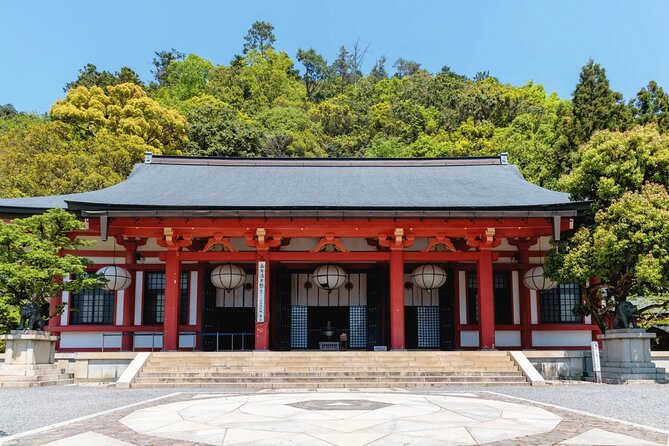
- Kurama-dera Stop: Temple Grounds, Guardian Statues, and Mountain Views
- The Forest Trail Between Kurama and Kibune: Cedar Shade, Steep Stairs, and Legends
- Kibune River and Kifune-jinja: The Red Lantern Staircase and Water Fortune
- The Guide and Group Size: Why Up to 12 Travelers Matters
- Price and Value: What You’re Really Paying For
- Timing and What to Expect in a 5.5-Hour Day
- What to Wear and Bring for Uneven Steps
- Should You Book This Kurama and Kibune Hike?
- FAQ
- What sites do we visit on the tour?
- How long is the Kurama and Kibune hiking experience?
- Is the tour guided, and is there an English option?
- Is lunch included?
- Do I need to buy tickets separately?
- Where do we meet, and what time does it start?
- How physically demanding is it?
- How many people are in the group?
- Can I cancel, and is it refundable?
Key Points You’ll Care About
- Kurama-dera first, so the hike starts with big temple views rather than mid-route crowding
- Eizan Railway scenic ride plus a short walk to the station for an easy beginning
- Real mountain trail walking, including steep stairs, uneven footing, and navigation support
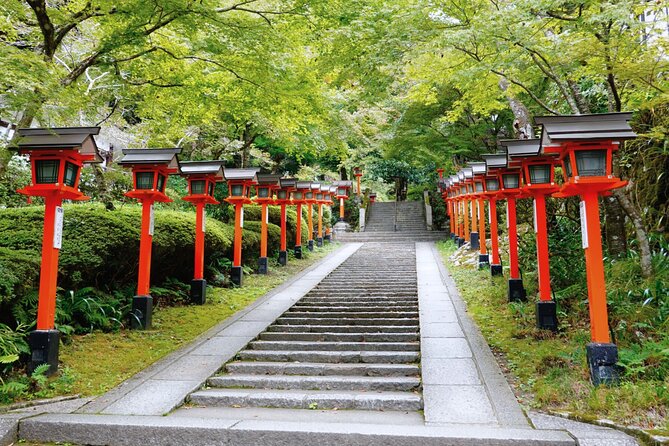
- Kifune-jinja water shrine experience with its famous red lantern staircase
- Small group size (max 12) for a safer, calmer pace on the steps
- Entry fees included, but lunch isn’t, so plan around that
Kurama to Kibune: Why This North-of-Kyoto Hike Feels Different
If you’ve ever felt like Kyoto is all streets and tour buses, this route gives your legs and eyes a break. You’re walking in the mountains north of the city, where the air feels cooler and the sound changes once you’re under the tree line. It still feels like Kyoto, just the quieter, older side.
The big draw here is the sequence. Starting at Kurama-dera first sets the tone with temple views and guardian statues, then you shift into a guided hike through cedar forest and small sacred stops. That makes the later arrival at Kifune-jinja feel earned, not like you just hopped off a bus and took photos.
The route also has a spirituality-and-legend layer that a regular walk misses. Your guide shares stories tied to sacred spots and natural features along the way, so you’re not only looking at scenery, you’re learning what people connected to this landscape for centuries.
Meeting Point, Transfers, and the Start at Kyoto Tower Sando
You begin at Starbucks Coffee Kyoto Tower Sando Japan at 9:30 A.M. From there, the tour’s transportation plan does most of the heavy lifting for you. You’re not left figuring out train changes with a backpack and hope.
The flow is simple. First, you take the Karasuma Subway Line to Kokusaikaikan Station, then you walk for about 15 to 20 minutes through a quiet residential area to Iwakura Station. After that, you board the Eizan Railway for roughly 30 minutes into northern Kyoto scenery.
This matters because it reduces stress. If you’re visiting Kyoto for a few days and already doing a lot of transit, having the guide handle the route pays off. The only tradeoff is that short walk at the beginning, so wear shoes you’re comfortable in right away.
A quiet valley north of the city
- Kyoto Hiking Tour: The Nature and Legends of Kurama and Kibune
★ 5.0 · 75 reviews - Kyoto: Kifune Shrine and the Sacred Kifune Valley Day Trip
★ 4.4 · 4 reviews - Kyoto: Kurama Temple and Mountain Legends Guided Hike
★ 5.0 · 2 reviews - Kyoto: Kurama Temple and Mountain Legends Guided Hike
★ 5.0 · 2 reviews
Kurama-dera Stop: Temple Grounds, Guardian Statues, and Mountain Views
Kurama-dera is a temple perched on the slopes of Mount Kurama, and that setting shows immediately. The main hall has panoramic views, so even before you start the hike you get a sense of elevation and distance. It’s a nice way to “warm up” your camera and your expectations.
You’ll also notice the guardian statues mentioned as part of the temple experience. That’s the kind of detail that makes a stop feel like more than a quick stop-and-go. The atmosphere tends to feel more focused here because you’re up in the temple complex, not surrounded by shopping streets.
This stop is scheduled for about two hours, with admission included. Two hours is enough time to see what you came for, plus take a breath before the trail gets steep. If you tend to rush at temples, slow down here because the hike after this will ask for your attention.
The Forest Trail Between Kurama and Kibune: Cedar Shade, Steep Stairs, and Legends
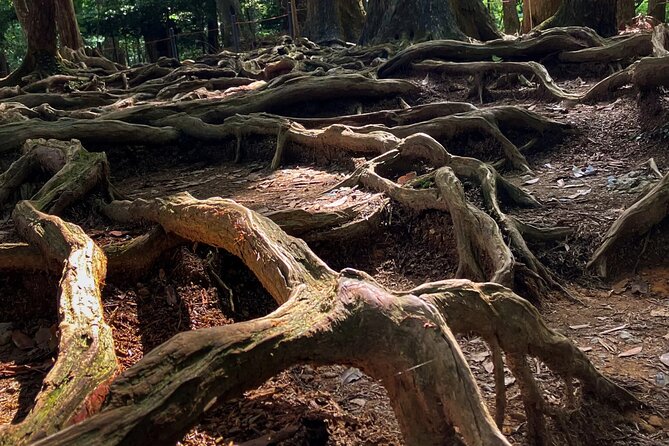
After Kurama-dera, the hike becomes the main event. You’ll head through dense cedar forests, and you’ll pass hidden shrines and steep stairways along the way. The trail is described as rugged, with parts that can be uneven and tricky.
This is where your guide becomes more than a translator. The route can be difficult to navigate on your own, especially when the ground is wet or when it’s hot. Having someone lead at a steady pace helps you focus on footing and rhythm, not guessing where to put your feet.
Also, your guide shares stories and legends connected to the sacred energy of the route. That turns the middle of the hike from “just walking” into an experience with meaning. Even if you’re not the type to read every sign, you’ll have a framework for what you’re seeing.
This section runs for about three hours until you descend into Kibune and reach the shrine stop. It’s long enough that you’ll notice your legs, but it’s not so long that you feel like you’re disappearing into the mountains all day.
Kibune River and Kifune-jinja: The Red Lantern Staircase and Water Fortune
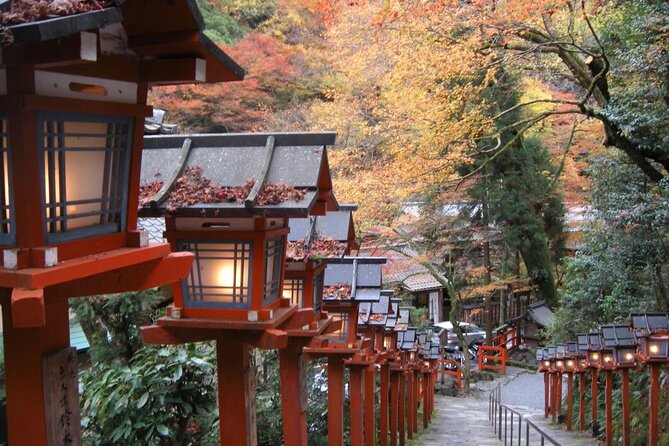
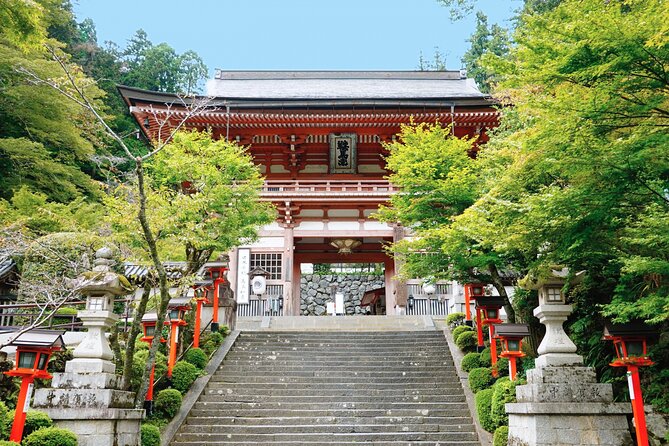
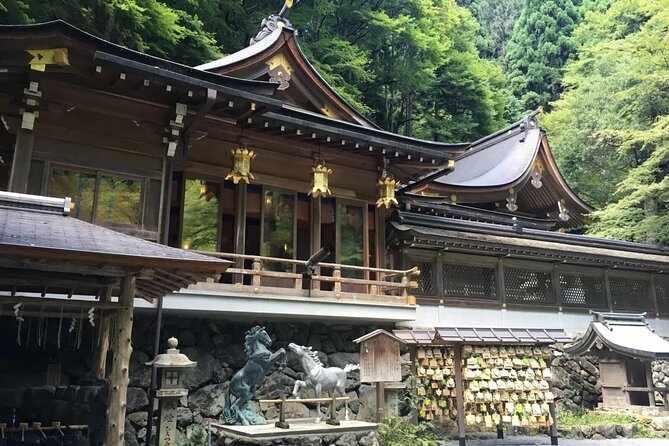
As you descend, the vibe changes from forest trail to village atmosphere. The tour brings you into Kibune, where the final major stop is Kifune-jinja Shrine, dedicated to the goddess of water and rain.
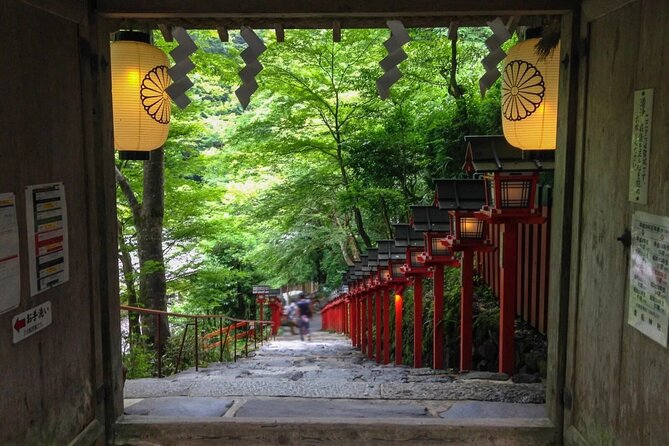
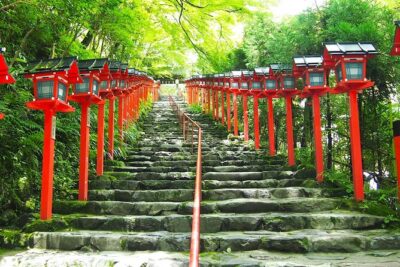
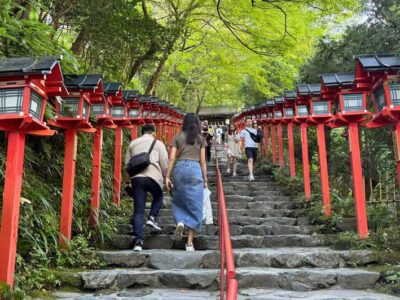
One of the most memorable visual moments here is the shrine’s red lantern-lined staircase. In any season, that staircase gives you an instant “Kyoto mountain shrine” feeling, and it’s the kind of spot where photos come out well without you searching for the perfect angle.
At Kifune-jinja, you can also write wishes using water-activated omikuji fortunes. That’s a specific, hands-on detail that makes the shrine feel interactive rather than purely observational.
This part of the tour also helps you land softly after the hike. You’ve spent hours on stairs and uneven ground, and then you end at a place designed for slower movement and contemplation.
The Guide and Group Size: Why Up to 12 Travelers Matters
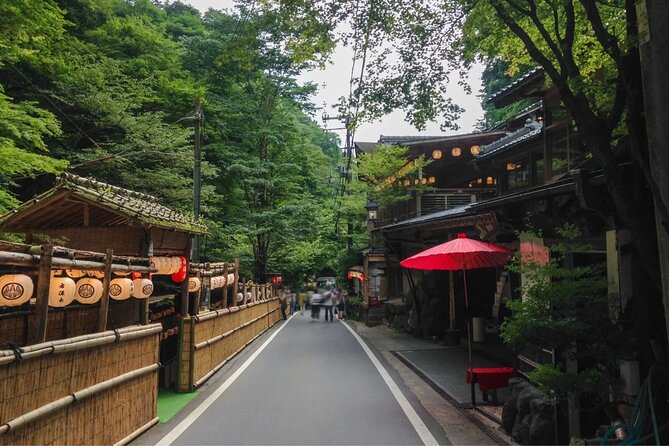
This tour runs with an English-speaking guide, and the group size is capped at 12 travelers. That size is important because it affects the pace on the trail. On steep, uneven sections, it’s easier for everyone to keep space and avoid bottlenecks.
In past experiences shared by people who booked this route, a guide named Justin is highlighted for being friendly and generous with knowledge. The helpful part is not just facts, it’s how the explanations connect to what you’re physically doing on the path. When the story lines up with a shrine or a natural stop, your attention stays where it should.
The guidance also helps with safety. Since the trail can be uneven and navigation is tricky in wet or hot conditions, following the guide’s pace is the simplest way to enjoy the hike without fighting the terrain.
More trails into the hills above the city
Price and Value: What You’re Really Paying For
At $165.18 per person, this is not a cheap “walk yourself” outing. But you’re paying for a real guided half-day in mountainous Kyoto with transportation support, included entry fees, and an English-speaking guide.
Here’s what that cost covers based on the tour details:
- English guide
- Transportation during the tour
- Entry fees at all tour locations
Lunch is not included, so you’ll need to budget for that on your own. Still, when you compare this to paying for separate transit plus temple admissions, the value starts to look more reasonable. The biggest value is the guide on the trail, because steep stairs and uneven paths are exactly where self-navigation gets annoying fast.
Timing also supports the value. The hike-and-shrine program takes about 5 hours 30 minutes, which is a solid chunk of time without stealing your whole day. You’ll feel like you did something substantial, but you’re not forced to abandon the rest of your Kyoto plans.
If you like booking early, note that on average this tour is booked 43 days in advance. That suggests demand stays steady, so if you have fixed dates, don’t wait until the last minute.
Timing and What to Expect in a 5.5-Hour Day
From the meeting time at 9:30 A.M., you’re effectively committing to a half-day itinerary with a clear start and end. The tour ends back at the meeting point, which is convenient if you want to jump to another plan afterward.
You should expect some time spent on transit, then a two-hour temple block, then a longer hike window, then arrival at Kibune and the Kifune-jinja shrine portion. The pacing is guided, not random, so you’re not constantly stopping to check your phone.
The route is best treated like a hiking outing, not a light sightseeing stroll. Bring a mindset that you’ll be walking on uneven ground and climbing stairs at times. If you do that, the day will feel fun instead of stressful.
What to Wear and Bring for Uneven Steps
Because the trail includes steep, uneven parts and stairways, footwear matters more than anything else. Wear shoes you trust on steps, especially if your trip overlaps with wet weather. The route is described as tricky to navigate on your own, so you’ll want to stay comfortable enough that you can follow the guide without rushing.
Since lunch isn’t included, plan a snack or a place to eat before or after the hike. A half-day can still use up energy, and you won’t want to feel forced to choose between dinner plans and finding food.
Also keep in mind the physical level. The tour asks for moderate physical fitness. That doesn’t mean it’s a brutal summit day, but you should be ready for stairs and uneven footing for multiple hours.
Finally, use the mobile ticket approach to save time. Have it ready on your phone so you’re not scrambling at the start.
Should You Book This Kurama and Kibune Hike?
Book it if you want a serene Kyoto experience that stays out of the busiest downtown rhythm. I think it’s a strong choice if you enjoy temples, forest walking, and a guided context that connects stories to specific spots. It’s also a good fit if you want a small group outing, because that makes steep trail moments feel more manageable.
Skip it or rethink it if you know you struggle with stairs or uneven footing, or if you don’t like hikes that require attention to where you place your feet. The trail is rugged in places, and the tour description makes it clear that it can be tricky in wet or hot conditions.
Overall, the value lands in the guidance and the included admissions, with a well-paced half-day plan. If you’re looking for Kyoto beyond the standard photos, this one is built for exactly that mood.
FAQ
What sites do we visit on the tour?
You visit Kurama-dera Temple and then hike to Kifune-jinja Shrine in Kibune.
How long is the Kurama and Kibune hiking experience?
It lasts about 5 hours 30 minutes.
Is the tour guided, and is there an English option?
Yes, it includes an English speaking guide.
Is lunch included?
No, lunch is not included.
Do I need to buy tickets separately?
Entry fees at all tour locations are included, and the tour uses a mobile ticket.
Where do we meet, and what time does it start?
You meet at Starbucks Coffee – Kyoto Tower Sando Japan at 9:30 A.M. The tour ends back at the same meeting point.
How physically demanding is it?
It’s described as suitable for moderate physical fitness, with a trail that includes steep and uneven parts and stairways.
How many people are in the group?
The group size is capped at a maximum of 12 travelers.
Can I cancel, and is it refundable?
Yes. Free cancellation is available if you cancel up to 24 hours in advance for a full refund.
New This Season
- Koyasan Day Trip by Private Car from Kyoto
- Old Port Town and Ultimate Sake Tasting Private Tour From Kyoto
- Kyoto’s Timeless Charm: 3hr Exploration of History and Peace
- Kyoto: 5 Types of Sushi Making
- Sacred Peak & Ancient Paths: Kurama-Kibune Hiking Experience
- Kyoto: Exclusive ZEN practice at Manpukuji temple in Uji
- Kyoto: Private Seasonal Aroma Yoga Class
- Traversing Kyoto’s Scenic West – Arashiyama to Kinkakuji
Kurama & Kibune Tours, compared.
Kyoto Hiking Tour: The Nature and Legends of Kurama and Kibune
Read our review →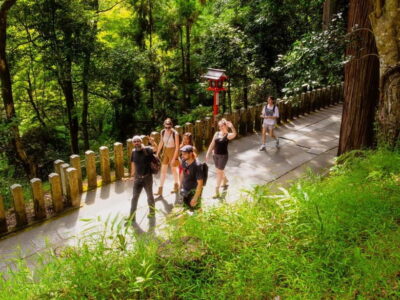
Kifune Shrine and the Sacred Kifune Valley Day Trip
Read our review →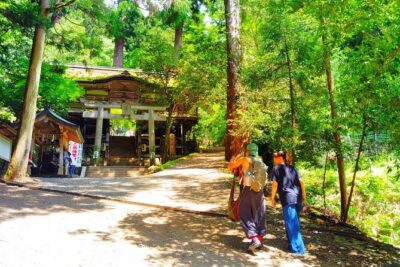
Kurama Temple and Mountain Legends Guided Hike
Read our review →Sacred Peak & Ancient Paths: Kurama-Kibune Hiking Experience
Read our review →
Day Tour to Kifune Shrine+Kuruma+Sanzen-in Temple
Read our review →Also filed under