
Reviewed · KYOTO
Kyoto: AuthenticMatcha&TeaCeremonyExperienceinaTraditional
Matcha, poured slowly, changes your pace. This one-hour Kyoto tea ceremony experience teaches you the basics in a traditional setting, then gets you making matcha yourself with a bamboo whisk. You also get to taste Kyoto’s Uji matcha alongside seasonal Japanese sweets.
I especially like two things about this class. First, the tea master guides you step-by-step, so you are not just watching. Second, you get to experience the quiet tatami room atmosphere while learning etiquette and techniques that make sense in real life.
One possible consideration is time. One hour sounds short, and it is. If you want a very long, deep formal ceremony with lots of extra courses, this may feel more like an efficient introduction than a full, extended ritual.
In This Review
- Key highlights that make this Kyoto matcha session worth your hour
- A quiet tatami room and Kyoto hospitality, packaged for real beginners
- Where you meet and how the first minutes set the tone
- The demonstration: you learn by watching first, then copying
- Making matcha with a bamboo whisk: the hands-on centerpiece
- Kyoto Uji matcha and seasonal sweets: what to notice while you taste
- Etiquette lessons you can reuse after Kyoto
- Itinerary rhythm: how the 1 hour stays comfortable
- Price and value: $49 for a practiced, guided cultural moment
- Who should book this Kyoto matcha tea ceremony, and who might want to skip
- Should you book Kyoto Authentic Matcha and Tea Ceremony at Hotel Rakurakuan?
- FAQ
- How long does the Kyoto matcha and tea ceremony experience take?
- Where is the meeting point?
- Is the tea ceremony suitable for beginners?
- What languages are provided during the experience?
- Is it hands-on or just watching?
- What food and drink are included?
- Is the matcha Uji matcha?
- Is this a private group experience?
- Is the experience wheelchair accessible?
- What is the cancellation and payment policy?
Key highlights that make this Kyoto matcha session worth your hour
- Traditional townhouse setting with a calm, wood-and-tatami feel that keeps you focused
- Hands-on matcha whisking after an initial demonstration
- Kyoto Uji matcha served alongside seasonal Japanese sweets
- Beginner-friendly instruction with English and Japanese guidance
- Private group experience, so you get more attention during the steps
- Wheelchair accessible, so more people can enjoy the tea room experience
A quiet tatami room and Kyoto hospitality, packaged for real beginners
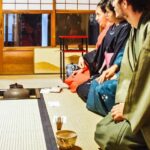
Kyoto has plenty of places where you can take photos and hear facts. This experience is different because it’s built around the slower pace of a tea house, in a traditional Kyoto townhouse setting. You sit in a tatami room, and the whole environment nudges you to slow down and pay attention to small movements.
That calm matters, because tea ceremony is mostly about process. Your hands learn the motions, your senses notice the fragrance, and your brain gets a break from sightseeing intensity. Even if you are new to Japanese culture, the structure makes it manageable rather than intimidating.
I also like that it is not only a viewing experience. You start by observing, then you do the key actions yourself, which is where the learning really lands.
Where you meet and how the first minutes set the tone
You meet at Hotel Rakurakuan in Kyoto. The address listed is 〒600-8456 京都府京都市下京区天使突抜三丁目452 ホテル楽々庵. That matters because you are not rushing across town to some hard-to-find side street, you are showing up at a real hotel base that feeds into the traditional setting.
From the moment you arrive, the schedule keeps things simple. You get a tea ceremony experience that totals about one hour, with the tea ceremony itself lasting around 40 minutes. The rest of the time is there for introduction, instruction, and tasting.
Because the environment is described as quiet and serene, you should expect low noise and a respectful mood. If you are coming right after a busy day of temples and markets, you may want to take a moment beforehand to get your energy level down.
Kyoto rewards patience — the quieter half of the city sits just off the main path.
- PERFECT KYOTO 1-Day Bus Tour
★ 5.0 · 13,518 reviews - Kyoto: Fushimi Inari, Kinkakuji, Bamboo Grove 1 Day Bus Tour
★ 4.8 · 4,316 reviews - Kyoto: Tea Ceremony in a Traditional Tea House in Kiyomizu
★ 4.9 · 3,519 reviews - Kyoto Geisha Walking Tour: Gion District & Hidden Gems
★ 4.7 · 3,273 reviews
The demonstration: you learn by watching first, then copying
The flow is classic and practical. You begin by observing a tea demonstration, guided by the instructor. This stage is not just background entertainment. It gives you the “why” behind the “how,” like how to handle items carefully, how to pace your movements, and how to follow the etiquette that makes the ritual feel respectful.
Even if you know almost nothing about tea ceremony, the demonstration acts like a visual checklist. You see where the pauses happen, where attention matters, and how the bamboo whisk fits into the method of preparing matcha.
This is also where the instructor’s English and Japanese guidance becomes useful. If you are comfortable in English, you get clear explanations. If you want extra context in Japanese, you can often follow along that way too.
Making matcha with a bamboo whisk: the hands-on centerpiece
After the demonstration, it is your turn. You prepare your own matcha using a bamboo whisk, the tool that creates that signature foam texture. This part is the reason I think this experience works well for short time windows, because there is a tangible moment of achievement right in front of you.
Your goal is not to produce some perfect matcha for a contest. It is to learn the basic technique and understand how the ritual feels when you are actually performing it. That is why the class is structured for beginners and foreigners. You are taught the fundamentals rather than being thrown into complicated forms.
As you whisk, watch for two things. First, pay attention to the rhythm of your motion. Second, notice how the aroma changes as the matcha comes together. Matcha is dramatic in smell, and it tends to reset your senses faster than you expect.
Kyoto Uji matcha and seasonal sweets: what to notice while you taste
Once the matcha is made, you savor it. The experience includes Kyoto’s Uji matcha, and that detail is worth caring about. Uji matcha has a reputation that comes from consistent cultivation and a flavor profile that often feels smooth and balanced, rather than overly bitter.
You also get seasonal Japanese sweets. This pairing is important because tea ceremony is not just a drink, it is a small moment of balance. The sweets can add sweetness, texture, and seasonal flavor cues, so you are tasting more than one element at a time.
When you drink, I suggest you slow your pace. Let the matcha sit for a second in your senses before you swallow. If you are new to matcha, start by identifying whether the taste feels more vegetal, more creamy, or more slightly roasted. Then notice how that changes after the sweets.
If you are the kind of person who buys food souvenirs, this is also one of the parts that can tempt you. The matcha served here is described as very good, and many people leave with a better sense of what quality matcha tastes like.
Etiquette lessons you can reuse after Kyoto
The class covers basic etiquette and techniques, and you do not need to remember everything perfectly. What matters is learning the idea behind etiquette in this context: it is about respect, calm attention, and thoughtful interaction.
During a tea ceremony, etiquette is usually physical. How you receive items, how you move, how you handle the cup, and how you pause. In other words, it is not etiquette as rules for rules’ sake. It is etiquette as a way to keep the moment peaceful for everyone sharing the room.
For foreigners, this is a smart way to learn because the instructor can translate what you are doing and why it matters. Instead of guessing what locals expect, you get the basics explained in plain terms.
A day of temples goes further with something to break it up.

Itinerary rhythm: how the 1 hour stays comfortable
The experience is short, but the pacing is designed to feel complete. A reasonable rhythm is built in:
- You start with the demonstration
- You move into making your own matcha with the bamboo whisk
- You finish with tasting Uji matcha and seasonal sweets
Because the tea ceremony itself is around 40 minutes, you should expect a steady progression rather than a long stretch of waiting. This helps if you are trying to fit cultural experiences into a packed Kyoto schedule.
Private group also helps the rhythm. You are not competing for attention with a big crowd, and questions tend to land faster. It also makes the atmosphere feel less like a show and more like guided instruction.
Price and value: $49 for a practiced, guided cultural moment
At $49 per person, you are paying for three things: instruction, included tea and sweets, and a structured experience in a traditional setting. For Kyoto, this price can feel fair because you are not only consuming a drink, you are learning a technique and etiquette in real time with guidance.
If you compare it to doing a tea ceremony with no hands-on part, the value improves. Here, you get to prepare your own matcha. That is the difference between a passive cultural ticket and an experience that stays in your hands and senses.
Also, the experience is private group. Private group does not always mean “no other people,” but it does mean you generally get a more personal instruction feel. That personal attention can be what makes the session worth it, especially if you are traveling with limited time.
Who should book this Kyoto matcha tea ceremony, and who might want to skip
This experience is a great fit if you want a true cultural activity without homework. You are a beginner, you like learning by doing, and you appreciate quiet, thoughtful moments in Japan.
It is also a good choice for people who want English and Japanese guidance. That reduces frustration and helps you understand what you are doing beyond just following motions.
If you are looking for a long, multi-course formal tea ceremony with heavy ritual complexity, you might find this one-hour format too compact. Think of it as a high-quality introduction that teaches the essentials, not a full-day ceremony you build into.
One more practical note: the environment is described as quiet and serene. If you are someone who struggles with calm settings, you might want to plan this when you can handle stillness.
Should you book Kyoto Authentic Matcha and Tea Ceremony at Hotel Rakurakuan?
I think you should book this if you want Kyoto culture you can actually practice. The combination of demonstration, hands-on bamboo whisk matcha preparation, and tasting Uji matcha with seasonal sweets makes it a complete experience in one hour.
I also like that it is beginner-friendly for foreigners and guided in English and Japanese. If you are traveling with someone who wants a calm, meaningful activity, this also has that extra “special moment” feel, like a short ritual you share rather than a checklist item.
If you are short on time in Kyoto but still want something authentic and hands-on, this is a strong pick. Your best move is to treat it like a pause in your day, not just another activity you fit in. Show up a little earlier than you think you need, and let the room do its job.
FAQ
How long does the Kyoto matcha and tea ceremony experience take?
The experience lasts about 1 hour, and the tea ceremony portion is about 40 minutes.
Where is the meeting point?
Meet at Hotel Rakurakuan, 〒600-8456 京都府京都市下京区天使突抜三丁目452 ホテル楽々庵.
Is the tea ceremony suitable for beginners?
Yes. It is described as suitable for beginners and foreigners.
What languages are provided during the experience?
Guidance is available in English and Japanese.
Is it hands-on or just watching?
It is both. You begin by observing a demonstration, then you prepare your own matcha using a bamboo whisk.
What food and drink are included?
You will have matcha tea and seasonal Japanese sweets.
Is the matcha Uji matcha?
Yes. The experience includes Kyoto’s Uji matcha.
Is this a private group experience?
Yes. The group type is listed as private group.
Is the experience wheelchair accessible?
Yes, it is listed as wheelchair accessible.
What is the cancellation and payment policy?
Free cancellation is available up to 24 hours in advance for a full refund, and you can reserve and pay later.
New This Season
- Koyasan Day Trip by Private Car from Kyoto
- Old Port Town and Ultimate Sake Tasting Private Tour From Kyoto
- Sacred Peak & Ancient Paths: Kurama-Kibune Hiking Experience
- Kyoto’s Timeless Charm: 3hr Exploration of History and Peace
- Kyoto: 5 Types of Sushi Making
- Kyoto: Exclusive ZEN practice at Manpukuji temple in Uji
- Kyoto: Private Seasonal Aroma Yoga Class
- Traversing Kyoto’s Scenic West – Arashiyama to Kinkakuji