
Reviewed · KYOTO
Kyoto: Discover Every Bit of Kyoto Imperial Palace
Kyoto’s imperial past feels strangely close when you walk the palace grounds. This guided visit through Kyoto Imperial Palace and its ceremony halls turns the architecture into a story about how Japan’s imperial family lived, worked, and held formal rites. It also gives you a calm, garden-paced break from the rest of Kyoto.
Two things I like a lot: the clear focus on ceremonial spaces such as the Shishinden main hall, and the way the tour connects buildings to daily court life at the Emperor’s personal residence. In one praised example, the guide named Yoshi was noted for answering questions with real historical detail, which is exactly what you want here.
One drawback to consider: the palace is still a place you can technically look around yourself, so if you are expecting every corner to be inaccessible without a guide, you might feel the booking is more of a “guided interpretation” than a must-do access pass. Also, like any tour, quality depends on the guide you get.
In This Review
- Key things to know before you go
- Kyoto Imperial Palace and Gyoen National Garden: why this visit matters
- Meeting at Hamaguri Gomon Gate: getting oriented fast
- Shishinden and ceremony halls: seeing power through layout
- Imperial court life at the Emperor’s residence: what you learn beyond photos
- Serene gardens in Kyoto: the slow part that makes the palace stick
- How long is enough: timing for a 1 hour or 1.5 hour palace visit
- Price and value: is $38 worth it for Kyoto Imperial Palace?
- Who should book this tour, and who should skip
- Should you book Kyoto Discover Every Bit of Kyoto Imperial Palace?
- FAQ
- Where is the meeting point for the Kyoto Imperial Palace tour?
- Who will I meet, and how do I find them?
- How long is the tour?
- What language is the tour guide?
- Is entry included?
- Are groups small, or can I book privately?
- What is the tour price?
- Is there free cancellation?
- Can I reserve now and pay later?
- What parts of the palace experience are emphasized?
Key things to know before you go
- Hamaguri Gomon Gate start point: that is your anchor, and you meet in front of it with your sign.
- Shishinden and ceremony halls: you are not just looking at old wood, you learn what these spaces were for.
- Imperial court life, not only monuments: the story includes routines tied to the Emperor’s residence.
- Gyoen National Garden pacing: it is a quieter stop with landscaped gardens that you can actually slow down in.
- English live guide: you get context on the spot, which matters for palace layouts and etiquette.
- Small groups or private options: easier Q and a less rushed feel than big-bus tours.
Kyoto Imperial Palace and Gyoen National Garden: why this visit matters
Kyoto Imperial Palace sits inside Gyoen National Garden, and that setting changes how you experience it. Outside the palace walls, you get the Kyoto you expect, then you step into a world shaped by ceremony, hierarchy, and careful design.
What makes this palace historically important is also what can confuse first-timers: the capital moved to Tokyo in 1869, so the palace you see in Kyoto is tied to the earlier imperial center. That means you are visiting not just a pretty complex, but a record of how the court operated before the political center shifted. The tour leans into that time period, with explanations that connect the spaces to the imperial family’s role.
Architecturally, the palace is known for traditional Japanese style, with main halls and other structures used for official functions. You will hear about the historical significance of the halls where emperors conducted important ceremonies. And the tour does something practical with that: it helps you look at what you are seeing in terms of function, not just form.
If you love Japan for the way details tell stories, this is a strong match. The gardens also help. Even if you are not a “garden person,” these landscaped spaces give your mind a place to rest so the palace feels less like a museum and more like a lived environment.
Meeting at Hamaguri Gomon Gate: getting oriented fast
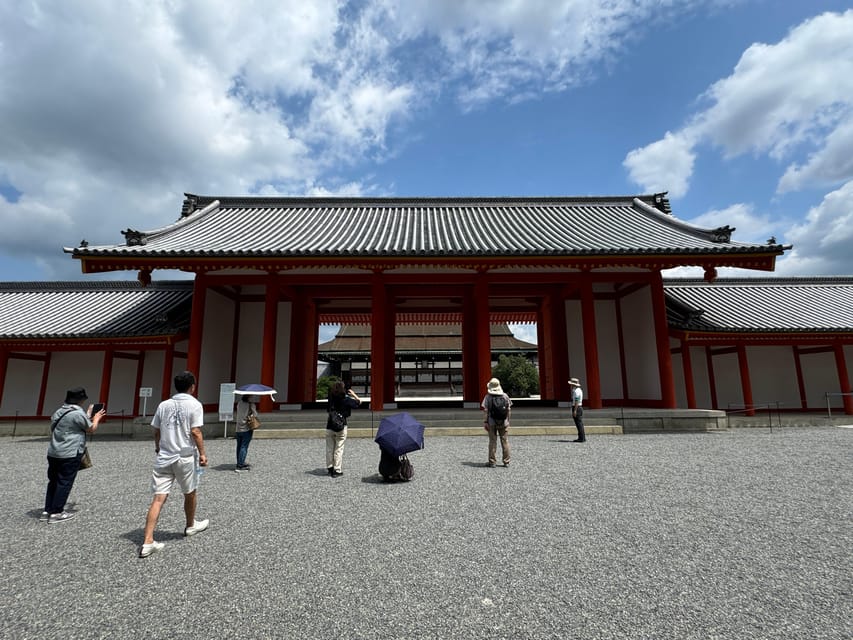
Your tour begins at Hamaguri Gomon Gate (Hamagurigomon). That matters more than it sounds. Palace complexes in Japan can feel like you are walking through multiple eras at once, with gates and paths that look similar. Starting at the right point is how you avoid wandering in circles.
You are told to look for your guide holding a yellow sign that says DeepExperience. That is a helpful detail because it removes a common first-day stress: matching a person to a listing when everyone is taking photos and everyone looks “Japan professional.”
The guided portion is scheduled for a short, efficient visit. The tour duration is listed as 1 hour, while the guided palace visit is described as about 1.5 hours. Translation: plan for a compact tour rhythm, not a half-day expedition. This is good news if you want the experience without eating your entire day in Kyoto.
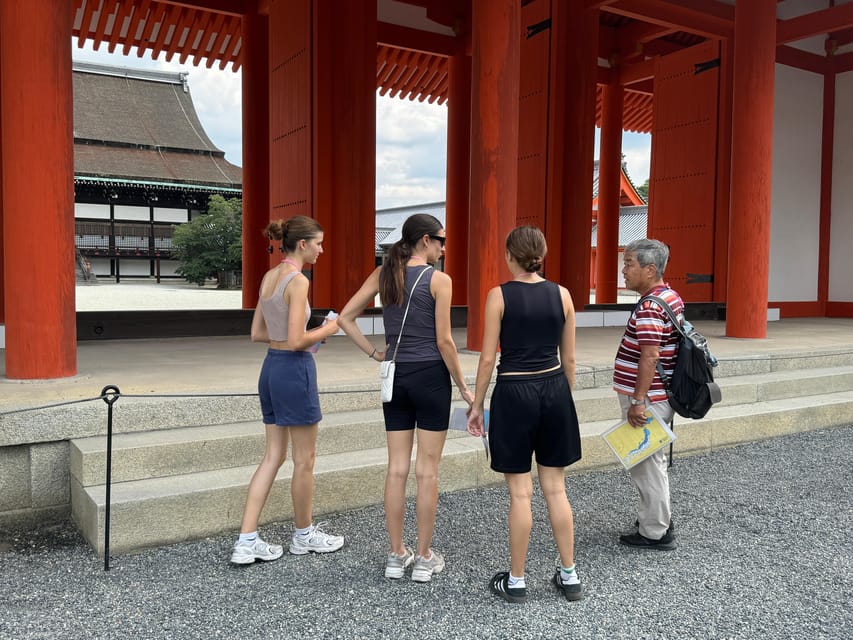
Once you meet, you typically get context before you walk far. The guide’s job here is interpretation, not just leading you from Point A to Point B. You are going to see major structures and ceremony-related rooms, and without basic orientation you might just see “nice hall, nice garden.” With a guide, you get the why behind the layout.
Kyoto rewards patience — the quieter half of the city sits just off the main path.
- PERFECT KYOTO 1-Day Bus Tour
★ 5.0 · 13,518 reviews - Kyoto: Fushimi Inari, Kinkakuji, Bamboo Grove 1 Day Bus Tour
★ 4.8 · 4,316 reviews - Kyoto: Tea Ceremony in a Traditional Tea House in Kiyomizu
★ 4.9 · 3,519 reviews - Kyoto Geisha Walking Tour: Gion District & Hidden Gems
★ 4.7 · 3,273 reviews
Shishinden and ceremony halls: seeing power through layout
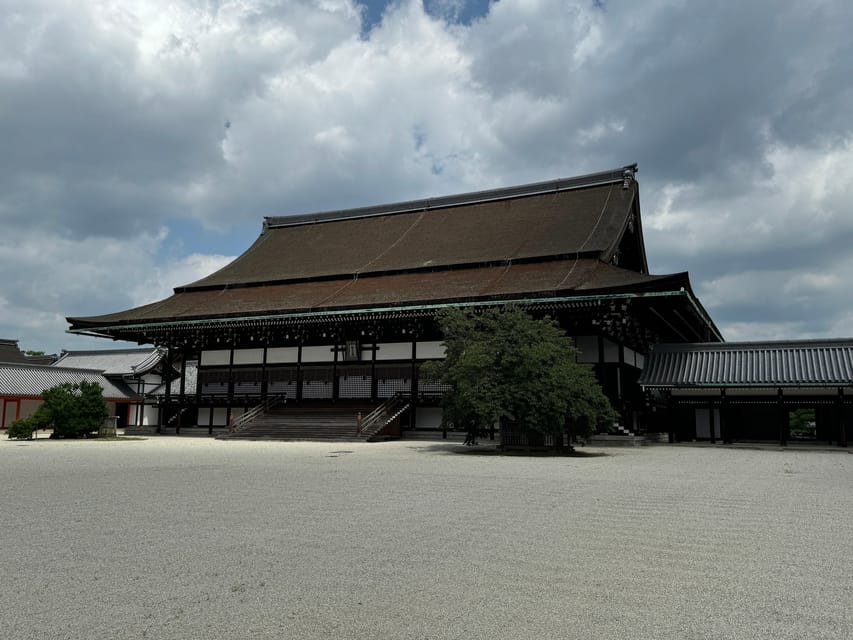
One of the most praised parts of this experience is the focus on the majestic hall where emperors conducted important ceremonies, and that is where the tour can feel most satisfying.
The main hall you will hear about is the Shishinden. In palace terms, it is a big deal. The tour frames it as a space used for grand imperial rites, which changes how you view it. Instead of treating it like a static photo stop, you start noticing how palace design communicates status and formality.
Here is what I think you should watch for while you are there:
- Pay attention to how the halls relate to each other, not just how they look. Ceremony spaces are often arranged to support processions and scripted movement.
- Notice the contrast between open garden areas and formal structures. The pacing of your walk mirrors the pacing of court life.
- Listen for what the guide says these halls were used for. Even a few minutes of function-based explanation makes the architecture feel intentional.
This is also where you can ask questions, if you like to talk history. One reason the guide matters is that ceremony rooms can be confusing at first glance. With a good guide, you get plain-language explanations that help you connect the dots quickly.
If you are more of a DIY traveler, you might wonder why you need a guide at all. But for ceremony halls, the value is interpretation. A building is still a building if you stand in front of it. The story is what turns it into a real experience.
Imperial court life at the Emperor’s residence: what you learn beyond photos
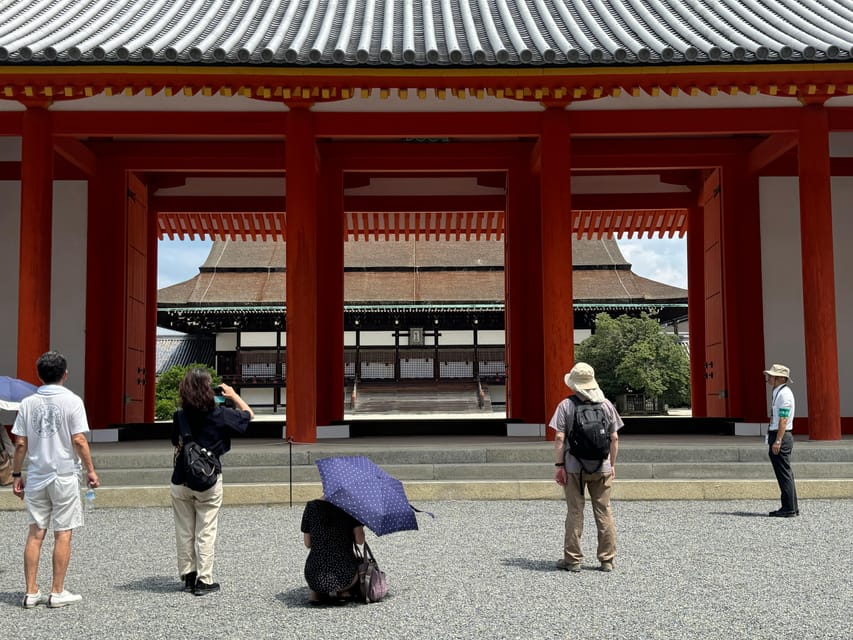
A palace tour is easy to do wrong. It becomes either architecture talk with no human scale, or it becomes a photo march with no context. This tour aims at something better: linking the spaces to daily life in the imperial court at the Emperor’s personal residence.
That daily-life angle is important because it prevents Kyoto Imperial Palace from feeling like a cold, distant monument. When you understand that the court had routines and official rhythms, you start imagining who moved where, when, and why.
The tour also emphasizes tradition and history related to Japan’s imperial family. That means you get more than “this is old.” You get a sense of how ceremony and governance were interwoven, and how specific buildings relate to official functions.
If you are the kind of traveler who likes learning how people lived in different times, you will probably enjoy this part. It gives you a human lens. And even if you normally skip lectures, the palace grounds help keep it grounded, because you can always look back at what the guide is talking about.
Still, there is a fair warning: the quality of the court-life explanations likely depends on the guide. In one positive example, Yoshi was praised for being very knowledgeable about Japanese history and for pointing out interesting details on the grounds. In a negative example, another guide did not provide enough information, making the experience feel closer to “walk alongside someone” than “learn from someone.” That variance is real, so if you can, choose the time when you are confident the guide will have strong reviews.
Serene gardens in Kyoto: the slow part that makes the palace stick
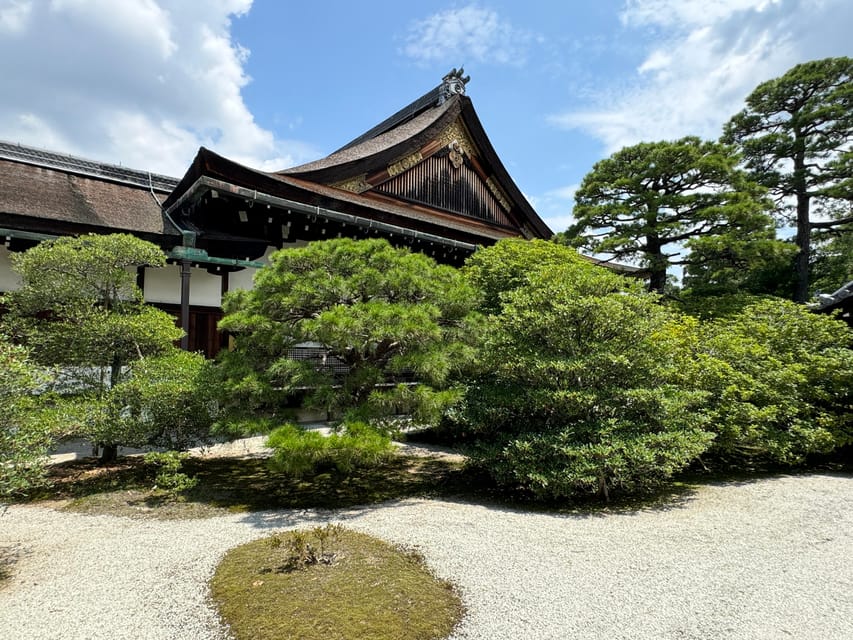
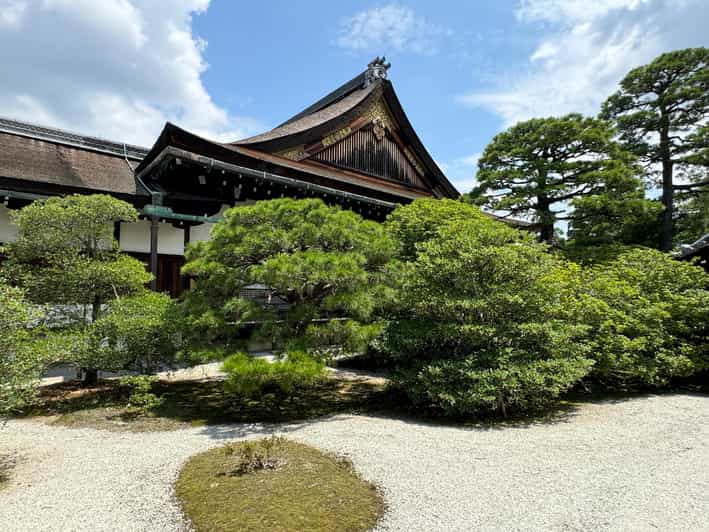
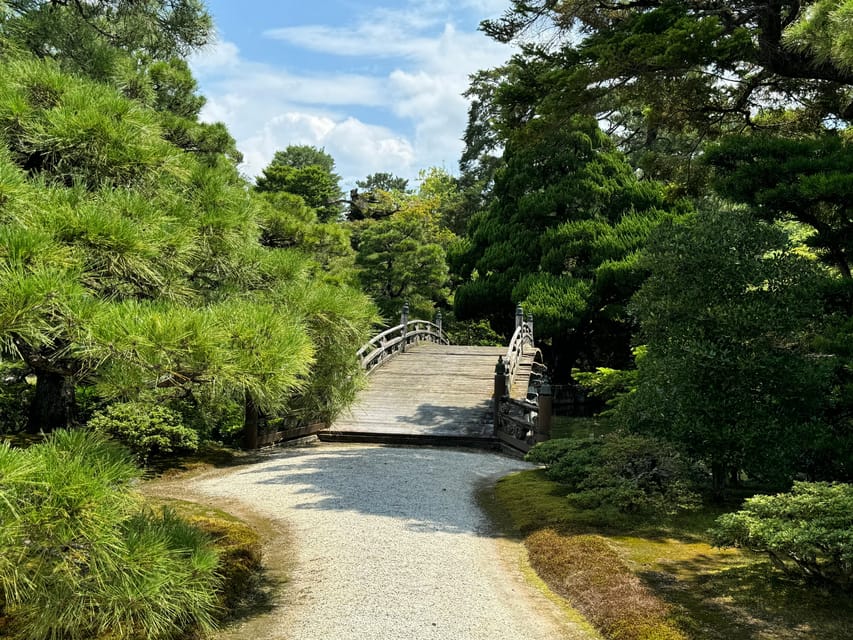
The palace complex sits in beautifully landscaped gardens, and this is not filler. The gardens are part of how the imperial world is experienced. They create breathing space between formal halls and help your brain process what you just learned.
One standout detail from a highly positive report is that the interior garden was described as jaw-droppingly beautiful. I would treat that as a clue, not a guarantee. Garden beauty is partly about timing, light, and what you notice. But the garden setting is central to why Gyoen is often recommended alongside palace sights.
What makes the gardens worthwhile on this tour is that they are paired with history. You are not just strolling. You are learning what these spaces mean in relation to the palace complex, and you get a slower rhythm that helps the guided stories feel believable.
Practical advice if you want to enjoy this section:
- Take a moment before photos. Let your eyes adjust to the garden lines and the way the path leads you.
- Listen for garden-related context, even if it is brief. It usually connects back to court aesthetics and ceremonial pacing.
- Don’t rush through the garden because the palace buildings feel like the “main attraction.” The gardens are part of the main attraction here.
For many people, the gardens are what make the tour feel calming instead of exhausting. In Kyoto, that matters. You can only handle so many temples before your brain goes into checklist mode.
How long is enough: timing for a 1 hour or 1.5 hour palace visit
Time matters in Kyoto. That is why I like that this is a short, focused outing.
The activity is listed at 1 hour, while the guided visit is described as around 1.5 hours. Either way, you are not committing to a half-day. This makes it easier to slot into an itinerary with other palace or temple visits without the day turning into a sprint.
The key is knowing what you will and will not get. This tour is designed to give meaning to a set of specific highlights: the palace grounds, the ceremony-related buildings, the Shishinden focus, and the serene gardens. It is not a multi-hour deep archaeological survey. If you want that, you would plan differently.
If your goal is to leave with a clearer understanding of what you saw, this length works. You get enough time for the guide to connect dots and answer questions, and you still finish with energy left for the rest of Kyoto.
If you are sensitive to crowds, a small group or private option helps. Fewer people can mean less time waiting at viewpoints and more time hearing explanations clearly.
A day of temples goes further with something to break it up.


Price and value: is $38 worth it for Kyoto Imperial Palace?
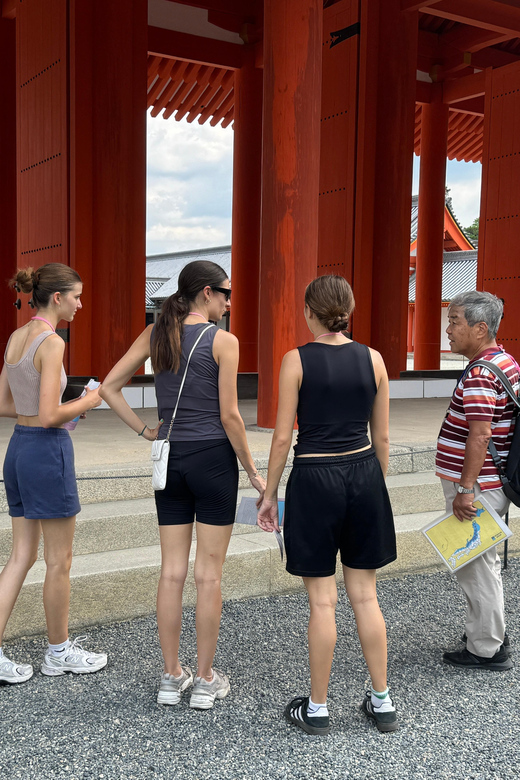
At $38 per person, you are paying for four things: live English interpretation, a guided path through the grounds, included entry to the Kyoto Imperial Palace, and the time efficiency of a focused tour.
Entry is described as free for this activity, so you are not paying a separate gate fee as part of the experience. That helps the math. You are also paying for the guide’s ability to translate palace layout into story. A hall without explanation can look like a hall. A hall with context becomes part of your Kyoto memory.
So is it worth it? For many travelers, yes, if you care about understanding what you see. The most praised element is the “deep insights” into traditions and history, plus the ceremony focus. That is exactly the kind of value you do not get when you wander alone.
What could make it not worth it for you? If you are the type who prefers self-guided wandering and you are comfortable reading plaques at your own pace, you might feel the guide adds less than expected. One criticism pointed out that the booking felt unnecessary and that accessibility could be handled without a guide. I would take that seriously if you are a confident independent traveler.
My practical take: if you want a guided interpretation of imperial tradition and daily court life, $38 is reasonable. If you want freedom to roam slowly without structured explanations, you may prefer to go on your own and spend your money elsewhere.
Who should book this tour, and who should skip
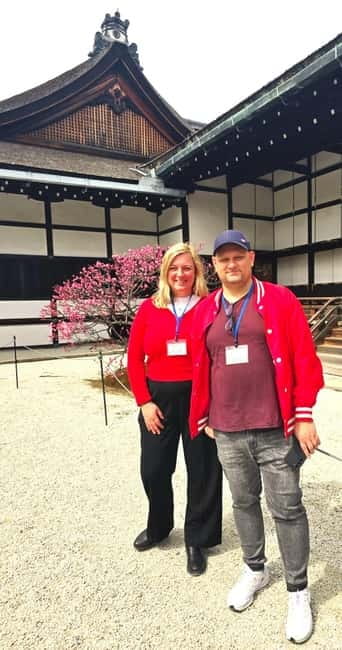
This tour is a good fit if:
- You like history with a visual anchor, meaning you want architecture explained through real function.
- You want context on the imperial family’s traditions and how ceremony shaped court life.
- You appreciate gardens and want the palace experience to include calm, walkable scenery.
- You prefer English live guidance and small group pacing.
It might be less ideal if:
- You only want photos and do not care about stories behind the buildings.
- You strongly prefer independent wandering, where the guide might feel optional.
- You are worried about variability in guide quality. The range of experiences shows that a good guide changes the feel dramatically.
If you fall in the middle, go anyway, but with a clear expectation. Think of this as a guided storyteller walking you through major palace highlights, with time to enjoy the gardens, not a ticket to private rooms.
Should you book Kyoto Discover Every Bit of Kyoto Imperial Palace?
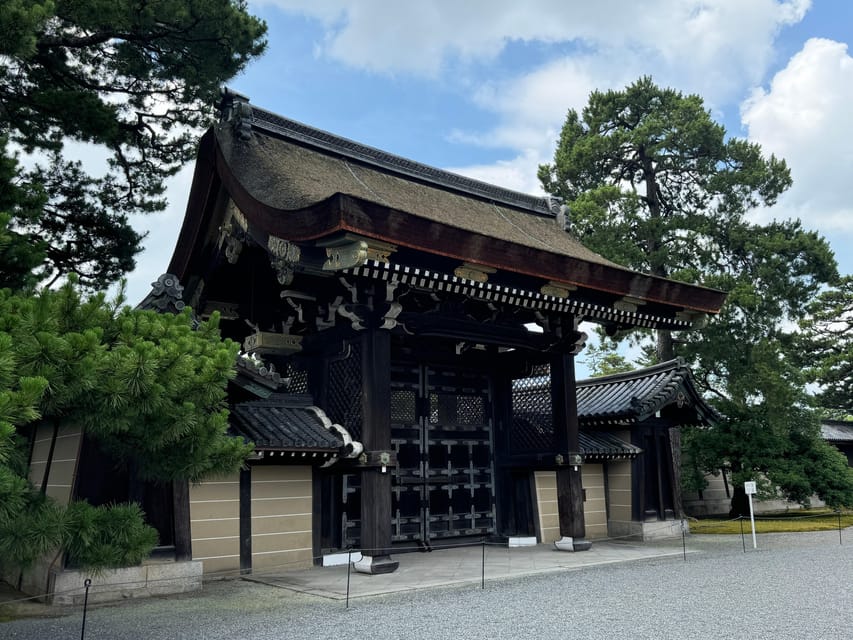
Yes, if you want your visit to feel like more than scenery. The best version of this tour is the one that links Shishinden and ceremony halls to how the imperial court lived and operated, and then gives you a garden break so you do not burn out.
Book with confidence if you:
- Want an English guide to explain what you are seeing
- Are excited by imperial tradition and the role of formal rites
- Plan on spending a full day in Kyoto and want a compact, efficient palace hit
Skip, or consider a self-guided approach, if you:
- Prefer to wander without structure
- Are only after the exterior photo points
- Think the guide will add little beyond what you can figure out yourself
If you do book, come prepared to look with questions in mind. Even basic curiosity will help you get more from every hall and every garden path.
FAQ
Where is the meeting point for the Kyoto Imperial Palace tour?
You meet in front of the Hamaguri Gate (Hamagurigomon) of the Kyoto Imperial Palace.
Who will I meet, and how do I find them?
Your guide will be waiting with a yellow sign that says DeepExperience.
How long is the tour?
The activity is listed at 1 hour. The guided visit portion is described as about 1.5 hours.
What language is the tour guide?
The live tour guide is in English.
Is entry included?
Yes. Entry to Kyoto Imperial Palace is included, and it is described as free for this activity.
Are groups small, or can I book privately?
Both private or small groups are available.
What is the tour price?
The price is listed as $38 per person.
Is there free cancellation?
Yes, you can cancel up to 24 hours in advance for a full refund.
Can I reserve now and pay later?
Yes, you can reserve now and pay later.
What parts of the palace experience are emphasized?
The tour focuses on imperial traditions and history, ceremony halls including the Shishinden main hall, daily life in the imperial court at the Emperor’s personal residence, and serene landscaped gardens.
New This Season
- Koyasan Day Trip by Private Car from Kyoto
- Old Port Town and Ultimate Sake Tasting Private Tour From Kyoto
- Kyoto’s Timeless Charm: 3hr Exploration of History and Peace
- Kyoto: 5 Types of Sushi Making
- Sacred Peak & Ancient Paths: Kurama-Kibune Hiking Experience
- Kyoto: Exclusive ZEN practice at Manpukuji temple in Uji
- Kyoto: Private Seasonal Aroma Yoga Class
- Traversing Kyoto’s Scenic West – Arashiyama to Kinkakuji