
Reviewed · TEMPLE & SHRINE VISITS
Kyoto: Ginkakuji, Silver Pavilion Guided Tour in 1 Hour
Zen calm in Kyoto, in just one hour.
This Ginkakuji, Silver Pavilion guided tour is a focused way to experience Zen architecture and carefully designed gardens, without spending the whole day stuck in lines or figuring out what to look at first.
I especially like the chance to see the Kannon-den hall up close, then shift to the quieter, more contemplative parts of the grounds. I also like that the tour ends in a spot that makes your next walk feel natural, not rushed.
The only real consideration is the timing: at 1 hour, you have to choose what to linger on, and you may want extra free time if you’re the type who likes to study every detail.
In This Review
- Key things to know before you book
- Ginkakuji Silver Pavilion in 1 hour, what you’re really buying
- Meeting at the Soumon gate, no guesswork required
- Kannon-den hall and Zen architecture you can read as you walk
- The sand garden and meticulous grounds, the quiet kind of impressive
- Elevated terrace views, why height changes the whole scene
- How the 1-hour pace feels, and where you can adjust
- Finishing at Tetsugaku No Michi, start your Philosopher’s Path walk on your terms
- Price and value of a $51 private guide for Ginkakuji
- Who this tour suits best (and who might want something longer)
- Tips to make the most of this Silver Pavilion hour
- Should you book this Ginkakuji guided tour?
- FAQ
- Where does the tour start?
- Where does the tour end?
- How long is the guided tour?
- What is included in the price?
- What does the guide look like at the meeting point?
- Is the tour private or group-based?
- What languages are offered?
- How much does it cost?
- Is there free cancellation?
- Can I reserve without paying right away?
Key things to know before you book
- Kannon-den is the architectural highlight, with Zen design you can actually feel in the space.
- The sand garden is a strong centerpiece, and it’s the kind of scene that makes you slow your pace.
- You get terrace views from higher ground, which changes how the gardens read.
- The tour finishes at Tetsugaku No Michi so your Kyoto stroll can start immediately.
- It’s a private group tour with a live guide in Japanese or English.
Ginkakuji Silver Pavilion in 1 hour, what you’re really buying
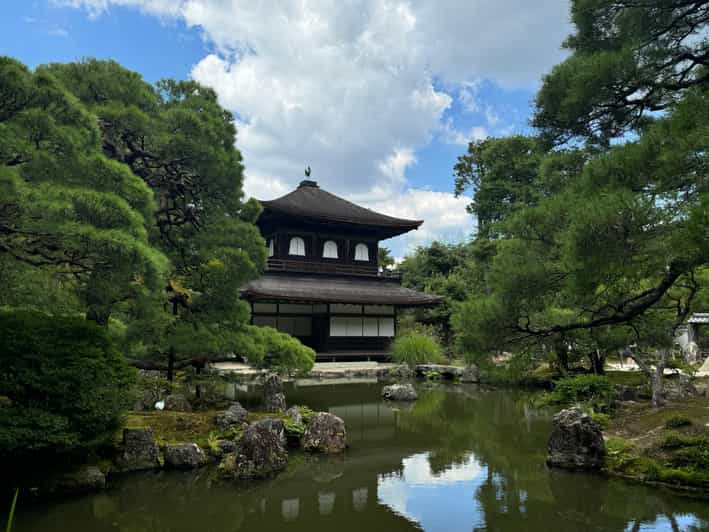
This tour is basically a guided shortcut to what makes Ginkakuji feel special. Kyoto has no shortage of iconic temples, but Ginkakuji works best when you understand what you’re looking for: the clean geometry, the garden composition, and how the space encourages a quiet rhythm.
With a 1-hour format, you’re not trying to “cover everything.” Instead, you get a guided walk that points you to the main visual beats, then hands you over to the Philosopher’s Path for an easy self-guided continuation. For many people, that’s the sweet spot. You get context up front, then freedom at the end.
At $51 per person, the value depends on your style. If you love temples but also want an efficient route and clear explanations, a guided hour usually pays off. If you’re already very confident navigating and reading signs on your own, you might feel the time is short for the money. Either way, the tour’s structure is designed to keep you moving through the highlights at a comfortable pace.
Meeting at the Soumon gate, no guesswork required
The tour starts at the 総門 (Soumon gate). Your guide meets you right in front of the gate, holding a yellow sign with the DeepExperience logo.
This matters more than it sounds. Kyoto temple entrances can be confusing at first, especially when you’re trying to line up the right gate, the right queue, and the right time. Having a clear meet point means you can arrive, find the sign fast, and start walking without the typical “Where is my tour?” scramble.
The tour is a private group, and the guide is available in Japanese or English. If you care about asking questions and getting direct answers, a live guide in your language helps a lot.
More rooftops worth a detour
- Kyoto: Tea Ceremony Ju-An at Jotokuji Temple
★ 4.9 · 3,207 reviews - Arashiyama Bamboo, Temple, Monkeys, or Secret Sake Brewery
★ 4.8 · 886 reviews - Kyoto: Arashiyama Bamboo Forest, Monkeys, Matcha & Temple Tour
★ 5.0 · 759 reviews - Osaka/Kyoto: Arashiyama, Nara & Fushimi Inari Shrine w/Lunch
★ 4.4 · 754 reviews
Kannon-den hall and Zen architecture you can read as you walk
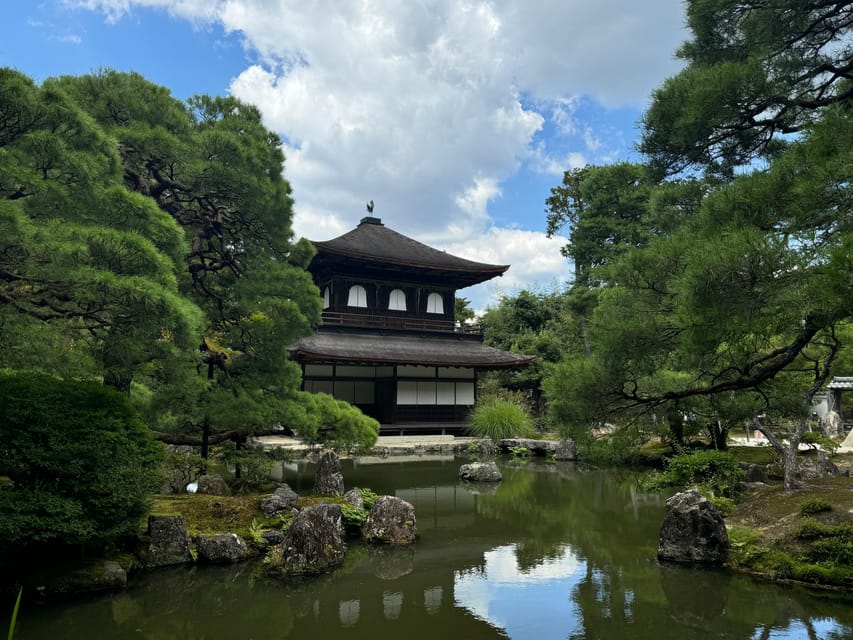
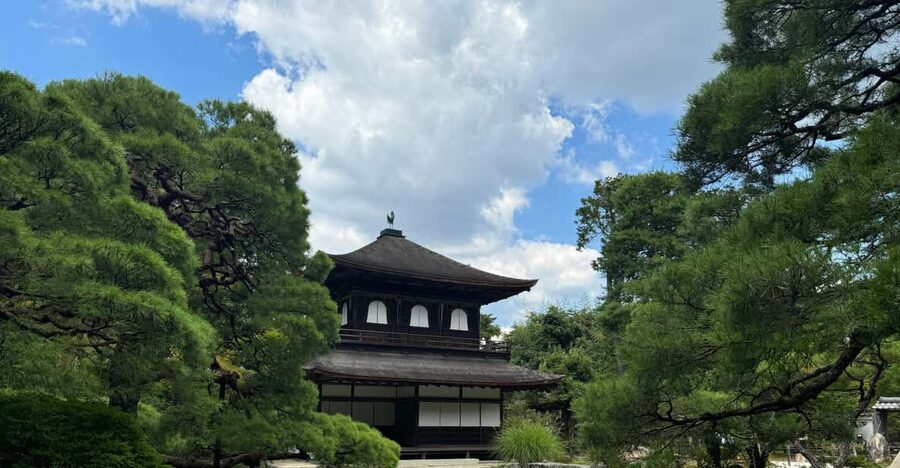
One of the best parts of this tour is the emphasis on the Kannon-den hall. This isn’t just a photo stop. The hall is the kind of structure where the details matter, and a good guide helps you notice what’s intentional.
Here’s what you should look for during the walk: the balance of forms, the calm feel of the space, and the way the hall connects to the surrounding garden world. Zen architecture tends to feel “simple” only until you pay attention. A guided hour helps you do that without overthinking every detail.
Also, guides have been singled out for how they explain. In past bookings, names like Hiro, Yoshi, and Teppei came up for being friendly and responsive, and for making the explanations feel connected to what you’re seeing in front of you. If you like your temple visits to come with meaning, this style is a strong match.
Potential downside here: if you’re the type who wants maximum time inside quiet spaces, you might find the hall portion too brief. But if you’re happy with a strong overview and a chance to reflect afterward, the timing is workable.
The sand garden and meticulous grounds, the quiet kind of impressive
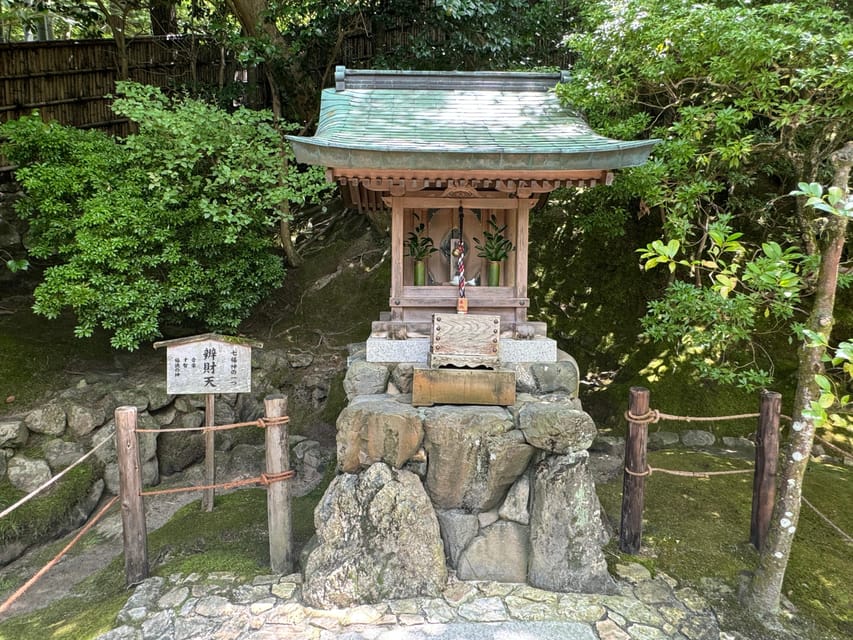
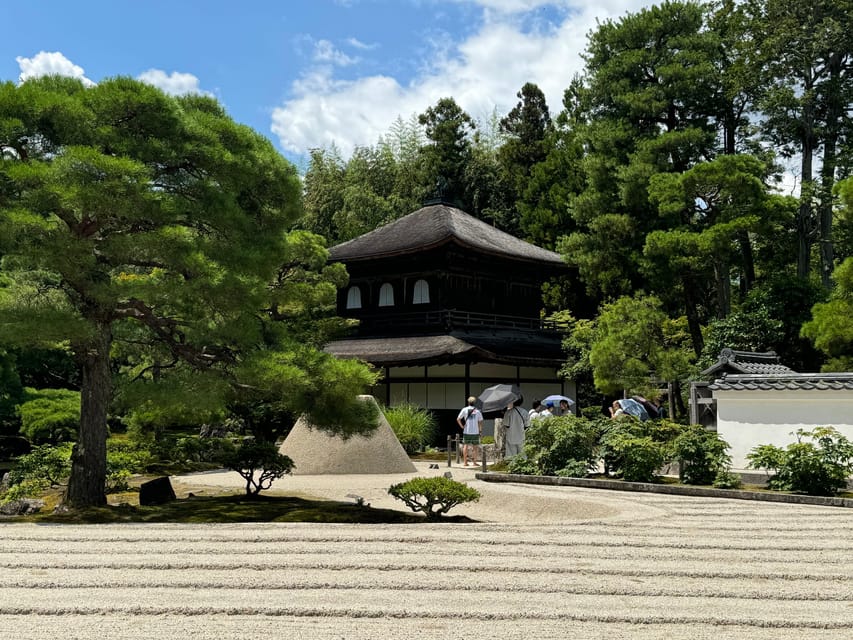
After the hall, the tour shifts into the heart of what makes Ginkakuji feel composed: the serene sand garden and the carefully maintained grounds.
What makes a sand garden worth your attention is not just its beauty. It’s how the garden shapes your viewpoint. Even when you’re standing still, your eyes keep moving, and the patterns encourage a slower gaze. It’s one of those places where a guide can be helpful because they often point out what to focus on, not just what you’re looking at.
The tour also highlights the lush, meticulously landscaped gardens. In practice, that means you get the chance to see the grounds as a designed system, not a random set of pretty corners. And if you’re someone who likes “where does my eye go next,” this is a satisfying experience.
Elevated terrace views, why height changes the whole scene
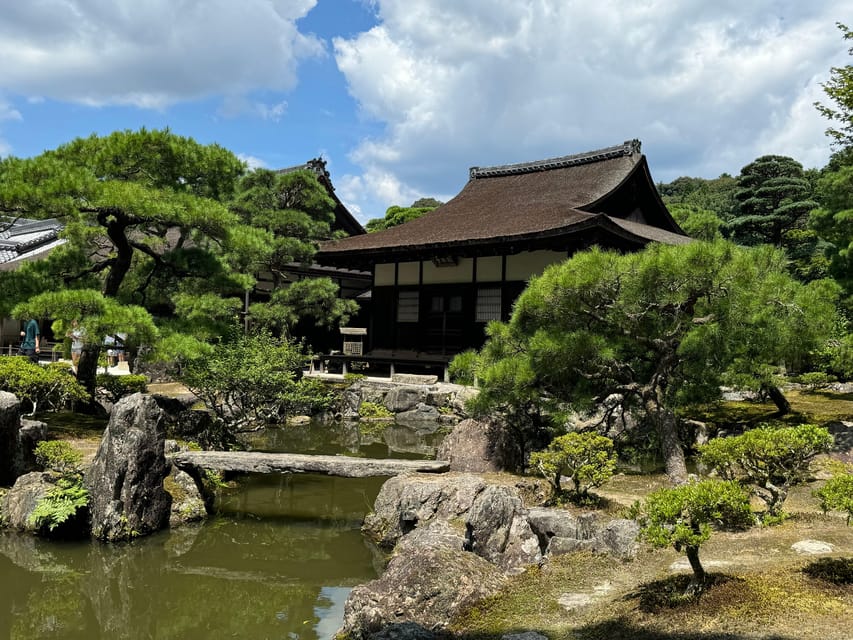
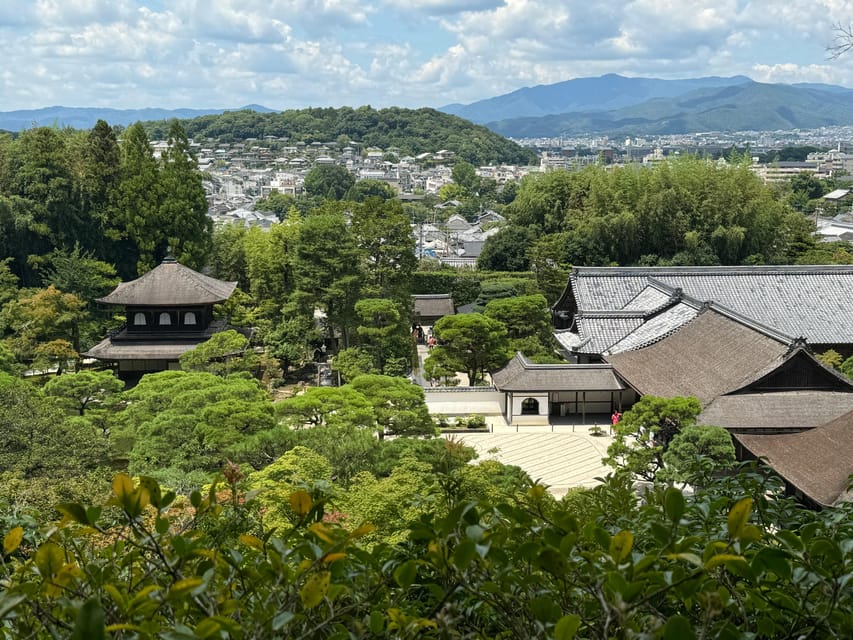
You’ll also get scenic views from the temple’s elevated terrace. This is a big deal because many temple gardens look different once you’re higher up. Details you might miss at ground level start to make sense, and the garden composition reads more clearly.
Even if you aren’t a “view person,” terrace viewpoints can be the difference between a good visit and a memorable one. A guide’s pacing helps here, too. They get you to the right place at the right moment in your walk so you don’t end up chasing views while everyone else waits.
This is also where you might want to slow down a bit. Take your time for a few minutes, then keep going. With only one hour total, you want to control your attention instead of letting the clock control you.
How the 1-hour pace feels, and where you can adjust
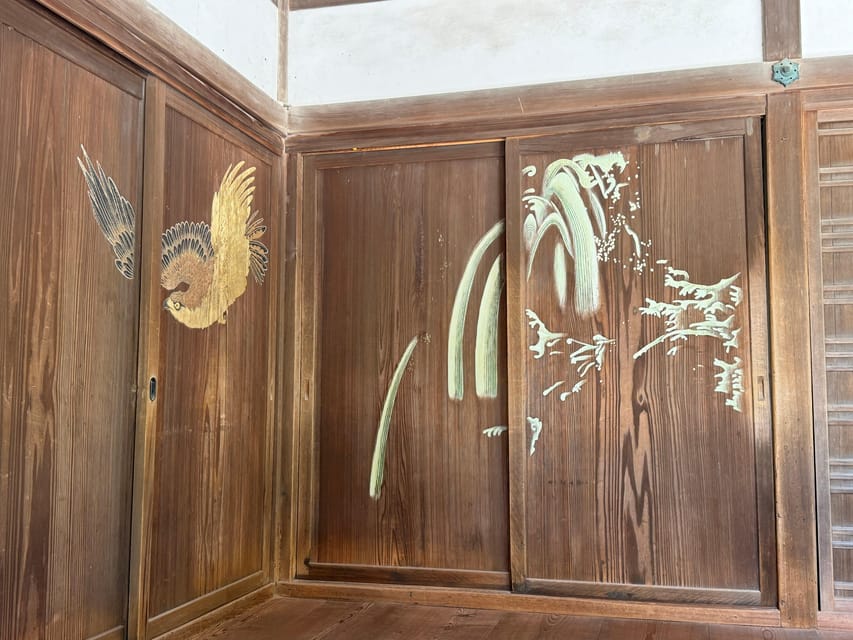
A 1-hour guided visit is short, but it’s not rushed chaos when the guide knows the flow. The tour starts at the gate, moves through the main temple highlights, and then transitions to the end point on Tetsugaku No Michi.
Here’s how to make it work for you:
- If you’re detail-oriented, plan to spend your extra minute budget on the sand garden and one terrace viewpoint.
- If you’re more interested in big-picture atmosphere, spend less time re-reading details and more time absorbing the quiet mood around the hall.
- If you have photo priorities, decide in advance what you want. This tour gives you strong scenes, but it’s not designed for an hour of nonstop camera work.
The key is remembering the tour’s goal: give you the essentials with enough explanation so you don’t leave feeling like you just walked through scenic spots. You leave with a sense of what mattered and why.
A quieter way to spend a day in Kyoto


Finishing at Tetsugaku No Michi, start your Philosopher’s Path walk on your terms
The tour ends at Tetsugaku No Michi, the Philosopher’s Path. That finish point is actually smart, because it turns the day into a smooth sequence: temple calm, then a gentle city walkway.
This is where you get personal control. The tour concludes at that area, and you have room to explore on your own. If you want to wander slowly, stopping for a snack or taking side turns, you can. If you want to keep moving and make the most of your time in Kyoto, you can do that too.
Practical advice: since this walk is your free time segment, it’s a good spot to shift gears from guided focus to your own pace. You’ll likely enjoy the rest of the route more if you don’t immediately rush onward.
Price and value of a $51 private guide for Ginkakuji
Let’s talk value plainly. The price is $51 per person for a 1-hour private group tour that includes:
- a live guide
- entry to Ginkakuji Temple
At this price, you’re paying for convenience, clarity, and time efficiency. In Kyoto, the time you save on “figuring it out” can be worth money, especially if you have a packed itinerary.
Where the value tends to be highest:
- You want guided interpretation, not just a walk.
- You’d like help prioritizing the key spots like the Kannon-den hall and sand garden.
- You want the tour to end in a way that connects to what you’ll do next, here the Philosopher’s Path.
Where it might feel less worthwhile:
- You’re happy doing Ginkakuji independently and don’t need a guide to explain what you’re seeing.
- You want a longer temple experience without the one-hour limit.
My take: for most visitors, the combo of entry plus a focused guide plus a sensible finish point is a fair deal. It’s not a bargain, but it’s not overpriced for the time you get either.
Who this tour suits best (and who might want something longer)
This tour fits best if you want a calm, organized temple experience without swallowing an entire morning. It’s also ideal if you like asking questions and getting direct answers in English or Japanese.
You’ll likely love it if:
- You’re seeing Ginkakuji as one stop in a bigger Kyoto plan.
- You like Zen gardens and want help reading them.
- You want a smooth link into the Philosopher’s Path walk after.
You might want a longer guided option if:
- You prefer deeper, slow sightseeing with lots of time on each viewpoint.
- You don’t want any time pressure at all, even in short visits.
One interesting detail from guide feedback: when people pair Ginkakuji with other nearby temple visits, guides such as Yoshi have been praised for adjusting explanations so the day feels connected rather than repetitive. That’s a plus if you’re planning multiple sites in one day.
Tips to make the most of this Silver Pavilion hour
You don’t need to over-prepare, but a few smart choices help you get more out of the hour.
First, decide what you want most from Ginkakuji: architecture, garden composition, or views. This tour covers all three, but your attention still matters.
Second, keep your expectations aligned with the time. You’re getting a guided highlight sequence, not an all-day immersion. If you treat it like the opening chapter of your Kyoto day and then take your time on the Philosopher’s Path, you’ll feel like you used your time well.
Third, if language matters, pick what you’re comfortable with. The guide is available in Japanese or English, and a live explanation tends to land best when you’re fully following.
Finally, if you’re sensitive to crowds, note that the tour is set up as a private group. That typically helps keep things calm, even when you’re in a popular temple area.
Should you book this Ginkakuji guided tour?
I’d book this tour if you want a high-yield, low-stress introduction to Ginkakuji and you value a guide who can point out what makes the Kannon-den hall, sand garden, and terrace views meaningful. The tour also earns points for ending at Tetsugaku No Michi, so your day continues naturally instead of stalling at the temple gates.
Skip it, or consider another format, if you’re looking for a long, unhurried temple stay where you can spend a lot of time reading quietly and roaming without a timed frame.
If your goal is to see the Silver Pavilion properly, understand what to notice, and then walk the Philosopher’s Path at your own pace, this 1-hour guided tour is a solid choice.
FAQ
Where does the tour start?
The tour starts at the 総門 (Soumon gate).
Where does the tour end?
The tour ends at Tetsugaku No Michi (Philosopher’s Path).
How long is the guided tour?
It lasts 1 hour.
What is included in the price?
The price includes a live guide and entry to Ginkakuji Temple.
What does the guide look like at the meeting point?
You should meet the guide in front of the gate. The guide holds a yellow sign with the DeepExperience logo.
Is the tour private or group-based?
This is a private group tour.
What languages are offered?
The live tour guide is available in Japanese and English.
How much does it cost?
The price is $51 per person.
Is there free cancellation?
You can cancel up to 24 hours in advance for a full refund.
Can I reserve without paying right away?
Yes, it offers Reserve now & pay later, so you can book your spot and pay later.
New This Season
- Koyasan Day Trip by Private Car from Kyoto
- Old Port Town and Ultimate Sake Tasting Private Tour From Kyoto
- Kyoto’s Timeless Charm: 3hr Exploration of History and Peace
- Kyoto: 5 Types of Sushi Making
- Sacred Peak & Ancient Paths: Kurama-Kibune Hiking Experience
- Kyoto: Exclusive ZEN practice at Manpukuji temple in Uji
- Kyoto: Private Seasonal Aroma Yoga Class
- Traversing Kyoto’s Scenic West – Arashiyama to Kinkakuji
Temple & Shrine Visits, compared.
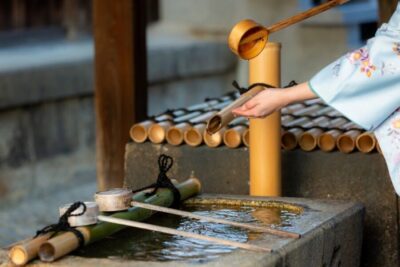
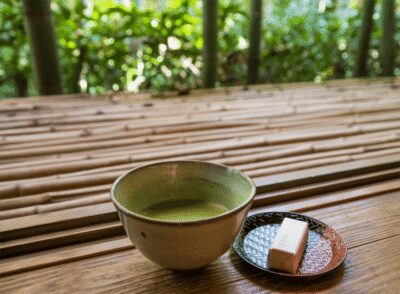
Arashiyama Bamboo, Temple, Monkeys, or Secret Sake Brewery
Read our review →
Arashiyama Bamboo Forest, Monkeys, Matcha & Temple Tour
Read our review →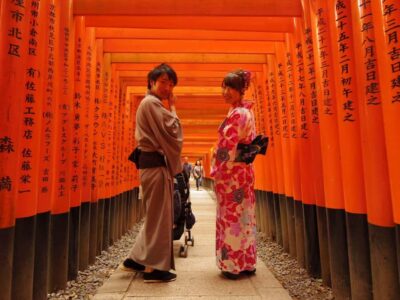
Arashiyama, Nara & Fushimi Inari Shrine w/Lunch
Read our review →
Kyoto Zen Meditation & Garden Tour at a Zen Temple with Lunch
Read our review →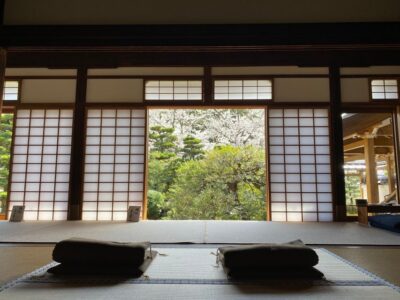
KYOTO Tea Ceremony with kimono near by Imamiya Jinjya Shrine
Read our review →Arashiyama Bamboo, Matcha, Monkeys & Temple Tour
Read our review →Also filed under