
Reviewed · GION GEISHA QUARTER WALKS
One Hour Geisha Show in Kyoto
Kyoto’s Maiko magic is surprisingly close. You’re not watching from across a room, you’re meeting a real Maiko while Kyoto’s geisha world stays intentionally discreet. The whole experience is built around short, graceful moments and real conversation.
I love two things most: you get to take pictures and videos, and you also get a real Q&A through the guide so you can understand the meanings behind the performance. Guides like Genki and Rin help translate the Maiko’s answers in a way that actually lands.
One thing to consider before you book: the Maiko does not perform nonstop for the full hour. Think short formal dances plus respectful interaction, not an extended stage show.
In This Review
- Quick reasons to go (and what you’ll walk away with)
- What makes a one-hour Maiko show feel special in Kyoto
- Tea House vs Gion Theater: choose the room you’ll enjoy most
- The show flow: opening dance, short performances, then Q&A and a game
- Tea, snacks, and the small details that make it feel real
- Getting great photos and videos without being that person
- Guides who make the Maiko experience click, from Rin to Umemai
- Kitano Tenmangū Shrine add-on: what you get with the Tea House option
- Price and value: does $50 make sense for this kind of Kyoto moment?
- Practical rules that affect comfort: socks, strollers, barefoot, and age
- Who this experience suits best (and who might not love it)
- Should you book this one-hour Kyoto Maiko experience?
- FAQ
- How long is the Maiko show experience?
- What does it cost per person?
- What are the main differences between the Tea House option and the Gion Theater option?
- Is the Kitano Tenmangū Shrine visit included?
- Can I take photos and videos?
- What’s included in the tour price?
- What should I bring, and what footwear rules apply?
- Is the tour wheelchair accessible?
- Is the experience suitable for very elderly visitors?
Quick reasons to go (and what you’ll walk away with)
- A rare Kyoto Maiko sighting when there are only about 40 Maikos left in the city
- Short, traditional dances that keep the art form’s timing and focus intact
- Q&A with translation support so you can ask about dress, roles, and daily life
- Photo and video time that feels structured, not chaotic
- Tea and traditional Japanese snacks included during the session
- Optional Kitano Tenmangu Shrine stop with the Tea House option only
What makes a one-hour Maiko show feel special in Kyoto
A lot of culture experiences in Kyoto are either big spectacle or museum-style viewing. This one works differently. You’re invited into a small, guided moment where the performance is meant to be brief, elegant, and personal, not drawn out for entertainment value.
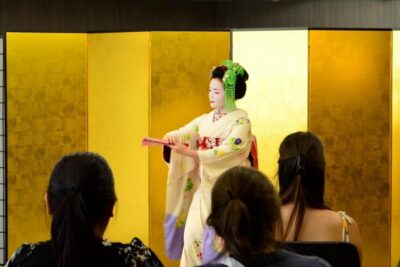
I like that the focus stays on the Maiko as a person and an artist. The show typically begins with a traditional dance around 10 minutes, then includes additional dances that are short and formal. Between the dancing, the atmosphere shifts to Q&A and interaction, which is where the experience becomes memorable.
And here’s the practical part: Kyoto has very few active Maikos compared with years past, so the chance to see one is genuinely rare. That rarity is part of why the performance stays short. It’s not a trick to keep the price up, it’s a way of protecting the grace and exclusivity of the craft.
Tea House vs Gion Theater: choose the room you’ll enjoy most
You get two different formats, and they change the flow of your day.
Tea House option
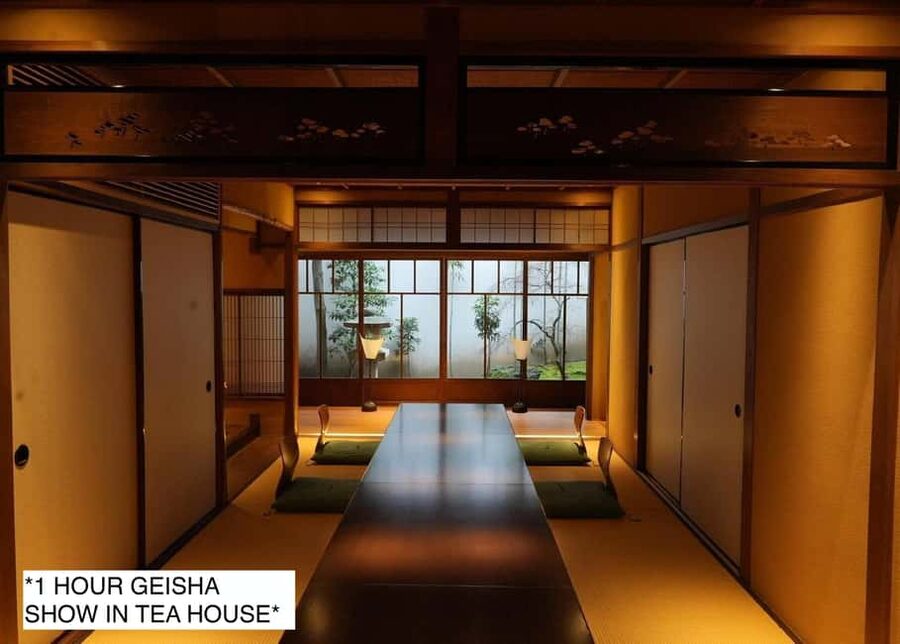
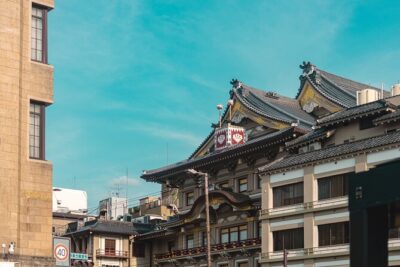
This takes place in a Kyoto-style townhouse setting, a Japanese Kyo-machi-ya. It also includes tea and traditional Japanese snacks as part of the session. If you choose this option, you also get a walking-guided shrine experience at Kitano Tenmangū that lasts 30 minutes, with time tied to the Maiko experience.
Gion Theater option
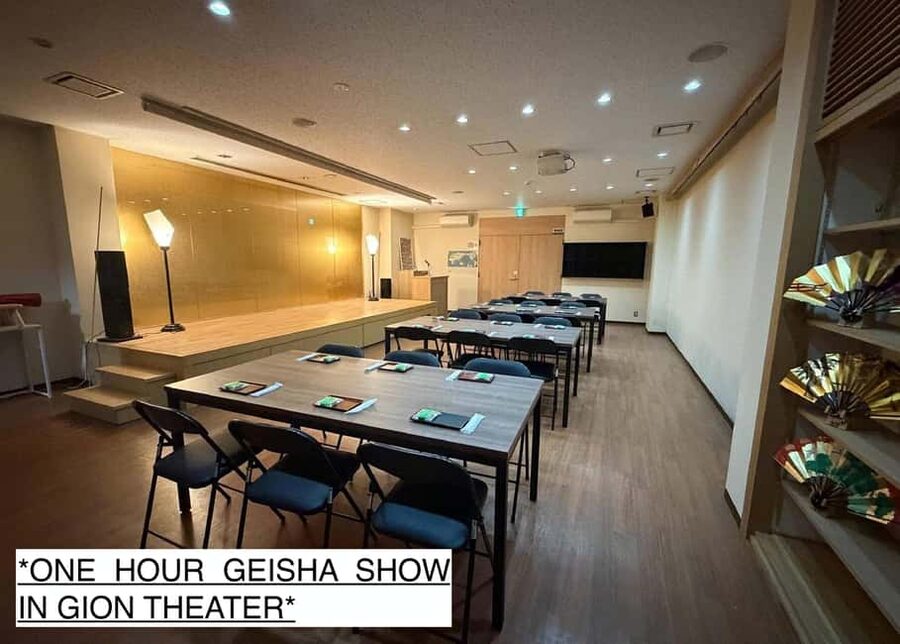
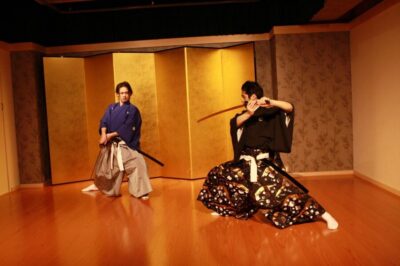
This is staged in a showhouse setting. It still gives you the Maiko dance experience with Q&A and photo time, and it includes tea and snacks. The big difference is you do not add the shrine walking session, because that shrine piece is only included with the Tea House option.
Group size matters too. The Tea House option caps at 23 people, while the Gion Theater option can run up to 30. If you want a slightly calmer, more intimate feel, the Tea House format tends to better match that vibe.
Wheelchair access also differs. The Tea House option is not wheelchair accessible, while the Gion Theater option is.
Lantern-lit streets of the geisha quarter
- Kyoto Geisha Walking Tour: Gion District & Hidden Gems
★ 4.7 · 3,273 reviews - Kyoto: Gion Magical Night Walking Tour with Geisha Trivia
★ 4.9 · 2,393 reviews - Kyoto: Gion Geisha District Walking Tour – Stories of Geisha
★ 4.7 · 2,187 reviews - Best of Kyoto: Gion, Geisha, Pagodas & Cobblestones
★ 4.9 · 2,058 reviews
The show flow: opening dance, short performances, then Q&A and a game
Plan for a tight rhythm. The experience is designed to fit into about 1 hour to 105 minutes, depending on the session start time and how long the group needs for photo moments.
You’ll typically start with the Maiko’s traditional dance, then see additional short dances. One key cultural point: the Maiko will not be on stage continuously for the entire session. That matters for expectations. You’ll get moments of performance, then the room shifts into conversation and activities.
Then comes the part that turns this from a nice show into a story you’ll remember. Q&A gives you the chance to ask questions and learn meanings behind what you’re seeing. In real moments, guides like Genki and Chihiro help translate smoothly, and that translation is a big reason people come away feeling like they understood the art, not just watched it.
After questions, there’s time for a traditional Japanese game with the Maiko. In one session, Konpira Fune Fune was the game, and the group had fun trying, with plenty of friendly losses. If you like interactive experiences, this is where your photos and laughs often happen.
Finally, there’s usually photo time so you can take home clear memories. The way it’s handled is structured, so you’re not fighting for attention in a crowd.
Tea, snacks, and the small details that make it feel real
This isn’t just a performance ticket. Tea and traditional Japanese snacks are included, and that simple inclusion changes the mood.
In tea-house style settings, the pacing feels more like hosting than like a show. You’re not rushed out the door the minute you finish watching. You get a chance to settle in, sip tea, and learn a bit before the dancing and photo moments.
One review experience included hot matcha tea or water, chosen during the brief hosting portion. Even if your session uses a different tea choice, the point stays the same: you’re participating in a small hospitality moment, not just buying access.
This also connects to what you’re paying for. At $50 per person, you’re paying for a rare face-to-face cultural encounter, plus a professional guide to translate and shape the session. The tea and snacks are a small but meaningful part of that overall value.
Getting great photos and videos without being that person
You’re welcome to take pictures and videos. That’s a big green light, especially compared with many cultural shows where photography can be limited.
Still, do it with respect. The Maiko’s performance is intentionally short, and the room is designed to protect the quiet focus of the art. So keep your movements controlled, phone brightness reasonable, and ask the guide for any timing cues.
The structured format helps here. You’ll have photo time built in after the Q&A and the game, so you’re not scrambling between dances. That means you can plan your shots instead of constantly worrying about when the best moment happens.
A useful mindset: aim for fewer, better photos. With a small group, you’ll get a nicer result if you’re ready and framed properly when the guide calls time for photos.
Guides who make the Maiko experience click, from Rin to Umemai
A big part of the success of this tour is how the guide bridges language and meaning. GuideMe Japan runs the experience with live English or Korean support, and in practice you can see how translation changes everything.
In different sessions, guides such as Rin, Genki, Akari, and Chihiro were mentioned for keeping explanations clear and friendly. Often, the guide will help translate what the Maiko says and also explain what her dress, hair, makeup, and accessories mean.
That meaning-focused context is what lets you understand the art instead of just admiring it. You’re not just looking at costumes, you’re learning how roles and details communicate within geisha culture.
Also, the Maiko’s openness matters. Multiple accounts highlighted how warm and responsive the Maiko was during Q&A, which makes the experience feel personal. When you feel invited to ask questions, you tend to remember more than just the photos.
A quieter way to spend a day in Kyoto


Kitano Tenmangū Shrine add-on: what you get with the Tea House option
If you choose the Tea House option, you’ll add a Kitano Tenmangū Shrine session. It’s guided and lasts 30 minutes, and it’s only included with this option.
In a practical sense, it breaks up the day. You’re not going from dance to nothing, you’re adding a Kyoto landmark that complements the cultural tone of the Maiko visit. The shrine time also gives you a change of scenery after the indoor or townhouse-style hosting session.
Because this shrine piece is only for the Tea House option, decide based on your energy. If you want a straight-to-the-point show with minimal walking, you might prefer the Gion Theater format. If you want your day to include a quick Kyoto cultural stop alongside the Maiko experience, the Tea House option makes sense.
Price and value: does $50 make sense for this kind of Kyoto moment?
At $50 per person, you might wonder what you’re really buying. Here’s the honest way to think about it: you’re not paying for a long performance. You’re paying for proximity, rarity, and translation support, plus tea and snacks.
You’re meeting and watching a Maiko in a setting that stays intentionally small. You also get Q&A, photo time, and a traditional game. Those extras are not afterthoughts. They’re part of the structure, and they’re what make the experience feel like a real encounter.
Then there’s the value factor of guidance. A professional tour guide can shape the whole session, especially because the Maiko’s explanations rely on context and translation. When guides like Genki or Rin help communicate clearly, the experience becomes more than sightseeing.
Compared with big staged shows, the price can feel high. Compared with the rarity of seeing a Maiko in Kyoto, plus the included hospitality and guided interaction, the $50 starts to feel more reasonable. The strongest value is for people who want to understand what they’re seeing, not just watch it.
Practical rules that affect comfort: socks, strollers, barefoot, and age
Read the practical stuff before you show up. It helps the experience go smoothly for everyone.
You’ll need to wear socks. Bare feet are not allowed, and socks are required. That’s easy, but don’t assume you can walk in comfortably without them.
Baby strollers are not allowed. If you’re traveling with a stroller, you’ll need an alternative plan for mobility.
Alcohol and drugs are not allowed. Also, the experience isn’t suitable for people over 95 years. If you’re near that age bracket, it’s worth thinking about seating, pacing, and the short but active interaction components.
These are small rules, but they matter. Follow them and you’ll spend your energy on the moment, not on fixing a footwear issue at the last minute.
Who this experience suits best (and who might not love it)
This is ideal for you if you:
- Want a rare Kyoto Maiko encounter with Q&A and photo time
- Prefer short, respectful performances over long stage shows
- Like cultural context, especially explanations about dress and roles
- Enjoy interactive moments like the traditional game
You might not love it as much if you’re looking for a full 60-minute uninterrupted dance performance. Again, the Maiko does not perform continuously for that entire time. The session is built for conversation and interaction, so your attention will move around more than you might expect.
Also, if you get easily overwhelmed by mixed group energy, keep it in mind that groups can be larger and multilingual. The guide will still support the main language, but you may hear other languages in the room.
Should you book this one-hour Kyoto Maiko experience?
I’d book it if you want a small, structured encounter with a real Maiko, and you care about understanding what you see. The combination of short traditional dancing, translated Q&A, photo and video time, and included tea and snacks is a strong package for $50.
Choose the Tea House option if you want that extra cultural bonus at Kitano Tenmangū and you’re comfortable with the format being in a Kyoto-style townhouse setting. Choose the Gion Theater option if you want the show-only style without the shrine add-on, and if wheelchair access matters for your group.
If your main goal is a long nonstop stage show, this likely won’t match your expectations. But if your goal is a rare Kyoto memory with real conversation, it’s exactly the kind of experience you’ll feel glad you didn’t skip.
FAQ
How long is the Maiko show experience?
The duration is about 1 hour to 105 minutes, depending on the start time and how the session runs.
What does it cost per person?
The price listed is $50 per person.
What are the main differences between the Tea House option and the Gion Theater option?
The Tea House option is held in a Japanese Kyo-machi-ya (Kyoto style house) and includes a shrine walking session. The Gion Theater option is held in a showhouse.
Is the Kitano Tenmangū Shrine visit included?
Yes, but only with the Tea House option. It includes a 30 minute guided session at Kitano Tenmangū.
Can I take photos and videos?
Yes. You’re welcome to take pictures and videos during the experience.
What’s included in the tour price?
Included items are the Geisha show (for 1 hour), tea and traditional Japanese snacks, a professional tour guide, and a 30 minute Kitano Tenmangū Shrine session only for the Tea House option.
What should I bring, and what footwear rules apply?
Bring socks. Bare feet are not allowed.
Is the tour wheelchair accessible?
Wheelchair access depends on the option. The Tea House option is not wheelchair accessible, while the Gion Theater option is.
Is the experience suitable for very elderly visitors?
The tour is not suitable for people over 95 years.
More Show in Kyoto
New This Season
- Koyasan Day Trip by Private Car from Kyoto
- Old Port Town and Ultimate Sake Tasting Private Tour From Kyoto
- Kyoto’s Timeless Charm: 3hr Exploration of History and Peace
- Kyoto: 5 Types of Sushi Making
- Sacred Peak & Ancient Paths: Kurama-Kibune Hiking Experience
- Kyoto: Exclusive ZEN practice at Manpukuji temple in Uji
- Kyoto: Private Seasonal Aroma Yoga Class
- Traversing Kyoto’s Scenic West – Arashiyama to Kinkakuji
Gion Geisha Quarter Walks, compared.
Kyoto Geisha Walking Tour: Gion District & Hidden Gems
Read our review →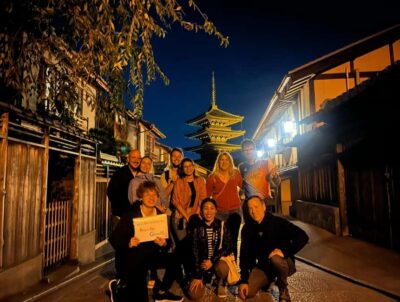
Gion Magical Night Walking Tour with Geisha Trivia
Read our review →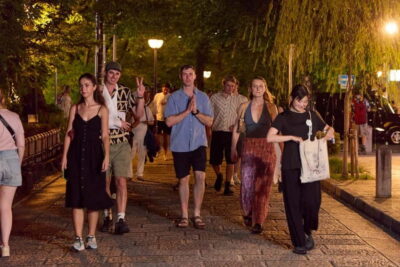
Gion Geisha District Walking Tour – Stories of Geisha
Read our review →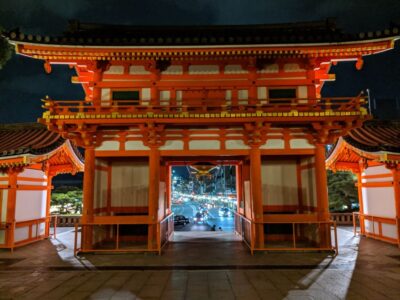
Best of Kyoto: Gion, Geisha, Pagodas & Cobblestones
Read our review →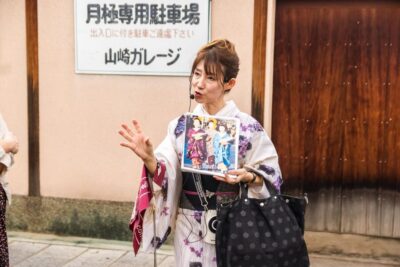

Kyoto Night Foodie Tour in Gion (9+ dishes + 6 Sake tastings)
Read our review →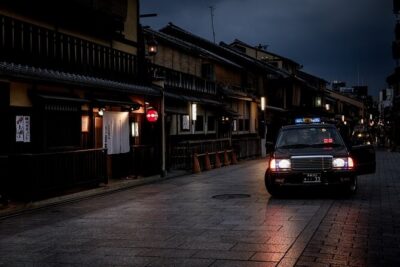
Kyoto Gion Geisha District Walking Tour – The Stories of Geisha
Read our review →
Kyoto Gion: 2-Hour Geisha Culture & History Walking Tour
Read our review →Also filed under