
Reviewed · COOKING CLASSES
Kyoto: Hands-on Takoyaki and Okonomiyaki Cooking (1 Hour)
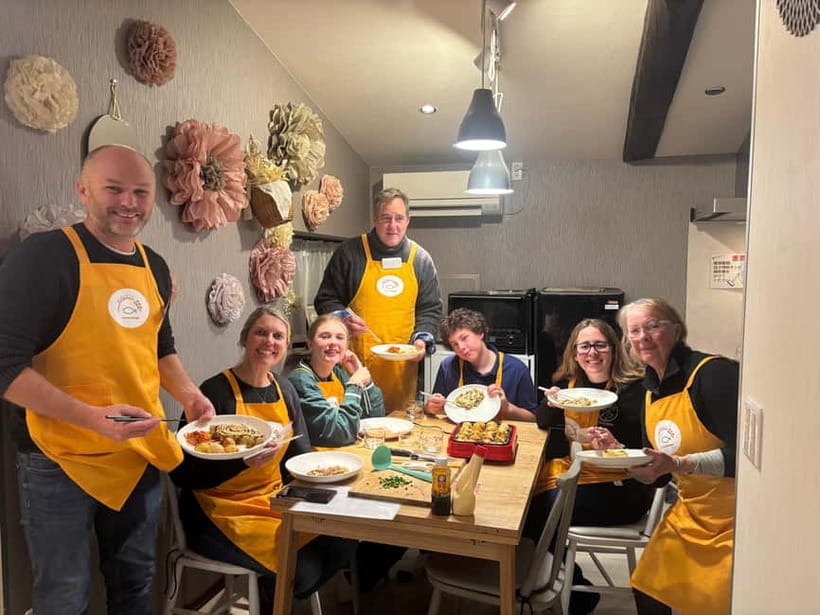
You can learn Kyoto comfort food fast, and have something warm in hand. This hands-on cooking session teaches you to make takoyaki and okonomiyaki in just one hour, using a format that works even if you’re new to Japanese food.
What I especially like is the focus on doing, not listening. You’ll get your own apron, utensils, and ingredients, and you move at your pace while the instructor helps you dial in the technique. I also like the short, practical length: after class, you sit down and eat what you cooked in a relaxed setting, so the day feels efficient instead of rushed.
One consideration: the class is only one hour, so if you want long, deep explanations or lots of downtime, this might feel tight. And while the operator notes an update in December 2025 with classes led or supervised by experienced instructors, you should still expect a busy, kitchen-style pace.
In This Review
- Key things to know before you go
- Takoyaki and Okonomiyaki in 60 minutes, the format that keeps you moving
- Where you meet in Kyoto, and why location matters more than you think
- What you cook, and what makes each dish worth learning
- Okonomiyaki: the savory pancake with the art of flipping
- Takoyaki: crisp edges and tender centers in bite-size form
- Why cooking both is smart
- The actual class flow: hands-on steps, instructor support, and what you’ll be asked to do
- Dietary options: gluten-free, vegan, halal-friendly, and allergy-free planning
- Eating what you cooked: a relaxed end to your Kyoto food day
- Price and value: is $56 worth it compared to eating on your own
- Who this Kyoto cooking hour suits best, and who might want something else
- Practical tips so you get the most from your one-hour cooking session
- Should you book this Kyoto takoyaki and okonomiyaki class?
- FAQ
- How long is the Kyoto Hands-on Takoyaki and Okonomiyaki cooking experience?
- How much does the experience cost?
- Where do I meet for the class?
- How far is it from Shijo Station or Karasuma Station?
- What dishes will I cook?
- Are gluten-free, vegan, or halal-friendly options available?
- Is the class suitable if I have food allergies?
- What’s included in the price?
- What’s the group size and language support?
- Is transportation included?
Key things to know before you go
- Two classics, one session: You’ll cook both takoyaki and okonomiyaki, which share some similar ingredients and methods, so it’s an efficient way to learn.
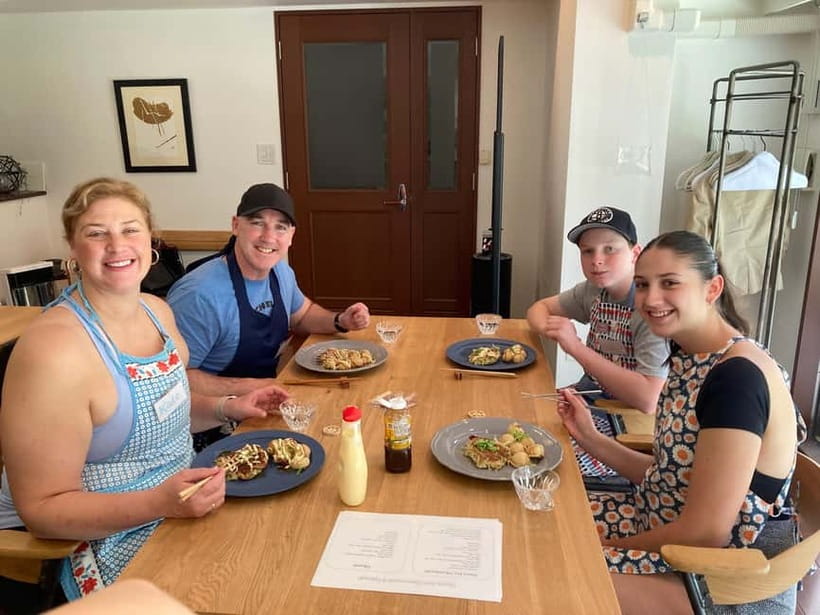
- Small group size (up to 6): Less waiting, more attention, and a better chance to ask questions.
- Beginner-friendly flow: It’s designed to be casual and easy to follow, not lecture-style.
- Dietary flexibility: Gluten-free, vegan, halal-friendly, and allergy-free options are available if you request them when booking.
- Easy meeting point: About a 10-minute walk from Shijo Station or Karasuma Station, and you meet on the 3rd floor at doorbell 302.
Takoyaki and Okonomiyaki in 60 minutes, the format that keeps you moving
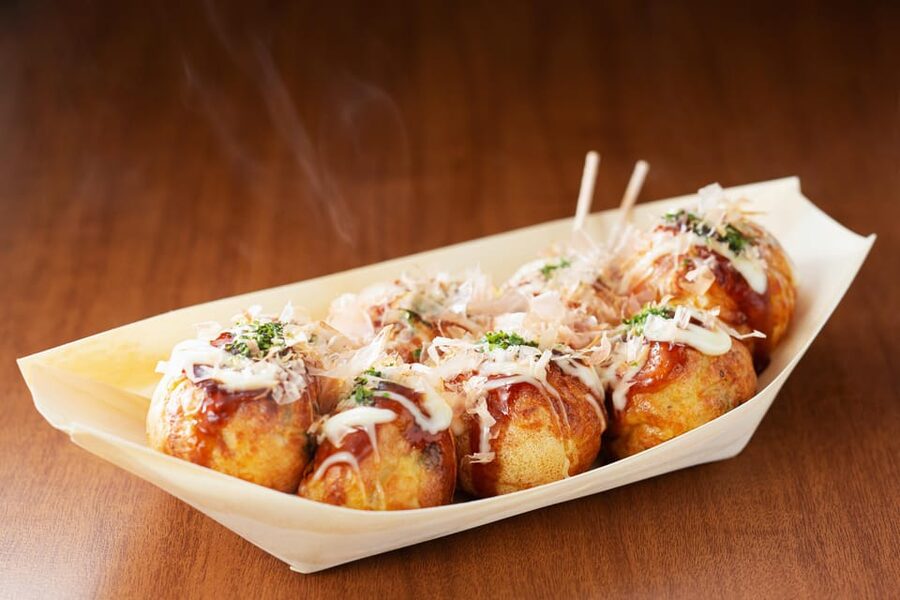
This class is built for people who want a real food activity without carving out half a day. In one hour, you’ll make two popular Japanese comfort foods: okonomiyaki and takoyaki. They’re both everyday Kansai-style favorites, and learning them side by side helps you see how Japanese home cooks think about batter, toppings, heat, and timing.
I like the way the experience is designed around momentum. There’s no long theory session first. Instead, you start cooking early, you get guidance in the moment, and you finish with something you made yourself. That matters in Japan, where food is everywhere but hands-on learning can be scarce unless you book something specific.
The dishes also give you variety without complexity. Okonomiyaki is all about shaping and flipping a savory pancake. Takoyaki is about filling and cooking small ball portions until they’re evenly crisp. In practice, you’re learning two textures and two techniques, but the workflow stays straightforward.
Where you meet in Kyoto, and why location matters more than you think
The meeting point is easy to reach and simple to find once you know what to look for. Take the elevator to the 3rd floor and press the doorbell for 302. The class is set up for walk-ins from major areas, not deep in the backstreets.
You’ve got practical options:
- Roughly a 10-minute walk from Shijo Station or Karasuma Station
- About 15 minutes from JR Kyoto Station by train or bus, plus a short walk
- Around a 15-minute walk from Nishiki Market
That location rhythm is helpful because you can plan around it. If you’re already in the Shijo area for shopping or food, you won’t waste energy cross-town. If you’re near Nishiki Market, this becomes a great “before or after dinner” activity that still leaves you time to explore.
And since round-trip transportation isn’t included, being close to transit is a real value point. You’ll spend less time scheduling buses, less time second-guessing routes, and more time actually doing something.
A quieter way to spend a day in Kyoto
- Ninja 1-hour Hands-on Lesson by Japanese master in Kyoto -Entry
★ 5.0 · 489 reviews - 1 Hour Geisha Show in Kyoto
★ 5.0 · 452 reviews - One Hour Geisha Show in Kyoto
★ 5.0 · 64 reviews - One Hour Geisha Show in Gion Kyoto
★ 5.0 · 59 reviews
What you cook, and what makes each dish worth learning
You’re making two iconic foods, but they feel different on the stove. Here’s what to watch for as you cook.
Okonomiyaki: the savory pancake with the art of flipping
Okonomiyaki is often described as a savory pancake, but that undersells it. The learning payoff is how you build structure and manage heat. You’re working with batter and toppings, then cooking until it sets and crisps enough to flip.
In a short class, you’re not trying to become a pro. You’re learning enough to understand why okonomiyaki is such an easy comfort food at home. One useful outcome is recognizing the balance of batter consistency and pan temperature, because that’s what determines whether the pancake holds together or turns into a messy science project.
Takoyaki: crisp edges and tender centers in bite-size form
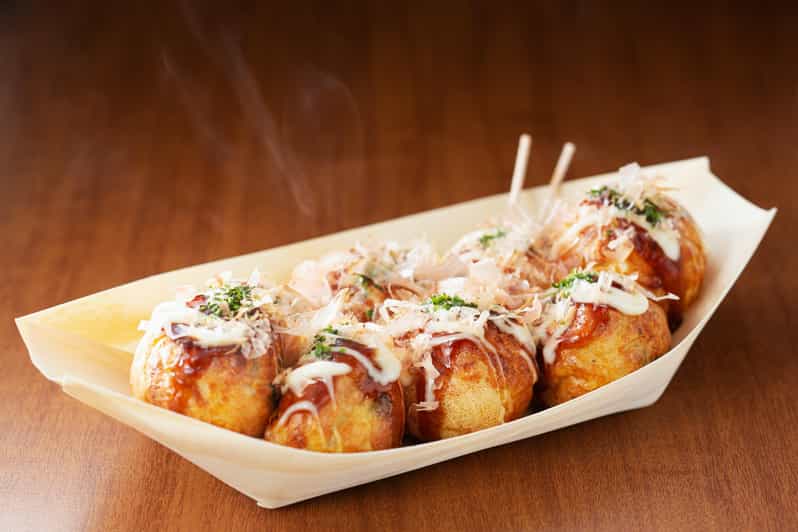
Takoyaki is the famous ball-shaped snack cooked in a special pan. You fill, cook, and then keep shaping so the exterior crisps while the inside stays tender. It’s a small-portion skill, and it’s easier than it looks once you get the rhythm from an instructor.
The learning payoff here is texture. Takoyaki is all about even browning and properly cooked inside pieces. In a one-hour class, you’ll mostly focus on getting the process right, not perfect artistry. Still, the moment you see your balls set and brown, you’ll understand why takoyaki is so satisfying.
Why cooking both is smart
These two dishes use familiar comfort-food logic: savory batter, hot surfaces, and toppings that finish the flavor. Making them back-to-back is a fast way to compare technique. You’ll come away with a clearer sense of how Kansai-style home cooking works, without needing a long, multi-course class.
A day of temples goes further with something to break it up.


The actual class flow: hands-on steps, instructor support, and what you’ll be asked to do
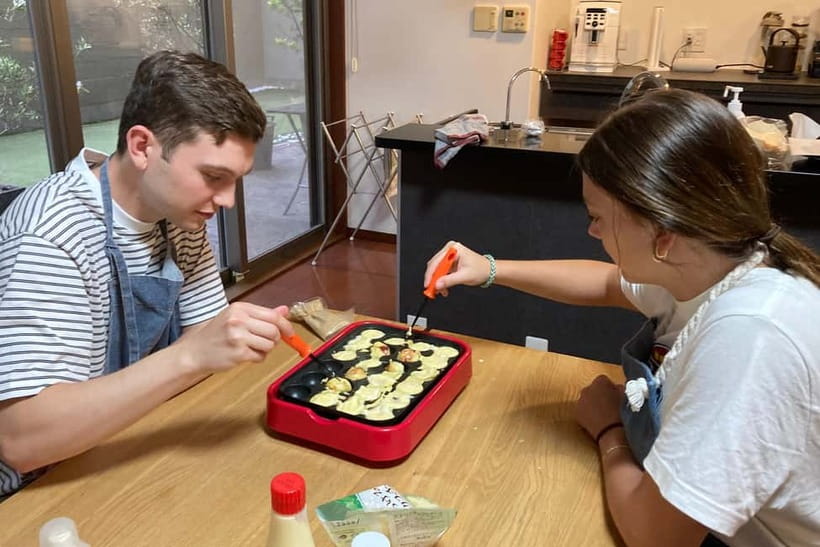
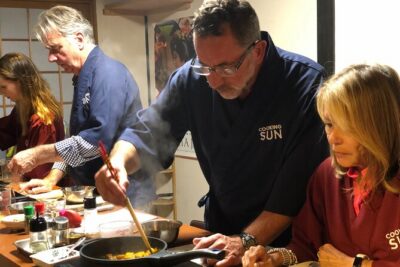
This experience is casual and hands-on, with friendly guidance. The instructor supports you, answers questions, and shares helpful tips as needed. It’s not a lecture where you mostly watch.
With a small group of up to 6, the pacing works because you aren’t waiting in line. You’ll likely rotate through steps like mixing components, preparing portions, cooking, and arranging toppings. The exact order can depend on timing, but the goal is consistent: everyone cooks, everyone eats.
The tool setup is part of the value. Aprons and cooking utensils are included, so you don’t have to show up carrying gear you can’t use later. Ingredients are included too, which means you can focus on technique instead of shopping.
There’s also a practical “don’t stress” element built in: the class is beginner-friendly and designed so you can follow even if it’s your first time in a Japanese kitchen setting. That beginner orientation is key if your Japan trip is packed with temples, trains, and late nights. One hour like this can reset your energy because it’s active and rewarding.
December 2025 update: the operator says classes are now led or supervised by experienced instructors. For you, that means smoother guidance and a more consistent class flow, especially in a time-limited kitchen.
Dietary options: gluten-free, vegan, halal-friendly, and allergy-free planning
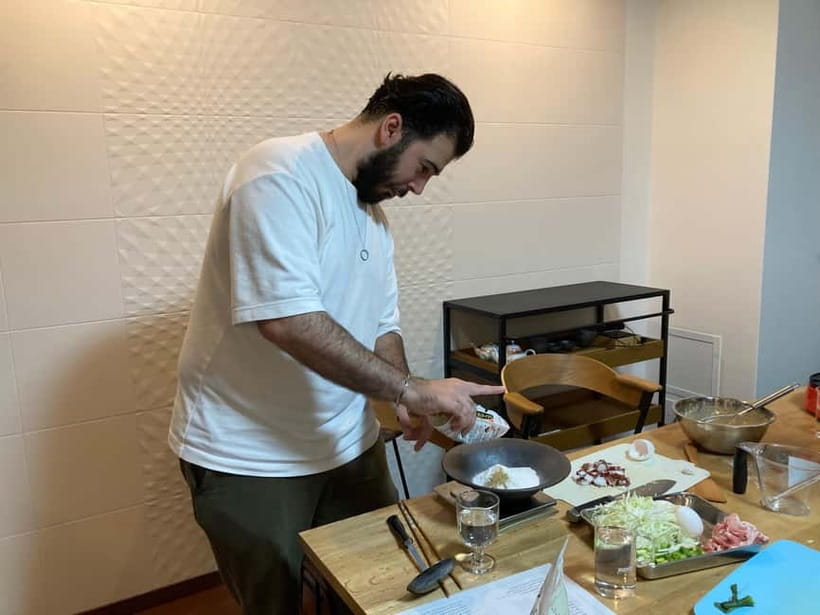
Food restrictions don’t have to kill your plans in Kyoto. This experience explicitly offers gluten-free, vegan, and halal-friendly options, and it also supports allergy-free needs if you tell them when booking.
Here’s what that means for you in real terms:
- You should request dietary needs at booking so ingredients can be adjusted ahead of time.
- You’re not expected to guess how a dish can be modified on the fly.
- The class is designed to handle these adjustments without making you feel like an inconvenience.
This matters because takoyaki and okonomiyaki can include wheat-based ingredients and other common allergens. Having an operator prepared for substitutions turns the class from a “maybe” into a real option.
Also, the experience uses a casual hands-on structure. That’s good for dietary needs because the instructor can guide you on what you’re working with and how to cook it, rather than sending you off to figure things out alone.
Eating what you cooked: a relaxed end to your Kyoto food day
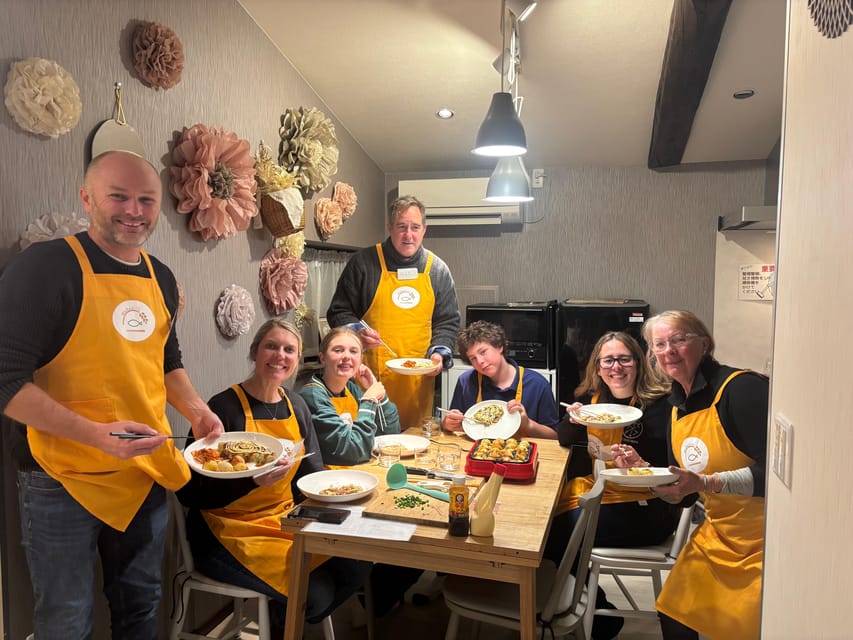
After cooking, you sit down and enjoy the dishes you made. That’s not a minor detail. In many cooking classes, you’re done, you wash up, and you hope you can remember what happened. Here, there’s a relaxed finish where you can actually taste and evaluate your work.
This is especially satisfying because you made two different textures:
- the pancake-style thickness and crisp edges of okonomiyaki
- the ball-shaped crisp shell and tender inside of takoyaki
It also makes the class easier to place in your day. If you’ve been walking Kyoto streets all afternoon, you get a warm sit-down moment that doesn’t require you to hunt for the right restaurant or wait for a table.
Price and value: is $56 worth it compared to eating on your own
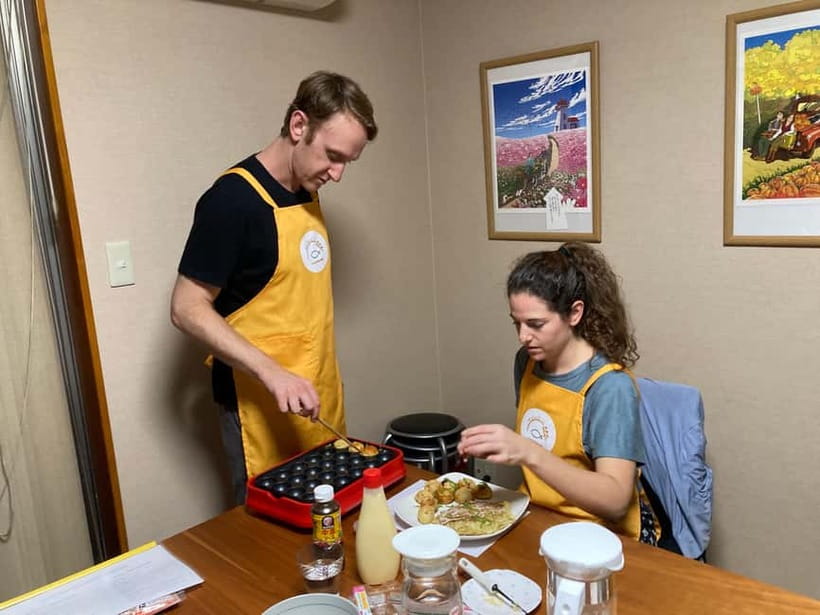
At $56 per person for a one-hour class, you’re paying for ingredients, utensils, instruction, and the chance to make two foods. Compared to just eating takoyaki or okonomiyaki, the price buys you time plus technique.
Where the value really shows up:
- You get to cook, not just sample.
- You learn two dishes using similar comfort-food logic, which compresses learning into one short slot.
- Dietary-friendly adaptations are supported, which can be harder to find at regular restaurants.
- Small group size keeps the experience personal.
If you’re the kind of traveler who likes food memories you can recreate at home, this format makes sense. You’re not learning one dish; you’re learning a pair of skills. Even if your home kitchen can’t perfectly recreate the takoyaki pan, you’ll still understand the batter rhythm and the texture targets.
The main trade-off is time. You’re paying to keep the class tight. If you want a slow, multi-hour culinary workshop, this may not be the best fit.
Who this Kyoto cooking hour suits best, and who might want something else
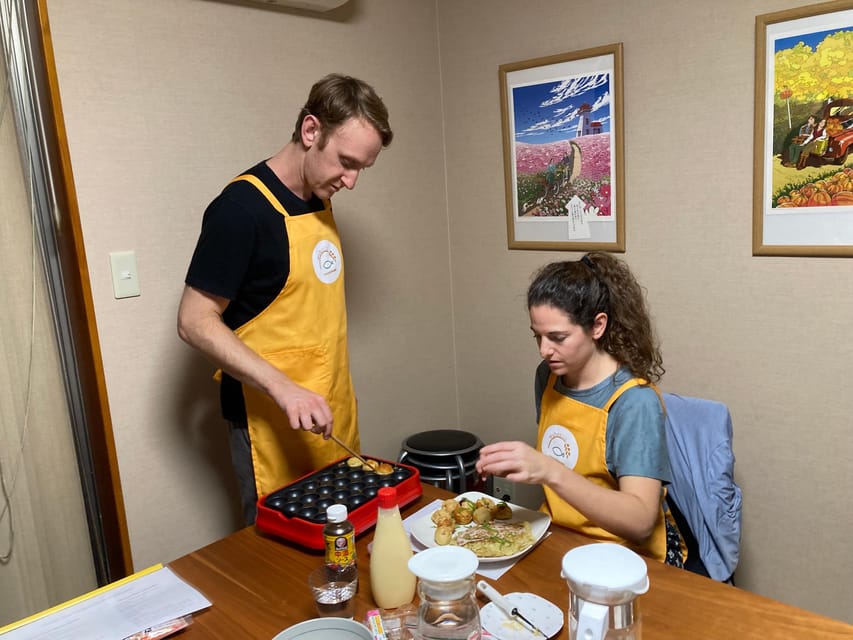
This class is a great match if you:
- want a short, friendly food experience without committing to a half-day
- enjoy hands-on learning, not just watching
- are traveling with someone and want a shared activity
- need gluten-free, vegan, halal-friendly, or allergy-free support
It can also work well for first-time Japan visitors. You get practical kitchen skills tied to recognizable street foods, plus chances to ask questions in English or Japanese.
Where it might not fit as well:
- If you’re very time-rich and want deeper technique lessons, you may feel a bit rushed.
- If you prefer a quieter, more reflective setting, the cooking pace might be more active than you like.
Practical tips so you get the most from your one-hour cooking session
A few habits will make the hour feel smoother:
- Arrive a little early so the elevator and doorbell meeting point doesn’t add stress.
- Go in with a mindset of learning texture, not chasing perfection. Takoyaki and okonomiyaki are about feel.
- If you have dietary needs, confirm them clearly at booking. Don’t wait until the day of.
- Ask questions while you’re cooking. The instructor’s tips matter most when you can use them right away.
Also, the small group format means you’ll likely have time for conversation. Some participants have mentioned that the guides were warm and open to questions about Japan, and that can turn cooking into a mini cultural chat, not just a meal.
Should you book this Kyoto takoyaki and okonomiyaki class?
I’d book it if you want a hands-on food lesson that fits into a busy Kyoto schedule and you like active learning. The combination of cooking two dishes in one hour, plus support for gluten-free, vegan, halal-friendly, and allergy-free needs, is a strong value mix.
I’d hesitate only if you strongly prefer unhurried, long-form instruction. For most people, though, this is exactly the kind of practical, fun Kyoto food experience that helps your trip feel more personal and easier to remember.
FAQ
How long is the Kyoto Hands-on Takoyaki and Okonomiyaki cooking experience?
It lasts 1 hour.
How much does the experience cost?
The price is $56 per person.
Where do I meet for the class?
Meet on the 3rd floor, and press the doorbell for 302.
How far is it from Shijo Station or Karasuma Station?
It’s about a 10-minute walk from either Shijo Station or Karasuma Station.
What dishes will I cook?
You’ll cook takoyaki and okonomiyaki.
Are gluten-free, vegan, or halal-friendly options available?
Yes. Gluten-free, vegan, and halal-friendly options are available if you inform the provider at booking.
Is the class suitable if I have food allergies?
Yes. Allergy-free adjustments are available if you let them know at the time of booking.
What’s included in the price?
The experience cost includes ingredients (lunch or dinner food), aprons, and cooking utensils rental.
What’s the group size and language support?
It’s a small group limited to 6 participants, and the instructor speaks English and Japanese.
Is transportation included?
No. Round-trip transportation to and from the location is not included.
More Workshops in Kyoto

New This Season
- Koyasan Day Trip by Private Car from Kyoto
- Old Port Town and Ultimate Sake Tasting Private Tour From Kyoto
- Kyoto’s Timeless Charm: 3hr Exploration of History and Peace
- Kyoto: 5 Types of Sushi Making
- Sacred Peak & Ancient Paths: Kurama-Kibune Hiking Experience
- Kyoto: Exclusive ZEN practice at Manpukuji temple in Uji
- Kyoto: Private Seasonal Aroma Yoga Class
- Traversing Kyoto’s Scenic West – Arashiyama to Kinkakuji
Cooking Classes, compared.
Ramen Cooking Class at Ramen Factory in Kyoto
Read our review →
Ramen Cooking Class at a Ramen Factory with Souvenir
Read our review →
Japanese Washoku Bento Small Group Cooking Class
Read our review →
Japanese Traditional Sweets Making and Tea Ceremony
Read our review →
Kyoto Ramen and Gyoza Cooking Class with Professional Chefs
Read our review →
Also filed under