
Reviewed · COOKING CLASSES
Kyoto: Ramen, Gyoza, and Onigiri Cooking Class
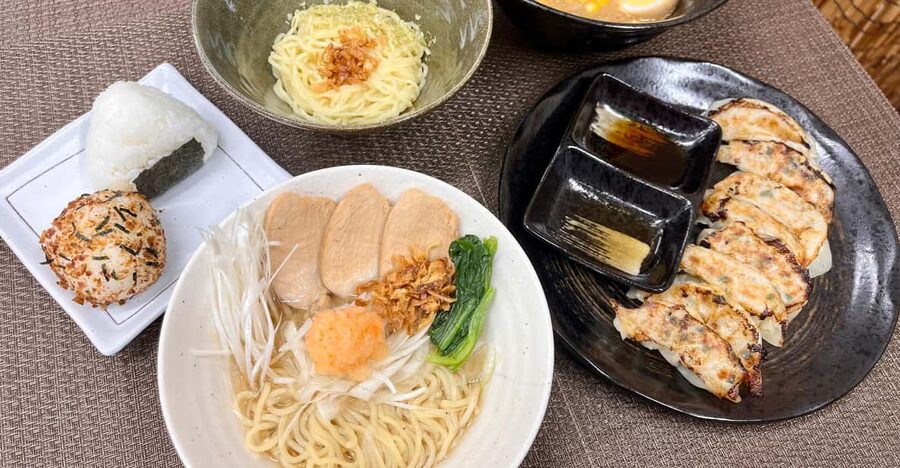
Knife-sharp cravings start in Kyoto. In this 90-minute class, I like how you build miso and shoyu ramen broth from straightforward ingredients, and you can recreate it at home. I also love the focus on gyoza wrapping, so the goal is not just filling scooped into a wrapper, it is getting the seal and shape right with hands-on practice.
One thing to consider before you book: this is a hands-on cooking class with strict rules, including a minimum age of 13 and limits on dietary needs (vegetarian is available, but vegan, pescatarian, and gluten-free are not).
In This Review
- Key highlights worth planning around
- Finding the class in Kyoto: B1 at Life Building
- How the 90 minutes actually flow
- Ramen broth coaching: miso and shoyu with home-store ingredients
- The topping approach: keep it simple, so the broth leads
- Gyoza masterclass: filling balance and a seal you can trust
- A practical tip: don’t aim for perfect on the first try
- Onigiri shaping: rice balls built for lunch mode
- What you eat: the ramen bowls, gyoza, and onigiri reward
- Price and value: $90 for a full meal and recipe kit
- Dietary limits and menu choices: what you can and cannot expect
- Who this class suits best in Kyoto
- Should you book the Kyoto ramen, gyoza, and onigiri class?
- FAQ
- What dishes will I learn to make in this class?
- Do you make the ramen noodles in the class?
- What toppings are used for the ramen?
- Is there a vegetarian option?
- Can the class accommodate vegan, pescatarian, or gluten-free diets?
- What is the minimum age to join?
- How large is the group?
- Where is the meeting point?
- Is hotel pickup and drop-off included?
- What is included in the price?
Key highlights worth planning around
- Broth-first ramen instruction so you learn the part restaurants don’t hand you easily, and you can pair it with store-bought noodles later
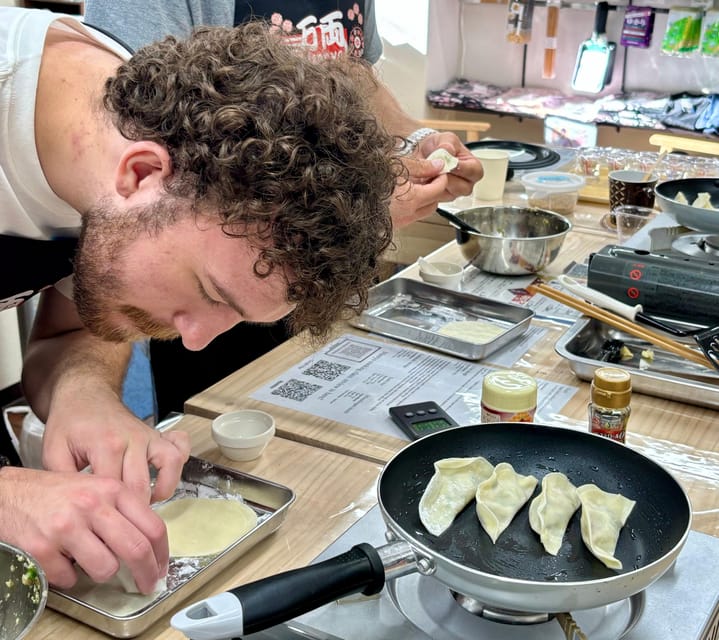
- Gyoza wrapping technique practiced step-by-step until you understand the fold, seal, and why your dumplings stay closed
- Onigiri shaping skills that help rice balls hold their form for a grab-and-go snack
- Small group size (up to 8) with multiple English-speaking instructors, so you get help without long waits
- Two ramen styles, simple toppings built to balance with the broth, not compete with it
Finding the class in Kyoto: B1 at Life Building
This cooking class happens off the main streets, inside a building location that is easy to miss if you rely on your GPS alone. Your meeting point is at B1 of Life Building. It is not on the main road, it is one street down.
If you are arriving by cab, the easiest anchor point is to ask your driver to drop you at Family Mart at Sanjo Keihan. From there, it is a short walk, about 2 minutes. Then plug in Manryo cooking class in Google Maps, so you can line up with the correct side street.
For timing, I recommend arriving a bit early. The class runs on a tight schedule, and once the cooking starts, you will want to be settled at your station.
How the 90 minutes actually flow
The best way to think about this experience is as a cooking sprint with a payoff: you learn three skills, then you eat the results.
You start by meeting your English-speaking instructors and getting organized at your cooking stations. Then the cooking rotates around three themes:
- Ramen broth preparation for two styles
- Gyoza filling and wrapping practice
- Onigiri shaping for neatly formed rice balls
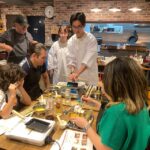
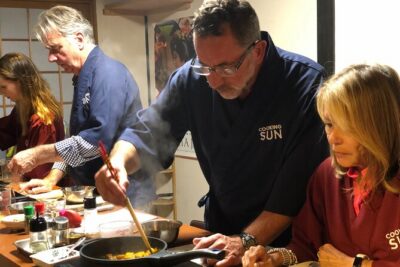
The session is fast paced, but it is not chaotic. Ingredients and equipment are ready so you are mostly cooking, not waiting. And because the group is limited to eight, you can ask questions without feeling like you are competing for attention.
More bowls worth the wait
- Ramen Cooking Class at Ramen Factory in Kyoto
★ 5.0 · 1,937 reviews - Kyoto: Ramen Cooking Class at a Ramen Factory with Souvenir
★ 4.9 · 532 reviews - Kyoto Ramen and Gyoza Cooking Class with Professional Chefs
★ 5.0 · 282 reviews - Home style Ramen and Homemade Gyoza in Kyoto
★ 5.0 · 152 reviews
Ramen broth coaching: miso and shoyu with home-store ingredients
Ramen is a maze if you only think about toppings and noodles. What makes this class practical is that it centers on the part you usually cannot buy in a packet: broth.
You will learn to make both a miso ramen broth and a shoyu ramen broth. The class explains what to use and why, including common flavor builders like soy sauce, miso, mirin, ginger, garlic, sesame oil, and the type of base that gives ramen its savory backbone. You also get the logic of seasoning balance, because toppings should support the broth, not bulldoze it.
Important detail: this class focuses on broth. They do not make ramen noodles in the class. That is actually good news for home cooks. Once you know your broth formula, you can pick up noodles near where you are staying and build the bowl afterward.
The topping approach: keep it simple, so the broth leads
Both ramen styles come with typical, straightforward toppings:
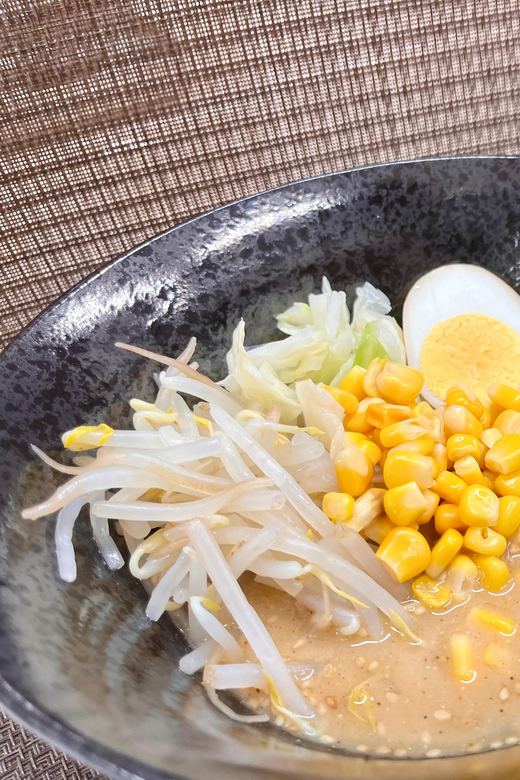
- Miso ramen: boiled egg, bean sprouts, green onions, and sweet corn
- Shoyu ramen: chicken, bamboo shoots, and green vegetables
This matters because the toppings are intentionally mild compared to the broth. If you are cooking at home, you can follow the same idea. Start with a broth you trust, then choose toppings that add texture and color, without turning the bowl into a second sauce.
Gyoza masterclass: filling balance and a seal you can trust
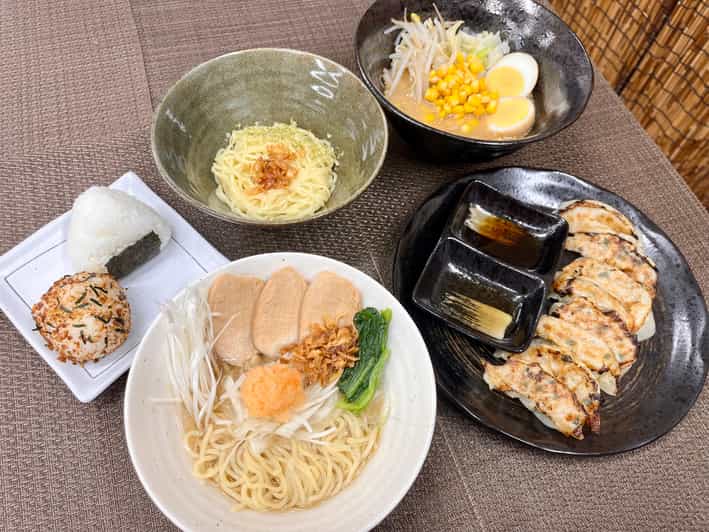
Gyoza is where this class earns its hype, because it is not just assembly. You build the filling and then you practice wrapping so you understand the technique.
You learn how to balance the filling, typically combining meat, vegetables, and seasonings so each dumpling tastes like something, not just like pan-fried dough. Then the real skill comes: wrapping the gyoza properly so the shape looks right and the seal holds during cooking.
The class is designed for you to finish with knowledge, not just a handful of pretty dumplings. You go from doing it once to doing it with confidence, which is exactly what you need if you want to recreate gyoza for friends later.
A practical tip: don’t aim for perfect on the first try
Gyoza wrapping is finicky. The best mindset for this class is simple: aim for consistency. Once you notice what creates a good seal and a stable fold, your dumplings stop looking like experiments and start looking like food you would serve.
Multiple instructors help at the stations, and that is another big value here. When you get stuck, you are not waiting around for the next step.
A quieter way to spend a day in Kyoto
Onigiri shaping: rice balls built for lunch mode
Onigiri sounds easy until you try it, because rice sticks, hands get messy, and the shape falls apart if you do not press and form with the right approach.
In this class, you learn how to create perfectly shaped onigiri so they hold their form. You practice making rice balls that work as a quick snack, or a lunch alternative to sandwiches.
If you want the real takeaway, it is technique. Once you understand how to form the rice ball and keep it from crumbling, you can customize flavors later with fillings you like.
What you eat: the ramen bowls, gyoza, and onigiri reward
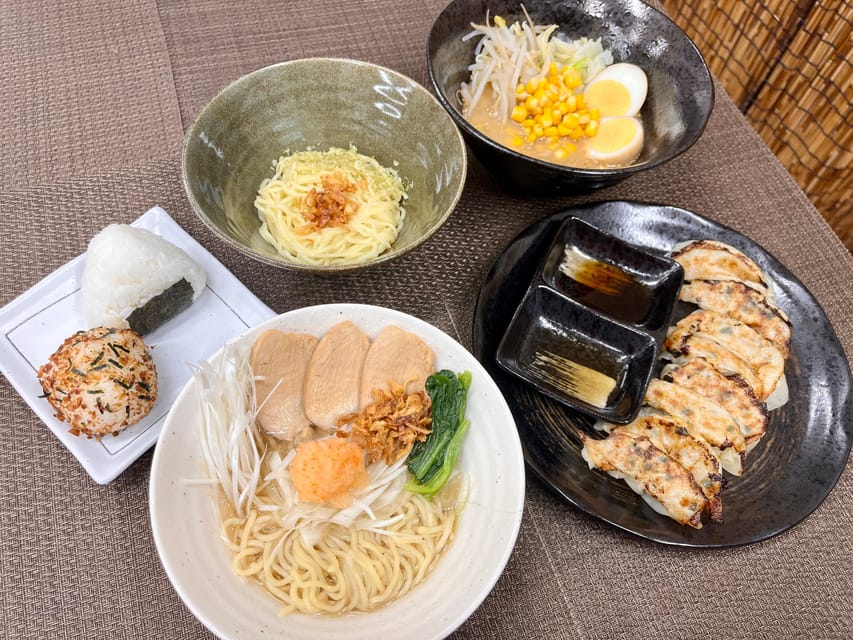
The payoff is real: you eat what you cook. That means the lesson ends with food that reflects your effort, not just watching someone else do the cooking.
For ramen, you end up with two bowls using the broth styles you made. The toppings follow the typical patterns for miso and shoyu, so you can compare how the broth changes the whole experience.
For gyoza, you get pan-fried dumplings. If you care about hands-on results, this is one of those classes where you walk away thinking, I can actually do that again.
And for onigiri, you take home the skill and concept: rice balls that are portable, quick, and easy to share.
Some people also mention being able to purchase beer after the meal, if you want to turn the end of class into a relaxed hangout.
Price and value: $90 for a full meal and recipe kit
At $90 per person for a 90-minute session, this is priced like an activity, not a casual tasting. The value comes from what you actually get:
- English-speaking instructors and hands-on station guidance
- All cooking ingredients and equipment
- The food you make
- Recipes for ramen and gyoza
- Free coffee and tea
The “take-home” part is key. If the goal is to recreate Japanese dishes at home, recipes are not a small extra. They are what turns a fun afternoon into a skill you can repeat.
Also, small group size helps the price make sense. When you are up to eight, instructors can correct your gyoza folds and explain broth decisions while you are still cooking.
Dietary limits and menu choices: what you can and cannot expect
This class has clear boundaries. Here is how it breaks down:
- A Regular Menu and a Vegetarian Menu are offered
- The Vegetarian Menu swaps pork for tofu, while other ingredients remain the same
- Vegan, pescatarian, and gluten-free diets are not accommodated
They also say participants must be able to cook by themselves without a lot of staff help. In practice, that means you should be comfortable with hands-on steps and staying engaged.
If you are traveling with someone who needs gluten-free or a strict plant-based setup, plan on skipping this one, even if you like Japanese food. This is not flexible on those points.
Who this class suits best in Kyoto
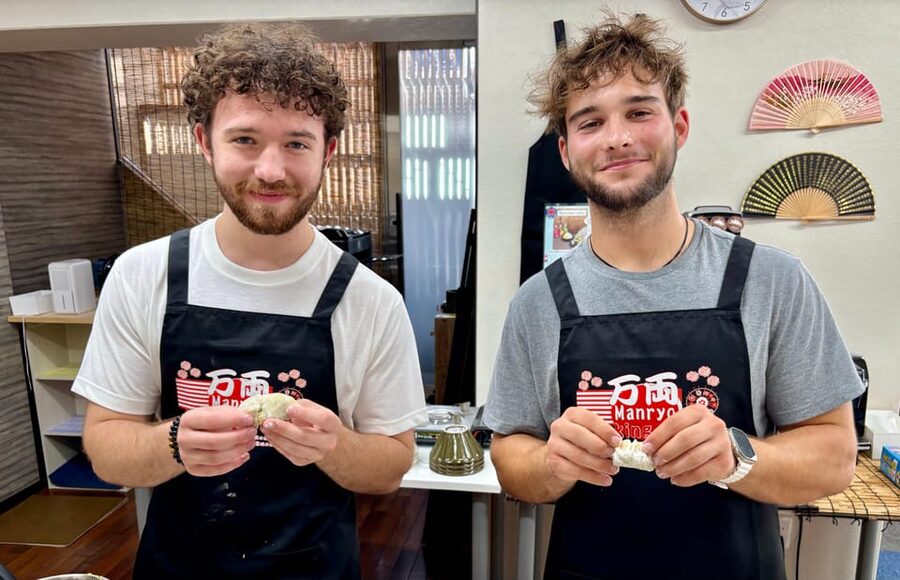
This works best if you want a practical cooking skill, not just photos and a quick taste.
You will probably love it if you:
- want to understand ramen broth rather than relying only on bottled bases
- want to learn gyoza wrapping with technique, not guesswork
- like hands-on lessons with a small group and active instructor support
- prefer an English-led class so you can actually follow the reasoning behind the ingredients
It may not be your best fit if you:
- need wheelchair access (this class is not suitable for wheelchair users)
- are under 13
- have recent surgeries or restrictions that make cooking hard
- need vegan, pescatarian, or gluten-free options
Should you book the Kyoto ramen, gyoza, and onigiri class?
I would book it if your goal is to leave with usable technique. The class is structured around the parts that matter for home cooking: ramen broth and gyoza wrapping, plus onigiri shaping. You also get to eat what you make, which makes it feel like more than a workshop.
If you are dietary-restricted beyond vegetarian tofu swap, skip it. Same for accessibility and age rules. In those cases, the limitations are part of the experience design, not a detail you can work around.
If you are flexible and want a hands-on Kyoto food lesson that feels satisfying all the way to the last bite, this is a strong choice.
FAQ
What dishes will I learn to make in this class?
You will make ramen broth (both miso and shoyu styles), gyoza, and onigiri (Japanese rice balls).
Do you make the ramen noodles in the class?
No. The class teaches broth preparation, not ramen noodle making.
What toppings are used for the ramen?
Miso ramen toppings include boiled egg, bean sprouts, green onions, and sweet corn. Shoyu ramen toppings include chicken, bamboo shoots, and green vegetables.
Is there a vegetarian option?
Yes. There is a Vegetarian Menu where pork is replaced with tofu, while other ingredients remain the same.
Can the class accommodate vegan, pescatarian, or gluten-free diets?
No. Vegan, pescatarian, and gluten-free options are not accommodated, and other special diets are also not supported.
What is the minimum age to join?
The class requires participants to be 13 and able to cook on their own without staff help.
How large is the group?
The class is a small group limited to 8 participants.
Where is the meeting point?
The classroom is on B1 of Life Building. It is one street down from the main street. If arriving by cab, get off at Family Mart at Sanjo Keihan and walk about 2 minutes. Search for Manryo cooking class in Google Maps.
Is hotel pickup and drop-off included?
No. Hotel pickup and drop-off are not included.
What is included in the price?
The price includes English-speaking instructors, all cooking ingredients and equipment, the food you make, recipes for ramen and gyoza, and free coffee and tea.
More Workshops in Kyoto

New This Season
- Koyasan Day Trip by Private Car from Kyoto
- Old Port Town and Ultimate Sake Tasting Private Tour From Kyoto
- Kyoto’s Timeless Charm: 3hr Exploration of History and Peace
- Kyoto: 5 Types of Sushi Making
- Sacred Peak & Ancient Paths: Kurama-Kibune Hiking Experience
- Kyoto: Exclusive ZEN practice at Manpukuji temple in Uji
- Kyoto: Private Seasonal Aroma Yoga Class
- Traversing Kyoto’s Scenic West – Arashiyama to Kinkakuji
Cooking Classes, compared.
Ramen Cooking Class at Ramen Factory in Kyoto
Read our review →
Ramen Cooking Class at a Ramen Factory with Souvenir
Read our review →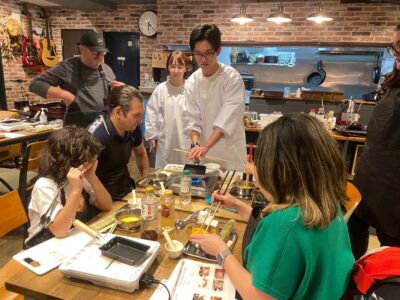
Japanese Washoku Bento Small Group Cooking Class
Read our review →
Japanese Traditional Sweets Making and Tea Ceremony
Read our review →
Kyoto Ramen and Gyoza Cooking Class with Professional Chefs
Read our review →
Gyoza Cooking Class in Kyoto: Traditional Japanese Dumplings
Read our review →Also filed under