
Reviewed · TEA CEREMONIES
Kyoto: Japanese Traditional Sweets Making and Tea Ceremony
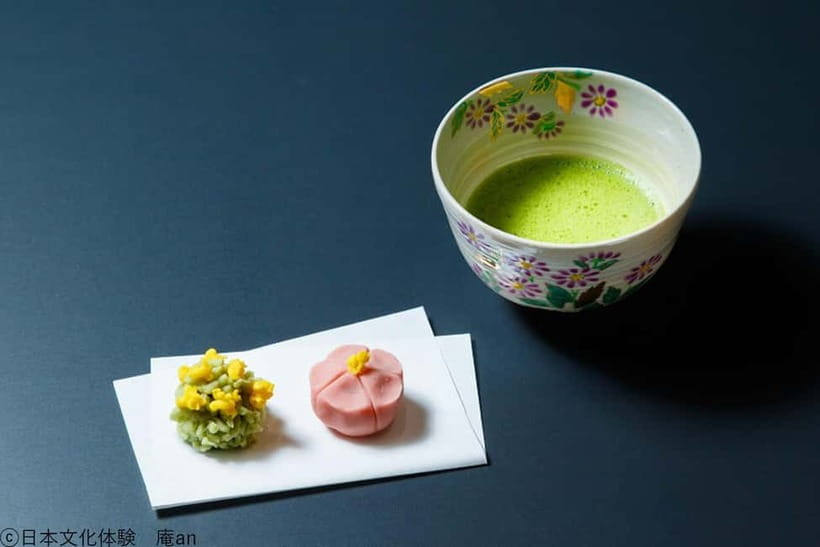
Kyoto has a way of turning small moments into rituals, and this class does exactly that. You will shape nerikiri sweets, then make your own Uji matcha and drink it the traditional way.
I really like that you are not watching a performance. You start by coloring the white bean paste, then you craft two sweets that match the season, using bean paste sourced from Kyoto’s long-established shops. The other big win is the pairing: the sweet, high quality bean paste balances the flavor of matcha instead of fighting it.
The main thing to consider is that English support varies. Translation is provided as much as possible, but Japanese is the default, and the room can involve more than one group at a time, so audio can be hit or miss if you are sitting farther from the instructor.
In This Review
- Key things to know before you go
- Kyoto sweets and matcha in 95 minutes: what you really get
- Finding the place near Gojo Station, and what to expect on arrival
- Making Nerikiri: coloring bean paste and shaping seasonal sweets
- The Uji matcha tea ceremony basics: what you do and what you learn
- Enjoying your sweets with your own matcha: the pairing logic
- Price and add-ons: what $18 covers, and what costs extra
- Language and group dynamics: how to get the most when English is limited
- Is this the right Kyoto activity for you?
- Should you book this Kyoto traditional sweets and tea ceremony?
- FAQ
- Where is the meeting point?
- What is the duration of the experience?
- What sweets will I make?
- What kind of matcha is used?
- What is included in the price?
- What costs extra?
- Are the materials and instructions available in English?
- What time do they operate?
- Is it wheelchair accessible?
- What is the cancellation policy?
Key things to know before you go
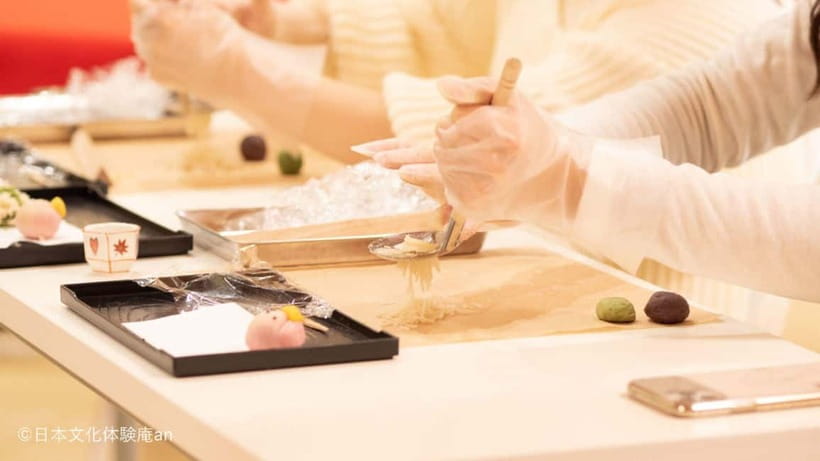
- You make two seasonal sweets in the nerikiri style, not just one small bite-sized item
- Coloring the bean paste is part of the fun, so you get creative right away
- Single-origin matcha from Uji is used for both the tea basics and what you drink
- You eat what you make, with your own matcha afterward
- No elevator on site, expect stairs to reach the rooms
- English is supported, but not guaranteed everywhere, so watching hands matters
Kyoto sweets and matcha in 95 minutes: what you really get
This is a focused, hands-on cultural stop that fits cleanly into a day of temple hopping and market wandering. The whole session runs about 95 minutes, and the structure is simple: make the sweets first, then do the matcha part, then sit down and enjoy your results.
At $18 per person, the value comes from what you actually take home with you, even if it is not packaged to go. You get a real skill to remember, how to shape nerikiri sweets and how to prepare and drink matcha with basic etiquette. For many Kyoto activities, you pay mainly for being present. Here, you pay for doing.
This also works well when you want something quieter than another shrine queue. You are sitting indoors, taking your time, and slowing the pace down on purpose. If your Kyoto trip has a packed schedule, this is a smart reset.
Finding the place near Gojo Station, and what to expect on arrival
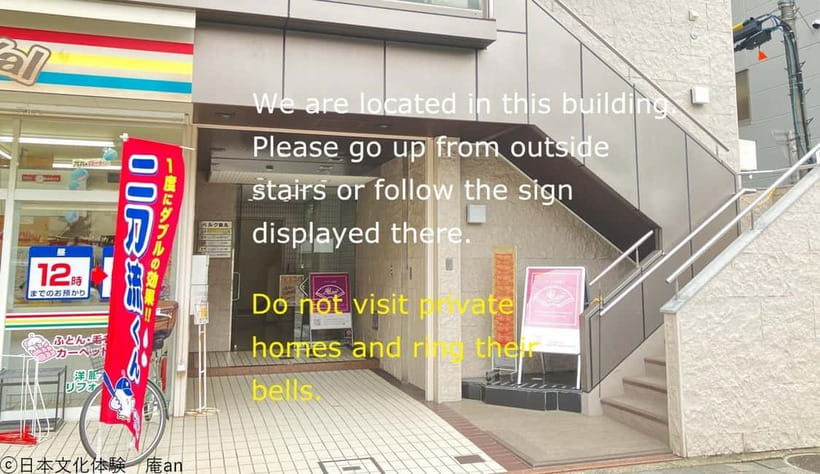
The meeting point is very easy to spot. It is about a 1-minute walk from Exit 1 of the Karasuma Line Gojo Station. The storefront entrance faces Gojo-dori, so you are not hunting down a hidden alley.
A couple practical points matter. First, the building has no elevator. You will need stairs to reach the different areas used for the class. Second, they cannot hold the event for delays, so plan to arrive early enough to check in without rushing.
Language is the other arrival reality. The instructor is Japanese, and English translation is provided as much as possible. If you do not speak Japanese, you will still be able to follow along, but you should expect to learn some parts by watching rather than only listening. Think of it as a “hands-on plus translation” class.
More bowls, poured the traditional way
- Kyoto: Tea Ceremony in a Traditional Tea House in Kiyomizu
★ 4.9 · 3,519 reviews - Kyoto: Tea Ceremony Ju-An at Jotokuji Temple
★ 4.9 · 3,207 reviews - Kyoto: 45-Minute Tea Ceremony Lesson Experience
★ 4.3 · 2,378 reviews - Kyoto: Table-Style Tea Ceremony at a Kyo-Machiya
★ 4.9 · 1,211 reviews
Making Nerikiri: coloring bean paste and shaping seasonal sweets
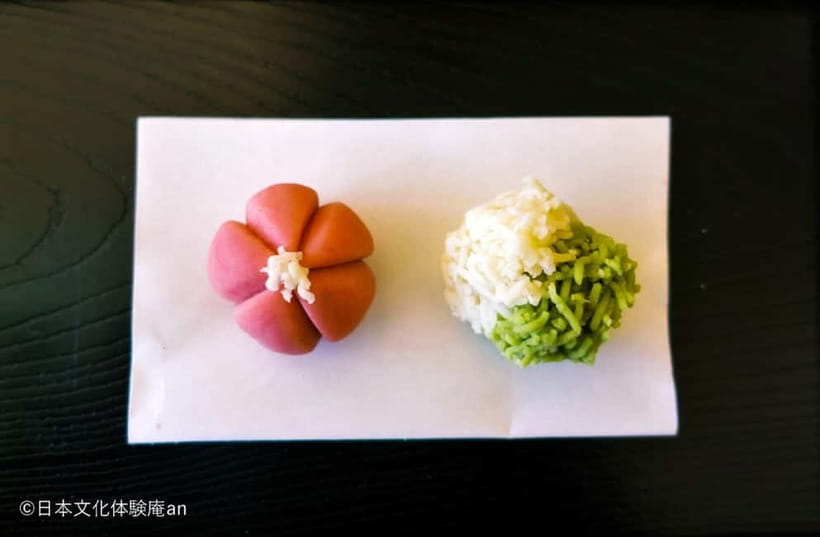
Your class starts with nerikiri, a higher-grade Japanese sweet made with bean paste shaped into flowers, fruits, or other seasonal motifs. The key detail here is that you do not start with finished shapes. You start with plain bean paste and build the look and form from there.
You will begin by coloring the white bean paste. That means you learn how color changes the paste visually and how it affects handling as you work. Then you move into shaping and crafting. In total, you will make two Japanese sweets that match the season, so there is variety even within one short class.
One more value point: the bean paste is produced by Kyoto’s long-established shops. That matters because nerikiri is all about texture and flavor balance. If the paste is low quality or overly sweet, the matcha part at the end would feel off. Here, the class is built around the idea that the sweets and tea should complement each other.
How hard is it? Expect it to be a gentle challenge, not a pastry lab. You are working at a comfortable pace with step-by-step guidance. The goal is making something attractive enough to enjoy, not producing a perfect showpiece.
The Uji matcha tea ceremony basics: what you do and what you learn
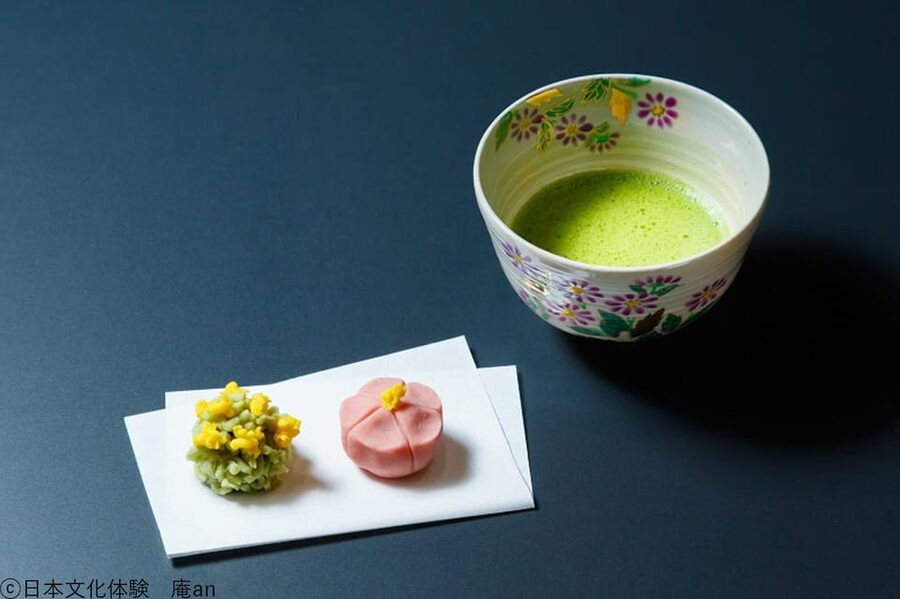
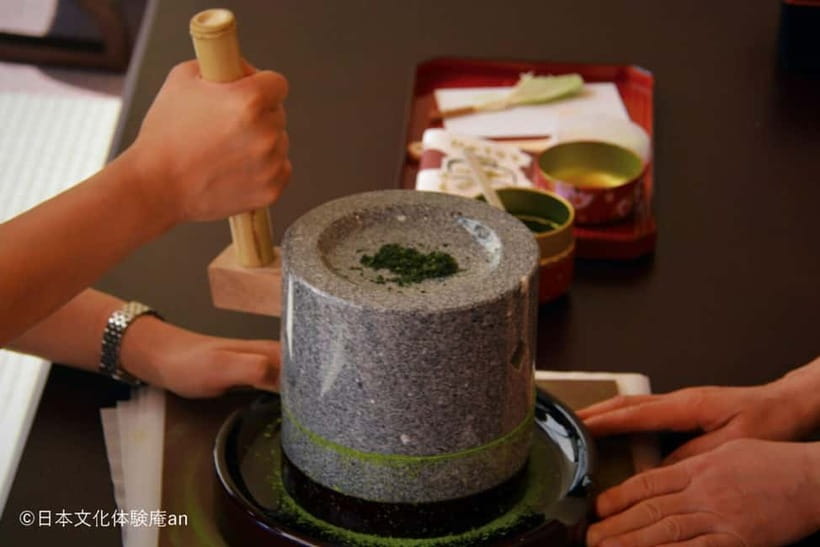
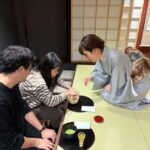
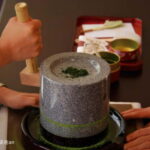
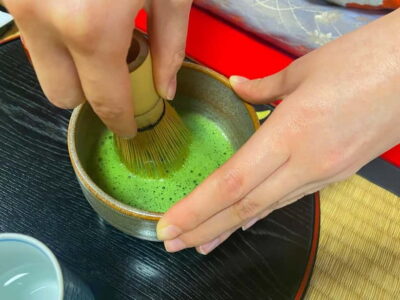
After the sweets are shaped, you switch gears to matcha. The tea you make uses Uji Matcha, and the class includes the basic tea ceremony-style process, followed by you drinking your own tea.
What you are really learning is the rhythm: preparing matcha carefully, then serving and sipping with basic etiquette. The class experience is designed to be understandable even if you are not fluent in Japanese, and you should still come away with a sense of what people pay attention to during tea time.
Also note the space reality. If another session is happening in the same area, you might find it harder to hear every word. The good news is that the instructor’s hand movements and the flow of the steps are visible, and watching helps more than you might expect.
Finally, the matcha is single-origin and treated as special. That choice changes the taste. You are not drinking “green tea powder” in a generic way. You are tasting a specific style of matcha that is meant to pair with the sweets you made.
Enjoying your sweets with your own matcha: the pairing logic
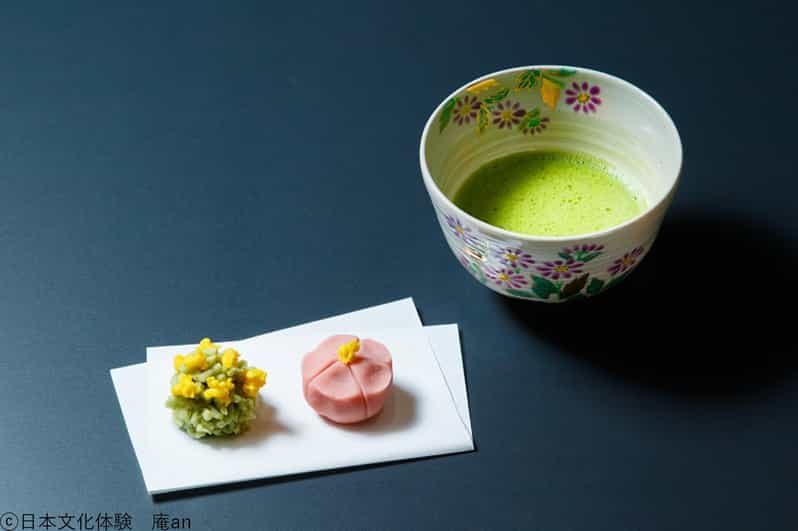
This part is not an afterthought. The class ends with you eating what you created alongside the matcha you prepared. The pairing is intentional: the sweetness and texture of high quality white/red bean paste is used to balance matcha’s bitterness and grassy depth.
If you already like red bean paste, you will probably feel in familiar territory right away. If you are on the fence, nerikiri is a good first step because it tends to be more refined and portioned, and the flavors are meant to work with the tea rather than replace it.
A practical tip for the best flavor experience: take a moment to taste the tea first, then taste a bite of sweet. Doing it in that order helps you understand how the matcha changes once the sweetness hits your palate, and you will feel the class’s logic instead of just following steps.
Price and add-ons: what $18 covers, and what costs extra
The $18 per person price covers the guided activities: Japanese traditional sweets making and the tea ceremony set. You get to make two sweets and prepare and enjoy your matcha during the session.
Two add-ons are available if you want them. A sweets take-out box costs 100 JPY, and an experience completion certificate costs 300 JPY. If you are hoping to bring sweets home as gifts, the take-out box is the only listed way to do it, so factor that into your budget.
If you are trying to decide whether this is worth it compared with another Kyoto class, ask yourself one question: do you want to actually make something and then taste it immediately? If yes, this is strong value for the time you spend.
A quieter way to spend a day in Kyoto
Language and group dynamics: how to get the most when English is limited
This is where your expectations matter. English translation is provided as much as possible, and the instructor switches to English when needed. That said, some details of tea and sweets making are easier to explain in Japanese because certain terms and techniques have built-in context.
Your best strategy is simple:
- Watch the instructor’s hands closely during the key steps, especially coloring and shaping
- Ask a short question when you get the chance, even if it is not perfect English
- Be okay with learning by doing, not only by hearing
The class can also have multiple groups moving through the spaces. If you are seated farther from the instructor during the tea portion, you may rely more on visuals. Plan to lean into that. Honestly, the tea steps are visual enough that you can still feel “in it” even when words are partly lost.
Is this the right Kyoto activity for you?
This suits you best if you want a calm, cultural activity that is tactile and not too intense. It is great for rainy afternoons, too, since you are working indoors in a structured way.
You might consider something else if you are looking for a long, deep lecture or a fully English-led immersion. The class is designed to teach through making, and English support is helpful but not the only channel.
It is also a nice option for different interests. If you came to Kyoto for food, you will love the sweets making. If you came for tea culture, you get matcha training you can actually repeat later, at least in a basic form.
Should you book this Kyoto traditional sweets and tea ceremony?
I think you should book it if you want a practical Kyoto souvenir, not a plastic one. The combination of nerikiri hands-on work, Uji matcha, and eating what you made immediately is the kind of “skill plus snack” day memory that sticks.
I would not oversell it as a scripted, polished English show. If you care a lot about audio clarity and you are sensitive to language barriers, arrive early, choose your sightline, and be ready to learn through watching. If you can do that, this class is a fun, efficient way to experience a very Kyoto version of slow down and taste.
FAQ
Where is the meeting point?
You meet about a 1-minute walk from Exit 1 of the Karasuma Line Gojo Station. The store entrance faces Gojo-dori.
What is the duration of the experience?
It lasts about 95 minutes.
What sweets will I make?
You will make two Japanese traditional sweets in the nerikiri style, matching the season.
What kind of matcha is used?
The tea uses Uji Matcha, and the matcha is described as single-origin special matcha.
What is included in the price?
A set of experiences covering Japanese traditional sweets making and the tea ceremony.
What costs extra?
A sweets take-out box costs 100 JPY, and an experience completion certificate costs 300 JPY.
Are the materials and instructions available in English?
English translation is provided as much as possible. You can contact them if you would like to add English translation.
What time do they operate?
Operation hours are 10:00-17:00. Reservations received after 17:00 are processed the next day.
Is it wheelchair accessible?
It is wheelchair accessible, but there is no elevator in the building and you will need to take stairs to reach each venue.
What is the cancellation policy?
You can cancel up to 24 hours in advance for a full refund. After 17:00, cancellations are treated as the next day, and a cancellation fee applies. Travel expenses to the venue are not compensated if cancellation happens.
More Cooking Classes in Kyoto
New This Season
- Koyasan Day Trip by Private Car from Kyoto
- Old Port Town and Ultimate Sake Tasting Private Tour From Kyoto
- Kyoto’s Timeless Charm: 3hr Exploration of History and Peace
- Kyoto: 5 Types of Sushi Making
- Sacred Peak & Ancient Paths: Kurama-Kibune Hiking Experience
- Kyoto: Exclusive ZEN practice at Manpukuji temple in Uji
- Kyoto: Private Seasonal Aroma Yoga Class
- Traversing Kyoto’s Scenic West – Arashiyama to Kinkakuji
Tea Ceremonies, compared.
Tea Ceremony in a Traditional Tea House in Kiyomizu
Read our review →
Kimono Tea Ceremony at Kyoto Maikoya, NISHIKI
Read our review →
Tea Ceremony in 100-year-old Kyo-Machiya Townhouse
Read our review →
Also filed under