
Reviewed · ARASHIYAMA BAMBOO FOREST WALKS
Kyoto: The Heart of Arashiyama, Bamboo Forests and Sacred Temples
Kyoto changes shape in Arashiyama, and this tour is built around that shift. You get the iconic Arashiyama Bamboo Forest plus a run of temples that feel more personal than the usual sightseeing loop. It is a smooth half-day way to see Kyoto’s spiritual side without losing too much time.
I especially like the mix of Otagi Nenbutsu-ji and Adashino Nembutsu-ji, because they swing from playful to profoundly solemn. The first gives you a crowd of 1,200 rakan statues with faces you cannot help but notice, and the second asks you to slow down and think.
One practical consideration, though: food and beverages are not included, so you will want to plan your snack or meal timing around the 9:00 am start and the 3:00 to 3:30 pm finish.
In This Review
- Key things I’d plan around
- Arashiyama Bamboo and Temples: Why This Blend Works
- Price and Value: What $122 Covers and Why It’s Fair
- Getting Started at Kyoto Station: The Easiest Way In
- The Ride to Arashiyama: 20 Minutes by Train, Then a Short Bus Step
- Otagi Nenbutsu-ji: 1,200 Rakan Statues With a Twist of Fun
- Adashino Nembutsu-ji: Thousands of Stone Figures for Quiet Reflection
- Nison-in and Rakushisha: Two Buddhas, Then Haiku Calm
- Jojakkō-ji: Hilltop Views, Lush Trees, and a Pagoda Crown
- Arashiyama Bamboo Forest Walk: Tall and Serene, Best When You Slow Down
- Tenryu-ji: Zen Gardens and an Ending That Feels Like Closure
- Timing, Footwear, and Planning Food Without Stress
- Who This Tour Fits Best (and Who Might Want Another Option)
- Should You Book This Arashiyama Half-Day Temple and Bamboo Tour?
- FAQ
- Where is the meeting point for the Kyoto: Heart of Arashiyama tour?
- What time does the tour start?
- How long is the tour?
- What language is the live guide?
- What transportation is included?
- Are the entrances or site costs included?
- Is food included in the price?
- What should I bring for the tour?
- Is there free cancellation?
- Can I reserve now and pay later?
- What is the day’s route in broad strokes?
Key things I’d plan around
- Bamboo Forest plus temples, so your morning stays varied and meaningful, not just photo stops
- Otagi Nenbutsu-ji’s 1,200 rakan statues, each with unique expressions and a surprisingly fun energy
- Adashino Nembutsu-ji’s thousands of stone statues, designed for quiet reflection and respectful stillness
- Rakushisha and haiku poet Mukai Kyorai, a literary stop that cools the pace with calm atmosphere
- Tenryu-ji Zen gardens, a UNESCO World Heritage ending that ties nature and mind together
Arashiyama Bamboo and Temples: Why This Blend Works
Arashiyama is famous for its bamboo, but that can make people rush straight to the “big moment” and miss the quieter Kyoto mood. This tour is smarter than that. It strings together temple visits that each offer a different emotional tone, so your head and heart do not feel like they are on the same setting all day.
The bamboo walk comes later in the route, after you have already had time for temple quiet. That timing matters. When you finally step into the tall, serene bamboo, it feels less like a checklist item and more like a reset, a chance to breathe in that calm rhythm.
Price and Value: What $122 Covers and Why It’s Fair
At $122 per person for a 6-hour tour, the key value is that transportation and admission-type costs are included. You do not have to sort out train plus local bus details mid-day, and you also do not have to separately pay to get into the listed sites.
You are paying for a guide, a structured route, and the logistics that typically eat up time in Kyoto. If you were to do this on your own, you would still spend time traveling between Saga-Arashiyama and temple areas, and you would likely spend extra effort figuring out entry points. Here, the plan is handled for you.
What is not included is also important. Food and beverages are not part of the price, so you will either eat on your own before the tour, during the gaps if you find time, or after it ends in Arashiyama.
More rooftops worth a detour
- Kyoto: Tea Ceremony Ju-An at Jotokuji Temple
★ 4.9 · 3,207 reviews - Arashiyama Bamboo, Temple, Monkeys, or Secret Sake Brewery
★ 4.8 · 886 reviews - Kyoto: Arashiyama Bamboo Forest, Monkeys, Matcha & Temple Tour
★ 5.0 · 759 reviews - Osaka/Kyoto: Arashiyama, Nara & Fushimi Inari Shrine w/Lunch
★ 4.4 · 754 reviews
Getting Started at Kyoto Station: The Easiest Way In
The tour meets at Kyoto Station, Central exit, in front of Kyoto Tower, at the Seven Eleven. The start time is 9:00 am, and the guide is there minutes before so you can spot them by the Japan Traveler company logo.
This is a good setup if you are arriving from elsewhere in Japan or you are just trying to keep things simple on day one in Kyoto. Kyoto Station can be a maze, so having a clear landmark like Kyoto Tower and that specific Seven Eleven helps you get oriented quickly.
Also note the guide language is Spanish. If you speak Spanish, you will get more out of the explanations at each stop. If you do not, the experience can still work, but you may rely more on visual cues and your own reading of the sites rather than the guide’s context.
The Ride to Arashiyama: 20 Minutes by Train, Then a Short Bus Step
Right after the introduction, you head to Saga-Arashiyama Station by train, a segment of about 20 minutes. Then you take a local bus for around 15 minutes to reach the first temple area.
I like that this is not a long, tiring transfer day. You are not spending the whole morning commuting. You get enough movement to break up the start of the day, and then you jump into walking and guided visits while the temples are at their best.
If you are prone to overpacking, this is your reminder to keep things light. You will be on foot between stops, and comfortable shoes are not optional if you want the pace to feel pleasant.
Otagi Nenbutsu-ji: 1,200 Rakan Statues With a Twist of Fun
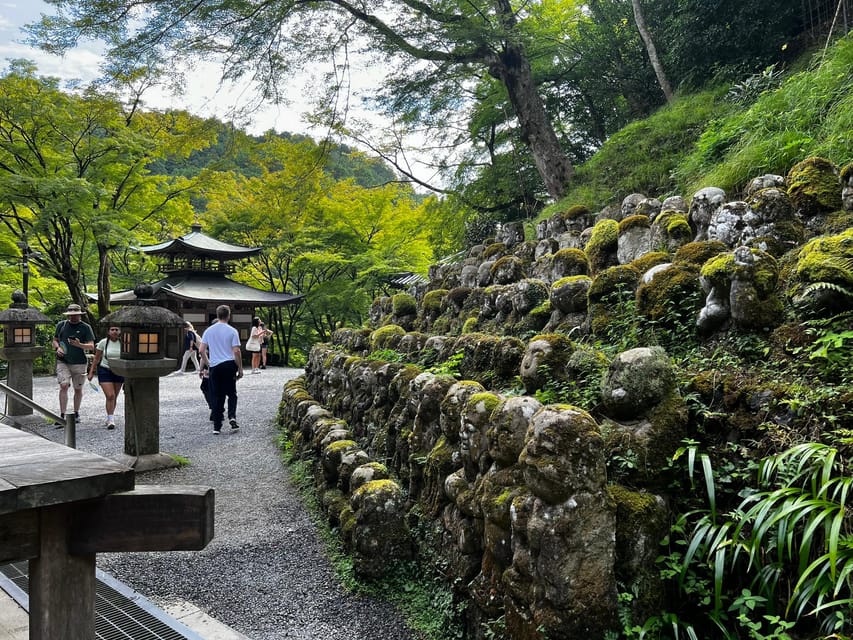
Otagi Nenbutsu-ji is where the tour turns lively. You spend about 1 hour here with guided time, and the main draw is the 1,200 rakan statues, each with unique expressions.
What I like about this stop is the mix of spirituality and play. Even though these are devotional figures tied to Buddhist tradition, the variety of faces makes the place feel human and approachable. You end up looking longer than you planned, because one statue never seems to be enough.
You will likely want to move slowly at first, then come back to the ones you keep noticing. The guided part helps you understand what you are seeing so you do not just treat them like a photo wall. It’s a temple that rewards attention.
A heads-up for your comfort: 1 hour can feel short once you start noticing expressions, so wear shoes that let you stand and wander without thinking about your feet.
Adashino Nembutsu-ji: Thousands of Stone Figures for Quiet Reflection
Next comes Adashino Nenbutsu-ji, guided time about 30 minutes. This is where the atmosphere shifts. The temple is known for thousands of stone statues, presented as an homage to souls without descendants, rooted in Japan’s older Buddhist traditions.
If Otagi sets a tone of curiosity, Adashino gives you a tone of respect. The solemn mood is the point, and you will feel it as you walk through rows of stone figures. This is the kind of stop that can make you slow your pace without anyone needing to tell you.
I also like that the tour does not rush this. Even though it is only 30 minutes, it is enough time to take in the scale and then sit in the feeling of stillness for a bit. You are not just moving through another temple. You are pausing in a place designed for remembrance.
If you come in expecting big spectacle, you might be surprised by how powerful quiet can be. That’s part of why this stop works so well inside a single half-day itinerary.
Green light through a bamboo grove

Nison-in and Rakushisha: Two Buddhas, Then Haiku Calm
After Adashino, you visit Nison-in Temple, with about 45 minutes guided time. Nison-in is known for its two major Buddha statues and its natural surroundings, which the tour frames as ideal for relaxing and meditating in tranquility.
Even if you are not planning to meditate, I recommend treating this as your decompression pocket. You have seen many statues already, so now you get a different kind of focus. The two Buddha figures give you a clear visual anchor, and the setting helps your mind stop sprinting.
Then you head to Rakushisha, about 30 minutes guided. This is the former home of haiku poet Mukai Kyorai. Instead of statues and garden scenes, you get a literary atmosphere, a space tied to classical literary culture and a quieter sense of the past.
I like that this is not just “another temple.” It adds a human thread through poetry and daily calm. It also breaks up the temple-only pattern so your brain does not feel stuck in the same mode.
Jojakkō-ji: Hilltop Views, Lush Trees, and a Pagoda Crown
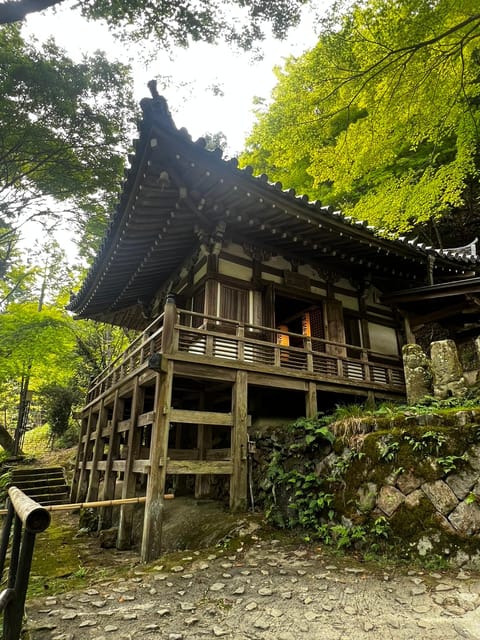
Your next guided stop is Jojakkō-ji, about 1 hour with the group. It sits on a hillside with breathtaking views of Kyoto, surrounded by lush trees and crowned by a pagoda.
This is a good place to walk with intention. You get that hillside feel, which naturally slows you down, and you get a view that makes the city feel real in your hands again, not just distant beyond the temple gates.
One practical note: viewpoints mean walking and some uneven terrain. If you are traveling in comfortable clothes, stick with that, and keep your shoe choice simple and secure.
This stop also plays nicely with the bamboo later. When you see Kyoto from a hillside and then later step into the bamboo corridor, the day feels like it has a coherent rhythm: wide view, quiet temple mood, then nature calm.
Arashiyama Bamboo Forest Walk: Tall and Serene, Best When You Slow Down
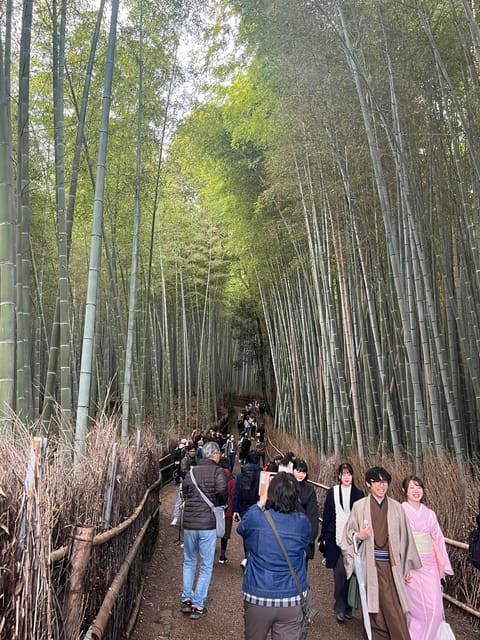
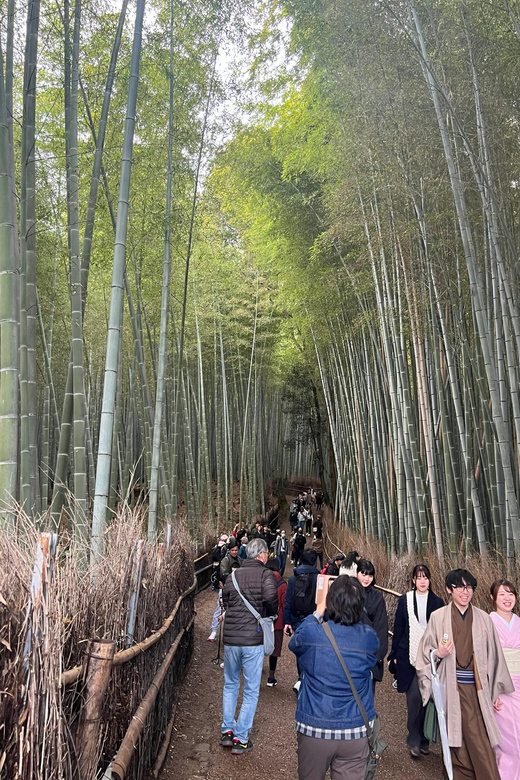
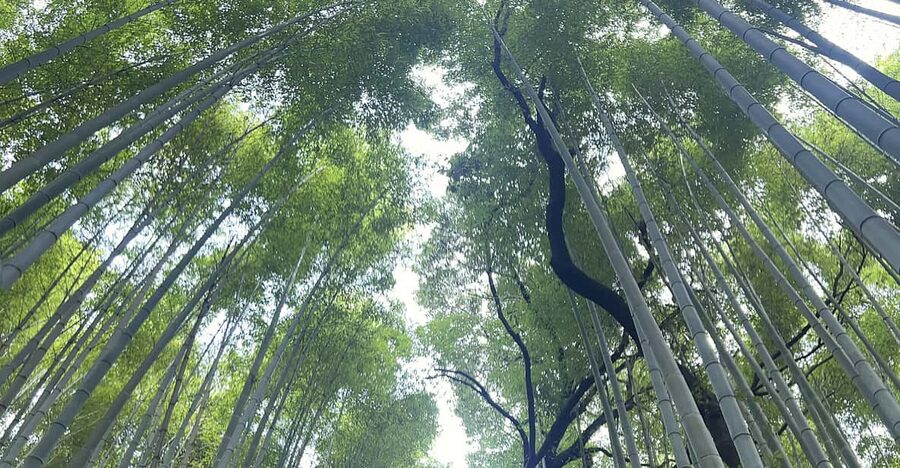
Then it is time for the Arashiyama Bamboo Forest, with about 1 hour guided walking time. This is one of Japan’s iconic landscapes, shaped by tall bamboo trees that create a peaceful atmosphere.
I love that the tour frames this as serenity, not as a sprint. If you walk too fast, you miss what makes the bamboo feel special. Take a slow pace for the first stretch, then stop now and then to look up. The height is part of the experience, and looking around changes how the light hits the stems.
If you are traveling with a camera, plan for short pauses rather than constantly clicking. You will get better photos, and you will feel less rushed. The bamboo works best when you let it do the quiet work for you.
Tenryu-ji: Zen Gardens and an Ending That Feels Like Closure
The final temple on the tour is Tenryu-ji, with about 40 minutes guided time. It is a UNESCO World Heritage Site, and it is famous for its Zen gardens, designed to create harmony between the human spirit and the natural environment.
What I like about ending here is that it ties the whole morning together. You started with a playful statue temple, moved into solemn reflection, included meditation surroundings and haiku calm, reached a hillside view, then went into bamboo tranquility. Tenryu-ji feels like the final note in that emotional music.
The gardens are where you slow your pace the most. Let the walk become a gentle procession. If you feel your mind racing, this is a good place to reset it.
After the guided visit, the tour ends around 3:00 to 3:30 pm, leaving you time to enjoy the Arashiyama shopping area on your own.
Timing, Footwear, and Planning Food Without Stress
This is a 9:00 am to about 3:00 to 3:30 pm experience, so you are traveling and walking for most of the day. The good news is it is only 6 hours total, so you are not stuck in a whole-day grind.
Because food and beverages are not included, I suggest you plan in layers:
- Eat a real breakfast before you go
- Bring a small snack if you know you get hungry
- Use the time after the tour to find lunch or something sweet in Arashiyama
Wear comfortable shoes and comfortable clothes, as the tour asks. You will likely be on your feet during multiple temple visits and during the bamboo forest walk, so your footwear needs to handle long walking and possible uneven ground.
Who This Tour Fits Best (and Who Might Want Another Option)
This tour is ideal if you want Arashiyama in a structured way with a blend of iconic and lesser known sacred spaces. You get both, and the route is built to shift your mood instead of repeating the same kind of temple view.
It also fits well if you are short on time. With a 6-hour duration, you still get to hit Tenryu-ji and the bamboo, but you also get the quieter stops like Otagi Nenbutsu-ji and Adashino Nembutsu-ji.
One thing to consider is language. The live tour guide is Spanish. If you are comfortable with Spanish or at least want to follow explanations, you will feel more connected to the details each site offers. If Spanish is not your thing, you might still enjoy the visuals, but your understanding of what you are seeing will depend more on your own reading.
Should You Book This Arashiyama Half-Day Temple and Bamboo Tour?
I think you should book it if you want a guided route that actually balances emotion and variety: playful statues at Otagi, solemn remembrance at Adashino, relaxation at Nison-in, literary calm at Rakushisha, hillside views at Jojakkō-ji, bamboo serenity, then Zen garden closure at Tenryu-ji.
It is also a strong value because $122 includes train and bus transportation and the listed site admission-type costs, which is where independent planning often gets messy. The biggest reason not to book is simple: if you cannot handle a few hours of walking and you want food included, you will need to solve the meal part yourself.
If you are ready to slow down, wear good shoes, and let Kyoto’s spiritual side unfold stop by stop, this is the kind of half-day that leaves you feeling calmer than you started.
FAQ
Where is the meeting point for the Kyoto: Heart of Arashiyama tour?
The meeting point is Kyoto Station, Central exit, in front of Kyoto Tower, at the Seven Eleven (7-Eleven).
What time does the tour start?
The tour starts at 9:00 am.
How long is the tour?
The duration is 6 hours. The tour ends at approximately 3:00 to 3:30 pm.
What language is the live guide?
The live tour guide is Spanish.
What transportation is included?
The value of transportation expenses such as train and bus/coach are included.
Are the entrances or site costs included?
Yes, the value of the income to the mentioned places is included.
Is food included in the price?
No, food and beverages are not included.
What should I bring for the tour?
Wear or bring comfortable shoes and comfortable clothes.
Is there free cancellation?
Yes, you can cancel up to 24 hours in advance for a full refund.
Can I reserve now and pay later?
Yes, you can reserve now and pay later.
What is the day’s route in broad strokes?
You travel from Kyoto toward the Arashiyama area, visit a sequence of temples (including Otagi Nenbutsu-ji and Tenryu-ji), walk through the Arashiyama Bamboo Forest, and finish with time to enjoy the Arashiyama shopping area.
New This Season
- Koyasan Day Trip by Private Car from Kyoto
- Old Port Town and Ultimate Sake Tasting Private Tour From Kyoto
- Kyoto’s Timeless Charm: 3hr Exploration of History and Peace
- Kyoto: 5 Types of Sushi Making
- Sacred Peak & Ancient Paths: Kurama-Kibune Hiking Experience
- Kyoto: Exclusive ZEN practice at Manpukuji temple in Uji
- Traversing Kyoto’s Scenic West – Arashiyama to Kinkakuji
- Kyoto: Private Seasonal Aroma Yoga Class
Arashiyama Bamboo Forest Walks, compared.
Fushimi Inari, Kinkakuji, Bamboo Grove 1 Day Bus Tour
Read our review →
Kinkakuji,Arashiyama,FushimiInariShrine,NaraPark
Read our review →
Nara, Fushimi Inari Taisha, Arashiyama Bus Tour
Read our review →
Kyoto Arashiyama Walking Tour: Bamboo, Monkeys, Gardens & Secrets
Read our review →
Arashiyama Bamboo, Temple, Monkeys, or Secret Sake Brewery
Read our review →
Arashiyama Bamboo Forest, Monkeys, Matcha & Temple Tour
Read our review →
Arashiyama, Nara & Fushimi Inari Shrine w/Lunch
Read our review →
Nijo, Kinkaku-ji, Arashiyama, Kiyomizu & Fushimi Inari
Read our review →Also filed under